


Causes of Denture Sores
- Fungal Infections: The most frequent underlying cause is the overgrowth of a naturally occurring yeast called Candida albicans, which easily forms a microscopic film on the porous surface of the acrylic dental appliance and triggers tissue inflammation 2.
- Poor Hygiene: Failing to properly clean the mouth and the prosthetic device allows harmful plaque, food debris, bacteria, and yeast to rapidly multiply and accumulate on the appliance surfaces 4.
- Continuous Appliance Wear: Wearing false teeth continuously without taking them out, particularly overnight while sleeping, deprives the oral tissues of essential rest and creates a warm, sealed environment that promotes infection 1.
- Ill-Fitting Dental Appliances: Prosthetics that are loose, older, or poorly adjusted cause continuous mechanical friction, rocking, and trauma against the underlying soft tissue, making the area highly vulnerable to soreness and microbial invasion 2.
- Dry Mouth (Xerostomia): A noticeable reduction in natural saliva flow—often resulting from advancing age, underlying systemic diseases, or daily medications—removes the mouth’s natural ability to wash away microorganisms, balance acidity, and lubricate the gums against physical friction 5.
Symptoms of Denture Sores
- Persistent Redness: The most common sign is a noticeable, widespread redness (clinically known as erythema) on the gums or the roof of the mouth that sits directly underneath the dental appliance 3.
- Tissue Swelling: The affected oral tissues often become swollen, puffy, or inflamed due to chronic irritation from the denture and subsequent microbial accumulation 2.
- Burning or Tingling Sensation: While the condition is frequently painless, individuals may experience mild to moderate discomfort, often characterized by a continuous burning or tingling feeling in the affected oral mucosal tissues 3.
- Altered Taste: The presence of a fungal or bacterial biofilm on the prosthetic device can cause an unpleasant metallic taste or an altered sense of taste, medically referred to as dysgeusia 6.
- Cracks at the Mouth Corners: The underlying fungal infection can sometimes spread outward, leading to painful redness, crusting, and cracking at the corners of the lips, a related inflammatory condition called angular cheilitis 3.
Natural Remedies for Denture Sores
1. Aloe Vera Gel
How it may help
Aloe vera gel contains active plant compounds that reduce swelling and soothe irritated oral tissues. By forming a protective layer over denture sores, it helps ease daily discomfort and supports the natural healing process of damaged gums 7.
What research says
Clinical research confirms that aloe vera effectively reduces inflammation and accelerates the healing of mouth sores 8. Studies also demonstrate its antibacterial and antifungal properties, which help control the common fungal infections often associated with regular denture wearing 9.
How to use it safely
Remove and clean your dentures completely. Apply a small amount of 100% pure, food-grade aloe vera gel directly to the irritated gums. Avoid eating, drinking, or reinserting your dentures for at least 30 minutes to allow the gel to absorb.
Potential precautions or side effects
While generally safe, aloe vera can cause allergic reactions like itching in sensitive individuals 10. Stop use immediately if irritation increases, and only apply pure, food-grade products.
2. Propolis (Bee Resin)
How it may help
Propolis, a natural resin produced by bees, acts as a protective barrier over sore gum tissues. It contains powerful compounds that naturally reduce tissue swelling and fight off harmful microbes. By coating irritated areas, propolis helps ease daily discomfort while creating a better environment for gums to heal.
What research says
Clinical trials demonstrate that propolis gels significantly reduce the severe inflammation and redness associated with denture stomatitis 11. Studies conclude its potent antifungal properties combat Candida yeast infections just as effectively as standard prescription medications, resulting in complete clinical remission for many patients 12.
How to use it safely
Remove and thoroughly clean your dentures. Apply a thin layer of food-grade propolis extract or a specially formulated propolis oral gel directly to the sore areas of your gums. Wait at least 30 minutes before eating, drinking, or placing your dentures back into your mouth.
Potential precautions or side effects
Avoid propolis if you are allergic to bee stings, honey, or pollen, as it may trigger severe reactions 13. Stop use immediately if your gums swell or burn.
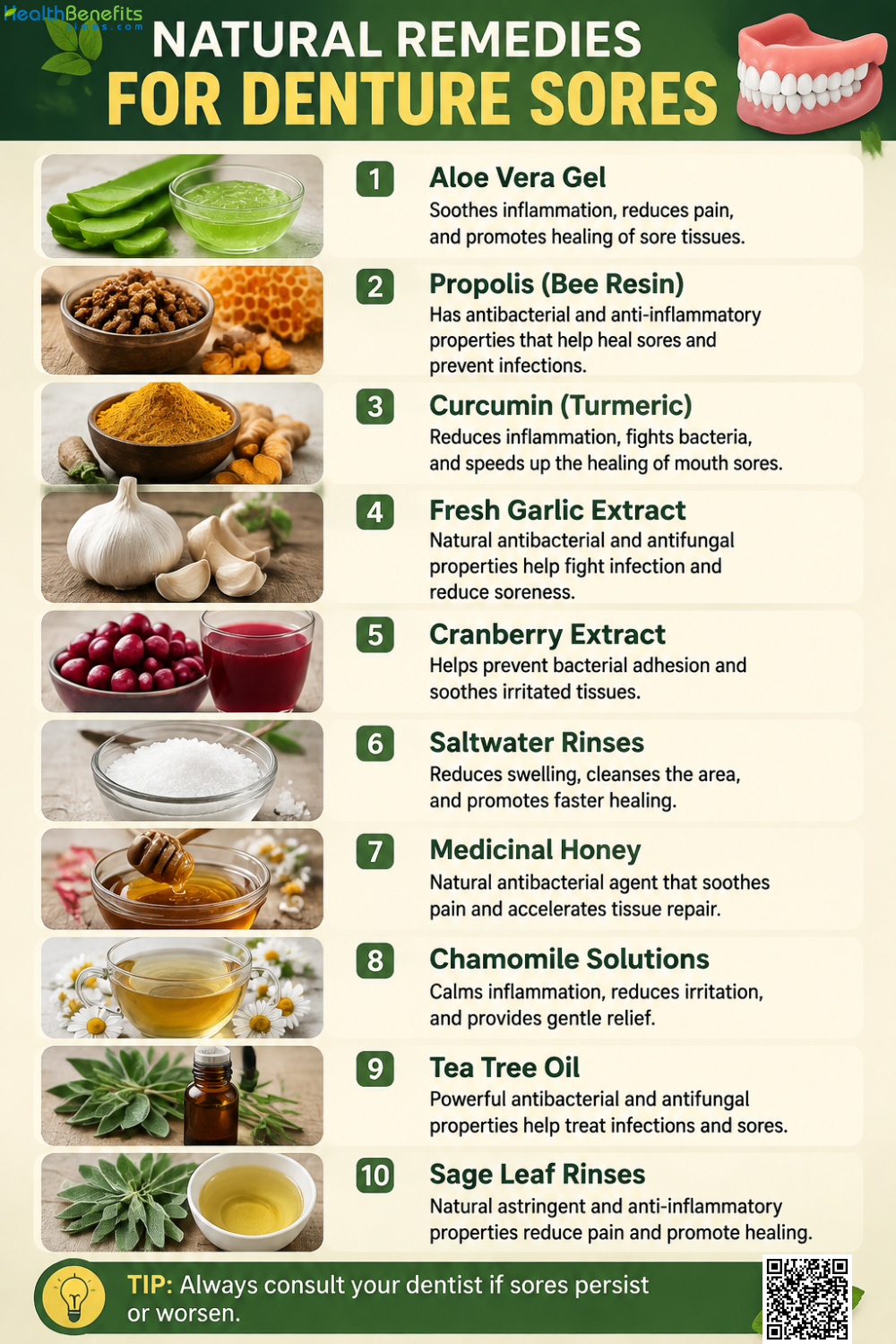
3. Curcumin (Turmeric)
How it may help
Curcumin, the active compound found in turmeric, provides strong anti-inflammatory and antioxidant benefits that soothe inflamed oral tissues. It acts directly against fungal overgrowth on the gums, helping to control localized infections while reducing the redness, swelling, and discomfort commonly caused by wearing dentures 14.
What research says
Clinical trials show that topical curcumin significantly reduces the severe tissue inflammation associated with denture-related mouth sores 14. Research confirms its potent antifungal properties effectively decrease Candida yeast colonies, making it a highly effective natural alternative to standard antifungal treatments for clearing oral infections and promoting gum recovery 15.
How to use it safely
Remove your dentures and clean them completely. Apply a thin layer of formulated curcumin oral gel or a mild food-grade turmeric paste directly to the sore gums. Allow it to sit for 15 minutes before rinsing your mouth thoroughly with water and reinserting your clean dentures.
Potential precautions or side effects
Turmeric can temporarily stain dental appliances and natural teeth. Avoid use if you are allergic to curcumin, and stop applying immediately if you experience any burning, stinging, or worsening irritation 16.
4. Fresh Garlic Extract
How it may help
Fresh garlic contains allicin, an active compound that fights both fungal and bacterial infections. By targeting the microscopic yeast that builds up under dental plates, it reduces painful gum inflammation and speeds up the healing process of raw, irritated tissues in the mouth 17.
What research says
Clinical trials show that garlic extract effectively destroys Candida albicans, the main fungus responsible for denture-related infections. Studies conclude that applying garlic extract decreases yeast colonies and reduces oral redness as effectively as standard prescription antifungal medications 18.
How to use it safely
Remove and clean your dentures. Dilute a drop of fresh garlic extract in water to prevent irritation. Apply the diluted mixture gently to the sore gums using a cotton swab. Leave it for two minutes, rinse thoroughly with water, and reinsert your dentures.
Potential precautions or side effects
Applying pure, undiluted raw garlic to delicate mouth tissues can cause painful chemical burns 19. Stop use immediately if you feel severe stinging, pain, or increased swelling.
5. Cranberry Extract
How it may help
Cranberry extract contains unique plant compounds called proanthocyanidins. These active molecules work by preventing harmful yeast and bacteria from sticking to gum tissues and the acrylic surfaces of dentures 20. By blocking this adhesion, cranberry extract reduces tissue swelling, eases soreness, and controls localized fungal growth.
What research says
Research demonstrates that cranberry compounds effectively prevent Candida albicans yeast from forming sticky layers on oral tissues and artificial denture resins 20. Studies conclude that this ability to block fungal attachment, combined with a proven reduction in tissue inflammation, makes cranberry extract highly effective for managing denture-related infections 21.
How to use it safely
Remove and carefully clean your dentures. Gently apply a small amount of pure, unsweetened cranberry extract or formulated oral gel directly to the sore gums. Allow it to sit for roughly 15 minutes before rinsing your mouth thoroughly with water and reinserting your dental appliances.
Potential precautions or side effects
Avoid using standard commercial cranberry juice, as added sugars promote yeast overgrowth. Highly acidic extracts may cause mild stinging on very raw tissues or temporarily stain dental appliances.
6. Saltwater Rinses
How it may help
Saltwater rinses act as a mild, natural antiseptic that draws excess fluid out of swollen gum tissues. This process reduces painful inflammation, washes away trapped food particles, and creates a clean environment that accelerates the healing of raw spots caused by tight-fitting dentures 22.
What research says
Clinical research concludes that warm saline rinses effectively reduce oral inflammation and prevent secondary bacterial infections in damaged mouth tissues 23. Studies confirm that salt water promotes the rapid repair of oral cells and is a safe, reliable baseline treatment for managing sore gums 24.
How to use it safely
Remove your dentures completely. Dissolve one-half teaspoon of standard table salt into eight ounces of warm water. Swish the solution gently around your mouth for thirty seconds, making sure it covers the sore areas, then spit it out completely. Repeat this process three to four times daily.
Potential precautions or side effects
Do not swallow the saltwater mixture, as ingesting excess salt can cause nausea or stomach upset. Overusing saline rinses may excessively dry out oral tissues and cause additional irritation.
7. Medicinal Honey
How it may help
Medicinal honey, particularly Manuka honey, contains unique enzymes and natural antimicrobial compounds. It draws excess fluid out of swollen tissues, creating a protective, soothing barrier that reduces painful inflammation while actively fighting the underlying fungal or bacterial infections often associated with dental appliances.
What research says
Clinical reviews identify medicinal honey as a promising natural treatment for oral infections [1]. Studies confirm its potent antibacterial and wound-healing properties, demonstrating that it effectively disrupts the growth of Candida yeast biofilms—the primary fungus responsible for denture-related sores—while accelerating tissue repair 25.
How to use it safely
Remove and clean your dentures completely. Apply a thin layer of sterile, medical-grade Manuka honey directly to the sore gums. Wait approximately 20 minutes before eating, drinking, or reinserting your dentures. Use only certified medicinal honey, as regular grocery store honey lacks reliable therapeutic properties.
Potential precautions or side effects
Avoid this remedy if you have severe pollen or bee-related allergies. Because honey contains natural sugars, maintain excellent daily oral hygiene to prevent decay on any remaining natural teeth.
8. Chamomile Solutions
How it may help
Chamomile contains potent anti-inflammatory plant compounds, such as apigenin and bisabolol, that penetrate and calm irritated oral tissues 26. When used as a liquid rinse, it decreases tissue swelling, relieves burning sensations, and provides gentle pain relief for raw gums caused by rubbing dentures.
What research says
Clinical trials demonstrate that chamomile mouth rinses significantly reduce the severe pain and physical size of inflammatory mouth lesions 27. Research confirms these active ingredients block inflammatory pathways in the body and provide mild antimicrobial effects, safely accelerating tissue repair without adverse side effects 28.
How to use it safely
Remove your dentures completely. Brew a strong cup of pure chamomile tea and let it cool entirely to room temperature. Swish the cooled liquid around your mouth for one minute, ensuring it coats all sore spots, then spit it out. Repeat this rinse three to four times daily.
Potential precautions or side effects
Avoid chamomile if you are allergic to plants in the daisy family, such as ragweed or marigolds, as it can trigger allergic reactions {% https://pmc.nc
9. Tea Tree Oil
How it may help
Tea tree oil contains terpinen-4-ol, a powerful natural compound with strong antifungal and antibacterial properties 29. By breaking down the protective cell walls of harmful microbes, it eliminates the stubborn yeast overgrowth on artificial dental plates that directly causes severe gum inflammation and painful mouth sores.
What research says
Clinical studies confirm that tea tree oil effectively destroys Candida albicans, the primary fungus responsible for denture stomatitis 30. Research demonstrates that this botanical oil inhibits stubborn yeast growth on acrylic dental materials as effectively as standard prescription antifungal solutions, offering a potent natural treatment option 31.
How to use it safely
Never apply pure tea tree oil directly to your gums. Remove your dentures and wash them thoroughly. Add two drops of essential oil to one cup of water, soak the dentures for ten minutes, and rinse them completely with clean water before placing them back into your mouth 32.
Potential precautions or side effects
Tea tree oil is toxic if swallowed and causes severe chemical burns on raw tissues 32. Always dilute it correctly and thoroughly rinse all dental appliances before wearing them again.
10. Sage Leaf Rinses
How it may help
Sage leaves contain natural plant compounds, including rosmarinic acid, that act to tighten and soothe irritated oral tissues 33. When used as a liquid rinse, sage reduces severe gum swelling, controls localized inflammation, and relieves the burning discomfort directly caused by rubbing dental plates.
What research says
Clinical studies demonstrate that sage extract significantly reduces oral inflammation and the physical pain associated with mouth sores 34. Research confirms its potent antimicrobial properties effectively neutralize Candida yeast and harmful bacteria, promoting faster recovery of damaged mucosal tissues in the mouth 33.
How to use it safely
Remove your dentures completely. Steep one tablespoon of dried sage leaves in boiling water for ten minutes. Allow the mixture to cool entirely. Swish the strained liquid gently around your mouth for one minute, ensuring it coats all sore spots, then spit it out. Repeat three times daily.
Potential precautions or side effects
Do not swallow the rinse, as sage contains thujone, a compound that can be toxic in high doses 35. Avoid sage entirely if you have a history of seizures.
Foods to Avoid When You suffer from Denture Sores
When managing denture-related stomatitis, adjusting your diet is crucial to prevent further tissue damage, minimize daily discomfort, and support the natural healing process of your gums.
1. Hard and Crunchy Foods
Foods like nuts, chips, and raw vegetables can cause unintended physical trauma to the oral mucosa, aggravating sores and increasing injury risk during chewing 36.
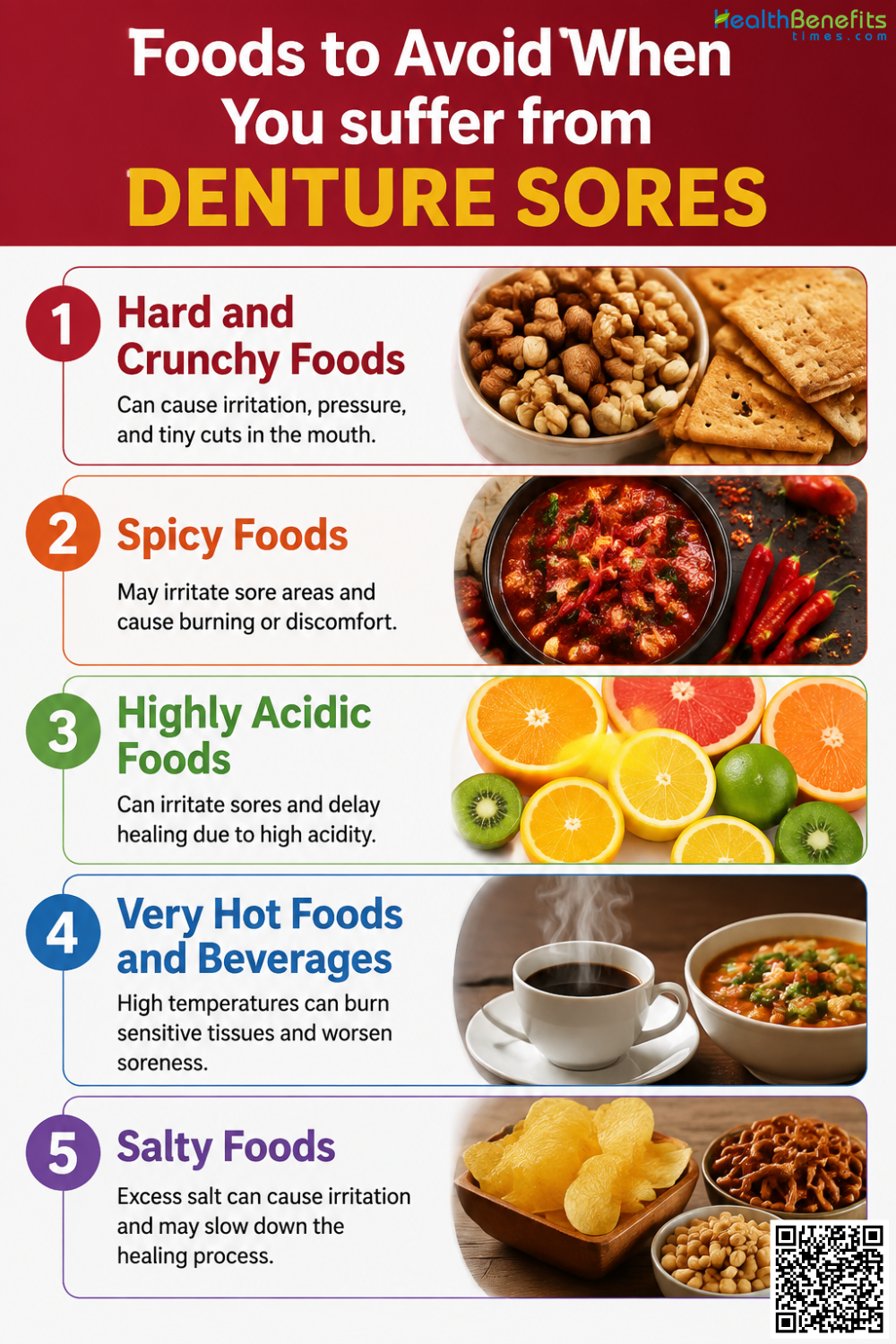
2. Spicy Foods
Spices severely irritate compromised mucosal barriers. Avoiding them prevents additional burning sensations and inflammation, allowing the raw tissues beneath your dentures to heal properly 37.
3. Highly Acidic Foods
Citrus fruits and tomatoes contain acids that directly irritate open sores. Consuming these triggers intense stinging and slows down the natural healing process of oral lesions 37.
4. Very Hot Foods and Beverages
High-temperature meals can thermally burn sensitive, inflamed tissues. Consuming cold or room-temperature foods helps avoid further hurting your mouth when dealing with painful denture sores 37.
5. Salty Foods
Excessively salty snacks cause painful stinging upon contact with open sores, further irritating an already sensitive mouth and prolonging the recovery of oral mucosal tissues 37.
When to see Doctor when you struggle from Denture Sores
While many denture sores resolve with proper daily hygiene and temporary rest of the oral tissues, persistent or worsening lesions require professional evaluation. Seeking timely medical or dental care is critical when symptoms escalate, as delaying treatment can lead to chronic infections, severe nutritional deficiencies, or the delayed diagnosis of serious pathological conditions.
1. Sores Lasting Longer Than Two Weeks
Seek immediate evaluation if oral sores do not heal within two weeks, as persistent mucosal lesions can sometimes indicate more serious pathological conditions like oral cancer 38.
2. Severe Pain Interfering with Nutrition
Contact a healthcare provider if the pain is severe enough to prevent normal eating or drinking, which can rapidly lead to dangerous dehydration and systemic malnutrition 39.
3. Signs of Systemic Infection
Medical attention is absolutely necessary if localized mouth sores are accompanied by a high fever, visible pus drainage, or significantly swollen lymph nodes in the neck 36.
4. Unusual White or Red Patches
Consult a professional if you notice thick white plaques or bright red patches under the denture, which strongly indicate a severe, localized Candida fungal infection 40.
5. Consistently Loose or Shifting Dentures
See a dentist if sores occur because dentures feel loose. Ill-fitting appliances require professional adjustments, relining, or replacement to stop chronic mechanical trauma to the gums 41.
Comments
comments