


Causes of Dry Cough
- Viral Respiratory Infections: Infections such as the common cold, influenza, and COVID-19 are the most frequent triggers for an acute dry cough. The cough frequently persists for weeks after other symptoms resolve due to lingering airway inflammation and heightened nerve receptor sensitivity 2.
- Asthma: Asthma often presents with a chronic dry cough, particularly in a specific subtype called cough-variant asthma. Airway hyperresponsiveness triggers persistent coughing—often worsening at night, in cold air, or during exercise—without the classic symptom of wheezing 4.
- Gastroesophageal Reflux Disease (GERD): GERD occurs when stomach acid flows back into the esophagus. The presence of acid can stimulate vagal nerve reflexes in the lower esophagus or directly irritate the vocal cords through micro-aspiration, resulting in a persistent, non-productive cough 1.
- Upper Airway Cough Syndrome (Postnasal Drip): Excess mucus produced by the nasal passages or sinuses can drip down the back of the throat. These secretions physically irritate pharyngeal and laryngeal nerve receptors, prompting a reflexive dry cough 1.
- ACE Inhibitor Medications: Angiotensin-converting enzyme (ACE) inhibitors, commonly prescribed for high blood pressure, induce a chronic dry cough in up to 20% of patients. This side effect is caused by the accumulation of inflammatory compounds, such as bradykinin, within the respiratory tract 3.
- Environmental Irritants: Direct inhalation of airborne irritants—including secondhand smoke, dust, mold, strong chemical fumes, and particulate air pollution—can immediately inflame the airway lining and provoke a defensive dry cough reflex 5.
Symptoms of Dry Cough
- Absence of Mucus Production: The defining clinical feature of a dry cough is that it is non-productive, meaning it does not expel phlegm, mucus, or other secretions from the lower respiratory tract 1.
- Throat Tickling and Scratchiness: Individuals frequently experience a persistent itchy, scratching, or tickling sensation at the back of the throat, which is driven by heightened sensitivity of the sensory nerves in the upper airway 5.
- Hoarseness and Vocal Strain: The sheer mechanical force of repeated coughing can inflame the larynx and traumatize the vocal cords, frequently resulting in a raspy voice, temporary hoarseness, and general throat discomfort 1.
- Musculoskeletal Chest Pain: Continuous and forceful coughing spells place severe strain on the diaphragm, abdominal muscles, and the intercostal muscles between the ribs, which can cause aching or sharp chest pain during and immediately after a coughing fit 4.
- Sleep Disruption (Nocturnal Worsening): Dry coughing episodes often become more frequent and severe at night or when lying flat—especially when triggered by asthma or acid reflux—leading to significant sleep fragmentation and subsequent daytime fatigue 2.
Natural Remedies for Dry Cough
1. Honey Administration
How it may help:
Honey functions as a natural demulcent, forming a thick, protective layer over inflamed throat tissues to calm irritated sensory nerves. Its inherent anti-inflammatory properties further reduce localized upper airway swelling, effectively suppressing the hypersensitive nerve reflex responsible for triggering a dry cough.
What research says:
Clinical evidence demonstrates that honey significantly reduces cough frequency and severity. Research concludes that a nighttime dose of honey is frequently more effective than common over-the-counter cough suppressants, like dextromethorphan, at alleviating non-productive coughs and restoring sleep quality in patients over one year old 6.
How to use it safely:
To soothe your throat, swallow one to two teaspoons of plain honey directly. Alternatively, dissolve the honey into a cup of warm water or caffeine-free herbal tea. You can safely take this remedy up to three times daily, prioritizing a final dose right before bedtime.
Potential precautions or side effects:
Never give honey to infants under 12 months old due to the severe risk of infant botulism {% https://www.who.int/news-room/fact-sheets/detail/botulism
2. Adequate Fluid Intake
How it may help:
Proper hydration maintains the natural moisture of the mucous membranes lining the respiratory tract. Adequate fluid intake prevents these tissues from drying out, which directly reduces localized irritation and decreases the hypersensitivity of the airway nerve receptors responsible for triggering a dry cough reflex.
What research says:
Clinical studies indicate that consuming fluids—particularly warm liquids—provides immediate relief from continuous coughing. Researchers conclude that warm beverages promote salivation and airway lubrication, effectively soothing inflamed vocal cords and calming the hyperactive cough reflex associated with upper respiratory infections 7.
How to use it safely:
Drink non-caffeinated fluids steadily throughout the day to maintain continuous throat lubrication. Choose warm water, decaffeinated herbal teas, or clear broths. Aim for at least eight glasses daily, adjusting based on your personal thirst and environmental dryness.
Potential precautions or side effects:
Avoid excessively hot liquids to prevent burning inflamed throat tissues. Patients with severe heart or kidney disease must consult a physician before significantly increasing daily fluid intake.
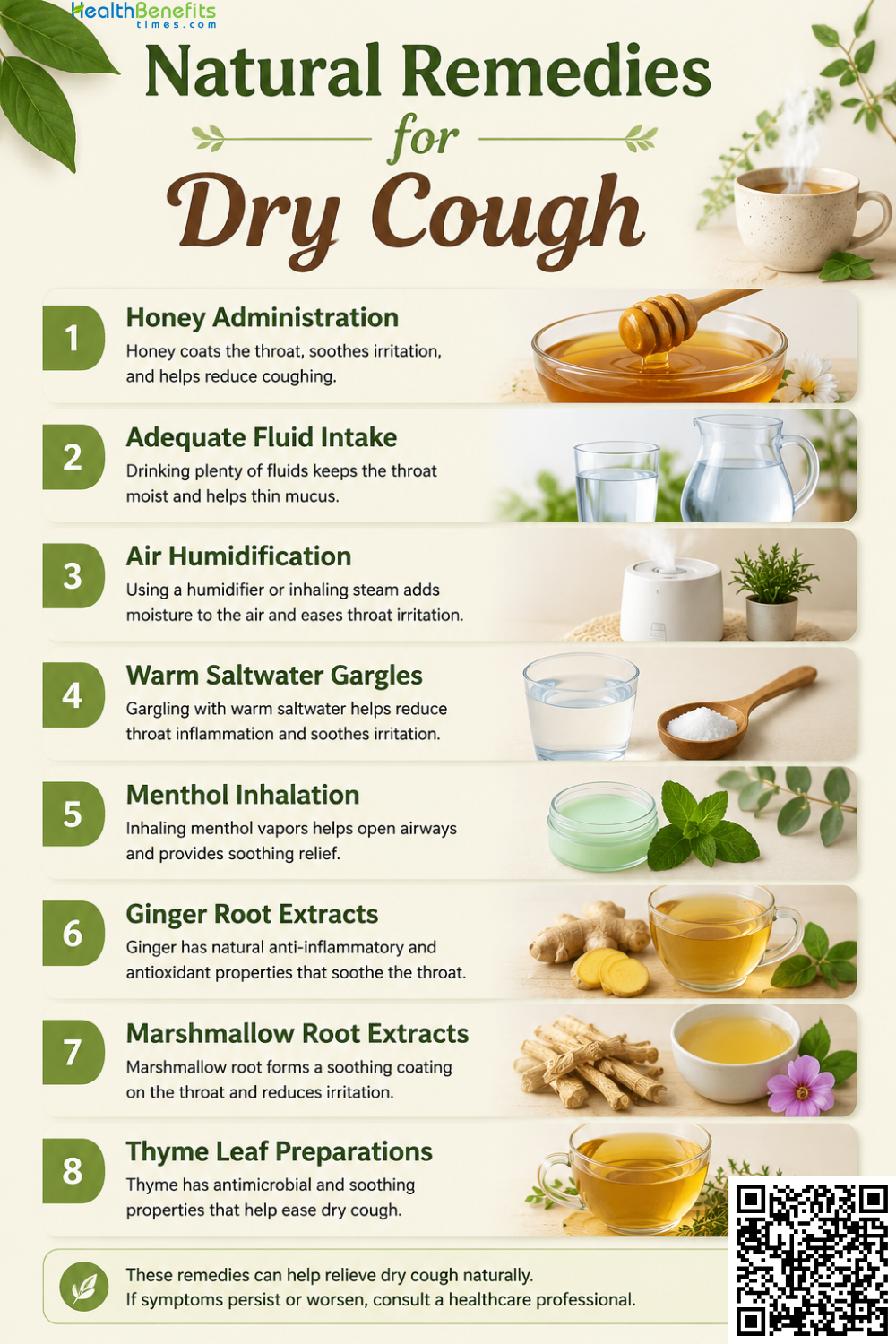
3. Air Humidification
How it may help:
Inhaling dry air frequently exacerbates vocal cord irritation and heightens the sensitivity of respiratory nerve receptors. Introducing moisture into the surrounding air through humidification directly hydrates dry mucous membranes, calms inflamed upper airway tissues, and consequently decreases the frequency of the non-productive cough reflex.
What research says:
Clinical research indicates that humidifying indoor environments can significantly reduce symptoms of upper airway dryness and tissue irritation. Studies conclude that maintaining optimal ambient humidity prevents respiratory mucosal desiccation, thereby reducing the localized inflammation and airway hyperresponsiveness that frequently provoke persistent coughing episodes 8.
How to use it safely:
Place a cool-mist humidifier in your bedroom during sleep to maintain ambient humidity levels between 40% and 50%. You must clean the device daily and refill it with distilled water to prevent the dangerous aerosolization of mineral deposits, mold, or bacteria into your breathing environment.
Potential precautions or side effects:
Avoid warm-mist vaporizers around children due to severe burn risks. Neglecting daily cleaning promotes rapid bacterial and mold growth, which can trigger severe asthma attacks or secondary lung infections.
4. Warm Saltwater Gargles
How it may help:
A warm saltwater gargle creates a high-salt environment that draws excess fluid out of inflamed throat tissues through osmosis. This process directly reduces localized mucosal swelling, washes away lingering environmental irritants, and instantly soothes the hyperactive nerve receptors responsible for triggering the dry cough reflex.
What research says:
Clinical evidence demonstrates that routine gargling with hypertonic saline significantly reduces the duration and severity of upper respiratory tract infections. Researchers conclude that saltwater physically clears viral pathogens from the pharynx and decreases localized inflammation, which effectively suppresses the associated non-productive cough 9.
How to use it safely:
Dissolve half a teaspoon of plain table salt into eight ounces of warm water. Tilt your head back, gargle the solution in the back of your throat for 15 to 30 seconds, and spit it out. Repeat this process up to four times daily for sustained relief.
Potential precautions or side effects:
Do not swallow the saltwater, as ingesting excess sodium can cause temporary nausea and dehydration. Avoid this remedy for young children who cannot reliably spit the liquid out.
5. Menthol Inhalation
How it may help:
Menthol directly stimulates cold-sensitive nerves in the respiratory tract 10. This cooling sensation provides an immediate soothing effect on irritated throat tissues. Furthermore, it actively calms the hyperactive nerve pathways responsible for triggering the cough reflex, significantly reducing the urge to cough without producing mucus.
What research says:
Clinical studies demonstrate that inhaling menthol vapor significantly decreases cough receptor sensitivity. Researchers conclude that menthol acts as a natural cough suppressant by desensitizing airway sensory nerves, effectively reducing both cough frequency and intensity caused by environmental irritants or viral upper respiratory infections 11.
How to use it safely:
Add a few drops of pure peppermint or menthol essential oil to a bowl of steaming hot water. Drape a towel over your head, close your eyes, and deeply inhale the soothing vapors for five to ten minutes. Alternatively, dissolve menthol lozenges slowly in your mouth.
Potential precautions or side effects:
Never apply undiluted menthol oil directly to your skin or swallow it, as it is highly toxic. Avoid menthol inhalation for young children, which may trigger severe breathing spasms.
6. Ginger Root Extracts
How it may help:
Ginger root contains bioactive compounds, specifically gingerols and shogaols, which relax respiratory tract smooth muscles. These compounds provide targeted anti-inflammatory effects that directly reduce airway swelling and diminish the hyperactive nerve signals responsible for a persistent dry cough reflex 12.
What research says:
Scientific studies demonstrate that specific ginger components, primarily 8-gingerol and 6-shogaol, cause significant and rapid relaxation of human airway tissues. Researchers conclude these isolated compounds act as effective natural bronchodilators, directly suppressing hyper-responsive airway triggers and providing measurable relief from non-productive coughing 12.
How to use it safely:
Steep two to three thin slices of fresh, peeled ginger root in boiling water for ten minutes to extract the active compounds. Strain the liquid and drink this warm herbal infusion up to three times daily to maintain continuous airway relaxation.
Potential precautions or side effects:
High doses of ginger can trigger mild heartburn or gastric discomfort. You must consult a doctor before daily use if you take prescription blood-thinning medications to avoid bleeding complications 13.
7. Marshmallow Root Extracts
How it may help:
Marshmallow root contains a high concentration of mucilage, a thick, gel-like substance. When consumed, this mucilage coats the respiratory tract and throat, forming a protective physical barrier over inflamed tissues. This direct coating action immediately soothes irritation and desensitizes hyperactive airway nerves, effectively suppressing the dry cough reflex.
What research says:
Clinical studies indicate that marshmallow root extract possesses potent anti-inflammatory properties and acts as an effective natural bio-adhesive. Researchers conclude that the extract’s polysaccharides successfully adhere to irritated epithelial membranes, promoting rapid tissue regeneration and providing significant symptomatic relief for patients suffering from persistent dry coughs 14.
How to use it safely:
Soak one tablespoon of dried marshmallow root in cold water for several hours to extract its thick mucilage. Strain the liquid and drink it slowly up to three times daily. You may slightly warm the infusion before drinking to provide additional physical comfort to your throat.
Potential precautions or side effects:
Marshmallow root can coat the stomach lining and delay the absorption of prescription medications. Take this extract at least two hours before or after administering any other oral drugs.
8. Thyme Leaf Preparations
How it may help:
Thyme leaves contain active compounds, primarily thymol, which possess strong antispasmodic and anti-inflammatory properties. These compounds work directly to relax the smooth muscles lining the respiratory tract. This tissue relaxation widens the airways and effectively calms the hypersensitive nerve reflexes responsible for triggering a persistent dry cough.
What research says:
Clinical studies demonstrate that thyme extract significantly decreases cough frequency and severity during upper respiratory infections. Researchers conclude that thymol’s ability to reduce airway inflammation and relax airway spasms provides rapid, measurable relief from non-productive coughing fits, functioning as an effective natural cough suppressant 15.
How to use it safely:
Steep two teaspoons of crushed, dried thyme leaves in one cup of boiling water for ten minutes. Strain the liquid thoroughly. Drink this warm herbal tea up to three times daily. Alternatively, take a standardized liquid thyme extract according to the exact dosing instructions on the product label.
Potential precautions or side effects:
Thyme is generally safe but may cause mild stomach upset. Avoid taking concentrated medicinal doses if you are pregnant, nursing, or have a hormone-sensitive medical condition.
Foods to Avoid When You Suffer From Dry Cough
1. Caffeinated Beverages
Caffeine relaxes the lower esophageal sphincter, promoting stomach acid regurgitation that frequently triggers a reflexive, non-productive dry cough 1.

2. Spicy Foods
Spices contain volatile compounds that directly stimulate airway sensory nerves and worsen acid reflux, immediately provoking a dry cough reflex 1.
3. Acidic Foods
Citrus fruits and tomatoes can directly irritate an inflamed throat lining and significantly worsen coughing episodes caused by upper airway irritation 1.
4. High-Fat Foods
Fried and greasy foods delay stomach emptying, which increases the likelihood of gastroesophageal reflux and its associated chronic dry cough 1.
5. Alcoholic Drinks
Alcohol induces tissue dehydration in the throat and relaxes esophageal muscles, leading to worsened nighttime coughing fits linked to acid regurgitation 1.
When to See a Doctor When You Suffer From Dry Cough
1. Duration Over Eight Weeks
Seek medical evaluation if your dry cough lasts over eight weeks. This chronic duration requires professional diagnostic testing to identify underlying triggers like asthma or acid reflux 1.
2. Coughing Up Blood
Immediately consult a doctor if you cough up blood. This symptom indicates potential serious respiratory tract injury, severe bacterial infection, or lung disease requiring prompt clinical imaging 16.
3. Shortness of Breath
Seek emergency care if your cough is accompanied by shortness of breath or wheezing. These symptoms signal dangerous airway inflammation, severe asthma, or acute respiratory obstruction 4.
4. Systemic Symptoms
Schedule an appointment if your cough occurs alongside unexplained weight loss, drenching night sweats, or high fever, which are primary indicators of systemic infections like tuberculosis 2.
5. Severe Chest Pain
Consult a physician if coughing causes sudden, severe chest pain. This requires immediate evaluation to rule out serious complications such as rib fractures, pleural inflammation, or cardiac issues 1.
Comments
comments