

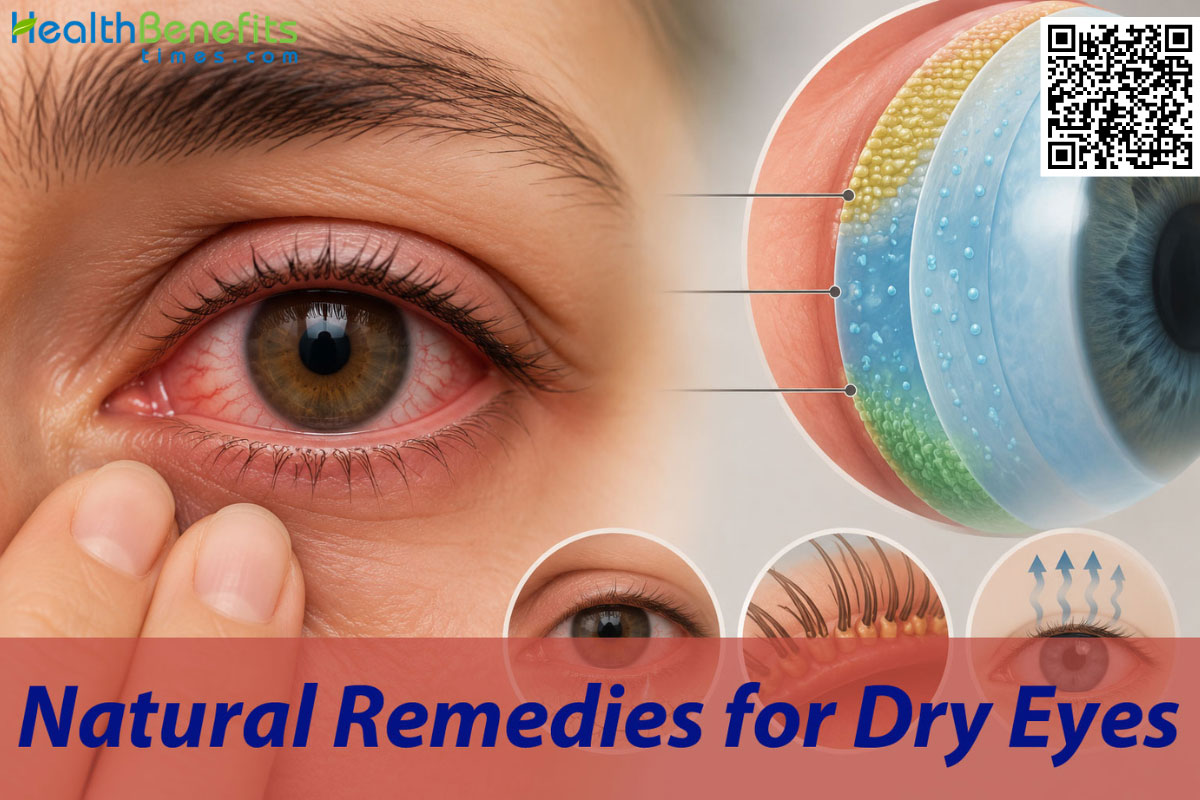
Causes of Dry Eyes
Investigating the origins of ocular dryness reveals that the disruption of tear production or quality rarely stems from a single trigger. The medical community recognizes several primary culprits that compromise the tear film:
- Age-Related Glandular Decline: The natural aging process slows down the body’s fluid production, meaning the lacrimal glands must work significantly harder to maintain basic eye moisture in individuals over the age of fifty.
- Meibomian Gland Dysfunction (MGD): The microscopic glands lining the edges of the eyelids can become obstructed with hardened secretions, preventing the release of essential lipids necessary to stop rapid tear evaporation.
- Hormonal Fluctuations: Significant shifts in the body’s endocrine system, particularly the drop in androgens and estrogens during menopause or pregnancy, directly impair the normal functioning of the eye’s moisture-producing glands 3.
- Prolonged Digital Device Use: Staring at computer monitors, smartphones, or televisions drastically reduces the natural blink rate, leading to accelerated tear evaporation and subsequent surface inflammation.
- Autoimmune and Systemic Diseases: Certain underlying health conditions cause the immune system to mistakenly attack healthy moisture-producing glands, a phenomenon most frequently observed in Sjögren’s syndrome, rheumatoid arthritis, and lupus 4.
- Medication Side Effects: A wide variety of pharmaceutical interventions, including antihistamines, decongestants, antidepressants, and blood pressure medications, systemically reduce the body’s ability to generate aqueous fluids 5.
- Environmental Extremes: Spending significant time in harsh climates featuring high winds, low humidity, excessive air conditioning, or heavy airborne particulate pollution aggressively strips moisture from the surface of the eye.
- Post-Surgical Alterations: Vision-correcting procedures like laser eye surgery temporarily sever the microscopic corneal nerves that signal the brain to produce reflex tears, resulting in transient but notable post-operative dryness.
Symptoms of Dry Eyes
Recognizing the physical signs of a compromised tear film is the essential first step toward finding relief. Patients frequently endure a combination of the following disruptive sensations:
- A persistent scratchy, gritty feeling, mirroring the sensation of having sand trapped beneath the eyelid.
- Intense stinging or burning sensations, particularly upon waking or when exposed to moving air.
- Noticeable redness and a bloodshot appearance across the white portion of the eye due to surface inflammation.
- Episodes of blurred vision that temporarily clear up after forcefully blinking or resting the eyes.
- Heightened sensitivity to bright lights, both indoors and outdoors.
- The formation of stringy, sticky mucus in the corners of the eyes or clinging to the eyelashes.
- Extreme discomfort or an outright inability to comfortably wear contact lenses.
- Paradoxically, sudden episodes of excessive, watery tearing, which represents the nervous system’s desperate attempt to flood and soothe a severely irritated ocular surface 6.
Dry Eyes Facts Table
| Category | Details |
| Symptoms |
|
| Causes |
|
| Types of Dry Eyes |
|
| How does it spread |
|
| Age Group |
|
| You might be at a higher risk for exposure of this disease if you:
7. |
|
| How doctors diagnose |
|
| Other facts |
|
Natural Remedies for Dry Eyes
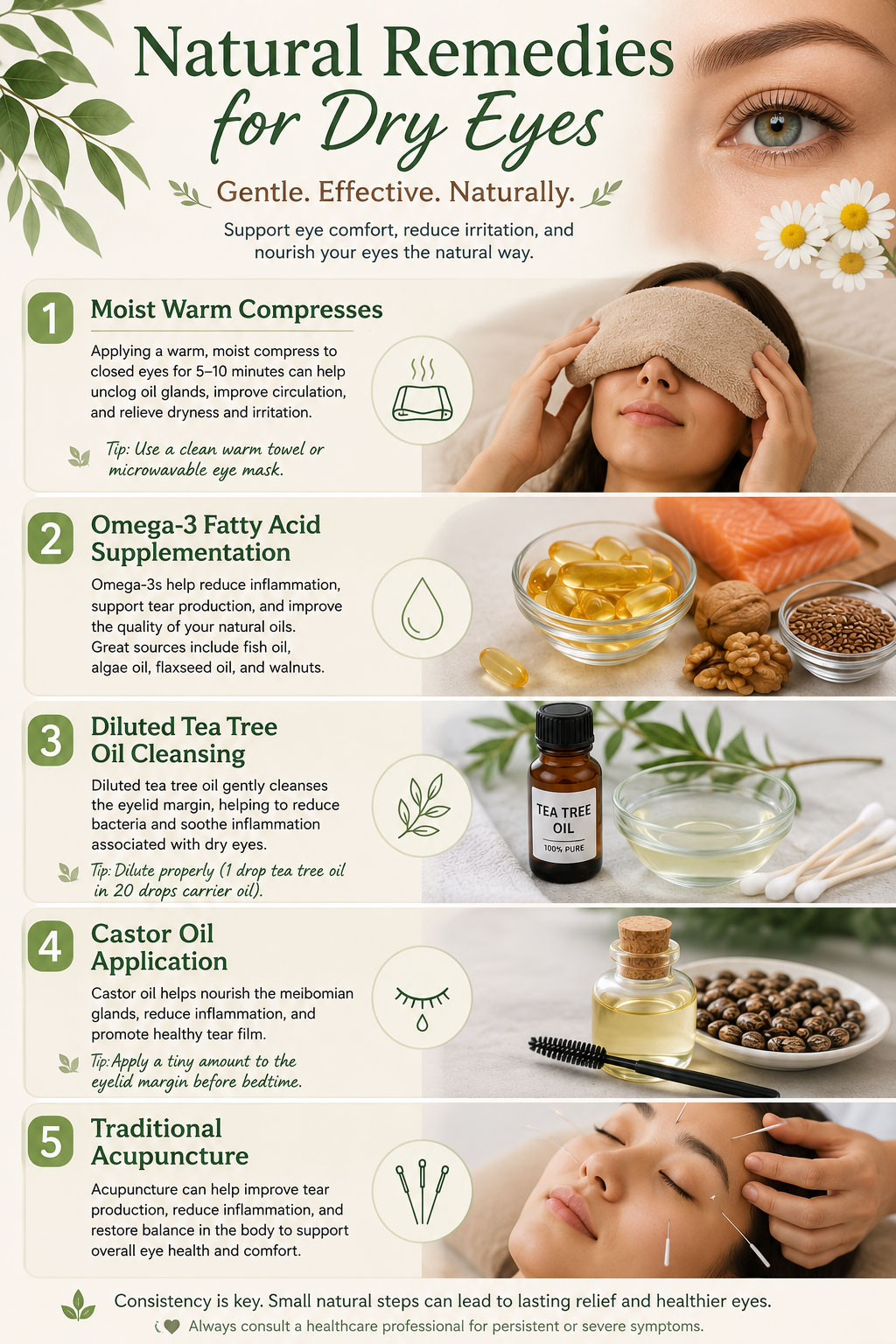
Turning toward nature and gentle home interventions can profoundly alter the comfort of the ocular surface. When the natural tear film struggles to maintain balance, several highly effective, non-prescription methods can be utilized to restore moisture, melt blocked glands, and reduce localized inflammation.
1. Moist Warm Compresses
Applying sustained, gentle heat to the closed eyelids stands as a cornerstone therapy for resolving blocked oil glands. The meibum (the natural lipid required to keep tears from drying up) can sometimes harden into a thick, wax-like consistency. Heating the eyelids to a target temperature of 40 degrees Celsius effectively melts these thickened oils, allowing them to flow freely over the eye surface once again. Clinical evaluations reveal that moist heat is generally superior to dry heat because it penetrates the eyelid tissue more efficiently and retains optimal therapeutic temperatures for a longer duration 8.
Note: You should heat a clean, damp washcloth or a microwaveable eye mask according to the manufacturer’s directions, then lay it gently over your closed eyes for 10 to 15 minutes daily.
2. Omega-3 Fatty Acid Supplementation
Nourishing the body from the inside out plays a massive role in maintaining eye health. Dietary intake of long-chain omega-3 fatty acids, specifically eicosapentaenoic acid (EPA) and docosahexaenoic acid (DHA), actively combats systemic inflammation. Research demonstrates that introducing high doses of omega-3s significantly improves tear film stability, increases tear break-up time (TBUT), and dramatically reduces the subjective burning and scratching sensations associated with dry eyes {% https://pmc.ncbi.nlm.nih.gov/articles/PMC3874521/ %}. By lowering cellular inflammation, the glands located in the eyelids are empowered to produce higher-quality, clearer oils.
Note: You can consume fatty fish like salmon and mackerel twice a week, or take a high-quality, re-esterified triglyceride fish oil supplement daily with meals.
3. Diluted Tea Tree Oil Cleansing
Microscopic organisms known as Demodex mites live naturally on human skin, but an overgrowth of these mites at the base of the eyelashes triggers severe eyelid inflammation and dry eye symptoms. Tea tree oil possesses strong natural antibacterial and anti-parasitic properties. Utilizing specific, highly diluted concentrations of tea tree oil effectively eradicates these mites and clears away the cylindrical dandruff and crusty debris that obstruct tear glands 9. Because pure tea tree oil is highly toxic and irritating to the surface of the eye, it must be formulated properly.
Note: You should strictly use commercially prepared, ophthalmologist-approved tea tree oil eyelid wipes to gently scrub the base of your closed eyelashes once a day to maintain hygiene.
4. Castor Oil Application
Derived from the seeds of the Ricinus communis plant, castor oil is a dense, soothing emollient that has been utilized for centuries. When formulated properly for ophthalmic use, it acts as a synthetic substitute for the eye’s missing lipid layer. Drops containing castor oil have been shown to thicken the tear film, successfully limit rapid evaporation, and provide long-lasting lubrication across the damaged ocular surface 10. Its natural viscosity allows it to coat the eye smoothly without causing the excessive stinging associated with thinner, water-based drops.
Note: You should apply one drop of a commercially sterile, preservative-free castor oil-based artificial tear into each eye, ideally right before bed, to trap moisture overnight.
5. Traditional Acupuncture
Eastern medical traditions offer a unique systemic approach to treating localized dryness. By inserting ultra-fine needles into specific meridian points on the face and body, acupuncture stimulates the autonomic nervous system. Medical evaluations indicate that this traditional practice can actively increase tear secretion volumes and lower the levels of aggressive inflammatory proteins such as tumor necrosis factor-alpha (TNF-α) and matrix metalloproteinase-9 (MMP-9) within the tear film itself 11. It serves as a drug-free method to prompt the body’s own healing and fluid-generation pathways.
Note: You should schedule regular weekly sessions with a licensed and certified acupuncturist who specializes in complementary treatments for ocular conditions.
Is there any exercise or physical activities for Dry Eyes
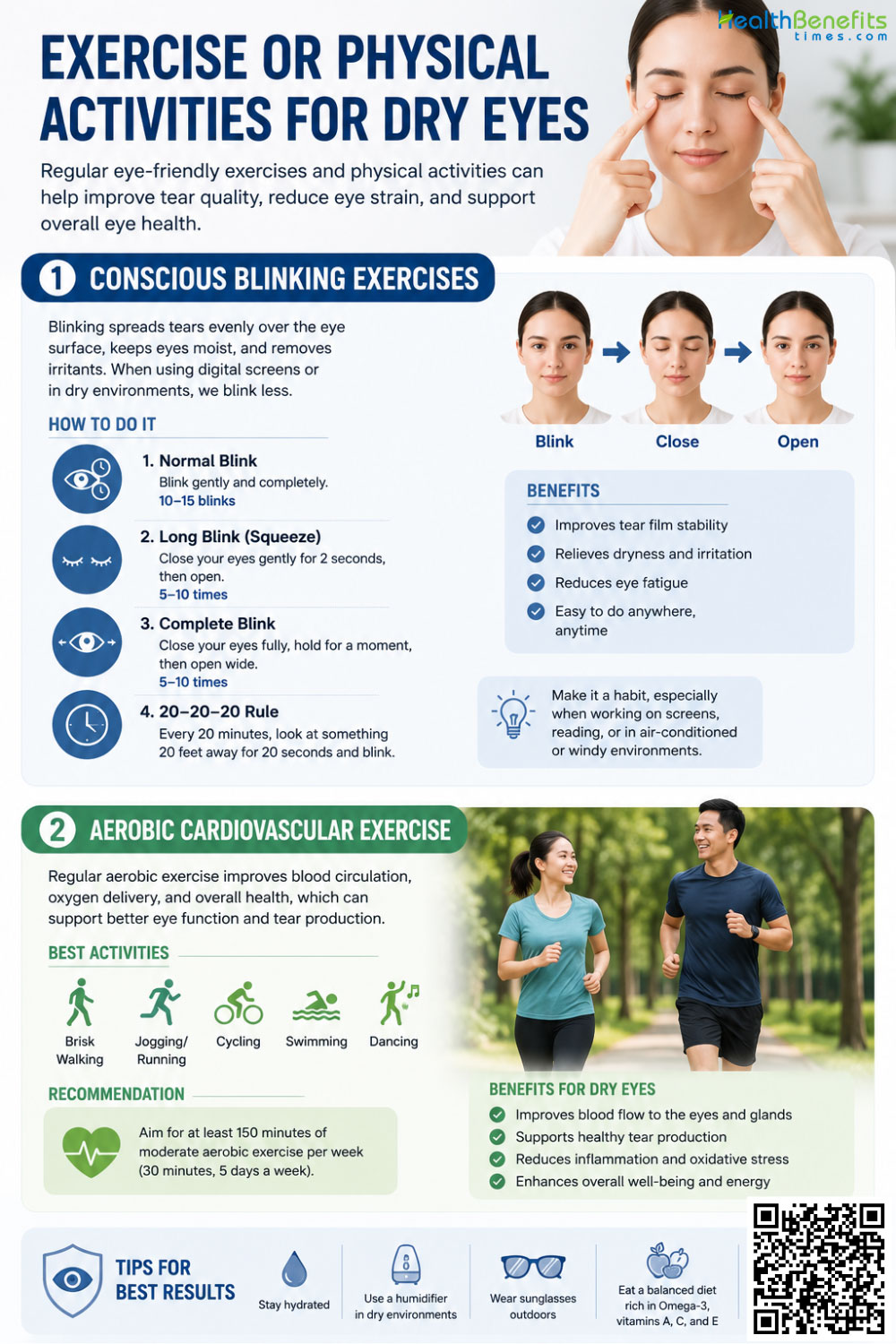
Moving the body and consciously engaging the muscles of the face can directly influence the health and stability of the tear film. Because modern lifestyles encourage physical stagnation and fixed visual staring, adopting specific active habits serves as a powerful, natural remedy.
1. Conscious Blinking Exercises
The simple biomechanical act of blinking is the only way the body pumps oil out of the eyelid glands and spreads moisture evenly across the cornea. When staring at screens, humans subconsciously suppress their blink rate by up to sixty percent, and the blinks that do occur are often “incomplete,” meaning the upper and lower eyelids do not fully touch. Consciously training the muscles to execute complete, forceful closures re-establishes healthy tear dynamics, improves visual acuity, and drastically reduces the symptomology of computer vision syndrome 12.
Note: To perform this, you should close your eyes fully for two seconds, squeeze the eyelids tightly together for another two seconds, and then open and relax them. Repeat this cycle ten times every twenty minutes when using a digital device.
2. Aerobic Cardiovascular Exercise
Engaging in exercises that raise the heart rate does more than improve cardiovascular fitness; it actively benefits the microscopic tissues of the eyes. Consistent aerobic activity increases systemic blood circulation, delivering essential oxygen and nutrients to the ocular glands while flushing out cellular waste. Furthermore, engaging in moderate to vigorous physical activity has been shown to increase natural tear secretion and lower overall oxidative stress and whole-body inflammation, which are key underlying drivers of dry eye disease 13.
Note: You should aim to engage in at least 30 minutes of brisk walking, jogging, cycling, or swimming most days of the week to promote robust blood flow to your ocular structures.
Dietary and Lifestyle Avoidances
Foods to Avoid When You Suffer from Dry Eyes
Managing your internal diet proves just as important as treating the external surface of the eye. Certain dietary habits promote systemic inflammation, which directly worsens glandular blockages and diminishes tear quality.
- Excessive Omega-6 Fatty Acids: You should limit your intake of highly refined vegetable oils (such as corn, soybean, and sunflower oils) commonly found in processed snacks, as an overabundance of omega-6 fuels bodily inflammation.
- High-Sodium Foods: You should avoid heavily salted fast foods and canned goods; excessive sodium intake causes systemic dehydration, leaving fewer water reserves for adequate tear production.
- Alcohol: You should moderate your consumption of alcoholic beverages, as alcohol acts as a known diuretic that quickly dehydrates the body and disrupts the delicate stability of the tear film.
- Refined Sugars: You should significantly reduce sugary sodas and sweets because high blood sugar spikes trigger an inflammatory response that can damage the delicate blood vessels feeding the ocular glands.
Activities to Avoid When You Suffer from Dry Eyes
Your daily environment and habitual behaviors can aggressively strip away the fragile layer of moisture protecting your vision. Protecting the eyes requires eliminating these hostile external factors.
- Uninterrupted Screen Time: You should completely avoid staring at laptops, tablets, or smartphones for continuous hours without taking mandated visual breaks to rest your focusing muscles and restore your blink rate 14.
- Direct Airflow: You should never position yourself directly in the path of blowing air. Avoid aiming car heater vents at your face, sleeping directly under ceiling fans, or sitting next to harsh air conditioning units.
- Smoking and Secondhand Smoke: You should strictly avoid lighting up or sitting in smoke-filled rooms; tobacco smoke introduces thousands of toxic micro-particles that chemically burn the tear film and induce severe oxidative stress.
- Unprotected Outdoor Exposure: You should avoid walking or exercising outdoors on highly polluted, dusty, or exceedingly windy days without wearing wrap-around protective sunglasses to shield your corneas from rapid evaporation and debris 15.
Myths and Misconceptions
| Myth | Reality |
| “Dry eye just means my eyes aren’t making enough water.” | DED is a highly complex, multifactorial condition. Even if your eyes produce plenty of water, you can still suffer from severe dryness if your tear film lacks oil, is unstable, or is highly inflamed 16. |
| “If my vision is currently perfectly clear, my eyes are entirely healthy.” | Many ocular surface diseases, including early-stage dry eye, can remain completely asymptomatic or lack visual disturbances until significant, irreversible cellular damage has already occurred. |
| “Dry eye disease is just a minor annoyance and does not influence surgical outcomes.” | An unstable tear film drastically impacts the measurements taken before cataract or LASIK surgery, potentially leading to inaccurate surgical outcomes and prolonged postoperative healing times 17. |
| “Only elderly people get dry eyes.” | While natural aging is a primary risk factor, a massive surge of dry eye disease is currently being diagnosed in teenagers and young children due to unprecedented levels of daily screen time. |
Special Considerations
Navigating ocular surface issues requires acknowledging that different stages of life and coexisting medical conditions dramatically alter how the disease presents itself.
1. Children
Historically considered a disease exclusive to adulthood, ocular dryness has rapidly become a rising pediatric concern. The primary culprit is the pervasive use of digital display terminals, specifically smartphones and tablets, which fundamentally suppress normal blinking mechanisms in the developing brain. Furthermore, children are highly susceptible to seasonal allergic conjunctivitis; the frequent eye-rubbing associated with these allergies introduces physical trauma to the eyelids and destabilizes the tear film 18. Ensuring mandatory screen breaks and monitoring for hidden vitamin A deficiencies are critical steps for protecting pediatric eye health.
2. Pregnancy
The profound physiological journey of gestation introduces systemic shifts that directly impact ocular moisture. Clinical data reveals that a significant percentage of pregnant women experience new or worsening dry eye symptoms, particularly as they enter the second and third trimesters 19. This phenomenon is largely driven by massive fluctuations in estrogen and progesterone, hormones that heavily dictate the behavior of the meibomian and lacrimal glands. Additionally, maternal immune tolerance and temporary insulin resistance during pregnancy can alter the baseline inflammatory state of the ocular surface, making the eyes feel uncomfortably gritty until the postpartum period.
3. Chronic Conditions
Patients managing long-term systemic diseases face an uphill battle regarding tear stability. Autoimmune disorders, most notably Sjögren’s syndrome, specifically target and destroy the exocrine glands responsible for producing saliva and tears, leaving patients with profoundly barren ocular surfaces. Similarly, individuals with diabetes often suffer from peripheral neuropathy; when the tiny nerves on the surface of the cornea become damaged by high blood sugar, they fail to adequately signal the brain to produce reflex tears, resulting in a high incidence of silent, severe dryness among diabetic populations 20.
4. Elderly
Advancing age inevitably brings a natural, unavoidable atrophy of the body’s fluid-producing structures. Post-menopausal women represent one of the most highly affected demographics, primarily because the sharp drop in sex hormones alters the lipid composition of the tear film, making it excessively thin and unstable. An observational study of post-menopausal women revealed that nearly 72 percent suffered from dry eye disease, heavily correlating with the duration of menopause 21. Furthermore, elderly individuals frequently take multiple systemic medications for blood pressure, cardiac health, or depression, creating a compounding chemical effect that drastically dries out all mucous membranes in the body.
Precaution Before Use of Natural Remedies When You Have Dry Eyes
Taking the healing process into your own hands is empowering, but the surface of the eye is one of the most delicate and sensitive tissues in the human body. Improper home treatments can quickly escalate minor irritation into a severe medical emergency.
- Avoid Unsterile Homemade Drops: You should never attempt to mix your own eye drops at home using tap water, honey, or raw food-grade oils; these liquids are entirely unsterile and can introduce devastating bacterial or fungal infections that permanently scar the cornea 22.
- Beware of Pure Essential Oils: You should never apply pure, undiluted essential oils (like raw tea tree, peppermint, or lavender oil) directly to your eyelids or eyes, as high concentrations will cause immediate, severe chemical burns to the conjunctiva and require emergency medical care 23.
- Perform Skin Patch Tests: You should always apply a small amount of any new oil, cream, or wipe to the skin on your inner wrist 24 hours before applying it near your eyes to ensure you do not have an underlying allergic reaction to the botanical ingredients.
- Test Compress Temperatures: You should rigorously test the heat of your warm compress against the sensitive skin of your inner forearm before placing it on your face, as microwaved masks can develop hidden “hot spots” that easily cause thermal burns to the thin, delicate skin of the eyelids.
- Maintain Equipment Hygiene: You should wash all reusable eye masks, towels, and compress covers frequently with hypoallergenic soap and hot water to prevent the buildup of bacteria that could lead to a stye or ocular infection.
When to See a Doctor
While holistic and lifestyle interventions resolve a vast majority of mild cases, certain symptoms signal that the eyes require advanced medical intervention to prevent permanent visual damage.
- You experience persistent, unrelenting pain: You should seek immediate clinical evaluation if your eyes physically ache, throb, or feel as though they are actively burning despite standard rest and over-the-counter lubrication.
- You notice a sudden drop in visual acuity: You should book an appointment with an ophthalmologist if your blurred vision does not clear up after a few forceful blinks, or if you begin to see dark spots and halos around lights.
- You have severe, angry redness: You should see a doctor if the whites of your eyes become heavily bloodshot and stay that way for several days, as this may indicate an aggressive underlying infection, an active autoimmune flare-up, or a corneal ulcer.
- Your daily life becomes disabled: You should consult a specialist if your symptoms force you to stop reading, driving, or completing your required professional tasks at a computer.
- Your home remedies stop working: You should undergo professional diagnostic testing if your regular artificial tears, warm compresses, and dietary changes no longer provide any comfort after weeks of consistent use, signaling the need for prescription anti-inflammatory drops or procedural interventions 6.
Comments
comments