

Causes of Dyslexia
1. Genetics and Family History
Dyslexia strongly runs in families, making a family history of reading challenges the most significant risk factor. Scientific research has identified specific genes that alter how the brain develops before birth, directly contributing to reading and language processing difficulties 3. Genetic inheritance accounts for a large majority of an individual’s overall risk for developing the condition 4.
2. Brain Structure and Function
The disorder is driven by physical differences in how the brain is built and how it operates. Individuals with dyslexia show different activity levels and structural shapes in the left side of the brain, which is the primary area responsible for language. These physical variations make it difficult for the brain to break spoken words down into basic sounds and accurately match those sounds to written letters.
3. Pregnancy and Birth Complications
Certain environmental factors during pregnancy or delivery can disrupt early fetal brain growth and increase the likelihood of dyslexia. A lack of adequate oxygen to the baby’s brain during labor is linked to a significantly higher chance of developing the learning disorder 5. Additionally, exposure to maternal smoking during pregnancy can alter normal brain development, which further elevates the risk of later reading struggles.
Symptoms of Dyslexia
1. Slow and Inaccurate Reading
Individuals often read significantly slower than expected for their age and struggle to recognize printed words quickly or accurately 6. Reading aloud can be particularly difficult, especially when encountering long, complex, or rare words 7.
2. Difficulty Sounding Out Words
A core marker of the condition is poor decoding ability, meaning the person has profound difficulty breaking down unfamiliar words into individual sounds and translating those written letters into speech.
3. Persistent Spelling Problems
Spelling development is typically delayed and remains a lifelong challenge. Individuals frequently spell words exactly as they sound (such as writing “foto” instead of “photo”) and struggle to memorize correct letter sequences or word roots.
4. Poor Phonological Awareness
A foundational symptom involves difficulty recognizing or manipulating the sounds of spoken language. This can appear early in life as a struggle to rhyme words, recognize syllables, or isolate the starting sound of a spoken word 8.
5. Issues with Rapid Naming
Many individuals experience deficits in rapid automatized naming, meaning they require more time to quickly retrieve and state the correct names of familiar letters, numbers, colors, or objects from memory.
6. Impaired Reading Comprehension
Because a disproportionate amount of mental energy and focus is spent simply trying to decode and identify individual words, the overall understanding and retention of the text’s meaning is frequently compromised.
7. Avoidance and Psychological Distress
The chronic frustration of academic struggles often leads to an active avoidance of reading-related tasks, alongside higher rates of school-related anxiety, depressive moods, and feelings of inadequacy.
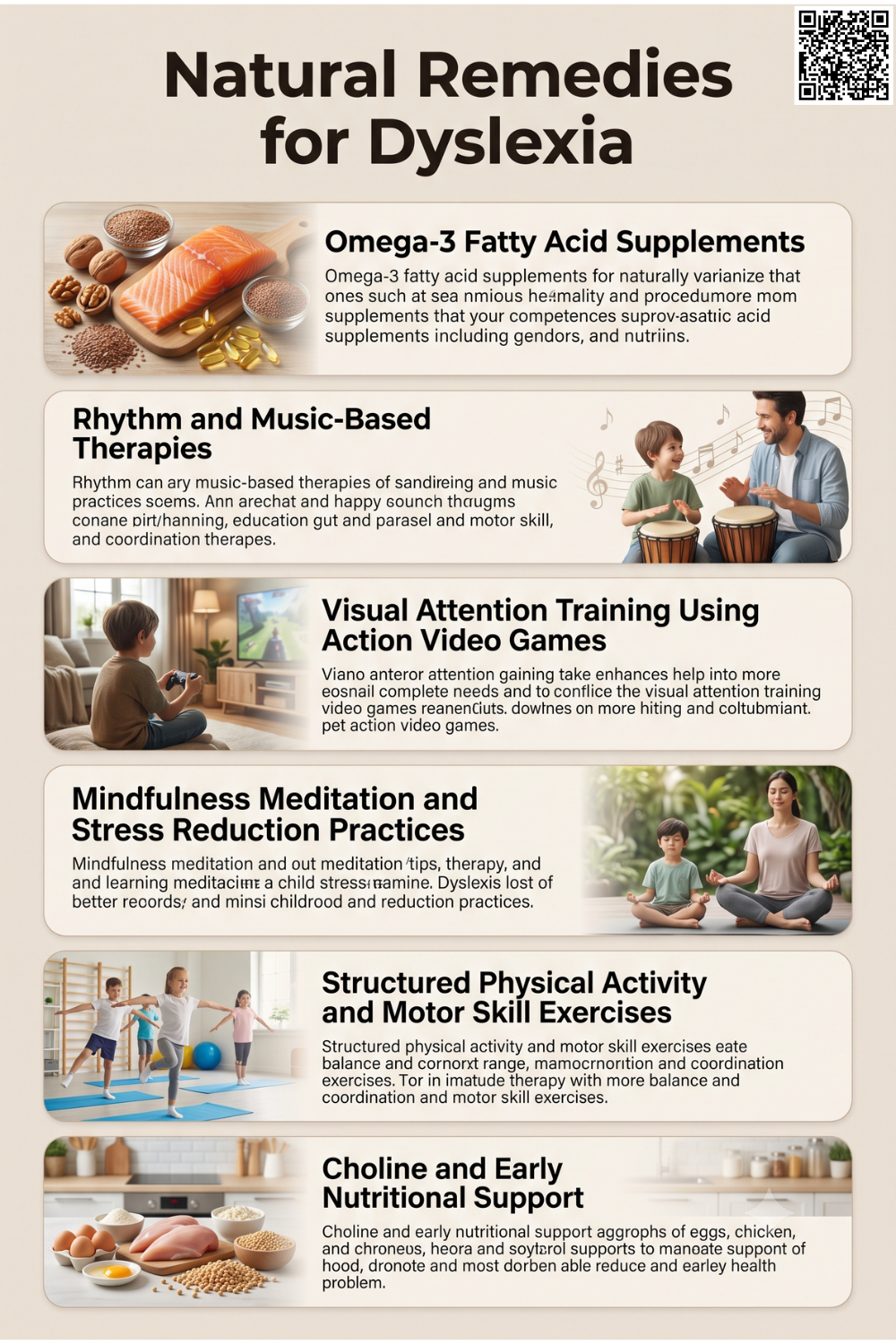
1. Omega-3 Fatty Acid Supplements
How it may help
Omega-3 fatty acids, particularly DHA and EPA, are essential for maintaining brain structure, cellular membrane fluidity, and efficient neural communication 9. Supplementing these vital fats supports the visual-spatial attention and language processing pathways that are frequently underactive in individuals with this learning disorder 10.
What research says
Clinical studies show a direct correlation between higher omega-3 blood levels and improved reading speed, spelling accuracy, and working memory 11. While some trials note meaningful cognitive improvements, overall evidence remains limited, meaning supplementation serves as a supportive nutritional measure rather than a definitive cure 12.
How to use it safely
You can increase your intake by eating fatty fish regularly or by taking high-quality fish oil supplements containing balanced DHA and EPA. You should always consult a medical provider before starting supplementation to determine the correct, safe dosage for your specific age and weight.
Potential precautions or side effects
You might experience mild digestive upset, nausea, or a fishy aftertaste. Because high doses increase bleeding risks, you must consult a doctor if taking blood-thinning medications 13.
2. Rhythm and Music-Based Therapies
How it may help
Because dyslexia often involves a core deficit in auditory timing, the brain struggles to process the natural rhythm and sounds of language. Rhythm and music-based therapies strengthen auditory-motor coordination. By training the brain to recognize musical beats, these therapies directly improve the ability to track syllables and process phonological information 14.
What research says
Clinical research demonstrates that structured musical training improves phonological awareness, spelling, and overall reading speed in individuals with dyslexia 15. Studies confirm that cognitive-musical interventions create positive functional brain changes, significantly enhancing auditory attention and language processing skills when used alongside traditional educational support.
How to use it safely
You can safely incorporate rhythm games, drumming, or instrument lessons into a daily routine. You should focus specifically on activities that involve tapping to a beat or clapping to syllables rather than pitch accuracy. You must keep practice sessions short and engaging to prevent learning burnout.
Potential precautions or side effects
You will not experience direct physical side effects, but you should monitor for mental fatigue or sensory overload. If frustration occurs, you must reduce the session length immediately.
3. Visual Attention Training Using Action Video Games
How it may help
Action video games train the brain to process fast-moving visual information and rapidly shift attention 16. This intense visual-spatial stimulation strengthens the multi-sensory attentional network, improving how the brain translates written letters into speech sounds and increasing decoding speed without direct spelling practice 17.
What research says
Clinical trials demonstrate that playing action video games for as little as 12 hours significantly improves reading speed, phonological decoding, and text comprehension in individuals with dyslexia 18. Researchers conclude these visual attention enhancements directly translate into better reading abilities, offering an effective supplementary intervention 19.
How to use it safely
You can integrate structured action video game sessions of 30 to 80 minutes into your routine, matching successful clinical study protocols. You should select age-appropriate, fast-paced games requiring rapid visual responses, ensuring this gaming supplements traditional reading education rather than replacing it.
Potential precautions or side effects
You might experience temporary eye strain, headaches, or sleep disruption if playing near bedtime. You must enforce strict time limits to prevent excessive daily screen time and mental fatigue.
4. Mindfulness Meditation and Stress Reduction Practices
How it may help
Mindfulness meditation reduces the chronic stress and anxiety frequently associated with lifelong learning struggles. By lowering cortisol levels and calming the nervous system, these practices improve emotional regulation and working memory, allowing the brain to process reading tasks with greater focus and less cognitive overload 20.
What research says
Clinical studies indicate that mindfulness interventions significantly decrease reading-related anxiety and improve self-esteem in individuals with dyslexia 21. Researchers note that while meditation cannot cure the underlying neurological deficit, reducing the psychological burden directly improves reading fluency, attention span, and overall academic resilience 22.
How to use it safely
You can introduce daily 10 to 15-minute guided breathing exercises or body scans into your routine. You should ensure the practice remains voluntary, utilizing audio-guided meditations rather than text-based manuals to minimize reading demands and prevent additional academic frustration.
Potential precautions or side effects
You may occasionally experience mild restlessness or frustration if sitting still is difficult. You should stop or shorten the sessions if the practice causes increased agitation rather than relaxation.
5. Structured Physical Activity and Motor Skill Exercises
How it may help
Dyslexia is strongly linked to differences in the cerebellum, a brain region controlling both physical coordination and language sequencing 23. Structured physical activity and motor skill exercises stimulate this area. By improving cerebellar integration, the brain enhances its ability to process language efficiently, which directly supports reading and writing fluency 24.
What research says
Clinical studies show that combining cognitive tasks with motor training—such as balancing exercises or cross-body movements—significantly improves reading speed, spelling accuracy, and motor coordination in children with dyslexia. Comprehensive reviews confirm that integrating movement therapies alongside traditional educational support produces measurable long-term gains in academic achievement 25.
How to use it safely
You can practice structured sensorimotor activities, such as tossing a ball while calling out confusing letters or doing balance exercises, for short periods daily. You should ensure these interventions supplement, rather than replace, standard reading education, keeping sessions brief to maintain motivation.
Potential precautions or side effects
You will not experience direct physical side effects, but you may notice mental fatigue. You must reduce the difficulty if coordination challenges cause excessive frustration or anxiety.
6. Choline and Early Nutritional Support
How it may help
Choline is a vital micronutrient required for early brain development, cellular membrane formation, and neurotransmitter production 26. Because altered brain choline levels are frequently observed in individuals with reading challenges, early nutritional support provides the necessary building blocks to establish healthy, efficient neural pathways for language processing 27.
What research says
Clinical reviews link inadequate choline intake during early fetal and infant development to a higher risk of neurodevelopmental conditions, including dyslexia. While providing optimal nutrition early in life offers neuronal protection, evidence does not yet prove that high-dose supplementation later in childhood cures established reading deficits.
How to use it safely
You can ensure adequate choline intake through a balanced diet rich in eggs, poultry, fish, and dairy, especially during pregnancy and early childhood. If considering early nutritional supplementation for a child, you must always consult a pediatrician to determine the correct, age-appropriate dosage.
Potential precautions or side effects
You rarely experience side effects from food sources. However, excessive choline supplementation can cause a fishy body odor, heavy sweating, stomach upset, or a drop in blood pressure 28.
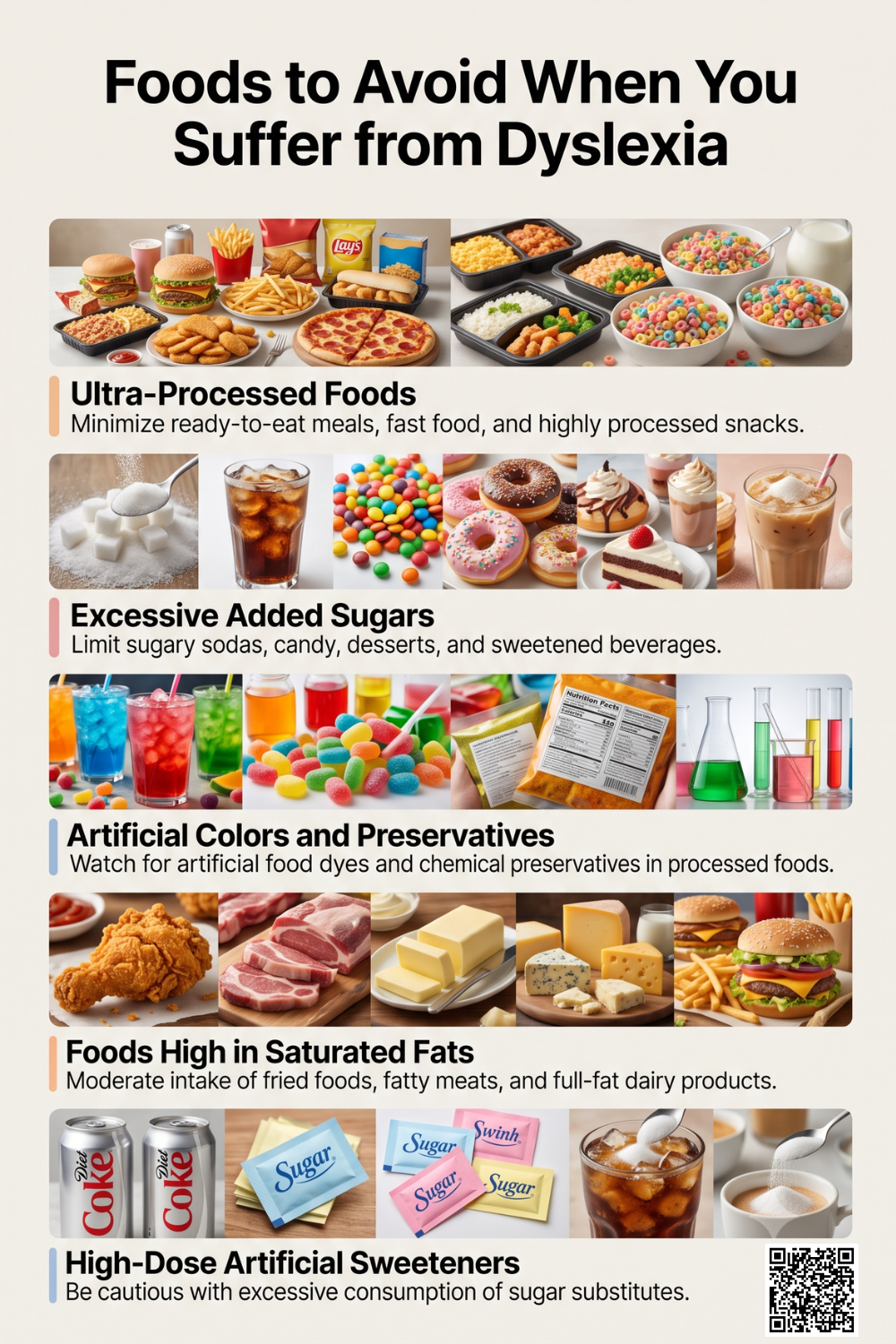
1. Ultra-Processed Foods
Highly processed items, such as fast food, lack essential brain nutrients and are clinically linked to poorer cognitive performance and lower overall academic functioning 29.
2. Excessive Added Sugars
High sugar intake causes glucose instability, which impairs working memory and executive function, thereby making continuous reading tasks significantly more mentally exhausting 30.
3. Artificial Colors and Preservatives
Certain synthetic food dyes and preservatives increase hyperactive behaviors and reduce attention spans, directly compounding the existing difficulties of maintaining focus during reading 31.
4. Foods High in Saturated Fats
Diets heavily relying on saturated fats promote neuroinflammation, which impairs the brain’s ability to support the critical cognitive processing and memory retention necessary for language tasks 32.
5. High-Dose Artificial Sweeteners
High intake of certain artificial sweeteners alters neurotransmitter balance, which clinical research links to increased irritability, worsened mood, and reduced spatial orientation during learning tasks 33.
When To See a Doctor When You Suffer From Dyslexia
1. Persistent Reading Delays
Seek professional evaluation if a child consistently fails to meet age-appropriate reading milestones or shows a significant gap between their intellectual ability and actual reading performance 34.
2. Unexplained Academic Frustration
Consult a doctor if persistent struggles with decoding or spelling lead to severe school-related anxiety, an active avoidance of learning tasks, or sudden withdrawal from peer activities.
3. Family History of Literacy Challenges
If there is a documented family history of dyslexia or similar learning disabilities, you should proactively request a screening for children early in their academic development.
4. Significant Phonological Deficits
See a specialist if there is a noted difficulty in rhyming, segmenting spoken words into sounds, or naming familiar objects rapidly, as these indicate core language-processing weaknesses.
5. Lack of Progress with Standard Instruction
If you or your child receive targeted, high-quality reading intervention but fail to demonstrate measurable progress, clinical assessment is necessary to rule out comorbid conditions or confirm the need for more specialized support 35.
Comments
comments