

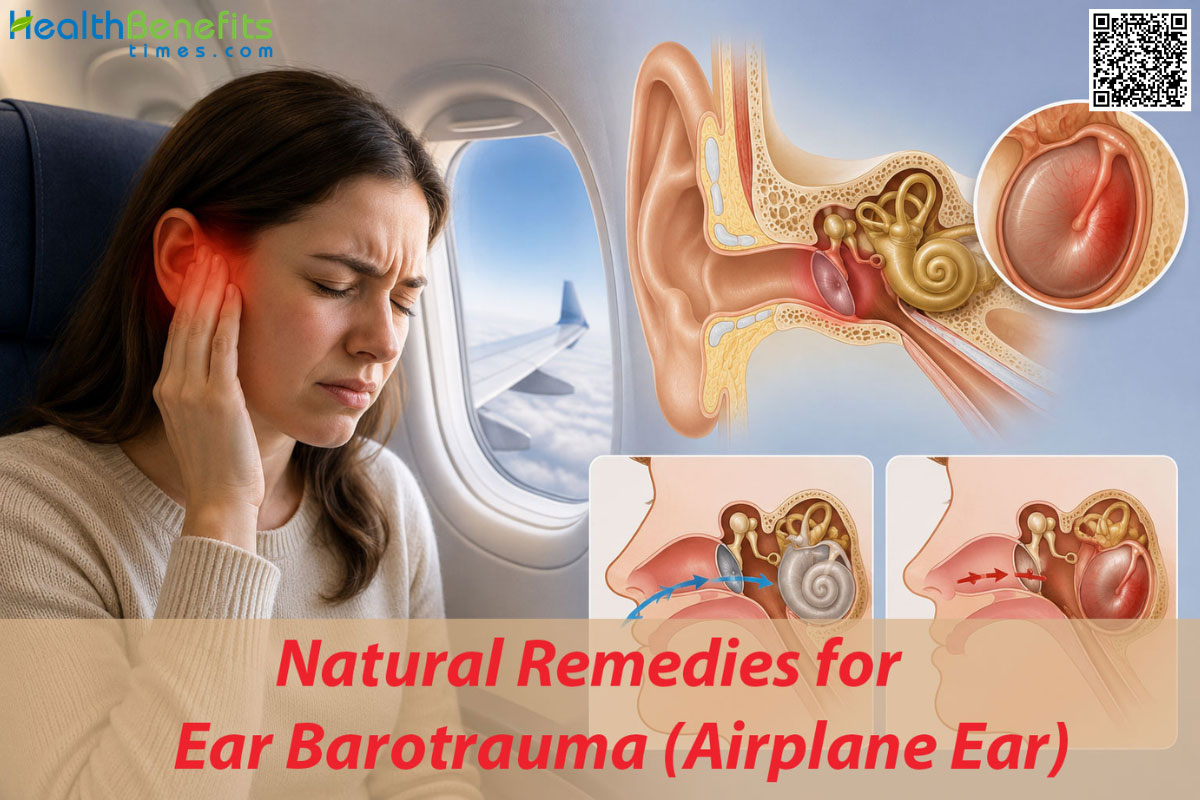
Causes of Ear Barotrauma (Airplane Ear)
Looking closely at daily activities, certain environments heavily influence the pressure dynamics inside the human head. The primary catalyst for this condition always involves an external environment shifting faster than the body can adapt, or an internal blockage preventing normal air flow 5. Here are the leading causes of Ear Barotrauma (Airplane Ear):
1. Commercial Air Travel
Taking off and landing in an airplane is the most widespread cause of this condition. As an aircraft descends for landing, the cabin air pressure increases rapidly, forcing the Eustachian tube to work harder to let air into the middle ear to prevent a vacuum from forming 6.
2. Scuba Diving and Underwater Activities
Moving beneath the water’s surface exposes the body to profound pressure changes. Because water is incredibly dense, even shallow dives create massive pressure gradients across the eardrum, making middle ear injuries the most frequent complication experienced by divers 7.
3. Nasal Congestion and Colds
Catching a common cold or upper respiratory infection generates heavy mucus and significant swelling in the nasal passages. This swelling acts as a physical roadblock, functionally clamping the Eustachian tube shut and preventing normal air regulation 8.
4. Allergic Rhinitis (Allergies)
Breathing in environmental allergens causes the immune system to inflame the respiratory tract. This allergic response swells the mucous membranes in the back of the throat, making the ear highly vulnerable to pressure changes 9.
5. Driving in Mountainous Terrain
Traveling through high altitudes in a car mimics the pressure changes of an airplane. Ascending a steep mountain pass decreases outside air pressure, while driving down into a valley increases it, both of which challenge the ears to equalize.
6. Hyperbaric Oxygen Therapy
Patients receiving medical treatments inside pressurized oxygen chambers face significant pressure shifts. If their ears do not clear properly during the pressurization phase, barotrauma will occur 10.
Symptoms of Ear Barotrauma (Airplane Ear)
Noticing the signs of pressure imbalance usually happens almost instantly as the surrounding environment changes. These symptoms arise directly from the mechanical stretching of the tympanic membrane and the subsequent fluid shifts occurring deep inside the ear 11. The most common symptoms of Ear Barotrauma (Airplane Ear) include:
- A distinct sensation of fullness or stuffiness, as if the ear is completely blocked or packed with cotton.
- Mild to moderate hearing loss, where surrounding sounds appear muffled or distant.
- Ear discomfort or sharp pain in one or both ears, resulting from the physical stretching of the eardrum 2.
- Dizziness or a feeling of being off-balance, caused by uneven pressure pressing against the inner ear structures.
- Tinnitus, which presents as a high-pitched ringing, buzzing, or roaring noise inside the head 12.
- Bleeding from the ear canal or fluid discharge, which only occurs in severe cases where the eardrum has ruptured 4.
Ear Barotrauma (Airplane Ear) Facts Table
Reviewing the core facts about this condition helps paint a clearer picture of who is affected and how it behaves. The following table breaks down essential medical information into an easily readable format.
| Category | Details |
| Symptoms |
|
| Causes |
|
| Types of Ear Barotrauma (Airplane Ear) |
|
| How does spread |
|
| Age Group |
|
| You might be at a higher risk for exposure of this disease if you: |
|
| How doctors diagnose |
|
| Other facts |
|
Natural Remedies for Ear Barotrauma (Airplane Ear)
Taking control of your ear comfort is entirely possible with a few simple techniques. When you feel that familiar pressure building up, your main goal is to help your Eustachian tube open so that fresh air can reach your middle ear 13. Here are the most effective natural remedies for Ear Barotrauma (Airplane Ear):
1. Active Swallowing Techniques
Using your throat muscles is the most natural way to open your ears. When you swallow, the muscles in the back of your throat physically pull on the Eustachian tube, momentarily opening it to allow a tiny bubble of air to pass through 2. You can encourage this by drinking small, frequent sips of water throughout a flight’s descent.
Note: This technique is commonly used constantly during airplane descent and is applied for remedial benefits by mechanically opening the airway to safely equalize pressure.
2. Chewing Gum or Hard Candies
Keeping your jaw moving serves a powerful mechanical purpose. The continuous motion of chewing gum or sucking on a hard candy stimulates your salivary glands to produce extra saliva 11. As saliva pools in your mouth, you are forced to swallow repeatedly, providing continuous opportunities for your ears to pop.
Note: Chewing gum is commonly eaten about 30 minutes before landing and is used for medicinal benefits to trigger an automatic, rhythmic swallowing reflex.
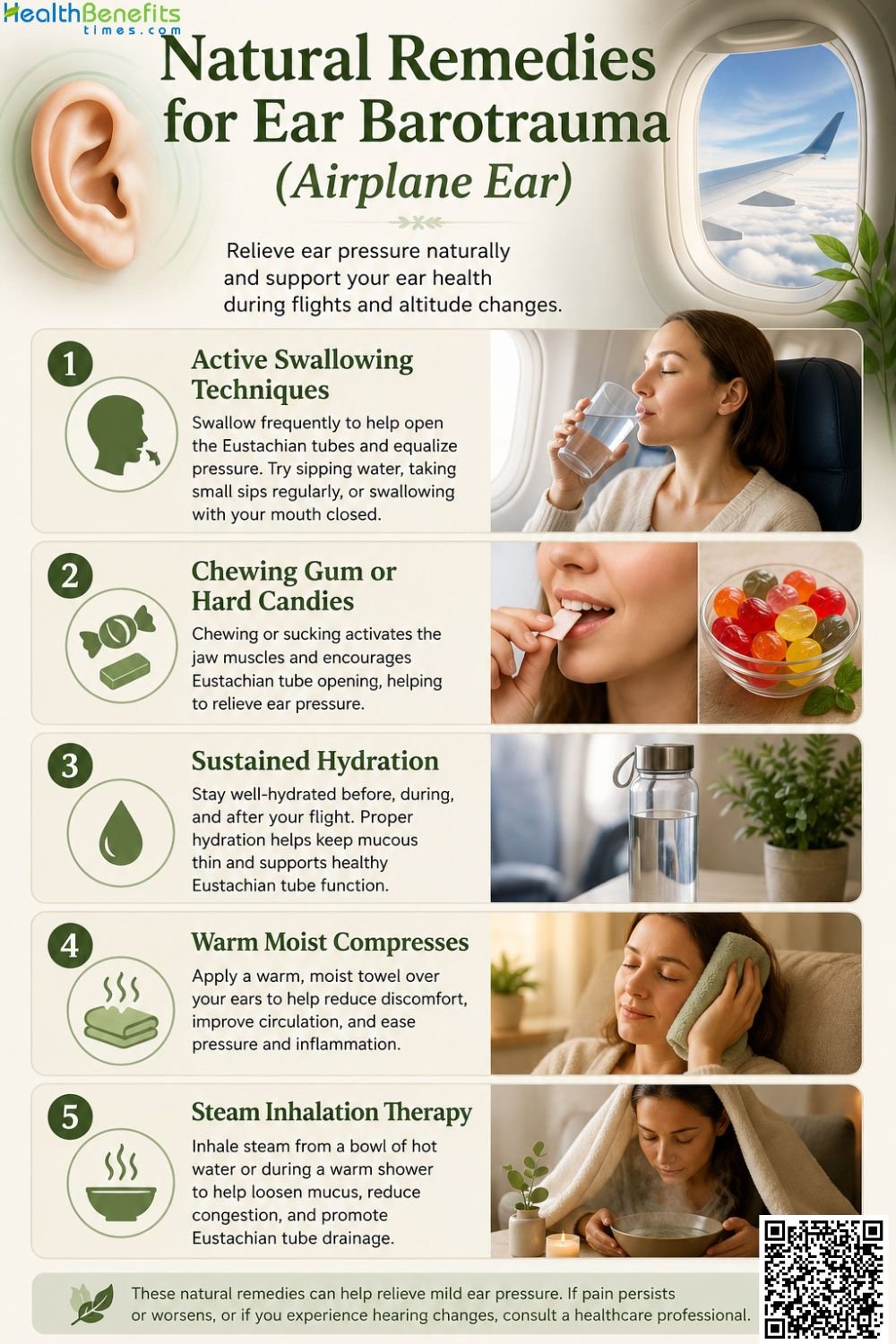
3. Sustained Hydration
Maintaining excellent hydration is critical for the health of your mucous membranes. When your body is well-hydrated, the mucus lining your nasal passages and Eustachian tubes remains thin and slippery. If you are dehydrated, this mucus becomes thick and sticky, effectively gluing your ear tubes shut and making it much harder for them to clear under pressure.
Note: Drinking plenty of plain water is commonly used in the hours leading up to travel; it is consumed for remedial benefits to optimize natural mucus clearance.
4. Warm Moist Compresses
Applying gentle heat to the side of your head can provide immediate soothing relief. The warmth from a damp, warm towel increases local blood circulation and helps relax the tense muscles around your jaw and ear canal. This relaxation can reduce the physical resistance against the Eustachian tube, making it easier for trapped air to escape.
Note: A warm washcloth is commonly applied directly to the outer ear for 10 to 15 minutes for medicinal benefits to reduce pain and relax muscle tension.
5. Steam Inhalation Therapy
Breathing in warm, wet air is highly effective at clearing out respiratory congestion. The moisture from steam directly interacts with the sticky secretions inside your nose and throat, thinning them out and liquifying blockages 14. A clearer nasal passage drastically reduces the swelling around the opening of your ear tubes.
Note: Steam is commonly used by leaning over a bowl of hot water and inhaling deeply; it is applied for remedial benefits to dissolve thick mucus blockages.
Is there any exercise or physical activities for Ear Barotrauma (Airplane Ear)
Engaging your facial and throat muscles actively can force stubborn ears to clear when passive remedies fail. These physical maneuvers are designed to gently push air upward into the ear canal, breaking the vacuum seal 15. Here are specific exercises to manage the condition:
1. The Valsalva Maneuver
This is the most famous technique for actively popping the ears. It works by creating positive pressure inside your chest and throat, which eventually forces air up into the middle ear spaces 16.
Note: To do this, pinch your nostrils tightly closed, keep your mouth shut, and gently blow air out through your nose as if you are blowing your nose into a tissue, stopping as soon as you feel your ears pop.
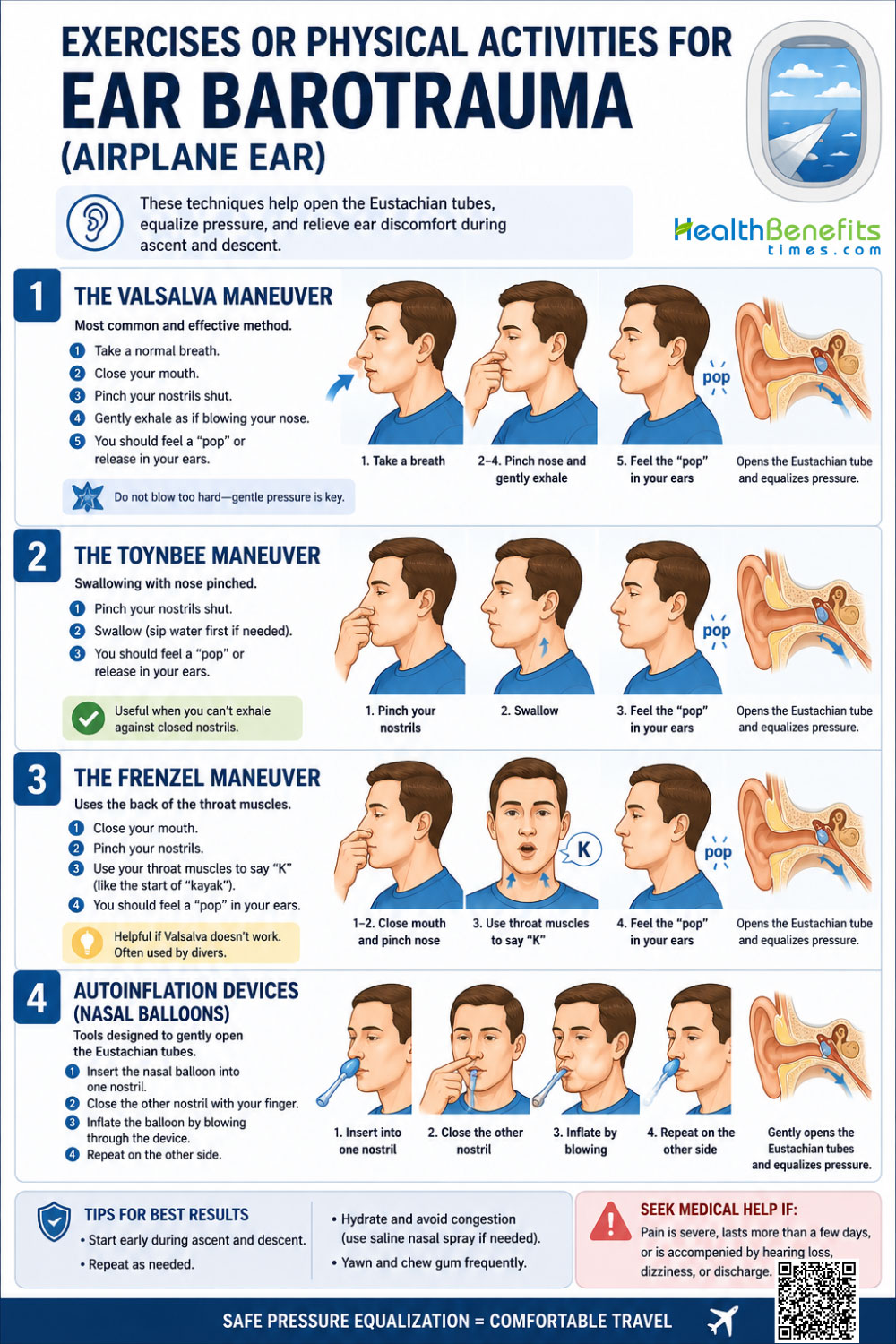
2. The Toynbee Maneuver
This exercise combines the natural opening power of swallowing with controlled nasal pressure. Clinical studies demonstrate that the Toynbee maneuver is particularly effective during the descent phase of flying, as it helps pull air out of a hyper-pressurized middle ear 17.
Note: To do this, pinch your nose completely shut, take a sip of water, and swallow while keeping your nose pinched.
3. The Frenzel Maneuver
Favored by advanced scuba divers, this technique uses the tongue as a piston to push air into the ears without relying on lung pressure. Research shows it can be just as effective as the Valsalva maneuver but is often gentler on the eardrums 18.
Note: To do this, pinch your nose closed, close the back of your throat as if you are about to lift something heavy, and press your tongue firmly up against the roof of your mouth while making a clicking “K” sound.
4. Autoinflation Devices (Nasal Balloons)
Sometimes, doing the exercises manually is too difficult, especially for children. Autoinflation involves using a specialized medical balloon to provide the exact right amount of back-pressure. Research indicates that using these autoinflation devices significantly improves negative middle ear pressure and clears trapped fluid more effectively than doing nothing 19.
Note: To do this, press the nozzle of the device into one nostril, hold the other nostril shut, and blow out through your nose to inflate the balloon to the size of a grapefruit.
Foods to Avoid When You suffer from Ear Barotrauma (Airplane Ear) and you are prone to Ear Barotrauma (Airplane Ear)
Paying attention to your daily diet can make a significant difference in how your nasal passages behave under pressure. Certain foods increase inflammation and mucus production, making it much harder for your ears to clear 9.
1. High-Sodium Foods
Eating meals loaded with salt aggressively disrupts the fluid balance in your mucosal tissues. High salt intake promotes a localized inflammatory response in the nasal lining, increasing tissue swelling and worsening allergic symptoms, which heavily blocks the ear tubes.
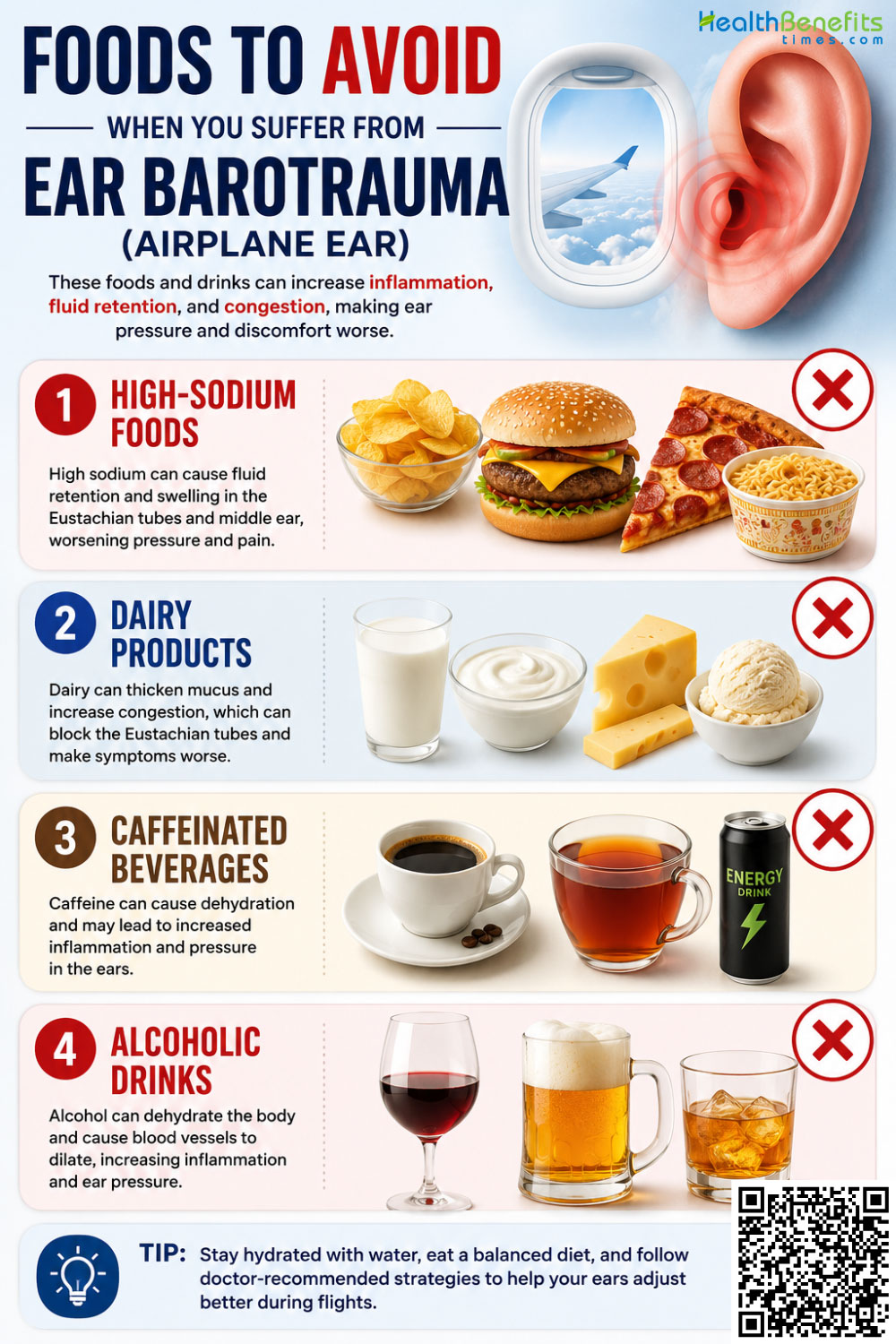
2. Dairy Products
For many people, consuming milk, cheese, and ice cream triggers an increase in the thickness of their natural mucus. Thicker mucus acts like a physical glue inside the throat, trapping air and preventing the Eustachian tube from popping open during a flight.
3. Caffeinated Beverages
Coffee, traditional teas, and energy drinks act as strong diuretics, pulling water out of your body. This dehydration concentrates your nasal secretions, making them stiff and highly resistant to clearing out of the ear passages.
4. Alcoholic Drinks
Drinking beer, wine, or spirits causes the blood vessels in your nose and throat to expand rapidly. This vasodilation leads to immediate nasal congestion and swelling, closing off the delicate ear pathways just when you need them to remain open.
Activities to Avoid When You suffer from Ear Barotrauma (Airplane Ear)
Being mindful of your actions during flights or dives is just as important as knowing what to treat yourself with. Certain habits can accidentally lock your ears or cause severe physical damage 20.
1. Sleeping During Aircraft Descent
Your natural swallowing reflex drops drastically while you are asleep. If you nap as the plane comes down for a landing, your ears will not open automatically, practically guaranteeing a painful buildup of pressure by the time you wake up.
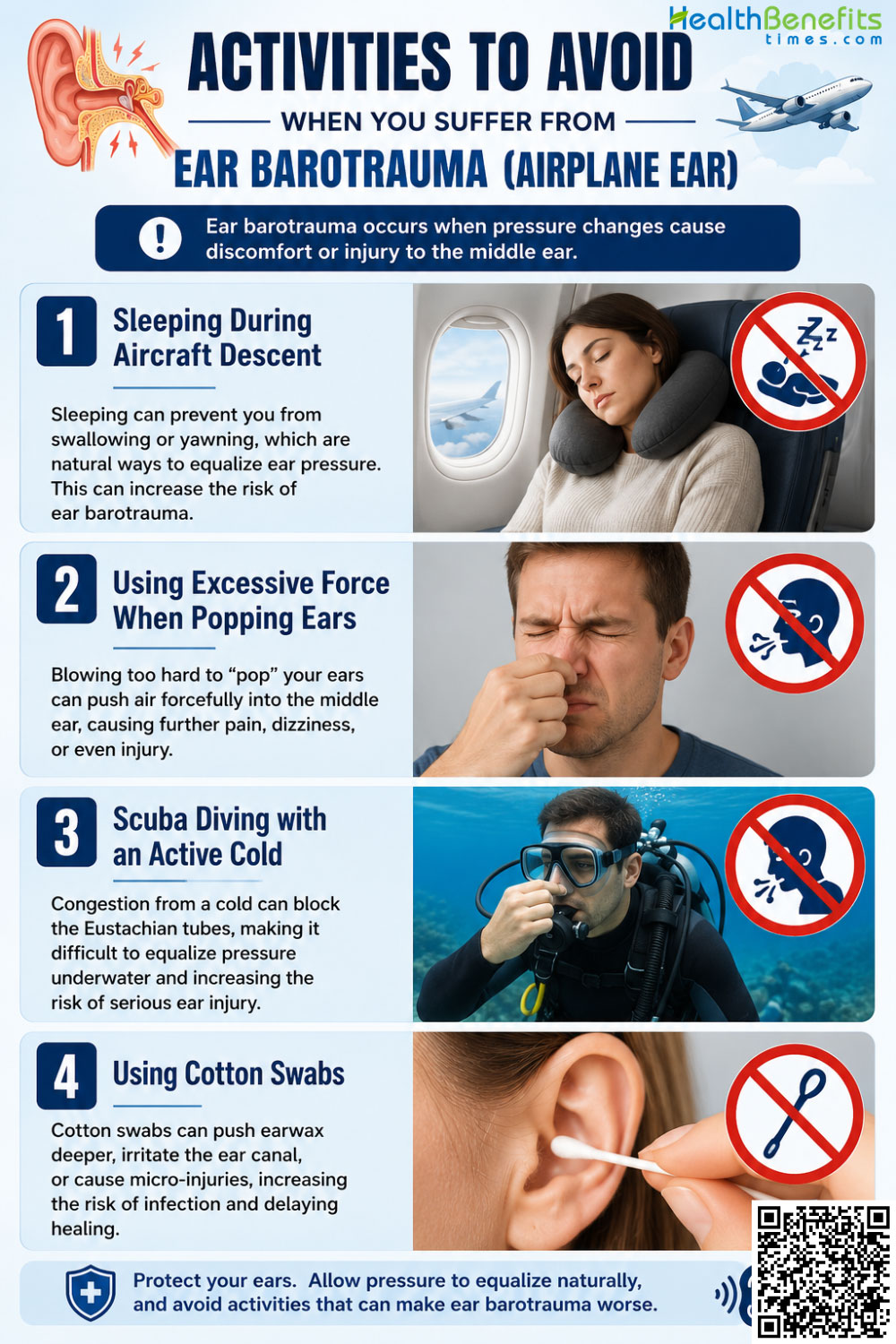
2. Using Excessive Force When Popping Ears
Pushing too hard while performing the Valsalva maneuver is incredibly dangerous. If you blow forcefully against a completely blocked ear, you can permanently tear the eardrum or force harmful bacteria from your nose straight into your ear canal.
3. Scuba Diving with an Active Cold
Plunging underwater while congested creates a massive risk for injury. Because the dense water magnifies pressure changes, diving with swollen sinus passages will trap high-pressure air inside your head, frequently resulting in severe bleeding and ruptured eardrums.
4. Using Cotton Swabs
Sticking objects into your ear canal will not relieve airplane ear. The pressure imbalance occurs deep behind the eardrum, and probing with a swab only risks compacting wax or puncturing the drum itself.
Myths and Misconceptions
Separating fact from fiction ensures you do not accidentally harm your hearing while trying to find relief. Here are common misunderstandings about airplane ear, clarified for your safety.
| Myth | Reality |
| Blowing as hard as possible is the fastest way to clear blocked ears. | Blowing forcefully can cause severe injury. Excessive pressure can tear the tympanic membrane or force infectious bacteria into the middle ear, causing an acute infection. Gentle pressure is always required. |
| Only scuba divers traveling deep underwater experience ear barotrauma. | Commercial air travel is actually the most common cause globally. Even minor changes, such as riding a fast elevator or driving over a mountain pass, can trigger symptoms in sensitive individuals. |
| Putting warm oil or ear drops into the ear canal will fix the pressure. | Ear drops only sit in the outer ear canal and cannot cross the waterproof eardrum. Since the pressure problem is trapped behind the eardrum in the middle ear, external drops offer no relief for barotrauma. |
| If the severe pain suddenly stops, it means the ear has completely healed. | A sudden, sharp release of pain followed by muffled hearing often means the eardrum has physically ruptured. This relieves the pressure vacuum but creates a medical injury requiring professional care. |
Special Considerations
Understanding how age and health status alter the body’s response helps in tailoring effective prevention strategies. Different demographic groups face entirely unique anatomical and physiological challenges when dealing with barometric pressure changes 21.
1. Children
The anatomy of a child’s head puts them at a severe disadvantage during travel. An infant’s Eustachian tube is much shorter, narrower, and lies almost flat horizontally compared to an adult’s angled tube. This flat orientation prevents fluid from draining effectively and makes the tube highly prone to collapsing under pressure. Furthermore, young children lack the motor skills and understanding to perform pressure-clearing exercises deliberately. To protect them, pediatricians strongly advise having infants actively nurse from a breast or bottle during takeoff and landing. The continuous sucking and swallowing mechanics forcefully pull their ear tubes open, relieving the pain naturally 22.
2. Pregnancy
Hormonal fluctuations during pregnancy dramatically impact the respiratory system. Elevated levels of estrogen increase blood flow to the mucous membranes, often resulting in a chronic, non-allergic swelling of the nasal passages known as pregnancy rhinitis. This constant baseline swelling means expecting mothers frequently suffer from clogged Eustachian tubes even before boarding a plane. Because many over-the-counter systemic decongestants are restricted during pregnancy, pregnant travelers must rely heavily on natural remedies like saline rinses, aggressive hydration, and active swallowing maneuvers to safely manage ear pressure.
3. Chronic Conditions
Individuals living with chronic allergic rhinitis, recurring sinus infections, or physical anomalies like a deviated septum exist in a constant state of compromised airway patency. Their Eustachian tubes are routinely surrounded by inflamed tissue, making them highly susceptible to severe barotrauma. Interestingly, clinical observations suggest that people with a history of long-standing chronic ear disease (such as chronic secretory otitis media) may actually experience fewer barotrauma issues. This is because their middle ear volume is physically smaller due to altered bone development, meaning less air needs to pass through the tube to successfully equalize the pressure 23.
4. Elderly
As the body ages, the muscular tone and elasticity of the tissues in the throat naturally decline. The specific muscles responsible for pulling the Eustachian tube open may lose some of their reactive strength, making active maneuvers slightly less efficient. Additionally, older adults often have minor scarring on their eardrums from a lifetime of past colds and minor infections. This scarring makes the eardrum stiffer and less compliant when pressure changes occur, meaning the elderly may need to start their swallowing and yawning exercises much earlier in a flight’s descent to stay ahead of the pressure curve.
Precaution before use of natural remedies when you have Ear Barotrauma (Airplane Ear)
Staying safe while attempting to clear your ears should always be your top priority. Before you try any physical exercises or natural remedies, keep these essential precautions in mind to avoid making the injury worse 4.
- Never Force a Blocked Ear: If you attempt a Valsalva maneuver and your ear refuses to pop, abandon the attempt immediately. Pushing harder will not open the tube; it will only increase the strain on your eardrum until it tears.
- Check Water Temperature for Steam: When utilizing steam inhalation, always ensure the water is comfortably steaming and not actively boiling. Inhaling excessively hot vapor can cause severe thermal burns to your delicate nasal lining and eyes.
- Avoid Saline Rinses if the Eardrum Might Be Ruptured: If you have experienced a sharp pain followed by fluid draining from your ear, do not use nasal flushes or put anything inside your ear canal. You may wash bacteria directly into the vulnerable middle ear space.
- Do Not Practice Maneuvers with a Severe Cold: Pushing air into your ears while your nose is packed with thick, infected green or yellow mucus carries a massive risk. You can easily blow that infected fluid into your sterile middle ear, causing an acute bacterial infection.
- Stop Immediately if Pain Increases: Natural remedies and exercises should relieve discomfort, not create it. If any swallowing technique or pressure maneuver causes a sharp spike in ear pain, stop the activity and allow your body to rest.
When to see a Doctor
Recognizing when an ear pressure issue has moved beyond a simple travel nuisance is vital for protecting your long-term hearing. You should seek professional medical care immediately if you experience any of the following severe symptoms 2.
- Bleeding or Fluid Discharge: Any sign of blood, clear fluid, or pus leaking from the ear canal is a medical red flag. This strongly indicates that the pressure was great enough to tear a hole straight through your tympanic membrane.
- Severe and Unrelenting Pain: While mild aching is normal, excruciating pain that continues for hours after you have landed or surfaced from a dive requires evaluation to check for deep tissue damage or trapped blood.
- Prolonged Hearing Loss: If your hearing remains noticeably muffled, dampened, or absent for more than a few days following a flight, you need an audiology assessment to ensure the delicate bones of your middle ear have not been dislocated.
- Severe Dizziness or Vertigo: Experiencing a spinning sensation, extreme loss of balance, or inability to walk straight after a pressure event points to an inner ear injury. This is a complex medical issue that requires urgent specialist intervention.
- Persistent Ringing (Tinnitus): If a loud ringing or roaring sound persists in your ears long after the travel event has concluded, it indicates sustained irritation to the sensory nerves that must be evaluated by an otolaryngologist.
Comments
comments