


Causes of Ear Infections
Various environmental, biological, and anatomical factors converge to trigger the development of fluid buildup and inflammation within the ear.
1. Bacterial Pathogens
Microscopic invaders are frequently the direct cause of the painful inflammation associated with this condition. Specific bacterial strains, most notably Streptococcus pneumoniae, Haemophilus influenzae, and Moraxella catarrhalis, are routinely isolated from the middle ear fluid of affected patients 7.
2. Viral Infections
Respiratory viruses often set the stage for secondary bacterial complications to take hold. Common illnesses caused by respiratory syncytial virus (RSV) or rhinoviruses degrade the natural mucociliary clearance system of the nasal passages, directly leading to tube dysfunction and fluid retention 8.
3. Eustachian Tube Dysfunction
Proper ventilation of the middle ear relies entirely on a narrow passageway connecting the ear to the back of the throat. When the Eustachian tube becomes blocked by mucosal swelling or physical obstruction from enlarged adenoids, negative pressure builds up, pulling fluid into the sterile ear space 9.
4. Allergic Rhinitis
Seasonal or chronic allergies provoke a systemic inflammatory response throughout the upper respiratory tract. The resulting release of histamine causes the mucous membranes within the nasal cavity and the Eustachian tubes to swell, doubling the risk of developing middle ear complications 10.
5. Anatomical Immaturity
Young children possess an inherent structural disadvantage when it comes to ear drainage. Their Eustachian tubes are significantly shorter, more flexible, and positioned at a horizontal angle, severely limiting the ability of gravity to pull trapped fluid downward into the throat 5.
6. Feeding Practices
The physical position of an infant during feeding plays a surprising role in ear health. Bottle-feeding a baby while they are lying completely flat allows liquid to pool in the back of the throat and flow directly into the Eustachian opening, introducing both blockages and foreign bacteria 11.
Symptoms of Ear Infections
Recognizing an active infection relies on observing a combination of physical discomforts and noticeable behavioral shifts.
- Otalgia (Earache): Intense, throbbing pain inside the ear canal caused by trapped fluid stretching the sensitive eardrum 12.
- Fever: An elevated body temperature that acts as the immune system’s natural systemic response to fighting off the invading pathogen 13.
- Otorrhea: The visible drainage of pus, clear fluid, or blood-tinged liquid exiting the outer ear, usually indicating that the eardrum has ruptured under pressure 14.
- Hearing Deficits: A temporary muffling of sound or conductive hearing loss because the accumulated fluid prevents the eardrum and ossicles from vibrating properly 5.
- A Feeling of Fullness: A continuous, highly uncomfortable sensation of pressure or blockage deep within the ear cavity 15.
- Behavioral Changes: In preverbal infants, extreme fussiness, relentless crying, and a noticeable tendency to vigorously rub or tug at the affected ear 16.
- Sleep Disturbances: Increased pain and restlessness when lying down, as horizontal positioning shifts the fluid and increases pressure against the tympanic membrane 11.
Ear Infections Facts Table
| Clinical Feature | Details and Facts |
| Symptoms |
|
| Causes |
|
| Types of Ear Infections |
|
| How does spread |
|
| Age Group |
|
| You might be at a higher risk for exposure of this disease if you: |
|
| How doctors diagnose |
|
| Other facts |
|
Natural Remedies for Ear Infections
When you find yourself battling the intense throbbing of an earache, leaning on conservative, evidence-based natural interventions can provide significant comfort. You can utilize the following targeted approaches to ease pain and reduce localized inflammation while your body heals.
1. Naturopathic Herbal Ear Drops
Harnessing the potent properties of botanical extracts is a cornerstone of natural ear care. Formulations blending garlic (Allium sativum), mullein (Verbascum thapsus), calendula, and St. John’s wort in an olive oil base have shown remarkable efficacy in soothing otalgia 17. Garlic contains active derivatives like allicin and s-allyl cysteine, which possess strong natural antimicrobial capabilities capable of hindering common ear pathogens 18. Simultaneously, the mucilage in mullein acts as a gentle anti-inflammatory barrier to calm the irritated tissues of the outer canal.
Note: You apply this remedy by placing a few warmed drops directly into the outer ear canal two to three times daily, provided you are certain your eardrum is not ruptured.
2. Warm Compresses
Turning to the simplicity of temperature therapy offers profound, immediate relief for nerve-based pain. Applying a gentle, localized heat source to the external ear dilates nearby blood vessels, which increases circulation and helps marginally reduce the internal pressure buildup causing your distress 19. The soothing warmth also acts as a neurological distraction, calming the sensory nerves around the jaw and earbone.
Note: You use this by holding a warm, moist washcloth or a heated gel pack firmly against the affected outer ear for 10 to 15 minutes whenever the pain spikes.

3. Essential Oil Inhalation (Aromatherapy)
Addressing the congestion in your upper respiratory tract directly influences the pressure in your ears. Volatile oils extracted from eucalyptus, peppermint, and chamomile contain active compounds like menthol and 1,8-cineol that function as natural secretolytics 20. When you inhale these vapors, they help decrease the surface tension of mucous in your nasal passages, promoting the unblocking of the Eustachian tube.
Note: You apply this by adding a few drops of the chosen essential oil to a bowl of steaming hot water, covering your head with a towel, and deeply inhaling the medicated steam.
4. Head Elevation During Rest
Manipulating gravity is a highly effective, yet often overlooked, strategy for managing fluid dynamics. When you lie completely flat, venous pressure increases in your head, and fluids inevitably pool in the Eustachian tubes, which is why earaches notoriously worsen at night 21. By keeping your head elevated, you allow gravity to encourage the natural downward drainage of fluid from the middle ear space into the back of your throat.
Note: You apply this method by propping your head up with an extra firm pillow or slightly elevating the head of your mattress before going to sleep.
5. Ayurvedic Herbal Formulations
Exploring traditional holistic systems offers systemic approaches to fighting infection and inflammation. In Ayurvedic medicine, specialized oral formulations like Gandhak Rasayana are specifically prescribed to manage ear discharge and outer ear inflammation 22. These medicinal blends often incorporate potent botanicals such as Elettaria cardamomum and Tinospora cordifolia, which provide systemic antibacterial and anti-inflammatory support to aid your immune response from the inside out.
Note: You take this remedy orally in tablet form, typically alongside a glass of lukewarm water, under the specific dosage guidance of an Ayurvedic practitioner.
Is there any exercise or physical activities for Ear Infections
You can actively engage the muscles surrounding your jaw and throat to manually force the Eustachian tube open, which relieves trapped pressure and promotes fluid drainage.
1. The Galbreath Technique
Originating in osteopathic medicine, this manipulative physical maneuver focuses on lymphatic drainage and the mechanical movement of the mandible. By applying rhythmic, controlled pressure to the lower jaw, this technique creates a physical “pumping action” that actively stretches the Eustachian tube open, allowing accumulated fluid in the middle ear to escape more effectively into the throat 23.
Note: To do this, you have another person turn your head gently to the side and apply a rhythmic, downward, and forward stroking pressure across the lower jawline for a few minutes.
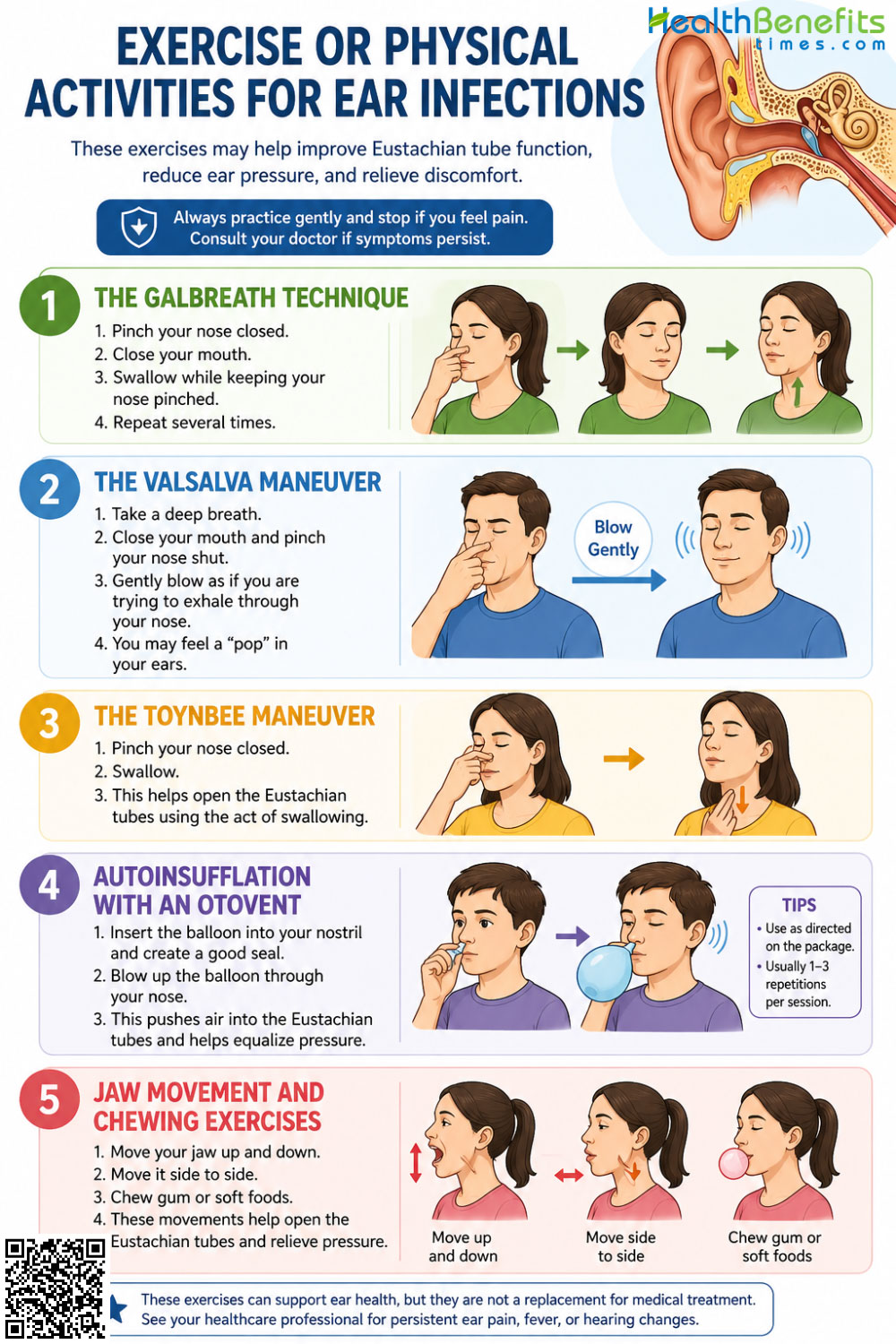
2. The Valsalva Maneuver
Utilized heavily by deep-sea divers and frequent flyers, this breathing technique forces air up into the middle ear to balance unequal pressure. By generating a controlled overpressure in the back of your nasal cavity, you can physically pop the Eustachian tubes open to equalize the air behind the eardrum 24.
Note: To do this, you pinch your nostrils tightly closed, shut your mouth, and gently blow air out of your lungs as if inflating a balloon, holding the pressure for no more than 5 seconds.
3. The Toynbee Maneuver
Serving as a much gentler alternative to forcefully blowing air, this exercise utilizes the body’s natural swallowing reflexes. The physical act of swallowing uses the throat muscles to pull the Eustachian tubes open, while simultaneously keeping the nose blocked compresses the air in the nasopharynx to assist in pressure stabilization 25.
Note: To do this, you simply pinch your nose completely shut with your fingers, keep your mouth closed, and swallow a sip of water or accumulated saliva.
4. Autoinsufflation with an Otovent
Employing a physical medical device can help you achieve precise pressure regulation without risking injury to the inner ear. Using a specially calibrated balloon creates a safe, controlled resistance that gently forces air up the nasal passages and into the Eustachian tube, making it an excellent exercise for clearing persistent, stubborn fluid 26.
Note: To do this, you press the plastic nozzle of the deflated balloon tightly against one nostril, hold the other nostril closed with a finger, and blow through your nose until the balloon inflates to the size of a grapefruit.
5. Jaw Movement and Chewing Exercises
Taking advantage of the anatomical connection between your jaw muscles and your inner ear can provide intermittent pressure relief. Exaggerated, continuous movements of the temporomandibular joint pull on the surrounding muscles, which routinely flexes the opening of the Eustachian tube and allows small pockets of air to enter the middle ear space 27.
Note: To do this, you vigorously chew a piece of sugar-free gum, or purposefully shift your lower jaw wide from side to side as if mimicking a massive yawn.
Foods and Activities to Avoid
When you are actively suffering from an ear infection, or if your biology makes you highly prone to recurrent episodes, modifying your diet and daily habits is essential for prevention.
Foods to Avoid When You Suffer From Ear Infections
- Dairy Products (In Specific Allergies): If you possess a known cow’s milk protein allergy, consuming dairy aggressively triggers an inflammatory cascade that increases mucus production and directly swells the Eustachian tissues 28.
- High-Fat Diets: Diets heavily saturated with unhealthy fats can act as an environmental risk factor, potentially elevating your baseline systemic inflammation and contributing to the chronicity of trapped ear fluid 29.
- Known Allergenic Foods: If you suffer from allergic rhinitis triggered by specific dietary antigens, eating those foods will release massive amounts of histamine, rapidly causing swelling in your nasal passages and ear tubes 30.
- Bottle-Feeding While Supine: For infants, you must completely avoid giving a bottle while the baby is lying flat on their back, as the liquid easily travels backward into the middle ear, bringing harmful bacteria along with it 31.
Activities to Avoid When You Suffer From Ear Infections
- Exposure to Cigarette Smoke: You must strictly avoid smoking or lingering in areas with secondhand smoke. The toxic chemicals in tobacco paralyze the microscopic hairs in your respiratory tract, destroying your ear’s ability to clear out foreign particles and infectious fluid 32.
- Using Cotton Swabs Internally: You should never insert cotton buds or sharp objects deeply into your ear canal. Doing so pushes protective earwax backward against the eardrum, creates mechanical blockages, and risks permanently puncturing the delicate membrane 33.
- Leaving Ears Wet After Swimming: You need to avoid leaving stagnant water inside your ear canal after bathing. Trapped moisture heavily alters the natural pH of the canal, creating a prime breeding ground for bacterial and fungal overgrowth 21.
- Overusing Pacifiers: For toddlers, you should limit continuous, all-day pacifier usage. The constant, repetitive sucking motion alters the pressure dynamics in the throat, which negatively impacts normal Eustachian tube function over time 34.
Myths and Misconceptions
Navigating health information often means sifting through outdated cultural advice. The following table systematically dismantles the most common misunderstandings regarding ear health.
| Myth | Reality |
| Every single earache requires an immediate prescription for antibiotics. | Up to 80% of uncomplicated acute otitis media cases resolve entirely on their own without medical intervention, especially those triggered by viral colds. Clinical guidelines recommend a conservative “wait-and-see” approach for mild cases to reduce antibiotic resistance. |
| Swimming in chlorinated pools is the primary cause of middle ear infections. | Pool water exclusively causes swimmer’s ear (otitis externa), which is an infection restricted to the outer canal. Middle ear infections are driven by respiratory viruses entering through the nose and throat, completely independent of water entering the outer ear. |
| Earwax is dirty, causes infections, and must be aggressively scrubbed out. | Earwax (cerumen) is a vital, naturally produced protective barrier. It effectively traps dirt, repels excess water, and possesses natural antibacterial properties. Removing it artificially invites infection and strips the ear of its primary defense. |
| An ear infection is always a life-threatening medical emergency requiring a midnight hospital visit. | While undoubtedly painful and distressing, an ear infection alone rarely poses an immediate emergency. Provided the patient is breathing comfortably, stays hydrated, and fevers are managed with analgesics, clinical assessment can typically wait until regular office hours. |
| Home remedies like dropping hot cooking oil into the ear are perfectly safe. | Pouring uncalibrated hot oils or unverified household liquids into the ear canal is exceptionally dangerous. It can cause severe thermal burns to the tympanic membrane and exacerbate existing infections dramatically |
Special Considerations
The physiological impact and clinical management of otitis media vary drastically depending on the patient’s age and baseline health profile.
1. Children
Pediatric patients unfortunately represent the vast majority of ear infection cases due to biological design. Their Eustachian tubes are functionally immature shorter, highly flaccid, and lacking the steep downward angle found in adults 5. Because of this horizontal orientation, their middle ear cannot drain fluid effectively via simple gravity. Furthermore, young immune systems are still developing, making toddlers highly susceptible to the relentless cascade of upper respiratory infections encountered in environments like daycare centers 1. Consequently, children are incredibly likely to develop recurrent episodes that require careful monitoring to prevent long-term language and cognitive delays caused by temporary hearing loss.
2. Pregnancy
Navigating an ear infection during pregnancy presents unique challenges. Severe hormonal fluctuations naturally cause widespread mucosal edema (swelling of the mucous membranes), which includes the linings of the nasal passages and Eustachian tubes, routinely leading to a sensation of aural fullness 4. Because systemic pharmaceuticals and conventional antibiotics must be heavily scrutinized for fetal safety during gestation, pregnant individuals rely heavily on mechanical and natural interventions. Management focuses strictly on localized, non-systemic treatments such as the Valsalva maneuver, applying warm compresses, and maintaining proper hydration to thin mucous secretions safely.
3. Chronic Conditions
Individuals born with craniofacial anomalies, such as a cleft palate, Treacher Collins syndrome, or Crouzon syndrome, face lifelong anatomical hurdles regarding proper Eustachian tube function 29. In these complex conditions, the muscular mechanics required to manually pull the tube open are fundamentally altered or absent. Similarly, children diagnosed with Down syndrome experience distinct structural differences and mucociliary function disorders that dramatically increase their inherent risk of chronic fluid retention. For patients living with underlying immunodeficiencies, the body profoundly struggles to mount an adequate cellular defense against the initial bacterial influx, which often necessitates specialized, proactive medical protocols rather than solely relying on conservative natural remedies.
4. Elderly
Although acute otitis media is statistically far less frequent in the geriatric population, its sudden presence warrants incredibly careful clinical evaluation. As human tissues age, they lose critical elasticity, which can negatively affect the patency and smooth operation of the Eustachian tube. Furthermore, older adults are highly prone to gastroesophageal reflux disease (GERD). Gastric acid traveling upward through the esophagus can reach the nasopharynx and heavily irritate the delicate opening of the Eustachian tube, precipitating swelling and middle ear effusion 29. Additionally, in older adults presenting with persistent, unilateral fluid buildup without a prior history of chest colds, physicians must diligently rule out more severe underlying pathologies, such as hidden nasopharyngeal masses physically obstructing the drainage pathways.
Precaution Before Use of Natural Remedies When You Have Ear Infections
Before you attempt to self-manage an active earache with holistic or botanical methods, you must observe strict safety protocols to avoid inadvertently causing permanent auditory damage.
- Verify Eardrum Integrity: You must never introduce any liquid, oil, or herbal drop into your ear if you suspect the eardrum is ruptured or perforated. If you observe any pus, blood, or cloudy fluid draining from the ear, the membrane is breached, and inserting liquids can push bacteria directly into the highly vulnerable inner ear spaces 33.
- Test for Botanical Allergies: Herbal remedies contain highly complex organic compounds. Before applying drops containing garlic, mullein, or essential oils into your ear, you should perform a small patch test on your inner wrist to ensure you do not have an undiagnosed contact allergy that could trigger severe canal inflammation 39.
- Regulate Pressure Techniques: When performing the Valsalva maneuver, you must blow gently. Forcing air too aggressively into a blocked nasal passage raises your internal fluid pressure drastically and runs the severe risk of rupturing the delicate “round windows” of your inner ear 40.
- Avoid Extreme Temperatures: If you are utilizing a warm compress, you must ensure the temperature is merely soothing, not hot. The skin lining the outer ear is exceptionally thin and lacks a thick, protective fat layer, making it highly susceptible to painful thermal burns 41.
- Do Not Insert Applicators Deeply: If you are applying a localized liquid remedy to the outer ear, you must never push the applicator (such as a glass dropper tip) deeply into the canal, as any sudden bodily movements could easily cause you to puncture the eardrum 37.
When to See a Doctor
While natural and conservative measures are exceptionally effective for basic symptom relief, certain clinical red flags necessitate immediate professional medical intervention. You should seek out a qualified healthcare provider immediately if:
- You experience a persistently high fever: A core body temperature reaching 102.2°F (39°C) or higher indicates a severe systemic infection that the body is struggling to contain, which likely requires prescription antimicrobials 11.
- Fluid or pus visibly drains from the ear: The sudden presence of physical discharge is a clear, undeniable indicator that the tympanic membrane has ruptured under immense pressure or that an outer ear infection is severely advanced 42.
- Symptoms persist without any improvement: If the intense throbbing pain, fever, or overall discomfort lasts longer than 48 to 72 hours despite your diligent application of natural remedies and comfort measures, the infection is highly unlikely to resolve independently 43.
- There is noticeable hearing loss or unresponsiveness: If a child suddenly stops reacting to vocal sounds, or an adult experiences a profound, sudden drop in hearing capabilities, the middle ear fluid may be causing concerning conductive deficits that require professional drainage 13.
- You experience severe dizziness or facial weakness: The inner ear controls spatial balance, and the facial nerve runs directly through the middle ear cavity. If you develop extreme vertigo, noticeable paralysis of your facial muscles, or swelling behind the earbone, you must seek urgent emergency care to prevent life-threatening neurological complications 44.
Comments
comments