

Causes of Excessive Yawning
- Sleep Disorders: Conditions that severely disrupt nighttime rest, such as obstructive sleep apnea or narcolepsy, commonly lead to chronic daytime fatigue and repetitive, excessive yawning 1.
- Medication Side Effects: Certain prescription drugs frequently trigger abnormal yawning reflexes. This is especially common with selective serotonin reuptake inhibitors (SSRIs) used to treat depression, as well as some antihistamines and pain medications 4.
- Vasovagal Reactions: This occurs when the nervous system overreacts, leading to a sudden drop in heart rate and blood pressure. Excessive yawning can be a symptom of a severe vasovagal response, which is sometimes linked to serious cardiovascular events like a heart attack or bleeding around the heart 1.
- Neurological Diseases: Damage or disease in the brain and nervous system can disrupt normal bodily reflexes. Persistent yawning is a recognized clinical symptom of serious neurological conditions, including multiple sclerosis, Parkinson’s disease, brain tumors, epilepsy, and strokes 3.
- Thermoregulation Issues: The body utilizes yawning as a natural mechanism to cool the brain. Consequently, underlying medical conditions that increase core brain temperature or impair the body’s ability to regulate heat can result in continuous, uncontrollable yawning 5.
Symptoms of Excessive Yawning
- Abnormal Yawning Frequency: The core symptom is a compulsive and repetitive reflex, clinically defined in neurological research as experiencing more than three yawns within a 15-minute timeframe 6.
- Absence of Normal Triggers: Experiencing continuous yawning that occurs without standard physiological causes, such as physical fatigue or boredom, and persists even after adequate sleep 1.
- Severe Daytime Sleepiness: An overwhelming, uncontrollable feeling of drowsiness and weariness during waking hours that frequently accompanies the yawning episodes 1.
- Vasovagal Distress: Episodes of dizziness, lightheadedness, or fainting sensations, which indicate a sudden drop in heart rate and blood pressure mediated by the vagus nerve 1.
- Impaired Awareness: Brief periods of decreased responsiveness, confusion, or an altered state of consciousness, which can occur when excessive yawning is a manifestation of abnormal brain electrical activity or seizures 2.
- Acute Neurological Deficits: The sudden appearance of severe physical symptoms alongside yawning, such as muscle weakness, facial drooping, or speech difficulties, which strongly indicate a serious medical emergency like a stroke 7.
Natural Remedies for Excessive Yawning
1. Nasal Breathing Exercises
How it may help:
Nasal breathing exercises help regulate the brain’s core temperature. Because yawning functions as a biological mechanism to cool the brain, inhaling cooler air directly through the nasal cavity lowers frontal brain temperature. This thermal regulation satisfies the body’s natural cooling requirement, thereby suppressing the neurological trigger for repetitive yawning 8.
What research says:
Clinical studies confirm that altering breathing patterns significantly impacts yawning frequency. Research demonstrates that individuals who exclusively breathe through their noses experience a complete cessation or substantial reduction in spontaneous yawning. This supports the conclusion that targeted nasal inhalation provides sufficient brain cooling to halt the yawning reflex entirely 8.
How to use it safely:
To manage excessive yawning, close your mouth and inhale deeply and slowly through your nose. Exhale gently through your nasal passages. Practice this controlled breathing technique for several minutes when an involuntary yawning episode begins. Stay in a well-ventilated, cool environment to maximize the cooling effect 9.
Potential precautions or side effects:
Do not force nasal breathing if you have severe congestion or asthma. Stop the exercises immediately if you experience dizziness or shortness of breath to prevent hyperventilation 10.
2. Cold Compress Application
How it may help:
Applying a cold compress to the forehead or neck helps regulate brain temperature by cooling the blood flowing to the head. Because excessive yawning is a biological reflex meant to cool an overheated brain, providing external cooling eliminates the physiological need to trigger the yawning response 8.
What research says:
Clinical experiments investigating the thermoregulatory theory of yawning demonstrate that temperature changes directly control this reflex. Researchers observed that subjects holding a cold pack to their foreheads experienced a complete elimination of spontaneous yawning, confirming that external brain cooling effectively suppresses the involuntary yawning mechanism 8.
How to use it safely:
To safely manage yawning episodes, wrap a cold gel pack or ice in a clean cloth to protect your skin. Place the compress gently against your forehead or neck for five minutes. Remove the pack immediately if your skin becomes uncomfortably cold or numb 11.
Potential precautions or side effects:
Never apply ice directly to bare skin to prevent tissue damage. Individuals with poor blood circulation or sensory nerve disorders should consult a physician before using cold therapy 11.
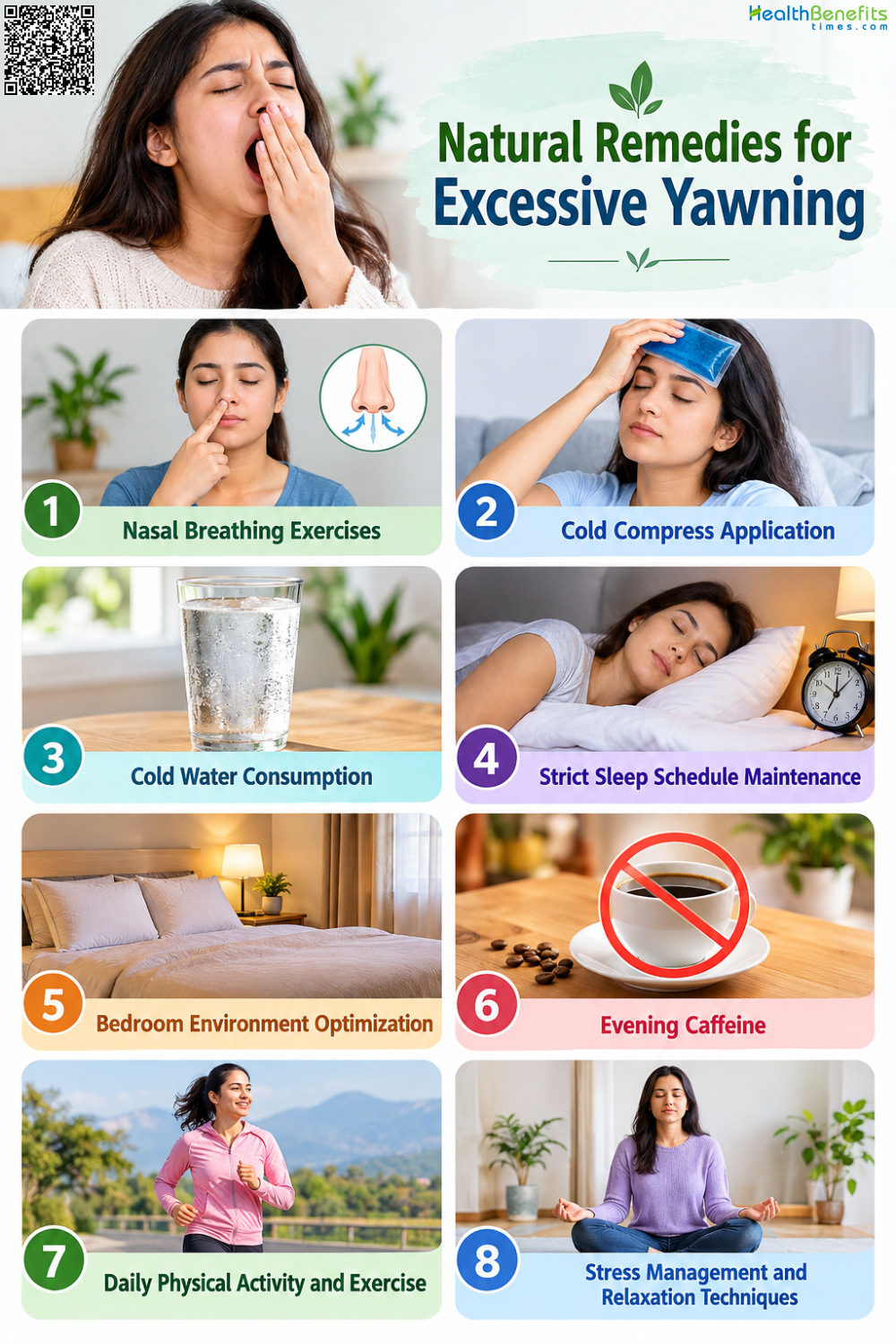
3. Cold Water Consumption
How it may help:
Drinking cold water helps lower internal temperature by cooling the blood flowing near the brain and major blood vessels in the throat. This internal thermal cooling satisfies the brain’s thermoregulatory needs, effectively stopping the biological trigger that causes frequent, excessive yawning 5.
What research says:
Clinical studies on brain thermoregulation reveal that core temperature changes directly influence yawning frequency. Research demonstrates that introducing cool stimuli, such as ingesting chilled liquids, successfully lowers brain temperature and significantly reduces or stops the occurrence of excessive yawning episodes 5.
How to use it safely:
To manage excessive yawning, drink a glass of cold water slowly when you notice frequent yawning beginning. Sip the liquid gradually rather than gulping it all at once to prevent sudden throat discomfort and to maintain a steady cooling effect inside your body 12.
Potential precautions or side effects:
Avoid drinking freezing liquids too quickly if you have sensitive teeth or a history of esophageal spasms, as extreme cold can trigger sudden discomfort 13.
4. Strict Sleep Schedule Maintenance
How it may help:
Maintaining a strict sleep schedule regulates the body’s internal circadian rhythm, directly reducing the daytime fatigue that triggers excessive yawning. Consistent rest ensures the brain undergoes complete, restorative sleep cycles, eliminating the physiological exhaustion that forces the yawning reflex to repeatedly activate 14.
What research says:
Clinical sleep studies conclude that irregular sleep-wake patterns severely disrupt circadian rhythms, directly causing excessive daytime sleepiness. Research confirms that adhering to a uniform daily sleep schedule consolidates restorative sleep phases, effectively treating daytime fatigue and related physical symptoms like compulsive yawning 15.
How to use it safely:
To implement this safely, establish a fixed bedtime and wake-up time, following it strictly every day, including weekends. Aim for seven to nine hours of continuous rest nightly. Avoid altering this routine by more than one hour to maintain consistent sleep alignment 16.
Potential precautions or side effects:
If you work irregular night shifts or suffer from severe insomnia, strict scheduling may temporarily worsen exhaustion. Consult a sleep specialist if severe yawning persists despite routine adjustments 17.
5. Bedroom Environment Optimization
How it may help:
Optimizing the bedroom environment directly improves nighttime sleep quality, addressing the primary cause of fatigue-induced excessive yawning. A dark, quiet, and cool room promotes uninterrupted, deep sleep cycles. This restorative rest eliminates the severe daytime exhaustion that typically triggers the body’s involuntary, repetitive yawning reflex 18.
What research says:
Clinical sleep research demonstrates that environmental factors, particularly ambient temperature and light exposure, critically influence sleep architecture. Studies conclude that maintaining a cool, dark room significantly reduces nighttime awakenings and increases deep sleep duration, effectively alleviating the chronic daytime drowsiness responsible for abnormal yawning patterns 19.
How to use it safely:
To optimize your sleep space, maintain a bedroom temperature between 60 to 67 degrees Fahrenheit (15 to 19 degrees Celsius). Block out external light using heavy curtains, and eliminate disruptive noises by utilizing earplugs or a white noise machine 14.
Potential precautions or side effects:
Avoid setting room temperatures excessively low, as extreme cold causes physical discomfort and disrupts sleep. Keep white noise machines at moderate volumes to prevent potential hearing damage over time 20.
6. Evening Caffeine
How it may help:
Limiting evening caffeine intake prevents chemically induced sleep disruptions, allowing for deeper, restorative rest. Because chronic fatigue is a primary trigger for excessive yawning, eliminating daytime drowsiness through high-quality nighttime sleep directly reduces the body’s physiological need to repeatedly activate the yawning reflex 14.
What research says:
Clinical studies demonstrate that consuming caffeine even six hours before bedtime significantly reduces total sleep time and fragments deep sleep cycles. Research concludes that this stimulant-induced sleep deprivation directly causes severe daytime fatigue, which neurologically triggers compensatory physiological behaviors, including excessive and repetitive yawning 21.
How to use it safely:
To improve sleep quality and stop daytime yawning, cease consuming all caffeinated beverages, including coffee, energy drinks, and certain sodas, at least six hours before bedtime. Substitute these stimulants with caffeine-free alternatives like water or herbal tea during the late afternoon and evening 22.
Potential precautions or side effects:
Abruptly stopping heavy caffeine consumption can cause temporary withdrawal symptoms, including severe headaches, irritability, and rebound fatigue. Gradually reduce your daily intake to minimize these physical side effects 23.
7. Daily Physical Activity and Exercise
How it may help:
Regular physical activity increases blood circulation and oxygen flow to the brain, naturally enhancing daytime alertness. By reducing overall daytime drowsiness and promoting better nighttime rest, daily exercise effectively eliminates the physiological fatigue that frequently triggers involuntary and repetitive yawning episodes 24.
What research says:
Clinical research concludes that engaging in regular aerobic exercise significantly improves sleep architecture and substantially decreases daytime sleepiness. Studies demonstrate that individuals who maintain consistent physical activity experience deeper, more restorative sleep, directly reducing compensatory behaviors caused by fatigue, such as excessive yawning 25.
How to use it safely:
To safely boost daytime energy, engage in at least 150 minutes of moderate aerobic exercise, such as brisk walking, each week. Schedule your physical activity during the morning or early afternoon to maximize daytime alertness without disrupting your nighttime sleep cycle 26.
Potential precautions or side effects:
Avoid performing vigorous workouts within three hours of bedtime. Late evening exercise elevates core body temperature and heart rate, potentially causing severe insomnia and worsening daytime fatigue 14.
8. Stress Management and Relaxation Techniques
How it may help:
Stress management lowers heightened anxiety levels, which directly provoke the nervous system. Chronic mental stress increases physical fatigue and alters autonomic responses. By calming the body’s nervous system, relaxation techniques prevent the severe physiological exhaustion that frequently triggers anxiety-induced, repetitive yawning 27.
What research says:
Clinical studies link acute psychological stress to abnormal, repetitive yawning reflexes. Research confirms that engaging in relaxation therapies, such as mindfulness, significantly decreases sympathetic nervous system hyperactivity. This measurable reduction in physiological stress directly limits the involuntary yawning episodes triggered by severe anxiety 9.
How to use it safely:
To manage stress-related yawning, practice mindfulness meditation or progressive muscle relaxation in a quiet environment for 15 minutes daily. Focus on slow, deep breathing to lower your heart rate. Incorporate these calming routines into your daily schedule for optimal results 9.
Potential precautions or side effects:
Some individuals may experience rare relaxation-induced anxiety. If meditation causes increased emotional distress or physical discomfort, immediately stop the practice and consult a qualified mental health professional 9.
Foods to Avoid When You Suffer from Excessive Yawning
1. Late-Day Caffeine
Consuming caffeinated drinks near bedtime disrupts nocturnal sleep architecture, causing severe next-day fatigue that directly triggers compensatory excessive yawning 17.
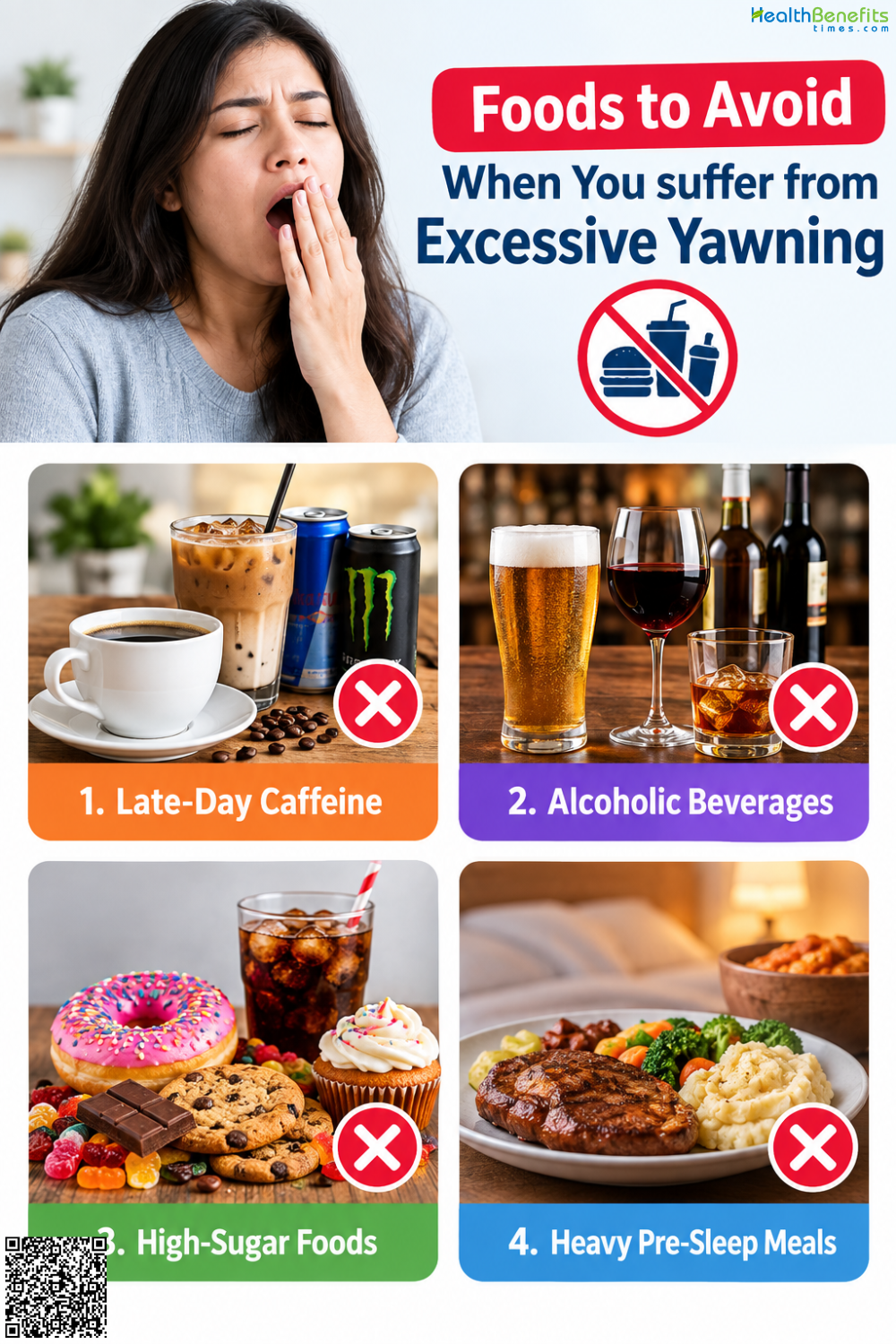
2. Alcoholic Beverages
Alcohol suppresses restorative REM sleep and fragments sleep cycles. This disruption causes chronic daytime drowsiness, significantly increasing the frequency of involuntary yawning episodes 28.
3. High-Sugar Foods
Refined sugary foods cause rapid blood glucose fluctuations. The subsequent sudden drop in blood sugar induces acute daytime lethargy, triggering the involuntary yawning reflex 29.
4. Heavy Pre-Sleep Meals
Eating large meals before bed causes digestive discomfort and disrupts natural circadian rhythms. This fragments rest, resulting in next-day exhaustion and recurrent yawning 14.
When to See a Doctor When You Struggle from Excessive Yawning
- Acute Neurological Symptoms: Seek emergency care if excessive yawning occurs with facial drooping, speech difficulty, or severe weakness. These deficits strongly indicate a serious neurological emergency, such as a stroke 1.
- Cardiovascular Distress: Consult a physician if continuous yawning presents with chest pain, shortness of breath, or fainting. This combination suggests a severe vasovagal reaction linked to a potential heart attack 1.
- Unrelieved Daytime Exhaustion: See a doctor if uncontrollable yawning accompanies severe daytime sleepiness despite adequate nightly rest. This clinical pattern frequently indicates an underlying sleep disorder, such as obstructive sleep apnea 30.
- New Medication Initiation: Schedule a medical evaluation if abnormal yawning begins after starting new prescription drugs. Specific medications, particularly serotonin-enhancing antidepressants, chemically trigger this reflex as a recognized side effect 4.
Comments
comments