

Causes of Eye Strain (Asthenopia)
1. Uncorrected Vision Problems
Uncorrected or under-corrected refractive errors, such as farsightedness (hyperopia), nearsightedness (myopia), and astigmatism, force the eye muscles to exert continuous effort to clear blurred images 3. Additionally, the natural age-related stiffening of the eye’s internal lens, known as presbyopia, reduces focusing flexibility and often triggers visual fatigue during close-up tasks 4.
2. Focusing System Dysfunctions
Eye strain frequently results from a failure in the eye’s internal focusing mechanism, known as the accommodative system. This manifests as either accommodative insufficiency, where the eye struggles to sustain the optical power needed for near work, or accommodative excess, where the focusing muscles spasm and fail to relax after extended close-up tasks.
3. Eye Coordination Imbalances
Weakness in the muscles that control eye movement requires extra effort to keep both eyes perfectly aligned. A primary example is convergence insufficiency, a condition where the eyes struggle to turn inward together to focus on a nearby target 5. Minor resting misalignments of the eyes, known clinically as heterophorias, similarly drain the visual system’s energy reserves and provoke discomfort.
4. Environmental and Task-Related Stressors
Intensive visual concentration directly triggers eye strain, particularly during sustained near-work activities like reading or detailed manual labor. Prolonged use of digital devices severely compounds this issue, as electronic screens demand constant refocusing and are often accompanied by poor environmental lighting or glare.
5. Medication Side Effects
Certain prescription and over-the-counter drugs chemically interfere with the nerve signals that control the eye’s focusing muscles. Medications such as antihistamines, tricyclic antidepressants, antipsychotics, and specific anti-anxiety drugs are known to disrupt normal visual accommodation and induce temporary eye strain.
6. Systemic Illness and Head Trauma
Underlying physical health conditions can compromise the nervous system’s ability to regulate eye function. Metabolic and systemic diseases like diabetes, thyroid dysfunction, and chronic anemia, as well as neurological events like concussions or mild traumatic brain injuries, frequently disrupt eye coordination and result in rapid visual fatigue.
Symptoms of Eye Strain (Asthenopia)
1. Blurred or Unstable Vision
Individuals frequently experience transient or persistent blurring of objects at both near and far distances. During reading or close-up work, words may appear to float, move, or stretch on the page, which directly impairs reading comprehension and reduces overall visual stamina.
2. Ocular Pain and Discomfort
A defining symptom is a localized sensation of dull pain, aching, or heavy eyelids. The eyes may feel hot, tired, or continuously uncomfortable, particularly after sustained visual tasks such as focusing on digital screens, reading, or performing detailed manual labor 6.
3. Headaches
Visual fatigue consistently triggers headaches, which are most commonly localized to the frontal region of the head or directly over the eyebrows. This referred pain develops because the intraocular muscles and surrounding tissues become physically overworked while attempting to continuously clear blurred images or maintain proper focus.
4. Double Vision or Diplopia
When the visual system lacks the endurance to maintain proper coordination, individuals may experience intermittent double vision. This separation of images occurs when the eyes momentarily drift out of alignment, causing the brain to fail at fusing the separate visual inputs from each eye into a single cohesive picture 7.
5. Fatigue and Decreased Concentration
Systemic exhaustion and behavioral changes are frequent secondary effects of visual strain. Patients commonly report drowsiness, generalized sleepiness, and a marked inability to sustain attention during near-work activities. In pediatric cases, this functional decline is frequently misinterpreted as behavioral inattention or academic underperformance rather than a physiological vision disorder.
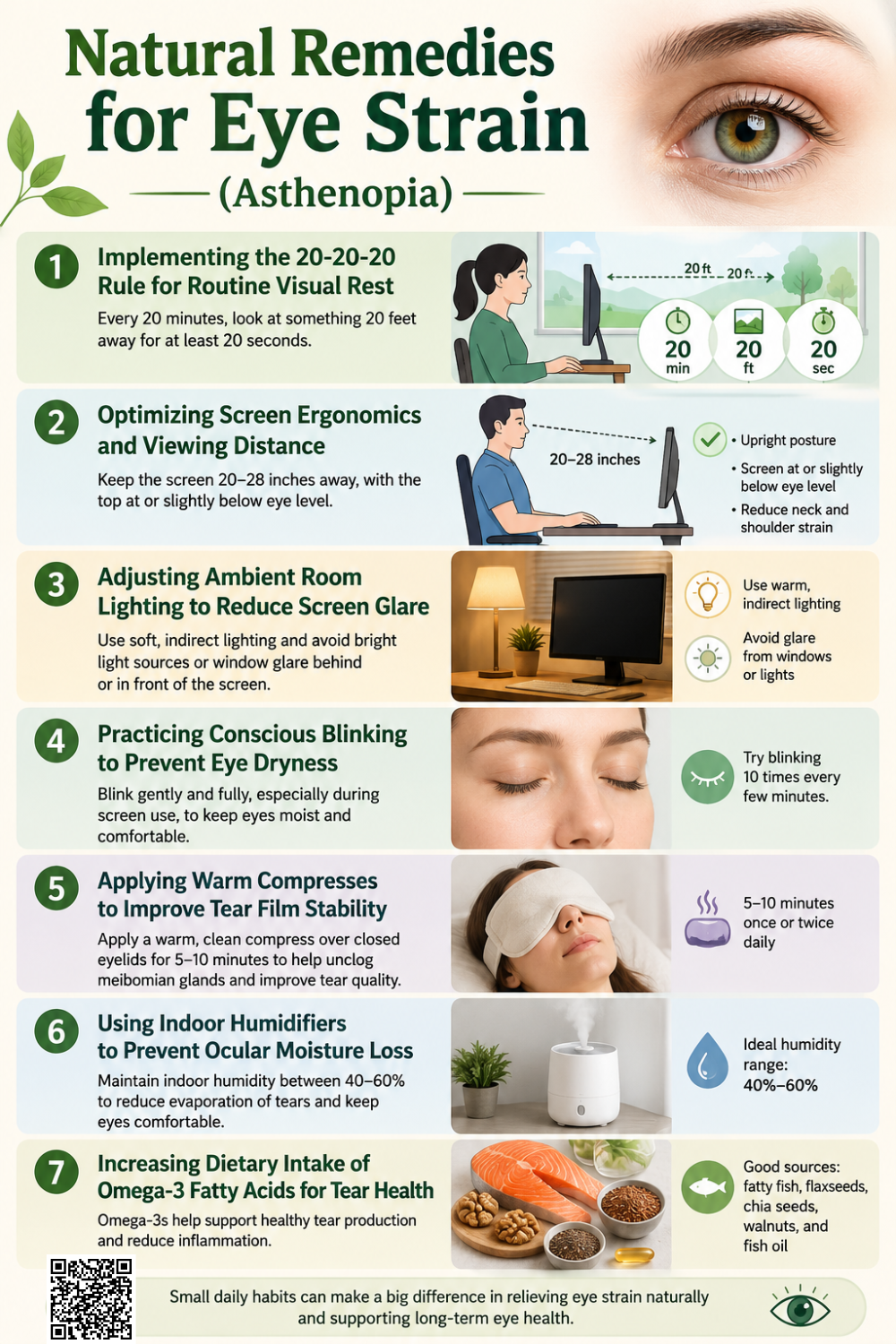
1. Implementing the 20-20-20 Rule for Routine Visual Rest
How it may help
Taking structured visual breaks directly interrupts the continuous workload placed on the eye’s focusing muscles. By shifting focus to a distant object, these muscles can fully relax. Additionally, pausing screen use naturally restores a normal blinking rate, which redistributes moisture over the eye and prevents uncomfortable dryness 8.
What research says
Clinical studies demonstrate that adopting the 20-20-20 rule—looking at something 20 feet away for 20 seconds every 20 minutes—significantly minimizes digital eye strain. Routine visual breaks successfully reduce reported symptoms of blurred vision, eye pain, and surface dryness by allowing the visual system to briefly recover.
How to use it safely
Set a recurring 20-minute timer on your computer or phone to remind yourself to look away. Identify an object at least 20 feet in the distance, such as looking out a window, and maintain a relaxed focus on it for 20 seconds.
Potential precautions or side effects
There are no physical risks or side effects associated with resting your eyes. However, frequent timed interruptions might briefly disrupt your workflow or concentration during demanding tasks.
2. Optimizing Screen Ergonomics and Viewing Distance
How it may help
Proper screen positioning reduces the physical workload on the eye’s focusing muscles. Positioning a monitor at a slight downward angle limits how widely the eyelids must open, which directly decreases the evaporation of natural tears. This prevents surface dryness and minimizes the continuous effort required to maintain clear vision.
What research says
Clinical reviews indicate that placing screens 20 to 28 inches away and 15 to 20 degrees below eye level significantly reduces digital eye strain symptoms. Research confirms that this specific downward viewing angle minimizes the exposed ocular surface area, effectively preventing rapid tear evaporation and associated discomfort.
How to use it safely
Position your computer monitor roughly an arm’s length away from your face. Adjust the screen height so the center sits slightly below your natural eye level. Ensure your chair provides adequate back support, allowing you to comfortably maintain this viewing distance without leaning forward.
Potential precautions or side effects
Incorrectly adjusting your desk height while changing monitor placement can induce neck or back pain. Always ensure your overall body posture remains neutral to avoid secondary musculoskeletal strain.
3. Adjusting Ambient Room Lighting to Reduce Screen Glare
How it may help
Harsh overhead lighting and bright reflections on a digital screen force the eyes to work harder to distinguish text and images. By matching the surrounding room light to the screen’s brightness, the eyes do not have to continuously adapt to extreme contrast. This minimizes squinting and directly reduces muscle strain 9.
What research says
Clinical reviews confirm that poor ambient lighting and screen glare are primary environmental triggers for visual fatigue. Studies conclude that minimizing screen reflections and avoiding excessive brightness from surrounding light sources significantly decrease the frequency and severity of computer vision syndrome symptoms, including headaches and ocular discomfort.
How to use it safely
Position your computer screen so that windows are to the side rather than directly in front of or behind you. Use adjustable blinds to block harsh sunlight, and opt for softer, indirect floor lamps instead of overly bright overhead lighting to create a balanced environment.
Potential precautions or side effects
Making a room excessively dark while viewing a bright screen can inadvertently worsen visual fatigue. Ensure the ambient lighting remains balanced with your device’s brightness to prevent severe contrast.
4. Practicing Conscious Blinking to Prevent Eye Dryness
How it may help
When concentrating on digital screens or detailed tasks, the natural blink rate drops significantly. This infrequency allows the protective tear layer to evaporate, causing friction and burning sensations. Intentionally blinking more often continuously redistributes moisture across the ocular surface, maintaining lubrication and relieving discomfort.
What research says
Clinical studies confirm that visual attention during screen use reduces the spontaneous blink rate by up to 60 percent, leading to rapid tear film instability. Research concludes that practicing conscious, complete blinking exercises effectively replenishes the tear film layer and significantly reduces the severity of digital eye strain.
How to use it safely
Make a conscious effort to blink fully and gently every few minutes while working. Periodically close your eyes completely for two to three seconds to ensure a fresh, even layer of tears successfully coats the entire exposed surface of your eyes.
Potential precautions or side effects
There are no adverse physical side effects to voluntary blinking. However, forcefully squeezing the eyelids shut rather than closing them gently can temporarily blur vision and cause minor muscle fatigue.
5. Applying Warm Compresses to Improve Tear Film Stability
How it may help
Applying controlled heat to the closed eyelids melts the hardened oils within the tiny glands located along the eyelid margins. Releasing these natural oils reinforces the outermost layer of the tear film, which prevents moisture from evaporating too quickly and relieves the dry, gritty sensations associated with eye strain 10.
What research says
Clinical research demonstrates that applying warm compresses significantly improves meibomian gland function and overall tear film stability. Studies conclude that routine heat therapy increases the thickness of the tear’s lipid layer, which directly reduces rapid tear evaporation and alleviates the symptoms of visual fatigue and ocular dryness.
How to use it safely
Soak a clean washcloth in warm—not hot—water and wring out the excess moisture. Place the damp cloth gently over your closed eyelids for five to ten minutes. Reheat the cloth as necessary to maintain a consistent, soothing temperature throughout the application.
Potential precautions or side effects
Avoid using excessively hot water, as the delicate skin on the eyelids is highly susceptible to thermal burns. Never apply firm pressure to the eyes during the treatment.
6. Using Indoor Humidifiers to Prevent Ocular Moisture Loss
How it may help
Adding moisture to indoor air prevents the protective tear film from evaporating too rapidly in dry, air-conditioned, or heated environments. Maintaining adequate room humidity keeps the ocular surface lubricated, which directly reduces the burning, grittiness, and irritation that significantly worsen overall visual fatigue.
What research says
Clinical reviews indicate that low indoor humidity accelerates tear evaporation and severely exacerbates the symptoms of digital eye strain. Research concludes that increasing ambient room humidity effectively stabilizes the tear film, thereby improving ocular comfort and reducing visual fatigue during prolonged tasks.
How to use it safely
Place a humidifier in your primary workspace or bedroom to maintain indoor humidity levels between 40 and 60 percent. Always use distilled water and clean the device regularly according to the manufacturer’s instructions to ensure optimal air quality.
Potential precautions or side effects
Failing to routinely clean the humidifier can allow harmful mold and bacteria to grow, which may trigger respiratory issues or allergic reactions when dispersed into the air.
7. Increasing Dietary Intake of Omega-3 Fatty Acids for Tear Health
How it may help
Omega-3 fatty acids reduce inflammation and support the function of the meibomian glands, which produce the protective oil layer of the tear film. By enhancing this oil production, omega-3s prevent tears from evaporating too quickly, keeping the ocular surface lubricated and relieving the friction that contributes to visual fatigue 11.
What research says
Clinical trials conclude that routine supplementation with omega-3 fatty acids significantly improves tear film stability and increases natural tear production. Research confirms that patients consuming adequate omega-3s experience a measurable reduction in dry eye symptoms and overall ocular discomfort associated with prolonged visual strain.
How to use it safely
Incorporate foods rich in omega-3s, such as salmon, mackerel, chia seeds, and walnuts, into your regular diet. If you choose to take over-the-counter fish oil or flaxseed oil supplements, consult with a healthcare provider to determine the correct dosage for your specific health needs.
Potential precautions or side effects
High doses of omega-3 supplements can increase the risk of bleeding and may interact with blood-thinning medications. Mild side effects can include a fishy aftertaste, heartburn, or gastrointestinal upset.
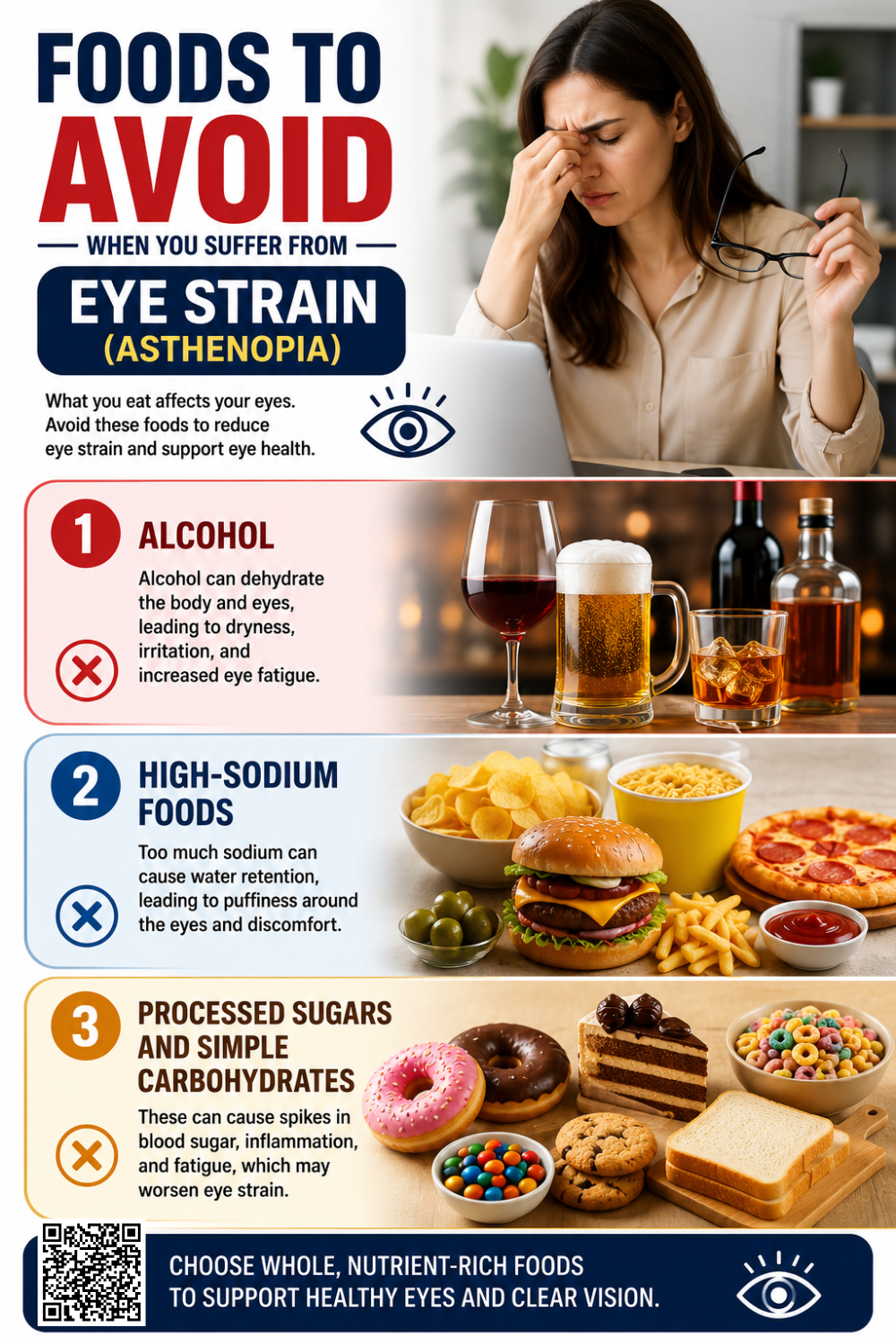
1. Alcohol
Alcohol consumption dehydrates the body and accelerates tear evaporation. This rapid moisture loss reduces tear film stability, directly worsening the discomfort and dryness associated with visual fatigue 12.
2. High-Sodium Foods
Diets heavily reliant on salt disrupt systemic hydration levels. Excessive sodium intake is clinically correlated with a significantly increased risk of dry eye syndrome, aggravating existing ocular strain 13.
3. Processed Sugars and Simple Carbohydrates
High-sugar diets trigger systemic inflammation and elevate blood glucose. This inflammatory response damages the ocular surface and compromises the glands responsible for tear lubrication, intensifying eye fatigue.
When to See a Doctor for Eye Strain (Asthenopia)
1. Persistent Symptoms
If visual discomfort or headaches continue despite routine breaks, seek clinical evaluation. This helps identify and correct underlying refractive errors or focusing dysfunctions.
2. Double Vision
Experiencing intermittent or constant double vision requires immediate medical assessment. It often indicates significant ocular muscle imbalances or underlying neurological conditions requiring targeted treatment.
3. Severe Ocular Pain
Intense, sharp pain within or behind the eye is abnormal for standard fatigue. It strongly suggests acute pathologies like elevated eye pressure or inflammation, demanding urgent intervention 14.
4. Sudden Vision Changes
A rapid onset of profound blurriness, blind spots, or flashing lights demands emergency evaluation to rule out severe structural emergencies like retinal damage 15.
Comments
comments