

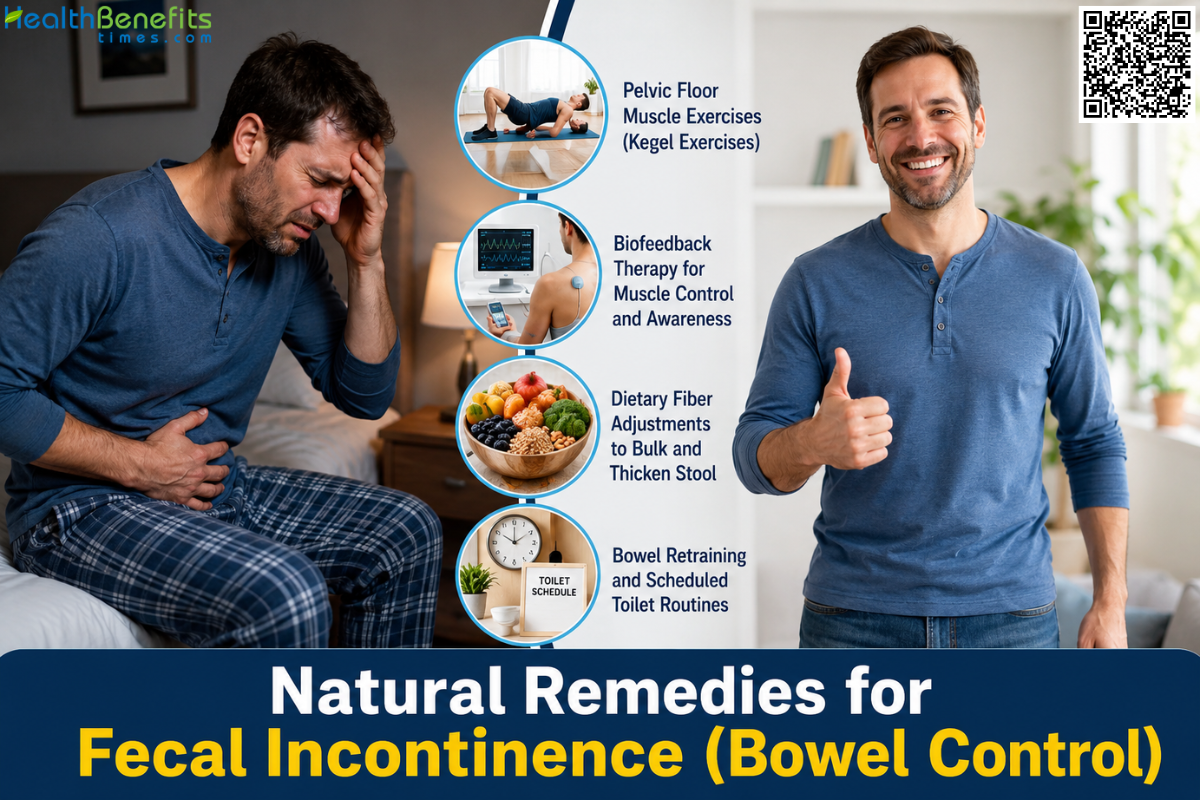
Causes of Fecal Incontinence (Bowel Control)
1. Muscle Damage
Injury to the ring-like muscles at the end of the digestive tract makes it difficult to hold stool back properly. This physical damage most frequently occurs during complicated childbirth, particularly if instruments were used, or as a complication of surgery to treat conditions in the anal area.
2. Nerve Damage
When the nerves that sense stool in the rectum or control the surrounding muscles are injured, the brain may not receive the signal to hold in a bowel movement. Common sources of this nerve damage include childbirth, severe straining during bowel movements, spinal cord injuries, and chronic medical conditions such as diabetes and multiple sclerosis.
3. Chronic Constipation
Long-term constipation can cause a large, hard mass of stool to become stuck in the lower bowel, leading the surrounding muscles to stretch and eventually weaken. Over time, watery stool from higher up in the digestive tract can leak out around the hard mass of stool.
4. Diarrhea
Loose, watery stool fills the rectum much faster and is significantly harder to hold inside the body than solid stool, making diarrhea a leading and immediate trigger for unexpected leakage.
5. Loss of Rectal Storage Capacity
Normally, the lower bowel stretches to temporarily store stool until a person can reach a bathroom. If the tissue becomes scarred or stiffened from conditions like inflammatory bowel disease (such as Crohn’s disease or ulcerative colitis), radiation therapy, or previous surgery, it cannot stretch adequately, leading to frequent leakage.
6. Pelvic Floor Dysfunction
Abnormalities in the coordination or strength of the pelvic floor muscles can impair normal bowel control. This includes structural issues where the rectum drops down into the anus (rectal prolapse) or when the rectum pushes through the wall of the vagina.
7. Hemorrhoids
Swollen blood vessels in the lower rectum and anus can prevent the surrounding muscles from closing completely, creating small gaps that allow mucus or liquid stool to escape unexpectedly.
Symptoms of Fecal Incontinence (Bowel Control)
1. Passive Incontinence
Passing solid or liquid stool without the physical awareness or sensation that a bowel movement is occurring.
2. Urge Incontinence
Experiencing a sudden, intense need to empty the bowels and lacking the physical strength to hold the stool inside long enough to reach a restroom.
3. Leakage Associated with Gas
Unintentionally releasing small amounts of liquid stool or mucus when passing gas, which is often caused by a weakened ability to distinguish between air and physical matter in the lower digestive tract.
4. Stool Smearing
Discovering streaks of stool or mucus on underwear throughout the day, which frequently occurs despite thorough cleaning after a conscious bowel movement.
5. Accompanying Digestive Discomfort
Individuals experiencing unexpected bowel leakage also frequently present with associated gastrointestinal symptoms, including chronic diarrhea, severe constipation, abdominal cramping, and severe bloating.
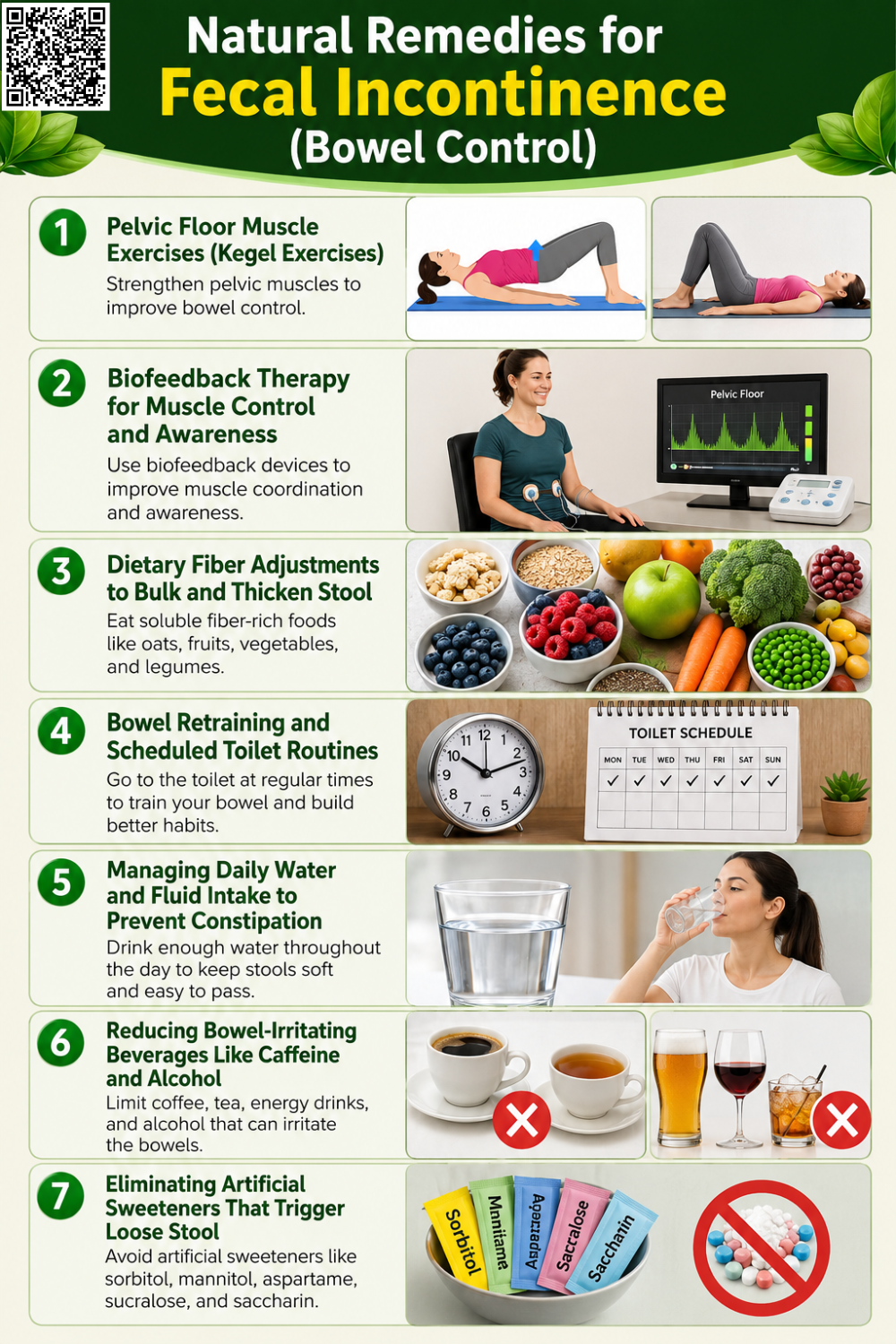
1. Pelvic Floor Muscle Exercises (Kegel Exercises)
How it may help
Pelvic floor muscle exercises, commonly called Kegel exercises, strengthen the muscles surrounding the anus and rectum. By building strength in these specific muscles, individuals can improve their physical ability to keep the anus closed, hold stool inside the body longer, and successfully delay a bowel movement until they reach a bathroom 3.
What research says
Clinical evidence demonstrates that pelvic floor muscle training effectively reduces the frequency and severity of accidental bowel leakage. Research indicates these exercises produce the best long-term results and significant improvements in daily bowel control when patients perform them consistently over several weeks or combine them with professional biofeedback therapy.
How to use it safely
To perform them correctly, squeeze the muscles you would use to stop passing gas. Hold the contraction for three to five seconds, then fully relax. Repeat this process for ten to fifteen repetitions, completing three sets daily. Breathe naturally without tightening your stomach or thigh muscles 4.
Potential precautions or side effects
Overworking these muscles can cause muscle fatigue, which may temporarily worsen bowel leakage. If you experience pain in your stomach or lower back, you are likely squeezing the wrong muscle groups.
2. Biofeedback Therapy for Muscle Control and Awareness
How it may help
Biofeedback therapy uses specialized sensors and computer monitors to display pelvic floor muscle activity. This real-time visual guidance helps individuals correctly identify the muscles that control the anus. It teaches them how to effectively strengthen these targeted muscles and improves their physical awareness of a full rectum.
What research says
Clinical studies conclude that biofeedback therapy is a highly effective treatment for improving bowel control. Research demonstrates that this guided training significantly reduces the frequency of accidental leakage by helping patients build stronger, better-coordinated pelvic floor muscles and increasing their ability to sense when stool enters the lower bowel.
How to use it safely
To use this therapy safely, you must work directly with a specially trained physical therapist or healthcare provider. Attend your scheduled clinical sessions, carefully follow the professional’s real-time instructions to ensure correct technique, and consistently practice the assigned exercises at home between your appointments.
Potential precautions or side effects
Biofeedback is a non-invasive, safe procedure with no serious side effects. However, you might experience temporary, mild muscle soreness in the pelvic area when first beginning the new strengthening exercises.
3. Dietary Fiber Adjustments to Bulk and Thicken Stool
How it may help
Dietary fiber acts like a sponge in the digestive tract, absorbing excess water to bulk up and thicken loose stool. Creating a more solid, well-formed stool makes it significantly easier for the pelvic muscles and rectum to successfully hold the stool inside the body, preventing unexpected watery leakage 5.
What research says
Clinical guidelines confirm that increasing dietary fiber intake effectively reduces episodes of accidental bowel leakage. Research shows that achieving a total daily intake of 20 to 30 grams of fiber significantly improves stool consistency, resolving both the chronic diarrhea and severe constipation that frequently trigger incontinence.
How to use it safely
Gradually add fiber-rich foods, such as whole grains, beans, fruits, and vegetables, to your daily meals. Increase your intake slowly over several weeks to allow your body time to adjust. You must drink plenty of water alongside increased fiber to maintain soft, passable stool.
Potential precautions or side effects
Adding dietary fiber too rapidly can cause temporary stomach cramping, severe gas, and bloating. Failing to drink enough water with increased fiber can worsen constipation and trigger further leakage.
4. Bowel Retraining and Scheduled Toilet Routines
How it may help
Bowel retraining establishes a predictable daily schedule for emptying the lower digestive tract. By encouraging the body to release stool at specific, planned times—such as shortly after meals—individuals can ensure their rectum remains empty throughout the rest of the day, significantly reducing the risk of sudden, unexpected leakage.
What research says
Clinical evidence shows that scheduled toilet routines effectively treat accidental bowel leakage, especially for individuals experiencing chronic constipation or a lack of physical awareness when the rectum is full. Consistently sitting on the toilet at the same times daily successfully trains the body’s internal clock to produce regular, predictable bowel movements.
How to use it safely
Sit on the toilet at the exact same times every day, typically 20 to 30 minutes after eating a meal. Stay seated for about 10 to 15 minutes to allow your body time to respond. Relax your muscles fully and avoid severe straining or pushing.
Potential precautions or side effects
Avoid pushing forcefully or straining while sitting on the toilet. Straining can cause painful hemorrhoids or weaken your pelvic floor muscles, which may ultimately worsen your bowel leakage.
5. Managing Daily Water and Fluid Intake to Prevent Constipation
How it may help
Drinking sufficient water and clear fluids maintains moisture in the digestive tract, preventing stool from becoming hard and difficult to pass. This directly helps avoid severe constipation, a condition where a hard mass blocks the lower bowel and allows watery stool to leak out unexpectedly around the blockage.
What research says
Clinical guidelines state that consuming enough daily fluids is essential for treating accidental bowel leakage caused by chronic constipation. Medical experts conclude that combining increased water intake with dietary fiber effectively produces softer, bulkier stools that are much easier for the body to control and pass normally.
How to use it safely
Aim to drink plenty of clear liquids, primarily water, throughout the entire day to support healthy digestion. You should drink enough water to keep your urine pale yellow. Always gradually increase your daily fluid intake whenever you add more dietary fiber to your meals.
Potential precautions or side effects
Consult a healthcare provider before significantly increasing fluids if you have heart or kidney disease, as these medical conditions often require strict daily limits on total water intake.
6. Reducing Bowel-Irritating Beverages Like Caffeine and Alcohol
How it may help
Caffeine and alcohol can irritate the digestive tract and act as laxatives, causing the bowels to empty rapidly. By reducing or eliminating these irritating beverages, individuals can slow down digestion and prevent the formation of loose, watery stool, which is much harder for the body to control.
What research says
Clinical guidelines emphasize that avoiding caffeinated and alcoholic drinks is a primary dietary strategy for managing accidental bowel leakage. Medical experts confirm that these beverages overstimulate the digestive system and frequently trigger diarrhea, which is a leading direct cause of unexpected incontinence.
How to use it safely
Gradually replace coffee, regular tea, and alcoholic drinks with water or decaffeinated alternatives to support normal bowel function. If you choose to consume these beverages, limit them to small amounts and closely monitor whether they trigger a sudden need to use the bathroom.
Potential precautions or side effects
Stopping caffeine abruptly can cause temporary withdrawal symptoms, such as severe headaches and fatigue. Slowly reduce your daily intake over several days to minimize these uncomfortable effects.
7. Eliminating Artificial Sweeteners That Trigger Loose Stool
How it may help
Artificial sweeteners, particularly sugar alcohols like sorbitol and xylitol, are poorly absorbed by the digestive tract and can draw excess water into the bowels. By eliminating these ingredients, individuals can prevent the watery diarrhea and severe gas that frequently lead to unexpected bowel leakage.
What research says
Clinical guidelines recommend avoiding artificial sweeteners and excessive fructose to manage accidental bowel leakage. Medical experts conclude that these specific food additives act as osmotic laxatives, significantly accelerating digestion and causing loose, unformed stools, which are much harder for weakened pelvic muscles to control.
How to use it safely
Carefully read food and beverage labels to identify and avoid hidden sugar substitutes, especially sorbitol, xylitol, and mannitol. Pay close attention to products marketed as “sugar-free,” such as chewing gum, diet drinks, and low-calorie candies, as these frequently contain ingredients that trigger sudden bowel urgency.
Potential precautions or side effects
Removing artificial sweeteners is entirely safe and has no negative side effects. However, replacing them with high-sugar foods can negatively impact blood glucose levels if you have diabetes.
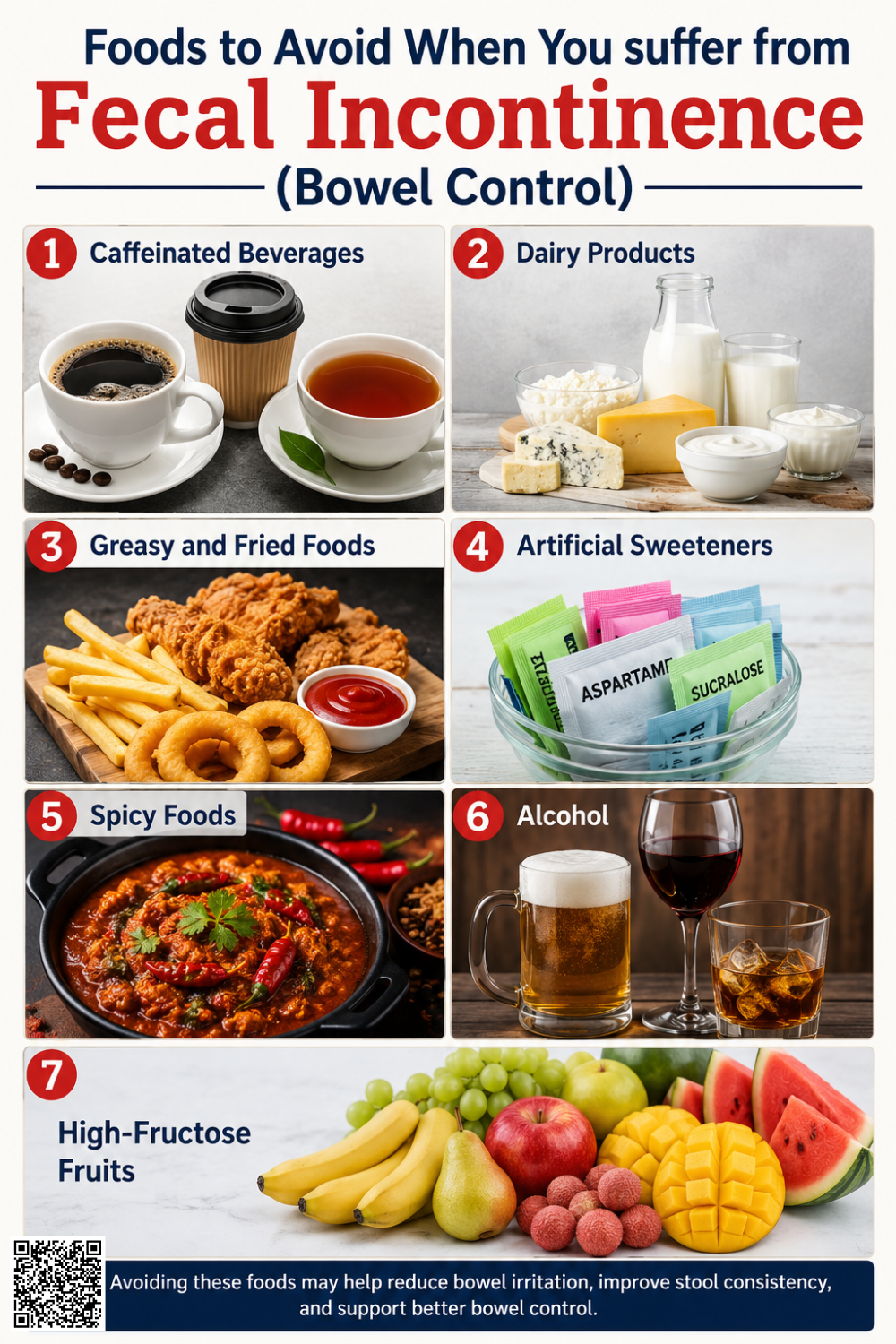
1. Caffeinated Beverages
Coffee and regular tea stimulate the digestive tract, acting as laxatives that speed up digestion and trigger loose stools.
2. Dairy Products
Milk and cheese can cause severe gas, bloating, and watery diarrhea in individuals who have difficulty digesting lactose.
3. Greasy and Fried Foods
High-fat foods are difficult to digest and frequently cause the bowels to empty rapidly, resulting in hard-to-control liquid stools.
4. Artificial Sweeteners
Sugar substitutes like sorbitol and xylitol, found in diet drinks and sugar-free gum, draw excess water into the bowel, causing severe diarrhea.
5. Spicy Foods
Spices can irritate the lining of the lower digestive tract, leading to painful cramping and sudden, urgent bowel movements.
6. Alcohol
Alcoholic beverages disrupt normal bowel function by acting as a stimulant, which accelerates digestion and frequently results in unexpected watery leakage.
7. High-Fructose Fruits
Fruits containing large amounts of fructose, such as apples, pears, and peaches, act as natural laxatives and can trigger sudden.
When to See a Doctor When You Suffer From Fecal Incontinence (Bowel Control)
1. Frequent or Recurring Leakage
Consult a healthcare provider if accidental bowel leakage happens repeatedly or forces you to avoid normal daily activities and social interactions.
2. Visible Blood in Stool
Seek immediate medical evaluation if you notice red blood in your stool or if your stool appears black, which strongly indicates internal gastrointestinal bleeding.
3. Chronic Bowel Changes
Schedule an appointment if your loss of bowel control is accompanied by persistent, severe diarrhea or long-term constipation that basic dietary adjustments cannot resolve.
4. Unexplained Weight Loss
A medical assessment is necessary if bowel leakage occurs alongside sudden, unintentional weight loss, as this combination frequently signals a serious underlying digestive disorder.
5. Severe Abdominal Pain
Seek urgent clinical care if your bowel control problems are accompanied by sudden, intense abdominal pain or severe cramping that does not go away.
Comments
comments