


Causes of FLU
Grasping the root cause of your illness helps demystify the experience of being sick. You contract the flu through a few specific pathways, all driven by microscopic pathogens.
1. Viral Pathogens
Your infection is caused by viruses belonging to the Orthomyxoviridae family, which aggressively invade the epithelial cells lining your respiratory tract 1.
2. Aerosolized Droplets
When an infected person near you coughs, sneezes, or simply talks, they expel tiny, virus-laden respiratory droplets into the air that you subsequently inhale.
3. Fomite Transmission
You can also inadvertently infect yourself by touching contaminated surfaces, such as doorknobs or shared keyboards and then touching your own eyes, nose, or mouth 2.
4. Prolonged Contagiousness
You remain capable of spreading the virus to others from approximately one day before your own symptoms even appear until about five to seven days after you first feel sick 1.
5. Continuous Mutation
The reason you can catch the flu year after year is because these viruses are constantly undergoing genetic changes, rendering your previous immunity only partially effective against new, emerging strains.
Symptoms of FLU
Feeling miserable is the hallmark of this infection, but the specific signs tell a deeper story about how your body is fighting back. You can differentiate the flu from milder respiratory infections by looking for these sudden, severe indicators.
1. Constitutional Pyrexia
You will likely experience a sudden, high fever accompanied by intense sweating and shivering chills, though it is important to note that not every flu patient develops a fever 3.
2. Systemic Myalgia
Severe muscle and body aches will radiate through your limbs and back, making even the simplest movements feel exhausting 4.
3. Profound Fatigue
An overwhelming sense of tiredness and weakness will force you to remain in bed, often persisting long after the fever breaks 1.
4. Respiratory Distress
You will develop a persistent, dry cough alongside a sore throat and severe nasal congestion 1.
5. Neurological Pain
Frontal or retro-orbital headaches are incredibly common, often presenting with a distinct sensitivity to light and deep ocular pain 4.
6. Gastrointestinal Upset
While much more common in young children than in adults, you may occasionally experience bouts of vomiting and diarrhea 5.
FLU Facts table
Navigating the immense amount of information surrounding seasonal illness can be overwhelming. To provide you with clarity, here is a structured breakdown of the most critical facts regarding the disease.
| Category | Key Facts |
| Symptoms |
|
| Transmission |
|
| Vulnerabilities |
|
| Types of FLU
6. |
|
| How does spread
|
|
| Causes of FLU
|
|
| Age Group
2.
|
|
| You might be at a higher risk for exposure of this disease if you:
7. 8.
|
|
| How doctors diagnose
|
|
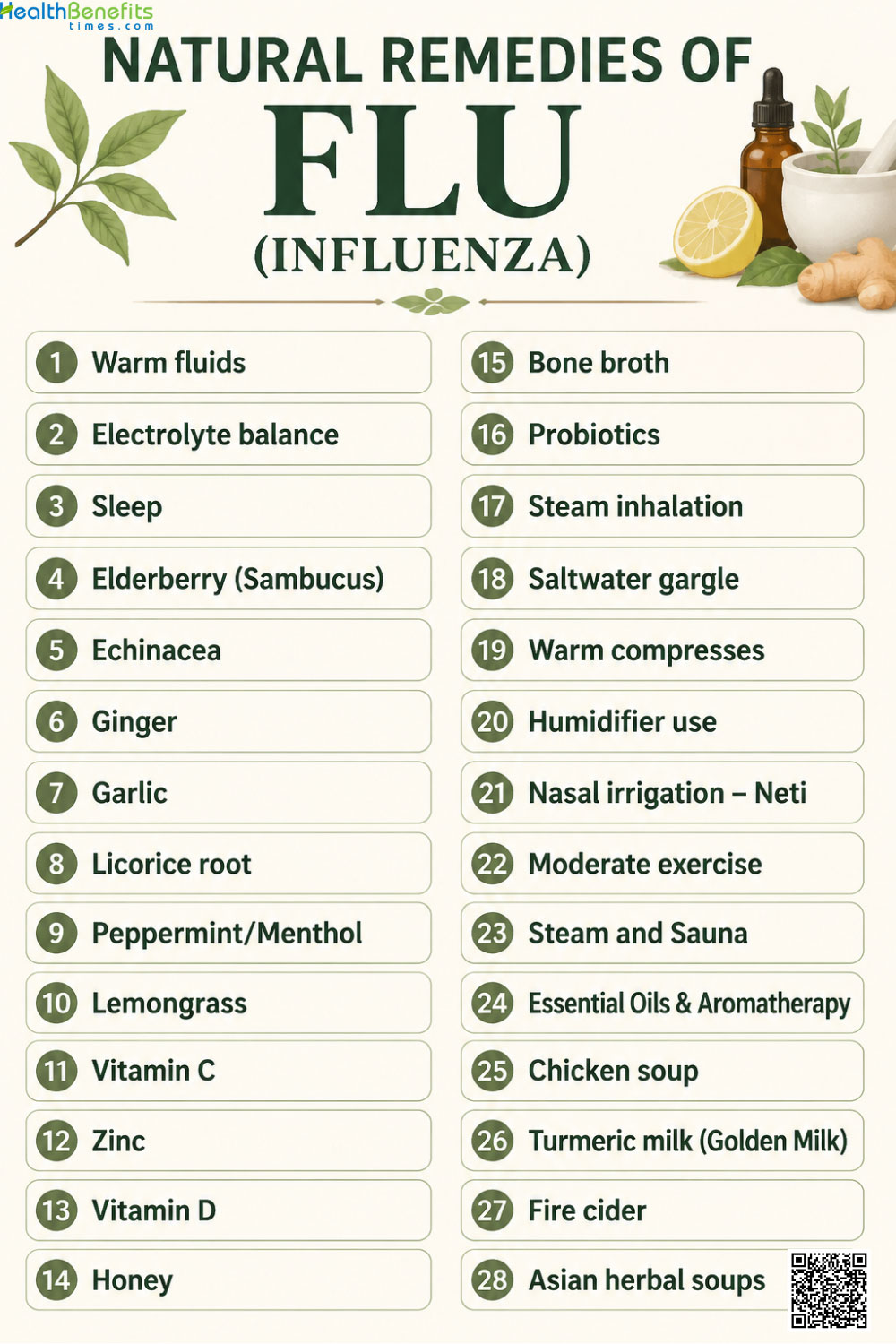
Natural Remedies of FLU
When conventional medicine focuses solely on suppressing symptoms, natural remedies step in to support your body’s inherent healing mechanisms. Embracing these strategies can help you recover faster while keeping you comfortable.
Hydration & Rest
1. Warm fluids
If you’ve ever wondered why a hot cup of tea feels so good when you’re sick, the answer often comes back to what warm liquids do inside your body. Drinking hot herbal teas, clear broths, or warm water with fresh lemon helps thin the thick mucus stuck in your respiratory tract 9. That makes it easier to breathe and clear congestion. Warm liquids also soothe your sore, inflamed throat. And when you’re completely wiped out, there’s a simple comfort in holding something warm it genuinely helps you feel a little better, even mentally.
2. Electrolyte balance
If you’ve ever wondered why the flu leaves you feeling so weak and dizzy, the answer often comes back to what you’re losing through sweat. When a fever hits, your body sweats out key minerals not just water. That loss can quickly throw off your electrolyte balance, making muscle cramps and dizziness worse. Drinking natural coconut water or a simple homemade oral rehydration solution helps replace what’s been lost and keeps your cells properly hydrated 10.
3. Sleep
Fighting off a virus takes a massive amount of energy more than most people realize. That’s why rest isn’t just helpful when you have the flu; it’s essential. While you sleep, your nervous system shifts into a calmer state, and your body ramps up production of cytokines proteins that help fight the infection 10.
Herbal Remedies
4. Elderberry (Sambucus)
Few foods have had their reputation shift as dramatically as elderberry. Once a folk remedy passed down through generations, it’s now backed by real clinical evidence. Dark elderberry syrup is packed with powerful plant compounds phenolics and lectins that give it its deep color and health benefits. If you start taking elderberry extract right when flu symptoms first appear, research shows it can shorten your illness by about two days on average 11. That’s a meaningful difference when you’re stuck in bed.
5. Echinacea
In traditional medicine, echinacea has been used for centuries to fight off infections. Now, researchers are examining those claims more closely and the results are encouraging. The roots and flowers of this plant help activate your body’s natural immune defenses. Studies show that taking echinacea can shorten how long a cold or flu lasts. It may also lower your chances of getting sick again 11.
6. Ginger
Fresh ginger root contains compounds called gingerols and shogaols. These aren’t just flavor they actively calm inflammation in your body. A strong cup of ginger tea can help ease a sore throat, clear congestion, and settle nausea brought on by the flu 11.
7. Garlic
Most people think of garlic as a flavor booster, not a flu fighter. But there’s more going on inside that clove than meets the eye. When you crush or chop fresh garlic, it releases a sulfur compound called allicin. Allicin has strong antimicrobial properties that can help your immune system fight off viruses more effectively 12.
8. Licorice root
What sets licorice root apart from most herbal remedies is a compound called glycyrrhizin a naturally occurring substance that directly interferes with how the flu virus copies itself inside your cells 13. Essentially, it blocks the enzyme the virus needs to multiply. On top of that, licorice root works as a gentle expectorant, helping soothe a sore, irritated throat.
9. Peppermint/Menthol
Peppermint contains menthol a natural compound known for its cooling, decongestant effect on the airways. When you inhale it, you feel that instant opening sensation in your nose and chest. But menthol does more than just clear congestion. It also has antiviral and anti-inflammatory properties, which means it can help soothe the irritated, swollen tissues in your respiratory tract 12.
10. Lemongrass
If you’ve ever wondered why lemongrass tea feels so soothing when you’re under the weather, the answer may go beyond just warmth and aroma. Lemongrass extract is packed with essential oils. And in lab studies, those oils have shown real antiviral activity against several respiratory viruses the kind that cause flu-like illness 12. So brewing a cup isn’t just comforting. It might actually be working in your favor.
Nutritional Support
11. Vitamin C
Your immune cells burn through vitamin C fast when you’re fighting an infection. Eating citrus fruits, bell peppers, or taking a good supplement helps supply the antioxidants your body needs. This can reduce lung damage and protect your organs during severe respiratory distress 14.
12. Zinc
The way zinc fights the flu comes down to a relatively simple mechanism: it physically blocks the virus from copying itself inside the lining of your throat 15. You can get zinc through lozenges or by eating foods like pumpkin seeds and legumes. Either way, research shows it can noticeably shorten how long flu symptoms last.
13. Vitamin D
Most people don’t think of vitamin D as a flu-fighting tool, but it plays a surprisingly important role in how your immune system handles infections. This fat-soluble vitamin helps keep your immune cells specifically macrophages from overreacting and causing too much inflammation. At the same time, it helps protect your lung tissue from the kind of serious damage that a viral infection can cause 14.
14. Honey
You’ve likely heard that honey is good for a cough. What you might not know is why it works so well. Raw honey has natural antiviral properties, thanks to its thick consistency and the hydrogen peroxide it produces on its own 14. In fact, it can work just as well as many over-the-counter cough syrups. One important warning, though: never give honey to children under one year old. It carries a risk of botulism in infants.
15. Bone broth
How you prepare food during illness matters more than most people realize and bone broth is a good example of why. When animal bones are slowly simmered, they release minerals, amino acids, and collagen in a form your body can absorb easily. It’s gentle on your stomach, helps repair cells, and replaces the electrolytes you lose from sweating with a fever 10.
16. Probiotics
A growing body of research links your immune health to your gut and probiotics play a specific role in that connection. A surprising amount of your immune system actually lives in your gut. That’s why what you feed it matters. Eating probiotic-rich foods like kefir, or taking the right supplements, can help you get sick less often and when you do catch a cold or upper respiratory infection, it may not hit as hard 16.
Ways to Ease Physical Discomfort
17. Steam inhalation
Your body responds to steam in a specific way one that brings instant relief to irritated airways. Breathing in warm, moist air sends moisture straight to your inflamed bronchial passages, soothing them on contact. Adding a few drops of eucalyptus oil can help loosen thick mucus and noticeably cut down on dry, painful coughing 17.
18. Saltwater gargle
The way a saltwater gargle eases a sore throat comes down to a relatively simple mechanism: the salt pulls excess fluid out of swollen tissue in your throat. Think of it like a sponge working in reverse. The saltwater is more concentrated than the fluid in your inflamed throat, so moisture naturally moves outward and the swelling goes down with it. The relief is temporary, but it kicks in fast, especially during those first miserable days when swallowing feels like a chore 17.
19. Warm compresses
If you’ve ever wondered why a warm towel on your face feels so relieving when you’re sick, the answer comes back to blood flow. Placing a warm, damp cloth on your forehead and over your sinuses helps open up the blood vessels in that area. This eases the pounding headache behind your eyes and relieves that stuffy, blocked-up feeling in your sinuses 18.
20. Humidifier use
Winter air is notoriously dry, and that dryness can take a toll on your respiratory system. Your nasal passages and throat rely on a thin layer of moisture to trap and clear out viruses. When that moisture disappears, your body’s first line of defense weakens. A cool-mist humidifier helps by keeping the air in your room from drying out your airways, so the tiny hair-like structures in your nose and throat can do their job sweeping away viral particles before they settle in 19.
21. Nasal irrigation – Neti
How you prepare your nasal rinse matters more than most people realize using the wrong water can turn a simple remedy into a serious risk. A neti pot works by flushing a gentle saline solution through your sinus passages. This physically washes out thick mucus, virus particles, and trapped allergens, helping you breathe easier 18. But there’s one rule you should never skip: always use sterile, distilled, or previously boiled water. Tap water can carry organisms that are harmless in your stomach but dangerous if they reach your sinuses or brain 20.
22. Moderate exercise
Many people assume complete rest is the only answer when the flu hits. But that assumption doesn’t always hold up once your fever breaks. 21 While you’re still running a fever, your body genuinely needs full rest. Once the fever passes and you start feeling noticeably better, though, gentle movement can actually help. Something as simple as light stretching or a slow walk gets your lymphatic system moving which supports your body’s natural cleanup process without draining the energy your immune system still needs.
23. Steam and Sauna
Your body responds to a sauna in a specific way one that works in your favor when you’re fighting the flu. The high heat mimics what happens during a fever, raising your core temperature on purpose. This makes you sweat heavily, which helps flush out waste from your cells. At the same time, that deep warmth loosens up tight, sore muscles the kind that make every movement miserable when you’re sick.
24. Essential Oils & Aromatherapy
Your body responds to essential oils in a specific way one that goes beyond just making a room smell nice. Diffusing oils like tea tree, rosemary, and clove can help clear airborne bacteria from your living space. Breathing in these natural compounds also tends to ease stress and lift your mood which matters a lot when you’re stuck at home feeling awful 21.
Traditional Remedies from Around the World
25. Chicken soup
Few foods have had their healing reputation validated by science as warmly as chicken soup. A hot bowl of chicken and vegetable soup does more than just comfort you when you’re sick it actually fights inflammation. It works by slowing down the movement of neutrophils, a type of white blood cell, which helps reduce swelling in your airways 22. There’s a reason people have called it “Jewish penicillin” for generations.
26. Turmeric milk (Golden Milk)
Turmeric doesn’t just provide antioxidants it also appears to influence how your body’s inflammatory signaling works. The key compound behind this is curcumin, and one of the best ways to get it is through golden milk, a warm drink rooted in Ayurvedic tradition. Here’s the thing, though: curcumin on its own is poorly absorbed. Adding a pinch of black pepper and a fat source like coconut oil or whole milk makes a real difference in how much your body actually takes in. That combination helps support your immune system and ease inflammation when you’re fighting the flu 23.
27. Fire cider
Fire cider is a traditional folk remedy made by soaking strong-flavored roots horseradish, garlic, ginger, and hot peppers in raw apple cider vinegar. It’s intensely spicy, but that’s part of the point. Herbalists recommend taking small daily doses to boost circulation and help clear sinus congestion 24.
28. Asian herbal soups
In Traditional Chinese Medicine, healing broths have been used for centuries to restore the body’s energy during illness. Now, researchers are looking more closely at what makes them work. Adding astragalus root to these soups may help your body produce more antibodies the proteins that fight off infections. Simmering goji berries into the broth supports your immune system and may also help protect your liver while your body is under stress from being sick 25.
Integrative care (natural + medical) yields the best outcomes
The relationship between natural remedies and conventional medicine looks simple on the surface, but gets more interesting the deeper you look. Real healing doesn’t treat symptoms as problems to shut down. Instead, it recognizes that the flu is essentially a conversation between the virus and your immune system 26. Fever and coughing aren’t glitches. They’re your body’s defense mechanisms doing exactly what they’re supposed to do fighting off the virus. Integrative care works with this process, not against it. The goal is to support your immune response, dial down excess inflammation without blocking your body’s natural healing, and help you bounce back faster 26. When you pair evidence-based natural therapies for building resilience with conventional medicine for managing acute symptoms, you get the best of both worlds. You recover sooner and lower your risk of lingering complications down the road 26.
When to see doctor
Even with the best natural care, viruses can trigger rapid physiological decompensation. You must recognize the absolute threshold where home remedies need to yield to emergency allopathic intervention.
1. Fever > 3 days or > 103°F (39.4°C)
For most people, a fever is the body’s way of fighting off an infection and it usually resolves on its own. But if your fever lasts longer than three days or climbs above 103°F (39.4°C), that’s a sign your immune system may be struggling to handle things alone 27. At that point, it’s time to see a doctor.
2. Shortness of breath, chest pain, wheezing
If you’re experiencing shortness of breath, chest pain, or wheezing, don’t wait it out. These symptoms mean your body may be struggling to get enough oxygen, and that’s a medical emergency. Get help right away. 27
3. Confusion, severe weakness, persistent vomiting
Most of us deal with flu symptoms that pass on their own. But some warning signs mean your body needs more help than rest and fluids can provide. If you can’t keep liquids down, feel dizzy when you stand up, or notice changes in your mental clarity, these are signs of serious dehydration that can affect your whole body 28. Don’t wait it out get medical attention right away.
4. Signs of dehydration or secondary infections (ear, sinus, pneumonia)
Most people recover from the flu on their own. But sometimes, things take a turn that needs medical attention. Watch for signs of dehydration things like dark urine, dizziness, or feeling lightheaded when you stand up. Also keep an eye out for symptoms of secondary infections, such as ear infections, sinus infections, or pneumonia. One pattern worth knowing: you start feeling better, then suddenly get worse again, often with a severe cough. This “two-phase” illness is a classic sign that a bacterial infection like pneumonia has set in on top of the original flu 27. If that happens, don’t wait it out see a doctor.
5. High-risk groups who may need prescription antivirals (e.g., oseltamivir)
For people who are pregnant, elderly, or immunocompromised, the flu carries implications that go beyond general health advice. These groups face a much higher risk of serious even life-threatening complications. That’s why prompt antiviral treatment, such as oseltamivir, is so important. It works best when started within the first 48 hours of symptoms 29. If you fall into any of these categories, don’t wait it out see a doctor early.
Foods and Activities to Avoid When You suffer from FLU
Your gastrointestinal tract demands immense energy to process complex meals, energy that should be fighting the virus. Avoiding certain dietary pitfalls is crucial for a smooth recovery.
1. Alcoholic beverages
Your body is already working overtime to fight off the flu and alcohol makes that job harder. It pulls water out of your cells, leaving you more dehydrated than you already are. On top of that, it weakens your immune system right when you need it most 30.
2. Caffeinated drinks
If you’ve ever wondered why you feel worse after reaching for coffee when you’re sick, the answer often comes back to hydration. Caffeine in coffee and energy drinks acts as a diuretic it makes you urinate more. That pulls water out of your body at a time when you need it most. Staying hydrated helps keep the mucus in your airways thin and easier to clear. Too much caffeine works against that process 31.
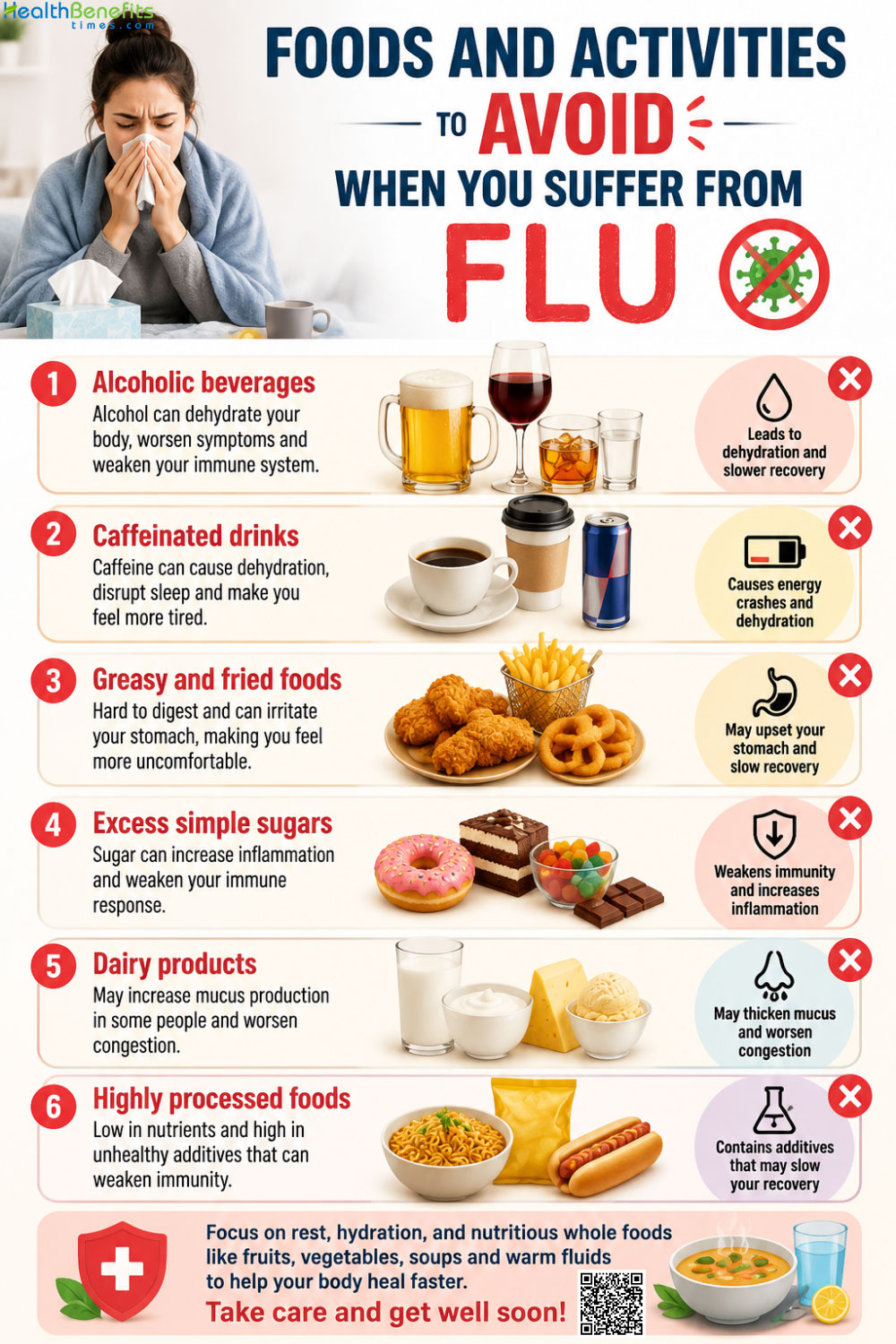
3. Greasy and fried foods
The way heavy fats affect your stomach comes down to a relatively simple mechanism: they slow digestion significantly. When you’re fighting the flu, that’s the last thing you need. Foods like pizza and fast food are already tough on your system but when you’re sick, they become even harder to break down. The result? Worse nausea and more stomach trouble 32.
4. Excess simple sugars
Most people reach for juice or candy when they’re sick, hoping for a quick energy boost. That instinct can actually backfire. Loading up on simple sugars spikes your blood glucose, which ramps up inflammation throughout your body. It can also make diarrhea last longer the opposite of what you need when you’re fighting the flu 32.
5. Dairy products
Most people don’t think twice about pouring a glass of milk when they’re sick. But here’s the thing, milk contains lactose, a sugar your body needs a specific enzyme to break down 30. When you’re already fighting the flu, that process can become harder on your stomach. If you’re feeling nauseous or noticing thicker mucus after having dairy, it’s best to skip it entirely until you’re feeling better.
6. Highly processed foods
Most of us reach for whatever’s easiest when we’re sick chips, instant noodles, frozen meals. But those convenience foods are some of the worst choices during the flu. They’re low in the vitamins and minerals your body actually needs to fight off the infection 31.
Safety Considerations & Contraindications
Assuming that natural or over-the-counter remedies are universally safe is a dangerous and widely held misconception. Bioactive compounds can trigger profound physiological changes and dangerous reactions based on your unique health profile.
1. Interactions with medications (e.g., blood thinners, diabetes meds)
Your liver breaks down both herbs and prescription drugs using the same pathways. That overlap matters. If you’re taking immunosuppressants, echinacea should be avoided entirely it can work against the very effect those medications are designed to produce. And if you’re on a blood thinner like warfarin, high doses of garlic or licorice root can significantly raise your risk of serious internal bleeding 33.
2. Pregnancy and breastfeeding precautions
Your body goes through major changes during pregnancy and those changes affect how you should handle something as simple as a stuffy nose. Oral decongestants like pseudoephedrine work by narrowing blood vessels. That’s fine under normal circumstances, but during the first trimester, this same effect can reduce blood flow to the developing baby. That’s why these medications are restricted early in pregnancy 19.
3. Allergies and sensitivities
For most people, herbal remedies are safe and well-tolerated. For those with certain allergies, however, they warrant a closer look before using them regularly. “Natural” doesn’t mean safe for everyone. If you’re allergic to ragweed, echinacea can cause serious reactions from severe rashes to anaphylaxis. 20 Essential oils can be just as risky. For people with asthma, inhaling them may trigger intense respiratory spasms.
4. Age-specific warnings (children, elderly)
For most people, honey is a safe and soothing remedy. For infants under 12 months, however, it’s strictly off-limits their digestive systems can’t handle botulism spores that may be present in honey 9. On the other end of the age spectrum, older adults face a different concern. They’re often taking multiple medications, which raises the chance of unwanted interactions with herbal or botanical remedies. If you’re older and considering adding these to your routine, it’s worth checking with your doctor first 34.
5. Addiction Recovery Considerations
For most people, reaching for a cough syrup or cold medicine is a routine decision. For those in recovery from substance or alcohol use disorders, it’s anything but. Many standard flu remedies contain ingredients that can quietly threaten sobriety or even trigger a full relapse. Dextromethorphan (DXM) is one of the biggest concerns. It’s found in most over-the-counter cough syrups, and it works on the same opioid receptors in the brain that drugs of abuse target. That makes it a serious risk for misuse and neurological triggering in people with a history of addiction 35. Then there’s the alcohol problem. Many liquid cold formulations NyQuil being one of the most common use alcohol as a solvent. Even a small dose can break sobriety. If you’re in recovery, switching to strictly alcohol-free preparations isn’t optional it’s essential 36.
Comments
comments