

Causes of Greasy (Oily) Hair
1. Hormonal Fluctuations
The primary biological regulators of oil production are hormones known as androgens, particularly testosterone and dihydrotestosterone (DHT). An elevated level of these hormones, or an inherent hypersensitivity of the sebaceous glands to normal circulating hormone levels, directly accelerates sebum production on the scalp 4.
2. Anatomical and Genetic Factors
The baseline volume of oil a person produces is fundamentally linked to their physical anatomy. Overall sebum production is heavily dependent on the localized density, size, and inherent cellular activity of the sebaceous glands, all of which are structurally determined by genetics 5.
3. High-Glycemic Diets
Consuming foods that cause rapid spikes in blood sugar triggers a sharp increase in insulin secretion. Elevated insulin subsequently raises the levels of insulin-like growth factor-1 (IGF-1), a hormone that directly enlarges sebaceous glands and stimulates the rapid overproduction of sebum 6.
4. Psychological and Physical Stress
When the central nervous system detects stress, it secretes a chemical messenger called corticotropin-releasing hormone (CRH). Receptors for this specific stress hormone are located directly on the oil-producing cells (sebocytes), and its activation forces these cells to synthesize and excrete excess lipids 7.
5. Environmental Temperature and Humidity
Climatic conditions independently alter how rapidly naturally produced oil is expelled from the glands onto the skin and hair shafts. Clinical evaluations indicate that high environmental temperatures accelerate the sebum excretion rate, with oil expulsion increasing by approximately ten percent for every one-degree Celsius rise in ambient temperature 8.
Symptoms of Greasy (Oily) Hair
1. Greasy, Flat, and Matted Appearance
Excess sebum physically coats the outer layer of the hair shafts, significantly increasing their weight. This heavy coating causes the individual hair strands to clump together, resulting in a chronically flat, slick, and shiny appearance shortly after washing 9.
2. Yellow, Oily Flakes (Dandruff)
A high volume of scalp oil provides an abundant food source for naturally occurring fungi on the skin. As the fungi consume these oils, they trigger a rapid shedding of skin cells, which then bind with the excess oil to form thick, yellowish, and greasy flakes in the hair 2.
3. Persistent Scalp Itching
When scalp fungi break down the excess oils, they produce acidic chemical byproducts, specifically oleic acid. This byproduct penetrates the top layer of the scalp, irritating the underlying tissue and causing chronic, persistent itching 3.
4. Redness and Inflammation
The continuous presence of excess oil, combined with the irritating byproducts of fungal breakdown, frequently damages the protective outer barrier of the skin. This damage provokes a localized immune response, leading to visible redness, mild swelling, and localized tenderness across the scalp 10.
Natural Remedies for Greasy (Oily) Hair
1. Topical Green Tea Extracts
How it may help
Green tea contains a highly active plant compound called epigallocatechin gallate (EGCG). When applied directly to the scalp, EGCG safely blocks the specific enzymes that overstimulate oil glands. By slowing down this localized cellular activity, green tea extracts reduce oil production and prevent greasy buildup on the hair 11.
What research says
Clinical trials demonstrate that topical formulas containing just three percent green tea extract consistently decrease human sebum secretion. Studies conclude that EGCG directly limits the size of sebaceous glands and lowers total oil output, offering an effective, long-term approach for regulating an excessively oily scalp 12.
How to use it safely
You can apply over-the-counter hair products containing three to five percent green tea extract. Alternatively, steep pure green tea in hot water, let it cool completely, and pour it over your scalp after shampooing. Massage the liquid gently, leave it for five minutes, then rinse thoroughly.
Potential precautions or side effects
Topical green tea is generally safe, but concentrated extracts may cause mild scalp irritation or allergic reactions. You should always perform a patch test before full scalp application.
2. Diluted Tea Tree Oil
How it may help
Tea tree oil contains terpinen-4-ol, a natural compound with strong antimicrobial properties. Rather than directly shrinking oil glands, it eliminates the overgrowth of scalp yeast that feeds on excess sebum. By controlling these fungi, tea tree oil prevents localized inflammation that often triggers the scalp to overproduce protective oils 13.
What research says
Clinical trials demonstrate that shampoos containing a five percent concentration of tea tree oil significantly reduce scalp greasiness, itchiness, and flaking. Researchers conclude that this targeted antifungal action effectively stabilizes the scalp environment and improves seborrheic dermatitis symptoms without causing adverse drying effects 14.
How to use it safely
You should never apply pure tea tree oil directly to your skin. Instead, mix three to five drops into a standard amount of your regular shampoo. Massage this diluted mixture into your scalp, leave it for three to five minutes, then rinse thoroughly with warm water.
Potential precautions or side effects
Undiluted tea tree oil frequently causes allergic contact dermatitis and skin irritation 13. You must properly dilute the oil and perform a patch test before full scalp application.
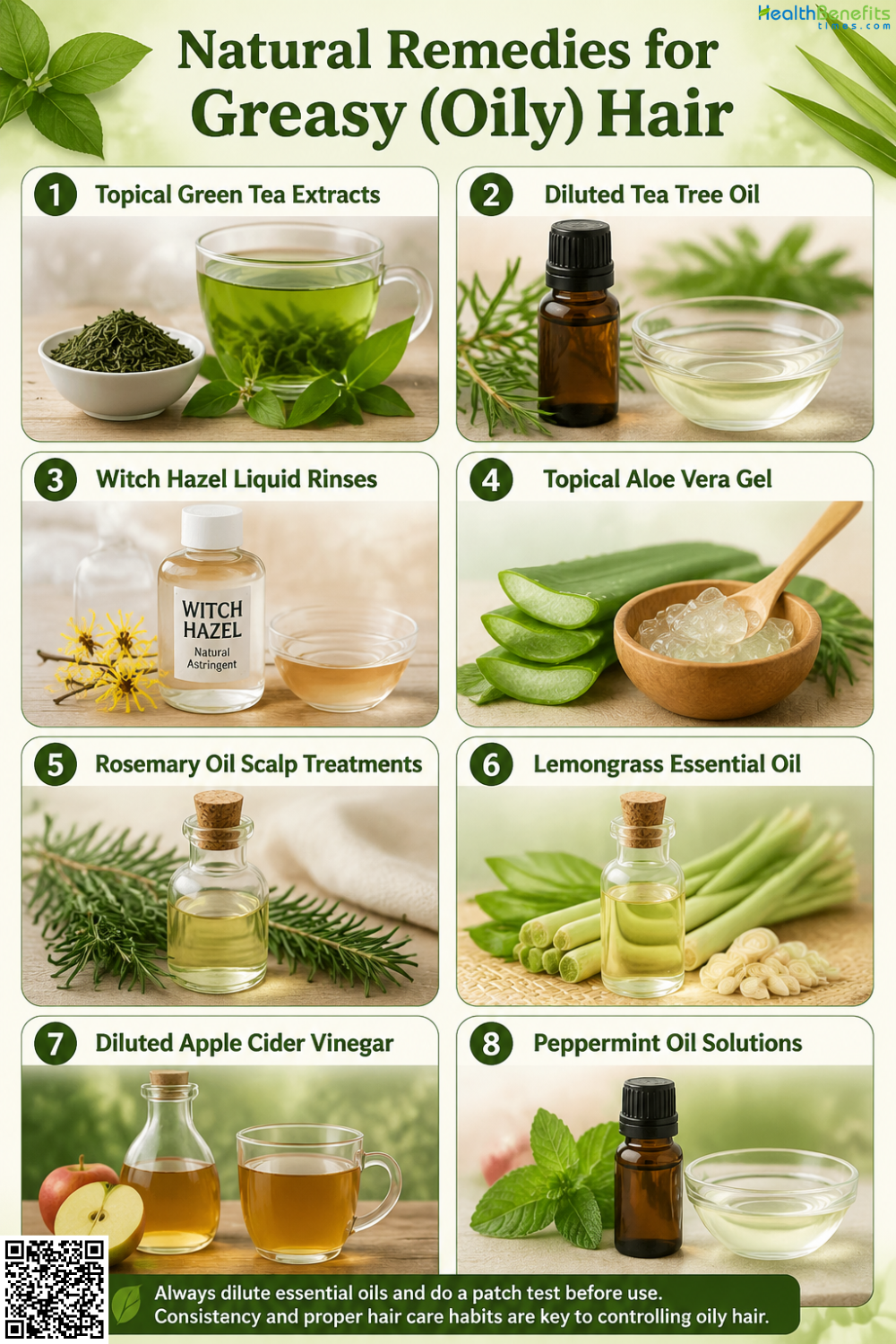
3. Witch Hazel Liquid Rinses
How it may help
Witch hazel liquid contains high concentrations of natural plant compounds called tannins, which act as powerful astringents. When applied directly to the scalp, these tannins temporarily constrict skin tissue and tighten pores. This gentle firming action physically restricts the immediate release of excess sebum onto the hair shafts 15.
What research says
Clinical evaluations show that witch hazel extracts effectively reduce localized inflammation and help control surface oil production. Dermatologists successfully use witch hazel formulas to treat sensitive, excessively greasy scalps. Researchers conclude that its natural astringent properties stabilize the scalp environment without disrupting the protective outer layer of the skin 16.
How to use it safely
You should choose pure, alcohol-free witch hazel to prevent excessive dryness. After washing your hair, part your damp hair into sections and apply the liquid directly to your scalp using a spray bottle or cotton pad. Massage it gently into the skin and leave it in without rinsing.
Potential precautions or side effects
Many commercial witch hazel products contain high levels of added alcohol, which can severely dry out and irritate your scalp. You must always check the label for alcohol-free formulas.
4. Topical Aloe Vera Gel
How it may help
Aloe vera contains natural enzymes and salicylic acid that gently break down excess sebum and dead skin cells on the scalp. Unlike harsh chemical cleansers, it removes greasy buildup while preserving the skin’s essential moisture barrier, preventing the scalp from overproducing oil to compensate for dryness 17.
What research says
Clinical studies confirm that aloe vera effectively treats seborrheic dermatitis, a primary cause of an overly oily and flaky scalp. Researchers conclude that its active anti-inflammatory and antibacterial compounds significantly reduce excess scalp oil, severe itching, and scaling with consistent topical application 18.
How to use it safely
You should use pure, one-hundred-percent aloe vera gel without added fragrances or artificial colors. Part your hair, massage the gel directly into your scalp, and leave it on for fifteen to thirty minutes. Afterward, wash your hair thoroughly with a mild shampoo to remove the loosened oils.
Potential precautions or side effects
While generally safe, raw aloe vera can occasionally cause allergic contact dermatitis. You should always perform a small patch test on your skin before applying it to your entire scalp.
5. Rosemary Oil Scalp Treatments
How it may help
Rosemary essential oil acts as a natural astringent, helping to regulate cellular activity and control excess sebum production on the scalp. It also contains active antimicrobial compounds that prevent the overgrowth of oil-loving yeast, effectively preventing the localized inflammation that often triggers excessive greasiness 19.
What research says
Clinical studies demonstrate that rosemary essential oil possesses strong anti-inflammatory and antimicrobial properties that stabilize an overly oily scalp. Researchers conclude that consistent application significantly decreases localized scalp inflammation, reduces chronic itching, and helps balance overall sebum excretion without damaging the skin barrier 20.
How to use it safely
You must safely dilute rosemary essential oil before application. Mix three to five drops of pure rosemary oil into a lightweight carrier oil, such as jojoba oil, or your regular shampoo. Massage this mixture directly into your scalp, leave it for ten minutes, then rinse thoroughly.
Potential precautions or side effects
Applying undiluted rosemary oil can cause severe skin irritation, redness, and allergic contact dermatitis. You should always perform a patch test on a small skin area before full application.
6. Lemongrass Essential Oil
How it may help
Lemongrass essential oil contains citral, a powerful bioactive compound with natural antimicrobial and anti-inflammatory properties. When applied to the scalp, it directly targets and suppresses Malassezia, the specific oil-loving yeast responsible for excessive sebum production. By reducing this fungal overgrowth, it helps stabilize oil output and prevents greasy buildup 21.
What research says
Clinical trials show that applying a hair tonic containing a ten percent concentration of lemongrass oil significantly reduces scalp oiliness and dandruff within seven to fourteen days. Researchers conclude that its strong antifungal action safely restores the scalp’s microbial balance, offering an effective treatment for oily and flaky scalps 22.
How to use it safely
You must never apply pure lemongrass oil directly to your skin. Instead, mix two to three drops into your regular shampoo or a lightweight carrier oil. Massage the diluted solution gently into your scalp, leave it for three minutes, and rinse completely with warm water.
Potential precautions or side effects
Undiluted lemongrass oil frequently causes severe skin irritation and allergic contact dermatitis. You must always dilute the oil properly and perform a patch test before full scalp application.
7. Diluted Apple Cider Vinegar
How it may help
Apple cider vinegar contains acetic acid, which helps restore the natural, slightly acidic pH of the scalp. By lowering the scalp’s pH, it creates a hostile environment for oil-loving fungi. This gentle acid also acts as a natural astringent, breaking down heavy, greasy buildup without stripping essential moisture 23.
What research says
Clinical studies confirm that apple cider vinegar possesses potent antimicrobial properties, effectively inhibiting the growth of common scalp fungi and bacteria. Researchers conclude that applying diluted acetic acid safely restores the scalp’s protective acid mantle, reducing localized inflammation, flaking, and the overproduction of excess oily sebum 24.
How to use it safely
You must heavily dilute apple cider vinegar before applying it. Mix two to three tablespoons of the vinegar into one cup of water. After shampooing, pour this diluted mixture over your scalp, let it sit for two to three minutes, and rinse it completely with cool water.
Potential precautions or side effects
Applying undiluted apple cider vinegar can cause chemical burns and severe skin irritation. You should never apply it to open wounds, scratches, or an actively bleeding or severely inflamed scalp.
8. Peppermint Oil Solutions
How it may help
Peppermint oil contains a highly active compound called menthol, which provides a cooling effect and acts as a natural astringent. When applied to the scalp, it helps regulate excess sebum production and neutralizes the microbes that thrive in oily environments, preventing the greasy buildup that weighs hair down 25.
What research says
Clinical studies show that the menthol in peppermint oil possesses significant antimicrobial and anti-inflammatory properties. Researchers conclude that topical application effectively reduces localized scalp inflammation and suppresses the growth of oil-loving microbes, helping to stabilize the scalp’s natural environment and prevent excessive oil secretion without stripping away essential moisture 25.
How to use it safely
You should always dilute peppermint essential oil before applying it. Mix two to three drops into your regular shampoo or a lightweight carrier oil. Gently massage the diluted solution into your scalp, leave it on for three to five minutes, and then rinse thoroughly with cool water.
Potential precautions or side effects
Applying pure, undiluted peppermint oil frequently causes intense burning sensations, redness, and severe skin irritation. You must properly dilute the oil and perform a patch test before use.
Foods to Avoid When You Suffer from Greasy (Oily) Hair
1. Refined Carbohydrates (White Bread, Pastries)
Consuming refined carbohydrates rapidly spikes insulin levels. This elevates insulin-like growth factor-1 (IGF-1), directly forcing sebaceous glands to overproduce oil on the scalp 26.
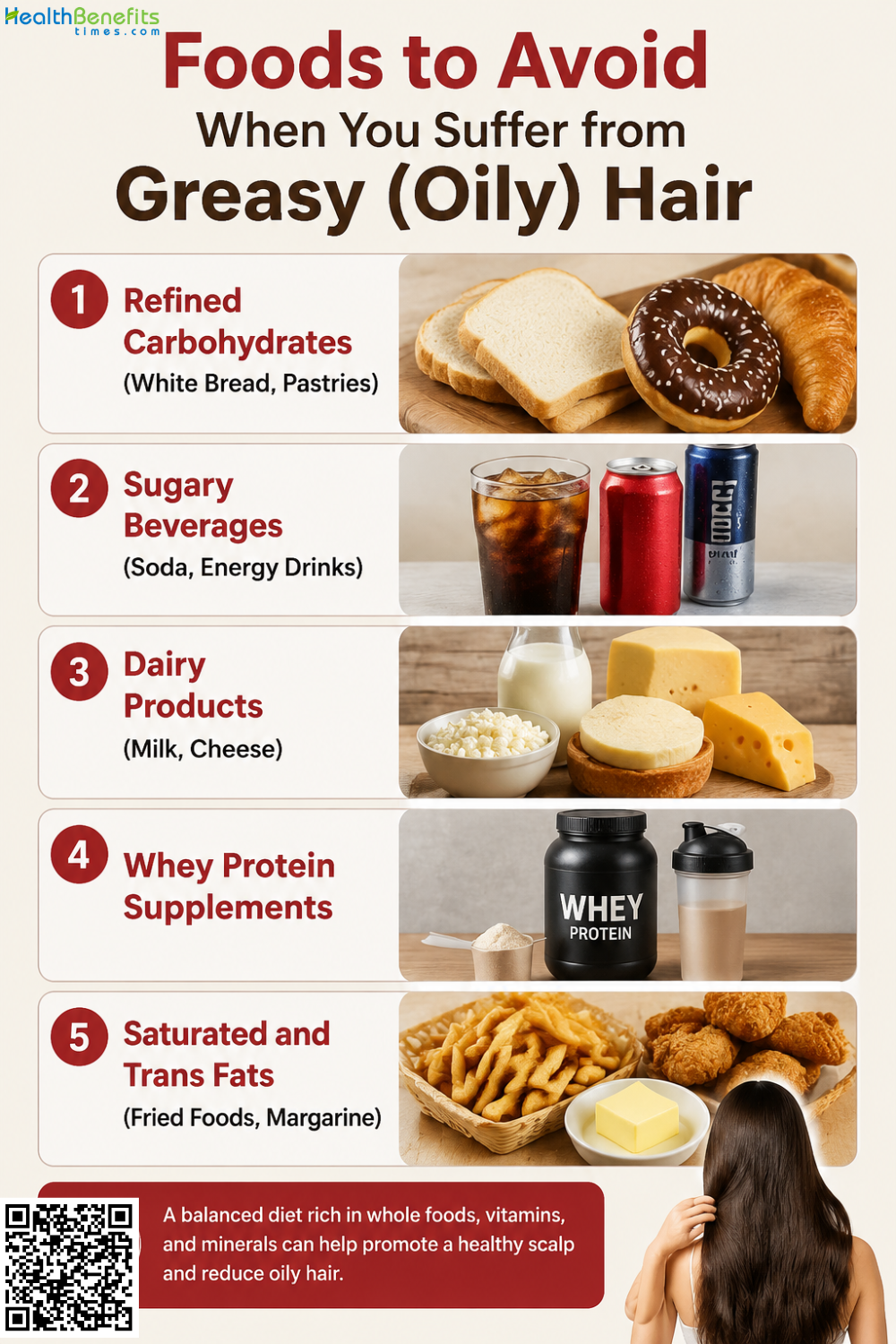
2. Sugary Beverages (Soda, Energy Drinks)
High sugar intake causes extreme blood glucose fluctuations. These systemic spikes significantly increase androgen hormone circulation, accelerating excessive sebum excretion from hair follicles 27.
3. Dairy Products (Milk, Cheese)
Cow’s milk contains natural hormones and directly stimulates IGF-1 production in the body. This systemic hormonal increase triggers oil glands to heavily secrete excess lipids 28.
4. Whey Protein Supplements
Whey protein is highly insulinotropic, meaning it forces a rapid release of insulin. This aggressive insulin response enlarges sebocytes and strongly stimulates scalp oil overproduction 29.
5. Saturated and Trans Fats (Fried Foods, Margarine)
Diets high in unhealthy fats promote systemic inflammation and alter circulating lipid levels. This inflammatory state disrupts hormonal balance, ultimately increasing cutaneous oil excretion 30.
When to See a Doctor When You Struggle from Greasy (Oily) Hair
1. Severe Flaking and Crusting
You should consult a physician if thick, yellowish scales or crusts develop. This indicates severe seborrheic dermatitis, which requires prescription-strength antifungal medications to resolve safely 2.
2. Sudden Hair Loss
Seek medical evaluation if excess oil is accompanied by noticeable hair thinning. Unmanaged chronic scalp inflammation and elevated androgens directly damage hair follicles, causing premature hair shedding 9.
3. Signs of Scalp Infection
You must see a doctor if the greasy scalp develops open sores, bleeding, or pus-filled bumps. These symptoms indicate secondary bacterial infections that require immediate antibiotic treatment 31.
4. Symptoms of Hormonal Imbalance
Consult a specialist if extreme scalp oiliness occurs alongside severe acne or irregular menstrual cycles. These combined symptoms frequently indicate an underlying systemic endocrine disorder like polycystic ovary syndrome 4.
5. Unresponsive to Home Treatments
You should seek dermatological care if over-the-counter remedies fail after several weeks. Persistent severe oiliness often requires targeted prescription interventions, such as localized topical corticosteroids, to stabilize the glands 3.
Comments
comments