

Causes of Heat Exhaustion
1. Dehydration and Electrolyte Depletion
The primary physiological cause of heat exhaustion is severe dehydration, which occurs when the body loses excessive amounts of water and essential salts through heavy sweating without adequate fluid replacement. This critical fluid deficit decreases overall blood volume, directly impairing the cardiovascular system’s ability to transport internal metabolic heat to the skin for cooling 2.
2. High Environmental Humidity
Elevated atmospheric humidity saturates the surrounding air with moisture, heavily restricting the physical evaporation of human sweat. Because sweat evaporation is the body’s primary mechanism for releasing internal heat, high humidity environments rapidly accelerate physiological thermal strain even during moderately hot weather 4.
3. Strenuous Physical Exertion
Engaging in intense physical labor, sports, or exercise in hot environments forces the muscular system to generate significant amounts of internal metabolic heat. This rapid internal heat production frequently overwhelms the body’s natural cooling mechanisms, accelerating the onset of heat-related illness 1.
4. Restrictive and Insulating Clothing
Wearing heavy, tightly woven, or non-breathable fabrics in extreme temperatures actively traps moisture and metabolic heat against the skin. This physical barrier severely limits necessary airflow and prevents the evaporative cooling process, neutralizing the body’s ability to safely regulate its core temperature 1.
5. Alcohol and Substance Use
Consuming alcohol acts as a strong diuretic, forcing the kidneys to excrete excess water and dramatically accelerating dangerous dehydration during extreme heat. Additionally, certain medications and substances interfere with the brain’s ability to regulate temperature and restrict blood vessel dilation, drastically reducing the body’s capacity to shed heat 2.
Symptoms of Heat Exhaustion
- Heavy Sweating: The body attempts to rapidly lower its internal temperature, leading to excessive and uncontrollable sweating 5.
- Cold, Pale, and Clammy Skin: Despite the high environmental heat, the skin frequently becomes noticeably cool, unusually pale, and visibly damp to the touch 5.
- Physical Exhaustion and Weakness: The depletion of essential bodily fluids causes profound physical fatigue, sluggishness, and widespread muscle weakness 5.
- Muscle Cramps: Significant losses of sodium and fluids through sweat often trigger painful, involuntary muscle spasms, particularly in the legs, arms, or abdomen 6.
- Dizziness and Lightheadedness: A reduction in overall blood volume leads to poor circulation and falling blood pressure, resulting in sudden unsteadiness or dizzy spells 6.
- Headaches: Progressive dehydration and severe thermal stress frequently cause a persistent, throbbing headache 5.
- Nausea and Vomiting: Heat exhaustion commonly disrupts normal digestive functions, causing an upset stomach, severe nausea, or episodes of active vomiting 5.
- Fast but Weak Pulse: The heart rate accelerates to push blood toward the skin for cooling, but the physical pulse feels notably weak or faint because there is less fluid volume in the bloodstream 5.
- Rapid and Shallow Breathing: Respiratory rates often increase, resulting in quick, shallow breaths as the body struggles to maintain physiological balance under extreme environmental heat 5.
- Fainting: Reduced blood flow to the brain, combined with severe dehydration, can cause an individual to temporarily lose consciousness or faint when standing up 5.
Natural Remedies for Heat Exhaustion
1. Relocate to a Cooler, Air-Conditioned, or Shaded Area
How it may help
Moving to a cooler environment instantly stops the body from absorbing environmental heat. This critical first step allows the cardiovascular system to begin releasing trapped internal heat, reducing physical strain and preventing the condition from rapidly escalating into life-threatening heat stroke 3.
What research says
Public health guidelines confirm that immediate removal from a high-temperature environment is the most critical intervention for treating heat exhaustion. Clinical protocols dictate that rapidly lowering the ambient temperatures surrounding the patient effectively reverses the progression of severe heat-related illnesses and significantly reduces overall medical complications 2.
How to use it safely
If experiencing heat exhaustion, immediately move indoors to an air-conditioned building. If indoor access is unavailable, find a heavily shaded, well-ventilated outdoor area. Sit or lie down quietly to maximize your body’s ability to naturally lower its core temperature 3.
Potential precautions or side effects
Do not return to the hot environment. Seek immediate emergency medical care if your symptoms worsen or last longer than one hour despite relocating to a cooler area 3.
2. Sip Cool Water or Electrolyte-Enhanced Fluids Slowly
How it may help
Drinking cool water or electrolyte solutions directly replaces the vital fluids and sodium lost through heavy sweating. This rehydration rapidly restores normal blood volume, which allows the cardiovascular system to pump efficiently and helps the body restart its natural cooling mechanisms to lower internal temperatures 3.
What research says
Clinical guidelines establish immediate oral fluid replacement as the primary treatment for heat exhaustion. Medical evidence shows that drinking electrolyte-enhanced fluids effectively corrects dangerous sodium imbalances caused by excessive sweating, significantly reducing cardiovascular strain and preventing the condition from escalating into life-threatening heat stroke 2.
How to use it safely
Take small, slow sips of cool water or a commercially prepared sports drink. Drink approximately four to eight ounces every fifteen to twenty minutes. Avoid gulping large amounts of fluid rapidly, as this can severely upset your stomach and induce vomiting 3.
Potential precautions or side effects
Do not drink freezing cold water, which can trigger painful stomach cramps. Seek immediate emergency medical care if you become nauseous and cannot keep fluids down 3.
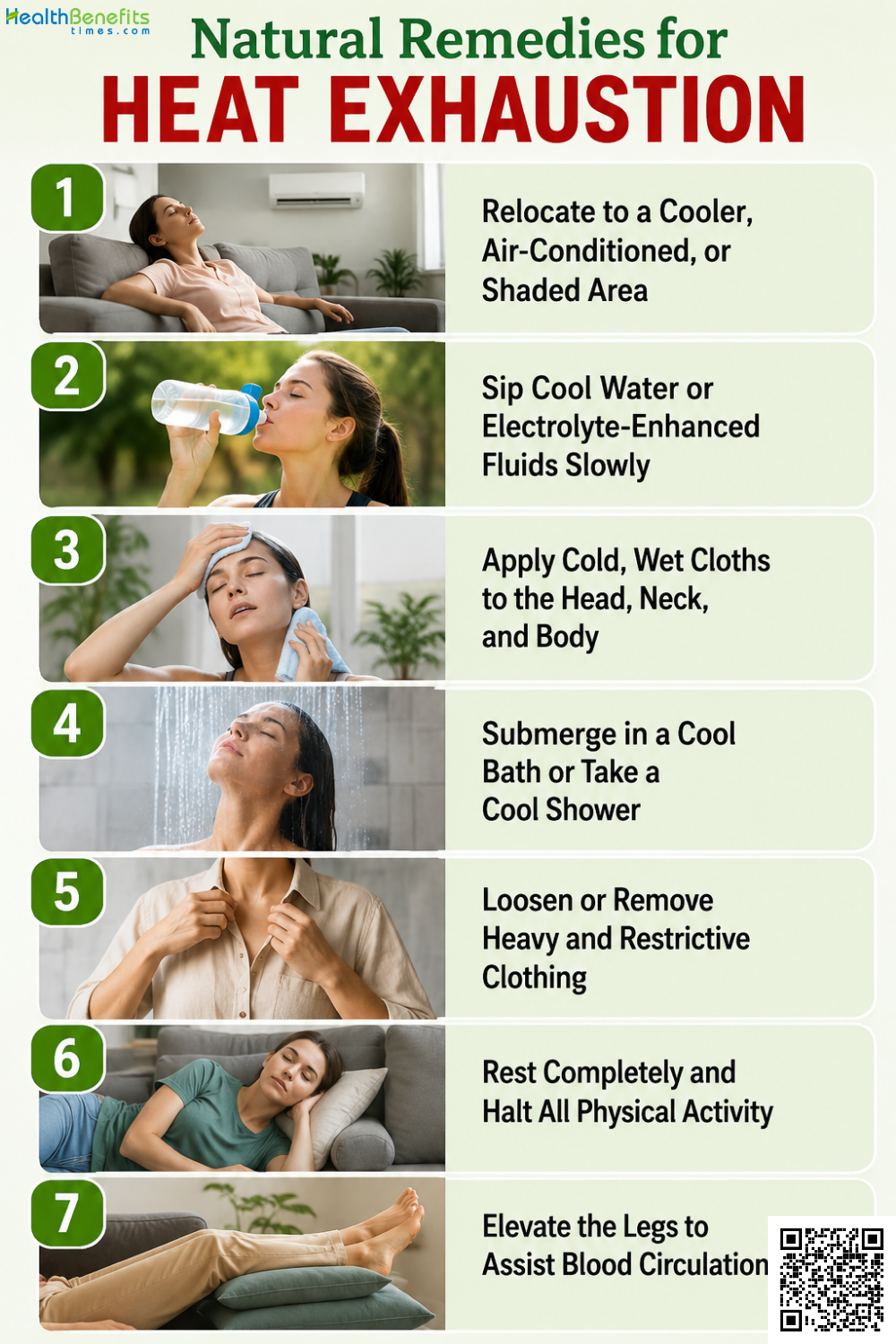
3. Apply Cold, Wet Cloths to the Head, Neck, and Body
How it may help
Applying cold, wet cloths directly to the skin facilitates rapid heat transfer away from the body. Placing these damp cloths on areas with high blood flow, such as the neck, head, armpits, and groin, rapidly cools circulating blood, significantly lowering internal core temperatures and relieving physical heat stress 3.
What research says
Clinical first-aid protocols identify conductive and evaporative cooling techniques as highly effective initial treatments for heat-related illnesses. Public health evidence confirms that applying cool, damp compresses rapidly decreases physiological thermal strain and successfully prevents heat exhaustion from progressing to severe, life-threatening heat stroke 2.
How to use it safely
Soak clean towels or cloths in cool water and place them directly on your neck, forehead, armpits, and groin. Because the cloths will absorb your body heat quickly, frequently re-soak them in cold water to maintain continuous and safe cooling effectiveness 3.
Potential precautions or side effects
Avoid placing solid ice blocks directly against bare skin, as this causes severe tissue damage or triggers shivering, which counterproductively raises internal body heat 2.
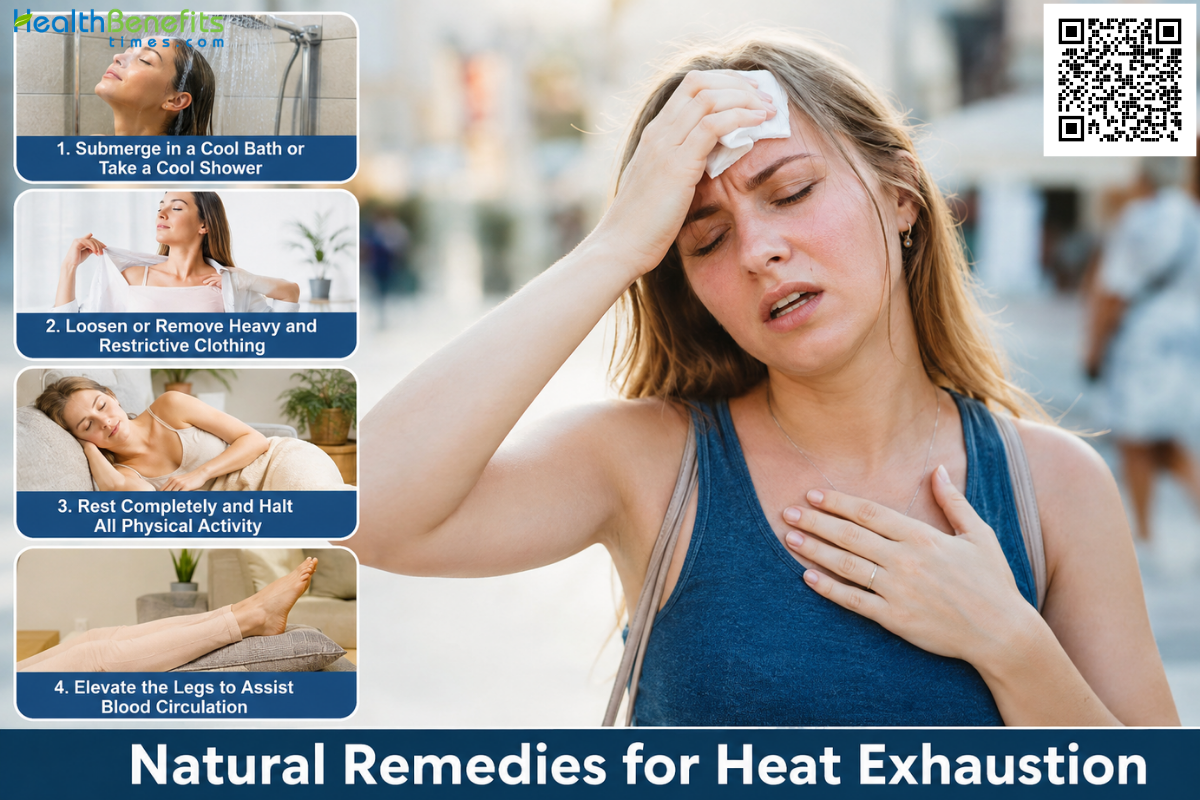
4. Submerge in a Cool Bath or Take a Cool Shower
How it may help
Full-body immersion in cool water provides rapid and highly effective relief from heat exhaustion. Because water conducts heat away from the body significantly faster than air, a cool bath or shower immediately lowers skin temperature. This process safely draws excess internal heat outward, quickly reducing physiological strain 3.
What research says
Clinical guidelines designate cold-water immersion as the most effective cooling method for severe heat-related illnesses. Medical research concludes that submerging the body in cool water lowers core temperature faster than any other non-invasive treatment, drastically reducing cardiovascular stress and preventing dangerous complications associated with extreme heat exposure 2.
How to use it safely
If experiencing symptoms of heat exhaustion, fill a bathtub with cool—not freezing—water and fully submerge your body up to your chest. Alternatively, stand under a steady, cool shower. Remain in the water until your physical symptoms significantly improve and you feel entirely comfortable 3.
Potential precautions or side effects
Never use severely cold or ice water, as sudden extreme temperature drops trigger violent shivering. This natural reflex counterproductively generates internal metabolic heat and rapidly worsens your condition 3.
5. Loosen or Remove Heavy and Restrictive Clothing
How it may help
Removing heavy or restrictive clothing immediately eliminates physical barriers that trap metabolic heat against the skin. This action exposes a larger surface area of the body to surrounding air, which rapidly accelerates the evaporation of sweat, the primary physiological mechanism required to lower internal core temperatures 3.
What research says
Clinical first-aid guidelines identify clothing removal as a critical initial intervention for heat-related illness. Medical evidence confirms that heavy or tightly woven fabrics severely impair evaporative cooling, and loosening these garments significantly reduces thermal strain while accelerating cardiovascular recovery during a heat emergency 2.
How to use it safely
If you experience heat exhaustion, immediately take off unnecessary outer layers such as jackets, sweaters, or heavy work gear. Unbutton tight collars, loosen your belt, and remove your shoes and socks to maximize skin exposure to the air and facilitate rapid cooling 3.
Potential precautions or side effects
Always relocate to a completely shaded or indoor area before exposing bare skin, as direct sunlight will cause severe sunburn and actively worsen your heat-related symptoms 3.
6. Rest Completely and Halt All Physical Activity
How it may help
Halting physical activity immediately stops the muscles from generating additional metabolic heat. This essential rest period removes the internal thermal burden, allowing the cardiovascular system to redirect blood flow efficiently toward the skin, which accelerates the body’s natural cooling process and stabilizes internal temperatures 3.
What research says
Clinical guidelines state that continued physical exertion during heat exhaustion actively drives core temperatures to dangerous levels, severely increasing the risk of exertional heat stroke. Medical evidence concludes that immediate and complete physical rest drastically reduces cardiovascular strain and is required for physiological recovery during a heat emergency 2.
How to use it safely
Stop all work or exercise immediately at the first sign of heat exhaustion. Sit or lay flat on your back in a cool, shaded, or air-conditioned environment. Remain completely at rest for at least several hours to ensure your body fully recovers from the severe thermal stress 3.
Potential precautions or side effects
Do not resume strenuous physical activity the same day, as you remain highly vulnerable to heat stroke. Seek emergency medical care if symptoms persist despite resting 3.
7. Elevate the Legs to Assist Blood Circulation
How it may help
Heat exhaustion causes blood vessels to expand, which often leads to blood pooling in the lower extremities. Elevating the legs uses gravity to gently force this blood back toward the heart and brain. This process rapidly restores normal blood pressure, prevents fainting, and improves overall cardiovascular circulation 2.
What research says
Clinical first-aid protocols strongly recommend a supine position with elevated legs for individuals experiencing heat-induced dizziness. Medical evidence confirms that this specific posture rapidly increases venous blood return to the heart, effectively stabilizing dangerous drops in blood pressure caused by severe dehydration and extreme thermal stress 2.
How to use it safely
If you feel dizzy or weak from the heat, immediately lie flat on your back in a cool, shaded area. Safely prop your feet and lower legs up about twelve inches above the level of your heart using pillows, a backpack, or a folded jacket 3.
Potential precautions or side effects
Do not elevate your legs if doing so causes physical pain or if you suspect a leg injury. Seek immediate emergency care if breathing becomes difficult while lying flat 3.
Foods to Avoid When You suffer from Heat Exhaustion
Certain dietary choices can exacerbate physiological strain and significantly worsen dehydration during an episode of heat exhaustion.
1. Alcoholic Beverages
Alcohol acts as a strong diuretic, increasing urine output and rapidly accelerating dangerous fluid loss when the body is already severely dehydrated 1.
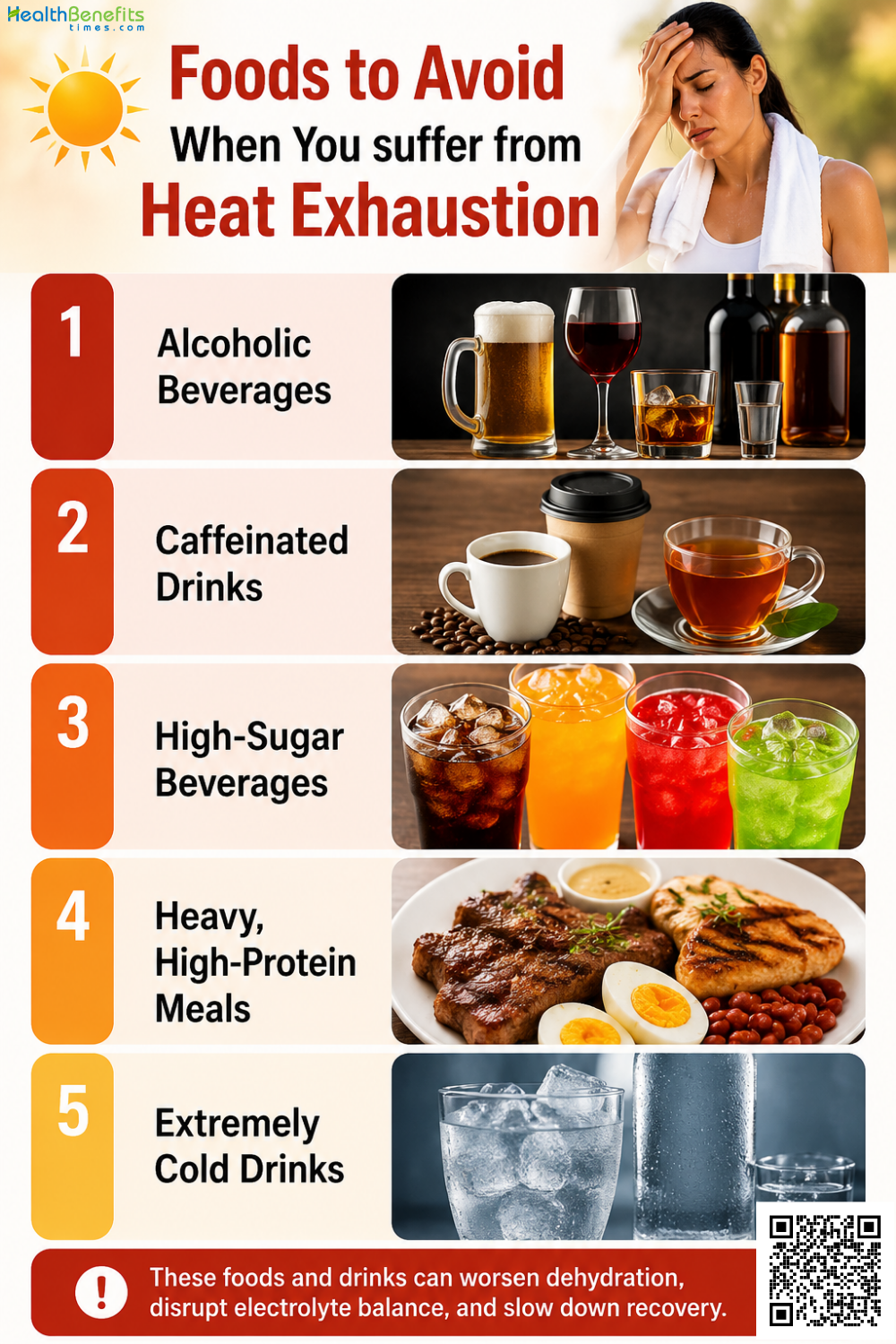
2. Caffeinated Drinks
Caffeine stimulates the kidneys to excrete water, counteracting rehydration efforts and worsening the critical fluid deficits associated with severe heat stress 1.
3. High-Sugar Beverages
Drinks containing excessive sugar impair the digestive system’s ability to rapidly absorb necessary fluids, severely hindering the crucial rehydration process required for recovery 7.
4. Heavy, High-Protein Meals
Digesting dense proteins requires substantial metabolic energy, which generates unnecessary internal body heat and further strains an already overwhelmed cardiovascular system 7.
5. Extremely Cold Drinks
Consuming freezing liquids rapidly can induce severe stomach cramps and sudden gastrointestinal distress, complicating the body’s ability to tolerate necessary fluid replacement 3.
When to see Doctor when you struggle from Heat Exhaustion
Heat exhaustion can rapidly escalate into a life-threatening medical emergency if cooling measures fail. Seek immediate medical attention if you experience any of the following critical warning signs.
1. Prolonged Symptoms
Contact a healthcare professional if your symptoms of heat exhaustion last longer than one hour despite resting in a cool environment and drinking fluids 3.
2. Worsening Condition
Seek immediate medical care if your physical symptoms progressively worsen over time instead of improving after you have relocated to a cooler area 3.
3. Severe Nausea or Vomiting
Go to an emergency room immediately if you begin vomiting or experience severe nausea that prevents you from keeping hydrating fluids down 3.
4. Altered Mental State
Seek emergency care if you observe severe confusion, slurred speech, or delirium, as these neurological symptoms indicate progression to life-threatening heat stroke 3.
5. Loss of Consciousness
Call for emergency medical assistance instantly if you or someone else faints or completely loses consciousness during a severe heat event 3.
Comments
comments