Hepatitis B is a viral infection caused by the hepatitis B virus (HBV). It inflames the liver and can be either short-term (acute) or long-term (chronic). 1 Left unmanaged, chronic infection can progress to cirrhosis, liver failure, or liver cancer. Hepatitis B is one of the leading causes of liver-related death worldwide, affecting hundreds of millions of people across every region. The World Health Organization estimated that 254 million people were living with chronic hepatitis B in 2022. 2 Around 1.2 million new infections occur each year, and roughly 1.1 million people die from it annually, mostly from cirrhosis and liver cancer. In the United States alone, about 640,000 adults are living with chronic hepatitis B. 3 Globally, it accounts for around 83% of all viral hepatitis deaths, a daily toll that matches tuberculosis. 4
Causes of Hepatitis B
Hepatitis B does not spread through casual contact like hugs, sneezes, or sharing a meal it spreads when infected blood, semen, or certain body fluids enter another person’s body. 3
Mother-to-baby transmission at birth (perinatal): the most common route worldwide, especially in highly endemic regions. 2
Unprotected sex with an infected partner, particularly among unvaccinated people with multiple partners. 2
Sharing needles, syringes, or drug-injection equipment. 5
Needlestick injuries, unsterile tattoos, piercings, or medical instruments. 2
Sharing razors, toothbrushes, or nail clippers that may carry tiny amounts of blood. 1
Horizontal transmission in childhood, child-to-child contact during the first five years of life is a major route in endemic countries. 2
Environmental exposure: HBV can remain infectious on surfaces for at least seven days, even without visible blood. 6
Symptoms of Hepatitis B
Many people carry HBV silently in fact, only 13% of those with chronic hepatitis B globally have been diagnosed which is why screening matters so much. 4. When symptoms do appear, usually 60–150 days after exposure, they may include: 5
Vaccine offers nearly 100% protection and lasts at least 20 years
HBV survives 7+ days on surfaces
Tenofovir and entecavir are first-line treatments
No cure yet, but treatment controls the virus
Natural Remedies for Hepatitis B
Before diving in, a quick honesty check: no herb, vitamin, or food has been shown to cure hepatitis B. The Hepatitis B Foundation is clear that herbal remedies, Ayurveda, Traditional Chinese Medicine, and supplements have not been proven to control the virus, and some can actually damage the liver. 13 What the science does support is using certain natural strategies to support liver health alongside never instead of medical treatment. Always check with your hepatologist before starting anything new, because the liver processes everything you swallow. 14
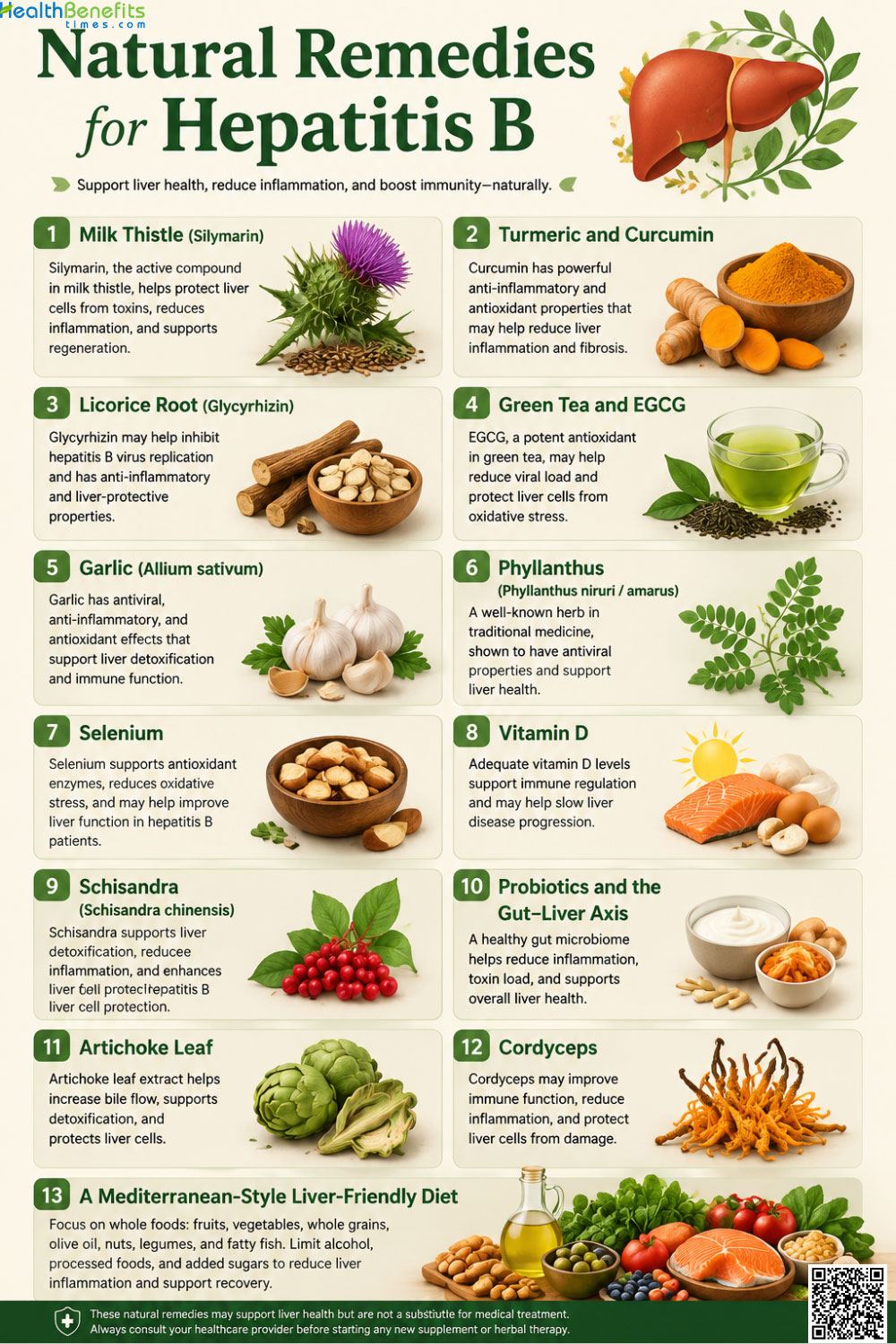
1. Milk Thistle (Silymarin)
Milk thistle is the most popular herb people reach for when they hear “liver.” Its active extract, silymarin, has antioxidant and anti-inflammatory properties and has been used since ancient Greek times. 15 However, a Cochrane systematic review concluded there is no convincing evidence that milk thistle reduces deaths or improves liver disease in people with hepatitis B or C, and the Hepatitis B Foundation explicitly states that silymarin “is not a treatment for hepatitis B or D, nor has it been shown to have any effect against fighting these viruses.” 1617 Some smaller reviews suggest it may modestly lower serum transaminases without changing viral load. 18 How it is used: Usually as standardized silymarin capsules (typically 140–420 mg/day in three divided doses) or as a tea brewed from crushed seeds but only after a doctor confirms it won’t interact with your other medications.
2. Turmeric and Curcumin
That sunshine-colored spice in your kitchen contains curcumin, a phenolic compound with broad antiviral activity. In laboratory studies, curcumin has been shown to inhibit hepatitis B virus replication by down-regulating the host coactivator PGC-1α, interfering with viral entry through NTCP binding, and reducing cccDNA-bound histone acetylation. 1920 A 2024 cell-line study found that curcumin differentially modulates HBV replication, decreasing HBsAg and Precore RNA in some models. 21 Caution: there are documented cases of turmeric supplements causing drug-induced liver injury, especially when combined with black-pepper extract (piperine). 22 How it is used: Add fresh or dried turmeric (½–1 teaspoon daily) to curries, rice, soups, smoothies, or warm “golden milk.” Avoid high-dose concentrated curcumin supplements unless your doctor approves them.
3. Licorice Root (Glycyrrhizin)
Glycyrrhizin the sweet active compound in licorice root has been used intravenously in Japan for over 30 years as Stronger Neo-Minophagen C (SNMC) to treat chronic hepatitis B, where it improves liver function and may suppress hepatitis B surface antigen secretion. 2324 A network meta-analysis of 53 randomized trials found glycyrrhizic acid preparations combined with entecavir produced better liver-function outcomes than entecavir alone in chronic hepatitis B patients. 25 Oral licorice is less well studied, and excessive intake can cause high blood pressure, low potassium, and fluid retention. 26 How it is used: Licorice root tea (1 cup brewed from ½–1 teaspoon of dried root) or DGL (deglycyrrhizinated licorice) lozenges for occasional use. Medical-grade glycyrrhizin injections must be administered only by a physician.
4. Green Tea and EGCG
The major polyphenol in green tea epigallocatechin-3-gallate (EGCG) has shown the ability to suppress HBV replication in liver-cell models by inhibiting viral DNA synthesis, blocking entry through farnesoid X receptor alpha, and enhancing autophagic degradation of viral core protein. 2728 A 2024 review concluded that EGCG not only inhibits HBV and HCV entry and replication in hepatocytes but also reduces hepatitis-induced inflammatory damage. 29 How it is used: Drink 2–3 cups of brewed green tea per day. Avoid concentrated EGCG supplements at high doses (above ~800 mg/day), which have been linked to liver injury in rare cases.
5. Garlic (Allium sativum)
Garlic’s organosulfur compound allicin has demonstrated antiviral and immune-modulating effects. A randomized, double-blind clinical trial of 88 chronic hepatitis (HBV or HCV) patients found that an oral capsule combining garlic oil with DDB significantly reduced serum ALT and AST (markers of liver injury) after 42 days, with no clinical adverse effects. 30 Allicin is also known to inhibit CYP2C19, which can elevate levels of co-administered antiviral drugs so caution is needed. 31 How it is used: Eat 1–2 raw or lightly cooked garlic cloves daily (crushed and rested 10 minutes before cooking releases the most allicin). Add to salad dressings, sautés, or roasted vegetables.
6. Phyllanthus (Phyllanthus niruri / amarus)
This small Ayurvedic herb has been studied repeatedly for hepatitis B since a 1987 study in woodchucks showed it inhibited woodchuck hepatitis virus DNA polymerase. 32 Unfortunately, a 2018 randomized, placebo-controlled, double-blind trial of 12-month Phyllanthus niruri treatment did not support its use for chronic hepatitis B, and the study was stopped at the end of the second year because there was no apparent benefit. 33 A Cochrane review similarly found no convincing evidence Phyllanthus species are beneficial compared with placebo. 34 How it is used: Sold as dried-herb capsules, decoctions, or teas but evidence does not currently support recommending it as a hepatitis B treatment.
7. Selenium
This trace mineral is one of the more compelling natural options. In Qidong, China a region of high HBV and liver-cancer rates an intervention trial in 130,471 people using selenized table salt showed an 8-year reduction in primary liver cancer incidence of 35.1% in the supplemented group, and animal studies in the same region showed dietary selenium reduced HBV infection in ducks by 77.2%. 35 A 2022 meta-analysis of 50 studies found patients with hepatitis, cirrhosis, and liver cancer had significantly lower selenium levels than controls, with higher selenium status linked to a 41% lower risk of advanced chronic liver disease. 36 In cell models, sodium selenite suppresses HBV transcription and replication. 37 How it is used: Eat 1–2 Brazil nuts a day (each provides about 70–90 mcg of selenium), or include tuna, sardines, eggs, sunflower seeds, and whole grains. The adult upper limit is 400 mcg/day more is harmful.
8. Vitamin D
Your liver activates vitamin D, and vitamin D in turn helps regulate your immune response to viruses. 38 Studies show that 50–90% of people with chronic liver disease have insufficient vitamin D, and lower vitamin D levels in chronic hepatitis B are strongly associated with higher HBV DNA loads. 39 Normal vitamin D levels are positively correlated with spontaneous clearance of HBsAg. 40 How it is used: Get 10–20 minutes of midday sunlight several times a week, eat fatty fish, eggs, and fortified dairy, and consider a supplement (typically 1,000–2,000 IU/day for adults) only after your doctor measures your blood 25-hydroxyvitamin D level.
9. Schisandra (Schisandra chinensis)
The “five-flavor berry” has been used in Chinese and Russian medicine for centuries. Modern systematic reviews of preclinical studies show Schisandra extracts significantly reduce ALT, AST, and ALP levels and protect against various forms of liver injury through antioxidant and anti-inflammatory pathways. 41 Lignans such as schisandrin B inhibit the NF-κB inflammatory pathway in liver cells. 42 How it is used: Dried berries can be brewed as tea (1.5–6 g daily), or taken as standardized capsules. Avoid if you have severe liver disease, peptic ulcers, or are pregnant.
10. Probiotics and the Gut–Liver Axis
A healthy gut microbiome reduces the amount of toxins the liver has to filter. While probiotics are not antivirals, they are increasingly studied as supportive therapy in chronic liver disease for improving the gut–liver axis. The NIDDK advises that people with hepatitis B speak with their doctor before using any dietary supplement because some can damage the liver. 43 How it is used: Eat fermented foods such as yogurt with live cultures, kefir, sauerkraut, kimchi, and miso. Probiotic supplements should be discussed with a clinician first.
11. Artichoke Leaf
Artichoke leaf contains cynarin and chlorogenic acid, compounds traditionally used to support bile flow and gentle liver function. Evidence in viral hepatitis is limited, and it should be considered supportive rather than antiviral. How it is used: Steam fresh artichoke hearts as a side dish, drink artichoke leaf tea, or take a standardized extract only with medical guidance.
12. Cordyceps
Cordyceps mushrooms, used in Traditional Chinese Medicine, have been studied for immune-modulating and liver-supporting properties, though large human trials in hepatitis B are lacking. NIDDK reiterates that complementary medicines should always be cleared with your doctor because of potential liver toxicity. 43 How it is used: Available as powder, capsules, or tinctures. Standard doses range from 1–3 g of dried mushroom per day.
13. A Mediterranean-Style Liver-Friendly Diet
This is arguably the most evidence-based “natural remedy.” Cleveland Clinic specifically recommends a Mediterranean-style food plan rich in lean protein, fruits, vegetables, whole grains, and olive oil to support liver health in chronic hepatitis B. 1 The Hepatitis B Foundation specifically highlights cruciferous vegetables cabbage, broccoli, cauliflower for their liver-protective effects against environmental chemicals. 14 How it is used: Build meals around vegetables, whole grains, beans, fish, nuts, and olive oil; reserve red meat for occasional use.
Foods and Activities to Avoid When You Have Hepatitis B
Picture your liver as already working overtime. Anything that adds extra strain alcohol, toxins, fatty meals slows its recovery.
1. Alcohol in any form
Even moderate drinking accelerates liver damage in hepatitis B and raises the risk of cirrhosis and liver cancer. 43
2. Raw or undercooked shellfish
Raw or undercooked shellfish, which can carry Vibrio vulnificus and hepatitis A. 14
3. Moldy nuts, peanuts, corn, or grains that may contain aflatoxins
Moldy nuts, peanuts, corn, or grains that may contain aflatoxins, a known risk factor for liver cancer. 14
4. Sugary drinks, sodas, packaged sweets, and excess refined sugar
Sugary drinks, sodas, packaged sweets, and excess refined sugar, which contribute to fatty liver disease that worsens HBV. 44
5. Deep-fried foods
Deep-fried foods and saturated fats from fatty cuts of meat and processed snacks.
6. Processed and cured meats
Processed and cured meats like hot dogs, bacon, and deli meats.
7. Excessive iron
Excessive iron from supplements if your serum iron is elevated or you have cirrhosis.
8. Salt and high-sodium foods
Salt and high-sodium foods if you have ascites or fluid retention.
9. Smoking and tobacco
Smoking and tobacco, which compound liver cancer risk. 14
10. Acetaminophen
Acetaminophen (paracetamol) above 2 grams/day without medical guidance, and other over-the-counter drugs processed by the liver. 14
11. Unverified herbal “detox” products
Unverified herbal “detox” products and megadose vitamins, especially anything containing comfrey, kava, or undisclosed Chinese herbs.
A lot of well-meaning advice on the internet is simply wrong. Here’s what to set straight.
“Milk thistle cures hepatitis B.” It doesn’t. Rigorously designed trials have not shown milk thistle to reduce mortality or affect viral load. 16
“Hepatitis B spreads through hugging, sharing food, or sneezing.” False it spreads through blood and certain body fluids, not casual contact. 3
“If I feel fine, I don’t have hepatitis B.” Most people with chronic infection have no symptoms, which is why only 13% of people with chronic HBV worldwide know they are infected. 4
“Natural means safe.” Herbal supplements such as high-dose turmeric, kava, and certain Chinese herbal blends have caused drug-induced liver injury. 43
“Hepatitis B always becomes chronic.” In adults, fewer than 5% of new infections become chronic; in infants, about 90% do which is why the birth-dose vaccine matters. 2
“Once vaccinated, you can still catch it easily.” The vaccine offers more than 95% protection and lasts at least 20 years. 2
Special Considerations
1. Children
Around 9 in 10 infants infected at birth and about 1 in 3 children under 6 develop chronic infection, so prevention through the birth-dose vaccine is essential. 5 Natural remedies should never be used in place of pediatric medical care; many herbs are unsafe for children. Focus on a balanced, colorful diet, plenty of water, and routine pediatrician visits.
2. Pregnancy
Hepatitis B in pregnancy poses a serious risk of mother-to-child transmission, which can be prevented by giving antiviral medicine to the mother and the hepatitis B vaccine plus immune globulin to the baby within 24 hours of birth. 2 Pregnant readers should avoid licorice root, schisandra, high-dose turmeric supplements, and most herbal “liver tonics,” and discuss every supplement including vitamin D with their obstetrician.
3. Chronic Conditions
If you have HIV, diabetes, kidney disease, or another liver condition such as fatty liver, the risks compound. Obesity-related fatty liver disease can accelerate damage in people with HBV. 43 People co-infected with HIV (about 1% of people with HBV) often benefit from tenofovir-based regimens that treat both viruses. 2
4. Elderly
In 2023, 48% of all acute hepatitis B cases in the United States were in adults aged 40–59. 3 Older adults often take more prescription drugs, so herbal–drug interactions (especially with garlic, licorice, and green tea extracts) become a bigger concern. Start any supplement at the lowest reasonable dose and review the medication list with a pharmacist.
Precautions Before Using Natural Remedies When You Have Hepatitis B
You’re the captain of your liver be careful what you load onto it.
Talk to your liver specialist before starting any herb, vitamin, or supplement, because some can damage the liver or interfere with antivirals such as tenofovir and entecavir. 43
Never stop prescribed hepatitis B antivirals without medical advice stopping can cause a dangerous viral rebound. 43
Buy supplements from reputable, third-party-tested brands to avoid contamination with heavy metals or undisclosed pharmaceuticals.
Watch the dose. “More” is not “better” for the liver high-dose green tea extract, turmeric concentrates, and selenium above 400 mcg/day can all cause harm.
Limit licorice to short periods and avoid it entirely if you have high blood pressure, kidney disease, or heart problems. 23
Avoid combining multiple “liver detox” products stacking herbs increases the chance of toxicity.
Check for aflatoxin on nuts, corn, peanuts, and grains by inspecting for mold and discoloration. 14
Tell every doctor and pharmacist about all supplements you take including teas.
Stop and seek care if you notice new jaundice, dark urine, abdominal pain, or unusual fatigue after starting an herb, which can be early signs of drug-induced liver injury.
Get vaccinated for hepatitis A if you aren’t already, to protect the liver from a second viral hit. 14
When to See a Doctor
Some symptoms are signals to act quickly not later, not tomorrow, but today.
Yellow eyes or skin (jaundice), dark urine, or pale stools classic signs of liver inflammation. 1
Sudden, severe abdominal pain in the upper right belly.
Persistent vomiting preventing you from keeping fluids down.
Swelling of the abdomen or legs (ascites/edema) a sign of advancing liver disease.
Confusion, sleepiness, slurred speech, or tremor possible hepatic encephalopathy, an emergency. 1
Vomiting blood or passing black, tarry stools a sign of gastrointestinal bleeding.
Easy bruising or bleeding gums that don’t stop.
Fever lasting more than a few days with hepatitis-like symptoms.
You are pregnant and test positive for HBV, so the baby can receive the vaccine and immune globulin within 24 hours of birth. 2
You were possibly exposed within the last 24 hours (needlestick, sexual exposure, shared injection) prophylactic vaccination and HBIG can prevent infection. 1
You are aged 18 or older and have never been tested the CDC recommends every adult be screened for hepatitis B at least once. 1
Recommendations
Here is what the evidence suggests you should do, in staged order:
Today: If you haven’t been tested, ask your primary care provider for the hepatitis B triple-panel test (HBsAg, anti-HBs, anti-HBc). This single step is more impactful than any herb. 45
This month: If you’re positive, see a hepatologist or gastroenterologist for staging (ALT, HBV DNA, elastography). If you’re negative and unvaccinated, complete the three-dose hepatitis B vaccine series. 2
This quarter: Build a Mediterranean-style eating pattern around vegetables, whole grains, fish, olive oil, and cruciferous vegetables; eliminate alcohol completely. 1
Add supportive nutrients, only with medical clearance: Have your vitamin D level checked and supplement to a normal range; consider 1–2 Brazil nuts daily for selenium; drink 2–3 cups of green tea; cook regularly with turmeric and garlic.
Recheck every 6 months: Liver enzymes, HBV DNA, and (if indicated) ultrasound for liver-cancer screening. 1
Change course if: ALT stays persistently elevated, HBV DNA rises significantly, or imaging shows fibrosis at that point, prescription antivirals (tenofovir or entecavir) become non-negotiable. 2
Caveats
Most of the strongest evidence for curcumin, EGCG, selenium, and Phyllanthus comes from cell-line or animal studies, not from large randomized human trials in hepatitis B; benefits seen in a Petri dish do not always translate to people.
“Natural” is not the same as “safe.” Turmeric, kava, comfrey, and several Chinese herbal mixtures have caused serious drug-induced liver injury in reported cases. 43
The Hepatitis B Foundation, NIDDK, CDC, and WHO all agree that there is currently no proven natural cure for hepatitis B and that prescription antiviral therapy remains the standard of care for those who meet treatment criteria. 13
Recommendations in this article are educational and do not substitute for personalized medical advice. Every supplement, dose, and dietary change should be reviewed with the clinician who knows your full health history.
Some sources cited reflect ongoing or in-vitro research; where evidence is preliminary, it is identified as such. As of May 2026, hepatitis B can be controlled sometimes very effectively but it cannot be cured by any natural remedy.