

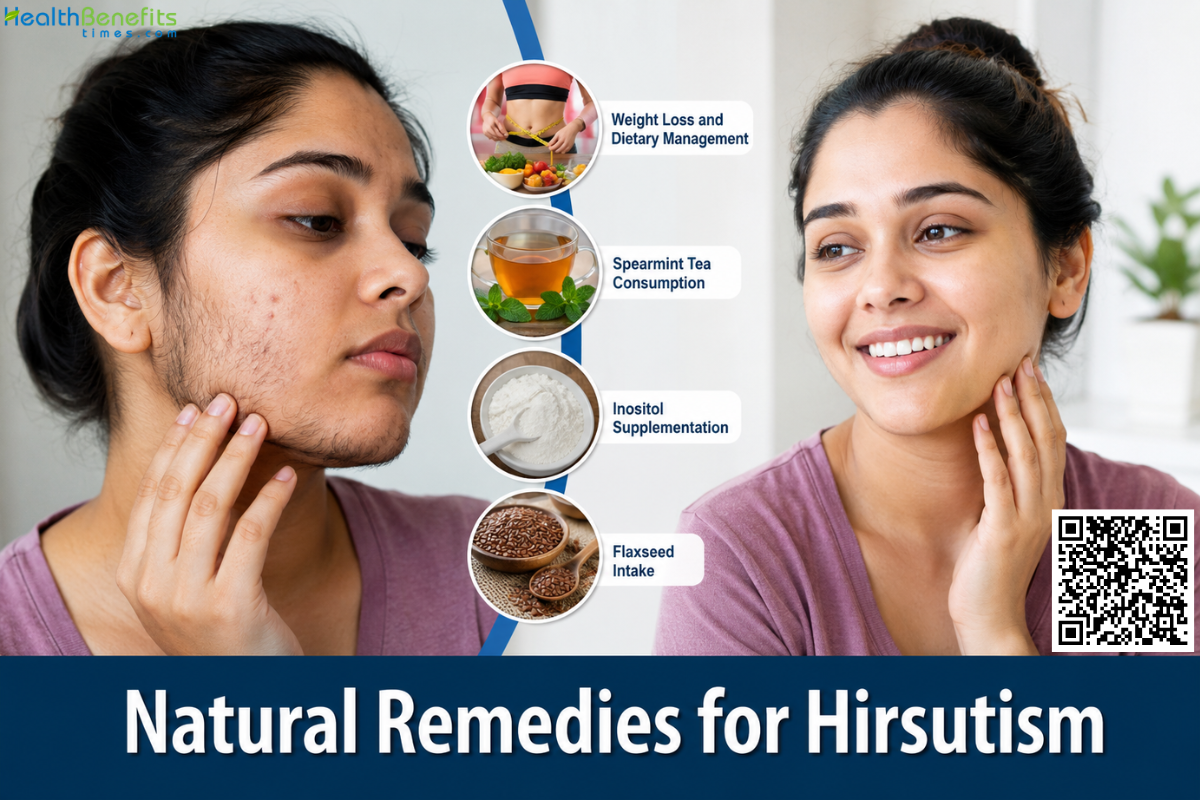
Causes of Hirsutism
1. Polycystic Ovary Syndrome (PCOS)
This condition represents the most frequent cause of hirsutism, accounting for approximately 70% to 80% of all cases 6. It is a complex hormonal disorder characterized by the overproduction of androgens, irregular menstrual cycles, and the accumulation of underdeveloped follicles within the ovaries.
2. Idiopathic Hirsutism
Accounting for about 10% to 20% of cases, this diagnosis is made when a woman experiences excessive hair growth despite having regular menstrual cycles, normal ultrasound findings, and normal circulating hormone levels. It is believed to occur because the skin’s hair follicles become unusually sensitive to normal, everyday amounts of natural hormones 7.
3. Non-Classical Congenital Adrenal Hyperplasia
This is an inherited genetic disorder that affects the adrenal glands, causing a minor enzyme deficiency that leads to the excessive production of steroid hormones, including androgens. It is the most common adrenal-related cause of excessive hair growth in women, often developing during or after puberty.
4. Medications
Certain prescription drugs can trigger excessive hair growth as a direct side effect. Common examples include synthetic hormones like testosterone or anabolic steroids, specific immunosuppressant medications such as cyclosporine, and drugs like minoxidil or danazol.
5. Androgen-Secreting Tumors
In rare instances, accounting for approximately 0.2% of all cases, abnormal growths or tumors in the ovaries or adrenal glands can autonomously produce extremely high levels of male hormones. These tumors generally cause a sudden, rapid, and severe onset of excessive hair growth alongside other masculine physical changes.
6. Other Endocrine Disorders
Less frequently, hirsutism can result from other broad glandular disorders, such as Cushing’s syndrome—which develops when the body has chronically high levels of the stress hormone cortisol—or from severe insulin resistance and high prolactin levels, all of which disrupt standard hormone balance.
Symptoms of Hirsutism
1. Excessive, Coarse Hair Growth
The defining characteristic of the condition is the emergence of thick, dark, and stiff hair—medically termed terminal hair—in bodily areas where women typically only have fine, virtually invisible hair. This growth follows a male-pattern distribution, most frequently appearing on the upper lip, chin, neck, chest, stomach, and back.
2. Severe Acne and Oily Skin
The same elevated male hormone (androgen) levels that trigger excess hair growth also overstimulate the skin’s oil glands 8. This overproduction of oil frequently leads to persistent acne, particularly concentrated around the lower face, jawline, and neck.
3. Menstrual Irregularities
Because the condition is heavily linked to underlying hormonal and ovarian disorders, individuals frequently experience disruptions in their reproductive cycles. This can manifest as unpredictable menstrual cycles, unusually heavy bleeding, or a complete absence of menstrual periods.
4. Scalp Hair Thinning
While hair growth increases on the body, elevated androgens can have the opposite effect on the scalp. Many individuals experience a specific type of hair loss known as androgenic alopecia, which presents as a widening of the hair part or thinning at the crown and front of the head.
5. Signs of Virilization
In rare cases where androgen levels are excessively high, such as with certain tumors, women may develop more pronounced masculine physical traits, a process called virilization. These severe symptoms include a noticeable deepening of the voice, increased muscle mass, decreased breast size, and enlargement of the clitoris.
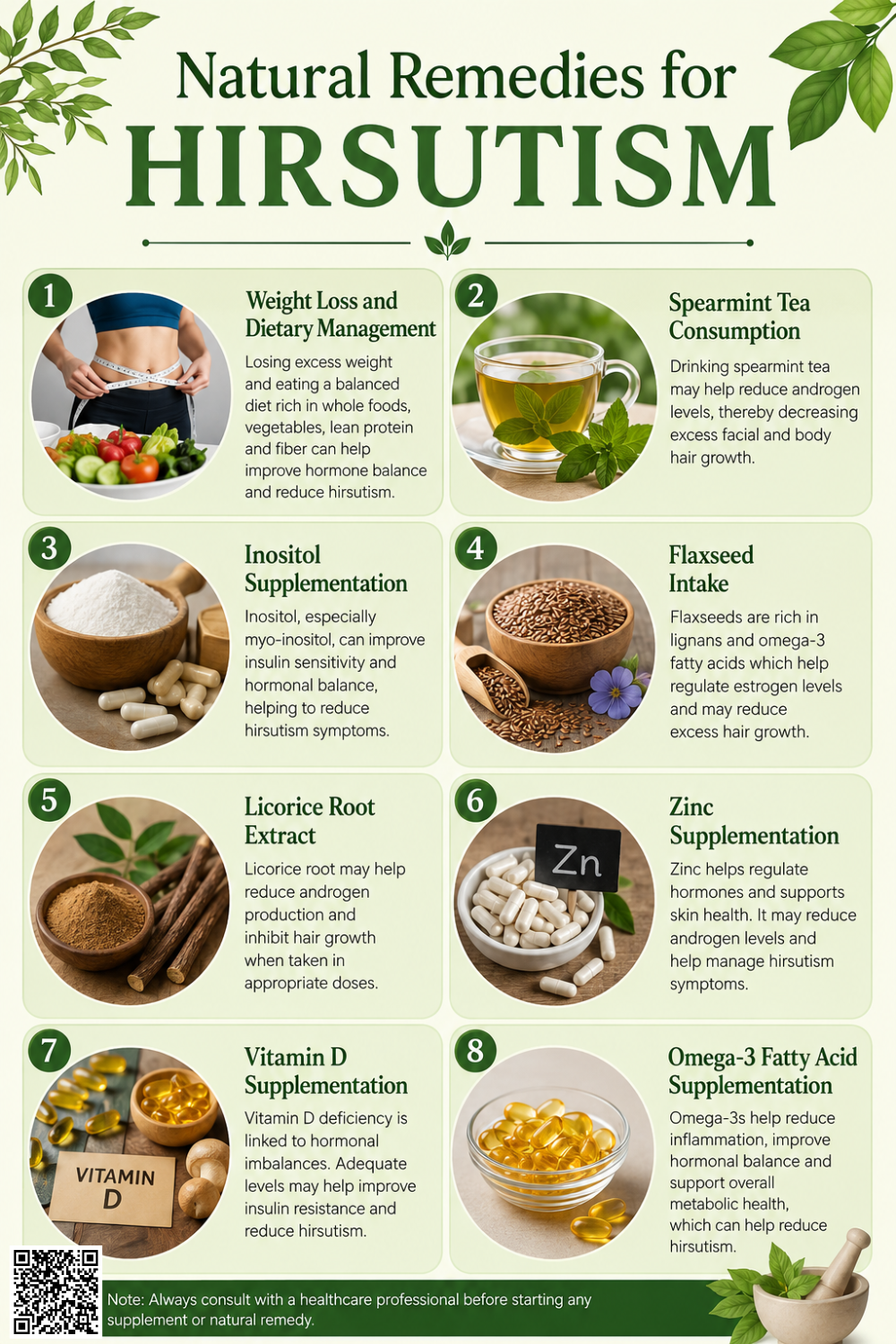
1. Weight Loss and Dietary Management
How it may help
Weight reduction directly improves insulin resistance, a key driver of hormone imbalances in conditions like polycystic ovary syndrome. Lowering insulin levels reduces the ovaries’ production of male hormones and increases a protein that binds to testosterone, decreasing the amount of free hormones available to stimulate excess hair growth 9.
What research says
Clinical studies conclude that a modest weight loss of just 5% to 10% of total body weight significantly lowers circulating androgen levels and visibly reduces the severity of excessive hair growth. Researchers establish lifestyle modification and weight management as the most effective initial intervention for overweight women experiencing hirsutism 10.
How to use it safely
Aim for a steady, sustainable weight loss of one to two pounds per week. You should focus on a balanced diet rich in whole grains, lean proteins, and vegetables while limiting refined sugars. Consult a registered dietitian to create a personalized plan that safely meets your nutritional needs.
Potential precautions or side effects
Avoid extreme diets, as rapid weight loss causes nutritional deficiencies and further disrupts your hormone balance. Always seek medical supervision if you have a history of eating disorders.
2. Spearmint Tea Consumption
How it may help
Spearmint tea acts as a natural anti-androgen. It actively reduces the levels of free testosterone circulating in the blood while simultaneously increasing hormones that promote regular reproductive cycles 11. This rebalancing of hormones directly targets the chemical signals that stimulate dark, coarse hair growth on the face and body.
What research says
Clinical trials confirm that drinking spearmint tea twice daily over a thirty-day period significantly lowers free and total testosterone levels in women with polycystic ovary syndrome. Researchers conclude that this herbal treatment provides a safe, effective natural therapy for reducing mild symptoms of excessive hair growth 12.
How to use it safely
To use this remedy, steep one teaspoon of dried spearmint leaves or a commercial tea bag in boiling water for five to ten minutes. You should drink one to two cups per day. For the best results, maintain this daily routine consistently over several months.
Potential precautions or side effects
While generally safe, drinking excessive amounts may cause mild stomach upset. You should consult a doctor before starting if you are pregnant, nursing, or taking hormone-altering medications.
3. Inositol Supplementation
How it may help
Inositol is a natural carbohydrate that improves how the body uses insulin. By increasing insulin sensitivity, it prevents the body from producing excessive insulin levels. This reduction directly signals the ovaries to decrease male hormone production, effectively minimizing the primary trigger for unwanted hair growth 13.
What research says
Clinical studies demonstrate that myo-inositol supplementation significantly lowers circulating testosterone levels in women with polycystic ovary syndrome 14. Researchers conclude that regular daily intake over six months visibly reduces the severity of excessive hair growth and restores hormonal balance without major side effects.
How to use it safely
You should take inositol supplements daily, preferably as myo-inositol or a mix of myo-inositol and D-chiro-inositol. The standard recommended amount is two to four grams per day, taken with meals. Always consult your doctor to establish the exact dosage that fits your individual health profile.
Potential precautions or side effects
Inositol is generally safe, but high doses may cause mild nausea, stomach pain, or fatigue. You should consult your physician before combining this supplement with prescription diabetes medications.
4. Flaxseed Intake
How it may help
Flaxseed contains high amounts of natural plant compounds called lignans. These compounds increase the body’s production of a specific protein that binds to testosterone in the bloodstream, rendering the hormone inactive. By significantly reducing the amount of free testosterone available to stimulate hair follicles, flaxseed directly targets the primary hormonal trigger of excessive hair growth 15.
What research says
Clinical studies demonstrate that consuming 30 grams of flaxseed daily significantly decreases both total and free testosterone levels in women diagnosed with polycystic ovary syndrome. Researchers conclude that consistent daily supplementation over a period of four months results in a clinically significant and noticeable reduction in hirsutism symptoms.
How to use it safely
You should consume up to 30 grams, or approximately two tablespoons, of ground flaxseed daily. Always use milled or crushed seeds, because whole seeds pass through the digestive tract unabsorbed. You can easily mix the powder into water, yogurt, oatmeal, or smoothies for convenient intake.
Potential precautions or side effects
Because flaxseed is highly fibrous, it acts as a mild laxative. You must drink plenty of water to prevent bloating or constipation, and avoid exceeding 50 grams per day.
5. Licorice Root Extract
How it may help
Licorice root contains active plant compounds that block the specific enzymes the body uses to produce testosterone. By preventing the ovaries from manufacturing high levels of this male hormone, licorice directly addresses the chemical imbalance that causes thick, dark hair to grow on the face and body 16.
What research says
Clinical studies show that daily consumption of licorice root significantly lowers total testosterone levels in women after just one month of use. Researchers conclude that its strong hormone-blocking properties make it a viable supportive treatment for managing hormone-related conditions like polycystic ovary syndrome and hirsutism.
How to use it safely
You can consume licorice root as a daily tea, capsule, or liquid extract. Because of its potency, you should limit your intake to no more than a few weeks at a time. Always consult a healthcare provider to determine a safe dosage tailored to your medical history.
Potential precautions or side effects
Long-term use can cause dangerously high blood pressure and low potassium levels 17. You must avoid licorice entirely if you currently have heart disease, kidney issues, or hypertension.
6. Zinc Supplementation
How it may help
Zinc functions as a natural hormone regulator by blocking the specific enzyme responsible for converting testosterone into its more potent and active form. By lowering the concentration of this stronger hormone around the skin’s hair follicles, zinc minimizes the chemical signals that stimulate coarse, unwanted hair growth 18.
What research says
Clinical studies demonstrate that daily zinc supplementation significantly improves hormonal profiles and reduces excessive hair growth in women with polycystic ovary syndrome. Researchers conclude that taking zinc regularly for eight weeks leads to measurable reductions in hirsutism severity, confirming its value as an effective supportive therapy.
How to use it safely
You can take oral zinc supplements daily, commonly as zinc sulfate or gluconate. Clinical trials typically utilize doses of up to 50 milligrams per day. You should always take zinc with food to prevent nausea and consult your healthcare provider to establish a safe, individualized dosage.
Potential precautions or side effects
Excessive zinc intake frequently causes nausea and stomach distress. Long-term use of high doses can dangerously deplete copper levels, requiring careful medical supervision and routine blood monitoring 19.
7. Vitamin D Supplementation
How it may help
Vitamin D actively improves how the body processes insulin, preventing the insulin spikes that stimulate the ovaries to overproduce male hormones. It also helps regulate normal hair follicle function, directly counteracting the biological triggers that cause thick, dark hair growth 20.
What research says
Clinical trials confirm that treating a vitamin D deficiency in women with polycystic ovary syndrome significantly decreases circulating testosterone. Researchers conclude that routine vitamin D supplementation noticeably reduces hirsutism severity and improves reproductive hormone balance when used over several months 21.
How to use it safely
You should request a blood test to confirm a deficiency before beginning. Take vitamin D3 supplements alongside a meal containing healthy fats to maximize absorption. Always follow your doctor’s exact dosage instructions, as requirements vary heavily based on your current blood levels.
Potential precautions or side effects
Excessive vitamin D causes dangerously high blood calcium, potentially leading to kidney stones or heart rhythm issues. Never exceed standard limits without direct medical supervision 22.
8. Omega-3 Fatty Acid Supplementation
How it may help
Omega-3 fatty acids actively reduce systemic inflammation and improve how the body responds to insulin. By enhancing insulin sensitivity, these healthy fats help prevent the ovaries from overproducing the male hormones responsible for triggering unwanted, coarse hair growth on the face and body 23.
What research says
Clinical trials indicate that daily omega-3 supplementation significantly decreases circulating testosterone levels in women with polycystic ovary syndrome 24. Researchers conclude that taking these fatty acids consistently over several months noticeably reduces the severity of excessive hair growth and improves overall hormone balance.
How to use it safely
You can obtain omega-3s through fish oil or plant-based algae supplements. Standard clinical dosages typically range from one to two grams daily. You should always take these capsules with meals to improve absorption and consult your physician to confirm the appropriate dose.
Potential precautions or side effects
High doses of omega-3s can thin the blood and increase bleeding risks 25. You must consult your doctor before starting if you currently take prescription blood-thinning medications.
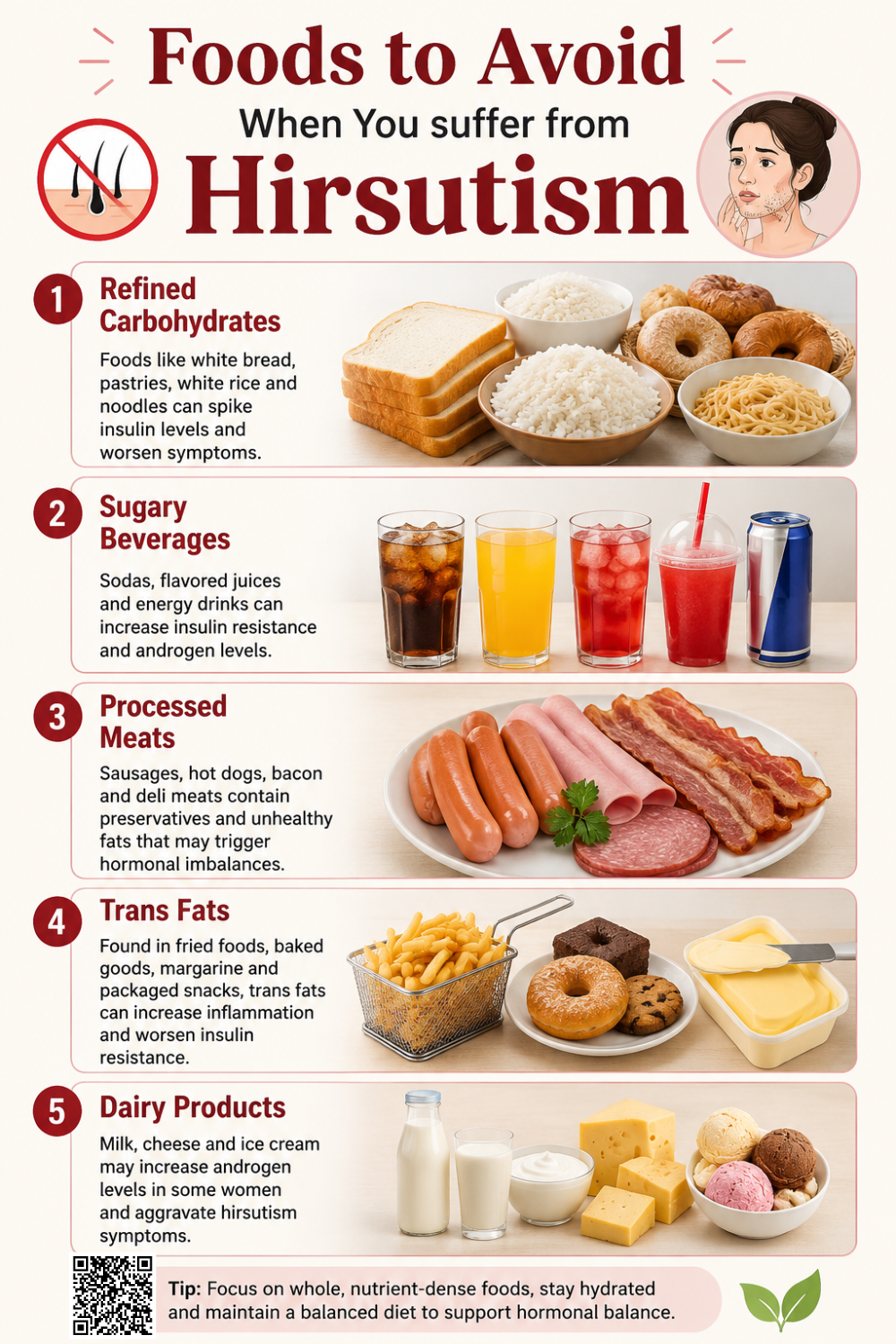
1. Refined Carbohydrates
White bread, pastries, and sugary snacks rapidly spike insulin levels. This forces the ovaries to produce excess male hormones, directly worsening excessive hair growth.
2. Sugary Beverages
Sodas and sweetened drinks severely disrupt blood sugar regulation. High sugar intake drives systemic inflammation and insulin resistance, primary triggers for hormone-induced hair growth.
3. Processed Meats
Hot dogs and bacon contain advanced glycation end products. These harmful compounds promote severe inflammation and metabolic dysfunction, exacerbating androgen overproduction in women 26.
4. Trans Fats
Found in commercial baked goods, artificial trans fats heavily worsen insulin resistance. This metabolic failure significantly amplifies the specific hormonal imbalances driving hirsutism.
5. Dairy Products
High consumption of conventional milk increases insulin-like growth factor 1 (IGF-1). This growth factor directly stimulates the body to synthesize higher levels of male hormones 27.
When to See a Doctor When You Suffer from Hirsutism
1. Rapid Onset of Symptoms
Seek immediate medical evaluation if excessive hair growth appears suddenly and progresses rapidly over a few months, as this strongly indicates a potential hormone-secreting tumor.
2. Signs of Masculinization
Consult a physician if hair growth is accompanied by a deepening voice, increased muscle mass, or decreased breast size, signaling severely elevated male hormones 28.
3. Menstrual Irregularities
You should see a doctor if hirsutism occurs alongside irregular, heavy, or completely absent menstrual periods, which points to underlying ovarian disorders like polycystic ovary syndrome.
4. Severe Acne or Balding
Schedule a clinical evaluation if you experience persistent, severe cystic acne or noticeable male-pattern scalp balding, as these confirm systemic androgen overproduction requiring prescription intervention.
Comments
comments