

What is HPV?
HPV is a group of more than 200 related viruses and at least 40 of them spread through sexual contact. 1 It is the most common sexually transmitted infection in the United States. The CDC estimates that about 85% of people will get an HPV infection at some point in their lives. 2 For most people, the infection causes no symptoms and clears on its own within two years. But when certain “high-risk” types persist, they can lead to cervical, anal, oropharyngeal, vaginal, vulvar, and penile cancers. 3 The scale of the problem is significant: roughly 49,908 HPV-associated cancers are diagnosed in the U.S. each year, with about 39,300 linked directly to HPV. 4 To protect yourself, vaccination, regular screening, and a healthy immune system remain the most powerful tools available. 5
Causes of Human Papillomavirus (HPV)
HPV is caused by infection with one of the more than 200 strains of papillomavirus, and most genital cases trace back to a small set of common situations:
1. Skin-to-skin sexual contact
Most HPV spreads during vaginal, anal, or oral sex with an infected partner, and penetration is not required. 6
2. Direct contact with warts
Common warts, plantar warts, and flat warts can spread by touching a wart or something that touched a wart. 7
3. Tiny breaks in the skin
The virus enters through small cuts, abrasions, or tears, which is why intimate friction during sex makes transmission easier. 7
4. Vertical (mother-to-baby) transmission
A pregnant person with genital warts can pass HPV to the baby during birth, occasionally leading to a rare condition called recurrent respiratory papillomatosis. 8
5. Autoinoculation
The virus can spread from one part of your own body to another, for example from a hand wart to the face. 6
6. A weakened immune system
HIV, organ transplant medicines, and other conditions that suppress immunity make it easier for HPV to take hold and persist. 9
Symptoms of Human Papillomavirus (HPV)
Most HPV infections are silent, but when symptoms do appear, they tend to fall into a few clear categories. 10
1. Skin warts (common HPV types)
- Rough, raised bumps on the fingers, hands, or knees (common warts) 7
- Hard, painful growths on the soles of the feet (plantar warts)
- Small, smooth, slightly raised flat warts, often on the face or legs
2. Genital warts (low-risk HPV 6 and 11)
- Small, flesh-colored or gray bumps in the genital or anal area
- Cauliflower-shaped clusters of warts
- Itching, mild discomfort, or bleeding during sex 11
3. High-risk HPV (often no early symptoms):
- Persistent infections can cause cell changes detected only by screening tests 10
- Later signs of HPV-related cancer may include unusual vaginal bleeding, pelvic pain, lumps, sore throat, or pain on swallowing
HPV Facts Table
| Symptoms |
|
| Causes |
|
| Types of HPV |
|
| How it spreads |
|
| Age group |
|
| Risk factors – you might be at higher risk if you: |
|
| How doctors diagnose |
|
| Other facts |
|
Natural Remedies for Human Papillomavirus (HPV)
Natural remedies cannot replace medical care, screening, or vaccination, but several well-studied options may help the immune system clear HPV or shrink HPV-related lesions. Always discuss any supplement with your doctor before starting.
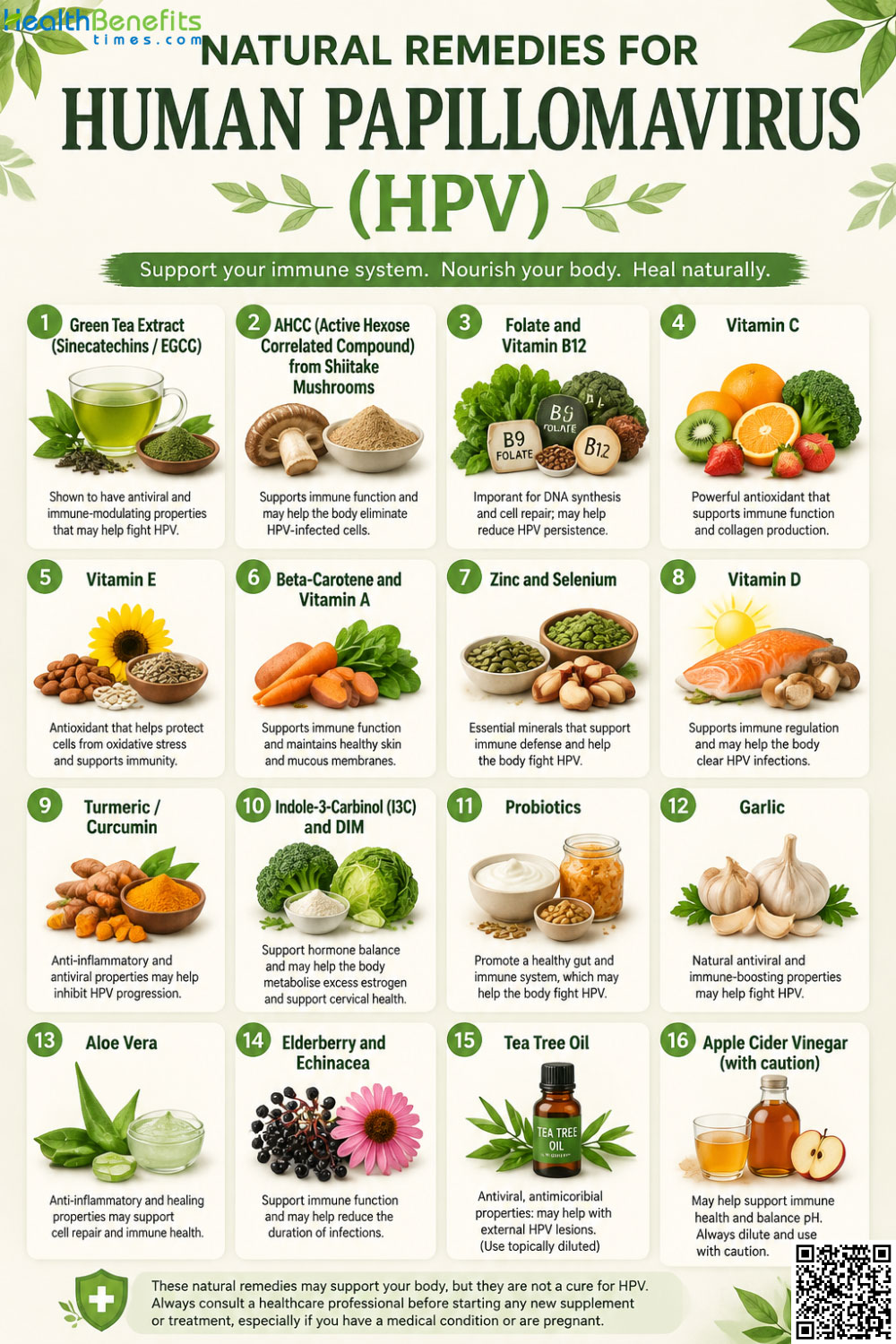
1. Green Tea Extract (Sinecatechins / EGCG)
A standardized green tea extract called sinecatechins (Veregen) is the only botanical drug the FDA has approved to treat external genital and perianal warts caused by HPV. 16 The active ingredient, mostly epigallocatechin gallate (EGCG), has antiviral, antioxidant, and immune-stimulating effects. 17 In phase III trials, 15% sinecatechins ointment cleared genital warts in roughly 53.6% of patients compared with 35.3% in controls. 18 A 2025 clinical study also showed that an oral combination of EGCG, folic acid, vitamin B12, and hyaluronic acid improved HPV clearance and reduced cervical lesion persistence. 19
Note: Veregen is applied as a thin layer to external warts three times daily for up to 16 weeks; oral green tea or supplements are taken with meals. 20
2. AHCC (Active Hexose Correlated Compound) from Shiitake Mushrooms
AHCC is a fermented extract from shiitake mushroom mycelia studied for its immune-modulating effects against HPV. 21 In a phase II double-blind, placebo-controlled trial, AHCC 3 g once daily for at least 6 months was associated with HPV clearance in roughly 60% of women with persistent high-risk infections, with no serious side effects. 22 Earlier pilot studies showed similar clearance, with suppression of interferon-β below 20 pg/mL correlating with durable response. 23
Note: AHCC is typically taken as a capsule of 1–3 g daily on an empty stomach for at least six months under medical supervision.
3. Folate and Vitamin B12
Folate (vitamin B9) is essential for DNA synthesis and methylation, and several studies link higher folate levels to better HPV clearance. 24 Women with higher folate status are significantly less likely to have persistent high-risk HPV or progress to cervical intraepithelial neoplasia. 25 High plasma folate may reduce the risk of HPV infection by as much as 73%, especially when combined with vitamin B12. 26
Note: Eat folate-rich foods (leafy greens, lentils, beans, citrus) or take 400–800 mcg of folic acid or methylfolate daily, often alongside 1 mg of vitamin B12.
4. Vitamin C
Vitamin C is a water-soluble antioxidant that supports the immune defense against viral infections. Higher dietary vitamin C intake has been linked to a lower risk of type-specific persistent HPV infection and to reduced progression of cervical intraepithelial neoplasia. 27 A 2025 meta-analysis found a consistent protective effect of antioxidant vitamins, including C, against HPV-related inflammation. 28
Note: Aim for vitamin C from citrus fruits, kiwi, strawberries, bell peppers, and broccoli, or take 500–1,000 mg as a supplement daily with food.
5. Vitamin E
Increased intake of vitamin E (especially α-tocopherol) is associated with faster HPV clearance, lower persistence, and reduced cervical cancer risk, with moderate-certainty evidence in recent meta-analyses. 28
Note: Get vitamin E from almonds, sunflower seeds, avocado, and wheat germ, or use a 15 mg (22 IU) supplement daily.
6. Beta-Carotene and Vitamin A
Carotenoids and vitamin A help maintain healthy mucosal tissue and may inhibit early cervical cancer development. 29 Diets rich in α- and β-carotene, lycopene, and vitamins A, C, and E are linked to lower risk of HPV-related cervical disease. 30
Note: Eat carrots, sweet potatoes, tomatoes, spinach, and pumpkin daily; avoid high-dose vitamin A supplements in pregnancy.
7. Zinc and Selenium
Zinc supplementation has been associated with improved HPV clearance and lesion regression, while selenium reduces oxidative damage and supports regression of cervical intraepithelial neoplasia. 31
Note: Use zinc (15–30 mg) and selenium (55–200 mcg) for short periods, or eat oysters, pumpkin seeds, and Brazil nuts; long-term high doses can be harmful.
8. Vitamin D
Two Iranian randomized controlled trials showed that high-dose vitamin D3 (50,000 IU twice weekly) helped prevent recurrence of CIN 2/3 lesions and supported their regression. 28
Note: Get sunlight and eat fatty fish or fortified foods; supplements (1,000–2,000 IU daily) should be guided by a 25-OH vitamin D blood test.
9. Turmeric / Curcumin
Curcumin, the active compound in turmeric, has shown the ability to suppress HPV oncoproteins E6 and E7, induce apoptosis in HPV-positive cervical cancer cells, and reduce activity of HPV in oral and cervical tissues. 32 Researchers describe it as an affordable potential adjuvant for HPV-associated cervical disease. 33 A topical intravaginal formulation is being investigated in clinical trials. 34
Note: Use 500–1,000 mg of curcumin with piperine (black pepper extract) once or twice daily with food to improve absorption.
10. Indole-3-Carbinol (I3C) and DIM
Indole-3-carbinol, found in cruciferous vegetables like broccoli, cabbage, and Brussels sprouts, converts in the stomach to diindolylmethane (DIM). 35 In a small placebo-controlled trial, I3C at 200 or 400 mg daily improved regression of cervical intraepithelial neoplasia, and DIM has reduced cervical dysplasia in animal models of HPV16. 36 I3C has also been used in doses up to 400 mg/day for recurrent respiratory papillomatosis.
Note: Eat one cup of cruciferous vegetables daily, or take I3C (200–400 mg) or DIM (100–200 mg) supplements with a meal.
11. Probiotics
Beneficial vaginal bacteria, especially Lactobacillus species, support a healthy mucosal environment that may help the body clear HPV. Supplementation with oral or vaginal probiotics is being explored as an adjunct to standard cervical care, though large clinical trials are still limited.
Note: Consume yogurt, kefir, sauerkraut, and kimchi, or take a multi-strain probiotic capsule containing Lactobacillus species daily.
12. Garlic
Garlic contains allicin, a sulfur compound with antiviral and immune-stimulating properties traditionally used for warts and skin infections. Direct application to the skin can, however, cause chemical burns and is not recommended on the genitals. 37
Note: Add one to two cloves of raw or lightly cooked garlic to meals daily, or use aged garlic extract capsules.
13. Aloe Vera
Aloe vera gel has soothing, anti-inflammatory, and mild antiviral properties that may help with skin warts and irritation around HPV lesions when applied externally.
Note: Apply fresh aloe vera gel to non-genital warts twice daily; for genital areas, only use products specifically formulated and approved for that purpose.
14. Elderberry and Echinacea
Elderberry (Sambucus nigra) and echinacea are traditional herbal immune supports that may help the body fight viral infections in general; high-quality HPV-specific studies are still lacking, so they are considered general immune adjuncts rather than HPV treatments.
Note: Use as a standardized syrup, tea, or capsule during cold and flu seasons; avoid in pregnancy and autoimmune conditions without medical advice.
15. Tea Tree Oil
Tea tree oil has antiviral and antimicrobial activity and has been used on common skin warts, but it is not recommended for genital warts because it can cause skin irritation, allergic reactions, and chemical burns in sensitive areas. 38
Note: For non-genital warts only, dilute one to two drops in a carrier oil and dab onto the wart daily.
16. Apple Cider Vinegar (with caution)
Apple cider vinegar’s acetic acid can break down wart tissue, but dermatologists warn it can cause severe skin irritation, chemical burns, and ulcers, especially on delicate skin. 39 It should not be used on genital warts. 40
Note: For common warts only, dilute with water (1:1), apply briefly with a cotton ball, and stop at any sign of irritation.
Foods and Activities to Avoid When You Have HPV
Certain habits weaken the immune system and have been linked to higher rates of persistent HPV infection and HPV-related cancers. To give your body the best chance to clear the virus, consider avoiding:
- Smoking and tobacco. Smoking is a well-known risk factor for persistent HPV infection and cervical cancer. 7
- Heavy alcohol use, which can suppress immune function and worsen oral and cervical HPV outcomes.
- Ultra-processed foods, refined sugar, and trans fats, which promote inflammation and oxidative stress.
- Low-fiber, low-vegetable diets, which lack the antioxidants and folate needed for HPV clearance. 41
- Unprotected sex with new partners while infected, since this can pass HPV to others and re-expose you to additional types. 13
- Chronic sleep deprivation and high stress, which weaken immune response.
- Sharing razors, towels, or underwear that may carry virus particles from warts.
- Self-treating genital warts with harsh substanceslike undiluted apple cider vinegar, bleach, or strong essential oils. 38
Myths and Misconceptions
| Myth | Reality |
| Only women get HPV. | Both men and women get HPV; men can develop genital warts and anal, penile, and oropharyngeal cancers. |
| HPV always causes cancer. | About 90% of HPV infections clear on their own within two years, and only persistent high-risk infections lead to cancer. |
| The HPV vaccine causes infertility. | Decades of safety data show no link between the HPV vaccine and infertility. |
| You only need the vaccine if you’re sexually active. | The vaccine works best before any sexual exposure, which is why it is recommended at ages 11–12. |
| Condoms fully prevent HPV. | Condoms reduce risk significantly but don’t cover all skin in the genital area, so transmission is still possible. |
| If you don’t have warts, you don’t have HPV. | Most HPV infections, including high-risk types, have no symptoms at all. |
| HPV means you were unfaithful. | HPV can stay in the body silently for years, so a new diagnosis doesn’t prove a recent infection or infidelity. |
| Natural remedies can cure HPV. | No supplement is proven to cure HPV; remedies may support immune clearance, but vaccination and screening remain essential. |
Special Considerations
1. Children
Common skin warts are very frequent in school-age children and usually resolve on their own. 44 Anogenital warts appearing in children older than three to four years should prompt evaluation for possible sexual abuse, since HPV in these areas is rarely acquired in other ways. The CDC recommends two doses of HPV vaccine for children at ages 11–12, ideally before any sexual exposure, and starting as early as age 9 for children with a history of sexual abuse. 9
2. Pregnancy
Most HPV infections do not affect pregnancy, but genital warts may grow faster due to hormonal changes, and rarely the virus can be passed to the baby during birth, causing recurrent respiratory papillomatosis. 44 Some studies link HPV infection in pregnancy with higher risk of preterm birth, premature rupture of membranes, and miscarriage. 45 HPV vaccination is not recommended during pregnancy and should be delayed until after delivery, though pregnancy testing before vaccination is not required. 13 Many supplements, including high-dose vitamin A, I3C, and herbal immune stimulants, should be avoided in pregnancy without medical advice.
3. Chronic Conditions and Weakened Immune Systems
People with HIV, autoimmune diseases, or those on immunosuppressive medications (such as after a transplant) are at higher risk for persistent HPV, multiple HPV types, and faster progression to precancer or cancer. 9 A three-dose HPV vaccine schedule is recommended for immunocompromised people of any age within the eligible range. More frequent cervical or anal cancer screening is also often advised.
4. Elderly
HPV-related cancers can take 20 years or more to develop, so older adults may still face risk from infections acquired earlier in life. 46 Routine cervical screening can usually stop after age 65 in women who have had several normal results, but anyone with a history of high-grade lesions, new symptoms, or a new sexual partner should continue screening. Catch-up HPV vaccination may be discussed with a clinician for adults 27–45, though benefits decrease with age. 47
Precautions before Use of Natural Remedies When You Have HPV
Before starting any supplement or home remedy, you should take a few sensible steps:
1. Get a confirmed diagnosis first.Visible bumps may not always be warts; skin cancers and other conditions can look similar. 14
2. Talk to your doctor or pharmacistabout any supplement, especially if you take other medications, are pregnant, or have a chronic illness.
3. Never apply tea tree oil, garlic, or apple cider vinegar to genital warts, since these can cause severe burns and scarring. 39
4. Stick to recommended doses. High-dose vitamin A, zinc, or selenium can be toxic over time.
5. Patch test essential oils on a small skin area first to check for allergic reaction.
6. Buy supplements from reputable brands that carry third-party testing seals.
7. Don’t replace medical treatment. Natural remedies are adjuncts, not substitutes, for screening, vaccination, or wart removal. 15
8. Keep up with Pap and HPV tests even if you feel well.
9. Stop any remedy that causes pain, bleeding, swelling, or skin breakdown.
10. Inform your partner so they can also be evaluated and consider vaccination.
When to See a Doctor
Some HPV-related changes need medical attention, not home care. Contact your healthcare provider promptly if you notice:
- New growths or warts on the genitals, anus, mouth, or throat. 11
- Itching, bleeding, or pain from a wart or lesion.
- Abnormal vaginal bleeding, including bleeding after sex or between periods.
- Persistent pelvic pain, vaginal discharge, or pain during sex.
- A lump in the neck, hoarseness, or chronic sore throat that doesn’t resolve, which can signal oropharyngeal disease. 10
- An abnormal Pap smear or positive HPV DNA test 48
- Warts that don’t respond to over-the-counter or home treatment.
- A weakened immune system with new skin or genital lesions.
- Pregnancy with genital warts, so your provider can plan safe delivery.
- A child with anogenital warts, which requires immediate evaluation. 44
HPV is extremely common, usually harmless, and often clears on its own. A strong immune system supported by good nutrition, sleep, stress management, and avoiding tobacco gives your body its best chance to do that work. Natural remedies such as sinecatechins, AHCC, folate, antioxidant vitamins, and curcumin show promising evidence as supportive tools, but they work best alongside, not instead of, vaccination, regular screening, and your doctor’s guidance.
Comments
comments