

Causes of Hypothermia
1. Prolonged Cold Weather Exposure
Spending extended periods in freezing or highly chilled environments without adequate protective clothing rapidly drains the body’s stored heat 5.
2. Cold Water Immersion
Submerging the body in cold water accelerates heat loss, as water conducts heat away from the body significantly faster than cold air.
3. Wet Clothing and Moisture
Wearing damp or sweat-soaked garments in cool temperatures causes continuous core body heat loss through evaporation.
4. Inadequate Indoor Heating
Remaining in poorly insulated or unheated indoor spaces can slowly lower core body temperatures, presenting a severe risk to infants and older adults who have slower metabolic rates 6.
5. Medical and Metabolic Conditions
Health issues such as an underactive thyroid (hypothyroidism), low blood sugar (hypoglycemia), and severe malnutrition impair the central nervous system and the body’s natural ability to generate necessary heat.
6. Alcohol and Substance Use
Consuming alcohol or certain drugs causes blood vessels in the skin to expand, which releases body heat quickly while simultaneously impairing a person’s mental awareness and physical ability to seek warm shelter.
Symptoms of Hypothermia
1. Uncontrollable Shivering
Constant, intense shivering is typically the first physical warning sign as the body attempts to generate muscle heat, though this shivering will dangerously stop once the condition becomes severe.
2. Cognitive Decline
Mental confusion, sudden memory loss, and a lack of sound judgment occur because the dropping core temperature significantly slows down normal brain function.
3. Loss of Physical Coordination
Individuals commonly experience slurred speech, fumbling hands, and stumbling steps as the cold severely impairs the central nervous system 7.
4. Extreme Exhaustion
Profound physical fatigue, lethargy, and intense drowsiness happen because the body rapidly drains its stored energy reserves in a desperate attempt to stay warm.
5. Slowed Vital Signs
In the later critical stages, the heart rate and breathing become abnormally slow, shallow, or irregular, which can eventually lead to complete unconsciousness and cardiac arrest if not treated immediately.
6. Unique Signs in Infants
Babies display slightly different clinical warning signs, most notably skin that feels very cold to the touch and appears unusually bright red, accompanied by an extreme lack of energy or a refusal to feed 8.
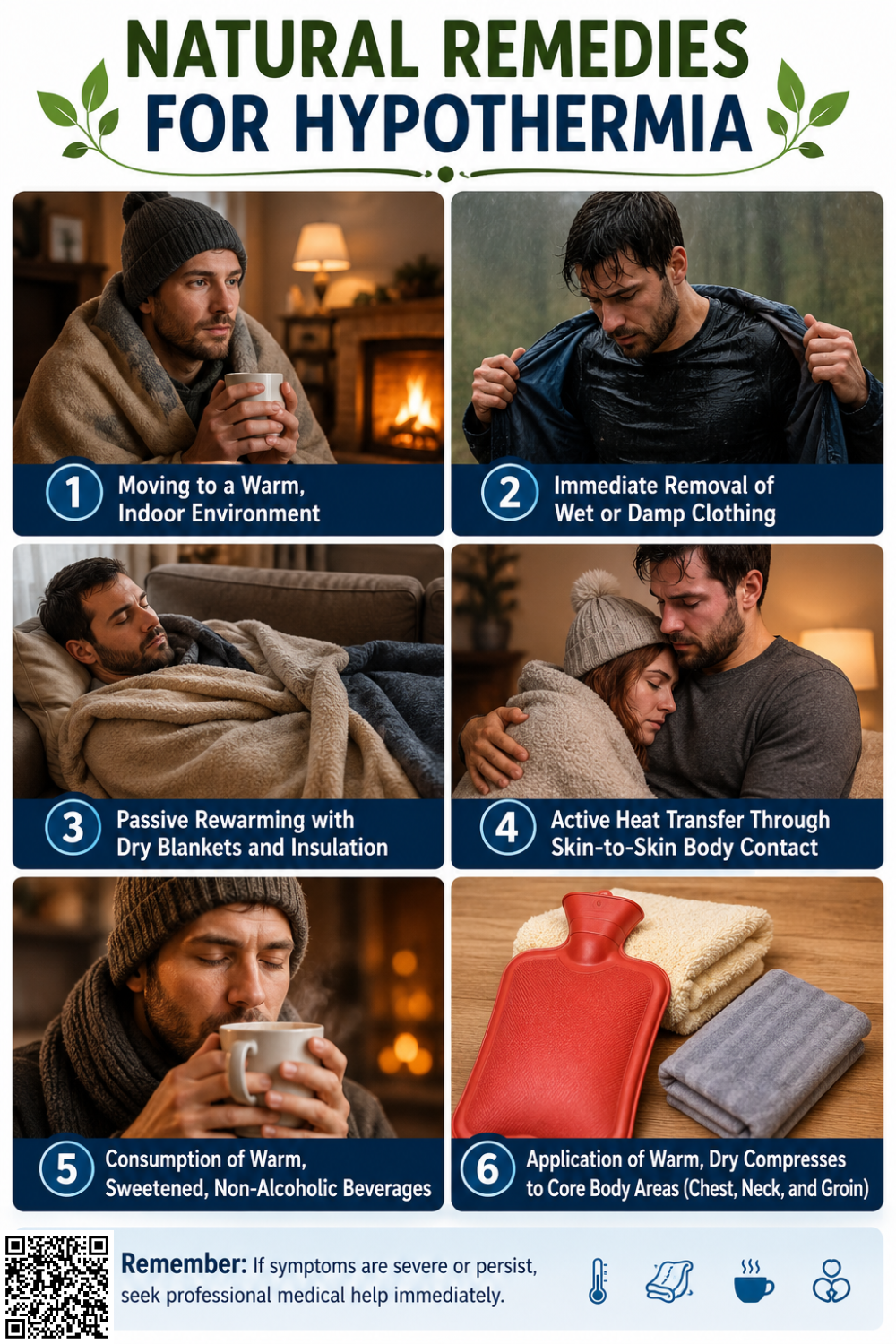
1. Moving to a Warm, Indoor Environment
How it may help
Moving a person indoors immediately stops ongoing environmental heat loss, which is the primary driver of a dropping core temperature. Sheltering from wind, snow, and freezing air establishes a stable baseline, allowing the body’s natural metabolic processes to begin generating heat and preventing the condition from rapidly worsening.
What research says
Clinical protocols establish that relocating a patient to a warm, dry environment is the mandatory first step in treating all stages of hypothermia. Medical guidelines confirm that without removing the environmental cold stress, secondary warming techniques remain largely ineffective at stabilizing a patient’s core body temperature.
How to use it safely
You must move the affected person as gently as possible into a warm shelter. Keep them horizontal during transport and immediately shield them from wind or drafts. If an indoor room is unavailable, use temporary shelters like a heated vehicle to block the cold.
Potential precautions or side effects
Never handle a severely hypothermic person roughly or aggressively massage their body. Sudden, jarring movements can trigger fatal heart rhythms, such as ventricular fibrillation.
2. Immediate Removal of Wet or Damp Clothing
How it may help
Water conducts heat away from the body significantly faster than dry air. Removing wet or damp clothing immediately halts rapid heat loss caused by evaporation and direct conduction. This crucial step prevents the core body temperature from dropping further and allows dry blankets to effectively trap the body’s natural heat.
What research says
Clinical guidelines emphasize that wet garments accelerate heat loss up to 25 times faster than dry conditions. Medical consensus mandates the immediate removal of all wet clothing as a foundational step in hypothermia treatment, as failing to do so renders subsequent passive rewarming techniques, like blankets, largely ineffective.
How to use it safely
You should gently cut away wet clothing with scissors instead of pulling it over the person’s head to prevent jarring physical movements. Once the damp layers are removed, immediately cover the individual with dry, warm blankets to begin the rewarming process safely.
Potential precautions or side effects
Avoid exposing the person to cold air during clothing removal. Limit all physical movement, as rough handling can trigger fatal cardiac arrhythmias in severely hypothermic patients.
3. Passive Rewarming with Dry Blankets and Insulation
How it may help
Passive rewarming utilizes heavy, dry blankets to trap naturally generated body heat, gradually raising the core temperature. By thoroughly insulating the individual, especially the head and neck, this method effectively halts further environmental heat loss and allows the body to safely warm itself over time.
What research says
Medical guidelines establish passive external rewarming as the standard first-line treatment for mild hypothermia. Clinical research confirms this method successfully raises core body temperatures by roughly 0.5°C to 2.0°C per hour, provided the patient retains enough metabolic energy to shiver and internally generate their own heat.
How to use it safely
You should completely wrap the person in multiple dry blankets, ensuring you carefully cover their head while leaving the face clear for breathing. Always place a thick insulating barrier, such as a sleeping pad, underneath them to block cold temperatures radiating from the ground.
Potential precautions or side effects
This method is ineffective for severe hypothermia because the body can no longer generate its own heat. Never rely solely on passive rewarming if the patient has stopped shivering entirely.
4. Active Heat Transfer Through Skin-to-Skin Body Contact
How it may help
Sharing body heat with a healthy person provides a direct source of external warmth when a hypothermic individual can no longer shiver to generate their own heat. This skin-to-skin thermal transfer directly delivers warmth to the affected person’s core, helping to stabilize their dropping body temperature during outdoor emergencies.
What research says
Wilderness medicine guidelines confirm that body-to-body rewarming is a practical field intervention for mild to moderate hypothermia when artificial heat sources are unavailable. However, clinical research indicates this method is significantly slower and less efficient at raising a patient’s core temperature compared to heated blankets or specialized medical warming devices.
How to use it safely
You should remove any wet garments from the hypothermic individual and place them directly inside a dry sleeping bag alongside a warm, dry person. Ensure direct skin-to-skin contact along the chest and torso to maximize core heat transfer while keeping both individuals fully insulated from the cold environment.
Potential precautions or side effects
The warm individual actively loses their own body heat, which can safely drop their temperature. You must never attempt this if it compromises the healthy rescuer’s safety.
5. Consumption of Warm, Sweetened, Non-Alcoholic Beverages
How it may help
Providing a warm, sweetened beverage delivers immediate, direct heat to the body’s core. The added sugar provides a rapid source of easily digestible calories. The body quickly metabolizes these carbohydrates to fuel the muscles, allowing a person to continue shivering and generating vital internal heat 9.
What research says
Public health protocols establish that warm, sweet beverages or broths effectively combat mild cold stress. While clinical guidelines confirm that oral fluids alone cannot treat severe hypothermia, providing warm, non-alcoholic drinks is a proven supplementary intervention that helps restore depleted metabolic energy reserves.
How to use it safely
You should only offer warm liquids if the affected person is fully awake, alert, and capable of swallowing normally. Serve the beverage comfortably warm, never boiling hot. Encourage the individual to take small, slow sips rather than gulping the liquid to prevent vomiting.
Potential precautions or side effects
Never force fluids into an unconscious person due to the severe risk of choking. You must strictly avoid any beverages containing alcohol or caffeine, which actively accelerate heat loss.
6. Application of Warm, Dry Compresses to Core Body Areas (Chest, Neck, and Groin)
How it may help
Applying warm, dry compresses directly to the core of the body—specifically the neck, chest, and groin—efficiently transfers heat to major blood vessels. This focused core warming safely raises the central body temperature and protects vital organs much faster than waiting for the body to generate its own heat.
What research says
Clinical protocols mandate core-focused external rewarming rather than warming the arms and legs. Research confirms that heating the extremities first forces cold blood back into the heart, a phenomenon called “afterdrop,” which can trigger a fatal secondary drop in core temperature and lead to sudden cardiac arrest 10.
How to use it safely
You should wrap chemical heat packs, warm water bottles, or warm towels in a dry cloth before placing them on the person’s chest, neck, and groin. Ensure the compresses are only comfortably warm to the touch, never hot, to protect the person’s highly vulnerable skin.
Potential precautions or side effects
Never apply heat directly to the arms, legs, or bare skin. Strictly avoid using boiling water or direct heat pads, which can easily cause severe thermal burns on numb skin.
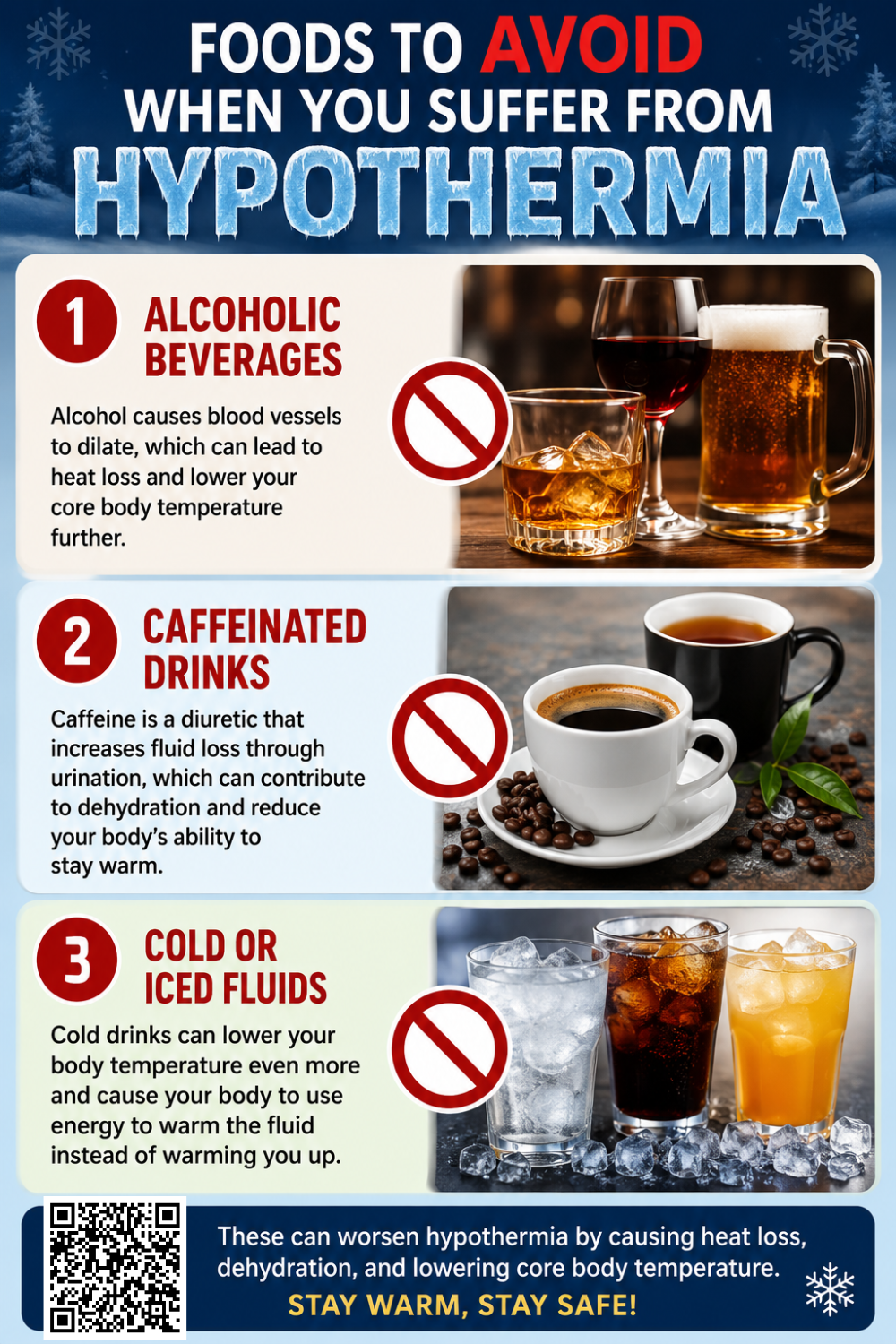
Foods to Avoid When You suffer from Hypothermia
1. Alcoholic Beverages
You must strictly avoid alcohol because it expands blood vessels, rapidly accelerating dangerous core heat loss while simultaneously impairing the body’s vital shivering reflex.
2. Caffeinated Drinks
Do not consume coffee, tea, or energy drinks. Caffeine actively accelerates body heat loss and can dangerously mask physical warning signs of severe cold stress 11.
3. Cold or Iced Fluids
You must avoid chilled water or iced drinks. Ingesting cold fluids introduces an internal thermal load that directly lowers the central core temperature further 12.
1. Core Temperature Below 95°F (35°C)
Medical professionals define this as clinical hypothermia, a life-threatening emergency requiring immediate hospital intervention and advanced core rewarming.
2. Shivering Suddenly Stops
You must seek emergency care immediately if violent shivering ceases, as this indicates the body’s energy is depleted and severe hypothermia has begun.
3. Altered Mental State
Emergency medical attention is required if the individual exhibits slurred speech, severe confusion, or profound lethargy, signaling critical central nervous system impairment.
4. Slowed Breathing or Weak Pulse
You must call for emergency responders immediately if breathing becomes shallow or the heart rate drops, as these vital sign changes precede cardiac arrest.
5. Loss of Consciousness
Complete unresponsiveness is a critical emergency. Professional healthcare providers must immediately administer advanced life support and specialized clinical rewarming to prevent death.
Comments
comments