

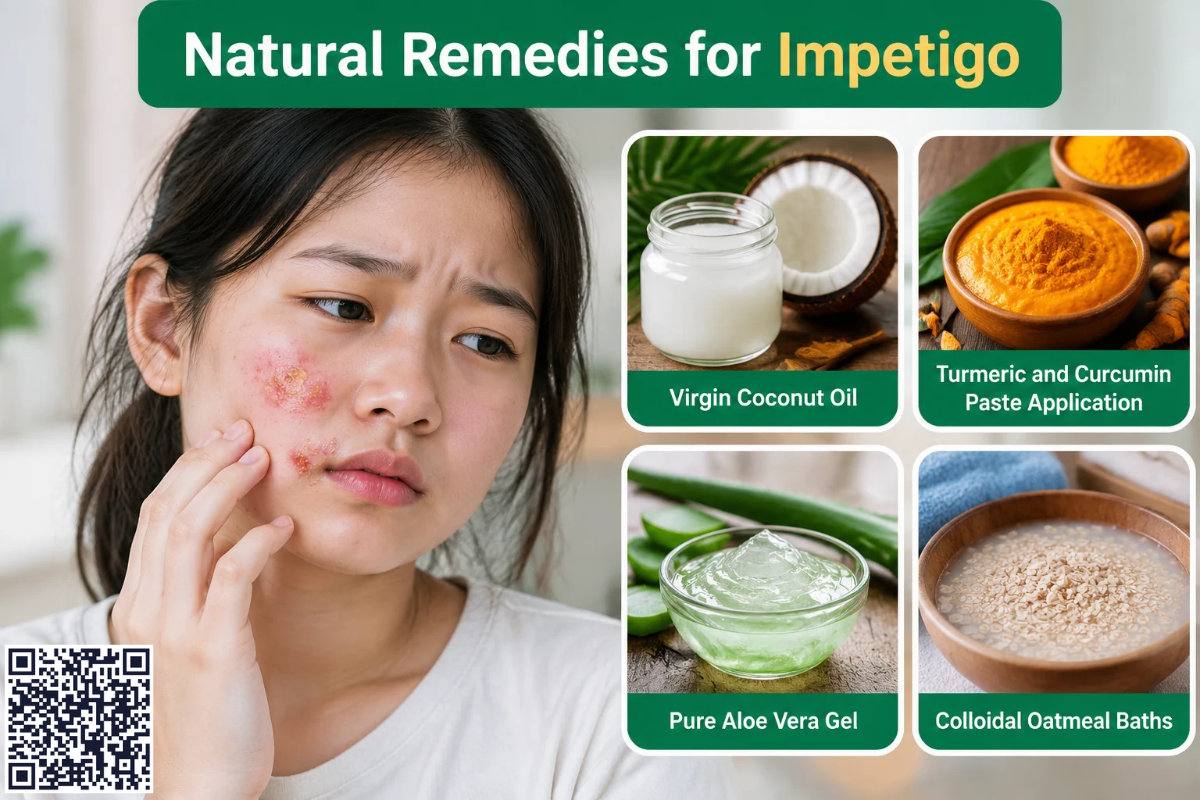
Causes of Impetigo
1. Bacterial Pathogens
The direct cause of impetigo is an infection by Staphylococcus aureus (staph) bacteria, group A Streptococcus (strep) bacteria, or sometimes a combination of both 2.
2. Skin Injuries
These bacteria generally enter the body and cause an infection when the outer skin barrier is broken by minor trauma, such as cuts, scrapes, scratches, burns, or insect bites 1.
3. Pre-existing Skin Conditions
Chronic inflammatory skin issues that provoke severe scratching, including eczema (atopic dermatitis), contact dermatitis, or scabies, create openings in the skin that allow the bacteria to enter 1.
4. Direct Contact
The bacteria are highly contagious and spread most commonly through direct, skin-to-skin contact with the open sores or blister fluid of an infected person 2.
5. Contaminated Objects
The infection can also be transmitted indirectly when a person touches personal items that have been recently used or worn by someone with impetigo, such as towels, bed linens, clothing, or shared toys 2.
Symptoms of Impetigo
1. Red, Itchy Sores
The initial sign is typically the appearance of small, red, pimple-like bumps (papules) that are often intensely itchy, most commonly developing on exposed skin around the nose, mouth, arms, or legs 2.
2. Fluid or Pus-Filled Blisters
Over a short period, the red bumps evolve into small, fragile blisters (pustules) that fill with clear fluid or yellowish pus 3.
3. Oozing and Rupturing
After a few days, these blisters break open easily, leaking their infectious fluid or pus onto the surrounding skin 2.
4. Honey-Colored Crusts
As the ruptured sores begin to heal, the oozing fluid dries and forms a distinctive, thick, golden or “honey-colored” crust over the affected areas 2.
5. Spreading Lesions
Scratching the itchy sores can transfer the highly contagious bacteria to other parts of the body, causing new patches of sores to rapidly appear and spread 4.
6. Swollen Lymph Nodes
In some individuals, the lymph glands located near the site of the skin infection may become enlarged and swollen as the immune system responds to the bacterial invasion 1.
Natural Remedies for Impetigo
1. Medical-Grade Manuka Honey
How It May Help
Medical-grade Manuka honey contains an active compound called methylglyoxal, which provides powerful antibacterial properties. When applied to the skin, it creates a protective barrier that stops bacterial growth while soothing the irritated sores. Its low pH and high sugar content also draw fluid away from the infection, helping the skin heal faster 5.
What Research Says
Clinical studies demonstrate that Manuka honey effectively stops the growth of Staphylococcus aureus and Streptococcus pyogenes, the specific bacteria that cause impetigo. Research confirms that bacteria do not build resistance to this honey, making it a reliable supportive treatment for clearing surface-level bacterial skin infections 6.
How to Use It Safely
To use this remedy, first wash your hands thoroughly. Apply a thin layer of sterile, medical-grade Manuka honey directly to the impetigo sores or onto a clean bandage. Place the bandage over the infected skin and replace it with a fresh one daily 7.
Potential Precautions or Side Effects
Do not use this remedy if you are allergic to bees or pollen. Avoid applying honey near the mouth of infants under one year old to prevent infant botulism 5.
2. Diluted Tea Tree Oil
How It May Help
Tea tree oil is a natural plant extract containing active compounds that break down bacterial cell walls. When properly diluted and applied to the skin, it helps destroy the bacteria responsible for impetigo infections while also reducing localized swelling and redness around the open sores 8.
What Research Says
Scientific research confirms that tea tree oil demonstrates significant antibacterial effects against Staphylococcus aureus and Streptococcus pyogenes, the exact bacteria that cause impetigo. Clinical reviews conclude that topical application successfully inhibits this bacterial growth on the skin, making it a viable supportive option for minor infections 8.
How to Use It Safely
You must never apply pure tea tree oil directly to your skin. Mix two drops of the essential oil into a tablespoon of a gentle carrier oil, like olive oil. Gently dab this blended mixture onto the sores using a sterile cotton swab once daily 9.
Potential Precautions or Side Effects
Discontinue use immediately if you experience increased redness, burning, or an allergic skin rash. Tea tree oil is highly toxic if swallowed and must stay away from the mouth 9.
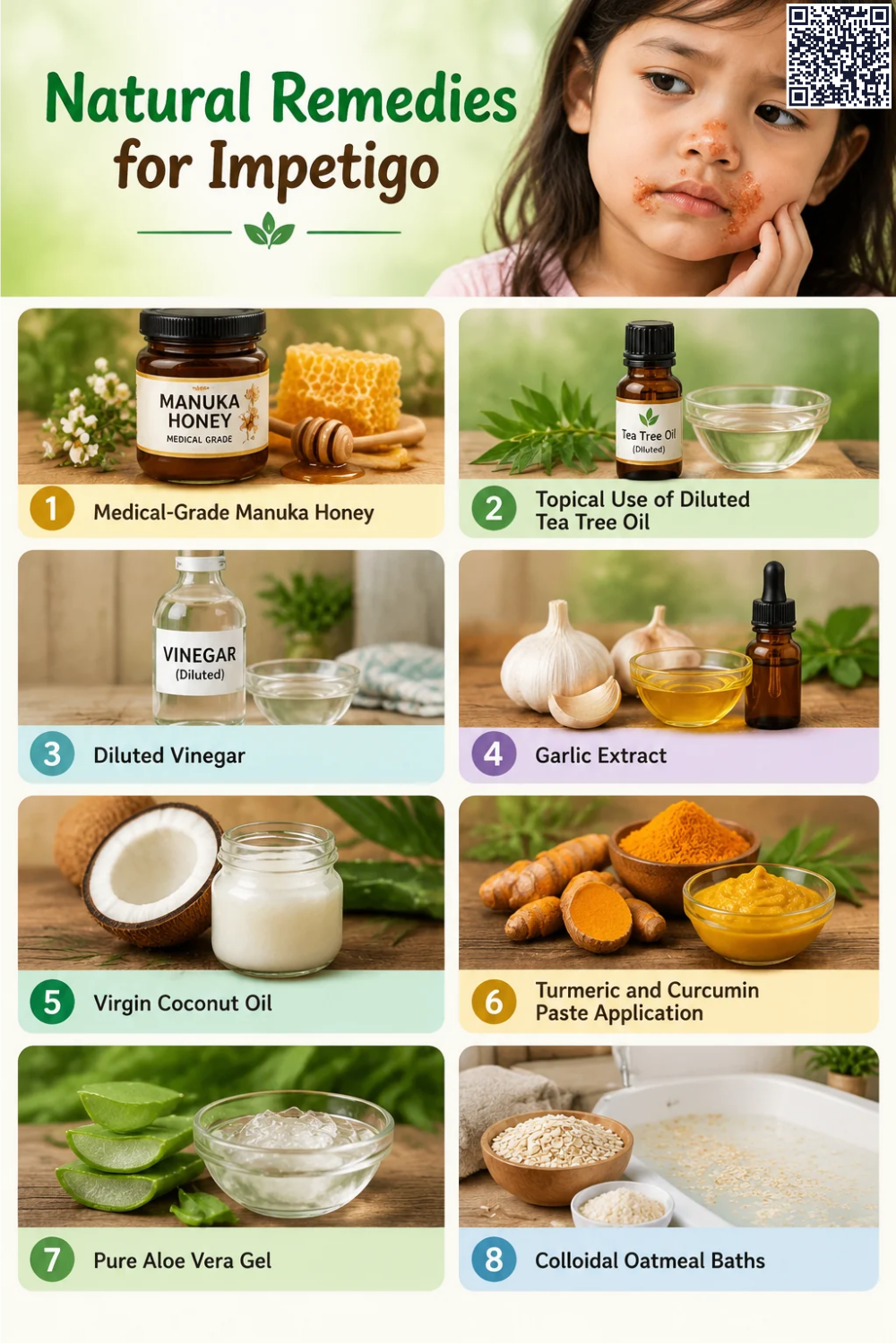
3. Diluted Vinegar
How It May Help
Vinegar contains acetic acid, which naturally lowers the skin’s pH level. This creates a mild acidic environment that makes it difficult for bacteria to survive and multiply. Using a diluted vinegar wash also helps safely loosen and remove the thick crusts that form over impetigo sores, allowing the skin to heal properly 10.
What Research Says
Clinical research demonstrates that low concentrations of acetic acid effectively inhibit the growth of multiple bacterial strains, including the Staphylococcus aureus bacteria that cause impetigo. Studies conclude that dilute acetic acid is a safe topical antimicrobial agent that reduces bacterial colonization on the skin’s surface without promoting antibiotic resistance 10.
How to Use It Safely
Mix one tablespoon of regular white vinegar into one pint of warm water. Soak a clean washcloth in this diluted mixture and gently press it against the sores for five to ten minutes. Carefully wipe away the softened crusts, pat dry, and repeat twice daily 1.
Potential Precautions or Side Effects
Never apply undiluted vinegar directly to the skin, as strong acids can cause chemical burns. Discontinue use immediately if you notice increased pain, burning, or worsening redness 10.
4. Garlic Extract
How It May Help
Garlic extract contains allicin, an organic compound providing natural antibacterial defense. Applying this diluted extract helps attack the bacteria responsible for the infection. By disrupting bacterial activity, it helps stop weeping sores from spreading while actively supporting the skin’s natural healing process and reducing localized inflammation 11 12.
What Research Says
Clinical studies confirm allicin effectively inhibits the growth of Staphylococcus aureus and Streptococcus pyogenes, the exact pathogens causing impetigo. Research concludes garlic extract acts as a potent antibacterial agent that significantly reduces bacterial colonization on the skin’s surface without easily triggering bacterial resistance 11 13.
How to Use It Safely
Never apply raw, undiluted garlic directly to open sores. Crush one fresh garlic clove and mix thoroughly with two tablespoons of a gentle carrier oil, like olive oil. Gently apply this diluted mixture using a sterile swab, leaving it for ten minutes before rinsing 11 14.
Potential Precautions or Side Effects
Raw garlic can cause chemical burns and contact dermatitis. Stop use immediately if you experience intense burning or worsening redness 11 14.
5. Virgin Coconut Oil
How It May Help
Virgin coconut oil contains a high concentration of lauric acid, a unique fatty acid that naturally converts into monolaurin on the skin. Monolaurin provides mild antibacterial properties that help break down the protective walls of harmful bacteria. Furthermore, applying this natural oil deeply moisturizes the damaged skin surface, restoring the physical outer barrier to prevent further bacterial invasion and soothe the intense itchiness associated with open impetigo sores 15 16.
What Research Says
Clinical studies verify that monolaurin, an active compound derived from virgin coconut oil, effectively inhibits the growth of Staphylococcus aureus, a primary bacteria responsible for impetigo. Researchers conclude that topical application significantly decreases bacterial colonization while simultaneously improving skin hydration. Furthermore, evidence confirms that virgin coconut oil offers a safe, non-irritating supplementary therapy for managing superficial bacterial skin infections without increasing the risk of antibiotic resistance in affected patients 15 16.
How to Use It Safely
Always wash your hands thoroughly before treating the bacterial infection. Select pure, cold-pressed virgin coconut oil to ensure maximum active ingredients. Using a sterile cotton swab, gently apply a very thin layer of the solid oil directly onto the clean, dry impetigo sores. Discard the swab immediately to prevent spreading the bacteria. You may safely repeat this gentle application routine two to three times daily until the crusty lesions completely heal 15 16.
Potential Precautions or Side Effects
While generally safe, virgin coconut oil can occasionally trigger contact dermatitis or localized allergic skin reactions in sensitive individuals. Stop applying the oil immediately if you notice increased swelling, intense burning, or worsening redness around the sores. Because the oil is highly comedogenic, meaning it can clog pores, avoid applying it over large areas of unaffected skin to prevent secondary acne breakouts around the healing impetigo lesions on your body 16 15.
6. Turmeric and Curcumin Paste Application
How It May Help
Turmeric contains an active compound called curcumin, which provides significant natural 17 antibacterial defense. Applying this medicinal paste directly helps destroy the harmful surface bacteria responsible for spreading the infection. Additionally, curcumin actively reduces the visible 18 redness and painful swelling associated with open impetigo sores, gently supporting the body’s natural skin healing process.
What Research Says
Clinical studies confirm that curcumin strongly inhibits the growth of Staphylococcus aureus 17, the primary bacterial strain causing impetigo. Researchers conclude that topical turmeric extracts function as highly effective 18 antimicrobial agents. Evidence demonstrates that this natural compound significantly decreases bacterial skin colonization while promoting faster tissue repair without contributing to antibiotic resistance.
How to Use It Safely
Wash your hands before touching the infection. Mix pure turmeric powder with sterile water 18 to form a paste. Apply this directly onto the sores using a clean 1 cotton swab. Leave it for twenty minutes before gently rinsing it away.
Potential Precautions or Side Effects
Turmeric paste will temporarily stain skin and clothing bright 18 yellow. Stop application immediately if you experience increased burning, intense itching, or an allergic 19 skin rash.
7. Pure Aloe Vera Gel
How It May Help
Pure aloe vera gel contains powerful active biochemicals that deliver significant 20 antibacterial and soothing effects to damaged tissue. When applied directly onto impetigo sores, this cooling plant extract immediately reduces intense itching and painful skin inflammation. By forming a protective, breathable moisture barrier over the ruptured blisters, it greatly accelerates the body’s natural 21 tissue repair process while actively protecting the broken skin from additional environmental damage and further bacterial spread.
What Research Says
Clinical evaluations clearly demonstrate that aloe vera extracts successfully inhibit the rapid growth of Staphylococcus aureus 21, a primary bacteria responsible for causing impetigo. Researchers emphasize that these plant-derived topical treatments function as highly effective 20 antimicrobial agents that decrease surface bacterial loads. Furthermore, robust scientific evidence confirms that applying this pure gel significantly enhances cellular regeneration and wound closure speed without promoting dangerous antibiotic resistance in affected patients.
How to Use It Safely
You must always wash your hands thoroughly before touching the infected skin areas. Extract fresh gel directly from a mature aloe leaf or use a pure, unscented 20 medical-grade commercial product. Using a sterile cotton swab, carefully apply a thick, even layer over the completely dry 1 impetigo lesions. You may safely repeat this gentle, soothing application routine three times daily until the crusty bacterial sores completely resolve and fully heal.
Potential Precautions or Side Effects
While generally considered highly safe for topical use, pure aloe vera gel may occasionally trigger mild 22 allergic contact dermatitis in highly sensitive individuals. You must stop applying the plant gel immediately if you suddenly notice worsening redness, intense burning sensations, or a completely new 20 itchy rash developing around the treated skin. Never consume the gel orally to treat surface-level bacterial skin infections.
8. Colloidal Oatmeal Baths
How It May Help
Colloidal oatmeal contains unique starches and beta-glucans that hold essential moisture, creating a soothing barrier over damaged tissue. When used for impetigo infections, it actively binds to the skin to relieve intense 23 itchiness and painful inflammation. This gentle soaking method effectively softens and safely lifts away the thick, infectious crusts without requiring harsh, painful scrubbing. Consequently, this prevents further skin tearing, thereby stopping the spreading of harmful 24 bacteria across the surface of the infected body.
What Research Says
Clinical evaluations verify that colloidal oatmeal delivers significant anti-inflammatory and antioxidant benefits that successfully calm compromised skin barriers. Researchers conclude that this finely milled oat powder functions as a highly effective 23 dermatological agent for reducing severe itching. Furthermore, rigorous scientific evidence demonstrates that while oatmeal does not independently destroy bacteria, it greatly enhances patient comfort and accelerates natural tissue healing when managing superficial 24 bacterial skin infections in many young children and affected adult patients worldwide.
How to Use It Safely
To safely manage the infection, carefully sprinkle one cup of pure colloidal oatmeal into a bathtub filled with comfortably lukewarm water. Vigorously stir the bathwater to ensure the fine powder completely 23 dissolves. You should soak the affected body parts gently for ten to fifteen minutes. After exiting the relaxing bath, carefully pat your skin completely dry using a soft, clean, fresh towel to avoid accidentally transferring the highly infectious 1 fluid to other healthy family members.
Potential Precautions or Side Effects
Although colloidal oatmeal is widely considered exceptionally safe for sensitive skin, it can occasionally cause an unexpected allergic skin reaction. You must immediately stop using these soothing baths if you suddenly 24 develop worsening redness, increased burning sensations, or a completely new, widespread itchy skin rash. Additionally, always ensure the bathwater remains comfortably lukewarm, because using excessively hot bath water will rapidly strip away natural skin oils and severely 4 aggravate the painful, open bacterial impetigo blisters.
Foods to Avoid When You Suffer From Impetigo
1. High-Sugar Foods and Refined Carbohydrates
Consuming excessive refined sugars and processed sweets can trigger systemic inflammation and weaken the immune system’s ability to efficiently fight off the bacterial infection 25.

2. Highly Processed and Fast Foods
These nutrient-poor foods often contain high levels of trans fats and additives that promote chronic inflammatory responses, slowing down the natural skin healing process 25.
3. Excessively Spicy Foods
Spicy meals can dilate blood vessels and cause flushing or irritation around the facial areas, potentially worsening the discomfort of open, inflamed skin lesions 1.
4. Common Allergenic Foods
If you have known food sensitivities, eating items like dairy, gluten, or nuts can trigger immune flare-ups that complicate skin recovery and increase skin irritation 26.
When to See a Doctor When You Struggle From Impetigo
1. Lack of Improvement After Treatment
If your skin sores do not start showing signs of healing after two or three days of starting topical treatment, you should consult a healthcare provider 2.
2. Spreading Infection and Fever
When you develop a high fever, chills, or notice the redness, swelling, and pus-filled blisters rapidly spreading across your body, seek medical attention immediately 1.
3. Severe Pain or Warmth
If the infected skin becomes intensely painful, severely swollen, or feels hot to the touch, a doctor must evaluate you to rule out deeper tissue complications 3.
4. Development of Blistered Lesions
If you notice large, fluid-filled blisters that rupture easily—a sign of bullous impetigo—you need professional medical diagnosis and prescription oral antibiotics 27.
Comments
comments