


Causes of Irregular periods
- Pregnancy and breastfeeding: These are natural physiological events that delay or completely stop menstruation 4.
- Hormonal imbalances: Endocrine conditions, most notably polycystic ovary syndrome (PCOS), disrupt normal reproductive hormones and frequently cause heavy or unpredictable bleeding 4.
- Perimenopause: The natural transition leading up to menopause, generally occurring in a woman’s late 40s or early 50s, causes significant cycle length fluctuations 4.
- Thyroid disorders: Both an overactive thyroid (hyperthyroidism) and an underactive thyroid (hypothyroidism) disrupt the hormones necessary for a regular menstrual cycle 4.
- Primary ovarian insufficiency (POI): This medical condition happens when the ovaries stop functioning normally before a woman reaches the age of 40 4.
- Physical stress and eating disorders: Extreme physical exertion, significant weight loss, anorexia nervosa, and bulimia can suppress ovulation and cause periods to stop entirely 4.
- Uterine growths: Benign (non-cancerous) tumors such as uterine fibroids or endometrial polyps are common structural causes of unusually heavy or prolonged periods 4.
- Endometriosis and adenomyosis: Conditions where tissue resembling the uterine lining grows outside the uterus or deep into the uterine muscle wall often result in painful and irregular bleeding 4.
- Metabolic disorders: Systemic conditions like uncontrolled diabetes or Cushing’s syndrome (characterized by elevated stress hormones) can interfere with regular reproductive function 4.
- Birth control and specific medications: Hormonal birth control pills, intrauterine devices (IUDs), and certain prescription medications for epilepsy or mental health disorders frequently alter menstrual patterns 4.
- Bleeding disorders: Inherited or acquired blood clotting issues, including von Willebrand disease or leukemia, can manifest as excessively heavy menstrual flow 4.
- Pelvic scarring: Scar tissue within the uterus (Asherman’s syndrome) or scarring caused by previous sexually transmitted infections can obstruct or disrupt normal menstrual bleeding 4.
Symptoms of Irregular periods
- Unpredictable cycle lengths: Experiencing menstrual cycles that frequently vary in duration each month, typically occurring less than 28 days or more than 35 days apart 2.
- Absent or missed periods (Amenorrhea): Failing to experience a menstrual period for three or more consecutive months, or a complete absence of menstruation 1.
- Infrequent menstruation (Oligomenorrhea): Having menstrual cycles that routinely occur more than 35 days apart 1.
- Frequent menstruation (Polymenorrhea): Experiencing menstrual periods that occur too frequently, typically less than 21 days apart 1.
- Excessively heavy bleeding (Menorrhagia): Enduring an unusually heavy menstrual flow, which often includes passing large blood clots or soaking through sanitary products every hour for multiple consecutive hours 2.
- Prolonged bleeding: Having a menstrual flow that consistently lasts longer than seven to eight days 2.
- Intermenstrual bleeding: Experiencing episodes of spotting or unexpected vaginal bleeding that occur between scheduled menstrual periods 1.
- Severe cramping and pain (Dysmenorrhea): Enduring highly painful periods accompanied by severe lower abdominal or pelvic cramps that disrupt daily functioning 1.
- Fatigue and weakness: Feeling unusually tired or lethargic, which serves as a common clinical symptom of anemia caused by excessive or prolonged menstrual blood loss 2.
Natural Remedies for Irregular periods
1. Reaching and Maintaining a Healthy Body Weight
How it may help
Body fat directly influences the production of reproductive hormones and insulin. Excess body weight increases insulin resistance, which disrupts ovulation and causes missed periods. Conversely, being severely underweight suppresses estrogen production. Reaching a healthy weight naturally balances these hormones, allowing the ovaries to function properly and restoring predictable menstrual cycles 5.
What research says
Clinical evidence shows that losing just five to ten percent of excess body weight significantly improves menstrual regularity in overweight individuals. Medical studies confirm this modest weight reduction lowers elevated insulin and androgen levels, effectively restarting spontaneous ovulation, especially in patients diagnosed with polycystic ovary syndrome 6.
How to use it safely
You should focus on gradual, sustainable lifestyle changes rather than restrictive crash diets. Combine a balanced, nutrient-dense diet with regular, moderate physical activity. Always consult a healthcare provider or dietitian to design a personalized weight management plan that safely supports your overall reproductive health 7.
Potential precautions or side effects
You must avoid extreme calorie restriction or rapid weight loss. Severe under-eating places significant physical stress on your body, which can entirely halt menstruation and cause dangerous nutritional deficiencies 8.
2. Engaging in Regular Moderate Physical Activity
How it may help
Moderate physical activity improves the body’s sensitivity to insulin and reduces metabolic stress. This physiological shift helps balance reproductive hormones and encourages regular ovulation. By naturally lowering elevated insulin levels, consistent exercise directly addresses one of the primary hormonal imbalances that cause missed or unpredictable menstrual cycles 5.
What research says
Clinical studies confirm that consistent, moderate aerobic exercise significantly increases menstrual cycle frequency and promotes natural ovulation. Medical research demonstrates that women engaging in regular physical activity experience improved hormonal profiles and a notable reduction in menstrual irregularities compared to those leading completely inactive lifestyles 9.
How to use it safely
You should aim for roughly 150 minutes of moderate aerobic activity, such as brisk walking or swimming, each week. Start slowly and gradually increase your activity level. Always schedule regular rest days to allow your body and reproductive system proper time to recover 10.
Potential precautions or side effects
You must avoid excessive or extreme workout routines. Overtraining places severe physical stress on your body, which can suppress reproductive hormones and cause your menstrual periods to stop entirely 4.
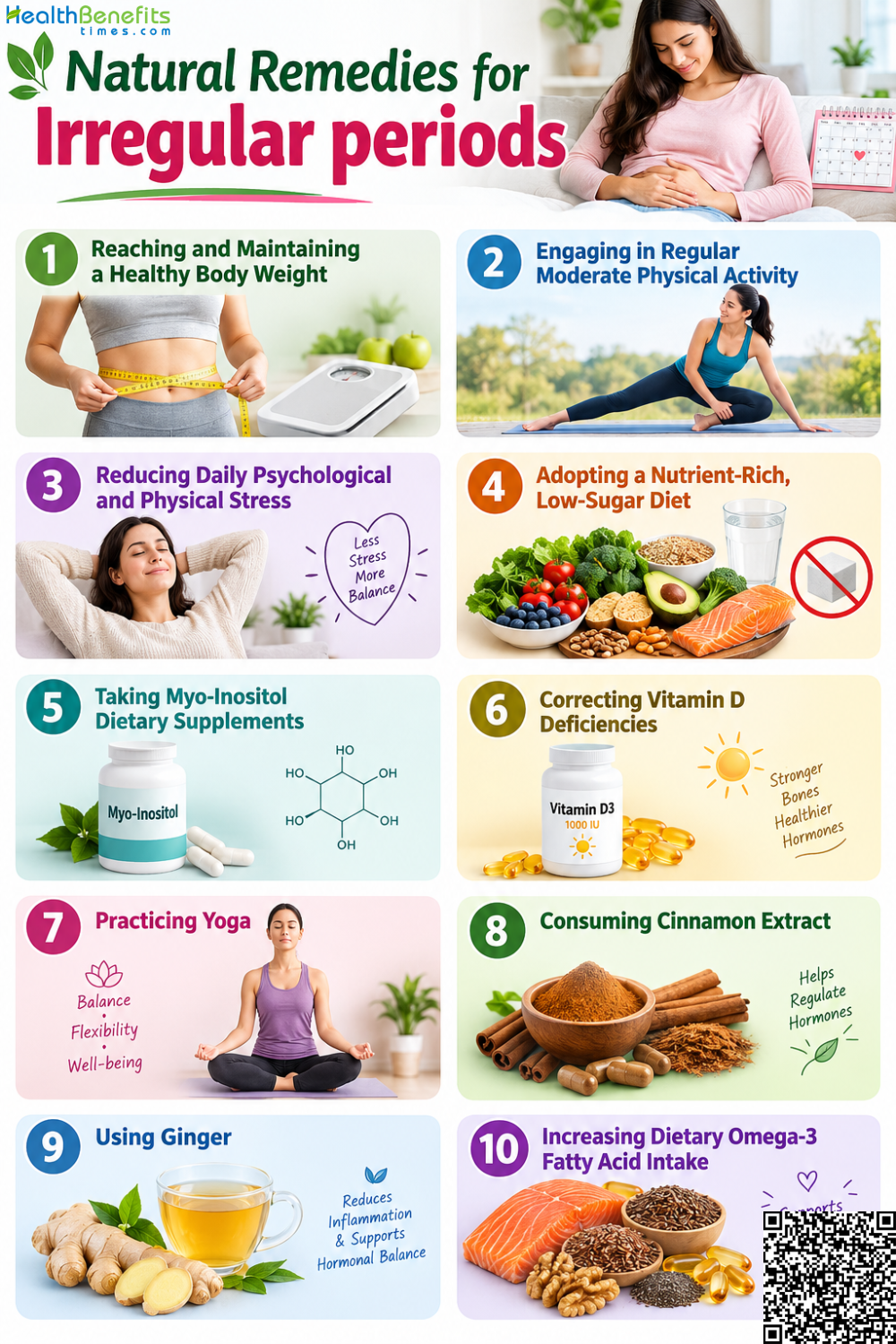
3. Reducing Daily Psychological and Physical Stress
How it may help
High levels of psychological or physical stress elevate cortisol production, which directly interferes with the hypothalamus. This brain region regulates the reproductive hormones necessary for normal menstruation. By lowering stress, the body decreases cortisol output, restores normal hormonal communication to the ovaries, and allows regular ovulation and predictable menstrual cycles to resume 4.
What research says
Clinical evidence establishes that high perceived stress significantly increases the risk of functional hypothalamic amenorrhea, a condition where periods stop entirely. Medical studies confirm that structured stress reduction interventions successfully lower elevated cortisol, restore normal hypothalamic function, and significantly improve menstrual cycle frequency and predictability in affected women 11.
How to use it safely
You should integrate proven relaxation techniques, such as deep breathing, mindfulness meditation, or journaling, into your daily routine. Ensure you get adequate sleep and maintain healthy boundaries to prevent burnout. If chronic stress persists, consult a licensed mental health professional for structured therapeutic support 12.
Potential precautions or side effects
You must remember that hormonal recovery takes time. Avoid becoming anxious about achieving immediate results, as stressing over menstrual regularity can counterproductively worsen your underlying hormonal imbalance 8.
4. Adopting a Nutrient-Rich, Low-Sugar Diet
How it may help
Consuming high amounts of sugar triggers rapid insulin spikes, which subsequently stimulate the ovaries to produce excess androgens. This specific hormonal imbalance directly disrupts normal ovulation. Adopting a low-sugar diet rich in essential nutrients stabilizes blood glucose levels, improves overall insulin sensitivity, and naturally restores the delicate hormonal balance required for regular, predictable menstrual cycles 13.
What research says
Clinical evidence demonstrates that dietary interventions focusing on low glycemic index foods significantly reduce circulating insulin and elevated androgen levels. Medical research confirms that women who strictly adhere to these nutrient-rich, low-sugar diets experience spontaneous ovulation much more frequently and report a substantial improvement in their overall menstrual cycle predictability 14.
How to use it safely
You should focus on eating whole vegetables, lean proteins, and complex carbohydrates while strictly limiting processed foods and added sugars. Always consult a registered dietitian to ensure your specific dietary changes provide adequate energy, meet essential nutritional requirements, and safely support your long-term reproductive health 15.
Potential precautions or side effects
You must avoid overly restrictive diets that completely eliminate all carbohydrates. Extreme nutritional deprivation causes severe energy loss and can suppress the reproductive hormones necessary for maintaining normal menstrual cycles 4.
5. Taking Myo-Inositol Dietary Supplements
How it may help
Myo-inositol is a naturally occurring carbohydrate that improves how cells respond to insulin. By enhancing insulin sensitivity, it directly reduces the overproduction of male hormones in the ovaries. This internal hormonal correction encourages normal egg release, effectively restoring predictable menstrual cycles for those experiencing hormone-related irregularities 16.
What research says
Clinical evaluations conclude that myo-inositol therapy significantly improves menstrual regularity and ovulation rates. Medical research confirms that taking this supplement lowers circulating insulin and testosterone, which directly results in normalized menstrual cycles, particularly for patients diagnosed with polycystic ovary syndrome 17.
How to use it safely
You should discuss myo-inositol with your healthcare provider to ensure it fits your specific medical profile. Clinical guidelines typically suggest taking two to four grams daily, usually divided into two equal doses consumed alongside meals to optimize metabolic absorption 9.
Potential precautions or side effects
You might experience mild gastrointestinal side effects, such as nausea, gas, or diarrhea, especially at higher doses. Always reduce your dosage or consult a doctor if stomach upset persists 18.
6. Correcting Vitamin D Deficiencies
How it may help
Vitamin D functions as a vital systemic hormone that directly influences ovarian physiology. It supports the healthy maturation of ovarian follicles and improves cellular insulin sensitivity. By correcting a deficiency, the body can properly regulate reproductive hormone production, which encourages normal ovulation and predictable menstrual cycles 19.
What research says
Clinical evidence confirms that addressing a severe vitamin D deficiency significantly improves menstrual cycle frequency. Medical research demonstrates that women experiencing metabolic and hormonal imbalances who receive structured vitamin D supplementation achieve much higher rates of spontaneous ovulation and fewer missed periods 20.
How to use it safely
You should request a simple blood test from your doctor to confirm a deficiency before starting any supplements. Follow clinical guidance regarding specific dosages, typically using vitamin D3, and incorporate natural sources like fortified foods or moderate daily sun exposure 21.
Potential precautions or side effects
You must avoid taking excessive supplement doses without medical supervision. Dangerously high vitamin D levels cause severe calcium buildup in the blood, leading to kidney stones and persistent nausea 22.
7. Practicing Yoga
How it may help
Yoga reduces psychological stress and calms the central nervous system, which naturally lowers circulating cortisol levels. Because elevated cortisol disrupts the reproductive hormones responsible for ovulation, reducing these stress hormones restores normal communication between the brain and ovaries. This shift promotes balanced hormone production and encourages regular menstrual cycles 23.
What research says
Clinical reviews show that consistent yoga practice significantly decreases menstrual cycle irregularities and pelvic pain. Medical studies confirm that women participating in structured yoga therapies experience improved hormonal balance, more predictable cycle lengths, and substantial relief from the physical symptoms associated with unpredictable periods 24.
How to use it safely
You should begin with gentle, restorative yoga styles, practicing for roughly thirty to forty-five minutes several times each week. Focus heavily on deep breathing and relaxation poses. Always listen to your physical limits and modify specific stretches if you experience any discomfort during the movements 25.
Potential precautions or side effects
You must avoid overly strenuous poses or physically exhausting heated yoga classes. Forcing your body into advanced postures incorrectly can cause muscle strains and counterproductively increase physical stress 25.
8. Consuming Cinnamon Extract
How it may help
Cinnamon extract contains active compounds that enhance the body’s ability to process glucose and respond to insulin. By improving insulin sensitivity, cinnamon helps lower elevated testosterone levels in the ovaries. This metabolic correction restores natural hormonal balance, which encourages regular ovulation and predictable menstrual cycles 26.
What research says
Clinical trials demonstrate that daily cinnamon supplementation significantly increases menstrual cycle frequency. Medical research confirms that women taking cinnamon extract experience more regular periods and spontaneous ovulation compared to those taking a placebo, specifically among patients managing polycystic ovary syndrome and related metabolic imbalances 27.
How to use it safely
You should consult a doctor before starting supplements to determine a safe dosage, typically one to two grams daily. Select Ceylon cinnamon instead of the common Cassia variety, as it is significantly safer for daily, long-term consumption regarding liver health 28.
Potential precautions or side effects
You must avoid excessive consumption of Cassia cinnamon. It contains high levels of coumarin, a natural chemical compound that can cause severe liver damage when taken in large doses 28.
9. Using Ginger
How it may help
Ginger contains potent anti-inflammatory compounds that reduce the body’s production of prostaglandins. High levels of these natural chemicals cause severe uterine cramping and excessively heavy menstrual bleeding. By naturally suppressing this inflammation, ginger helps regulate heavy menstrual flow and provides substantial relief from the severe pain frequently associated with irregular cycles 29.
What research says
Clinical trials demonstrate that ginger supplementation significantly reduces menstrual blood loss in women experiencing excessively heavy periods. Medical research concludes that taking ginger during the first few days of menstruation effectively lowers pain intensity and dramatically decreases heavy bleeding without causing major adverse health effects 30.
How to use it safely
You should consume ginger capsules or freshly brewed ginger tea during the initial days of your menstrual cycle. Clinical guidelines generally recommend taking 250 milligrams of ginger extract three times daily. Always consult a healthcare provider to verify safe dosages for your specific health needs 31.
Potential precautions or side effects
You must avoid high doses of ginger, as it can cause mild heartburn or diarrhea. Consult a doctor before use if you take prescription blood-thinning medications 31.
10. Increasing Dietary Omega-3 Fatty Acid Intake
How it may help
Omega-3 fatty acids provide strong anti-inflammatory properties that help lower elevated testosterone levels in the ovaries. By reducing systemic inflammation and improving cellular insulin sensitivity, these essential fats correct underlying metabolic imbalances. This internal regulation supports healthy ovarian function, encouraging spontaneous ovulation and restoring predictable menstrual cycles 32.
What research says
Clinical trials demonstrate that omega-3 supplementation significantly improves menstrual regularity and lowers male hormone levels. Medical research concludes that women with hormonal imbalances who consume adequate omega-3s experience more frequent ovulation and a noticeable reduction in severe menstrual cramps compared to those without supplementation 33.
How to use it safely
You should incorporate fatty fish, such as salmon or mackerel, into your meals twice a week. If choosing a fish oil supplement, a typical clinical dose is one to two grams daily. Always consult a healthcare provider to ensure the supplement safely matches your specific nutritional needs 34.
Potential precautions or side effects
You must avoid taking excessive omega-3 doses, which can cause gastrointestinal upset and increase bleeding risks. Always consult a doctor before use if you currently take prescription blood-thinning medications 35.
Foods to Avoid When You Suffer from Irregular Periods
1. Refined Carbohydrates
Foods like white bread and pastries rapidly spike blood sugar. This increases insulin production, which overstimulates ovarian androgen levels and directly disrupts normal ovulation cycles 13.
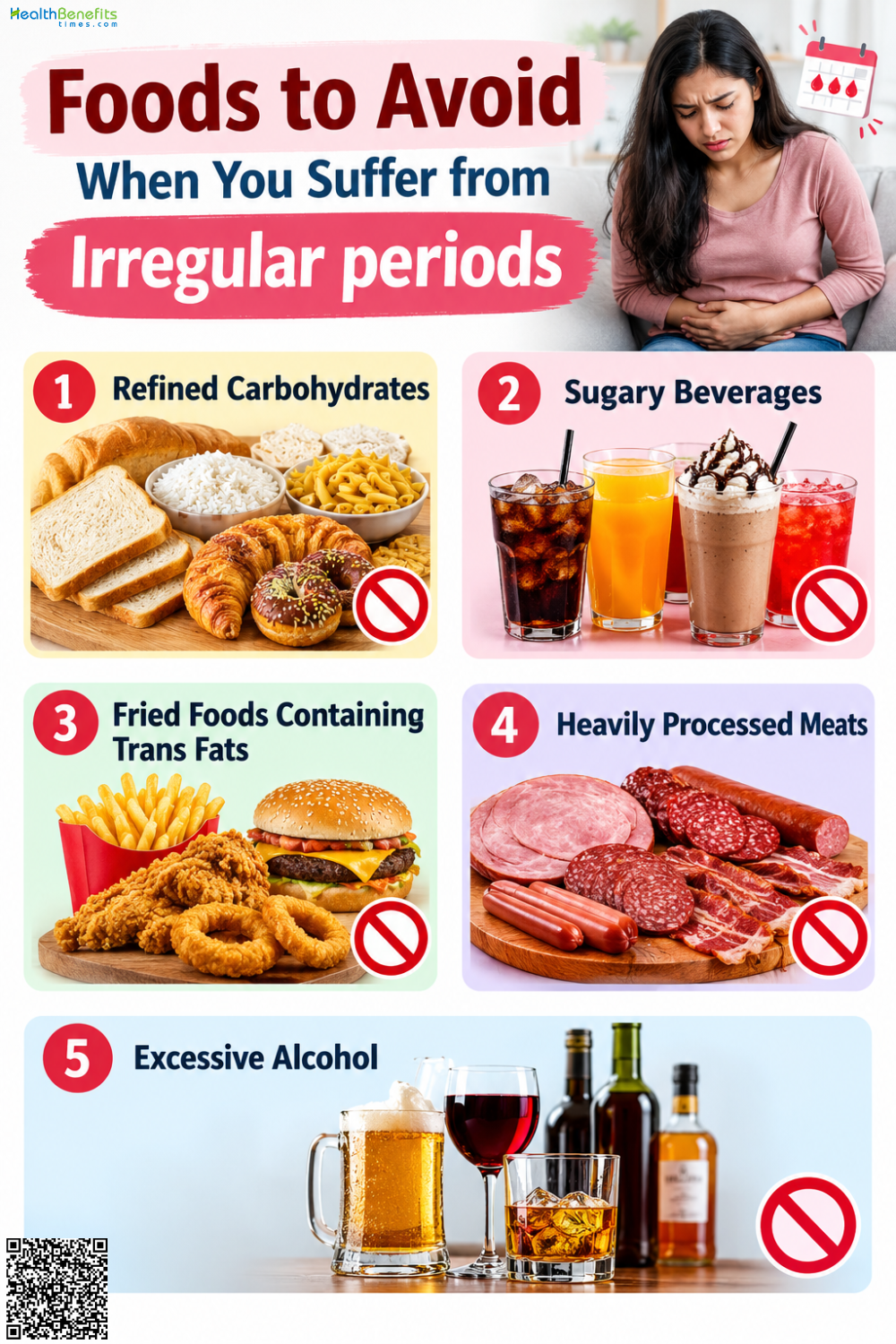
2. Sugary Beverages
Sodas and sweetened drinks severely worsen insulin resistance. Elevated insulin prevents the ovaries from functioning properly, frequently delaying or entirely halting normal menstrual periods 14.
3. Fried Foods Containing Trans Fats
Commercial fried foods increase systemic body inflammation. High inflammation disrupts endocrine signaling, directly interfering with the delicate hormonal balance required to maintain a predictable menstrual cycle 32.
4. Heavily Processed Meats
Sausages and hot dogs contain saturated fats and preservatives that trigger inflammatory responses. This internal metabolic stress alters hormone production and exacerbates existing menstrual cycle irregularities 14.
5. Excessive Alcohol
High alcohol consumption burdens the liver, impairing its ability to metabolize and clear estrogen. This unnatural hormonal buildup significantly alters menstrual cycle length and bleeding predictability 36.
When to see Doctor when you struggle from Irregular periods
- Prolonged Absence of Menstruation: You should consult a doctor if you miss your period for three consecutive months or completely stop menstruating without a known pregnancy 37.
- Abnormal Cycle Lengths: Seek medical evaluation if your menstrual cycles consistently occur less than 21 days apart or frequently stretch beyond 35 days apart 37.
- Excessively Heavy Bleeding: Contact a healthcare provider if you soak through one or more sanitary pads or tampons every hour for multiple consecutive hours 37.
- Prolonged Menstrual Flow: Schedule a clinical assessment if your menstrual bleeding consistently lasts longer than seven consecutive days during a single menstrual cycle 37.
- Unexpected Spotting or Bleeding: You should seek immediate medical attention if you experience unusual vaginal bleeding between scheduled periods, after sexual intercourse, or following menopause 38.
- Severe Pelvic Pain: Contact a medical professional if your irregular periods are accompanied by severe abdominal cramps, unusual pelvic pain, or a sudden fever 37.
Comments
comments