


Causes of Lichen simplex chronicus
1. Underlying Skin Conditions
Lichen simplex chronicus frequently develops as a secondary complication to preexisting skin disorders that cause intense, localized itching. Conditions such as eczema (atopic dermatitis), psoriasis, severe dry skin, and localized fungal infections can create a primary itch that prompts habitual scratching. Over time, this constant physical trauma to the skin barrier triggers the thickened, leathery plaques characteristic of the disorder 3.
2. Psychological and Emotional Stress
Emotional distress is a highly recognized trigger for this condition. High levels of psychological stress, anxiety, clinical depression, and obsessive-compulsive behaviors often manifest physically as an intense urge to scratch the skin. The scratching mechanism temporarily relieves emotional tension but quickly initiates a repetitive itch-scratch cycle. As the skin becomes chronically inflamed and itchy, the physical discomfort typically causes further psychological distress, which aggressively perpetuates the cycle 4.
3. Mechanical and Environmental Irritation
Physical friction and environmental factors can provoke the localized itching that leads to the condition. Continuous mechanical irritation from tight clothing, repetitive physical activities, or occupational tasks that repeatedly rub against the skin can initiate the disorder 5. Additionally, environmental triggers such as excessive heat, prolonged sweating, and extreme climate-induced skin dryness can prompt the initial itch stimulus that starts the scratching habit 6.
4. Genetic Predisposition
A strong genetic link exists between this condition and a personal or family history of allergies. Individuals with a background of asthma, allergic rhinitis (hay fever), or atopic eczema are significantly more susceptible to developing these thickened skin patches. The underlying immune system profile in these individuals makes their skin more sensitive and highly reactive to mild itch stimuli.
5. Neurological and Systemic Disruptions
Chronic itching can sometimes stem from internal dysfunctions within the nervous system. Conditions that involve damaged or dysfunctional nerves can cause sensory pathways to misfire, sending continuous itch signals to the brain and prompting severe scratching 7. Furthermore, an increased presence of inflammatory chemicals and nerve growth factors in the skin can alter how nerves interpret regular touch, converting normal sensations into persistent itching.
Symptoms of Lichen simplex chronicus
1. Intense, Persistent Itching (Pruritus)
The defining characteristic of the condition is an overwhelming, continuous itch that is strictly confined to specific patches of skin. This itching typically occurs in sudden, severe bursts and noticeably worsens during periods of inactivity, rest, or sleep, as well as during times of high emotional stress.
2. Thickened and Leathery Skin (Lichenification)
As a direct physical response to chronic rubbing and scratching, the outer layer of the affected skin becomes aggressively thickened and hardened. The skin takes on a tough, leathery texture where the natural skin lines become deeply exaggerated and highly visible.
3. Noticeable Skin Discoloration
The continuous physical trauma to the skin causes localized changes in pigmentation. Depending on an individual’s natural complexion, the affected patches typically turn dark brown, deep red, purple, or grayish compared to the surrounding healthy skin.
4. Rough, Dry, and Scaly Texture
The surface of the thickened patches frequently loses its natural moisture barrier, resulting in skin that is exceptionally dry. The affected areas often develop a rough, flaky surface with distinct, easily visible scales covering the thickened plaques.
5. Visible Scratch Marks and Open Sores
Due to the severe and repetitive scratching behavior, the skin surface is regularly broken. The affected areas frequently display fresh scratch marks, raw patches, and crusted scabs. In severe cases, this persistent damage leads to open, bleeding sores that significantly increase the risk of secondary bacterial infections.
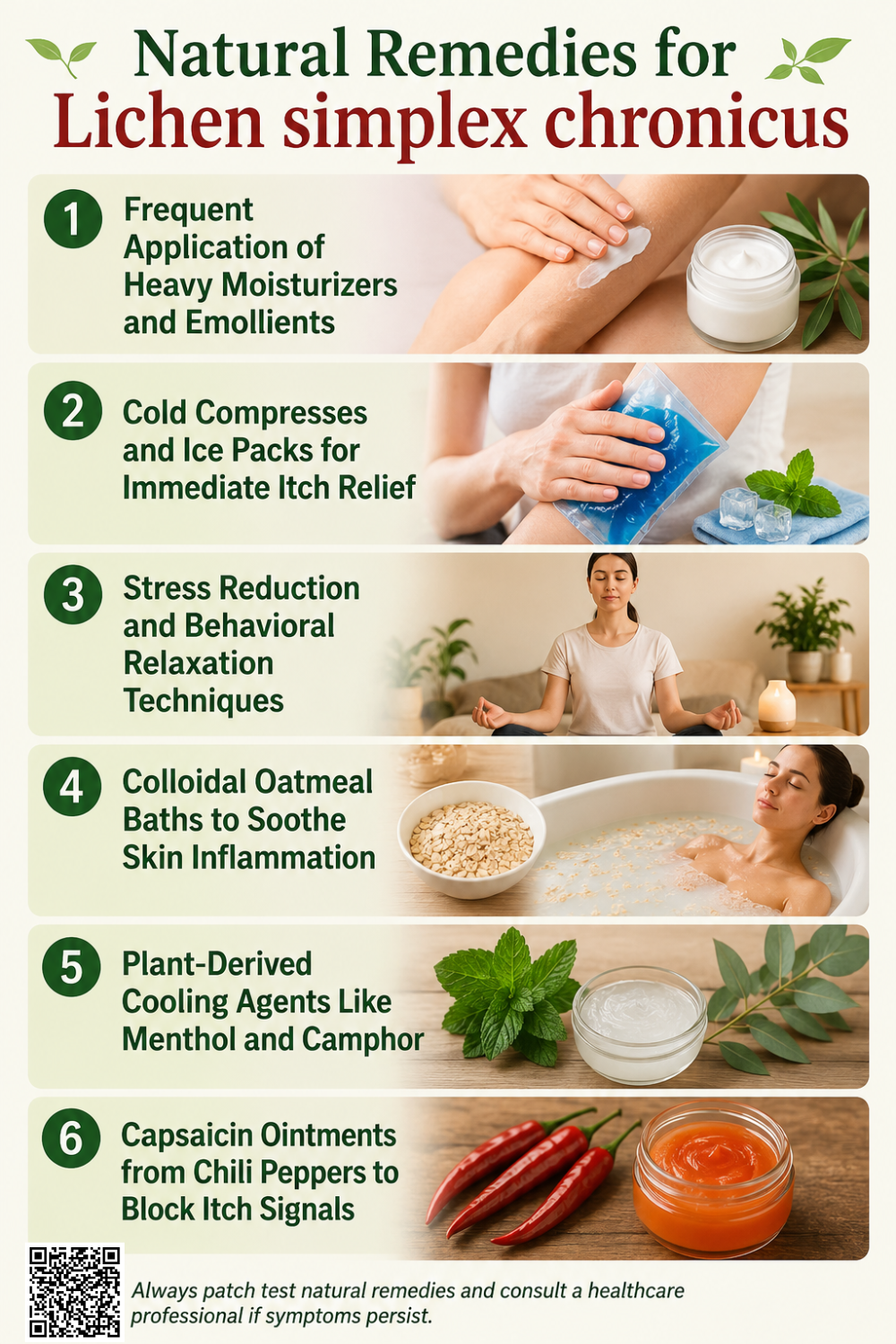
1. Frequent Application of Heavy Moisturizers and Emollients
How it may help
Heavy moisturizers and emollients physically trap water inside the skin, repairing the damaged outer barrier caused by constant scratching. By softening the thickened, scaly patches, these thick creams significantly reduce severe dryness and lower the intensity of the persistent urge to itch.
What research says
Clinical guidelines confirm that regular application of thick emollients restores skin hydration and decreases the severity of chronic itching . Research shows that repairing the skin barrier with lipid-rich ointments blocks environmental irritants from penetrating the skin, preventing new itch signals from triggering the scratch cycle 8.
How to use it safely
For the best results, you should apply a thick, fragrance-free ointment, such as petroleum jelly, directly to the affected skin immediately after bathing while your skin is still damp. Reapply the moisturizer multiple times daily whenever the patches feel dry.
Potential precautions or side effects
Always avoid moisturizers containing perfumes, dyes, or alcohols, as these chemicals can sting or further irritate broken skin . Stop use if you experience increased burning.
2. Cold Compresses and Ice Packs for Immediate Itch Relief
How it may help
Applying cold directly to itchy skin numbs the area and temporarily blocks the nerve pathways that send itch signals to the brain. This cooling effect immediately interrupts the intense urge to scratch, preventing further physical damage and helping the thickened skin heal 9.
What research says
Research confirms that cooling the skin activates specific temperature sensors, known as TRPM8 receptors. When activated, these receptors send strong signals that override and inhibit the transmission of chronic itch sensations in the nervous system. Clinical evidence supports cold therapy as a fast, effective method for managing itch flare-ups.
How to use it safely
You should always wrap an ice pack or a bag of frozen vegetables in a clean, dry towel before placing it on your body. Apply the cold compress to the itchy patch for 10 to 15 minutes at a time whenever the urge to scratch becomes overwhelming.
Potential precautions or side effects
Never apply ice directly to bare skin, as this can quickly cause frostbite and severe tissue damage. Remove the cold pack immediately if you experience sharp pain or prolonged numbness.
3. Stress Reduction and Behavioral Relaxation Techniques
How it may help
Stress and anxiety directly amplify the urge to scratch, worsening the itch-scratch cycle. Behavioral relaxation techniques, such as deep breathing or mindfulness, calm the nervous system and decrease emotional tension. This mental shift reduces the psychological compulsion to scratch, allowing the damaged skin time to heal.
What research says
Clinical studies indicate that psychological stress exacerbates skin inflammation and heightens itch perception in chronic dermatological conditions. Research confirms that integrating behavioral therapies, such as habit-reversal training and progressive muscle relaxation, significantly reduces repetitive scratching behavior and improves the clinical symptoms of lichenified skin plaques.
How to use it safely
You can safely practice daily stress reduction by dedicating 10 to 15 minutes to guided meditation, deep breathing exercises, or gentle stretching. Consistency is key. Whenever you feel the urge to scratch, actively redirect your hands and focus on your breathing until the sensation passes.
Potential precautions or side effects
Behavioral techniques are completely safe and have no physical side effects. However, they should always complement, not replace, medical treatments prescribed by a dermatologist for severe itching.
4. Colloidal Oatmeal Baths to Soothe Skin Inflammation
How it may help
Colloidal oatmeal coats the skin with a protective layer of natural starches and lipids, which helps lock in moisture. This soothing barrier effectively calms irritated nerve endings, reduces redness, and minimizes the intense urge to scratch the thickened patches associated with this chronic condition 10.
What research says
Clinical research demonstrates that colloidal oatmeal contains specific active compounds called avenanthramides. These plant-derived chemicals directly inhibit the inflammatory proteins responsible for chronic itching 11. Studies confirm that oatmeal preparations significantly improve skin barrier function and reduce itch intensity in patients with persistent inflammatory skin disorders 12.
How to use it safely
You should dissolve one cup of unflavored, finely milled colloidal oatmeal into a lukewarm bathtub. Soak for 10 to 15 minutes to allow the oatmeal to coat your skin. Afterward, gently pat yourself dry and immediately apply a thick, fragrance-free moisturizer to seal in hydration.
Potential precautions or side effects
Colloidal oatmeal is generally safe, but you must avoid using hot water, as it strips natural oils and worsens itching. Stop use if new redness or stinging occurs.
5. Plant-Derived Cooling Agents Like Menthol and Camphor
How it may help
Plant-derived compounds like menthol and camphor provide an immediate, strong cooling sensation when applied to the skin. This cooling effect acts as a counter-irritant, essentially distracting the nervous system from chronic itch signals. By rapidly numbing the persistent urge to scratch, these natural agents protect the thickened skin patches from further physical damage 13.
What research says
Clinical research demonstrates that menthol and camphor actively bind to specific temperature-sensing nerve receptors in the skin, specifically the TRPM8 pathway. Studies confirm that triggering these cold receptors safely blocks the transmission of intense itch signals to the brain, providing rapid and effective relief for chronic skin conditions.
How to use it safely
You should apply a thin layer of over-the-counter creams containing 1% to 3% menthol or camphor directly to the itchy patches up to three times daily. Always wash your hands thoroughly after application to prevent accidentally transferring these strong cooling agents to your eyes or mouth.
Potential precautions or side effects
Never apply menthol or camphor to open sores, raw scratch marks, or severely cracked skin, as this causes intense burning and stinging. Discontinue use if irritation worsens.
6. Capsaicin Ointments from Chili Peppers to Block Itch Signals
How it may help
Capsaicin, the active compound in chili peppers, works by overstimulating and eventually depleting the skin’s itch-transmitting nerves. Applying this natural extract to thickened patches initially causes a warming sensation, which quickly stops nerve endings from sending persistent itch signals to the brain, effectively interrupting the scratch cycle.
What research says
Clinical studies demonstrate that topical capsaicin effectively depletes substance P, a key chemical responsible for transmitting pain and chronic itch sensations 14. Dermatological research confirms that regular application significantly reduces severe localized itching and promotes the healing of lichenified skin lesions over several weeks of continuous use.
How to use it safely
You should apply a low-concentration capsaicin cream (usually 0.025%) thinly over the affected area three to four times a day. Always wash your hands immediately and thoroughly after application to prevent accidentally rubbing this spicy compound into your eyes or mucous membranes.
Potential precautions or side effects
Never apply capsaicin to broken skin or open scratches, as it causes severe burning. A temporary stinging sensation is expected initially but fades with consistent daily use.

1. Very Hot and Spicy Foods
These foods trigger sweating and increase skin temperature, which aggravates nerve receptors and severely worsens the intense itching sensation 15.
2. Alcoholic Beverages
Alcohol dilates blood vessels and elevates body heat, heightening skin sensitivity and intensifying the uncontrollable urge to scratch chronic skin lesions.
3. Histamine-Rich Foods
Fermented items, aged cheeses, and cured meats contain high histamine levels that directly provoke systemic inflammation and trigger extreme itchiness 16.
4. Ultra-Processed and Instant Meals
High consumption of processed meats and instant foods is clinically linked to increased severity of inflammatory skin disorders and persistent scratching 17.
5. Common Dietary Allergens
Consuming dairy or gluten can trigger systemic immune reactions and worsen skin inflammation in sensitized individuals, thereby fueling the itch-scratch cycle.
When To see Doctor when you suffer from Lichen simplex chronicus
1. Signs of Bacterial Infection
Seek immediate medical care if the thickened skin develops yellow crusts, leaks pus, or feels hot, as these indicate a secondary bacterial infection requiring prescription antibiotics.
2. Failure of Home Treatments
Consult a dermatologist if the intense itching and thickened skin patches do not improve after two weeks of consistent over-the-counter moisturizing and natural remedy use.
3. Severe Sleep Disruption
Schedule an appointment if the uncontrollable urge to scratch frequently wakes you up, as severe sleep deprivation significantly worsens both physical healing and emotional stress.
4. Appearance of Open Sores
Medical intervention is necessary when constant scratching creates bleeding or deep, open wounds, as this severely compromises the skin barrier and requires professional wound care.
5. Unmanageable Psychological Distress
You should seek professional guidance if the persistent itch causes extreme anxiety or depression, as addressing the psychological component is essential to breaking the itch-scratch cycle.
Comments
comments