


Causes of Neuromyelitis Optica (NMO)
1. Aquaporin-4 (AQP4) Autoantibodies
The primary cause of NMO is a malfunctioning immune system that produces abnormal antibodies targeting a specific water-channel protein known as aquaporin-4. Because this protein is heavily concentrated in the cellular structures of the optic nerves and spinal cord, the targeted immune attack creates severe inflammation that destroys the protective coating of the nerves and the underlying nerve fibers.
2. Myelin Oligodendrocyte Glycoprotein (MOG) Antibodies
In a smaller subset of patients who do not possess AQP4 antibodies, the immune system mistakenly attacks a different target called MOG, a protein located on the outermost layer of central nervous system cells. This attack results in similar inflammatory damage to the optic nerve and spinal cord, though researchers now often classify this as a closely related but distinct spectrum of autoimmune disease.
3. Co-existing Autoimmune Conditions
NMO is strongly linked to an overall systemic dysfunction in immune regulation, meaning it frequently occurs in people who already suffer from other autoimmune disorders. Clinical research demonstrates a significant overlap between NMO and conditions such as systemic lupus erythematosus and Sjogren’s syndrome, indicating a shared vulnerability in the immune system.
4. Environmental and Infectious Triggers
The vast majority of NMO cases occur randomly in individuals with no family history of the disorder. While the exact event that initiates the immune system’s failure is unknown, scientific consensus suggests that exposure to certain viral or bacterial infections may confuse a susceptible immune system, prompting it to permanently misidentify the body’s own nervous system tissues as a foreign threat.
Symptoms of Neuromyelitis Optica (NMO)
1. Vision Loss and Eye Pain
The disease typically triggers sudden and severe inflammation in the optic nerve, known as optic neuritis. This results in significant eye pain that often worsens with movement, followed by blurred vision, loss of color vision, or partial to complete blindness, which can affect one or both eyes.
2. Limb Weakness and Paralysis
Inflammation extending into the spinal cord causes a condition called transverse myelitis. This damage disrupts signals between the brain and the body, leading to sudden muscle weakness, heavy sensations in the limbs, or in severe cases, complete paralysis of the arms and legs.
3. Sensory Changes
Damage to the spinal cord pathways frequently causes abnormal sensations along the torso or limbs. Patients commonly experience numbness, tingling, a burning feeling, or heightened sensitivity to cold and physical touch.
4. Bladder and Bowel Dysfunction
Spinal cord lesions often disrupt the nerve signals responsible for controlling bodily waste. This leads to a loss of bowel and bladder control, resulting in urinary retention, incontinence, or severe constipation.
5. Uncontrollable Vomiting and Hiccups
If the immune attack targets a specific region at the base of the brain called the area postrema, it disrupts the body’s nausea control center. This specific damage causes episodes of severe, uncontrollable hiccups, intense nausea, and persistent vomiting that can last for days or weeks.
Natural Remedies for Neuromyelitis Optica (NMO)
1. Vitamin D Supplements for Immune System Regulation
How it may help
Vitamin D helps manage NMO by acting as a powerful immune system modulator. It assists in maintaining a balanced immune response, which is crucial for reducing the frequency and severity of inflammatory attacks on the optic nerves and spinal cord 5.
What research says
Clinical research indicates that patients with NMO often exhibit low levels of Vitamin D. Evidence suggests that maintaining adequate blood levels of this vitamin is associated with a lower risk of disease relapses and improved outcomes, as it helps stabilize the immune pathways involved in the condition 6.
How to use it safely
You should first consult your neurologist to determine the appropriate dosage through a blood test. Never start high-dose supplementation without professional guidance, as the correct amount depends on your specific deficiency level and existing medical treatment plan.
Potential precautions or side effects
Excessive intake can cause toxicity, leading to high calcium levels in the blood, nausea, or kidney issues. Always follow medical supervision to avoid these complications.
2. Physical Therapy and Exercise for Mobility Recovery
How it may help
Targeted physical therapy helps manage NMO by improving muscle strength, coordination, and endurance. By focusing on specific movements, patients can retrain the nervous system to bypass damaged pathways, effectively reducing the impact of weakness and balance issues on daily activities while preventing muscle atrophy from disuse.
What research says
Clinical evidence demonstrates that regular, supervised exercise significantly enhances functional independence in individuals with NMO. Research confirms that structured physical activity programs not only improve motor skills but also help combat chronic fatigue, a common and debilitating symptom of this condition, leading to better overall physical well-being and long-term quality of life 7.
How to use it safely
Work closely with a licensed physical therapist to create a personalized routine tailored to your specific physical limitations. Begin slowly with low-impact movements, prioritizing consistency over intensity, and always stop immediately if you experience increased pain or unusual neurological symptoms during your workout.
Potential precautions or side effects
Avoid overexertion or heat-heavy environments, as elevated body temperatures can temporarily worsen nerve conduction and trigger fatigue or worsening symptoms. Always consult your healthcare provider before starting any new exercise program.
3. Anti-Inflammatory Diets to Help Manage Body Inflammation
How it may help
An anti-inflammatory diet helps manage NMO by reducing systemic stress and lowering levels of inflammation-promoting markers in the blood. By prioritizing nutrient-dense whole foods and minimizing processed items, this dietary approach supports the immune system’s ability to maintain homeostasis, potentially lowering the biological drive for the abnormal immune attacks that characterize NMO.
What research says
Clinical evidence indicates that diets rich in antioxidants, fiber, and healthy fats correlate with improved long-term health outcomes in autoimmune conditions. Research suggests that these nutritional patterns may help modulate the immune response, providing a supportive strategy that complements traditional medical therapies to stabilize neurological function and overall disease activity 8.
How to use it safely
Focus on consuming fresh fruits, vegetables, fatty fish, nuts, and whole grains while limiting refined sugars and ultra-processed oils. Work with a registered dietitian to ensure your specific nutritional needs are met, as consistency is key to achieving sustainable health benefits without sacrificing essential vitamins or minerals.
Potential precautions or side effects
Monitor for potential food sensitivities or digestive discomfort when making dietary shifts. Always ensure that any major changes to your eating habits do not interfere with your prescribed medications.
4. Omega-3 Fatty Acids for Nerve and Brain Health
How it may help
Omega-3 fatty acids, particularly EPA and DHA, help manage NMO by exerting potent anti-inflammatory effects within the central nervous system. These essential fats support the structural integrity of cell membranes and may help stabilize nerve signaling pathways, potentially reducing the neuroinflammatory damage associated with the immune attacks occurring in NMO.
What research says
Scientific evidence indicates that omega-3 supplementation contributes to a reduction in systemic inflammatory markers. Research suggests that these fatty acids may support neuroprotection, potentially aiding in the maintenance of neurological function and offering a beneficial, non-pharmacological adjunct to standard disease-modifying therapies for individuals managing chronic autoimmune conditions 9.
How to use it safely
Include cold-water fish like salmon, sardines, and flaxseeds in your diet, or discuss high-quality fish oil supplements with your neurologist. Always verify the purity and concentration of supplements to ensure you are receiving the correct dose, as specific amounts should be tailored to your individual health needs.
Potential precautions or side effects
Include mild gastrointestinal discomfort, such as indigestion or a fishy aftertaste. Consult your doctor, as omega-3s can thin the blood and may interact with anticoagulant medications.

How it may help
Acupuncture assists in managing NMO-related pain by stimulating the nervous system to release natural chemicals that block pain signals. By targeting specific points, this practice helps dampen the overactive nerve pathways often caused by spinal cord inflammation, providing a way to reduce reliance on daily pain medications while improving physical comfort 10.
What research says
Research indicates that acupuncture is a helpful tool for alleviating various types of chronic neurological pain. Clinical findings suggest that when used alongside standard medical care, it effectively improves pain scores and quality of life for patients experiencing nerve damage, providing a safe, non-drug approach to long-term pain management and relief 11.
How to use it safely
Always seek treatment from a licensed, certified acupuncturist who has experience working with neurological conditions. Ensure your practitioner is aware of your NMO diagnosis and current symptoms. Begin with a professional assessment to develop a treatment plan that safely aligns with your specific neurological needs.
Potential precautions or side effects
Side effects are rare but may include minor bruising, bleeding, or temporary soreness at needle sites. Ensure all needles used are sterile and single-use to avoid infection risk.
6. Yoga and Gentle Stretching for Reducing Muscle Stiffness
How it may help
Yoga and gentle stretching help manage NMO by improving joint flexibility and reducing muscle tightness caused by nerve damage. These practices promote better circulation and help maintain range of motion in limbs affected by weakness or stiffness, which assists in preserving physical function and lowering the daily impact of mobility challenges 12.
What research says
Clinical evidence indicates that mind-body exercises like yoga significantly improve physical quality of life in patients with neurological conditions. Research findings suggest that consistent practice can reduce fatigue and enhance motor control, offering an effective, low-impact method to manage physical impairments and improve independence without putting excessive strain on the central nervous system 13.
How to use it safely
Begin with a qualified instructor who understands your specific physical limitations and neurological diagnosis. Use props like blocks or straps to provide stability, and ensure your movements remain slow and controlled. Always prioritize comfort and stop immediately if you feel pain or notice any increase in your NMO symptoms.
Potential precautions or side effects
Avoid extreme poses that cause overheating or physical strain, as high body temperatures can temporarily worsen nerve function. Consult your neurologist before starting any new routine.
7. Mindfulness and Stress Management to Support Overall Well-being
How it may help
Mindfulness and stress management techniques help alleviate the psychological burden of Neuromyelitis Optica (NMO). Because NMO involves unpredictable attacks, patients frequently experience severe anxiety and emotional distress 14. Stress management practices foster psychological resilience, improve emotional well-being, and mitigate the negative impact of physical disabilities on overall mental health 15.
What research says
Clinical studies conclude that the physical disability associated with NMO directly correlates with heightened perceived stress and diminished quality of life 16. Research indicates that psychological hardiness and stress reduction act as critical mediators, effectively lowering psychological stress, reducing depression, and improving overall well-being.
How to use it safely
You can safely incorporate stress management through non-strenuous practices like guided meditation, deep breathing, and cognitive strategies. Work with a mental health professional to tailor mindfulness routines that accommodate your specific physical limitations, ensuring you avoid overexertion during disease flare-ups.
Potential precautions or side effects
While generally safe, intense introspection can temporarily trigger overwhelming emotions. Consult a clinical psychologist to safely manage underlying trauma or severe depressive symptoms related to the disease 17.
8. Aquatic Therapy for Safe and Low-Impact Muscle Strengthening
How it may help
Aquatic therapy provides a buoyant environment that reduces joint stress while utilizing water resistance to safely rebuild muscle. For individuals with Neuromyelitis Optica (NMO), it helps improve balance, reduce painful muscle stiffness, and enhance mobility without the heavy physical strain that triggers extreme fatigue 18.
What research says
Clinical evidence indicates that physical rehabilitation, including hydrotherapy, significantly improves motor function and daily independence in patients with NMO 19. Reviews conclude that aquatic exercises effectively decrease muscle tightness, alleviate chronic pain, and improve the quality of life for individuals with severe spinal cord inflammation 20.
How to use it safely
You should exercise in temperature-controlled pools kept below 30°C (86°F) to prevent heat-induced symptom flares 21. Work directly with a physical therapist specializing in neurological conditions to design a gentle routine that matches your physical limits and prevents overexertion.
Potential precautions or side effects
Avoid aquatic therapy during active relapses or if you have severe bladder control issues. Overexertion or warm water can temporarily worsen nerve pain and cause extreme fatigue.
9. Cognitive Behavioral Therapy for Managing Pain and Mental Health
How it may help
Cognitive Behavioral Therapy (CBT) helps manage the profound psychological burden and severe central neuropathic pain associated with Neuromyelitis Optica (NMO). It teaches patients to reframe negative thoughts, modify behavioral responses to pain, and build emotional resilience, effectively reducing anxiety and improving overall health-related quality of life 22.
What research says
Research indicates that CBT effectively addresses comorbid mental health disorders in patients experiencing central neuropathic pain from central nervous system lesions. Clinical reviews conclude that structured psychological therapies significantly reduce depression, lower psychological distress, and improve daily functioning for individuals with intractable neurological conditions 23.
How to use it safely
You should work with a licensed clinical psychologist experienced in chronic neurological diseases. Engage in consistent CBT sessions via telehealth or in person, adjusting the therapy’s pace to ensure you avoid mental exhaustion or undue psychological stress during active physical relapses.
Potential precautions or side effects
Confronting disease-related trauma and anxiety can temporarily increase psychological distress. You must communicate openly with your therapist to prevent emotional exhaustion or overwhelming depressive feelings during early sessions.
10. Cooling Strategies for Lowering Body Temperature and Preventing Fatigue
How it may help
Because demyelinated nerves in Neuromyelitis Optica (NMO) are highly sensitive to heat, slight temperature increases temporarily worsen neurological symptoms and induce severe fatigue—a condition called Uhthoff’s phenomenon. Cooling strategies lower core body temperature, restoring nerve conduction velocity and rapidly alleviating heat-induced exhaustion 24.
What research says
Clinical reviews confirm that demyelination diminishes axonal conduction, causing reversible nerve signal blockages when body temperature rises by merely 0.2°C to 0.5°C. Research demonstrates that active cooling measures significantly improve neurological function, enhance motor performance, increase visual acuity, and decrease perceived fatigue.
How to use it safely
You can manage thermal stress by resting in air-conditioned environments, wearing specialized cooling garments like ice vests, taking cool showers, and consuming cold beverages. Schedule physical exertion during cooler early morning or late evening hours to prevent activity-induced core temperature spikes.
Potential precautions or side effects
Avoid extreme or sudden cold shock, which can occasionally trigger muscle spasms. Monitor skin integrity carefully when applying ice packs, particularly if you have NMO-related sensory loss.
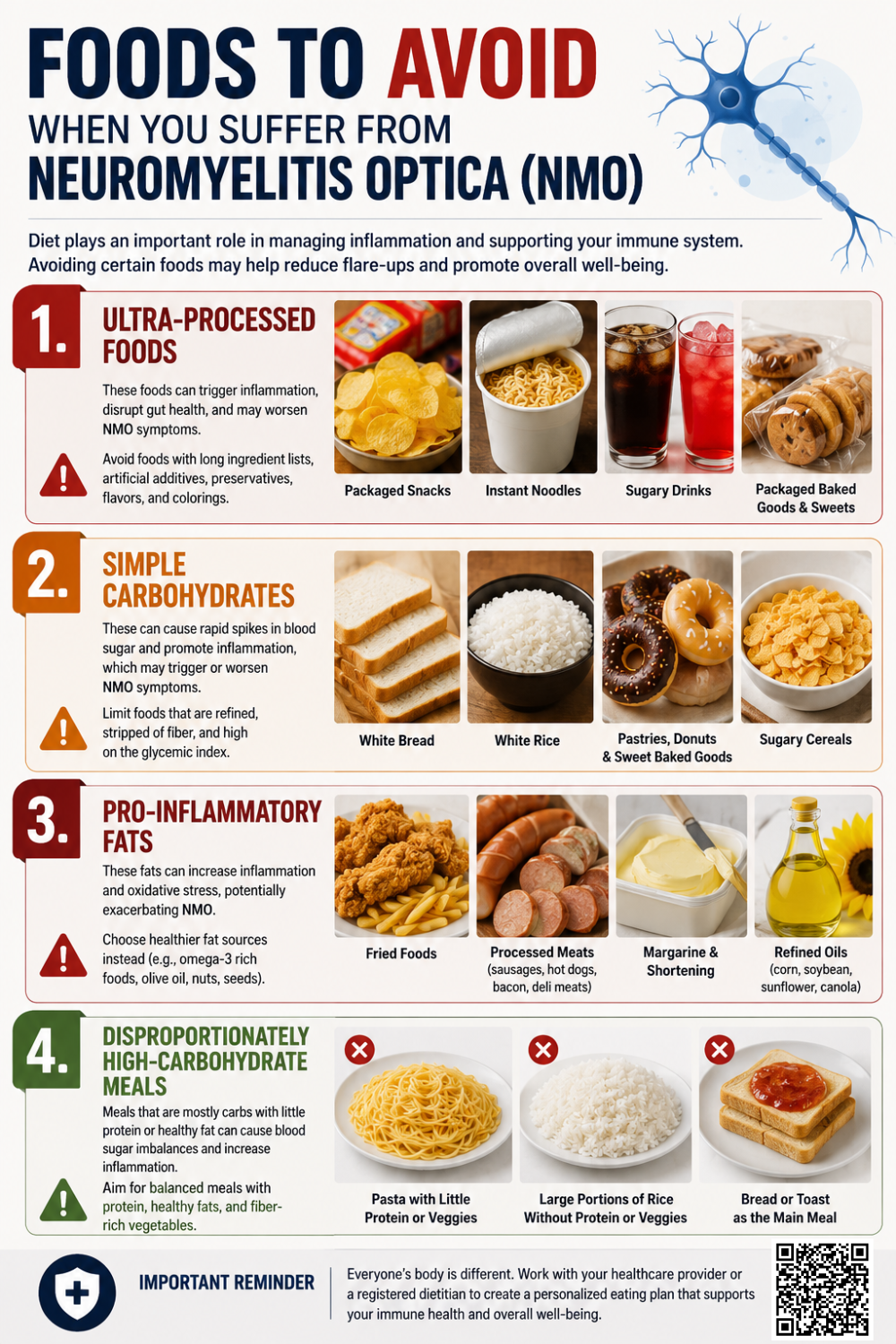
1. Ultra-Processed Foods
Consuming ultra-processed items drives systemic inflammation, disrupts beneficial gut bacteria, and exacerbates autoimmune responses in individuals with demyelinating diseases 25.
2. Simple Carbohydrates
Diets high in simple sugars reduce gut microbiota diversity, induce systemic neuro-inflammation, and correlate with an increased risk of disease progression 26.
3. Pro-Inflammatory Fats
Excessive intake of pro-inflammatory trans and saturated fats promotes metabolic dysfunction and intensifies the autoimmune responses linked to severe optic nerve inflammation.
4. Disproportionately High-Carbohydrate Meals
Clinical reviews conclude that predominantly high-carbohydrate diets act as environmental risk factors associated with the development of central nervous system inflammatory disorders 27.
When To See a Doctor When You Suffer from Neuromyelitis Optica (NMO)
1. Acute Visual Disturbances
Seek emergency care if you develop sudden blurred vision, severe eye pain with movement, or acute visual loss, which signify aggressive optic nerve inflammation 28.
2. Sudden Limb Weakness
Immediate evaluation is necessary if you experience rapidly progressive muscle weakness, flaccid paralysis, or numbness in the extremities, indicating acute transverse myelitis 29.
3. Intractable Hiccups or Vomiting
You must consult a physician for unexplained, uncontrollable nausea, vomiting, or continuous hiccups lasting over 48 hours, which represent a classic area postrema syndrome attack 30.
4. Loss of Sphincter Control
Sudden urinary retention or acute loss of bowel and bladder control requires urgent intervention, as these reflect severe inflammatory lesions within the spinal cord.
5. Brainstem Dysfunction
Seek immediate neurological assessment if you develop sudden speech slurring, severe lack of coordination, or difficulty swallowing, which indicate dangerous brainstem or medullary inflammation.
Comments
comments