

Causes of Night Sweats
1. Hormonal Changes
Fluctuations in estrogen and progesterone levels during perimenopause and menopause frequently trigger sudden feelings of intense heat and severe night sweats 1.
2. Infections
Bacterial and viral infections cause the immune system to raise the body’s temperature, leading to excessive nighttime sweating. Tuberculosis is a well-known cause, though conditions like HIV and bacterial infections of the inner lining of the heart (endocarditis) also trigger this symptom 2 3.
3. Medications
Many common prescription drugs interfere with the brain’s ability to properly regulate body temperature. Antidepressants, steroids, hormone therapies, and diabetes medications that cause blood sugar to drop too low overnight (hypoglycemia) are frequent medical triggers for night sweats 4.
4. Endocrine Disorders
Conditions that affect the body’s hormone-producing glands can abnormally increase metabolism and internal body heat. Hyperthyroidism, a condition where the thyroid gland produces too much thyroid hormone, commonly leads to heightened heat sensitivity and heavy sweating during sleep 5.
5. Cancers
Persistent, drenching night sweats can sometimes serve as an early warning sign of certain cancers. These severe sweating episodes are most frequently associated with blood and lymph node cancers, particularly Hodgkin lymphoma, non-Hodgkin lymphoma, and leukemia 6.
Symptoms of Night Sweats
1. Drenching Perspiration
The defining feature of true night sweats is extreme sweating that completely soaks through pajamas, sheets, and blankets. Unlike normal sweating from a warm room, this level of moisture often forces a person to get out of bed and change their clothing or bedding.
2. Sleep Interruption and Fatigue
The physical discomfort of being soaked in sweat frequently causes individuals to wake up multiple times during the night. This severely fragments the sleep cycle, leading to noticeable exhaustion, poor concentration, and daytime sleepiness 7.
3. Unexplained Weight Loss
When heavy nighttime sweating occurs alongside a sudden, unintentional drop in body weight, it serves as a clinical warning sign. This combination frequently points to a chronic infection or certain types of blood cancers, requiring immediate medical evaluation 6.
4. Repeated Fevers and Chills
Experiencing a high body temperature or alternating episodes of cold, shaking chills alongside night sweats indicates that the body’s immune system is actively fighting an illness, such as tuberculosis or an internal bacterial infection 2.
5. Daytime Hot Flashes
If hormonal transitions are the root cause, such as during menopause, the nighttime sweating is often accompanied by sudden, intense feelings of heat in the face, neck, and chest during normal waking hours 1.
Natural Remedies for Night Sweats
1. Adjusting Bedroom Temperature
How it may help
Lowering the ambient room temperature directly helps prevent a rapid rise in core body heat during sleep. By maintaining a consistently cool external environment, the body does not need to activate its emergency sweating response to regulate its internal temperature. This straightforward environmental adjustment effectively minimizes the frequency and severity of intense, sleep-disrupting nighttime sweating episodes 1.
What research says
Clinical evidence concludes that maintaining a cool sleep environment serves as a highly effective, non-medical intervention for temperature regulation issues. Research confirms that actively lowering bedroom temperatures significantly reduces the frequency, duration, and overall intensity of nighttime hot flashes and severe sweating episodes, particularly for individuals experiencing natural hormonal transitions 1.
How to use it safely
Set your bedroom thermostat between 60 and 67 degrees Fahrenheit before going to sleep. You should utilize oscillating room fans to maintain continuous air circulation. Keep lightweight, layered blankets nearby so you can easily and quickly adjust your personal comfort level if you become too cold overnight 8.
Potential precautions or side effects
Avoid setting the room temperature excessively low. Extreme cold environments can cause joint stiffness, shivering, and further sleep fragmentation. Ensure fans do not blow directly onto your face 8.
2. Using Breathable, Moisture-Wicking Sleepwear and Bedding
How it may help
Moisture-wicking fabrics pull perspiration away from the skin to the material’s surface, where it evaporates rapidly. This prevents body heat and dampness from becoming trapped against the skin. By maintaining a more stable external microclimate, these specialized textiles stop the severe chills and physical discomfort that typically follow heavy nighttime sweating episodes 1.
What research says
Clinical guidelines conclude that altering the sleep environment with breathable, lightweight fabrics significantly improves rest for those experiencing severe sweating. Medical authorities formally recommend utilizing natural cotton or specialized wicking materials instead of heavy fabrics to effectively reduce sleep interruptions caused by nighttime temperature fluctuations 9.
How to use it safely
You should select loose-fitting sleepwear made from natural cotton or athletic moisture-wicking blends. Dress your bed with multiple thin layers of breathable cotton sheets and light blankets. This layering strategy allows you to easily remove covers throughout the night to quickly adjust your body temperature 9.
Potential precautions or side effects
Avoid tight clothing and traditional synthetic materials like standard polyester, which trap excess body heat. Do not use liquid fabric softeners, as they destroy the material’s moisture-absorbing properties 9.
3. Avoiding Dietary Triggers Like Alcohol, Caffeine, and Spicy Foods Before Bed
How it may help
Consuming certain stimulating foods and beverages before sleep directly elevates internal body heat and heart rate. Alcohol expands blood vessels, while caffeine and spicy ingredients stimulate the central nervous system. Avoiding these dietary triggers prevents artificial temperature spikes, reducing the likelihood of sudden, severe night sweats 10.
What research says
Clinical studies confirm that consuming spicy meals, caffeine, and alcohol significantly increases the frequency of nighttime hot flashes. Medical authorities identify these substances as primary risk factors for vasomotor symptoms, recommending dietary modification as an effective, frontline lifestyle treatment to reduce sweating episodes 9.
How to use it safely
You should stop consuming all caffeinated beverages at least six hours before your bedtime. Eliminate hot spices from dinner meals, and replace alcoholic drinks with cold water or decaffeinated teas to ensure your internal temperature remains low and stable overnight 11.
Potential precautions or side effects
Suddenly stopping high caffeine intake often causes temporary withdrawal headaches and daytime fatigue. You must reduce your consumption gradually over several days to minimize these uncomfortable withdrawal symptoms 11.
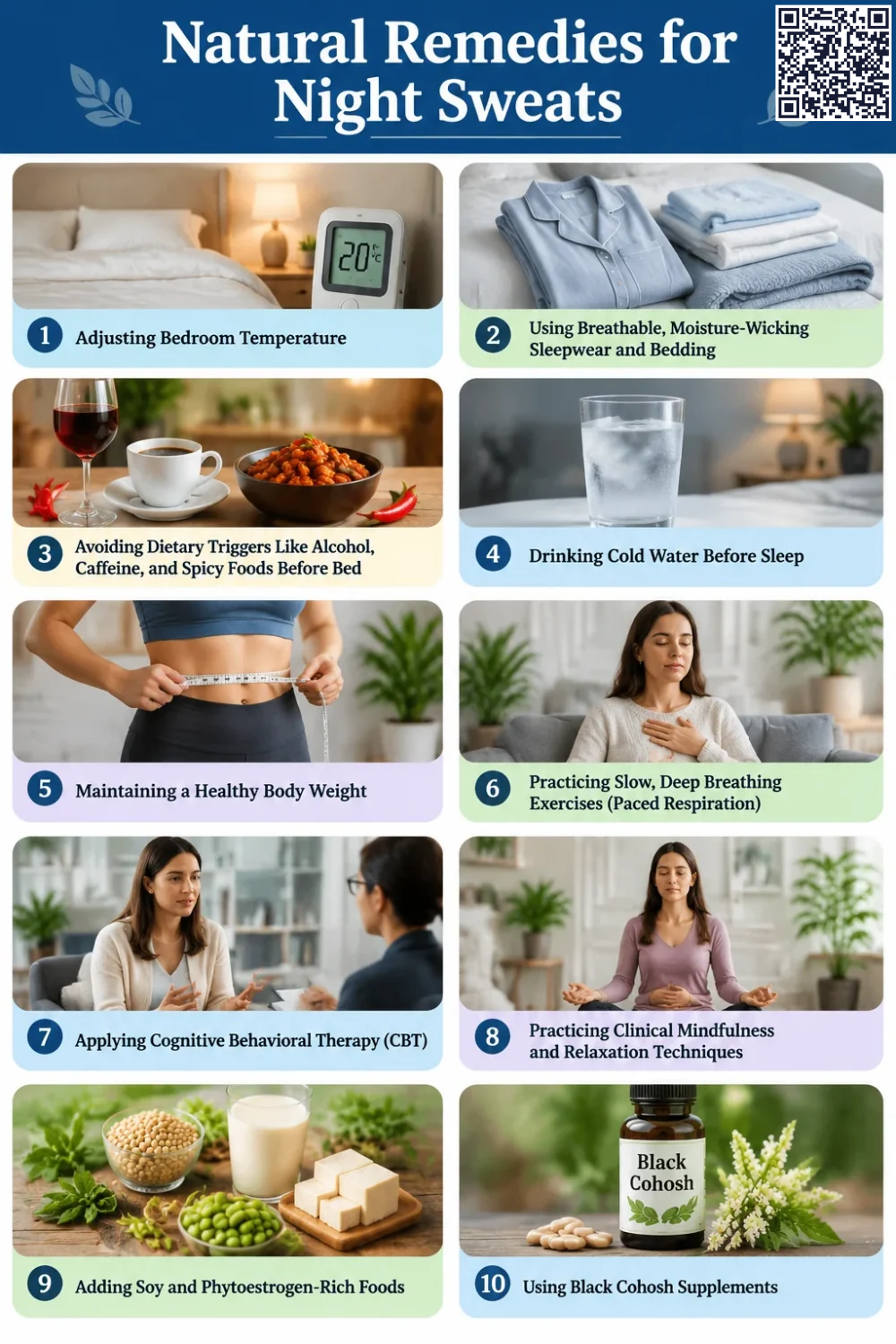
4. Drinking Cold Water before Sleep
How it may help
Consuming a chilled beverage directly lowers the body’s internal core temperature. This rapid cooling effect signals the brain to halt its emergency heat-releasing response. By keeping the core temperature stable, sipping cold liquids prevents the sudden physiological spikes that trigger intense nighttime sweating episodes 9.
What research says
Clinical guidelines support using basic temperature-lowering techniques to manage vasomotor symptoms. Health authorities formally recommend consuming chilled water at the immediate onset of a heat spike. Evidence indicates that this physical cooling effectively shortens the duration and intensity of nocturnal hot flashes 1.
How to use it safely
You should keep an insulated glass of ice water directly on your nightstand. When you first feel a sudden rise in body heat or wake up sweating, immediately and slowly sip the chilled water until your internal temperature normalizes and the sweating subsides 9.
Potential precautions or side effects
Avoid drinking massive quantities of water right before sleep. Excessive nighttime fluid intake forces you to wake up repeatedly for urination, which severely fragments your natural sleep cycle 8.
5. Maintaining a Healthy Body Weight
How it may help
Excess body fat acts as physical insulation, trapping internal heat and forcing the body to sweat heavily to cool down. Additionally, fat tissue alters estrogen levels, which triggers severe temperature fluctuations. Reducing excess weight directly lowers core heat retention and stabilizes these internal chemical messengers 1.
What research says
Clinical studies confirm a direct link between a high body mass index and increased vasomotor symptoms. Medical authorities conclude that individuals who actively lose excess weight experience a significant, measurable reduction in the daily frequency and physical intensity of nighttime sweating episodes 12.
How to use it safely
You should work to achieve a healthy weight gradually through a balanced diet and steady physical activity. Aim to lose one to two pounds per week by eating vegetables and whole grains while engaging in moderate daily exercises like brisk walking 13.
Potential precautions or side effects
Avoid extreme calorie restriction or unproven crash diets. Rapid weight loss deprives your body of essential nutrients, which causes severe fatigue, muscle loss, and a weakened immune system 14.
6. Practicing Slow, Deep Breathing Exercises (Paced Respiration)
How it may help
Slow, deep breathing exercises calm the central nervous system and decrease stress hormone production. This physical relaxation response stabilizes the body’s internal temperature controls. By preventing the sudden chemical spikes that trigger intense heat, paced breathing effectively stops the onset of severe nighttime sweating episodes 15.
What research says
Clinical trials demonstrate that practicing paced respiration significantly reduces the frequency of hot flashes and nocturnal sweating. Medical authorities conclude that intentionally slowing the breathing rate successfully calms the autonomic nervous system, offering a proven, non-pharmacological treatment for internal heat spikes 16.
How to use it safely
You should practice paced breathing by inhaling slowly through your nose for five seconds, then exhaling through your mouth for five seconds. Perform this deep, rhythmic breathing for fifteen minutes before bed and immediately when you wake up feeling hot 9.
Potential precautions or side effects
Breathing too deeply or rapidly causes hyperventilation, resulting in sudden dizziness or lightheadedness. You must maintain a slow, comfortable breathing pace to avoid these physical imbalances 17.
7. Applying Cognitive Behavioral Therapy (CBT)
How it may help
Cognitive Behavioral Therapy (CBT) alters how the brain reacts to the physical sensation of excess heat. By minimizing the mental anxiety that typically accompanies sudden temperature changes, this psychological intervention stops the nervous system from releasing stress hormones. This prevents the physiological overreaction that makes nighttime sweating episodes more severe 1.
What research says
Clinical trials demonstrate that Cognitive Behavioral Therapy significantly reduces the perceived severity of nocturnal hot flashes. Medical authorities formally recognize this structured therapy as a highly effective, non-pharmacological treatment that successfully improves sleep quality and decreases the daily disruption caused by intense nighttime sweating 18.
How to use it safely
You should participate in structured sessions with a licensed mental health professional who is specially trained in behavioral sleep medicine. Attend regular weekly appointments to practice thought-modification exercises, or utilize scientifically validated digital therapy programs designed specifically to manage sleep disruption 19.
Potential precautions or side effects
Behavioral therapy requires consistent, daily practice over several weeks to produce noticeable results. It is not a fast-acting treatment and provides no immediate physical relief during an active sweating episode 15.
8. Practicing Clinical Mindfulness and Relaxation Techniques
How it may help
Clinical mindfulness and relaxation exercises directly lower the body’s physical stress response by reducing the production of adrenaline and cortisol. Decreasing these stimulating chemicals prevents the central nervous system from overreacting to minor temperature shifts, which effectively stops the sudden, intense internal heat spikes that trigger severe sweating episodes 15.
What research says
Clinical evidence concludes that while mindfulness-based stress reduction may not completely eliminate hormonal temperature fluctuations, it significantly decreases the physical intensity and emotional distress associated with them. Health authorities verify that these relaxation techniques measurably improve sleep quality and reduce the daily disruption caused by nighttime sweating 15.
How to use it safely
You should perform a guided body scan or progressive muscle relaxation for fifteen minutes immediately before sleep. Sit or lie in a quiet room, focusing your attention on consciously releasing physical tension from each muscle group, starting from your toes and moving upward 20.
Potential precautions or side effects
Relaxation techniques provide no immediate physical relief during an active sweating episode. If an underlying infection causes your symptoms, mindfulness cannot replace necessary medical evaluations and treatments 21.
9. Adding Soy and Phytoestrogen-Rich Foods
How it may help
Phytoestrogens are natural plant compounds found in soy that behave like the body’s natural estrogen. When internal estrogen drops, it disrupts temperature controls, causing severe sweating. These plant compounds attach to cellular receptors to gently replace lost hormones, which stabilizes internal body heat and prevents sudden sweating episodes 22.
What research says
Clinical trials indicate that plant-based estrogens offer measurable relief for temperature instability. Medical authorities conclude that consuming soy isoflavones provides a modest but significant reduction in the daily frequency and severity of nighttime hot flashes, making it a viable, non-medical option for managing hormonal heat spikes 23.
How to use it safely
You should incorporate whole, minimally processed soy foods into your regular daily diet. Eat balanced portions of edamame, tofu, tempeh, or unsweetened soy milk rather than taking highly concentrated pills, as whole foods provide a safer, steady absorption of these beneficial compounds 22.
Potential precautions or side effects
If you have a history of hormone-sensitive conditions, including specific breast cancers, you must consult an oncologist before consuming large amounts of dietary soy or phytoestrogen extracts 24.
10. Using Black Cohosh Supplements
How it may help
Black cohosh is an herbal extract that acts on the central nervous system. It interacts with specific brain chemicals, such as serotonin, rather than functioning as a direct estrogen replacement. This internal chemical interaction helps stabilize the body’s core temperature controls, actively preventing the severe heat spikes that trigger sudden nighttime sweating episodes 25.
What research says
Clinical research regarding black cohosh currently provides mixed results. While some short-term clinical trials report a measurable decrease in nighttime hot flashes, larger medical studies conclude the herb performs no better than a placebo. Health authorities explicitly state that its overall effectiveness for severe temperature regulation remains medically inconclusive 26.
How to use it safely
You should purchase standardized capsules or liquid extracts from reputable manufacturers and follow the exact dosage instructions provided on the packaging. Limit your continuous daily use to a maximum of six months, as medical authorities have not yet thoroughly verified the long-term safety profile of this herbal supplement 26.
Potential precautions or side effects
This supplement occasionally causes minor stomach upset, rashes, or headaches. You must avoid black cohosh entirely if you have existing liver disease, as rare cases of severe liver damage have occurred 25.
Foods to Avoid When You Suffer From Night Sweats
1. Spicy Foods
Spices contain active compounds that elevate core body temperature and dilate blood vessels, which directly triggers intense flushing and severe nighttime sweating episodes 9.
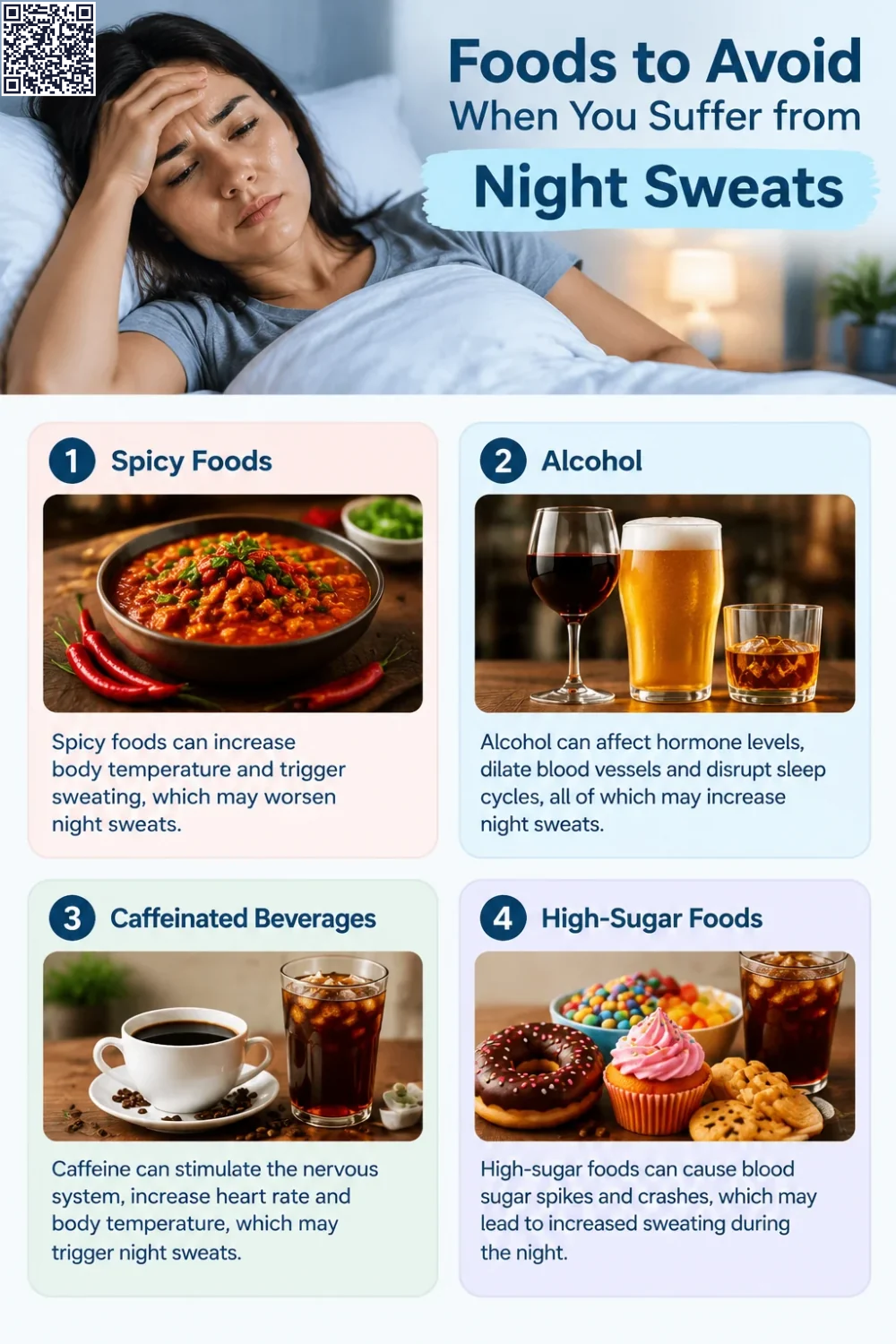
2. Alcohol
Alcoholic beverages expand blood vessels near the skin and disrupt central temperature controls, significantly increasing the frequency and physical intensity of sudden night sweats 10.
3. Caffeinated Beverages
Caffeine stimulates the nervous system and raises the heart rate. Clinical evidence confirms this direct stimulant activity provokes sudden internal heat spikes and nocturnal sweating 11.
4. High-Sugar Foods
Consuming excess sugar before bed causes rapid glucose spikes followed by sharp drops. This nocturnal hypoglycemia forces the body to release adrenaline, triggering heavy sweating 27.
When to See a Doctor When You Struggle From Night Sweats
1. Unexplained Weight Loss
Seek immediate medical care if heavy sweating occurs alongside sudden, unintentional weight loss. This combination serves as a primary clinical warning sign for underlying infections or blood cancers 6.
2. Persistent Fevers
Consult a physician if sweating episodes include high temperatures or shaking chills. These accompanying symptoms strongly indicate an active bacterial or viral infection requiring targeted medical treatment 2.
3. Chronic Cough
Contact a healthcare provider if night sweats appear alongside a severe cough lasting several weeks. This specific symptom combination is a well-documented clinical indicator of tuberculosis 2.
4. Severe Sleep Disruption
See a doctor if nocturnal sweating repeatedly awakens you and causes severe daytime exhaustion. Chronic sleep fragmentation weakens the immune system and requires professional medical management 7.
Comments
comments