

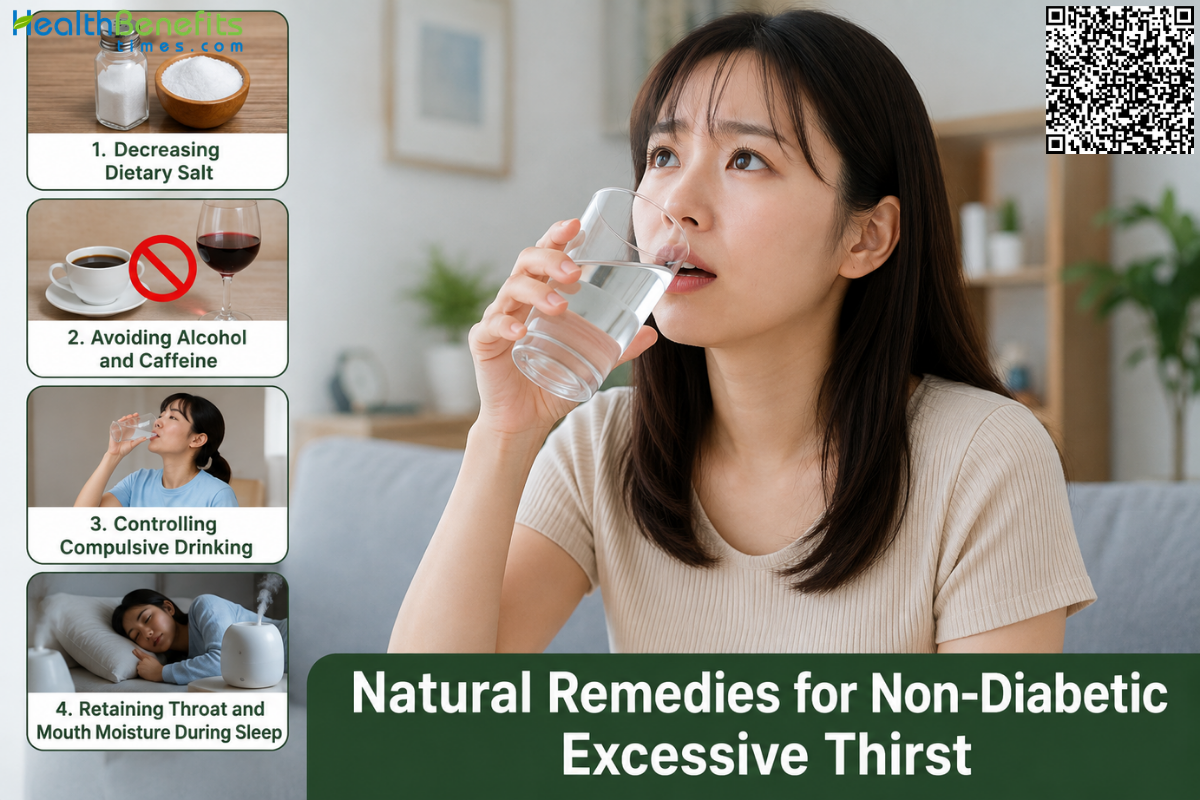
Causes of Non-Diabetic Excessive Thirst
- Dehydration: Severe fluid loss resulting from heavy sweating, high fever, vomiting, or ongoing diarrhea disrupts the body’s water balance, triggering an urgent need to replace fluids 3.
- Diabetes Insipidus: A rare disorder, completely unrelated to blood sugar levels, that prevents the kidneys from conserving water, causing frequent urination and continuous thirst 4.
- Primary Polydipsia: A behavioral or psychological condition where a person feels a compulsive urge to drink massive amounts of fluids, often linked to underlying mental health disorders such as schizophrenia 5.
- Dipsogenic Polydipsia: A malfunction or physical damage in the brain’s thirst center that creates an abnormally low threshold for feeling thirsty, compelling a person to drink even when their body is fully hydrated 6.
- Electrolyte Imbalances: Unusually high levels of calcium or low levels of potassium in the blood interfere with normal kidney function and water retention, leading to excessive urination and subsequent thirst 7.
- Medication Side Effects: Certain prescription drugs, particularly diuretics that force the body to expel water or medications like lithium used for psychiatric care, can artificially increase fluid loss and stimulate thirst 7.
- Chronic Kidney Diseases: Genetic or long-term disorders, such as nephronophthisis, create scarring and inflammation in the kidneys, severely impairing their ability to properly filter waste and retain necessary water 8.
Symptoms of Non-Diabetic Excessive Thirst
- Unquenchable Urge to Drink: A continuous, overwhelming need to consume fluids that does not go away, even immediately after drinking large amounts of water 1.
- Frequent and Heavy Urination: Expelling abnormally large volumes of pale or completely clear urine, often exceeding three liters per day, because the kidneys are unable to concentrate the urine properly 1.
- Disrupted Sleep Due to Urination: A persistent need to empty the bladder that interrupts sleep, forcing a person to wake up multiple times throughout the night 2.
- Severely Dry Mouth: A constant lack of saliva and moisture in the mouth and throat, which persists regardless of the volume of liquids consumed 9.
- Muscle Weakness and Confusion: When drinking excessive amounts of water dangerously dilutes the sodium levels in the blood, it can cause physical and neurological symptoms, including nausea, headaches, muscle cramps, and mental confusion 10.
Natural Remedies for Non-Diabetic Excessive Thirst
1. Restoring Mineral and Water Balance
How it may help
When excessive thirst results from severe fluid loss, drinking plain water often fails to stop the craving. Restoring essential minerals, such as sodium and potassium, alongside water helps the cells properly absorb and retain fluids. This directly resolves the underlying physical imbalance that continuously triggers the brain’s thirst signals 10.
What research says
Clinical evidence confirms that oral rehydration solutions, which contain precise measurements of salts and carbohydrates, effectively treat severe dehydration. Correcting sodium levels is scientifically proven to stop continuous thirst and prevent hyponatremia, a dangerous physical condition caused by consuming too much plain water 11.
How to use it safely
To restore balance safely, you should consume medical-grade oral rehydration solutions instead of sugary commercial sports drinks. Mix the packets with clean water exactly as directed. Sip the fluid slowly over several hours to allow your digestive system to absorb the essential minerals properly 12.
Potential precautions or side effects
Do not consume excessive electrolytes without medical supervision. Overuse can cause dangerously high blood sodium levels and can severely worsen existing kidney or heart conditions 11.
2. Relieving Dry Mouth Sensations by Sucking on Ice Chips
How it may help
Sucking on ice chips continuously moistens the tissues inside the mouth and throat, directly relieving the physical sensation of severe dryness. The cold temperature strongly stimulates sensory nerves in the mouth, sending signals to the brain that suppress the urge to drink without adding excess fluid to the body 13.
What research says
Clinical guidelines indicate that letting ice melt in the mouth is a highly effective, non-medical strategy for managing chronic dry mouth. Experts recommend this approach to safely reduce uncomfortable thirst sensations and prevent patients from dangerously over-hydrating when their excessive thirst is not caused by dehydration 13.
How to use it safely
To use this method safely, you should allow small ice chips to melt completely on your tongue rather than actively chewing them. Always prepare the ice using clean, safe drinking water, and use this technique slowly throughout the day whenever severe mouth dryness occurs 14.
Potential precautions or side effects
Never bite or chew the ice, as this can severely crack teeth and destroy dental enamel. Furthermore, ice chips present a choking hazard for individuals with swallowing difficulties 14.
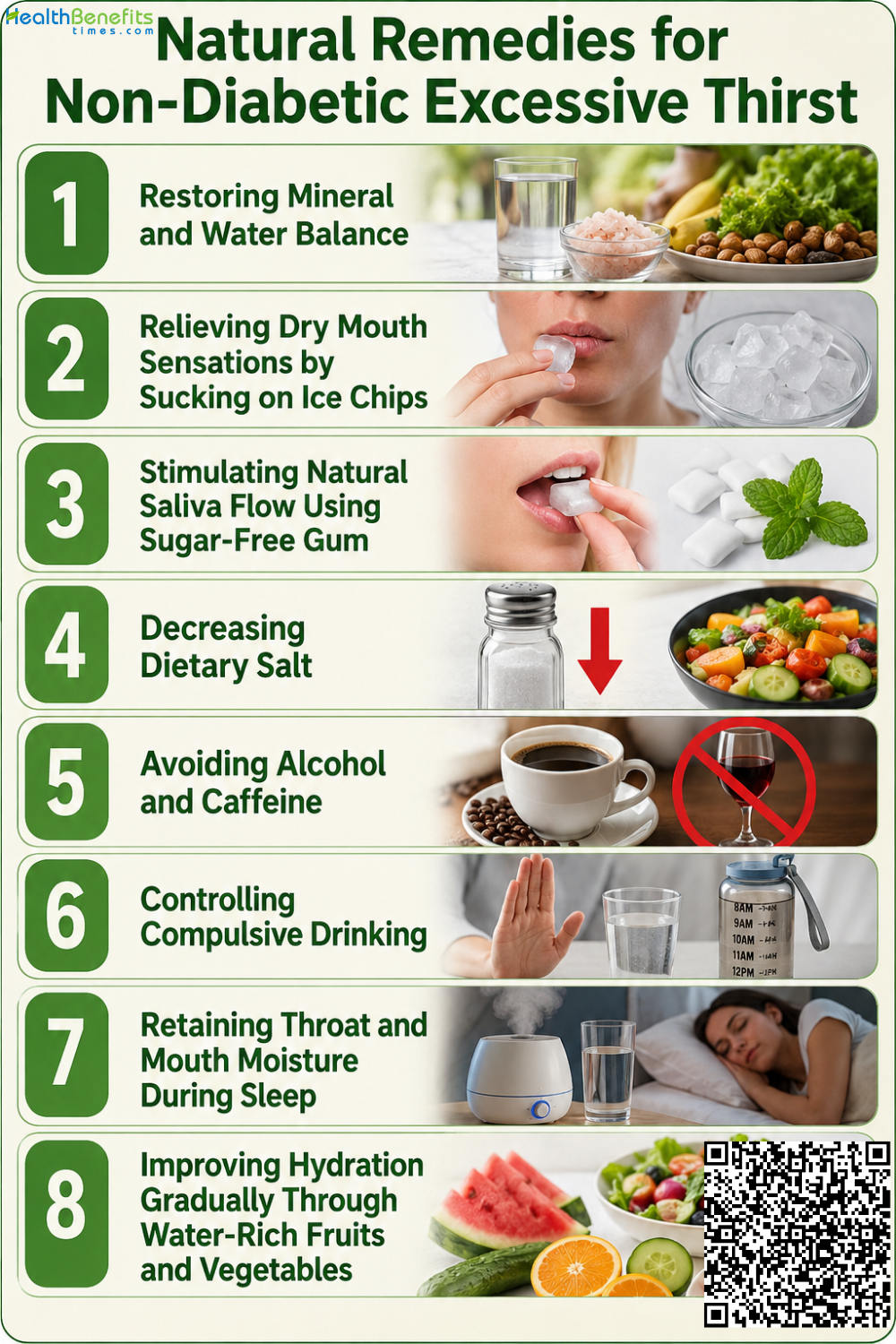
3. Stimulating Natural Saliva Flow Using Sugar-Free Gum
How it may help
The physical action of chewing sugar-free gum directly stimulates the salivary glands, prompting them to generate more natural saliva. This steady flow of saliva actively lubricates the interior of the mouth and the throat, eliminating severe dryness. By preserving a wet environment inside the mouth, this simple mechanical process effectively suppresses the uncomfortable physical sensation of thirst, safely preventing a person from drinking unnecessary volumes of extra water when their body remains completely hydrated 13.
What research says
Clinical medical evidence demonstrates that actively chewing sugar-free gum is a highly effective, non-medical intervention for managing chronic mouth dryness. Health experts conclude that this continuous chewing action significantly increases natural saliva production, providing measurable relief from intense thirst sensations. Research confirms that utilizing this simple method helps patients control their constant urge to drink, safely preventing dangerous water intoxication in vulnerable individuals who are experiencing severe thirst completely unrelated to actual cellular dehydration 14.
How to use it safely
To use this specific technique safely, you should select only sugar-free gum products to protect your teeth from rapid dental decay. You must chew the gum gently throughout the day whenever you feel uncomfortable dryness in your mouth or throat. Furthermore, you should look specifically for gum sweetened with xylitol, as this natural ingredient helps prevent harmful bacteria from growing in your mouth while continuously encouraging your salivary glands to release more hydrating fluid 13.
Potential precautions or side effects
While generally safe, chewing gum constantly can physically strain your jaw muscles and lead to painful joint disorders over time. Additionally, consuming massive quantities of artificial sweeteners or xylitol found in sugar-free gum can severely upset your digestive system. This overconsumption often triggers unpleasant gastrointestinal side effects, including severe abdominal bloating, painful stomach cramps, and persistent diarrhea. Therefore, individuals with existing jaw issues or sensitive stomachs should use this stimulation method with extreme caution 14.
4. Decreasing Dietary Salt
How it may help
Consuming excessive amounts of dietary salt directly increases the concentration of sodium circulating within the bloodstream. When this occurs, specialized sensors inside the brain detect the elevated sodium levels and immediately trigger a powerful physical urge to drink fluids to dilute the blood. By deliberately decreasing daily salt intake, individuals prevent these brain sensors from over-activating, which effectively reduces the constant, uncomfortable sensation of thirst without requiring unnecessary water consumption throughout the day 15.
What research says
Clinical medical research thoroughly confirms that consuming high levels of dietary sodium significantly increases plasma osmolality, which directly stimulates the primary thirst centers located within the brain. Health experts definitively conclude that restricting dietary salt intake measurably lowers the biological urge to drink fluids. Scientific studies consistently prove that this specific dietary adjustment successfully decreases daily water consumption, providing an effective clinical strategy for safely managing uncontrollable thirst disorders without requiring prescription medications 16.
How to use it safely
To safely reduce your daily salt consumption, you must carefully read nutrition labels on all packaged foods and strictly avoid heavily processed meals. You should prepare your meals at home using fresh ingredients while flavoring your food with natural herbs instead of table salt. Always consult with your healthcare provider before making drastic dietary changes to ensure your body maintains adequate sodium levels for basic nerve and muscle function every single day 17.
Potential precautions or side effects
While reducing salt intake is generally highly beneficial, completely eliminating dietary sodium is physically dangerous. Severe sodium deficiency, known medically as hyponatremia, severely impairs brain function and causes dangerous swelling. This serious physical condition triggers extreme muscle weakness, intense confusion, severe headaches, and life-threatening seizures. Therefore, you must carefully maintain a moderate, medically appropriate sodium balance rather than attempting to remove all salt from your diet entirely without strict professional medical supervision 10.
5. Avoiding Alcohol and Caffeine
How it may help
Alcohol and caffeine act as diuretics, meaning they force the kidneys to produce more urine and expel excess water. By avoiding these specific beverages, individuals prevent unnecessary fluid loss from their bodies. This directly stops the physical triggers that cause severe dry mouth and the resulting continuous urge to drink fluids throughout the day 14.
What research says
Clinical research confirms that both caffeine and alcohol suppress natural hormones that normally help the kidneys retain water. Medical experts conclude that consuming these substances increases urinary output and significantly worsens cellular dehydration. Consequently, eliminating them successfully reduces abnormal thirst signals and provides measurable relief from chronic mouth dryness 14.
How to use it safely
To implement this safely, you should gradually replace caffeinated beverages and alcohol with plain water or decaffeinated alternatives. Slowly decrease your daily intake rather than stopping entirely at once. This step-by-step approach effectively maintains proper body hydration while safely avoiding uncomfortable physical withdrawal symptoms 18.
Potential precautions or side effects
Stopping caffeine suddenly often causes severe withdrawal symptoms, including intense headaches, extreme fatigue, and severe irritability. You must reduce intake gradually to avoid these disruptive physical side effects 19.
6. Controlling Compulsive Drinking
How it may help
Establishing a strict daily fluid schedule directly limits the excessive volume of water entering the body. This behavioral strategy breaks the psychological habit of constant drinking. By controlling intake, individuals prevent the dangerous dilution of essential blood minerals, effectively managing the compulsive urge to drink without requiring prescription medications 5.
What research says
Clinical research confirms that strictly monitoring and restricting fluid intake is the most effective treatment for compulsive water drinking, known as primary polydipsia. Medical experts conclude that controlled fluid restriction successfully normalizes blood sodium levels and prevents life-threatening water intoxication in patients driven by psychological thirst 5.
How to use it safely
You must work directly with a healthcare provider to calculate your specific daily fluid limit. Measure your total allowed water into a marked container each morning. Sip this predetermined amount slowly and evenly throughout the day to safely manage your thirst without overhydrating 5.
Potential precautions or side effects
Restricting fluids without professional medical supervision can quickly cause severe physical dehydration and serious kidney damage. You must never attempt extreme water restriction independently without strict clinical guidance 5.
7. Retaining Throat and Mouth Moisture During Sleep
How it may help
Running a bedroom humidifier continuously adds moisture to the surrounding air while a person sleeps. This physical intervention directly prevents indoor heating systems and normal mouth breathing from drying out delicate oral tissues overnight. By preserving mouth moisture, this method effectively reduces the intense morning sensation of thirst without requiring unnecessary fluid intake 13.
What research says
Clinical health guidelines strongly recommend utilizing nighttime humidifiers as a practical, non-medical treatment for chronic mouth dryness. Medical experts conclude that increasing ambient room humidity significantly decreases moisture evaporation from the oral cavity during sleep. Scientific evidence confirms this environmental adjustment successfully minimizes severe morning thirst sensations and greatly improves overall oral comfort 13.
How to use it safely
To use this device safely, you must clean your humidifier regularly according to the manufacturer’s exact instructions. You should use clean, distilled water to prevent harmful mineral buildup. Place the machine directly in your bedroom to consistently moisturize the air you breathe overnight 14.
Potential precautions or side effects
Failing to clean the water tank regularly allows dangerous mold and bacteria to grow. Inhaling these contaminated water droplets can trigger severe asthma attacks and cause serious respiratory infections 20.
8. Improving Hydration Gradually Through Water-Rich Fruits and Vegetables
How it may help
Consuming water-rich fruits and vegetables introduces fluids into the digestive system gradually as the food breaks down. This slow absorption process provides steady hydration alongside essential vitamins and minerals. By improving cellular fluid retention naturally, this dietary approach effectively reduces intense thirst signals without requiring individuals to consume excessive volumes of plain water 18.
What research says
Clinical nutrition research confirms that approximately twenty percent of daily human fluid intake naturally comes from food sources. Medical experts conclude that consuming water-dense produce significantly improves overall hydration status. Evidence demonstrates that the essential nutrients present in these whole foods help the body retain fluids efficiently, which successfully decreases abnormal physiological urges to drink continuously 21.
How to use it safely
To use this dietary approach safely, you should gradually incorporate water-dense foods like cucumbers, celery, and melons into your daily meals. You must wash all fresh produce thoroughly to prevent foodborne illnesses. Eat these foods slowly throughout the day to naturally maintain steady hydration levels 22.
Potential precautions or side effects
Individuals with severe kidney disease must carefully monitor their fruit consumption. The high potassium levels found in many water-rich foods can cause dangerous heart complications if kidney function is impaired 23.
Foods to Avoid When You suffer from Non-Diabetic Excessive Thirst
1. Highly Processed Meats
Processed meats contain immense sodium levels, which spike blood concentration and severely activate the brain’s thirst centers 17.
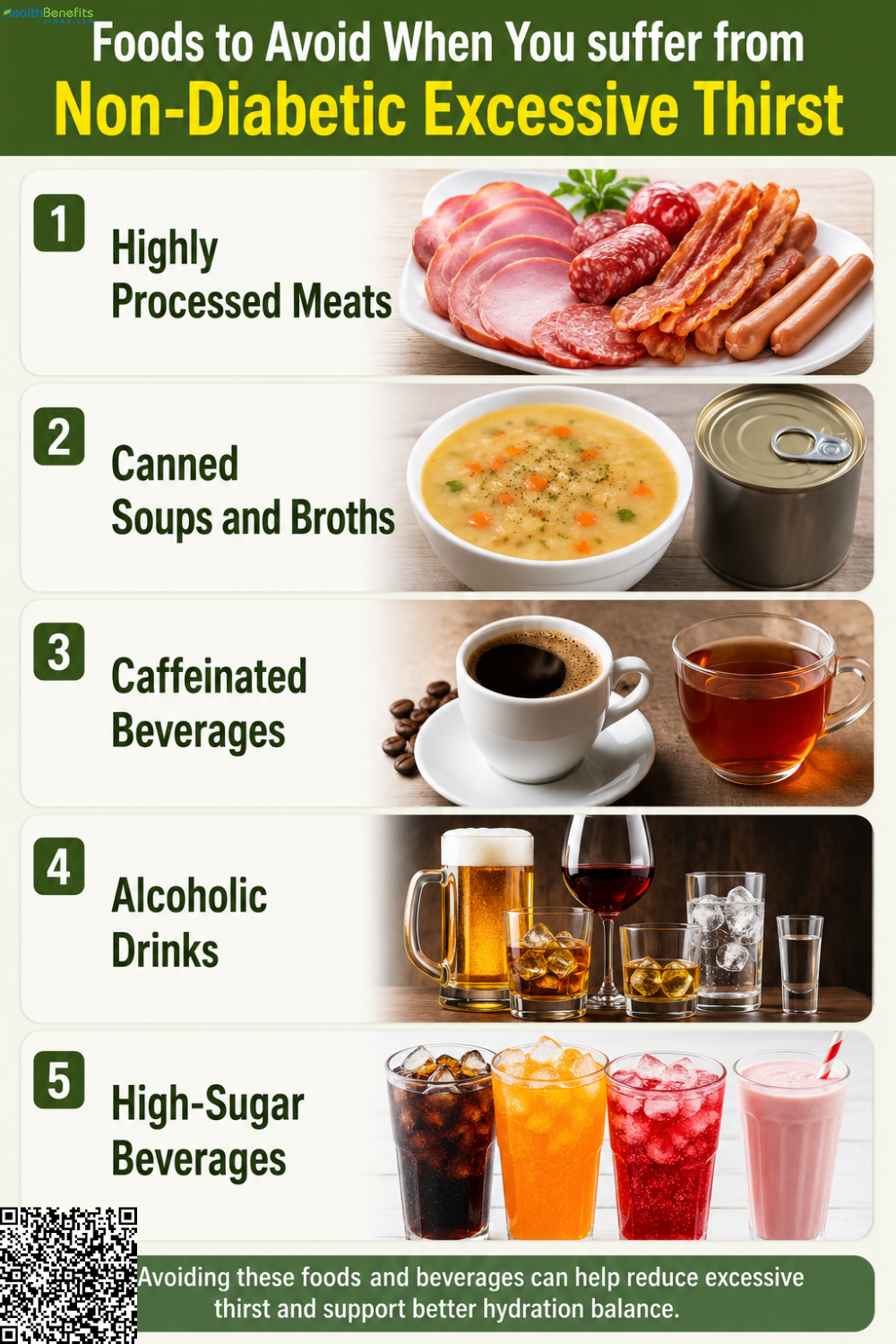
2. Canned Soups and Broths
Commercial soups hold massive amounts of hidden salt that elevate blood sodium, directly stimulating neurological thirst receptors to crave water 16.
3. Caffeinated Beverages
Drinks containing caffeine force the kidneys to expel water rapidly, worsening cellular dehydration and severely drying out mouth tissues 14.
4. Alcoholic Drinks
Alcohol actively suppresses hormones that retain water, causing excessive urination and severe dehydration that triggers intense physiological thirst 14.
5. High-Sugar Beverages
Concentrated sugary drinks fail to hydrate, instead drawing essential water from cellular tissues into the bloodstream and worsening fluid imbalances 18.
When to see Doctor when you struggle from Non-Diabetic Excessive Thirst
- Unrelenting Thirst and Urination: Seek care if you consume massive amounts of water but remain severely thirsty while expelling exceptionally large volumes of clear urine daily 2.
- Severe Mental Confusion: Immediate medical attention is required if extreme thirst occurs alongside severe confusion, dizziness, or severe headaches, which indicates dangerous blood sodium dilution 10.
- Disrupted Nighttime Sleep: Consult a doctor if you are continuously forced to wake up multiple times throughout the night to urgently urinate or drink fluids 1.
- Muscle Weakness and Cramping: See a healthcare provider if intense thirst is accompanied by sudden muscle weakness, painful cramps, or extreme nausea, signaling a critical electrolyte imbalance 7.
- Recent Head Trauma: Seek immediate evaluation if uncontrollable thirst begins suddenly following a head injury or surgery, as physical trauma can damage the brain’s fluid-regulating centers 6.
Comments
comments