

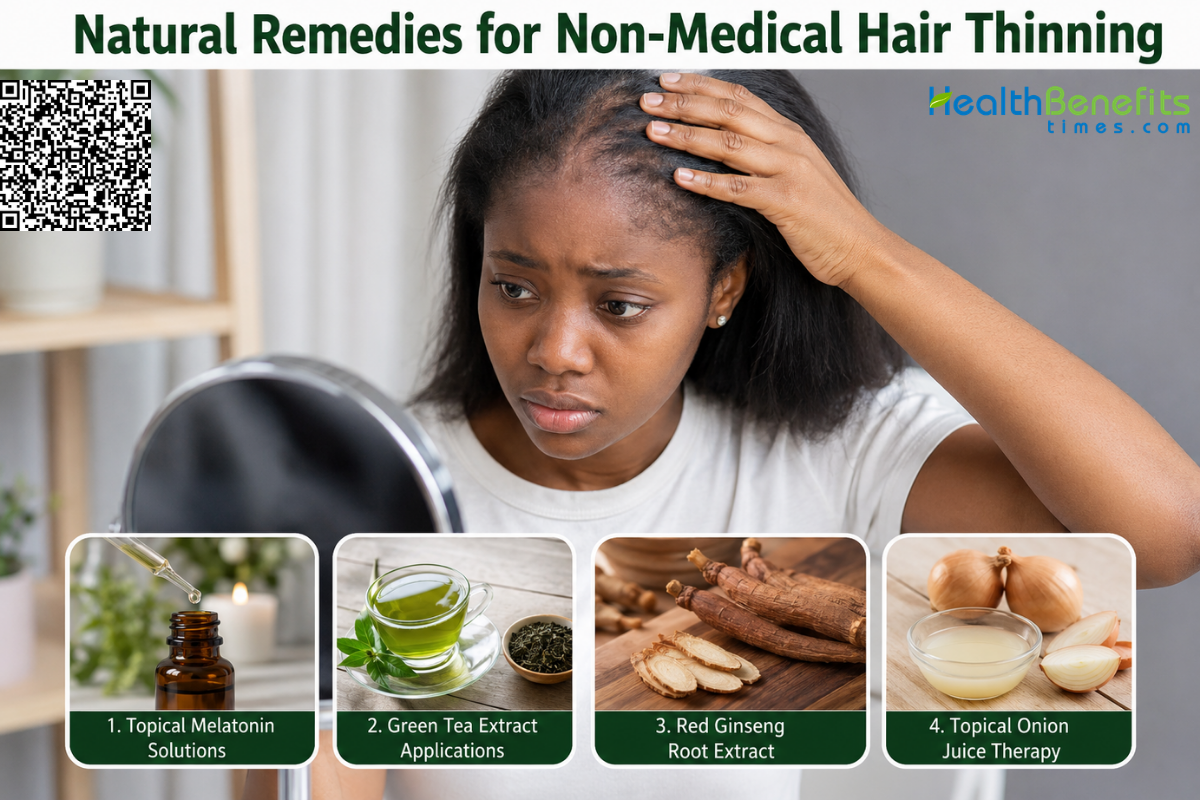
Causes of Non-Medical Hair Thinning
1. Genetic Predisposition and Aging
The most common driver of gradual hair volume loss is hereditary pattern baldness, which occurs naturally as part of the aging process 1. Over time, hair follicles become smaller and produce finer, shorter strands until active hair growth eventually ceases entirely.
2. Physical and Emotional Stress
Severe psychological stress, sudden weight loss, or major emotional trauma can disrupt the natural hair growth cycle, pushing a large number of follicles prematurely into a resting state 1. This temporary condition, known as telogen effluvium, causes noticeable shedding and widespread thinning that typically appears several months after the stressful event.
3. Damaging Hair Care Practices
Styling habits that place constant, tight tension on the hair roots, such as tight braids, buns, or heavy extensions, lead to localized thinning known as traction alopecia 2. Furthermore, the frequent use of high-heat styling tools, harsh relaxers, and excessive brushing weakens the hair structure, causing strand breakage and a thinned appearance.
4. Nutritional Deficiencies
Healthy hair growth requires a steady supply of vitamins and minerals, meaning poor dietary habits can directly impair the process. Diets that severely lack essential nutrients, particularly cellular building blocks like protein, iron, and zinc, limit the body’s ability to produce robust hair, resulting in increased shedding and reduced density 3.
Symptoms of Non-Medical Hair Thinning
- Gradual Widening of the Hair Part: A common early sign of age-related or genetic hair loss is a noticeable widening of the natural parting line on the scalp, which indicates a general decrease in overall hair density 4.
- Receding Hairline and Crown Thinning: In hereditary patterns, the hairline may slowly move backward from the forehead, or the hair may become visibly sparse at the highest point of the scalp over time 1.
- Increased Daily Shedding: Finding unusually large amounts of loose hair on pillows, in hairbrushes, or gathered in the shower drain is a primary sign of stress-induced shedding, where the natural growth cycle is interrupted and hairs fall out rapidly 1.
- Production of Finer, Weaker Strands: As follicles shrink due to aging and genetic factors, the new hairs they produce are noticeably thinner, more fragile, and shorter than the hairs that previously grew in the same location 4.
- Broken Hairs Around the Hairline: Styling methods that pull tightly on the scalp or use excessive heat can cause physical damage, resulting in short, frayed, or broken strands primarily concentrated at the front hairline or near the site of tension 2.
- Reduced Ponytail Volume: A practical and noticeable symptom of widespread thinning is a significant decrease in the thickness of the hair when gathered into a ponytail, indicating a substantial loss of total hair strands across the entire scalp 4.
Natural Remedies for Non-Medical Hair Thinning
1. Application of Topical Rosemary Oil
How It May Help
Topical rosemary oil helps counter non-medical hair thinning by stimulating blood circulation directly in the scalp tissue. This increased blood flow delivers vital oxygen and nutrients to resting follicles, which promotes active growth and strengthens individual strands. Furthermore, rosemary contains natural anti-inflammatory and antioxidant agents that protect delicate hair roots from environmental damage and support a healthier scalp environment 5.
What Research Says
Clinical research indicates that rosemary oil significantly improves hair count in individuals experiencing gradual hereditary thinning. A controlled trial demonstrated that applying rosemary oil over six months produced hair growth outcomes comparable to conventional two percent minoxidil treatments 6. The findings concluded that consistent, long-term use is required to see measurable gains in strand density.
How to Use It Safely
You should never apply pure rosemary essential oil directly to your scalp without diluting it first. Mix a few drops with a gentle carrier oil, like jojoba or coconut oil, and massage it gently into your scalp. Leave the mixture on for at least thirty minutes before washing it out thoroughly 6.
Potential Precautions or Side Effects
Essential oils can occasionally trigger mild scalp itching, redness, or contact allergic reactions. You should perform a small skin patch test on your forearm before applying it to your scalp, and avoid getting the oil into your eyes 6.
2. Daily Scalp Massage
How It May Help
Daily scalp massage applies direct mechanical stress to the cells located at the base of hair follicles. This physical stimulation stretches the cells, which triggers biological pathways that encourage the production of thicker hair. Additionally, the gentle pressure dilates small blood vessels under the skin, improving local blood circulation to nourish the resting hair roots 7.
What Research Says
Clinical trials demonstrate that consistent mechanical stimulation directly improves hair strand density. In a standardized study, healthy participants who received four minutes of daily scalp massage over twenty-four weeks experienced a statistically significant increase in individual hair thickness 7. Researchers concluded that this mechanical force directly alters gene expression within human hair cells.
How to Use It Safely
You should use the pads of your fingertips to apply light, even pressure across your scalp. Move your fingers in slow, circular motions for about four minutes each day. Always avoid using your fingernails, as scratching can damage fragile follicles 7.
Potential Precautions or Side Effects
You must be gentle; aggressive rubbing can physically break delicate hair shafts. Always avoid massaging if you have an active skin infection to prevent spreading the underlying condition 8.
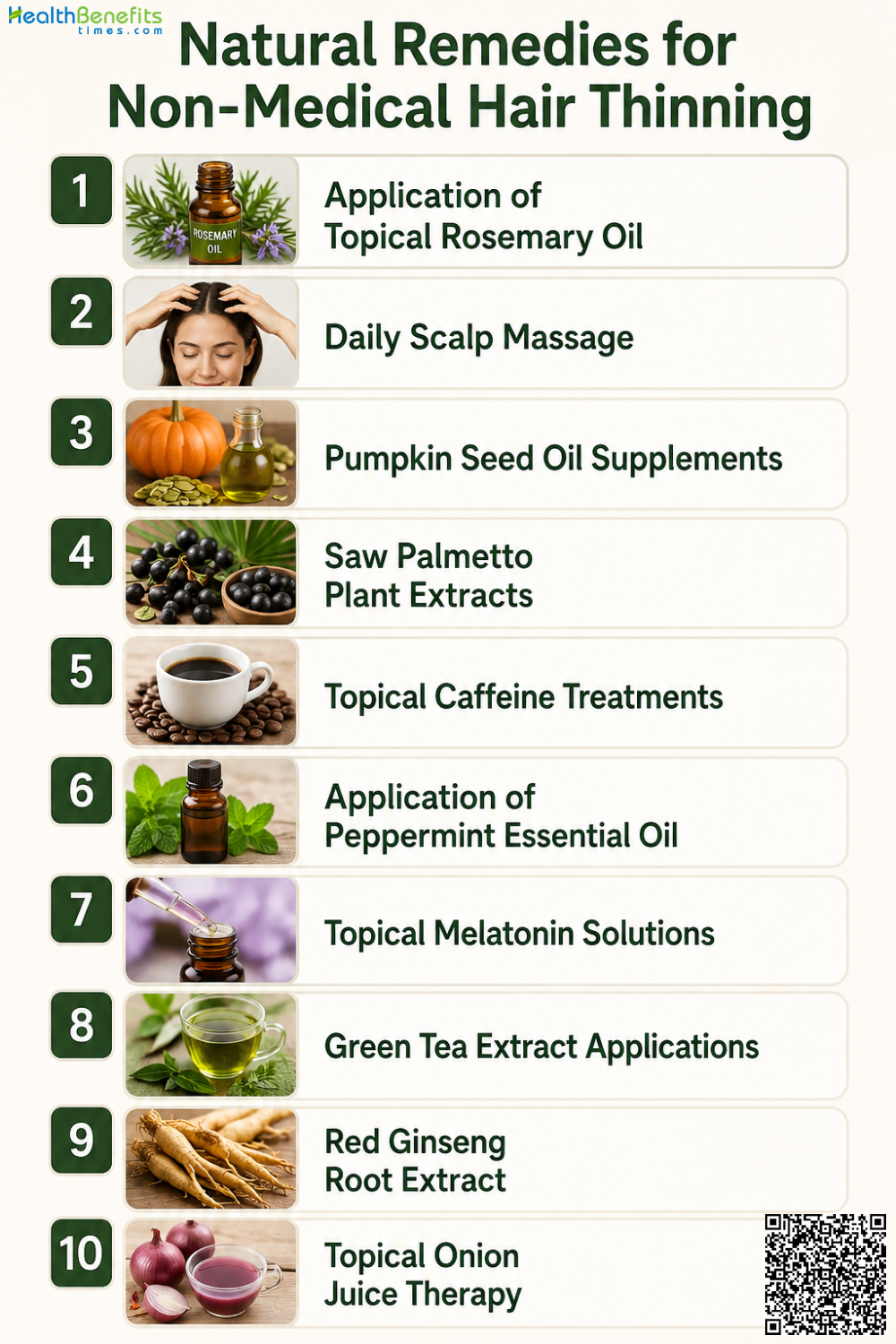
3. Pumpkin Seed Oil Supplements
How It May Help
Pumpkin seed oil contains plant compounds called phytosterols that block the enzyme responsible for converting testosterone into dihydrotestosterone. Because high levels of dihydrotestosterone cause hair follicles to shrink and produce thinner strands, blocking this chemical conversion protects the hair roots and promotes the maintenance of normal hair volume over time 9.
What Research Says
Clinical trials show that daily supplementation with pumpkin seed oil significantly improves hair growth in individuals with hereditary thinning. A placebo-controlled study demonstrated that taking four hundred milligrams of the oil daily for twenty-four weeks resulted in a forty percent average increase in visible hair count 9.
How to Use It Safely
You should take oral pumpkin seed oil capsules at a standard dosage of four hundred milligrams per day. For optimal digestion, swallow the capsules with a meal. You must remain consistent with daily dosing for several months to observe noticeable improvements in your hair thickness 9.
Potential Precautions or Side Effects
You may experience mild stomach upset or nausea when starting this supplement. Always consult your doctor before use, especially if you are taking prescription medications or have known plant allergies 9.
4. Saw Palmetto Plant Extracts
How It May Help
Saw palmetto plant extracts contain fatty acids that block the specific enzyme responsible for converting testosterone into dihydrotestosterone. Because high levels of this converted hormone directly cause hair follicles to shrink, reducing its overall production helps maintain normal follicle size and prevents the premature shedding of existing hair strands 10.
What Research Says
Clinical reviews confirm that saw palmetto effectively improves general hair density. A comprehensive analysis concluded that treating mild hereditary hair loss with these specific plant extracts produced a sixty percent improvement in overall hair quality and a twenty-seven percent increase in total hair count after continuous daily use 10.
How to Use It Safely
You can take saw palmetto as an oral capsule, typically at a daily dose of one hundred to three hundred and twenty milligrams. For optimal absorption, you should consume the supplement alongside a meal. Maintain a consistent daily routine for several months to observe visible results 10.
Potential Precautions or Side Effects
You may experience mild stomach pain or temporary headaches. Because it affects hormones, you must consult a doctor before use if taking hormone medications or prescription blood thinners 10.
5. Topical Caffeine Treatments
How It May Help
Topical caffeine penetrates directly into the hair follicles to stimulate active cellular energy. This process blocks the hair-damaging effects of hormones that naturally cause follicles to shrink over time. By extending the normal hair growth cycle, caffeine prevents premature shedding and encourages the continuous production of thicker strands 11.
What Research Says
Clinical trials confirm that applying liquid caffeine directly to the scalp significantly prolongs the active hair growth phase. Researchers concluded that topical caffeine effectively halts hereditary hair loss and stimulates hair elongation, providing reliable preventative benefits for thinning hair without the need for systemic medical drugs 11.
How to Use It Safely
You should apply a caffeine-infused liquid solution or specialized shampoo directly to your scalp. Gently massage the product into your hair roots and let it sit for at least two minutes before rinsing it out thoroughly. You must repeat this simple washing routine daily for best results 11.
Potential Precautions or Side Effects
You might experience mild scalp redness, dry skin, or temporary itching. Always avoid getting the solution in your eyes, and discontinue use immediately if severe irritation or a rash develops 11.
6. Application of Peppermint Essential Oil
How It May Help
Peppermint essential oil contains menthol, a natural compound that significantly expands blood vessels and increases blood flow to the scalp. This enhanced circulation delivers essential nutrients and oxygen directly to resting hair roots. By stimulating these dormant follicles, the oil encourages them to enter a new active growth phase, ultimately promoting thicker and healthier hair 12.
What Research Says
Scientific studies demonstrate that a three percent peppermint oil solution promotes faster and thicker hair growth compared to standard topical treatments. Researchers concluded that the oil effectively increases total hair follicle count, deepens the follicles into the skin, and strongly shifts them into the active growth stage without causing bodily harm 12.
How to Use It Safely
You must dilute pure peppermint essential oil before applying it directly to your skin. Mix two drops of peppermint oil with one tablespoon of a neutral carrier oil, such as jojoba oil. Gently massage the mixture into your scalp and leave it for five minutes before washing 12.
Potential Precautions or Side Effects
You may experience a strong tingling sensation, which is normal. However, severe burning, itching, or redness indicates an allergic skin reaction. Wash the area immediately and completely discontinue use 12.
7. Topical Melatonin Solutions
How It May Help
Topical melatonin acts as a potent local antioxidant that shields hair follicles from oxidative damage. By neutralizing harmful free radicals directly at the cellular level, it extends the active growth phase of the hair cycle, preserving root health and supporting thicker hair production 13.
What Research Says
Clinical trials demonstrate that applying topical melatonin effectively counters early-stage hereditary thinning. Researchers concluded that continuous daily application of a cosmetic melatonin solution significantly increases the percentage of actively growing hairs and visibly improves overall scalp density in affected individuals 13.
How to Use It Safely
You should apply a formulated topical melatonin solution directly to your scalp once daily. Gently massage the liquid into your hair roots during your evening routine, allowing it to fully absorb into the skin without washing it out 13.
Potential Precautions or Side Effects
Topical melatonin is extremely safe, though you might experience mild scalp irritation. You should always perform a patch test first and completely discontinue use if an allergic skin reaction develops 13.
8. Green Tea Extract Applications
How It May Help
Green tea extract contains high concentrations of powerful plant antioxidants called catechins. These natural compounds protect hair follicles from oxidative stress and help block hormones that cause follicles to shrink. By shielding the roots from cellular damage, green tea extract supports a healthier scalp environment and encourages normal hair growth 14.
What Research Says
Clinical research indicates that the active antioxidant components found in green tea help promote hair growth by prolonging the active growth phase. Studies concluded that topical or dietary application of these catechins stimulates hair cell proliferation and protects existing follicles from premature degeneration {% htps://pubmed.ncbi.nlm.nih.gov/17092697/ %}.
How to Use It Safely
You can apply a cooled, brewed green tea rinse directly to your scalp after washing your hair. Alternatively, look for specialized cosmetic products containing standardized green tea extract. Leave the liquid on your scalp for ten minutes before rinsing thoroughly with clean water 14.
Potential Precautions or Side Effects
You may experience mild skin dryness or temporary irritation. Always perform a patch test first, and discontinue use immediately if an adverse reaction occurs 14.
9. Red Ginseng Root Extract
How It May Help
Red ginseng root extract contains active plant compounds called ginsenosides, which directly stimulate the specialized cells located at the base of hair follicles. This natural stimulation encourages cellular division and prevents premature cell death. Additionally, the extract improves local blood circulation, ensuring that resting hair roots receive the vital nutrients needed for continuous growth 15.
What Research Says
Clinical studies demonstrate that red ginseng significantly enhances overall hair density and thickness. Researchers concluded that the regular application of ginseng extract effectively promotes hair cell survival and visibly prolongs the active growth phase, offering a reliable natural intervention for individuals experiencing gradual, non-medical hair thinning 15.
How to Use It Safely
You can apply a topical serum containing red ginseng extract directly to your scalp daily, gently massaging it into the roots. Alternatively, you can take standardized oral ginseng supplements. Always follow the specific dosage instructions provided on the product label to ensure safe use 15.
Potential Precautions or Side Effects
You may experience mild scalp irritation with topical use. When taking oral supplements, monitor for temporary headaches or sleep disturbances, and discontinue use immediately if allergic symptoms develop 15.
10. Topical Onion Juice Therapy
How It May Help
Topical onion juice delivers dietary sulfur directly to the scalp, which helps produce the strong keratin proteins that build hair strands. Furthermore, the natural antibacterial agents within the liquid promote a healthy scalp environment. The antioxidants also protect resting follicles from cellular damage and improve local blood flow 16.
What Research Says
Clinical trials demonstrate that crude onion juice significantly stimulates visible hair regrowth. In controlled studies, participants applying the juice twice daily experienced measurable increases in strand count and thickness within six weeks. Researchers concluded it is a highly effective, natural topical therapy for localized patchiness and general thinning 17.
How to Use It Safely
You should blend or grate fresh onions to extract the raw liquid. Use a cotton pad to apply the juice directly to your scalp, focusing on thinning areas. Leave the treatment on for fifteen to thirty minutes before washing your hair thoroughly with a gentle shampoo 17.
Potential Precautions or Side Effects
You may experience redness, strong odors, or mild itching. Always perform a small patch test first, and avoid contact with your eyes to prevent severe burning 17.
Foods to Avoid When You Suffer From Non-Medical Hair Thinning
1. Refined Sugars and Sweets
High sugar intake spikes blood glucose, increasing androgen hormone production. These elevated hormones directly shrink active hair follicles, accelerating premature shedding and visibly worsening overall hair volume 18.
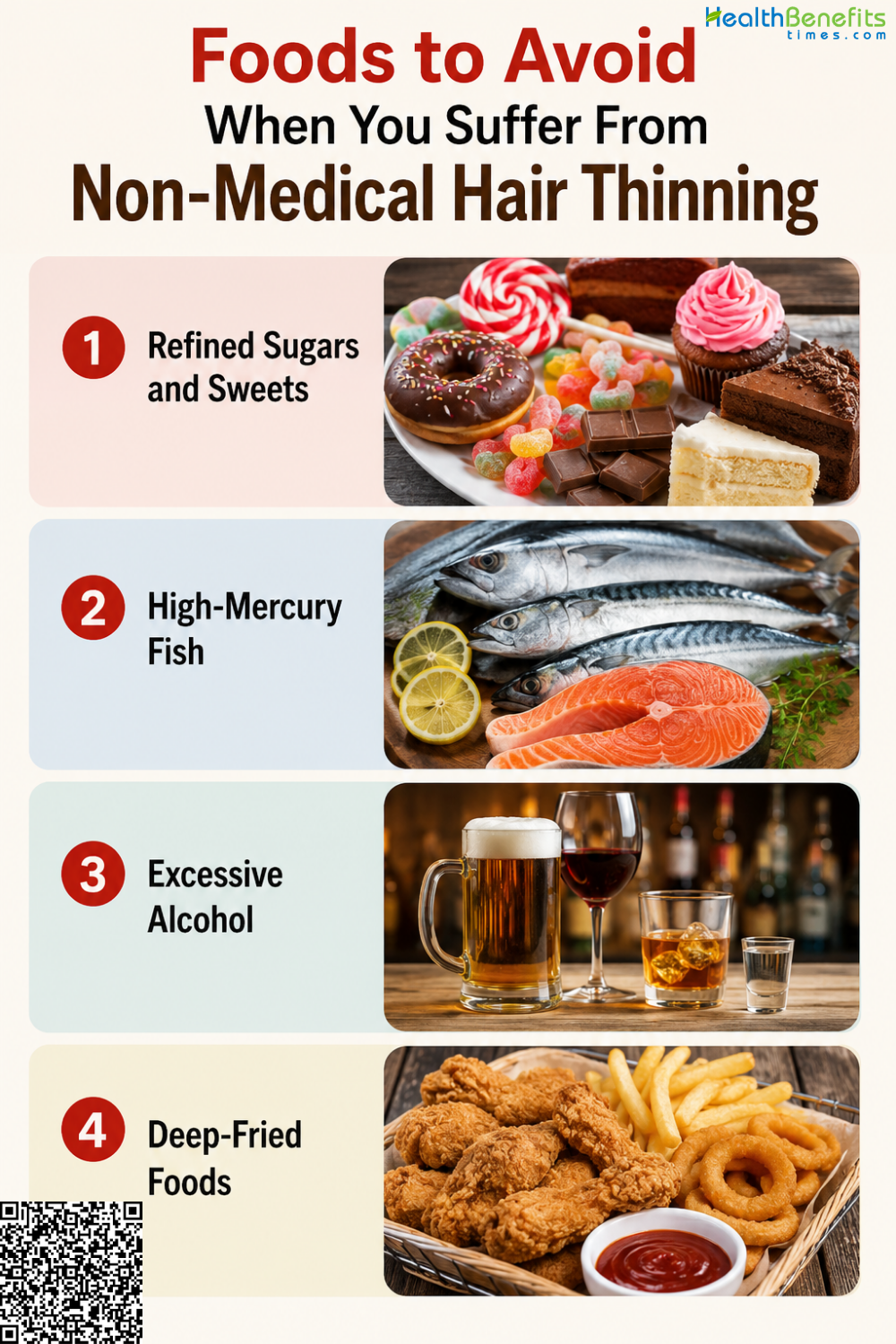
2. High-Mercury Fish
Consuming large predatory fish exposes your body to toxic mercury. This heavy metal accumulation severely disrupts cellular protein synthesis, forcing active hair follicles into sudden, widespread shedding 19.
3. Excessive Alcohol
Heavy alcohol consumption inflames your digestive tract, severely blocking the vital absorption of essential hair-building minerals, particularly dietary zinc and iron, which directly causes chronic hair thinning 3.
4. Deep-Fried Foods
Deep-fried foods contain harmful trans fats that trigger severe systemic inflammation. This continuous internal stress physically damages fragile hair roots and prevents the production of healthy new strands 20.
When to See a Doctor When You Struggle From Non-Medical Hair Thinning
- Sudden or Patchy Hair Loss: Consult a doctor if hair falls out rapidly or forms distinct circular bald patches. This strongly indicates an underlying autoimmune condition rather than normal aging 1.
- Unexplained Systemic Symptoms: Seek medical evaluation if thinning occurs alongside severe fatigue or sudden weight changes. These symptoms typically signal an undiagnosed thyroid disorder or serious hormonal imbalance 1.
- Scalp Pain or Redness: You should see a physician if your scalp becomes red, painful, or excessively scaly. These physical signs point to an active fungal infection or inflammatory skin disease 1.
- Loss of Body Hair: Contact a healthcare provider if you lose hair from your eyebrows, eyelashes, or body. Widespread shedding requires clinical blood tests to identify severe systemic diseases 1.
Comments
comments