

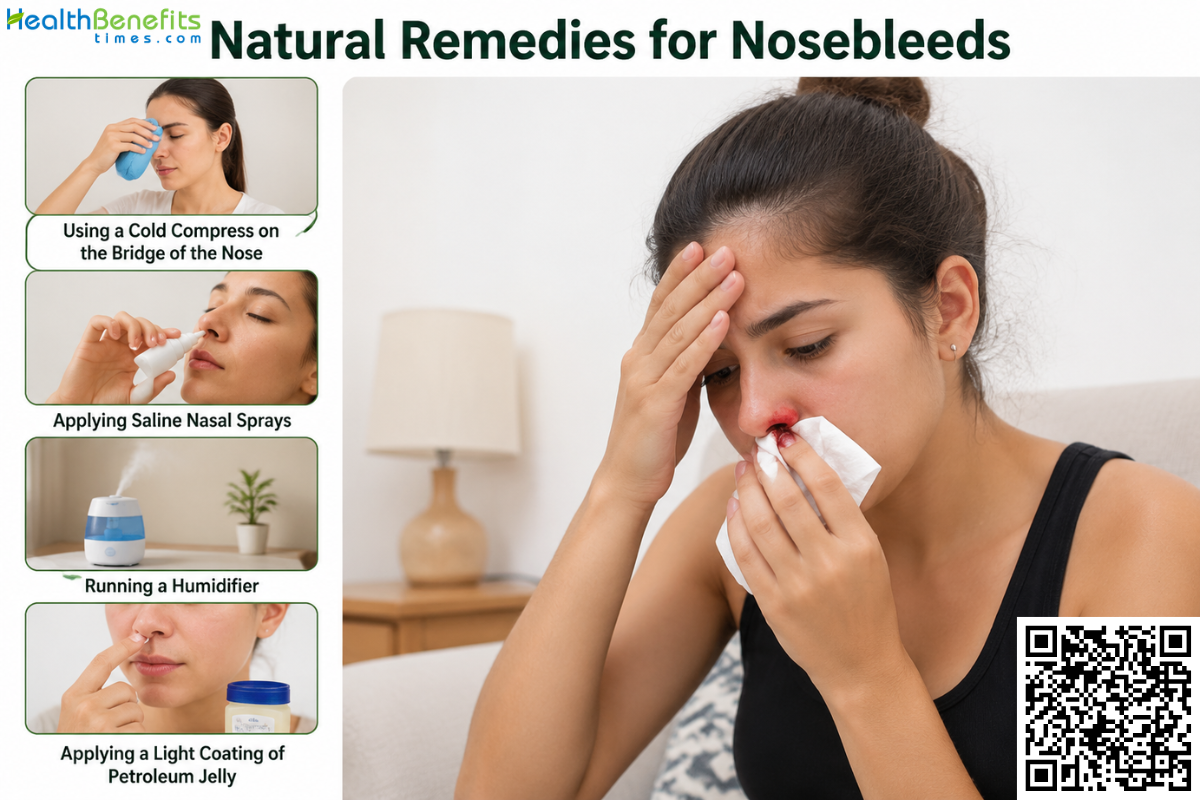
Causes of Nosebleeds
1. Dry Air
The most frequent environmental trigger is dry air, commonly resulting from indoor heating systems or arid climates. A lack of environmental moisture dries out the delicate mucous membranes lining the nasal cavity, causing them to become crusty, stiff, and highly susceptible to cracking and bleeding 3.
2. Direct Trauma
Minor physical injuries, particularly nose picking or aggressive scratching, frequently cause bleeding. This action is the leading cause of nosebleeds in children, as it directly tears the fragile blood vessels located at the front of the nasal septum 1.
3. Inflammation from Illness or Allergies
Upper respiratory infections, such as the common cold, sinusitis, and seasonal allergies, cause significant inflammation inside the nasal passages. This tissue swelling, combined with the forceful and frequent nose-blowing that usually accompanies these illnesses, weakens the blood vessels and leads to ruptures 2.
4. Blood-Thinning Medications
Drugs designed to prevent blood clots, including aspirin, warfarin, and other prescription thinners, can increase the severity of nosebleeds. While these medications may not spontaneously cause the blood vessels to break, they interfere with the body’s natural ability to form a clot, turning a minor internal scratch into a prolonged bleeding episode 4.
5. Underlying Medical Conditions
Certain systemic health issues, such as inherited blood clotting disorders or severe high blood pressure (hypertension), can complicate nasal bleeding. While high blood pressure rarely starts a nosebleed on its own, it can significantly prolong the duration of the bleeding and make it much heavier once a vessel is broken 5.
Symptoms of Nosebleeds
- Visible Bleeding from the Nostrils: The primary and most obvious sign is a steady stream or trickling of dark or bright red blood from the nose. In the vast majority of cases, the bleeding exits through only one nostril, though extremely heavy bleeding can overflow and affect both nasal passages 3.
- Blood Draining Down the Throat: If a blood vessel breaks deep inside the nasal cavity—known as a posterior nosebleed—the blood often flows backward rather than out the front of the nose. This creates a distinct, constant sensation of liquid trickling down the back of the throat and into the airway 1.
- Nausea and Vomiting: When blood drains down the back of the throat, it is frequently swallowed and enters the digestive system. Because human blood is highly irritating to the stomach lining, swallowing significant amounts typically triggers severe nausea and can cause the person to vomit dark, clotted blood 2.
- Dizziness and Lightheadedness: While rare in everyday occurrences, a severe and prolonged nosebleed can lead to substantial blood loss. This sudden drop in blood volume reduces the oxygen supply to the brain, causing secondary symptoms such as dizziness, generalized weakness, confusion, or fainting, which require immediate emergency medical care 1.
Natural Remedies for Nosebleeds
1. Applying Direct Pressure to the Soft Part of the Nose
How it may help
Applying physical pressure compresses the ruptured blood vessels against the firm cartilage of the nasal septum. This mechanical force stops the active flow of blood, allowing the body’s natural platelets to gather and form a stable clot over the injury to seal the leak 1.
What research says
Clinical protocols identify continuous compression of the lower third of the nose as the standard first-line treatment for anterior nosebleeds. Medical guidelines state this pressure must be maintained uninterrupted for 10 to 15 minutes to successfully achieve blood coagulation 1.
How to use it safely
Sit upright and lean your head slightly forward. Using your thumb and index finger, firmly pinch the soft, fleshy part of your nose below the bony bridge. Breathe through your mouth and hold the pressure continuously for 15 minutes without releasing it to check 3.
Potential precautions or side effects
Never tilt your head backward or lie flat. This forces blood to drain backward into your throat, which can trigger coughing, airway irritation, severe nausea, and vomiting 3.
2. Leaning Forward
How it may help
Gravity dictates blood flow. Leaning forward ensures blood exits through the front of the nose rather than draining backward down the throat. This simple positional adjustment prevents blood from entering the airway or the stomach, avoiding potential choking hazards and severe stomach irritation.
What research says
Clinical guidelines consistently dictate a forward-leaning posture during nosebleed management. Medical consensus demonstrates that this position prevents blood from draining into the throat, significantly reducing the risks of inhaling blood into the lungs or experiencing severe nausea and vomiting caused by swallowing blood 1.
How to use it safely
Sit upright in a chair to maintain your balance. Keep your back straight and tilt your head slightly forward. While pinching your nose, breathe through your mouth. Allow any draining blood to empty into a tissue or bowl held directly in front of you 3.
Potential precautions or side effects
Do not bend over entirely or place your head between your knees. This extreme position increases blood pressure inside your head and can make the bleeding worse 1.
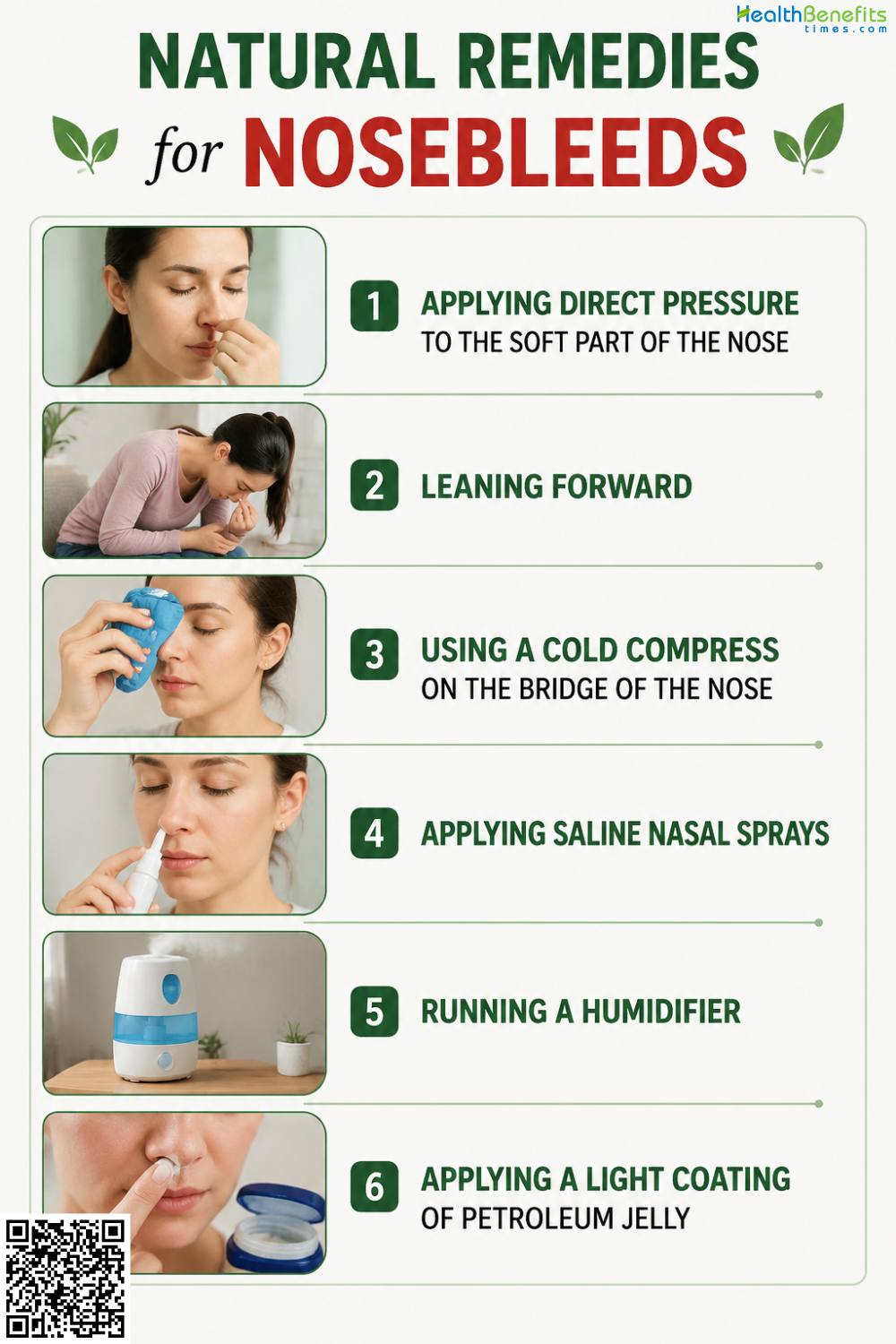
3. Using a Cold Compress on the Bridge of the Nose
How it may help
Exposure to cold temperatures causes blood vessels to quickly narrow. Applying a cold compress reduces the volume of blood flowing to the nasal cavity, which relieves pressure on the broken vessel and helps a stable clot form much faster 1.
What research says
Clinical evidence confirms that localized cold therapy effectively induces reflex vasoconstriction in the nasal passages. Studies demonstrate that applying ice packs significantly reduces blood flow to the nasal lining, making it a valuable secondary treatment to support direct pressure 4.
How to use it safely
Wrap a small ice pack or frozen vegetables in a clean cloth. Hold the wrapped compress against the bony bridge of your nose while you continue to actively pinch the soft lower section 3.
Potential precautions or side effects
Applying bare ice directly to the face can cause severe skin damage or frostbite. Limit application to 15 minutes at a time to prevent tissue injury 3.
4. Applying Saline Nasal Sprays
How it may help
Saline nasal sprays introduce gentle, continuous moisture directly into the nasal passages. By keeping the delicate tissue lining adequately hydrated, these sprays prevent the formation of hard, dry crusts that frequently crack the underlying skin and trigger bleeding.
What research says
Medical guidelines recommend the routine application of topical saline to prevent recurrent nosebleeds, particularly in dry environments. Clinical evidence confirms that maintaining hydration with saline solutions significantly decreases the frequency of bleeding episodes by protecting the structural integrity of fragile nasal tissues 1.
How to use it safely
Purchase a sterile, unmedicated saline nasal spray. Gently place the tip just inside your nostril, pointing it slightly outward away from the center wall. Apply one to two sprays per nostril daily, avoiding deep insertion to prevent accidental scratching 3.
Potential precautions or side effects
Strictly use plain, unmedicated saline. Avoid medicated decongestant sprays, which can cause severe rebound dryness and worsen bleeding with prolonged use 3.
5. Running a Humidifier
How it may help
A humidifier adds moisture to dry indoor air, which prevents the delicate lining inside the nasal cavities from drying out and cracking 6. By keeping the tiny blood vessels in the nose hydrated and protected, humidifiers reduce the irritation that frequently triggers nosebleeds 7.
What research says
Clinical guidelines state that maintaining adequate environmental humidity effectively reduces the frequency and severity of recurrent nosebleeds 7. Medical research confirms that utilizing a humidifier successfully prevents dryness of the nasal lining, which otherwise leaves blood vessels highly susceptible to breaking 8.
How to use it safely
Place a cool-mist humidifier in your bedroom at night to keep the air moist while you sleep 9. You must clean the unit regularly to prevent harmful germs and mold from growing inside the water tank 10.
Potential precautions or side effects
If you do not clean the machine properly, it can release mold or bacteria into the air, potentially causing breathing problems or illness 10.
6. Applying a Light Coating of Petroleum Jelly
How it may help
Petroleum jelly acts as a protective barrier that seals moisture into the lining of the nasal passages. This prevents delicate tissues from drying out and forming crusts, which protects the fragile blood vessels inside the nose from breaking and bleeding 11.
What research says
Medical guidelines recommend applying nasal emollients, such as petroleum jelly, to prevent recurrent bleeding 11. Clinical evaluations demonstrate that hydrating the nasal mucosa with ointments successfully resolves chronic nosebleeds in most patients by preventing the excessive dryness that makes tissues prone to injury 7.
How to use it safely
Apply a very small amount of petroleum jelly to the tip of a cotton swab. Gently wipe the ointment just inside the opening of your nostrils. Do not push the swab deeply into your nasal cavity, and repeat this only once or twice daily.
Potential precautions or side effects
Avoid using large amounts or pushing the jelly deep into your nose. Inhaling fat-based substances over long periods can cause a rare lung inflammation called lipoid pneumonia 12.
Foods to Avoid When You suffer from Nosebleeds
1. Alcohol
Alcohol widens nasal blood vessels and prevents blood cells from sticking together properly. This interference significantly increases both the frequency and severity of nosebleeds 13.
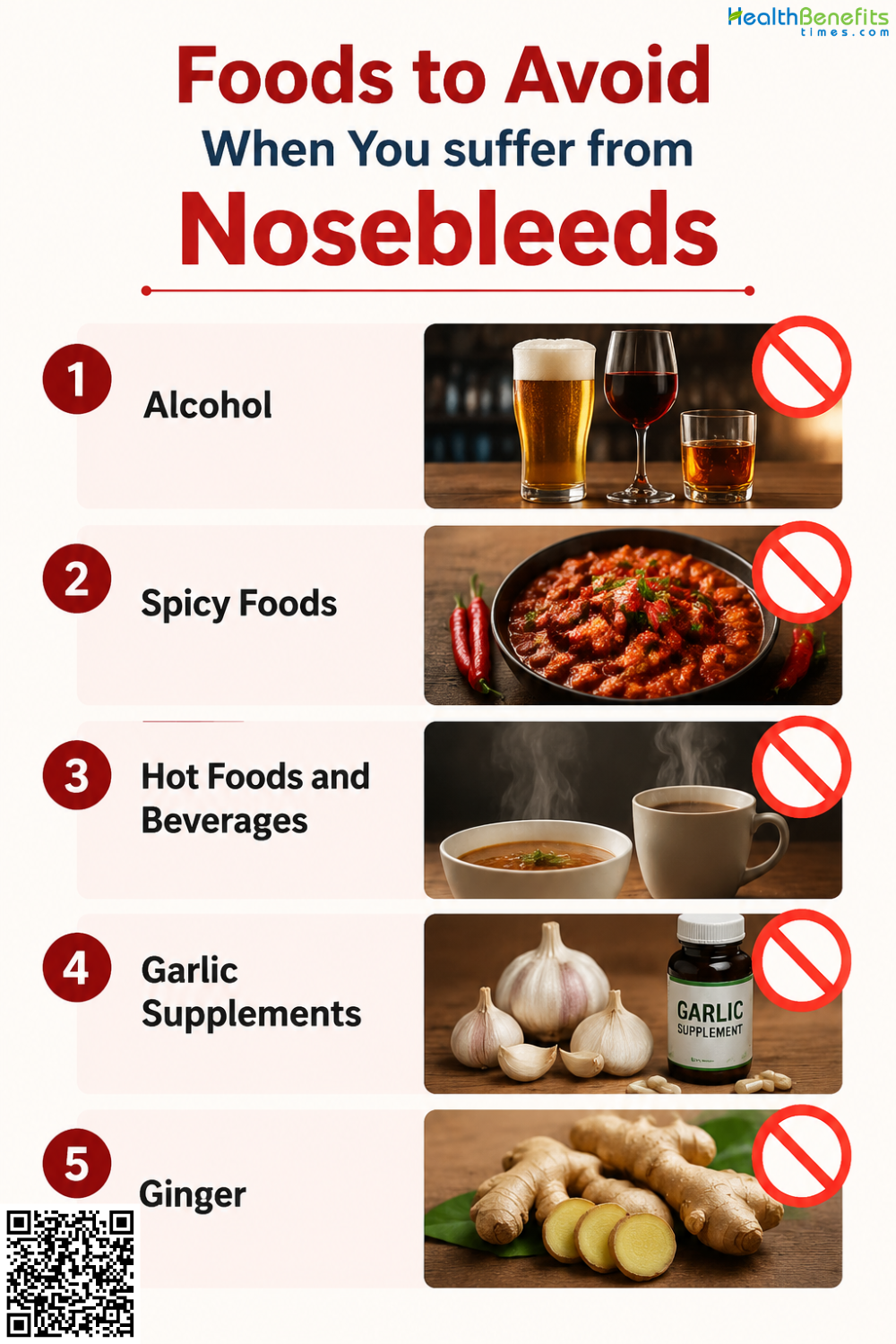
2. Spicy Foods
Eating highly spiced meals increases blood flow and causes sudden nasal congestion, which expands delicate blood vessels and makes them more likely to bleed 14.
3. Hot Foods and Beverages
Medical guidelines advise avoiding steaming hot meals and drinks because elevated temperatures cause the fragile blood vessels inside the nose to expand, making them prone to bursting 1.
4. Garlic Supplements
While normal food amounts are safe, highly concentrated garlic supplements stop blood cells from clumping together, which prevents normal clotting and prolongs active bleeding 15.
5. Ginger
Large amounts of ginger act as a natural blood thinner. This delays normal clotting and raises your risk of prolonged bleeding, especially if you take anticoagulant medications 15.4
When to see a Doctor when you struggle from Nosebleeds
1. Prolonged Bleeding
Seek immediate medical care if direct pressure fails to stop the bleeding after 20 minutes, as this requires clinical intervention to prevent excessive blood loss 1.
2. Heavy Blood Loss
Go to an emergency room if the bleeding is extremely heavy, causes dizziness, or forces you to swallow large amounts of blood 3.
3. Breathing Difficulties
Immediate medical evaluation is necessary if the blood flow obstructs your airway or causes any difficulty breathing normally 1.
4. Head Trauma
You must consult a physician if the nosebleed begins after a severe blow to the face or head, as it could indicate a serious fracture 3.
5. Frequent Recurrence
Schedule a medical evaluation if you experience repeated nosebleeds, as chronic occurrences require investigation to rule out underlying clotting disorders or medication side effects 11.
Comments
comments