

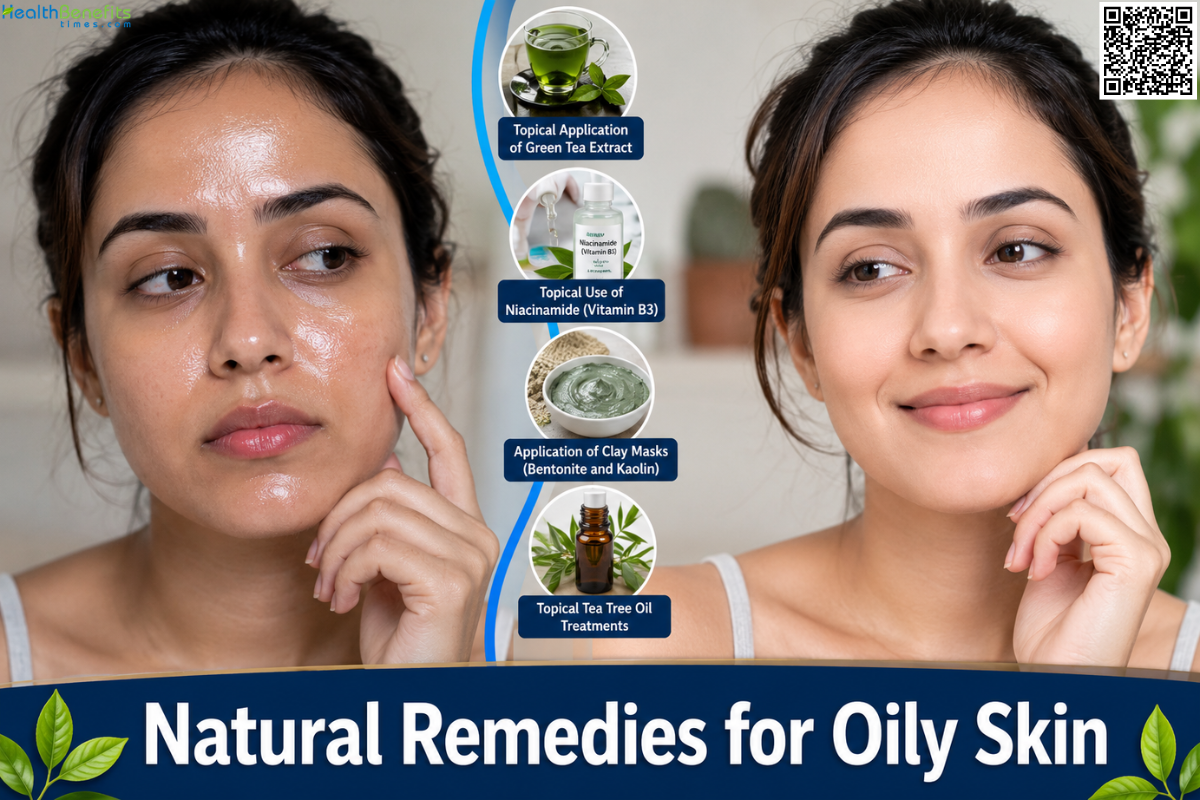
Causes of Oily Skin
1. Genetics and Heredity
A primary determinant of oily skin is a person’s genetic makeup, as hereditary factors largely dictate the natural size and baseline activity levels of the sebaceous glands 5.
2. Hormonal Fluctuations
Hormones, specifically androgens like testosterone, directly bind to receptors on the oil glands and signal them to increase sebum production; this oil-producing activity typically surges during puberty, the menstrual cycle, and pregnancy 6.
3. Age
Age significantly influences skin behavior, with natural sebum production peaking during late adolescence and the early twenties, before gradually declining as systemic hormone levels decrease later in adulthood 7.
4. Climate and Environment
External environmental conditions impact the skin’s surface, and studies demonstrate that hot, humid weather significantly increases the excretion rate of sebum and the visible appearance of facial oiliness.
5. Dietary Factors
Consuming diets high in refined carbohydrates, sugars, and dairy products can elevate blood sugar and insulin-like growth factor 1 (IGF-1) levels, which systematically triggers the skin to produce excess oil 8.
6. Psychological Stress
Chronic emotional or psychological stress leads the body to release specific stress hormones, such as corticotropin-releasing hormone (CRH), which can directly overstimulate the sebaceous glands and increase overall skin oiliness 9.
Symptoms of Oily Skin
1. Shiny or Greasy Appearance
The most visible indicator of overactive sebaceous glands is a persistent shiny, greasy, or wet appearance on the skin’s surface, particularly concentrated across the T-zone, which encompasses the forehead, nose, and chin.
2. Enlarged and Visible Pores
As excess oil flows through the hair follicles to reach the skin’s surface, it physically expands the follicle openings, resulting in prominently enlarged and easily visible pores, especially on the nose and central cheeks 10.
3. Frequent Acne Breakouts
The heavy accumulation of surface oil easily traps shed, dead skin cells and environmental debris, leading to blocked follicles that frequently manifest as blackheads, whiteheads, and inflamed pimples.
4. Thickened or Coarse Skin Texture
Chronically oily skin often exhibits a noticeable change in texture, appearing thicker, rougher, or slightly uneven due to the simultaneous overgrowth of the outermost layer of the skin alongside high oil production.
5. Poor Cosmetic Adhesion
A practical, daily symptom of high sebum output is the rapid degradation of topical products; the continuous flow of oil physically breaks down makeup, sunscreens, and lotions, making it difficult for them to stay adhered to the face throughout the day.
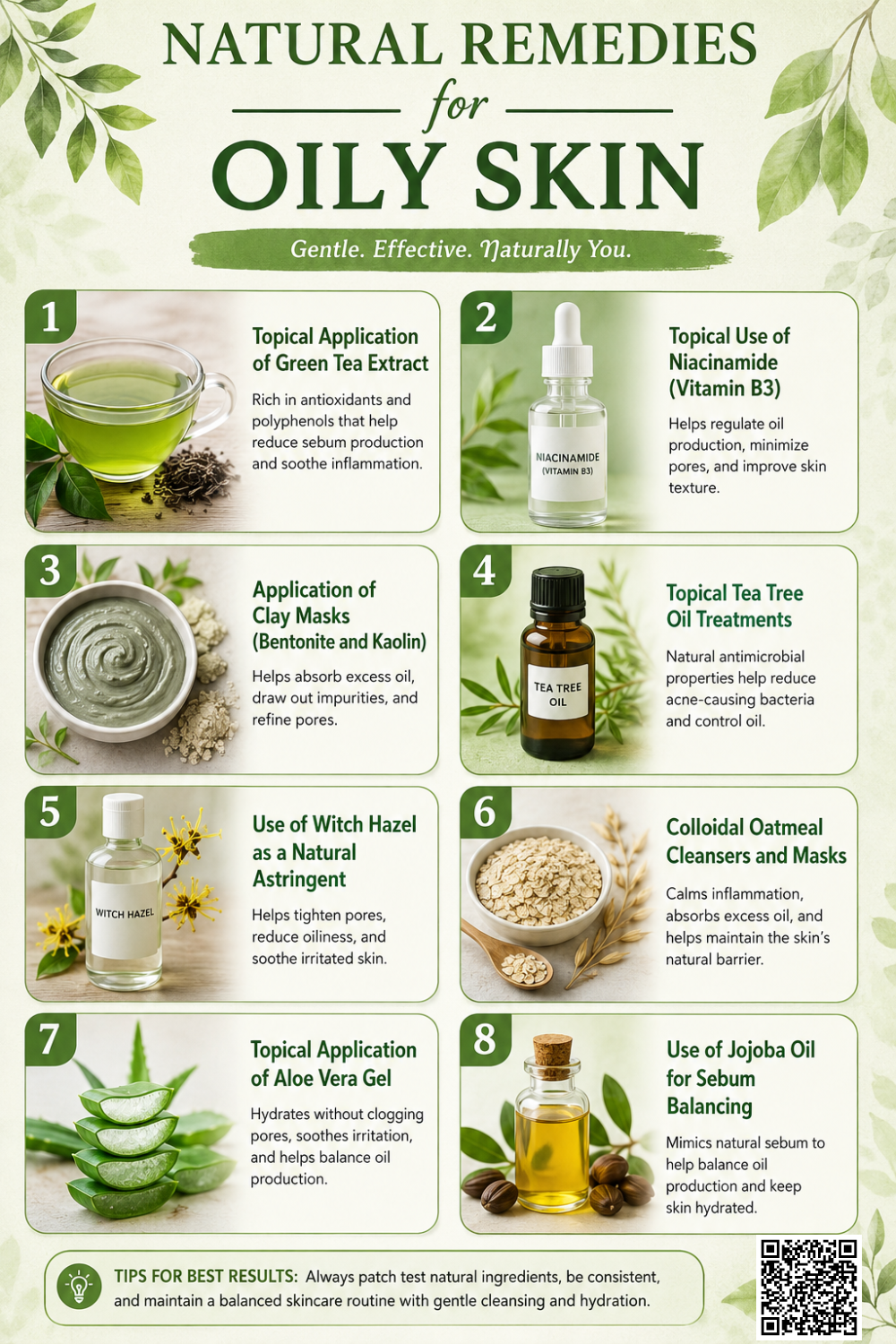
1. Topical Application of Green Tea Extract
How it may help
Green tea extract contains active plant compounds called polyphenols, specifically epigallocatechin-3-gallate (EGCG). When applied directly to the skin, EGCG blocks the hormones that trigger oil glands to enlarge and produce excess sebum, effectively reducing overall facial oiliness 11.
What research says
Clinical studies demonstrate that using a topical formulation containing 3% green tea extract for eight weeks significantly decreases facial sebum production 12. Researchers conclude that green tea is a highly effective treatment for managing excessive skin oil without disrupting the skin’s natural moisture barrier.
How to use it safely
To manage oily skin, incorporate a lotion or serum containing a 2% to 3% concentration of green tea extract into your routine. Apply it to a freshly cleansed, dry face once or twice daily, and always follow up with sunscreen during daylight hours.
Potential precautions or side effects
Green tea extract is generally safe but may occasionally cause mild redness or allergic reactions. Perform a patch test on a small skin area before full facial application.
2. Topical Use of Niacinamide (Vitamin B3)
How it may help
Niacinamide, an active, water-soluble form of vitamin B3, helps control oily skin by directly slowing the rate at which sebaceous glands secrete oil 13. By decreasing the total amount of sebum that reaches the skin’s surface, it effectively reduces visible facial shine and minimizes the appearance of enlarged pores.
What research says
Clinical trials demonstrate that applying a topical 2% niacinamide formulation for two to four weeks significantly lowers both the sebum excretion rate and overall facial oiliness. Researchers conclude that niacinamide effectively modulates natural internal sebum production, rather than simply absorbing excess surface oil after it is produced.
How to use it safely
To manage excess oil, apply a daily serum or lightweight moisturizer containing a 2% to 5% concentration of niacinamide to a clean, dry face. You can safely use it once or twice a day, ensuring you allow it to fully absorb before applying your daily sunscreen or makeup.
Potential precautions or side effects
Niacinamide is generally well-tolerated, but high concentrations may occasionally cause mild redness or irritation. Always perform a patch test on a small area before applying it to your entire face.
3. Application of Clay Masks (Bentonite and Kaolin)
How it may help
Natural clays like bentonite and kaolin possess highly porous structures that act like a sponge on the skin. When applied, they physically absorb excess surface sebum, draw out trapped debris from pores, and immediately reduce facial shine without permanently altering the underlying oil glands 14.
What research says
Clinical reviews indicate that medicinal clays effectively bind to skin oils and impurities, significantly lowering surface sebum levels upon removal. Researchers conclude that regular application of these clays successfully manages oily skin symptoms and helps clear clogged pores, which reduces the likelihood of acne breakouts.
How to use it safely
To manage excess oil, apply a thin, even layer of a clay mask to your clean face once or twice a week. Let it sit for ten to fifteen minutes, then gently rinse it off with warm water right before it completely hardens and cracks.
Potential precautions or side effects
Using clay masks too frequently or leaving them on until completely dry can strip the skin, causing redness, irritation, or rebound oil production to compensate for severe dryness.
4. Topical Tea Tree Oil Treatments
How it may help
Tea tree oil contains terpinen-4-ol, a natural compound with strong antimicrobial and anti-inflammatory properties. While it does not stop the glands from producing oil, it effectively eliminates the acne-causing bacteria that thrive in oily skin and reduces the swelling associated with clogged pores 15.
What research says
Clinical studies show that applying a 5% tea tree oil formulation significantly reduces both the number and severity of acne breakouts common in oily skin. Researchers conclude it is an effective, well-tolerated treatment that manages symptoms and clears pores without causing excessive surface peeling.
How to use it safely
Never apply pure essential tea tree oil directly to your face. Always dilute it by mixing one or two drops into a gentle moisturizer or a carrier oil, such as jojoba oil. Apply this properly diluted mixture to the affected oily areas once a day.
Potential precautions or side effects
Undiluted tea tree oil is highly concentrated and can cause severe irritation, burning, and allergic contact dermatitis. Always perform a patch test on your arm before facial application.
5. Use of Witch Hazel as a Natural Astringent
How it may help
Witch hazel contains high concentrations of natural plant compounds called tannins, which act as powerful astringents. When applied to the skin, these tannins temporarily shrink the appearance of pores and rapidly absorb excess surface oil, removing immediate greasiness while soothing underlying inflammation associated with breakouts 16.
What research says
Clinical reviews indicate that the specific tannins found in witch hazel effectively clear away superficial sebum and exert significant anti-inflammatory effects on human skin cells. Researchers conclude that its potent astringent properties make it a viable botanical treatment for safely managing excessive facial oiliness and irritated skin 17.
How to use it safely
To manage oily zones, gently swipe an alcohol-free witch hazel toner over your freshly washed face using a cotton pad. Apply it only once a day to avoid over-drying, focusing specifically on naturally greasy areas like your forehead, nose, and chin.
Potential precautions or side effects
Strictly avoid witch hazel formulas containing alcohol, as these can severely strip the skin’s moisture barrier, cause irritation, and ultimately trigger your glands to produce even more rebound oil.
6. Colloidal Oatmeal Cleansers and Masks
How it may help
Colloidal oatmeal contains natural cleansing compounds known as saponins, which gently dissolve and lift away dirt and excess surface oil. Additionally, its high starch content allows it to physically absorb greasy sebum while simultaneously soothing inflamed, acne-prone skin without stripping away essential moisture 18.
What research says
Clinical evaluations demonstrate that finely ground colloidal oatmeal effectively cleanses the skin and restores the natural moisture barrier, confirming its status as an FDA-approved skin protectant 19. Researchers conclude its active compounds, particularly avenanthramides, significantly reduce skin inflammation and successfully manage oil-related irritation without causing excessive dryness 20.
How to use it safely
Mix plain, unflavored colloidal oatmeal powder with warm water to form a thick paste. Apply this directly to your face as a mask for ten to fifteen minutes, then rinse thoroughly. Alternatively, you can use a daily commercial cleanser that features colloidal oatmeal as a primary ingredient.
Potential precautions or side effects
Colloidal oatmeal is exceptionally safe for most individuals. However, those with diagnosed oat allergies or severe gluten sensitivities should avoid it to prevent localized allergic skin reactions.
7. Topical Application of Aloe Vera Gel
How it may help
Aloe vera gel functions as a lightweight, non-greasy moisturizer that hydrates the skin without clogging pores. Because dehydrated skin often triggers sebaceous glands to overproduce oil as a defense mechanism, maintaining proper hydration with aloe vera helps balance natural sebum production and prevents excessive facial greasiness 21.
What research says
Clinical research confirms that aloe vera acts as a natural astringent, helping to tighten pores and absorb superficial excess oil. Furthermore, studies highlight its potent anti-inflammatory and antibacterial properties, which effectively soothe irritated skin and reduce the severity of acne breakouts common in oily skin types 22.
How to use it safely
Apply a thin layer of pure, fragrance-free aloe vera gel directly to your clean face before bedtime or beneath your daily sunscreen. You can safely use it as a daily moisturizer to keep your skin hydrated without adding heavy oils that exacerbate shine.
Potential precautions or side effects
While generally safe, some individuals may experience mild allergic contact dermatitis. Always perform a small patch test on your arm before applying aloe vera to your entire face.
8. Use of Jojoba Oil for Sebum Balancing
How it may help
Jojoba oil is fundamentally a liquid wax ester that closely mimics the molecular structure of human sebum. When applied, it signals the sebaceous glands that sufficient surface oil is already present, which naturally slows down excess sebum production and reduces overall facial greasiness without clogging pores 23.
What research says
Clinical reviews confirm that jojoba oil exhibits significant anti-inflammatory effects and effectively repairs compromised skin barriers. Furthermore, dermatological research demonstrates that its unique sebum-mimicking properties help regulate natural oil output and significantly reduce acne lesions in individuals struggling with chronically oily and blemish-prone skin 24.
How to use it safely
To safely balance oil production, apply two to three drops of pure, unrefined jojoba oil to your freshly cleansed, slightly damp face. Gently press the oil into your skin rather than rubbing it. You can use it daily as a lightweight moisturizer or mix it with your regular lotion.
Potential precautions or side effects
Jojoba oil is highly well-tolerated and non-comedogenic. However, rare allergic reactions may occur. Always perform a patch test on a small skin area before full facial application.
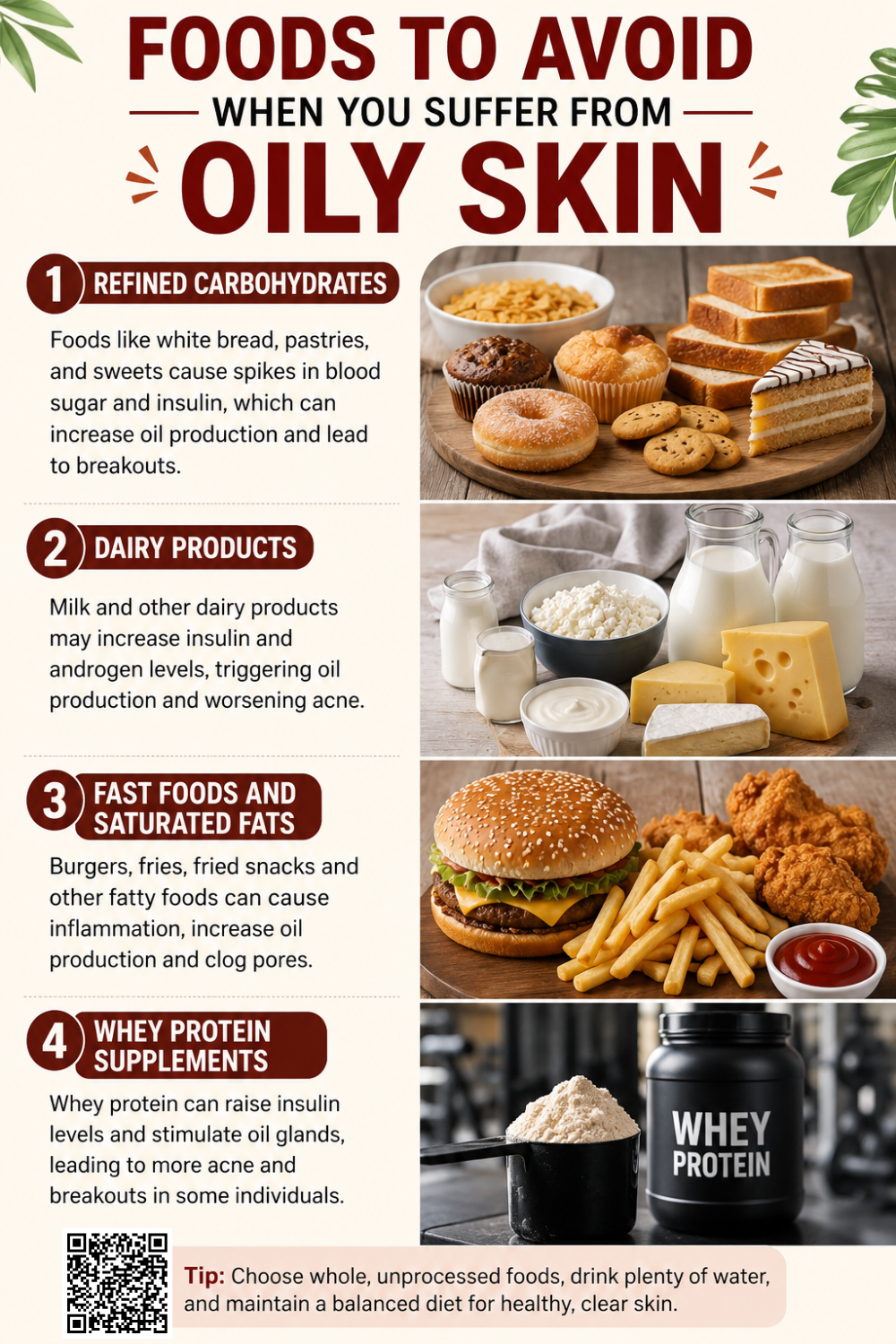
1. Refined Carbohydrates
Foods like white bread and sugary snacks spike blood sugar and insulin levels, which significantly increases sebum production and worsens oily skin symptoms.
2. Dairy Products
Cow’s milk, particularly skim milk, contains hormones and insulin-like growth factors (IGF-1) that directly stimulate sebaceous glands to overproduce facial oil 25.
3. Fast Foods and Saturated Fats
High consumption of fried foods and saturated fats promotes systemic inflammation and alters natural hormonal balance, leading to a measurable increase in skin oiliness 26.
4. Whey Protein Supplements
Rich in specific amino acids, whey protein rapidly elevates insulin and IGF-1 levels, which strongly triggers the sebaceous glands to secrete excess sebum 27.
When To See a Doctor When You Suffer From Oily Skin
1. Severe or Cystic Breakouts
Seek a dermatologist if oily skin triggers deep, painful cysts or widespread acne that completely fails to improve with standard over-the-counter treatments 28.
2. Sudden or Extreme Changes
Consult a doctor if facial oil production increases suddenly and severely, as this may indicate an underlying endocrine disorder like polycystic ovary syndrome 29.
3. Development of Permanent Scarring
Immediate medical intervention is necessary if oil-induced breakouts begin leaving deep indentations, pitted scars, or permanent dark marks on the skin surface 30.
4. Signs of Skin Infection
Seek medical care if clogged pores become unusually hot, heavily swollen, or begin draining pus, which indicates a secondary bacterial infection requiring prescription antibiotics 31.
5. Significant Psychological Distress
Medical evaluation is recommended when oily skin and resulting acne cause severe anxiety, depression, or profound social withdrawal affecting daily life 32.
Comments
comments