

Causes of Photophobia and Light Sensitivity
1. Migraine and Headache Disorders
Migraines are the most frequent neurological condition associated with light sensitivity. During a migraine attack, the brain pathways that process pain and visual signals become hypersensitive. Individuals with migraines often experience physical eye pain when exposed to standard light levels, and this heightened sensitivity frequently persists even between active headache episodes 4.
2. Dry Eye Syndrome
Dry eye is the most common eye-related cause of photophobia. When the eyes fail to produce sufficient tears or when tears evaporate too rapidly, the protective outer layer of the eye becomes chronically dry and irritated. This ongoing irritation sensitizes the nerves on the surface of the eye, creating a continuous pain response that the brain interprets as an intolerance to light 5.
3. Traumatic Brain Injury and Concussions
Individuals who sustain physical head trauma frequently develop photophobia as a lasting symptom. A traumatic brain injury or concussion can disrupt the internal neural networks that transmit sensory information from the eyes to the brain, resulting in a hypersensitive and painful neurological reaction to normal indoor and outdoor lighting 6.
4. Eye Inflammation and Surface Damage
Internal inflammatory conditions of the eye, such as uveitis or iritis, cause severe light aversion. Furthermore, any direct physical injury to the clear front surface of the eye, including corneal scratches or infections, strips away protective tissue and exposes deep nerve endings. This damage directly irritates major facial nerves, immediately triggering a sharp pain reaction whenever light enters the pupil.
5. Meningitis and Central Nervous System Inflammation
Severe infections or sudden bleeding in the tissues surrounding the brain and spinal cord frequently result in intense photophobia. This profound swelling irritates the sensitive protective membranes that envelop the brain. Because these membranes share underlying pain-signaling pathways with the visual system, the localized brain inflammation translates directly into severe visual discomfort upon light exposure.
Symptoms of Photophobia and Light Sensitivity
1. Eye Pain and Discomfort
Exposure to everyday indoor or outdoor lighting triggers an immediate sensation of pain within the eye. This discomfort is often described as a deep ache or a sharp, stabbing feeling that persists as long as the light source is present.
2. Involuntary Squinting and Blinking
A core physical reaction to light sensitivity is the uncontrollable urge to squint, blink rapidly, or completely shut the eyes. This automatic reflex serves as the body’s attempt to reduce the amount of light entering the pupil and reaching the highly sensitive retina.
3. Excessive Tearing
When irritated by light, the eyes frequently react by overproducing tears. This reflex causes the eyes to become unusually watery, similar to the body’s reaction when a foreign object is trapped on the surface of the eye.
4. Headache Onset and Worsening Migraines
Because visual nerves are directly linked to the pain centers in the brain, bright light can rapidly trigger severe headaches. For individuals who already suffer from migraines, exposure to light frequently amplifies the throbbing pain and extends the duration of the headache attack.
5. Burning and Gritty Sensations
Many individuals experience a harsh burning, stinging, or scratching feeling on the clear surface of the eye when moving into brightly lit environments. This constant irritation closely mimics the physical feeling of extreme dryness or having sand caught beneath the eyelid.
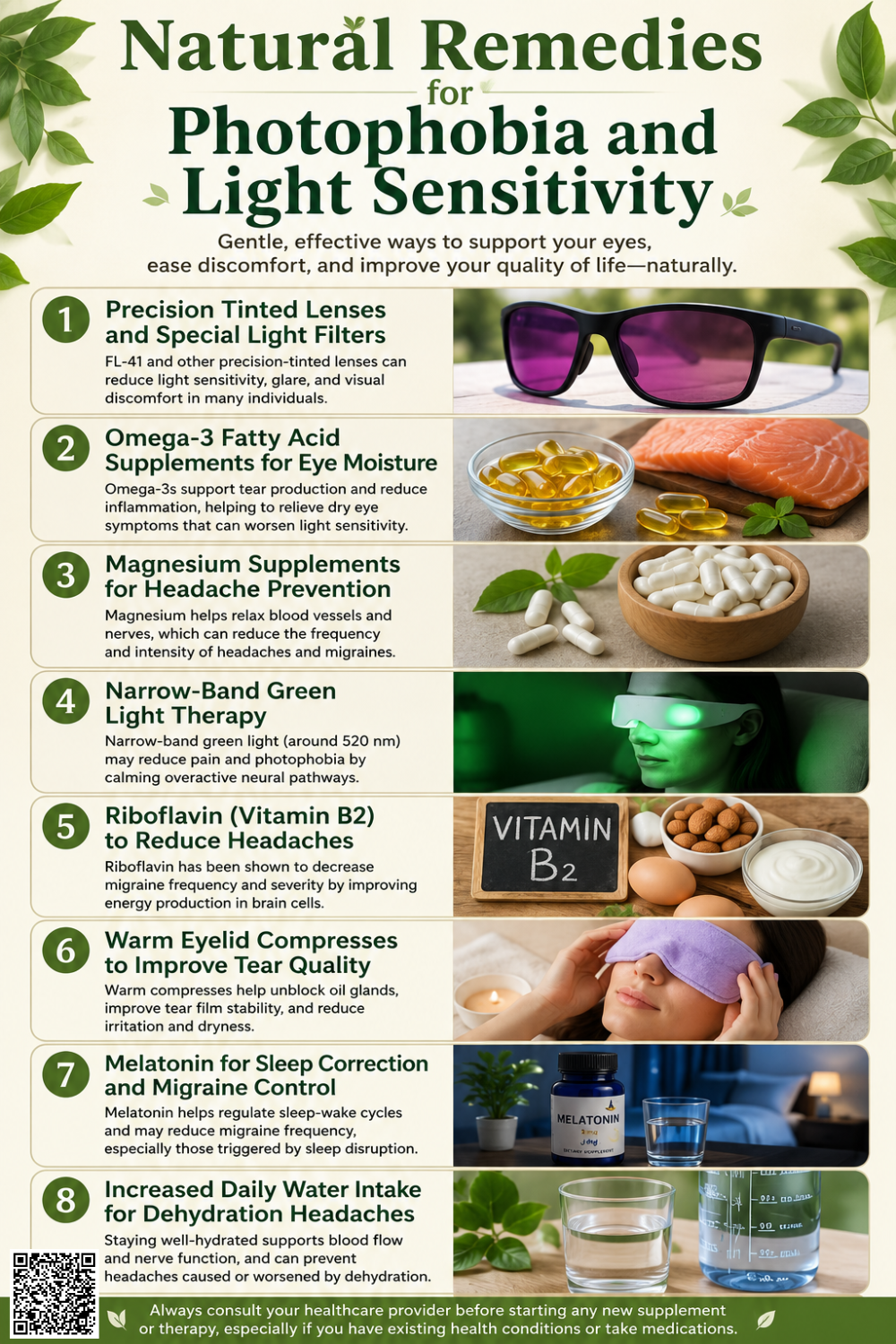
1. Precision Tinted Lenses and Special Light Filters
How It May Help
Precision tinted lenses, specifically those utilizing an FL-41 tint, help control photophobia by selectively blocking specific wavelengths of high-energy blue and green light. These specific frequencies are known to trigger the overstimulation of sensitive visual and pain pathways in the brain. By reducing this painful optical glare, the lenses alleviate continuous eye strain and decrease discomfort in brightly lit environments 7.
What Research Says
Clinical studies confirm that specialized optical filters provide therapeutic relief for light aversion. Research demonstrates that FL-41 lenses significantly reduce the frequency, duration, and severity of light-induced migraines. Furthermore, peer-reviewed medical data shows these filters successfully lower light sensitivity in individuals recovering from traumatic brain injuries and concussions.
How to Use It Safely
You should wear these specialized glasses during exposure to fluorescent lighting, computer screens, or bright sunlight. To maintain visual safety, ensure your lenses are prescribed and precisely calibrated by an eye care professional. Avoid wearing darkly tinted sunglasses indoors long-term, as this can inadvertently adapt your brain to darkness and worsen your light sensitivity.
Potential Precautions or Side Effects
Improper indoor use of excessively dark sunglasses can trigger dark adaptation, making the eyes more sensitive to light over time. Additionally, some users may notice minor, temporary changes in color perception while wearing specific optical tints.
2. Omega-3 Fatty Acid Supplements for Eye Moisture
How It May Help
Omega-3 fatty acids reduce inflammation and improve the function of eyelid glands that produce the oily layer of tears. By preventing tears from evaporating too quickly, these supplements maintain a stable moisture barrier on the eye. This lubrication soothes exposed nerve endings, directly reducing the irritation that triggers light sensitivity 8.
What Research Says
Clinical evidence indicates that daily omega-3 supplementation significantly improves dry eye symptoms, which is a major underlying cause of light intolerance. Studies demonstrate that regular use increases tear production and heals surface damage on the eye, leading to a measurable decrease in photophobia and overall visual discomfort.
How to Use It Safely
You should consult your doctor to determine the appropriate dosage for your specific needs. Choose a high-quality fish or algal oil supplement containing both EPA and DHA. Take the capsules alongside a full meal to maximize absorption and reduce the likelihood of experiencing an upset stomach.
Potential Precautions or Side Effects
High doses can thin the blood, increasing bleeding risks for individuals taking anticoagulant medications 9. Minor side effects frequently include a fishy aftertaste, bad breath, and mild indigestion.
3. Magnesium Supplements for Headache Prevention
How It May Help
Magnesium stabilizes hyperactive nerve pathways in the brain. When magnesium levels drop, the brain becomes highly excitable, triggering a wave of neurological irritation that directly causes severe migraines and extreme light sensitivity. Taking a daily supplement prevents this nervous system overreaction, stopping the headache and photophobia before they start 10.
What Research Says
Clinical reviews confirm that magnesium supplementation safely and effectively prevents chronic migraines and alleviates associated photophobia. Evidence demonstrates that restoring magnesium levels stops the abnormal electrical brain activity that triggers light sensitivity and head pain. Regular use significantly reduces both the frequency and severity of attacks 11.
How to Use It Safely
Take an oral magnesium supplement daily as a preventive measure, rather than waiting for a headache to begin. Always consult your doctor to determine the safest daily dosage for your body, as the ideal amount varies based on individual dietary habits and medical history.
Potential Precautions or Side Effects
Common side effects include diarrhea and abdominal cramping. If you have kidney disease, avoid high doses to prevent dangerous toxic buildup in your bloodstream.
4. Narrow-Band Green Light Therapy
How It May Help
Narrow-band green light therapy helps control photophobia by selectively activating specific visual pathways that generate much smaller electrical signals in the brain. Unlike blue or white light, which trigger neurological irritation, pure green light increases natural pain-relieving chemicals in the nervous system, reducing intense eye pain 12.
What Research Says
Clinical studies show that viewing narrow-band green light significantly decreases the intensity of photophobia and chronic migraines. Research demonstrates that daily exposure to these specific green wavelengths for one to two hours directly reduces the frequency of headache attacks and fundamentally alters how the central nervous system processes pain 13.
How to Use It Safely
You should use a specialized medical lamp that only emits pure, narrow-band green light in a completely dark room. Sit in the ambient green illumination for one to two hours daily while relaxing or reading. Keep your eyes open, but never stare directly into the light bulb.
Potential Precautions or Side Effects
This therapy is highly safe and non-invasive. However, using standard green-tinted bulbs that still emit hidden blue or white light frequencies can accidentally worsen your pain instead of treating it.
5. Riboflavin (Vitamin B2) to Reduce Headaches
How It May Help
Riboflavin improves essential energy production within the brain’s cells. Low levels of cellular energy can cause the nervous system to become highly unstable, leading directly to chronic migraines and severe light sensitivity. By restoring this cellular energy balance, riboflavin calms the overactive nerve pathways that trigger eye pain in bright environments.
What Research Says
Comprehensive clinical reviews confirm that high-dose riboflavin supplementation is a highly effective preventive treatment for adult migraines. Medical evidence demonstrates that regular daily use significantly decreases both the frequency and duration of severe headache attacks, which directly eliminates secondary neurological symptoms like intense photophobia 14.
How to Use It Safely
You should take an oral dose of 400 milligrams of riboflavin daily to prevent headaches, rather than using it to treat an active attack. You must take it consistently for at least three months to see full results 15. Always ask your doctor before starting supplementation.
Potential Precautions or Side Effects
Riboflavin is generally very safe because the body simply excretes any excess amounts. The most common, completely harmless side effect is bright yellow urine. Very rarely, some users experience mild diarrhea.
6. Warm Eyelid Compresses to Improve Tear Quality
How It May Help
Warm compresses apply gentle heat to the eyelids, melting thickened oils trapped within the meibomian glands. This restores the essential lipid layer of the tear film, preventing severe dry eye irritation. By keeping the sensitive ocular surface protected and moisturized, compresses directly reduce the eye nerve irritation that triggers photophobia.
What Research Says
Clinical studies confirm that applying warm, moist compresses for at least ten minutes significantly increases tear film lipid layer thickness and improves overall tear stability 16. Research demonstrates that this routine therapy effectively reduces underlying dry eye symptoms, subsequently alleviating the severe light sensitivity associated with chronic ocular inflammation 17.
How to Use It Safely
Apply a clean, moist washcloth or a self-heating eye mask over your closed eyelids for ten to fifteen minutes daily. Always test the temperature on your wrist first to ensure it is comfortably warm. Gently massage your eyelids afterward to release the softened natural oils.
Potential Precautions or Side Effects
Avoid excessively hot temperatures to prevent eyelid skin burns and temporary blurred vision. Do not use warm compresses if you have an active eye infection or acute allergic conjunctivitis.
7. Melatonin for Sleep Correction and Migraine Control
How It May Help
Melatonin is a natural hormone that regulates the sleep-wake cycle and stabilizes pain pathways in the brain. Poor sleep directly triggers chronic migraines and heightens neurological pain. By correcting sleep patterns and calming abnormal brain activity, melatonin prevents the severe headaches that directly cause extreme light sensitivity and ocular discomfort.
What Research Says
Clinical trials demonstrate that taking melatonin daily significantly reduces the frequency and intensity of migraine attacks compared to placebos 18. Because migraines frequently cause visual hypersensitivity, medical researchers confirm that controlling these underlying headaches directly eliminates the associated secondary symptom of severe photophobia 19.
How to Use It Safely
You should take an oral melatonin supplement thirty to sixty minutes before your desired bedtime to naturally support sleep onset. Start with a low dose of one to three milligrams. Always consult your healthcare provider to establish a safe dosage and ensure it avoids interactions with other daily medications.
Potential Precautions or Side Effects
Common side effects include daytime drowsiness, vivid dreams, and mild dizziness. Do not drive or operate heavy machinery after taking melatonin to prevent accidents caused by sudden sleepiness 20.
8. Increased Daily Water Intake for Dehydration Headaches
How It May Help
Dehydration causes blood volume to drop, which makes brain tissue temporarily shrink. This shrinking pulls on pain-sensitive nerves, triggering intense headaches and migraines. Because these severe headaches are a primary cause of photophobia, restoring proper fluid balance stops the head pain and directly eliminates the resulting light sensitivity.
What Research Says
Clinical studies confirm that increasing daily water intake significantly reduces the severity, duration, and frequency of migraine attacks. Research demonstrates that maintaining proper hydration prevents the underlying neurological pain caused by dehydration, which fundamentally controls secondary symptoms like severe photophobia and visual discomfort 21.
How to Use It Safely
Drink plain water consistently throughout the day rather than waiting until you feel thirsty. Aim for eight to ten glasses daily, and increase your intake during physical exercise or hot weather. You should also consume water-rich fruits and vegetables to support your overall fluid balance.
Potential Precautions or Side Effects
Drinking excessive water too rapidly can cause dangerous drops in blood sodium levels. If you have kidney disease or heart conditions, consult your doctor before drastically increasing fluid intake.
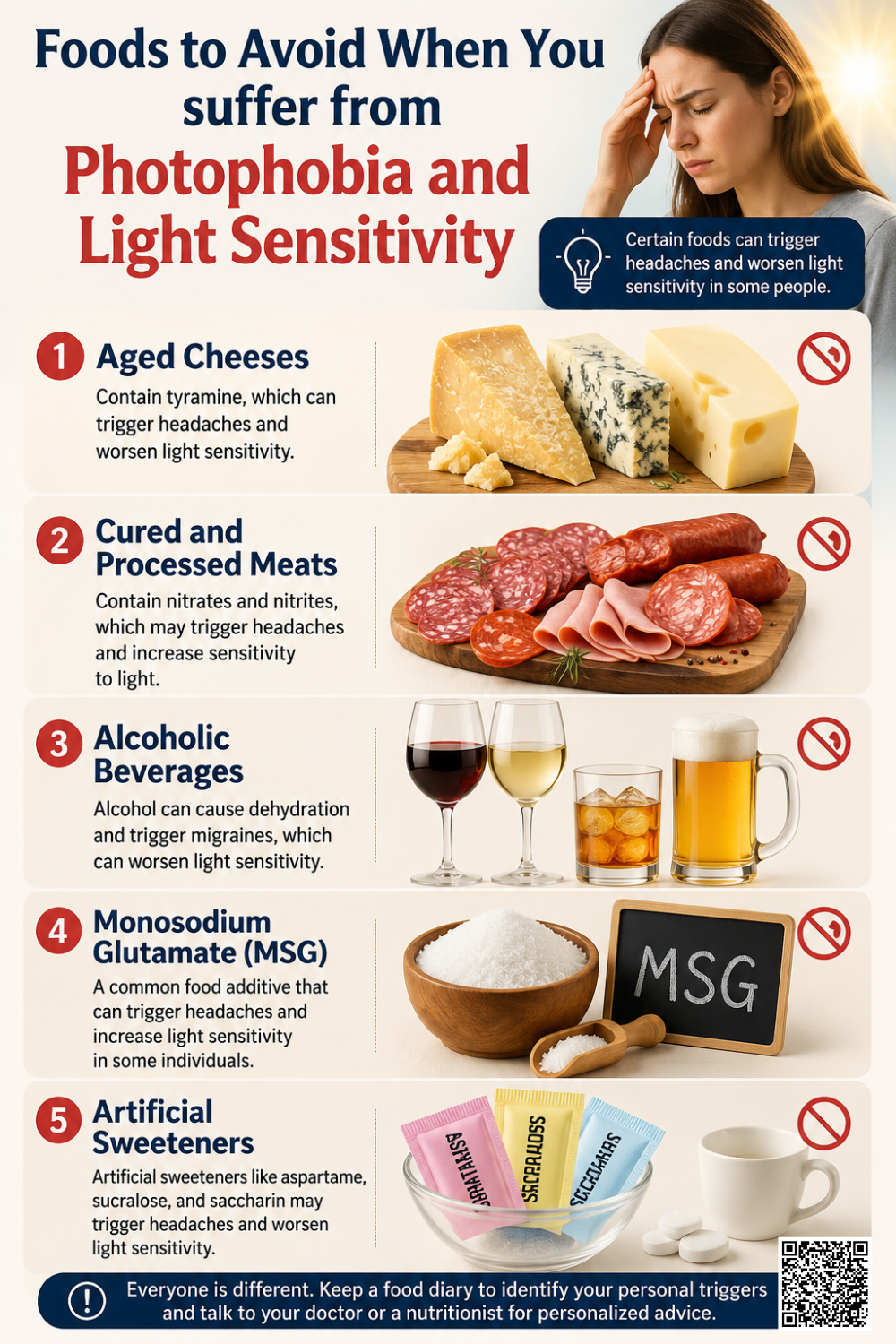
1. Aged Cheeses
Aged cheeses contain high levels of tyramine. This natural compound affects blood vessels and frequently triggers severe migraines, directly causing intense photophobia and visual discomfort 22.
2. Cured and Processed Meats
Processed meats use nitrates as preservatives. These chemicals expand blood vessels in the brain, consistently initiating migraine attacks and the associated hypersensitivity to normal lighting 23.
3. Alcoholic Beverages
Alcohol, particularly red wine, contains histamine and sulfites. These inflammatory compounds directly trigger neurovascular headaches, leading to profound light intolerance and ocular pain 24.
4. Monosodium Glutamate (MSG)
MSG is a flavor enhancer that overstimulates the nervous system. Clinical evidence identifies it as a direct dietary trigger for severe migraines and sudden light sensitivity 25.
5. Artificial Sweeteners
Artificial sweeteners like aspartame alter brain neurotransmitters. Medical studies confirm they provoke painful neurological headaches in susceptible individuals, directly worsening overall eye pain and photophobia 26.
When To See a Doctor When You Suffer from Photophobia and Light Sensitivity
1. Accompanied by Fever or Stiff Neck
Seek immediate emergency care if light sensitivity occurs with a high fever or stiff neck. These indicate meningitis, a life-threatening neurological infection requiring urgent medical intervention.
2. Sudden Vision Changes
Consult a doctor immediately if photophobia is accompanied by blurred vision or sudden vision loss. These symptoms suggest severe ocular inflammation or optic nerve damage requiring prompt treatment.
3. Following a Head Injury
Always undergo a clinical evaluation if light aversion begins after physical head trauma. This indicates a potential concussion or traumatic brain injury requiring a professional neurological assessment.
4. Severe Eye Pain or Redness
See an eye specialist if light sensitivity involves deep eye pain, severe redness, or discharge. These strongly indicate an active infection, corneal abrasion, or internal eye inflammation.
5. Lasting Longer Than Two Days
Schedule a medical appointment if unexplained light sensitivity persists for more than two days. A doctor must evaluate chronic symptoms to identify and treat the underlying medical cause.
Comments
comments