


Causes of Plantar Warts
1. Viral Infection
The fundamental cause is the human papillomavirus (HPV), specifically strains that target the thick tissue on the soles of the feet.
2. Skin Abrasions
To cause an infection, the virus must enter the skin through weak spots, tiny cuts, scrapes, or natural cracks, as it cannot penetrate completely healthy, unbroken skin.
3. Environmental Exposure
HPV thrives and survives well in warm, damp areas; consequently, walking barefoot in public places like communal showers, locker rooms, and swimming pools significantly increases the risk of viral transmission 3.
4. Indirect Contact
Because the virus can live on inanimate surfaces, it can easily spread by sharing personal items such as towels, socks, or footwear with an infected individual.
5. Immune System Vulnerability
Individuals with weakened immune systems, whether due to underlying medical conditions or immunosuppressive medications, are significantly more susceptible to developing the infection upon exposure to the virus 4.
Symptoms of Plantar Warts
1. Fleshy, Rough Lesions
The primary physical sign is a small, rough, or grainy skin growth that typically develops on weight-bearing areas of the sole, such as the heel or the ball of the foot 5.
2. Hardened Skin and Calluses
Because standing and walking exert constant pressure on the soles of the feet, the wart is forced to grow inward beneath a thick, tough layer of hardened skin (callus) that covers the lesion.
3. Dark Pinpoints (Wart Seeds)
The surface of the wart frequently exhibits tiny black or dark brown dots; while commonly called “wart seeds,” these are actually clotted capillaries (microscopic blood vessels) that have leaked into the skin.
4. Pain and Tenderness
The inward physical growth of the wart often compresses surrounding nerve endings and tissues, leading to moderate to severe pain, tenderness, or a sensation similar to walking on a small stone during daily activities.
5. Interruption of Natural Skin Lines
The structural formation of the wart distinctly alters the skin surface, causing a visible interruption or disappearance of the natural footprint lines and ridges directly over the affected area 6.
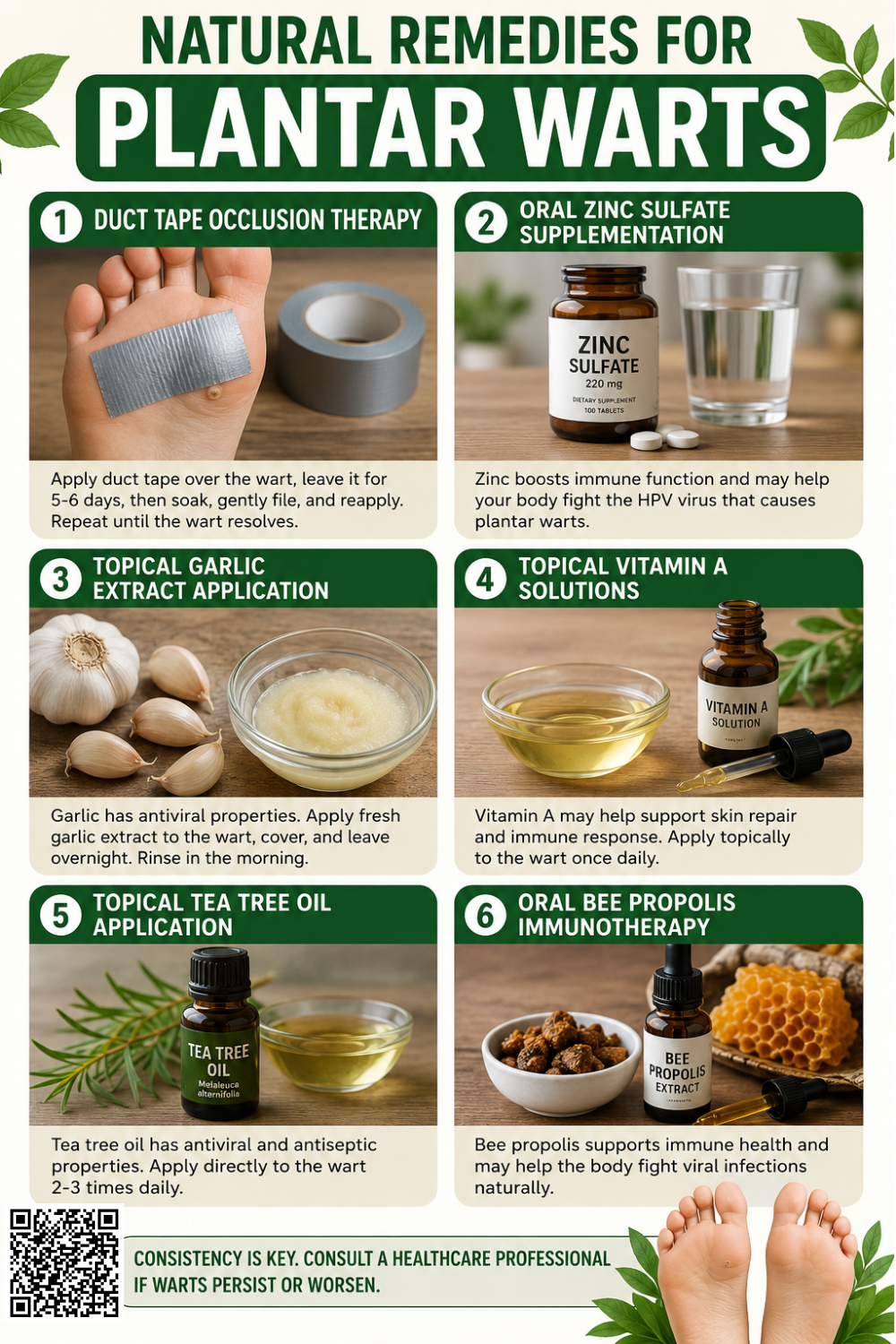
1. Duct Tape Occlusion Therapy
How it may help
Duct tape occlusion therapy cuts off oxygen to the plantar wart while trapping moisture. This process softens the hard tissue and helps remove dead skin layers. Stripping away the skin may also irritate the area enough to trigger the body’s immune system to attack the underlying virus. 7
What research says
Clinical studies present mixed results. While earlier research suggested it was highly effective, recent trials conclude it is generally not better than a placebo (inactive treatment) or standard freezing treatments for complete clearance. However, medical professionals still consider it a practical, low-cost initial option due to its safety profile. 8 9
How to use it safely
Cut silver duct tape to completely cover the wart and leave it on for six days. After removal, soak your foot in warm water and gently file the softened skin with a disposable emery board. Leave the area uncovered overnight, then repeat the cycle. 10
Potential precautions or side effects
Stop treatment if you experience severe skin irritation, redness, or bleeding. This method is not recommended if you have diabetes, nerve damage, or poor circulation in your feet.
2. Oral Zinc Sulfate Supplementation
How it may help
Oral zinc sulfate helps fight the human papillomavirus (HPV) by strengthening the immune system. Low zinc levels are linked to persistent skin infections. Taking zinc supplements enhances the activity of white blood cells, allowing the body to better recognize, attack, and clear the virus causing the warts. 11
What research says
Clinical trials indicate that oral zinc sulfate can effectively clear stubborn warts, particularly in individuals with an underlying zinc deficiency. Studies report complete clearance in many patients within two to three months. However, the high daily doses required for treatment frequently cause stomach upset, which limits its practical use. 12
How to use it safely
Consult your doctor to determine the correct dosage before starting oral zinc sulfate, as clinical amounts exceed standard dietary recommendations. Take the supplement exactly as directed, preferably with a large meal or a full glass of water to reduce stomach irritation. 13
Potential precautions or side effects
Common side effects include severe nausea, vomiting, and stomach pain. Long-term high doses can cause copper deficiency, lowered immunity, and harmful interactions with antibiotics or blood pressure medications. 14
3. Topical Garlic Extract Application
How it may help
Topical garlic extract contains allicin, a sulfur compound with established antiviral properties. When applied directly, allicin disrupts the human papillomavirus (HPV) envelope and prevents the virus from multiplying in skin cells. Additionally, it triggers a localized immune response, prompting the body’s defensive cells to attack the wart tissue. 15
What research says
Clinical trials demonstrate that topical garlic extracts can successfully eliminate cutaneous warts. In controlled studies, daily application of concentrated garlic extract resulted in complete resolution for a majority of patients within three to four months, with no observed recurrences. Researchers attribute this success to garlic’s combined antiviral and tissue-dissolving effects. 16
How to use it safely
Crush a fresh garlic clove to release the active compounds, or use a prepared liquid extract. Apply a small amount strictly to the wart, carefully avoiding healthy surrounding skin. Cover the area with a bandage overnight, wash it off in the morning, and repeat daily. 17
Potential precautions or side effects
Raw garlic and concentrated extracts can cause severe chemical burns and allergic contact dermatitis. Stop treatment immediately if you experience blistering, intense burning pain, or spreading redness.
4. Topical Vitamin A Solutions
How it may help
Topical vitamin A works by interfering with human papillomavirus (HPV) replication and normalizing skin cell growth. It stops the overproduction of hard skin that forms the wart. Additionally, it triggers a localized immune response, helping the body recognize and gradually eliminate the virus. 18
What research says
Clinical reports demonstrate that topical vitamin A effectively treats stubborn warts that resist standard therapies. Research indicates that daily application slowly replaces the wart tissue with healthy skin. Unlike destructive freezing methods, it causes no pain or scarring, though complete clearance can take several months.
How to use it safely
Apply a thin layer of vitamin A oil or prescription retinoid directly to the plantar wart once daily, usually before bed. Wash your hands thoroughly afterward. Consistent use is necessary; visible improvement takes weeks, and complete healing may require up to six months.
Potential precautions or side effects
Side effects include mild irritation, redness, and peeling. Apply only to the wart. Pregnant women must consult a healthcare provider before using any topical vitamin A products. 19
5. Topical Tea Tree Oil Application
How it may help
Topical tea tree oil contains terpinen-4-ol, a compound with established antiviral properties. When applied to a plantar wart, it targets the human papillomavirus (HPV) by disrupting the virus’s ability to infect skin cells. This direct antiviral action helps gradually eliminate the localized tissue infection. 20
What research says
Evidence for treating plantar warts with tea tree oil remains limited to individual clinical case studies rather than large trials. While some pediatric reports show complete wart clearance after daily application for twelve days, broader research focuses on its general antiviral effectiveness rather than specific wart treatment protocols. 21
How to use it safely
Dilute pure tea tree oil with a carrier oil, such as coconut or olive oil, to minimize skin irritation. Apply the diluted mixture strictly to the wart using a cotton swab, avoiding healthy skin. Cover the area with a clean bandage overnight and repeat daily.
Potential precautions or side effects
Tea tree oil can cause severe allergic contact dermatitis and blistering. Stop treatment if widespread redness or pain develops. Never swallow the oil, as it is highly toxic. 22
6. Oral Bee Propolis Immunotherapy
How it may help
Oral bee propolis is a resinous substance with antiviral and immunomodulatory properties. When ingested, it stimulates the immune system by increasing the activity of macrophages and T-cells. This systemic immune enhancement helps the body recognize the human papillomavirus (HPV) and attack the infected plantar wart tissue. 23
What research says
Clinical evidence indicates that oral propolis is highly effective for flat warts but less successful for plantar varieties. In a controlled trial, oral propolis achieved complete clearance in over 70% of patients with common and plane warts, but only 17% of patients with plantar warts experienced complete resolution. 24
How to use it safely
Consult a healthcare provider before starting oral propolis to determine the correct dosage. Clinical trials typically administer 500 mg daily. Take the capsules with a full glass of water. Consistent daily use is required, and treatments in studies generally last for up to three months.
Potential precautions or side effects
Avoid this treatment completely if you have known allergies to bees, honey, or tree pollen, as it can trigger severe allergic reactions. High doses may also cause gastrointestinal upset.
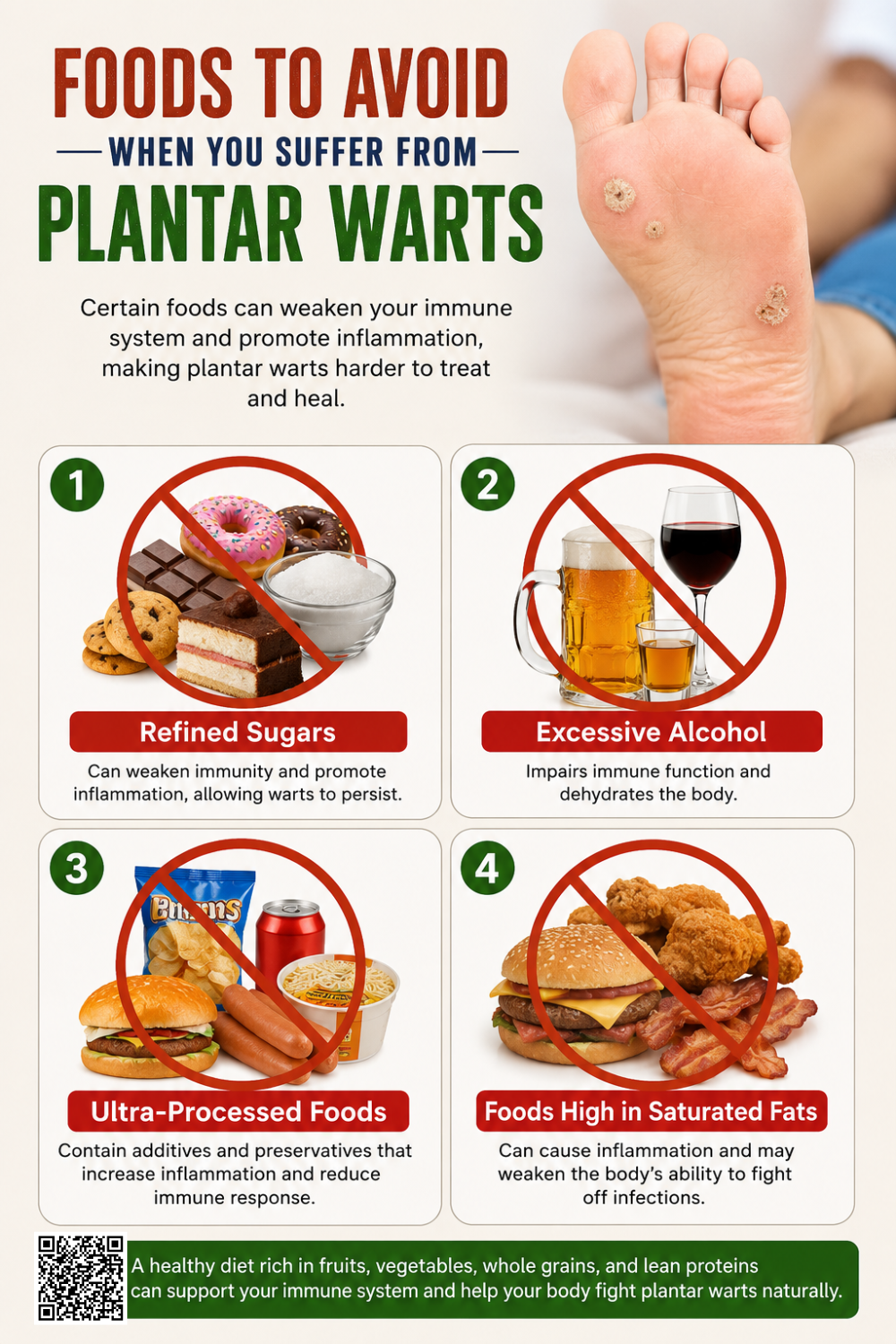
1. Refined Sugars
High sugar intake elevates blood glucose, which directly impairs white blood cell function and reduces the body’s ability to effectively target and destroy viral infections. 25
2. Excessive Alcohol
Heavy alcohol consumption severely suppresses immune defense mechanisms, lowering white blood cell counts and reducing the body’s ability to identify and clear HPV-infected skin cells. 26
3. Ultra-Processed Foods
Diets heavily reliant on processed foods trigger chronic systemic inflammation and lack essential micronutrients, which delays the cellular immune response required for complete wart resolution. 27
4. Foods High in Saturated Fats
Consuming excessive amounts of saturated fats from red meat or fried foods can negatively alter gut bacteria, weakening the overall systemic immune response against pathogens. 28
When To See a Doctor When You Suffer from Plantar Warts
1. Severe Pain or Mobility Issues
Seek medical attention if the wart causes significant pain that alters your walking posture or prevents routine daily activities and mobility.
2. Underlying Health Conditions
Individuals with diabetes, nerve damage, or poor blood circulation must consult a physician immediately, as self-treatment can lead to severe infections or non-healing tissue ulcers. 29
3. Changes in Appearance or Bleeding
Consult a doctor if the lesion bleeds easily, changes color, or grows rapidly, because skin cancers can sometimes closely mimic the appearance of a persistent wart.
4. Weakened Immune System
If you have a compromised immune system from immune-suppressing medications or medical conditions, professional treatment is necessary since the body cannot fight the viral infection alone.
5. Failure of Home Treatments
Schedule a clinical evaluation if the warts persist, multiply, or recur frequently despite consistently using over-the-counter treatments or natural remedies for several weeks.
Comments
comments