


Causes of Premenstrual Syndrome (PMS)
- Cyclical Hormonal Fluctuations: The primary trigger for PMS involves the natural rise and fall of estrogen and progesterone levels during the menstrual cycle, which creates physical and chemical changes in the body 4.
- Brain Chemical Imbalance: Significant changes in ovarian hormones can alter levels of serotonin, a brain chemical that plays a vital role in mood regulation, triggering symptoms like irritability, fatigue, and sleep disturbances 2.
- Genetic Predisposition: Research indicates that PMS often runs in families, suggesting that certain inherited genetic factors may increase a person’s sensitivity to standard hormonal changes throughout the menstrual cycle 1.
- Lifestyle and Environmental Stress: High levels of chronic stress, poor dietary habits, and nutritional deficiencies can exacerbate the body’s reaction to hormonal shifts, leading to more pronounced premenstrual symptoms 5.
Symptoms of Premenstrual Syndrome (PMS)
- Emotional and Behavioral Changes: Many individuals experience significant mood shifts, including sudden irritability, feelings of sadness or depression, increased anxiety, and social withdrawal. These changes often stem from the body’s reaction to hormonal fluctuations influencing brain chemicals like serotonin 4.
- Physical Discomfort: Common physical symptoms include abdominal bloating, breast tenderness, and swelling in the hands or feet caused by water retention. These physical sensations are frequently linked to the body’s shifting balance of estrogen and progesterone 6.
- Energy and Sleep Disturbances: Fatigue and lethargy are frequently reported during the days leading up to menstruation. Additionally, some individuals experience difficulty falling asleep or staying asleep, further contributing to a general sense of tiredness and reduced physical stamina 2.
- Appetite and Digestive Changes: Altered eating habits are common, often presenting as intense food cravings—particularly for sugar or salt—or a diminished appetite. Accompanying digestive issues, such as constipation or diarrhea, may also occur as hormonal levels change 7.
Natural Remedies for Premenstrual Syndrome (PMS)
1. Calcium Supplements
How it may help
Calcium blood levels naturally drop during the second half of the menstrual cycle. Correcting this imbalance with supplements helps stabilize serotonin in the brain, easing emotional symptoms like irritability, while also reducing physical discomforts such as cramping and bloating 8.
What research says
Clinical trials demonstrate that daily calcium supplementation significantly reduces the overall severity of PMS. Studies conclude that women taking calcium report major improvements in psychological symptoms, including mood swings and depression, and physical symptoms, like fatigue and water retention 9.
How to use it safely
Experts recommend a daily intake of 1,000 to 1,200 milligrams of calcium for PMS relief 10. You should split this into smaller doses of 500 milligrams taken with food to maximize your body’s absorption and prevent mild stomach upset.
Potential precautions or side effects
Common side effects include gas and constipation, while excessive intake can increase kidney stone risk 10. You should consult a doctor before starting, as calcium can interfere with certain medications.
2. Chasteberry Extract (Vitex)
How it may help
Chasteberry extract, or Vitex agnus-castus, influences the brain to decrease the production of prolactin, a hormone that triggers premenstrual discomfort. Lowering these levels helps balance estrogen and progesterone, which eases breast swelling and mood instability 11.
What research says
Clinical trials show that chasteberry effectively relieves premenstrual syndrome. Studies conclude that women using the extract report a significant reduction in breast pain, mood swings, irritability, and headaches compared to those taking a placebo 12.
How to use it safely
You should take chasteberry extract once daily in the morning. Experts generally recommend a daily dose of 20 to 40 milligrams, but you must use it consistently for at least three menstrual cycles to see maximum symptom relief 13.
Potential precautions or side effects
Side effects are generally mild, including nausea or rash. You should avoid chasteberry if taking birth control pills, hormone therapy, or medications for Parkinson’s disease 11.
3. Vitamin B6
How it may help
Vitamin B6 helps the body produce brain chemicals, like serotonin and dopamine, that control mood. By increasing these chemicals, the vitamin reduces the emotional symptoms of premenstrual syndrome, such as irritability and sadness, and may also improve physical fatigue 14.
What research says
Clinical reviews confirm that Vitamin B6 effectively relieves overall premenstrual discomfort. Researchers conclude that it is highly beneficial for emotional symptoms, showing significant improvements in premenstrual depression and mood instability when compared to placebo treatments 15.
How to use it safely
You should take 50 to 100 milligrams of Vitamin B6 daily to manage premenstrual symptoms safely 14. Experts recommend taking the supplement with a meal to improve absorption and taking it consistently throughout your entire menstrual cycle.
Potential precautions or side effects
You must avoid taking high doses without medical supervision. Long-term use of amounts exceeding 100 milligrams daily can cause severe nerve damage, resulting in permanent numbness or weakness 14.
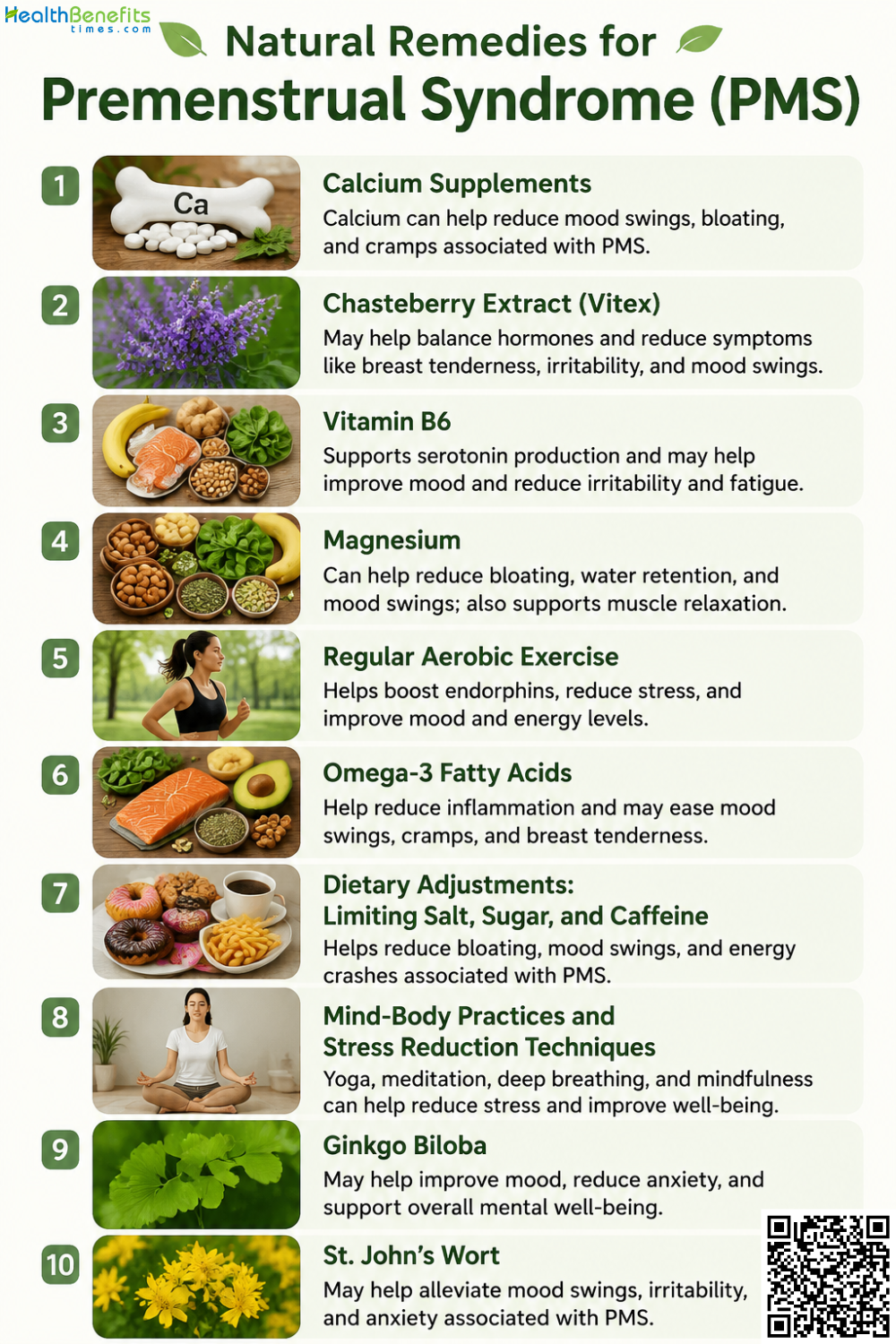
4. Magnesium
How it may help
Magnesium helps regulate brain chemicals and balances body fluids. Correcting a natural magnesium deficiency during the menstrual cycle can significantly ease physical discomforts like abdominal bloating, breast tenderness, and water retention, while supporting nervous system stability to reduce overall anxiety 16.
What research says
Clinical trials demonstrate that daily magnesium supplementation significantly decreases premenstrual symptom severity. Researchers conclude that magnesium, especially when combined with vitamin B6, effectively relieves fluid retention, weight gain, and mood instability when taken consistently over multiple menstrual cycles 17.
How to use it safely
You should take 200 to 250 milligrams of magnesium daily throughout your menstrual cycle. Experts recommend taking the supplement with food to boost absorption and pairing it with vitamin B6 for maximum relief of both physical and emotional symptoms 17.
Potential precautions or side effects
High doses can cause digestive issues like diarrhea and abdominal cramping. You must consult a doctor if taking antibiotics or diuretics, as magnesium can interfere with them 16.
5. Regular Aerobic Exercise
How it may help
Aerobic exercise increases the brain’s production of endorphins, which act as natural mood elevators and painkillers. This physical activity improves blood circulation and helps lower stress hormones, effectively reducing common premenstrual issues like fatigue, depression, and general physical discomfort 4.
What research says
Clinical studies demonstrate that engaging in regular aerobic exercise significantly decreases the severity of premenstrual symptoms. Researchers conclude that women who consistently perform activities like brisk walking, swimming, or cycling experience major improvements in both psychological mood swings and physical symptoms over multiple cycles 18.
How to use it safely
You should aim for at least 30 minutes of moderate-intensity aerobic exercise most days of the week, rather than just during your premenstrual phase 4. Choose enjoyable, low-impact activities like walking, and ensure you stay properly hydrated during your workouts.
Potential precautions or side effects
You should avoid severe overexertion if experiencing intense fatigue or heavy cramping. Excessive exercise without proper rest can increase physical stress and worsen your overall exhaustion 6.
6. Omega-3 Fatty Acids
How it may help
Omega-3 fatty acids naturally reduce the body’s production of prostaglandins, which are chemicals that cause inflammation and muscle contractions. By lowering this inflammation, omega-3s help alleviate menstrual cramps, reduce breast tenderness, and stabilize brain chemicals to lessen premenstrual depression and anxiety 19.
What research says
Clinical studies demonstrate that omega-3 supplementation significantly decreases the severity of physical and emotional premenstrual symptoms. Researchers conclude that women taking daily omega-3s experience major reductions in depression, nervousness, lack of concentration, and physical bloating compared to those receiving a placebo 19.
How to use it safely
You should take 1,000 to 2,000 milligrams of fish oil containing EPA and DHA daily. Experts recommend taking these supplements with a meal to improve absorption and minimize mild digestive discomforts like fish-tasting burps 20.
Potential precautions or side effects
Common side effects include bad breath, heartburn, and nausea. You must consult a doctor before starting if you take blood-thinning medications, as high omega-3 doses can increase bleeding risks 20.
7. Dietary Adjustments: Limiting Salt, Sugar, and Caffeine
How it may help
Excess salt causes fluid retention and physical bloating, while high sugar intake leads to blood glucose fluctuations that worsen mood swings and fatigue. Caffeine acts as a stimulant that can increase irritability and breast tenderness. Limiting these dietary elements stabilizes fluids and energy levels, easing premenstrual discomfort 4.
What research says
Epidemiological studies demonstrate a strong link between dietary habits and premenstrual syndrome. Researchers conclude that women who frequently consume foods high in salt, sugar, and calories have a significantly increased risk of developing severe physical symptoms, such as bloating and swelling, compared to those with balanced diets 5.
How to use it safely
You should gradually decrease your intake of salty snacks, sugary foods, and caffeinated drinks one to two weeks before your period. Experts recommend replacing them with complex carbohydrates, like whole grains, and drinking plenty of water to naturally support your body’s nutritional needs 4.
Potential precautions or side effects
Stopping caffeine abruptly can cause withdrawal symptoms like severe headaches and irritability. You should slowly reduce your coffee or tea intake to avoid worsening your premenstrual exhaustion 21.
8. Mind-Body Practices and Stress Reduction Techniques
How it may help
Chronic stress increases cortisol levels, which can disrupt the endocrine system and worsen PMS symptoms. Mind-body practices, such as yoga, meditation, and progressive muscle relaxation, reduce the body’s stress response. These techniques help stabilize the nervous system, alleviate muscle tension, and improve emotional regulation during the premenstrual phase 22.
What research says
Clinical studies show that structured stress reduction programs significantly lower the severity of both physical and psychological PMS symptoms. Researchers conclude that consistent practice of yoga and mindfulness leads to substantial improvements in mood, anxiety levels, and overall quality of life, often surpassing the effects of standard care alone 23.
How to use it safely
You should practice stress reduction techniques for 20 to 30 minutes daily, rather than only when symptoms appear. Gentle yoga, deep breathing, or meditation are safe and effective. It is important to focus on techniques that you find relaxing and that fit easily into your regular daily routine 24.
Potential precautions or side effects
Practices are generally safe. However, you should avoid intense physical poses if you experience severe back pain or joint discomfort during your cycle to prevent injury 22.
Ginkgo Biloba
How it may help
Ginkgo biloba contains compounds that improve blood flow and act as antioxidants to reduce inflammation throughout the body. By enhancing circulation and potentially regulating neurotransmitters, this herbal extract helps to alleviate various premenstrual symptoms, particularly those related to physical water retention and overall psychological distress 25.
What research says
Clinical studies indicate that ginkgo biloba is effective in managing both physical and psychological premenstrual symptoms. Researchers conclude that regular use of the extract significantly reduces the severity of breast tenderness, fluid retention, irritability, and mood changes compared to those not receiving the supplement 26.
How to use it safely
You should take 80 to 160 milligrams of standardized ginkgo biloba extract twice daily. It is best to start taking it during the second half of your menstrual cycle and continue until your period begins to achieve optimal symptom relief 26.
Potential precautions or side effects
Side effects may include headache, stomach upset, or dizziness. You must avoid ginkgo if you take blood-thinning medications, as it increases the risk of bleeding 25.
9. St. John’s Wort
How it may help
St. John’s wort contains active components that influence neurotransmitters like serotonin and dopamine in the brain. By supporting the levels of these mood-regulating chemicals, the herb helps improve emotional stability, reduce irritability, and alleviate feelings of sadness often associated with the premenstrual phase 27.
What research says
Clinical evidence indicates that St. John’s wort is effective for managing mild to moderate premenstrual symptoms. Researchers conclude that it significantly reduces physical and emotional symptoms, particularly irritability, mood swings, and feelings of depression, compared to placebo treatments in many women 28.
How to use it safely
You should take 300 milligrams of standardized extract three times daily. It is important to maintain consistent use throughout your cycle. Always choose products that list the specific chemical concentration on the label to ensure you are receiving a reliable dose 27.
Potential precautions or side effects
St. John’s wort interacts dangerously with many prescription drugs, including antidepressants and birth control. Common side effects include dry mouth, fatigue, and increased skin sensitivity to sunlight 27.
Foods to Avoid When You Suffer from Premenstrual Syndrome (PMS)
1. High-Sodium Foods
Excessive salt intake promotes water retention and bloating. Limiting processed, salty snacks helps reduce physical swelling and discomfort during the premenstrual phase 4.
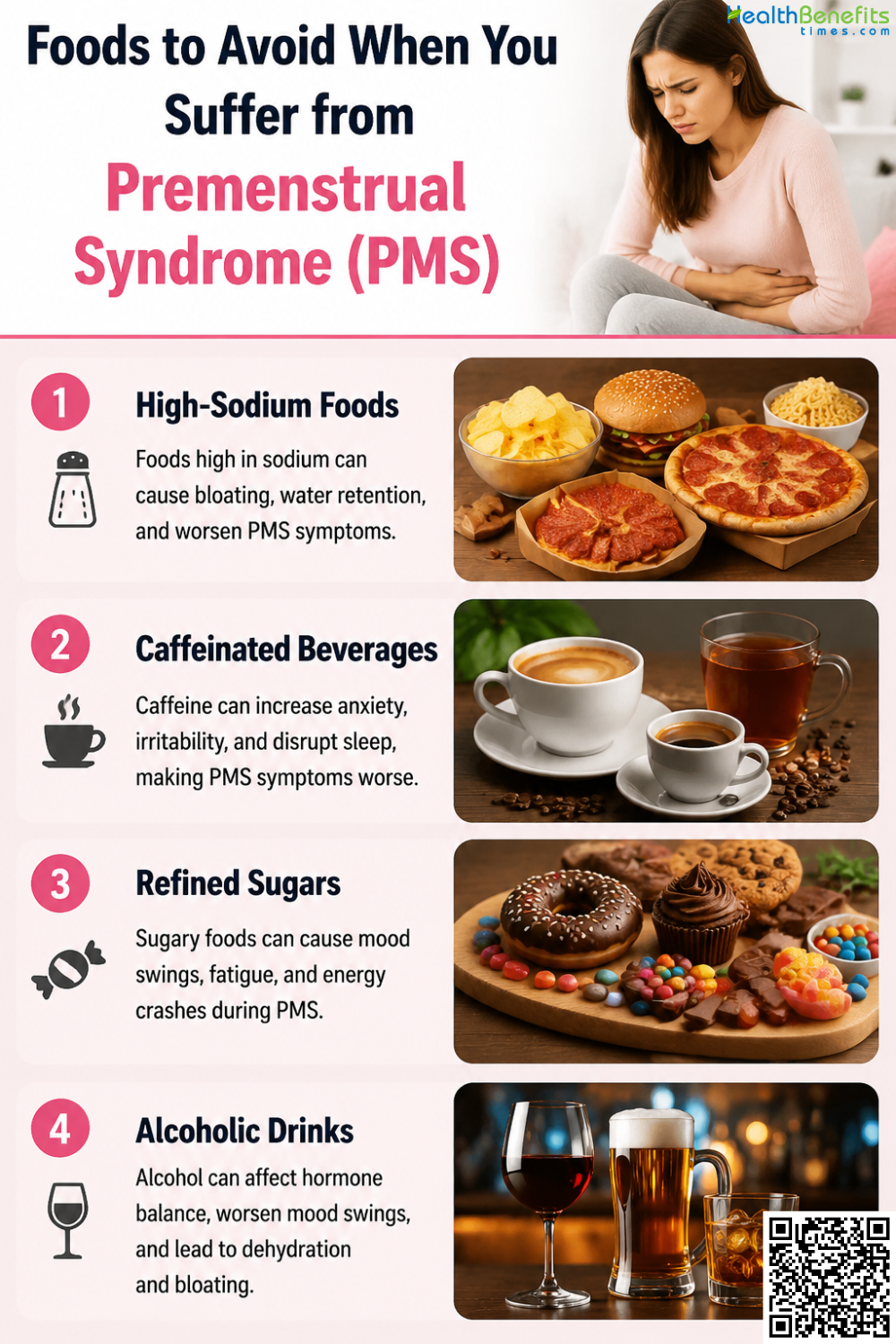
2. Caffeinated Beverages
Caffeine can increase feelings of irritability, tension, and breast tenderness. Reducing coffee, tea, and soda consumption may help stabilize your mood and physical comfort 4.
3. Refined Sugars
Foods high in added sugar cause rapid blood glucose spikes and subsequent drops. This cycle can worsen fatigue, irritability, and overall mood instability before your period 5.
4. Alcoholic Drinks
Alcohol can disrupt sleep patterns and worsen mood swings or depressive symptoms. Avoiding alcohol helps maintain better emotional regulation and physical well-being during this time 6.
When to See a Doctor for Premenstrual Syndrome (PMS)
1. Disruption of Daily Life
Seek medical advice if symptoms are severe enough to interfere with your work, school, or personal relationships, as this may indicate a more serious condition 4.
2. Symptoms of PMDD
Consult a professional if you experience intense mood swings, severe depression, or thoughts of self-harm, which are hallmark signs of premenstrual dysphoric disorder (PMDD) 29.
3. Lack of Improvement
If lifestyle changes and over-the-counter remedies fail to provide relief after several months, a doctor can help evaluate other underlying health issues 6.
4. Worsening Symptoms
Schedule an appointment if your premenstrual symptoms gradually become more painful or severe over time, as this may signal an underlying medical problem that requires specific clinical treatment 4.
Comments
comments