

Causes of Psoriasis
1. Immune System Dysfunction
The condition is fundamentally driven by a malfunctioning immune system. Instead of protecting the body, specialized white blood cells called T-cells mistakenly attack healthy skin cells, triggering chronic inflammation and forcing the skin to produce new cells at an unnaturally rapid pace 4.
2. Genetics and Heredity
A person’s inherited genetic makeup plays a primary role in their susceptibility. Individuals who carry specific genetic markers, particularly the HLA-Cw6 gene variant, are significantly more likely to develop the disease, especially if a direct family member is also affected 5.
3. Bacterial Infections
Certain infections act as powerful catalysts that first activate the disease. For instance, a streptococcal bacterial infection (strep throat) is a well-documented cause of a specific variant called guttate psoriasis, which causes drop-shaped spots and frequently appears in children or young adults 6.
4. Skin Injuries (The Koebner Phenomenon)
Physical trauma to otherwise healthy skin can stimulate the immune system to form new psoriatic plaques exactly where the damage occurred. This reaction is routinely triggered by everyday skin injuries, including cuts, deep scratches, insect bites, or severe sunburns 7.
5. Specific Medications
Several common prescription drugs are known to either trigger the initial onset of the disease or severely worsen existing symptoms. The most heavily documented of these include lithium (used for mood disorders), antimalarial medications, and certain beta-blockers prescribed for high blood pressure 8.
6. Tobacco Smoking and Heavy Alcohol Use
Unhealthy lifestyle factors physically alter the body’s inflammatory response. Smoking tobacco introduces chemicals that activate innate immune cells and upregulate psoriasis-associated genes, while heavy alcohol consumption acts as an independent risk factor that triggers onset and worsens clinical severity 9.
7. Psychological Stress
High levels of emotional or mental stress cause the body to release inflammatory signaling molecules. Because of this biological response, periods of extreme stress are universally recognized as one of the primary triggers for both the first appearance of the disease and subsequent flare-ups.
Symptoms of Psoriasis
1. Thick, Scaly Skin Patches
The most prominent characteristic of the condition is the development of raised, inflamed skin plaques covered with a silvery-white buildup of dead skin cells. These thick scales are caused by the rapid overproduction of the outer skin layer and most commonly appear on the scalp, knees, elbows, and lower back 10.
2. Severe Itching and Discomfort
The affected skin patches frequently trigger intense itching, burning sensations, and generalized soreness. When the inflammation is severe, this constant physical irritation can disrupt daily activities, interfere with sleep, and significantly reduce overall quality of life 11.
3. Dry, Cracked Skin
As the affected skin thickens and loses its natural moisture barrier, it becomes rigid and extremely dry. This severe dryness causes the skin to crack open during normal physical movement, which frequently leads to painful bleeding and creates an entry point for secondary bacterial infections.
4. Nail Deformities
The disease often extends beyond the skin to affect the fingernails and toenails. Patients routinely experience tiny dents or pitting across the nail surface, abnormal nail thickening, yellow-brown discoloration, and a condition where the nail physically separates and lifts away from the underlying nail bed 12.
5. Small, Drop-Shaped Spots
Individuals who develop a specific subtype called guttate psoriasis present with dozens of small, teardrop-shaped scaling spots. These lesions primarily erupt across the torso, arms, and legs, and typically appear suddenly following a bacterial illness such as strep throat.
6. Joint Stiffness and Swelling
Up to one-third of individuals with skin symptoms will eventually experience systemic inflammation that attacks the musculoskeletal system. This manifests as swollen, intensely stiff, and painful joints—most notably in the fingers, toes, and lower back—which are the primary clinical signs of psoriatic arthritis.
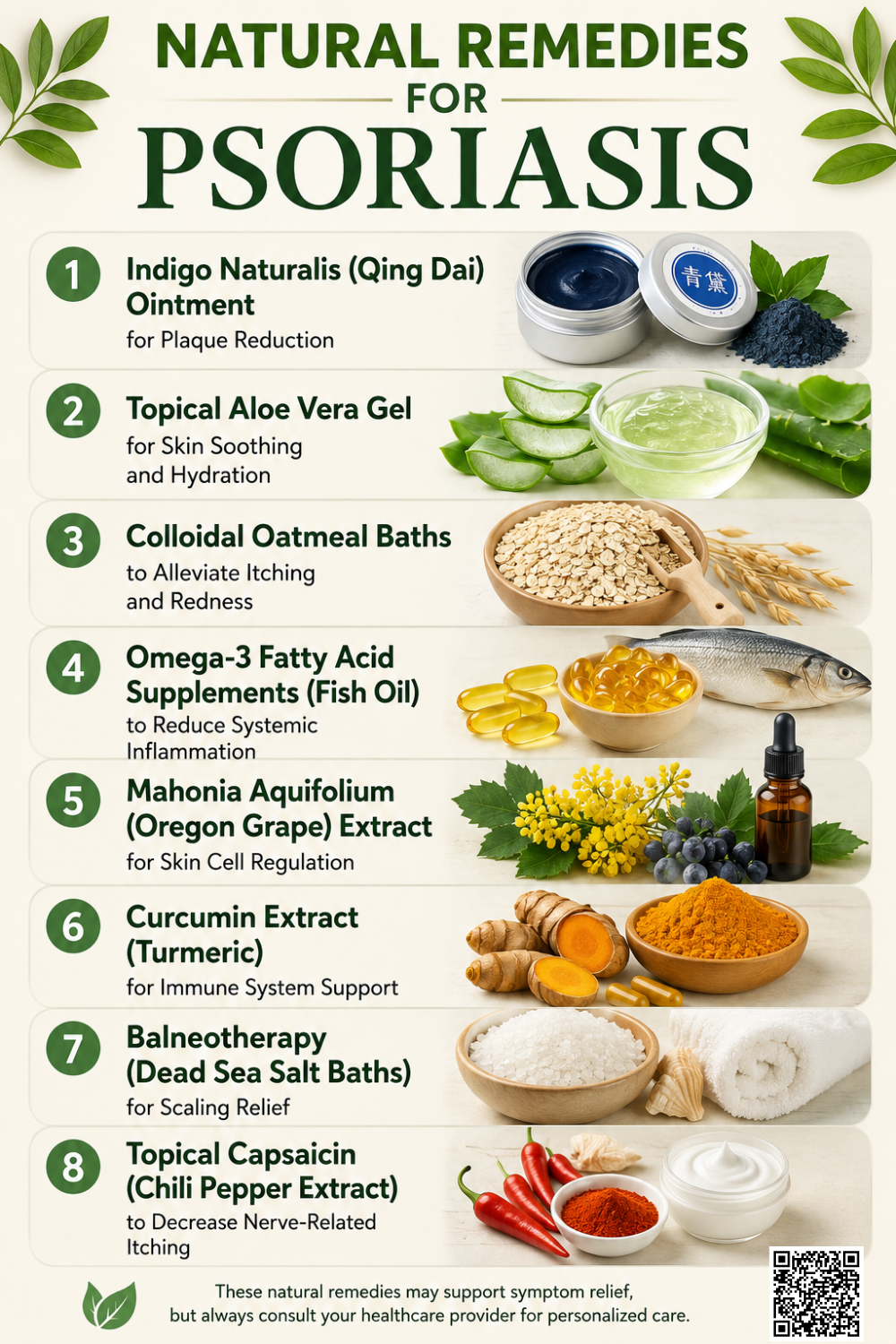
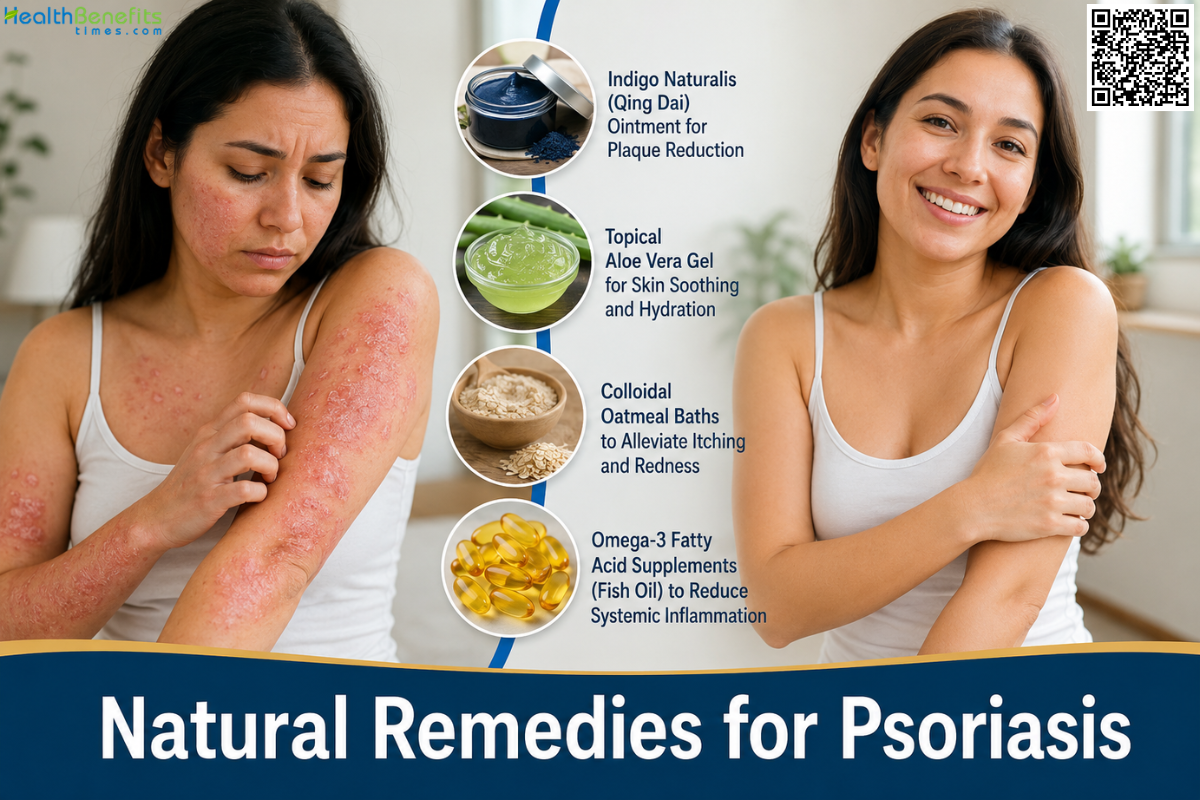
1. Indigo Naturalis (Qing Dai) Ointment for Plaque Reduction
How it may help
Indigo naturalis, an herbal extract derived from the indigo plant, helps treat psoriasis by slowing down the rapid, abnormal growth of skin cells. Its active compounds block the inflammatory signals that trigger the disease, which helps flatten thick plaques, reduce redness, and restore the skin’s normal barrier.
What research says
Clinical studies demonstrate that topical indigo naturalis ointment is highly effective for plaque psoriasis. Research concludes that regular application significantly reduces scaling, redness, and plaque thickness, with many patients experiencing complete or near-complete clearing of skin lesions compared to those using inactive treatments 13.
How to use it safely
To use this ointment safely, apply a thin layer directly to your affected plaques once or twice daily. Gently rub it into the skin. Do not apply the product to open cuts, the face, or sensitive areas unless specifically directed by your healthcare provider.
Potential precautions or side effects
The most common side effect is temporary blue staining of skin and clothing. Some individuals may also experience mild, localized skin irritation or itching at the application site 14.
2. Topical Aloe Vera Gel for Skin Soothing and Hydration
How it may help
Aloe vera gel provides cooling relief to irritated skin while serving as a natural moisturizer. It helps manage psoriasis by locking in essential hydration, which softens rigid plaques and reduces severe dryness. Its natural anti-inflammatory compounds also help calm redness and alleviate the intense itching associated with sudden flare-ups.
What research says
Clinical trials show that applying topical aloe vera cream significantly reduces skin redness, desquamation, and plaque thickness. Research concludes that it is highly effective at clearing psoriatic lesions and may even perform better than mild prescription steroid creams at reducing clinical symptoms and improving quality of life 15.
How to use it safely
Apply a high-quality cream containing at least 0.5 percent pure aloe vera directly to your affected skin up to three times daily. Choose products without artificial fragrances or colors to prevent further irritation. Gently massage the gel into the plaques without harsh rubbing or picking.
Potential precautions or side effects
Aloe vera is generally safe, though some individuals experience mild stinging or allergic contact dermatitis. Stop using it immediately if you notice increased redness, burning, or a new rash.
3. Colloidal Oatmeal Baths to Alleviate Itching and Redness
How it may help
Colloidal oatmeal consists of finely ground oats that bind to the skin to form a protective, hydrating barrier. It helps manage psoriasis by locking in moisture, softening thick scales, and delivering specialized compounds called avenanthramides, which directly reduce skin inflammation and calm severe itching.
What research says
Research confirms that colloidal oatmeal possesses significant anti-inflammatory and barrier-repairing properties. Clinical studies demonstrate that it effectively reduces pro-inflammatory signaling proteins and substantially decreases clinical symptoms of severe dryness, scaling, and itching in patients with chronic inflammatory skin conditions like psoriasis 16.
How to use it safely
To prepare a bath, sprinkle one cup of unflavored, finely ground colloidal oatmeal into a tub of lukewarm water. Soak for 10 to 15 minutes. Avoid using hot water, as it worsens inflammation. Afterward, gently pat your skin dry and immediately apply a heavy moisturizer.
Potential precautions or side effects
Colloidal oatmeal is generally very safe, but it makes the bathtub extremely slippery. Rarely, individuals with an oat allergy may experience a mild rash or increased skin irritation.
4. Omega-3 Fatty Acid Supplements (Fish Oil) to Reduce Systemic Inflammation
How it may help
Omega-3 fatty acids, particularly EPA and DHA found in fish oil, act as powerful natural anti-inflammatories. They help manage psoriasis by reducing the body’s production of inflammatory chemicals that trigger rapid skin cell growth. This internal regulation helps calm the overactive immune response and can improve both skin plaques and joint pain.
What research says
Clinical studies indicate that omega-3 supplementation reduces the severity of skin lesions, specifically decreasing redness, scaling, and itching. Research concludes that while fish oil may not clear plaques entirely on its own, it significantly enhances the effectiveness of standard medical treatments when used as a daily complementary therapy 17.
How to use it safely
To use fish oil safely, take daily supplements containing a combined total of 2 to 3 grams of EPA and DHA. Always consume the capsules with a meal to improve absorption. You must consult your doctor before starting, especially if you take prescription medications.
Potential precautions or side effects
High doses of fish oil can thin the blood and increase your risk of bleeding. Common, mild side effects include nausea, a fishy aftertaste, and general stomach upset.
5. Mahonia Aquifolium (Oregon Grape) Extract for Skin Cell Regulation
How it may help
Mahonia aquifolium, commonly known as Oregon grape, contains a powerful natural compound called berberine. It helps control psoriasis by actively suppressing the abnormal, rapid overproduction of skin cells. Its strong anti-inflammatory properties also soothe the immune response, helping to decrease the redness, thickness, and scaling of skin plaques.
What research says
Clinical trials consistently demonstrate that applying Mahonia aquifolium extract safely and effectively reduces symptom severity. Multiple randomized studies conclude that the topical cream significantly improves the thickness of skin plaques and overall quality of life, offering a reliable botanical alternative for managing mild-to-moderate plaque psoriasis 18.
How to use it safely
Apply a 10 percent Mahonia aquifolium cream directly to the affected skin patches two to three times daily. Gently rub the product into the thick scales. Always apply it to clean skin, and avoid contact with your eyes, mouth, or any open, bleeding skin cracks.
Potential precautions or side effects
The extract is generally well-tolerated, but minor side effects can include temporary burning, itching, or redness at the application site. It may also mildly stain skin or clothing.
6. Curcumin Extract (Turmeric) for Immune System Support
How it may help
Curcumin, the primary active compound found in turmeric root, acts as a powerful natural anti-inflammatory agent. It helps control psoriasis by calming the overactive immune system and blocking specific inflammatory proteins that cause skin cells to multiply too rapidly. This internal regulation helps reduce the widespread redness and thick scaling.
What research says
Clinical studies show that curcumin significantly reduces the severity of psoriasis. Research concludes that both oral supplements and topical curcumin gels lower inflammation markers and substantially improve skin lesions, especially when used alongside traditional medical treatments. Its ability to block immune pathways makes it an effective complementary therapy 19.
How to use it safely
To improve absorption, take an oral curcumin supplement formulated with black pepper extract (piperine). A typical daily dose ranges from 500 to 2,000 milligrams. Always take the capsules with a meal. You must consult your doctor before starting, as it can interact with other prescription medications.
Potential precautions or side effects
Curcumin is generally safe but may cause stomach upset or diarrhea. It acts as a mild blood thinner, increasing bleeding risks if taken with anticoagulant medications.
7. Balneotherapy (Dead Sea Salt Baths) for Scaling Relief
How it may help
Balneotherapy, which involves soaking in mineral-rich water like Dead Sea salt baths, helps manage psoriasis by softening and loosening thick skin plaques. The high concentration of magnesium and other minerals improves skin hydration, reduces redness, and effectively washes away severe scaling without causing physical irritation.
What research says
Clinical research demonstrates that balneotherapy using Dead Sea salts significantly reduces psoriasis severity. Studies conclude that these mineral baths improve the skin’s natural barrier function, decrease inflammation, and significantly lower clinical severity scores, making it a highly effective complementary treatment for plaque psoriasis 20.
How to use it safely
Dissolve one to two cups of genuine Dead Sea salt into a bathtub filled with warm—never hot—water. Soak for 15 minutes to soften the plaques. Afterward, gently pat your skin dry and immediately apply a thick, fragrance-free moisturizer to lock in hydration.
Potential precautions or side effects
Soaking in salt water can painfully sting open cuts or severely cracked skin. Avoid using excessively hot water, as it strips natural oils and actively worsens inflammation and dryness.
8. Topical Capsaicin (Chili Pepper Extract) to Decrease Nerve-Related Itching
How it may help
Capsaicin, the active compound that makes chili peppers spicy, temporarily depletes a vital nerve chemical called substance P, which transmits pain and itch signals to the brain. By interrupting this nerve communication, capsaicin helps manage psoriasis by effectively blocking intense itching and decreasing localized inflammation.
What research says
Double-blind clinical trials demonstrate that capsaicin cream significantly reduces psoriasis severity. Research concludes that regular topical application safely depletes nerve chemicals in the skin, resulting in substantially less scaling, skin thickness, and itching compared to inactive treatments, making it a highly effective targeted therapy for symptom relief 21.
How to use it safely
Apply a thin layer of over-the-counter capsaicin cream (usually 0.025 percent) directly to your affected psoriasis plaques up to four times daily. Wash your hands thoroughly with soap immediately afterward. Never touch your eyes, nose, or mouth after handling the product.
Potential precautions or side effects
The most frequent side effect is a temporary, intense burning or stinging sensation where applied. You must never apply capsaicin to open cuts, severely cracked skin, or bleeding lesions.
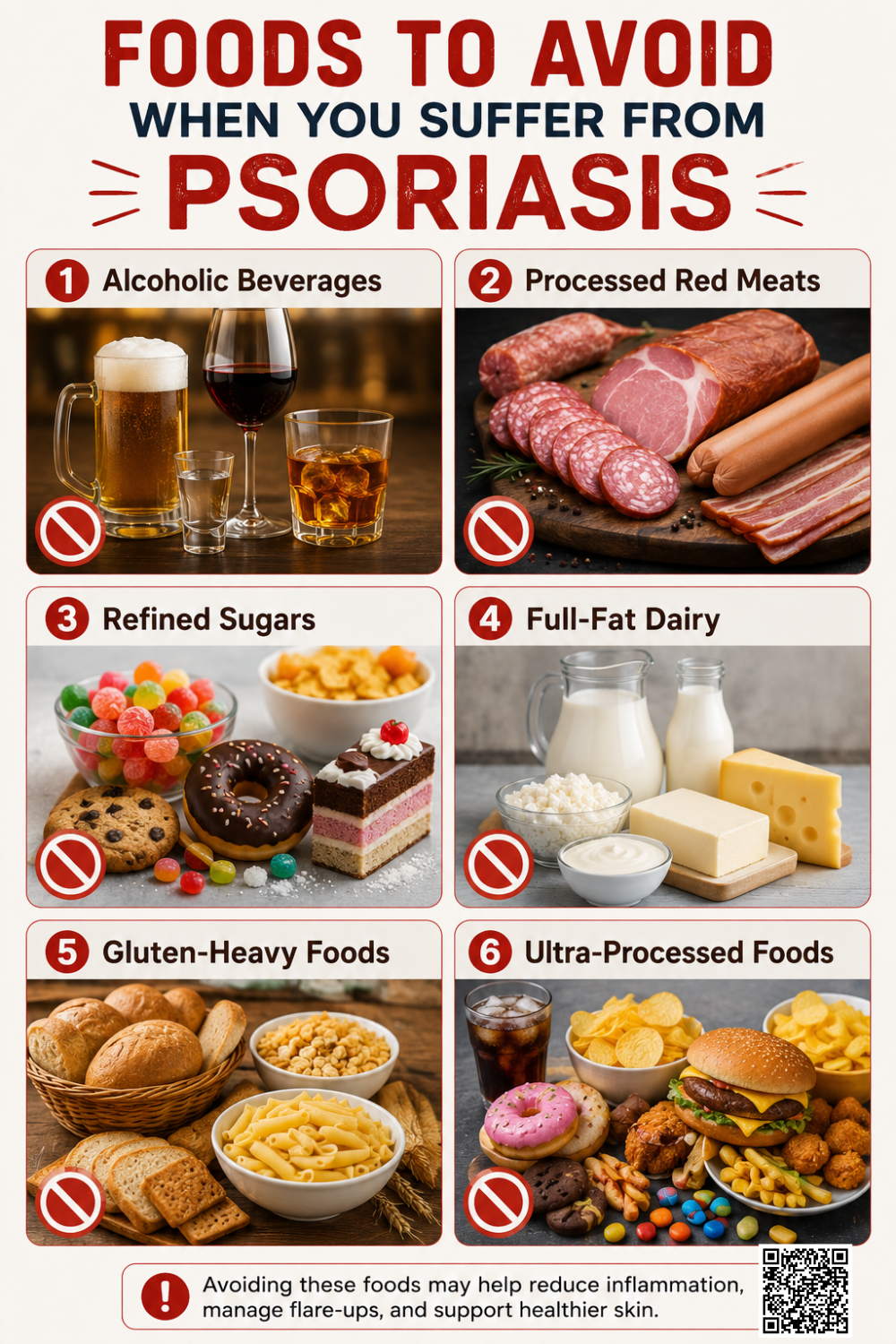
1. Alcoholic Beverages
Heavy alcohol consumption triggers systemic inflammation, worsens skin lesions, and reduces the effectiveness of prescribed psoriasis medications, making strict limitation essential for disease control 22.
2. Processed Red Meats
Meats like sausage and bacon contain high levels of arachidonic acid, a polyunsaturated fat that actively fuels inflammatory pathways and worsens psoriatic skin plaques 23.
3. Refined Sugars
Highly processed sweets spike blood glucose levels, prompting the body to release inflammatory immune proteins called cytokines that stimulate rapid, abnormal skin cell growth 24.
4. Full-Fat Dairy
Dairy products contain casein and natural inflammatory fatty acids. Eliminating whole milk and cheese often decreases chronic inflammation and improves severe skin scaling 25.
5. Gluten-Heavy Foods
Psoriasis is heavily linked to gluten sensitivity. If you possess celiac antibodies, completely eliminating wheat and barley drastically reduces systemic inflammation and clears lesions.
6. Ultra-Processed Foods
Packaged snacks contain trans fats and synthetic preservatives that disrupt the gut microbiome, directly triggering the immune system to produce psoriasis-worsening systemic inflammation.
When To see Doctor when you suffer from Psoriasis
1. Joint Pain and Stiffness
Seek immediate medical evaluation if you experience swollen, stiff, or painful joints. This signals psoriatic arthritis, which causes permanent, irreversible joint destruction if delayed in treatment 26.
2. Widespread Skin Involvement
Consult a doctor when plaques cover extensive body areas, typically exceeding ten percent of your skin surface, as this severe inflammation requires systemic prescription medications to control.
3. Signs of Bacterial Infection
Contact a healthcare provider immediately if skin cracks develop expanding redness, warmth, or leak pus. These symptoms indicate a secondary bacterial infection requiring prescription antibiotics.
4. Failure of Home Remedies
Schedule a medical appointment if over-the-counter treatments fail to relieve intense itching, or if skin plaques continue to rapidly thicken and spread despite consistent daily home care.
5. Significant Psychological Distress
Seek professional help if the condition severely disrupts sleep, restricts daily physical activities, or triggers feelings of severe anxiety and clinical depression, which frequently accompany chronic psoriasis.
Comments
comments