

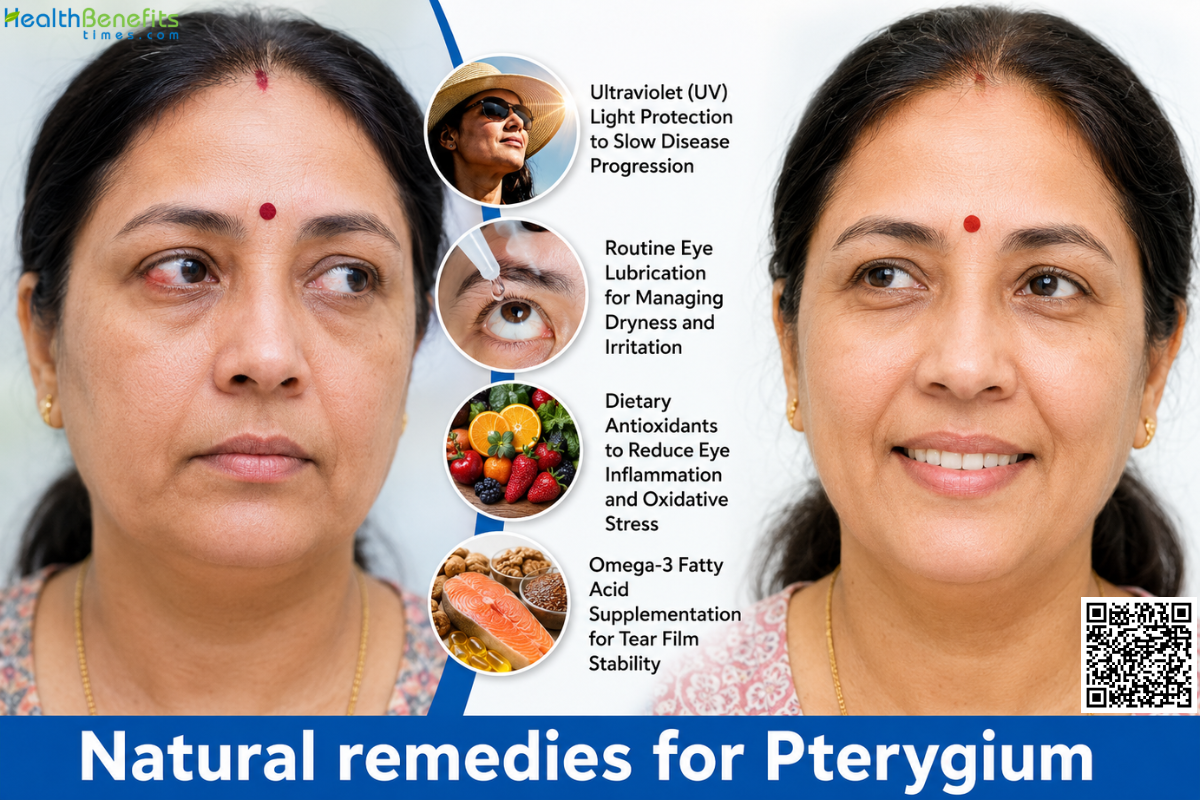
Causes of Pterygium
1. Ultraviolet (UV) Light Exposure
The primary and most significant cause of a pterygium is chronic, long-term exposure to ultraviolet radiation from the sun. Prolonged UV exposure damages the cellular DNA on the clear surface of the eye, triggering abnormal and rapid tissue growth.
2. Dry Environments
Spending extensive time in hot, dry, or low-humidity climates increases the likelihood of developing this condition. A chronic lack of moisture degrades the eye’s protective tear film, leading to persistent irritation that promotes the development of the fleshy lesion 5.
3. Dust and Airborne Irritants
Frequent exposure to sand, dirt, and dust physically irritates the outer layer of the eye. This continuous mechanical irritation causes chronic inflammation, which acts as a catalyst for the tissue to thicken and spread toward the cornea.
4. Wind Exposure
Constant exposure to harsh winds accelerates the evaporation of natural tears, heavily drying out the eye. Wind also drives microscopic debris onto the eye’s surface, compounding the continuous irritation and cellular damage required for a pterygium to form.
Symptoms of Pterygium
1. Visible Tissue Growth
The most apparent sign is a raised, pink, wedge-shaped fleshy growth on the white part of the eye, most commonly forming near the inner corner next to the nose.
2. Redness and Inflammation
The localized area around the growth frequently becomes bloodshot and swollen, particularly when the eye is exposed to wind, dust, or prolonged sunlight.
3. Foreign Body Sensation
People often experience a persistent gritty or scratchy feeling, creating the uncomfortable illusion that a piece of sand or debris is permanently trapped under the eyelid.
4. Dryness and Itching
Because the raised tissue disrupts the smooth distribution of the natural tear film, the surface of the eye dries out rapidly, leading to chronic itching and discomfort.
5. Excessive Tearing
As an automatic reflex to the constant surface dryness and mechanical irritation, the tear glands may overcompensate, causing the affected eye to water heavily.
6. Blurred or Distorted Vision
In advanced stages, the fleshy tissue can aggressively spread across the cornea. This pulling effect alters the natural curve of the eye to induce astigmatism, or directly obscures the pupil, resulting in noticeably blurred or distorted vision.
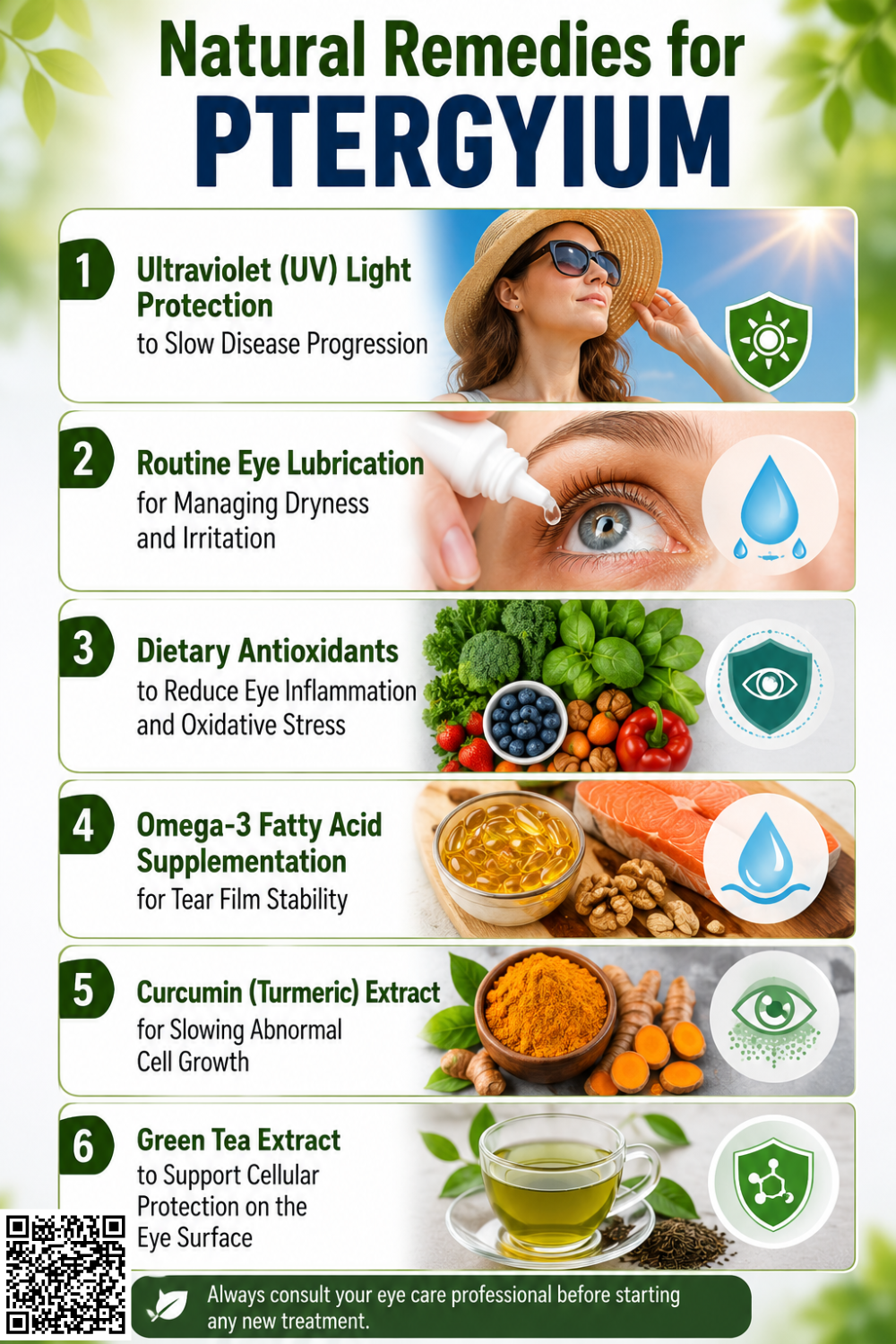
1. Ultraviolet (UV) Light Protection to Slow Disease Progression
How it may help
Shielding the eyes from ultraviolet sunlight directly halts the continuous cellular damage that fuels the growth of a pterygium. By eliminating this primary trigger, UV protection stops ongoing inflammation and prevents the fleshy tissue from expanding further across the surface of the eye.
What research says
Clinical studies confirm that chronic UV radiation is the leading environmental factor responsible for pterygium development and progression. Research concludes that consistent use of UV-blocking lenses significantly reduces the rate of tissue growth and lowers the risk of the condition worsening over time.
How to use it safely
You should wear wrap-around sunglasses that block 99% to 100% of both UVA and UVB rays whenever you are outdoors. Pair your sunglasses with a wide-brimmed hat to block overhead sunlight and prevent reflected rays from reaching your eyes.
Potential precautions or side effects
Ensure your sunglasses are certified for full UV protection. Wearing dark lenses without proper filters causes pupils to dilate, paradoxically increasing harmful light exposure to the eyes.
2. Routine Eye Lubrication for Managing Dryness and Irritation
How it may help
Applying artificial tears directly soothes the eye by restoring lost moisture and smoothing the tear film over the raised pterygium. This constant lubrication reduces the physical friction caused by blinking, washes away environmental irritants like dust, and prevents the localized dryness that triggers chronic inflammation.
What research says
Clinical guidelines indicate that frequent use of topical lubricating drops successfully manages the irritating symptoms of a pterygium, such as redness and a gritty sensation. While artificial tears cannot shrink or remove the fleshy growth, they effectively stabilize the tear film and suppress mild surface inflammation.
How to use it safely
You should use over-the-counter, preservative-free artificial tear drops to moisturize your eyes. Apply one to two drops in the affected eye four to six times daily, or whenever you feel dryness or irritation. Preservative-free formulas are safe for frequent, long-term use without damaging the eye surface.
Potential precautions or side effects
Strictly avoid using “redness-relief” eye drops. These contain chemicals that temporarily shrink blood vessels but frequently cause severe rebound redness and worsening irritation once they wear off.
3. Dietary Antioxidants to Reduce Eye Inflammation and Oxidative Stress
How it may help
Antioxidants neutralize unstable molecules called free radicals, which are produced by UV light and cause cellular damage. By reducing this oxidative stress, natural antioxidants decrease inflammation on the surface of the eye and help prevent the abnormal tissue growth of a pterygium from worsening.
What research says
Scientific studies confirm that oxidative stress heavily contributes to pterygium formation. Research concludes that high levels of dietary antioxidants help protect ocular surface cells from UV-induced damage, effectively suppressing the inflammatory pathways that drive the progression of this eye condition 6.
How to use it safely
You should focus on eating a balanced diet filled with dark leafy greens, citrus fruits, nuts, and berries to absorb natural antioxidants. If considering supplements, consult your doctor first to determine the correct dosage and ensure they do not interact with your current medications.
Potential precautions or side effects
Excessive intake of antioxidant supplements can cause stomach upset, nausea, and potentially dangerous interactions with blood-thinning medications. It is safest to obtain these nutrients directly from whole foods.
4. Omega-3 Fatty Acid Supplementation for Tear Film Stability
How it may help
Omega-3 fatty acids improve the quality of oil produced by the eyelid glands. This strengthens the natural tear film, preventing rapid moisture evaporation. By keeping the eye thoroughly lubricated, omega-3s reduce the chronic dryness, friction, and surface inflammation that can irritate and worsen a pterygium.
What research says
Clinical trials confirm that omega-3 supplementation significantly improves tear film stability and decreases overall inflammation on the surface of the eye. Researchers conclude that managing this dryness protects the ocular surface, effectively reducing the constant irritation that contributes to pterygium progression 7.
How to use it safely
You can increase your omega-3 intake by eating fatty fish, such as salmon or sardines, twice weekly. If opting for dietary supplements like fish oil, consult your healthcare provider to determine the correct daily dosage and ensure it is safe for you.
Potential precautions or side effects
High doses of omega-3 supplements can increase bleeding risks and interfere with blood-thinning medications. Common, mild side effects include a fishy aftertaste, heartburn, and mild stomach upset.
5. Curcumin (Turmeric) Extract for Slowing Abnormal Cell Growth
How it may help
Curcumin, the active compound in turmeric, possesses potent anti-inflammatory properties that help control abnormal tissue. It directly targets the rapidly dividing cells within a pterygium, suppressing their multiplication and blocking the formation of new blood vessels that supply the fleshy growth with nutrients 8.
What research says
Laboratory studies confirm that curcumin significantly inhibits the proliferation of human pterygium cells and successfully triggers programmed cell death in the abnormal tissue. Researchers conclude that curcumin suppresses key growth factors, demonstrating strong potential as a natural agent to halt the progression of this eye condition.
How to use it safely
You can safely add turmeric powder to your daily meals, soups, or teas. Because curcumin is poorly absorbed by the body, always consume it alongside black pepper and a healthy fat to boost absorption. If taking concentrated supplements, consult your doctor to determine a safe dosage.
Potential precautions or side effects
High doses of curcumin supplements may cause stomach upset, nausea, or diarrhea. Because it acts as a mild blood thinner, you must consult a doctor if taking anticoagulant medications.
6. Green Tea Extract to Support Cellular Protection on the Eye Surface
How it may help
Green tea contains a powerful antioxidant called epigallocatechin gallate (EGCG). This compound directly protects the eye surface by reducing oxidative stress caused by ultraviolet light. Furthermore, EGCG actively prevents the abnormal cells of a pterygium from surviving, multiplying, and migrating across the clear part of the eye 9.
What research says
Laboratory studies demonstrate that treating human pterygium cells with green tea extract and EGCG significantly reduces the survival and spread of the fleshy growth. Researchers conclude that these catechins successfully suppress abnormal tissue proliferation without damaging surrounding healthy cells, offering strong potential for managing the condition.
How to use it safely
You can safely consume two to three cups of freshly brewed green tea daily to absorb its systemic antioxidants. Alternatively, you can place clean, completely cooled green tea bags over your closed eyelids for a soothing compress to relieve localized surface irritation and swelling.
Potential precautions or side effects
Never drip brewed tea directly into your eyes, as this introduces dangerous bacteria. High doses of concentrated green tea supplements may cause stomach upset, jitteriness, or rare liver complications.
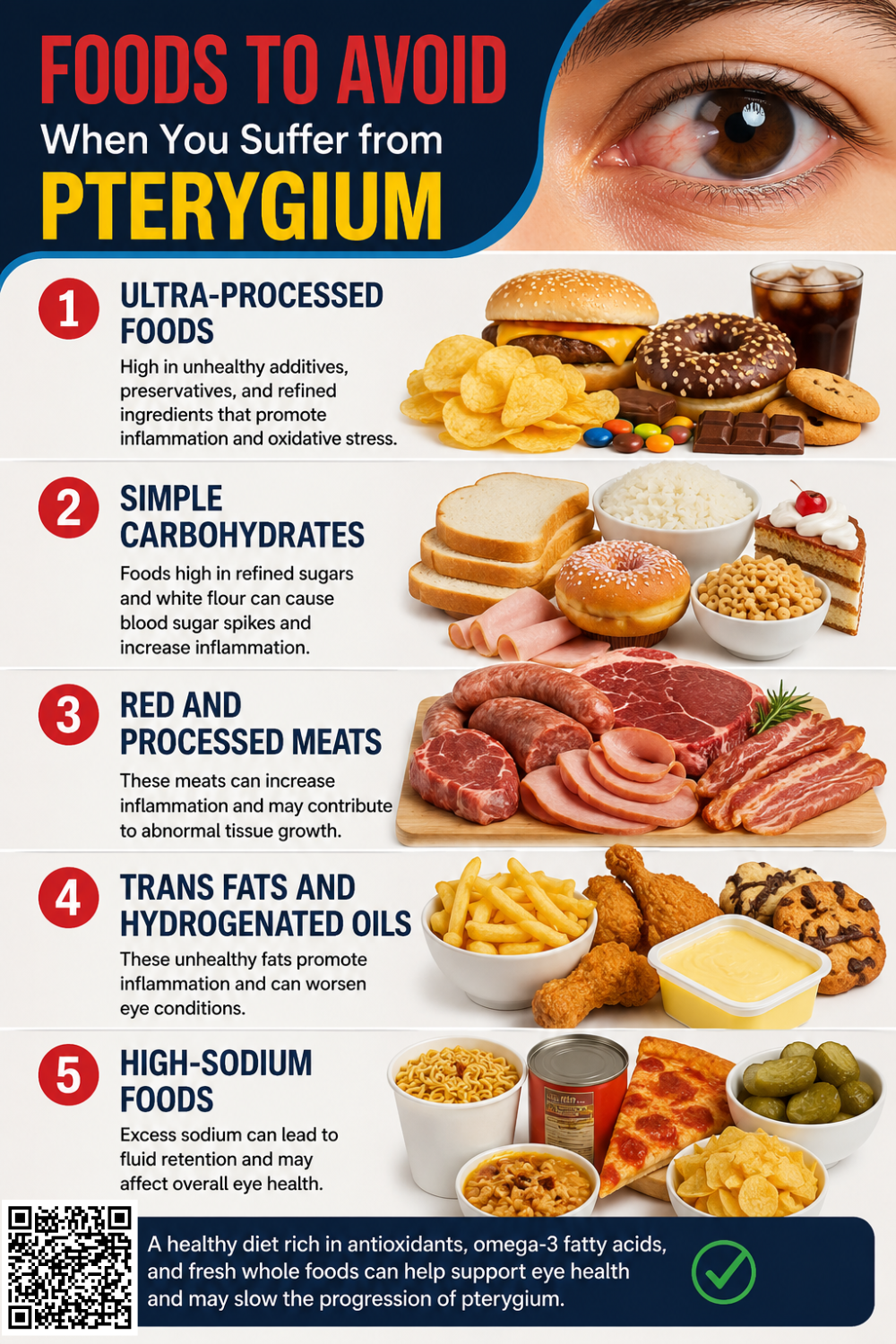
1. Ultra-Processed Foods
These products contain synthetic preservatives and unhealthy fats that trigger systemic inflammation and oxidative stress, both of which actively accelerate pterygium progression and chronic eye irritation 10.
2. Simple Carbohydrates
Sugary snacks and white bread spike blood sugar levels, creating a pro-inflammatory environment that worsens chronic eye surface inflammation and disrupts overall tear film stability.
3. Red and Processed Meats
Frequent consumption of beef and cured meats elevates low-density lipoprotein (LDL) cholesterol. Clinical and genetic research links high LDL cholesterol directly to a significantly increased pterygium risk 11.
4. Trans Fats and Hydrogenated Oils
Found in margarine and commercial baked goods, trans fats severely raise LDL cholesterol levels, creating metabolic conditions that promote the development and worsening of abnormal ocular tissue.
5. High-Sodium Foods
Excessive salt from heavily processed foods disrupts systemic fluid balance, compounding localized eye dryness and mechanical friction on the ocular surface, which persistently irritates the fleshy growth 12.
When To See a Doctor for Pterygium
1. Vision Changes
If the fleshy growth alters the shape of the cornea or obscures the pupil, it induces astigmatism and significantly blurs your normal vision.
2. Persistent Inflammation
You must seek medical care if chronic redness, swelling, and severe irritation fail to improve after regularly using over-the-counter, preservative-free artificial tear drops.
3. Rapid Tissue Growth
An aggressively expanding lesion requires immediate clinical assessment to confirm the diagnosis and definitively rule out precancerous conditions like ocular surface squamous neoplasia 13.
4. Restricted Eye Movement
In advanced cases, severe scar tissue formation physically tethers the eye, severely limiting normal eye rotation and directly causing distressing double vision.
5. Significant Cosmetic Distress
If the prominent, bloodshot growth causes severe cosmetic concern, consult a specialist to discuss safe surgical excision and grafting options to restore the eye’s appearance.
Comments
comments