

Causes of PTSD (Post Traumatic Stress Disorder)
- Military Combat: Exposure to warfare, active combat zones, or life-threatening military operations is a widely recognized trigger for the condition 5.
- Physical and Sexual Violence: Experiencing direct interpersonal trauma, such as domestic violence, physical assault, mugging, or sexual assault, severely disrupts psychological safety and frequently leads to the disorder 1.
- Childhood Abuse and Neglect: Enduring long-term physical, emotional, or sexual abuse during childhood fundamentally alters stress-response systems and significantly increases the risk of developing symptoms in adulthood 6.
- Severe Accidents: Surviving sudden, life-threatening incidents, including major motor vehicle collisions, plane crashes, or severe industrial accidents, can cause lasting psychological distress 7.
- Natural and Human-Made Disasters: Living through catastrophic events like earthquakes, hurricanes, floods, terrorist attacks, or mass shootings exposes individuals to profound, immediate danger and widespread trauma 8.
- Sudden Loss or Medical Trauma: Witnessing a death, experiencing the violent or unexpected loss of a loved one, or enduring sudden, life-threatening medical emergencies (such as waking up during surgery or severe ICU stays) can act as a primary catalyst for traumatic stress 5.
Symptoms of PTSD (Post Traumatic Stress Disorder)
- Intrusive Memories and Re-experiencing: Individuals frequently relive the traumatic event through intense, unwanted memories, vivid flashbacks that make them feel as if the danger is happening all over again, or deeply distressing nightmares 1.
- Avoidance Behaviors: A core symptom involves actively staying away from places, people, objects, or activities that trigger memories of the trauma, as well as consciously attempting to suppress related thoughts and feelings 8.
- Negative Changes in Mood and Thinking: The disorder frequently causes profound shifts in a person’s mindset, including persistent negative beliefs about oneself or the world, overwhelming feelings of guilt or shame, and a strong sense of emotional detachment from friends and family 5.
- Heightened Physical and Emotional Reactivity: Often referred to as hyperarousal, this category includes being easily startled, feeling constantly on guard for potential threats, struggling with severe sleep disruption, and experiencing unexpected outbursts of anger or irritability 7.
- Cognitive Difficulties: Many individuals experience significant issues with concentration and focus in their daily lives, along with memory blocks that prevent them from recalling important details of the traumatic event itself 1.
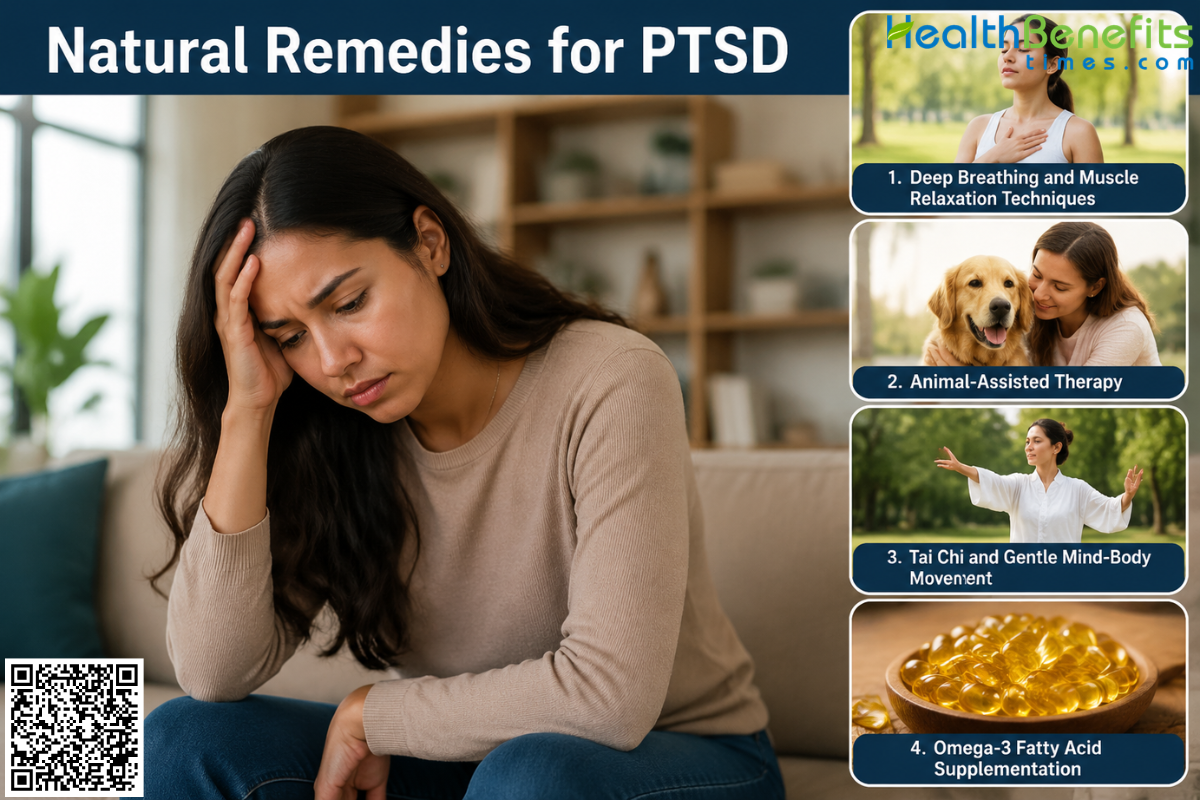
Natural Remedies for PTSD (Post Traumatic Stress Disorder)
1. Mindfulness-Based Stress Reduction and Meditation
How it may help
Mindfulness and meditation help individuals focus their attention on the present moment rather than intrusive past memories. By teaching individuals to observe their thoughts and physical sensations without judgment, these practices lower the body’s baseline stress response and reduce severe emotional reactivity to trauma triggers 9.
What research says
Clinical studies confirm that mindfulness-based stress reduction (MBSR) significantly decreases PTSD symptom severity, particularly avoidance and hyperarousal 10. Evidence indicates it is an effective complementary approach that improves mood, lessens depression, and enhances overall emotional regulation when recovering from trauma 9.
How to use it safely
To practice safely, start with brief, guided sessions led by a certified instructor who understands trauma. You should integrate mindfulness as an addition to standard mental health care rather than relying on it as a replacement for professional trauma therapies 11.
Potential precautions or side effects
Quiet, unsupervised meditation with closed eyes can sometimes trigger flashbacks, severe anxiety, or dissociation in trauma survivors 10. Stop the practice immediately if your symptoms worsen.
2. Trauma-Informed Yoga Practices
How it may help
Trauma-informed yoga helps individuals gently rebuild a safe connection with their physical bodies after experiencing trauma. By combining controlled breathing with specific physical postures, the practice calms the central nervous system, lowers rapid heart rates, and reduces the constant state of high alert common in the disorder 12.
What research says
Clinical evidence demonstrates that regular trauma-sensitive yoga significantly reduces core PTSD symptoms, including intrusive thoughts and severe anxiety 13. Studies show that patients who participate in these specialized yoga programs often experience improved sleep quality and a greater ability to manage extreme emotional distress 11.
How to use it safely
You should exclusively seek classes led by instructors specifically certified in trauma-informed yoga, rather than attending standard fitness yoga. Practice in a comfortable environment where you retain full control over your movements, and use it alongside formal psychological therapy 12.
Potential precautions or side effects
Certain deep breathing exercises, unexpected physical adjustments from instructors, or vulnerable body postures can trigger distressing traumatic memories, intense physical discomfort, or feelings of dissociation 13.
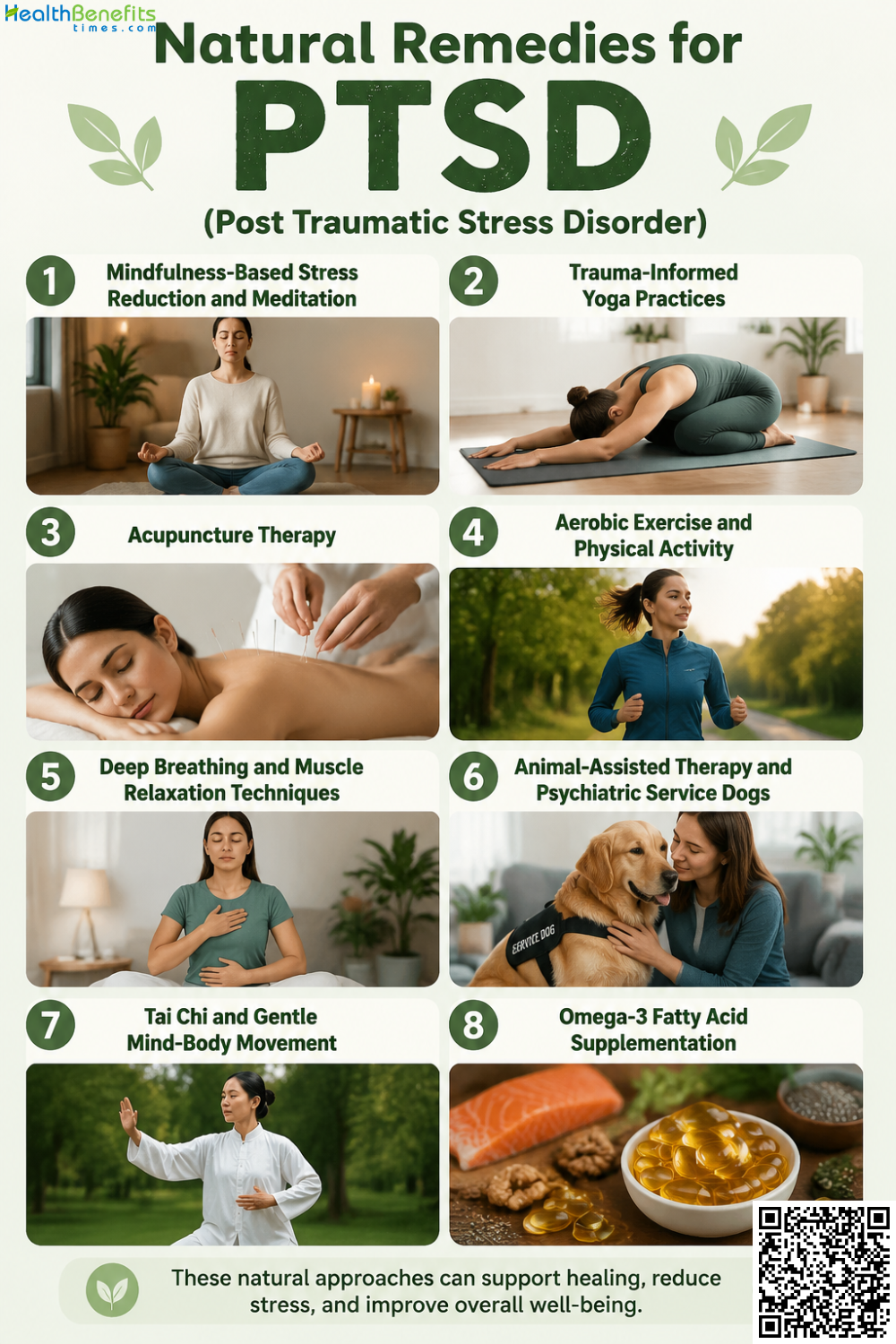
3. Acupuncture Therapy
How it may help
Acupuncture involves inserting thin needles into specific body points to stimulate physiological responses. For PTSD, it aims to regulate the autonomic nervous system, potentially reducing the hyperarousal—such as increased heart rate and muscle tension—that often characterizes the disorder, thereby promoting physical and emotional relaxation 14.
What research says
Research indicates that acupuncture may effectively reduce PTSD symptom severity when used as a complementary treatment. Clinical studies suggest it can alleviate anxiety and physical tension, helping patients manage stress more effectively than no treatment, although it is best utilized alongside established, evidence-based psychological therapies 15.
How to use it safely
You should seek treatment only from a licensed, qualified acupuncturist who strictly follows sterile, single-use needle protocols. Ensure you coordinate this care with your primary mental health provider to verify it aligns with your comprehensive treatment plan and does not interfere with other ongoing therapies 14.
Potential precautions or side effects
Common, mild side effects include soreness, minor bruising, or bleeding at the needle insertion sites. Rarely, improper technique may cause nerve injury or infection 14.
4. Aerobic Exercise and Physical Activity
How it may help
Aerobic exercise helps regulate the central nervous system and promotes the release of endorphins, which naturally elevate mood. Regular physical activity reduces severe hyperarousal symptoms, decreases physiological tension, and helps individuals process stress more effectively, making it easier to cope with daily trauma triggers 16.
What research says
Clinical studies demonstrate that regular aerobic exercise significantly reduces core PTSD symptoms, including intrusive thoughts and avoidance behaviors 17. Research confirms that integrating physical activity into trauma recovery plans improves sleep quality, lessens co-occurring depression, and enhances the overall effectiveness of standard psychological therapies 16.
How to use it safely
You should consult your healthcare provider before beginning any new exercise program. Start with low-impact activities, such as brisk walking, and gradually increase the duration and intensity to prevent physical strain while safely building your tolerance to increased heart rates 16.
Potential precautions or side effects
Intense aerobic exercise rapidly increases heart rates and breathing. In sensitive individuals, these physiological changes can mimic panic attacks and inadvertently trigger severe anxiety or traumatic memories 16.
5. Deep Breathing and Muscle Relaxation Techniques
How it may help
Deep breathing and progressive muscle relaxation help calm the body’s overactive fight-or-flight response. By intentionally slowing the breath and systematically releasing physical tension, these techniques activate the parasympathetic nervous system. This lowers heart rate and blood pressure, directly counteracting the severe physiological hyperarousal commonly experienced during trauma triggers 18.
What research says
Clinical practice guidelines and literature reviews indicate that relaxation techniques can be a helpful component in treating acute stress and reducing hyperarousal symptoms 18. Studies show these methods are particularly beneficial as an adjunctive treatment to improve overall sleep quality and safely decrease anxiety when combined with standard psychological therapies 19.
How to use it safely
You should practice these techniques in a quiet, comfortable environment when you are already relatively calm, rather than waiting for a severe panic episode. Incorporate them as an everyday stress management tool alongside your prescribed trauma-focused therapies, rather than using them as a standalone cure 20.
Potential precautions or side effects
In rare cases, focusing deeply on bodily sensations or breathing can paradoxically worsen anxiety, trigger distressing traumatic memories, or cause feelings of dissociation in trauma survivors 20.
6. Animal-Assisted Therapy and Psychiatric Service Dogs
How it may help
Psychiatric service dogs are specially trained to detect and interrupt early signs of anxiety or panic attacks. By providing a constant sense of physical safety and emotional grounding, these animals help individuals navigate stressful environments and manage the severe hyperarousal symptoms associated with trauma 21.
What research says
Clinical research demonstrates that veterans paired with psychiatric service dogs experience significantly lower overall PTSD symptom severity compared to those receiving standard care alone 21. Studies consistently show that animal-assisted interventions improve sleep quality, decrease reliance on medications, and significantly reduce co-occurring depression and anxiety 22.
How to use it safely
You should obtain a psychiatric service dog exclusively through accredited organizations, such as Assistance Dogs International, to ensure proper training. Always integrate the animal into a comprehensive treatment plan supervised by your mental health provider rather than relying on it as a standalone cure 23.
Potential precautions or side effects
Caring for a service animal requires significant financial and emotional commitment. The stress of daily animal maintenance or the eventual loss of the dog may inadvertently worsen emotional distress 21.
7. Tai Chi and Gentle Mind-Body Movement
How it may help
Tai Chi is a mind-body practice that combines slow, deliberate movements with deep diaphragmatic breathing. By encouraging a focus on the present moment and body awareness, it actively promotes physical relaxation and regulates the autonomic nervous system, reducing the severe physiological arousal frequently experienced by trauma survivors 24.
What research says
Clinical pilot studies demonstrate that trauma survivors who practice Tai Chi experience notable reductions in intrusive thoughts, emotional distress, and physical hyperarousal 24. Research reviews confirm this gentle exercise safely improves physical functioning, enhances mood, and lessens co-occurring conditions like chronic pain and depression during trauma recovery 25.
How to use it safely
You should learn the basic movements from a qualified instructor who understands your physical abilities. Practice gently in a comfortable space, starting with brief sessions to prevent strain. Always integrate it as a coping tool alongside your primary, evidence-based psychological trauma therapies 26.
Potential precautions or side effects
While generally very safe, improper posture during movements can cause mild joint or muscle pain. Occasionally, the increased focus on internal body sensations may temporarily trigger distressing emotions or memories 27.
8. Omega-3 Fatty Acid Supplementation
How it may help
Omega-3 fatty acids are essential nutrients that reduce inflammation in the central nervous system and support healthy brain cell communication. By regulating brain chemicals linked to mood and stress, these supplements may help stabilize emotional responses and lower the intense physiological arousal associated with trauma 28.
What research says
Clinical research yields promising results regarding omega-3s for trauma recovery. Studies indicate that daily supplementation can reduce core PTSD symptoms and may help prevent the disorder from worsening after a traumatic event 28. However, experts emphasize that omega-3s provide adjunctive support rather than acting as a standalone cure 29.
How to use it safely
You should consult your healthcare provider before starting supplementation to determine the correct dosage. Look for high-quality fish or algal oil products. Always use omega-3s as a complementary addition to your primary trauma treatments rather than replacing prescribed therapy 29.
Potential precautions or side effects
Omega-3 supplements can cause mild stomach upset, fishy breath, and nausea. At high doses, they may increase bleeding risks or interact dangerously with prescription blood-thinning medications 29.
Foods to Avoid When You Suffer from PTSD
1. High-Caffeine Beverages
Caffeine overstimulates the central nervous system. This exacerbates core hyperarousal symptoms, easily triggers severe anxiety, and disrupts the deep sleep necessary for trauma recovery 30.
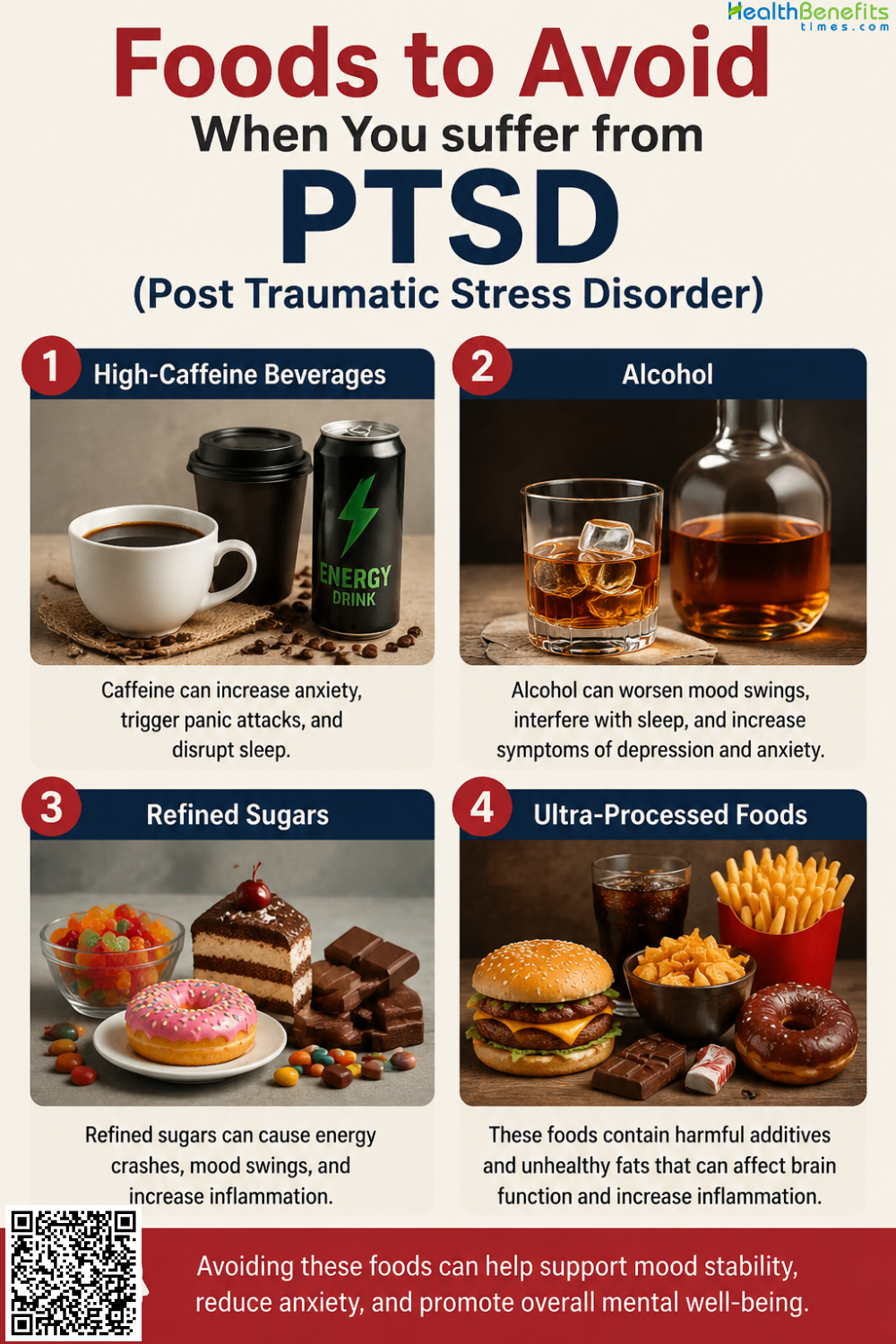
2. Alcohol
While often used for temporary relief, alcohol significantly disrupts REM sleep, deepens co-occurring depression, and ultimately intensifies the severity and frequency of long-term trauma symptoms 31.
3. Refined Sugars
Consuming high amounts of processed sugar causes rapid blood glucose spikes and crashes. These sudden physical shifts often mimic panic attacks and severely worsen mood instability 32.
4. Ultra-Processed Foods
Heavily processed foods drive systemic bodily inflammation. High neuroinflammation is directly linked to an increased severity of psychiatric disorders, making emotional regulation much more difficult for trauma survivors 33.
When to See a Doctor When You Struggle from PTSD
It is crucial to seek professional medical evaluation if trauma-related symptoms become unmanageable or persistent.
1. Symptoms Last Longer Than a Month
You should consult a doctor if severe emotional distress, nightmares, or flashbacks continue for more than four weeks following the traumatic event 1.
2. Severe Disruption of Daily Life
Seek professional help if symptoms significantly interfere with your ability to perform at work, maintain personal relationships, or manage routine daily tasks 8.
3. Thoughts of Self-Harm or Suicide
You must seek immediate emergency medical care if you experience thoughts of suicide, self-harm, or feel completely overwhelmed and unable to cope 7.
4. Relying on Substances to Cope
Consult a healthcare provider if you find yourself increasingly using alcohol, prescription medications, or illicit drugs to numb painful emotions or induce sleep 31.
Comments
comments