

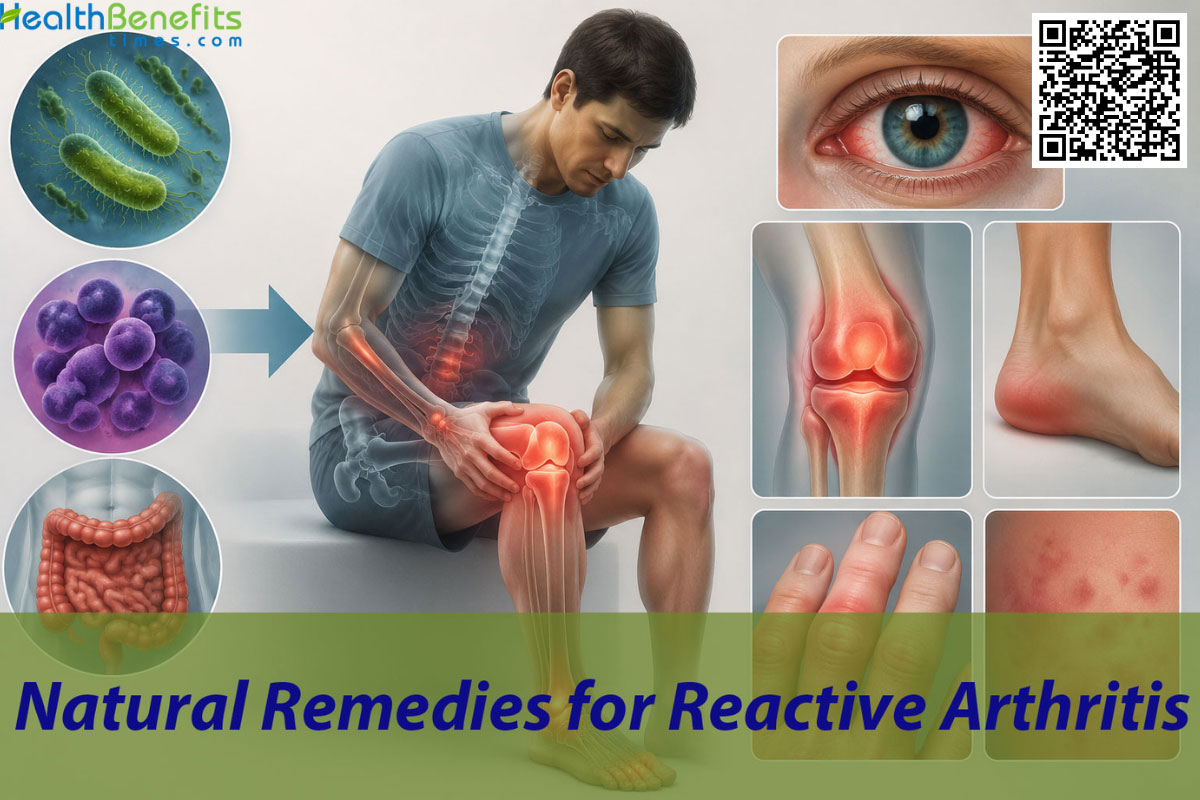
Joint pain and swelling typically begin one to six weeks after the triggering infection. The inflammation primarily targets the large joints of the lower body, particularly the knees, ankles, and feet. In addition to joint discomfort, the condition can also cause eye redness and pain during urination. While the symptoms can be uncomfortable, they are usually temporary and resolve within several months for most people.
Causes of Reactive Arthritis
- Gastrointestinal Bacterial Infections
- Genitourinary Bacterial Infections
- Other Infectious Triggers
- Genetic Predisposition
Symptoms of Reactive Arthritis
- Acute, asymmetric joint pain, warmth, and swelling, primarily affecting large joints of the lower extremities such as the knees, ankles, and feet (oligoarthritis).
- Diffuse, painful swelling of entire fingers or toes, commonly referred to as “sausage digits” (dactylitis).
- Tenderness and inflammation at the sites where tendons attach to bone, most notably at the Achilles tendon or the bottom of the heel (enthesitis).
- Eye inflammation presenting as redness, pain, light sensitivity, or blurred vision (conjunctivitis or uveitis).
- Genitourinary discomfort, including pain or burning during urination, increased frequency, pelvic pain, or discharge (urethritis or cervicitis).
- Inflammatory lower back, lumbar spine, or buttock pain that is often worse at night or accompanied by early morning stiffness (sacroiliitis).
- Painless ulcers or sores located in the mouth or on the tongue.
- Thickened, hyperkeratotic skin lesions or pustular rashes, typically appearing on the soles of the feet or the palms of the hands (keratoderma blennorrhagicum).
- Genital lesions or ulcers, such as inflammation of the glans penis (circinate balanitis).
- Nail abnormalities, including dystrophy, thickening, or changes resembling psoriasis.
Natural Remedies for Reactive Arthritis
1. Omega-3 Polyunsaturated Fatty Acids (Fish Oil)
Omega-3 fatty acids are a group of essential, healthy fats found mostly in marine life, such as cold-water fish and algae. They are called “essential” because the human body cannot build them from scratch; they must be consumed through diet or daily supplements 6. The two most important types of omega-3s for reducing inflammation are eicosapentaenoic acid (EPA) and docosahexaenoic acid (DHA).
How It May Help
The typical modern diet is overloaded with a different type of fat called omega-6, which is found in high amounts in vegetable oils and heavily processed foods. In many people, the ratio of omega-6 to omega-3 fats reaches as high as 30 to 1. This imbalance is dangerous because the body uses omega-6 fats to create chemicals that promote inflammation, pain, and swelling.
When high doses of omega-3 fats are consumed, they physically enter the outer walls of the body’s immune cells. By doing this, they compete directly with the inflammatory omega-6 fats, starving the inflammation process of its basic building blocks. Furthermore, the body transforms omega-3s into specialized healing molecules called resolvins, which send chemical signals that command the immune system to stop attacking the joints and begin the healing process.
What Research Suggests
Clinical research shows that omega-3 fatty acids possess powerful abilities to change how the immune system behaves. In scientific studies using human blood cells, adding fish oil significantly reduced the production of major inflammatory chemicals, including tumor necrosis factor-alpha (TNF-a) and interleukin-6 (IL-6). Furthermore, EPA and DHA have been shown to directly reduce the number of specific white blood cells (CD4+ T cells) that travel to the joints to cause swelling.
Extensive reviews of multiple clinical trials confirm that supplementing with omega-3s improves the daily lives of patients suffering from inflammatory joint diseases. Patients who take these healthy fats regularly report a significant drop in the total number of tender and swollen joints they experience. They also experience less severe morning stiffness and, importantly, are frequently able to reduce their reliance on harsh, over-the-counter pain medications 7.
How to Use It Safely
To get the joint-protecting benefits of omega-3s, you should look for high-quality fish oil, krill oil, or algae oil supplements. Check the nutrition label carefully to ensure the supplement provides a high concentration of the active ingredients, EPA and DHA. For a strong anti-inflammatory effect, experts generally suggest a total daily dose of 2,000 to 3,000 milligrams of combined EPA and DHA. Because these are fats, you should always take your supplement with a meal that contains other natural fats (like avocados or olive oil) to help your digestive system absorb them properly.
Potential Precautions or Side Effects
Fish oil is highly safe for the vast majority of people, but it does have a natural blood-thinning effect. If you are currently taking prescription blood thinners or if you have a surgery scheduled, you must consult your doctor before taking high doses of omega-3s to avoid the risk of easy bruising or bleeding. The most common side effects are minor stomach issues, such as a fishy aftertaste, burping, or mild heartburn. You can easily reduce these stomach issues by keeping your fish oil capsules in the refrigerator or by purchasing “enteric-coated” pills that dissolve further down in your digestive tract.
2. Probiotic Therapy and Microbiome Balancing
The human digestive system is filled with trillions of living microorganisms, known as the gut microbiome. These bacteria act as the control center for the body’s immune system. When the delicate balance of good and bad bacteria is ruined by illness, stress, or poor diet, the walls of the intestines become weak and leaky. This allows harmful bacteria and toxins to escape into the bloodstream, which causes the immune system to panic and create widespread inflammation. Because reactive arthritis is directly caused by bacterial infections, fixing the gut with healthy bacteria (probiotics) is a highly effective way to stop the disease at its source.
How It May Help
Probiotics are living, beneficial strains of bacteria that provide immense health benefits when swallowed in large amounts. They help heal reactive arthritis through three main actions. First, they restore the proper balance between healthy and harmful bacteria. Second, they physically crowd out the bad bacteria that cause disease. Third, they replace the good bacteria that were wiped out during the initial sickness 8.
Specific types of bacteria operate in unique ways to protect the body:
- Faecalibacterium: These good bacteria produce a chemical called butyrate, which stimulates the production of mucus to lubricate and protect the gut lining. Without it, the gut becomes vulnerable to invaders 9.
- Collinsella and Prevotella copri: These are harmful bacteria that break down the tight seals of the gut wall and release chemicals that cause massive inflammation in the joints. Good probiotics suppress the growth of these dangerous strains.
- Lactobacillus species: These beneficial bacteria secrete natural acids and vitamins that lower the pH of the intestines, creating an environment where bad bacteria simply cannot survive. They also improve the physical strength of the intestinal walls, stopping bad bacteria from leaking into the blood.
What Research Suggests
The clinical proof supporting the use of probiotics for joint inflammation is very strong. In animal studies designed to mimic reactive arthritis caused by Salmonella, consuming milk fermented with Lactobacillus casei completely prevented the joints from swelling. It did this by stopping the production of the specific immune cells (Th17 cells) that attack joint tissue 10.
In humans, a rigorous 12-month clinical trial tested 100 patients with newly diagnosed inflammatory arthritis. Half of the patients received standard drugs, while the other half received standard drugs plus a daily probiotic containing Lactobacillus casei, Lactobacillus salivarius, and Bifidobacterium breve 11. The results were striking. The group taking the probiotics showed much faster and longer-lasting reductions in pain, joint swelling, and disability. By the end of the year, the probiotic group had achieved near-complete remission from the disease, while the group taking only standard drugs returned to their original, painful baseline. The researchers concluded that taking probiotics was an independent predictor of achieving low disease activity and allowed patients to rely less on steroid medications.
Another 8-week study involving 60 patients tested a similar probiotic mix. Blood tests revealed that patients taking the probiotics experienced a massive, significant drop in high-sensitivity C-reactive protein (hs-CRP), which is a major chemical marker that doctors use to measure total body inflammation 12.
How to Use It Safely
When selecting a probiotic supplement to help with joint inflammation, you should look for a multi-strain formula that specifically includes well-researched species such as Lactobacillus casei, Lactobacillus acidophilus, and Bifidobacterium bifidum. The strength of a probiotic is measured in colony-forming units (CFUs). For therapeutic immune support, you should aim for a daily dose ranging from 10 billion to 50 billion CFUs. To get the best results, you must take the probiotic every single day. It is also helpful to eat a diet high in fiber (like garlic, asparagus, and onions), because fiber acts as food to help the good bacteria grow once they reach your stomach.
Potential Precautions or Side Effects
Probiotics are exceptionally safe for the general public and serve as a very gentle health support tool. When you first start taking high doses of new bacteria, you might experience mild gas, bloating, or changes in how often you use the bathroom. These minor stomach issues usually go away on their own within the first week as your digestive system adjusts. However, if you have a severely damaged immune system, or if you are taking extremely strong immune-suppressing drugs, you should talk to your doctor before starting live bacterial supplements to make sure they are safe for your specific situation.
3. Curcumin (Turmeric Extract)
Turmeric is a bright yellow root that has been used for thousands of years in traditional Asian medicine to treat pain and sickness. The most powerful, active chemical hidden inside the turmeric root is called curcumin 13. While the turmeric powder found in grocery stores contains only a tiny amount of this chemical, highly concentrated curcumin extracts are heavily researched by modern scientists for their incredible ability to stop inflammation at the cellular level.
How It May Help
In the human body, inflammation is controlled by a master genetic switch known as NF-kB. When you get sick or your immune system malfunctions, this switch flips “on,” commanding the body to create a flood of destructive chemicals that cause swelling, redness, and severe pain in the joints 14. Curcumin acts as a master regulator by directly blocking this switch, forcing it to stay in the “off” position.
Additionally, curcumin targets another internal communication system called the mTOR signaling pathway. When this pathway is overactive, it causes the tissue lining the joints to grow abnormally thick and aggressive 15. By slowing down this pathway, curcumin mimics the effects of very complex synthetic drugs, but it does so naturally and without causing toxic damage to the liver or stomach.
What Research Suggests
A massive review of 29 different clinical trials, which included nearly 2,400 participants, investigated the effects of curcumin on various types of arthritis. The patients took doses ranging from 120 mg to 1,500 mg daily for several weeks 16. The combined results of all these studies proved that curcumin safely and effectively improved the severity of inflammation and significantly lowered pain levels for arthritis sufferers.
In a specific meta-analysis focusing on autoimmune arthritis involving 539 patients, those who took curcumin showed a major reduction in the number of tender and swollen joints on their body. Furthermore, their blood tests showed significant drops in the erythrocyte sedimentation rate (ESR), which proves that the inflammation in their blood was actively clearing up 17.
How to Use It Safely
The biggest problem with curcumin is that the human body has a hard time absorbing it. If you swallow regular turmeric powder, most of it passes straight through your digestive tract without ever reaching your blood. To get the pain-relieving benefits, you must buy a special curcumin supplement designed for high absorption. Look for products that combine curcumin with black pepper extract (often listed as piperine), which forces the body to absorb the chemical. Other highly effective forms include liposomal curcumin, which wraps the medicine in tiny fat bubbles to help it enter the bloodstream. A normal dose to fight joint pain is between 500 mg and 1,500 mg per day, split into two separate doses.
Potential Precautions or Side Effects
Curcumin is considered extremely safe, even when people take high doses for long periods of time 18. The massive studies mentioned above found very few side effects, making it an excellent addition to standard medical treatments 14. However, if you take excessively high amounts, you might experience mild stomach upset, slight nausea, or diarrhea. Because curcumin naturally causes the body to produce more bile for digestion, you should speak to your doctor before taking strong extracts if you have a history of painful gallstones or blocked bile ducts. Lastly, curcumin can mildly thin the blood, so use caution if you are on prescription blood-thinning medicine.
4. Sarsaparilla (Smilax officinalis)
Sarsaparilla is a climbing, woody vine that grows naturally in the warm climates of Central and South America. While many people only know it as an old-fashioned flavoring for root beer, the roots of the Smilax officinalis plant have been a staple of traditional herbal medicine for hundreds of years. Herbalists have long used it to treat painful skin diseases like psoriasis and severe joint inflammation 19.
How It May Help
The true healing power of sarsaparilla comes from its dense concentration of natural plant chemicals called flavonoids and saponins. These specific compounds act as direct messengers to the immune system. Laboratory research reveals that sarsaparilla extracts have the incredible ability to turn down the body’s main inflammation switch (NF-kB) by nearly 62 percent.
By lowering this switch, the herb physically stops the body from releasing highly destructive immune chemicals like interleukin-6 (IL-6) and tumor necrosis factor-alpha (TNF-a). Even more impressively, sarsaparilla naturally blocks an enzyme in the body known as cyclooxygenase-2 (COX-2). This is exactly the same inflammatory enzyme that heavy prescription painkillers and NSAIDs are designed to block, meaning sarsaparilla offers a natural, biological alternative to standard drug therapy.
What Research Suggests
Authoritative medical texts, including the Physician’s Desk Reference for Herbal Medicines, officially document that Smilax species have strong, reliable effects on immune function and are historically proven to help treat autoimmune diseases.
In detailed clinical case reports, doctors have successfully used sarsaparilla root powder combined with other natural medicines (like turmeric and vitamin D) to treat severe, inflammatory joint disease. The reports show that patients taking this natural combination experienced massive reductions in joint swelling and morning stiffness. Most importantly, the patients noted that taking these supplements daily helped keep their joint pain at a very tolerable level for over a year without needing to increase their synthetic medications.
How to Use It Safely
If you want to try adding sarsaparilla to your daily routine, you can easily find it sold as powdered root inside gelatin capsules or as a strong liquid extract (tincture). In the successful clinical cases, doctors used a daily dose of roughly 400 to 500 mg of powdered sarsaparilla root capsule. Because herbal products are not always heavily regulated, you should buy your supplements from trusted, high-quality brands that clearly test their products for purity to ensure you are getting real Smilax officinalis.
Potential Precautions or Side Effects
Sarsaparilla is generally very safe and easy for most people to handle. However, the natural soapy chemicals (saponins) found in the root can sometimes upset an empty stomach or cause mild irritation. To prevent this, you should always take your sarsaparilla capsules in the middle of a solid meal. You should also be aware that sarsaparilla can occasionally increase how fast your body absorbs other drugs. If you are taking very sensitive prescription medications, you must tell your doctor before starting this herb to make sure it does not accidentally make your other medicines too strong.
5. Vitamin D3 Supplementation
Most people think of vitamin D simply as a nutrient found in milk that helps build strong bones. However, modern science has proven that vitamin D actually functions as a very powerful steroid hormone that controls vast parts of the human immune system. Almost every single white blood cell in your body has a special receptor designed specifically to receive instructions from vitamin D. Because of this, having enough vitamin D is absolutely critical for keeping inflammation under control.
How It May Help
There is a very strong and proven connection between lacking vitamin D and developing severe autoimmune and inflammatory diseases. When your body has optimal levels of this hormone, it actively stops the immune system from creating abnormal, confused white blood cells that mistakenly attack healthy joint tissues.
At a microscopic level, vitamin D acts just like other natural anti-inflammatory medicines. It slows down the genetic switches that cause inflammation and lowers the amount of inflammatory chemicals floating in the bloodstream. By calming these chemical storms, vitamin D effectively lowers the total amount of stress and swelling placed on the joints during a reactive arthritis attack.
What Research Suggests
Medical studies consistently show that people suffering from inflammatory joint diseases almost always have significantly lower levels of vitamin D in their blood compared to healthy people. Researchers have found that fixing this deficiency through daily supplementation is a highly effective way to reduce the terrible symptoms associated with autoimmune disorders.
In documented medical reports, doctors added high doses of vitamin D3 (cholecalciferol) to the treatment plans of patients suffering from severe joint inflammation. The results showed that the vitamin D therapy successfully helped the patients reduce their pain symptoms and keep their disease under control for long periods without flare-ups.
How to Use It Safely
Before you begin taking vitamin D, you should ask your doctor to perform a simple blood test (called a 25-hydroxyvitamin D test) to see exactly how low your current levels are. While average healthy people only need a small amount daily, people who are actively trying to fix a deficiency and calm down an angry immune system usually need much higher therapeutic doses. This often ranges from 2,000 to 5,000 International Units (IU) per day, and clinical studies sometimes use up to 10,000 IU daily. You should always buy the “D3” form of the vitamin (cholecalciferol), because your body absorbs and uses it much better than the cheaper “D2” form.
Potential Precautions or Side Effects
Vitamin D is a fat-soluble vitamin. This means that if you take too much, your body stores the extra amount in your fat cells rather than safely washing it out in your urine. Because of this, it is possible to build up toxic levels of vitamin D if you take massive doses for many months without checking your blood. Having too much vitamin D can cause a dangerous condition where too much calcium builds up in your blood, leading to nausea, weakness, and kidney stones. You must have your doctor check your blood levels once or twice a year to ensure you are staying within the safe, healthy range.
6. Cinnamon Extract (Cinnamaldehyde)
Cinnamomum cassia, widely known as simple cassia cinnamon, is a tropical tree whose bark is ground up and used in kitchens around the world. But beyond making food taste good, it is a highly respected medicine in traditional Asian healing practices. Scientists have found more than 160 different active chemicals inside cinnamon bark 20. The most medically powerful of these chemicals is an organic compound called cinnamaldehyde, which is the exact chemical that gives cinnamon its famous smell and spicy taste.
How It May Help
Cinnamaldehyde has profound abilities to stop inflammation at a very deep, cellular level. In diseases like reactive arthritis, joint swelling is heavily controlled by a microscopic cellular machine called the NLRP3 inflammasome. This machine acts like a factory that constantly pumps out chemicals to make the joints swell. Recent scientific discoveries show that cinnamaldehyde actually blocks this factory from being built in the first place, completely stopping the production of inflammatory chemicals like interleukin-1 beta.
Furthermore, cinnamaldehyde fixes a chemical glitch in the immune system. When inflammation is severe, immune cells build up too much of an acid called succinate, which triggers a massive immune alarm. Cinnamaldehyde clears out this acid buildup, silencing the alarm and protecting the joints from being destroyed.
What Research Suggests
Extensive laboratory experiments and animal testing have proven that cinnamaldehyde is a highly effective treatment against joint arthritis. In medical studies using rats with severe, chemically induced joint disease, giving the animals cinnamaldehyde caused a massive reduction in the swelling and redness of their paws and joints.
Detailed blood analysis in these studies showed that the cinnamon extract actively stopped the body from producing key pro-inflammatory signals, including IL-1b, TNF-alpha, and IL-6. The researchers also found that cinnamaldehyde reduced the production of the specific enzymes that cause pain and swelling. The scientists concluded that this natural flavoring chemical has enormous therapeutic potential to stop arthritis from getting worse.
How to Use It Safely
To use cinnamon as real medicine, simply sprinkling a little bit on your morning oatmeal is not enough. You should purchase a high-quality, standardized cinnamon extract supplement in capsule form. Read the label to ensure the product specifically mentions it contains concentrated cinnamaldehyde. In traditional herbal medicine, safe and effective daily doses usually range between 500 mg and 1,000 mg per day.
Potential Precautions or Side Effects
If you are taking cinnamon capsules daily, you must pay very close attention to the exact type of cinnamon you are buying. The most common and cheap type, Cinnamomum cassia, contains a natural chemical called coumarin. If you swallow high doses of coumarin every day, it can be toxic and cause serious damage to your liver. To stay completely safe, you should either buy special extracts that guarantee the coumarin has been removed, or buy capsules made specifically from Cinnamomum verum (often called “Ceylon cinnamon” or “true cinnamon”). Ceylon cinnamon has all the healthy benefits but contains virtually zero dangerous coumarin.
7. Acupuncture and Traditional Medicine Therapies
While dietary pills and herbs change the body’s chemicals from the inside, external physical therapies like acupuncture have been used for thousands of years to stop chronic pain and cool down inflammation. Traditional Chinese Medicine believes that sickness happens when energy and blood flow get blocked. Modern clinical scientists have studied this ancient practice and figured out exactly how it works in biological terms: inserting tiny needles into specific points on the body sends powerful commands through the nervous system to change how the immune system acts.
How It May Help
When an acupuncture needle is gently placed into the skin, it physically stimulates the nerves. These nerves send immediate messages to the brain and spinal cord, commanding them to release endorphins, which are the body’s natural, built-in painkilling chemicals. But acupuncture does much more than just hide pain.
Studies show that the physical stimulation of acupuncture actually normalizes the immune system by controlling the exact number of specific white blood cells floating in the body (such as CD3, CD4, and CD8 cells) 21. It also stops the body from making too many T helper 17 cells, which are the specific immune cells famous for attacking joint tissue in autoimmune diseases. Finally, acupuncture increases the body’s production of interleukin-10 (IL-10), which is a powerful, natural chemical that calms the immune system down.
What Research Suggests
Clinical trials testing acupuncture on patients with autoimmune joint inflammation show very positive results. In monitored medical settings, patients who received regular acupuncture treatments reported significant relief from the painful symptoms of their inflammatory joint diseases.
In detailed case reports where doctors combined traditional acupuncture with natural supplements (like turmeric and vitamin D), the results were highly successful. The researchers concluded that this combined natural approach was highly capable of shutting down inflammation. The patients were able to keep their joint swelling, pain, and morning stiffness at a very low, tolerable level without needing to rely on heavy, dangerous pharmaceutical drugs.
How to Use It Safely
To get real results from acupuncture, you must find a licensed, board-certified acupuncturist, preferably someone who has specific experience treating arthritis and immune system disorders. Acupuncture is not a magic, one-time cure; it requires a dedicated schedule. If you are having a severe, painful flare-up of reactive arthritis, you will likely need to go for treatments once or twice a week. As your joint swelling goes down and your pain goes away, you can slowly reduce the visits to simple monthly maintenance sessions.
Potential Precautions or Side Effects
Acupuncture is incredibly safe when it is performed by a properly trained professional who uses sterile, single-use, disposable needles. The needles are as thin as a human hair, so the treatment is usually completely painless. The most common side effects are very minor, such as a tiny drop of blood, a small bruise, or a feeling of mild soreness at the spot where the needle was placed. However, if you have a dangerous blood-clotting disorder or if you take heavy prescription blood-thinning pills, you must tell your acupuncturist before the session begins so they can avoid causing unnecessary bruising.
8. Blood Flow Restricted Resistance Training (BFR-RT)
One of the hardest problems to solve with reactive arthritis is how the disease destroys the body’s muscles. When joints become hot, swollen, and painful, people naturally stop moving them. This lack of movement quickly causes the surrounding muscles to shrink and waste away (muscle atrophy). Standard physical therapy tells patients to lift heavy weights to rebuild this muscle. But if a patient with reactive arthritis lifts heavy weights, the heavy mechanical stress crushes their already inflamed joint cartilage, causing a massive, painful flare-up.
How It May Help
Blood Flow Restricted Resistance Training (BFR-RT) is a brilliant, modern physical therapy technique that solves this exact problem. During BFR-RT, a physical therapist wraps a special, thick cuff (similar to a blood pressure cuff) around the upper part of your arm or leg. They pump air into the cuff to gently squeeze the limb. This squeeze partially stops blood from leaving the muscle through the veins, but it still allows fresh blood to enter through the arteries 22.
Because the blood is trapped in the muscle, it creates a low-oxygen environment that builds up lactic acid. This artificial stress tricks your brain into thinking you are lifting incredibly heavy weights. Because of this trick, you can lift very, very light weights or even just the weight of your own body and still trigger massive muscle growth and strength gains. The best part is that because the weights are so light, your inflamed joints and tendons are completely protected from heavy, damaging stress.
What Research Suggests
A fascinating clinical study tested this exact therapy on a 17-year-old male who was suffering from severe, chronic reactive arthritis in his knees and hips. His arthritis was so bad that heavy steroid injections and NSAID painkillers had completely failed to help him. The patient was put on a 12-week BFR-RT program. He performed very simple exercises, like bodyweight squats, while the cuff squeezed his leg at a pressure between 110 and 150 mmHg. He did one set of 30 repetitions, followed by three sets of 15 repetitions, with short rests in between.
The results were incredible. The patient finished all his workouts without any pain flare-ups. A medical test of his leg strength (the 30-second chair stand test) showed massive improvements. More importantly, physical measurements of his thigh showed that the swelling inside his knee joint went down by over a centimeter. His test scores for daily symptoms and total quality of life showed massive, clinically important improvements. The doctors concluded that BFR-RT is a highly effective way to increase muscle strength and reduce joint swelling in reactive arthritis patients.
How to Use It Safely
If you want to try BFR-RT to fix your weak, arthritic joints, you must never try to do it yourself at home using rubber bands or tight wraps. Doing it incorrectly is extremely dangerous and can damage your nerves or blood vessels. You must find a certified physical therapist who has the expensive, specialized pneumatic cuffs that accurately measure your blood pressure. Once the therapist teaches you exactly how to apply the cuff, how much air to pump into it, and how to do the high-repetition exercises correctly, you may eventually be allowed to do the routine at home, just like the patient in the clinical study.
Potential Precautions or Side Effects
While this therapy is very safe for people with joint problems, it works by actively changing how your blood flows. Because of this, you must get strict permission from your medical doctor before starting if you have any history of heart disease, severe high blood pressure, blood clotting disorders, or if you have ever had a dangerous blood clot in your leg (Deep Vein Thrombosis). When you do the exercises, your muscles will feel incredibly tired and will burn intensely from the lactic acid, but the exercises should never cause sharp, stabbing pain inside the joint itself.
Foods to Avoid When You Suffer from Reactive Arthritis
Reactive arthritis is a form of inflammatory arthritis classified as a seronegative spondyloarthropathy. It is typically triggered by a bacterial infection in the gastrointestinal or genitourinary tract. While addressing the underlying infection and utilizing directed medical therapies are the primary treatments, dietary choices play a crucial role in managing the body’s overall inflammatory response. To help minimize joint pain, swelling, and systemic inflammation, it is highly recommended to eliminate or limit foods known to provoke inflammatory pathways.
1. Ultra-Processed Foods
Foods heavily modified from their original state such as packaged snacks, fast food, and convenience meals often contain a combination of synthetic additives, emulsifiers, artificial colorants, and preservatives. Research highlights that a high intake of ultra-processed foods can disrupt the gut microbiome, compromise the intestinal barrier, and promote systemic low-grade inflammation. This disruption of the gut mucosa and immune regulation directly impacts inflammatory joint diseases and can exacerbate autoimmune responses in conditions like reactive arthritis. 23, 24
2. Refined Sugars and Sweetened Beverages
Added simple sugars, notably found in sodas, pastries, candies, and many commercially baked goods, rapidly spike blood glucose levels and stimulate the release of pro-inflammatory cytokines such as interleukin-6 (IL-6) and tumor necrosis factor-alpha (TNF-α). The overconsumption of refined sugar promotes an inflammatory cascade and can alter gut microbiota, which is a known aggravating factor for inflammatory arthritis and joint tissue injury. Choosing naturally sweet whole foods like whole fruits while cutting out sodas and refined sugars can help manage inflammatory flares. 25, 26
3. Red and Processed Meats
Frequent consumption of red meats (such as beef and lamb) and processed meats (such as sausages, bacon, and cold cuts) is strongly linked to higher levels of systemic inflammation. These meats contain high levels of saturated fats and pro-inflammatory compounds like advanced glycation end products (AGEs), especially when cooked at high temperatures. In epidemiological studies, diets high in red and processed meat are repeatedly associated with early-onset and higher disease activity in inflammatory polyarthritis, whereas shifting toward plant-based proteins or fish can offer a protective, anti-inflammatory effect. 27
4. Alcohol
Although the relationship between alcohol and autoimmune arthritis can sometimes seem complex in observational data, alcohol acts as a dietary toxin that strains the liver, disrupts the gut microbiome, and interacts poorly with arthritis medications. For those suffering from reactive arthritis especially during an acute flare or when taking immunosuppressants and nonsteroidal anti-inflammatory drugs (NSAIDs) to manage musculoskeletal symptoms alcohol can compromise gut mucosal integrity, elevate baseline inflammation, and significantly increase the risk of gastrointestinal bleeding or hepatic toxicity. 28, 29
When To see Doctor when you have Reactive Arthritis
1. Recent Infection Followed by Joint Pain
See a doctor if you develop acute, asymmetric joint pain and swelling particularly in the knees, ankles, or feet within a few days to six weeks after experiencing a gastrointestinal infection (such as food poisoning or diarrhea) or a genitourinary infection. The temporal link between a preceding infection and new, unexplained joint pain is a classic warning sign of reactive arthritis. 4
2. Severe or Persistent Eye Inflammation
Reactive arthritis can frequently cause ocular complications such as conjunctivitis (“pink eye”) or anterior uveitis. Seek prompt medical evaluation from a specialist if you experience eye redness, excessive discharge, severe eye pain, light sensitivity, or blurred vision, as untreated uveitis can rapidly lead to permanent visual loss. 30, 31
3. Swelling of Entire Fingers or Toes (Dactylitis):
Consult a healthcare provider if you develop severe, sausage-like swelling in an entire toe or finger rather than just an isolated knuckle. This symptom, clinically known as dactylitis, often occurs alongside severe heel pain (enthesitis) or nocturnal lower back pain, which are hallmark musculoskeletal features of the condition requiring medical intervention. 32, 33
4. Genitourinary Symptoms Accompanying Joint Issues:
You should see a doctor if you experience joint pain alongside symptoms like burning during urination, increased urinary frequency, or abnormal urethral discharge. Even if you do not have a known sexually transmitted infection, the simultaneous emergence of urological symptoms with arthritis requires clinical investigation and testing to rule out triggering bacterial pathogens. 34, 35
5. Development of Unexplained Skin or Mucous Membrane Lesions:
Contact a doctor if you notice painless ulcers in the mouth or on the genitals (circinate balanitis), or hyperkeratotic skin changes (such as small, hard nodules or scaly psoriasis-like patches on the soles of the feet or palms of the hands) appearing concurrently with your joint stiffness and pain. 36, 37
Comments
comments