

Causes of Respiratory Syncytial Virus (RSV)
Respiratory syncytial virus (RSV) infections occur when the highly contagious pathogen enters the body through the eyes, nose, or mouth. Clinical evidence identifies the following primary transmission methods as the direct causes of infection:
- Airborne Droplets: Infection frequently occurs when individuals inhale virus-carrying respiratory droplets released into the air after an infected person coughs or sneezes nearby 4.
- Direct Physical Contact: The virus spreads rapidly through close physical interaction with infectious secretions, such as when an adult kisses the face of a sick child 4.
- Contaminated Surfaces (Fomites): RSV can survive for several hours on hard, non-porous objects, including doorknobs, countertops, and crib rails. Transmission happens when a person touches these contaminated surfaces and subsequently touches their own face before thoroughly washing their hands 5.
Symptoms of Respiratory Syncytial Virus (RSV)
- Mild Upper Respiratory Symptoms: In older children and healthy adults, the virus typically presents four to six days after exposure with gradual, cold-like signs. These include a runny nose, frequent sneezing, a developing cough, a low-grade fever, and a reduced desire to eat 6.
- Atypical Infant Symptoms: Infants under six months of age may not exhibit traditional respiratory signs like a runny nose or cough. Instead, their clinical presentation often includes unusual irritability, profound lethargy, poor feeding, and apnea, which are sudden, temporary pauses in breathing 6.
- Lower Respiratory Tract Symptoms: If the infection progresses deeper into the lungs, it can lead to conditions such as bronchiolitis or pneumonia. This stage is frequently marked by a persistent, worsening cough and wheezing, a high-pitched whistling sound produced during exhalation 7.
- Emergency Warning Signs: Severe RSV restricts airflow and oxygen circulation. Critical symptoms requiring immediate medical intervention include abnormally rapid breathing, chest retractions (where the skin forcefully pulls inward between or below the ribs during inhalation), and cyanosis, a bluish tint to the lips, skin, or nail beds indicating a dangerous lack of oxygen 7.
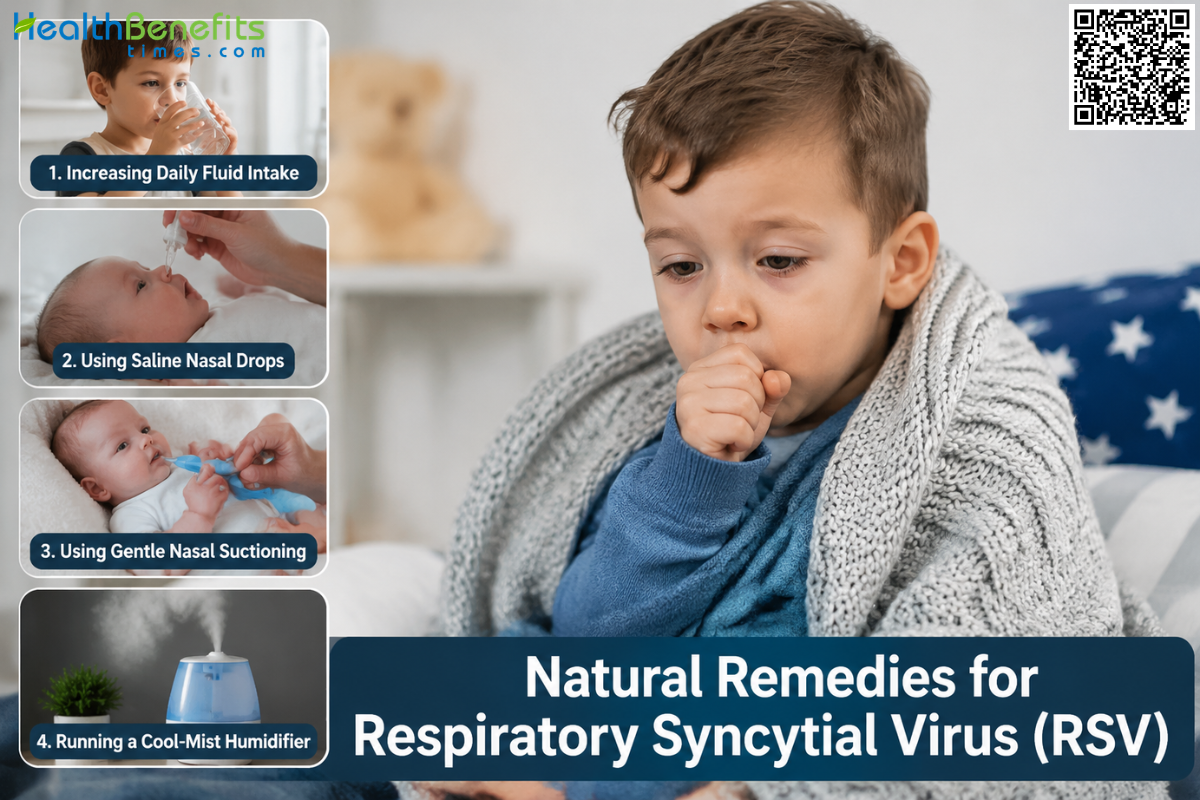
Natural Remedies for Respiratory Syncytial Virus (RSV)
1. Increasing Daily Fluid Intake
How it may help
Maintaining proper hydration is a primary supportive treatment for RSV. It thins thick mucus in the airways, making it easier to clear from the lungs. Additionally, adequate fluid intake replenishes water lost due to fevers and rapid breathing, which frequently accompany the infection 6.
What research says
Clinical guidelines emphasize that hydration is critical for managing viral respiratory illnesses. Evidence confirms that maintaining fluid balance prevents severe dehydration, which is a leading cause of hospital admission for infants with RSV. Medical authorities recommend fluid maintenance as a standard intervention to stabilize patients 7.
How to use it safely
Offer small, frequent amounts of liquids like water, breast milk, or formula throughout the day. If you notice signs of dehydration, such as fewer wet diapers or a dry mouth, contact a healthcare provider immediately to see if an oral rehydration solution is necessary 6.
Potential precautions or side effects
Avoid plain water for infants under six months unless directed by a doctor. Never force fluids if the person is choking or severely struggling to breathe 7.
2. Using Saline Nasal Drops
How it may help
Saline nasal drops add essential moisture to the nasal passages, which safely loosens and thins the thick mucus caused by RSV. This process clears the upper airways, allowing infants and young children to breathe more easily, sleep comfortably, and maintain their regular feeding routines during the infection 7.
What research says
Clinical guidelines establish saline drops combined with gentle suctioning as a standard supportive treatment for RSV-induced bronchiolitis. Medical evidence confirms this method effectively clears upper airway blockages in infants, improving overall airflow and reducing the immediate risk of severe respiratory distress that might otherwise require hospital admission 7.
How to use it safely
Place one or two drops of sterile, over-the-counter saline solution into each nostril just before feeding or putting your child to sleep. Wait a few moments for the mucus to soften, then gently clear the airway using a bulb syringe or nasal aspirator 6.
Potential precautions or side effects
Never use homemade saltwater, as it carries a risk of bacterial infection. Avoid excessive suctioning, which can irritate or swell delicate nasal tissues, ultimately making breathing more difficult 7.
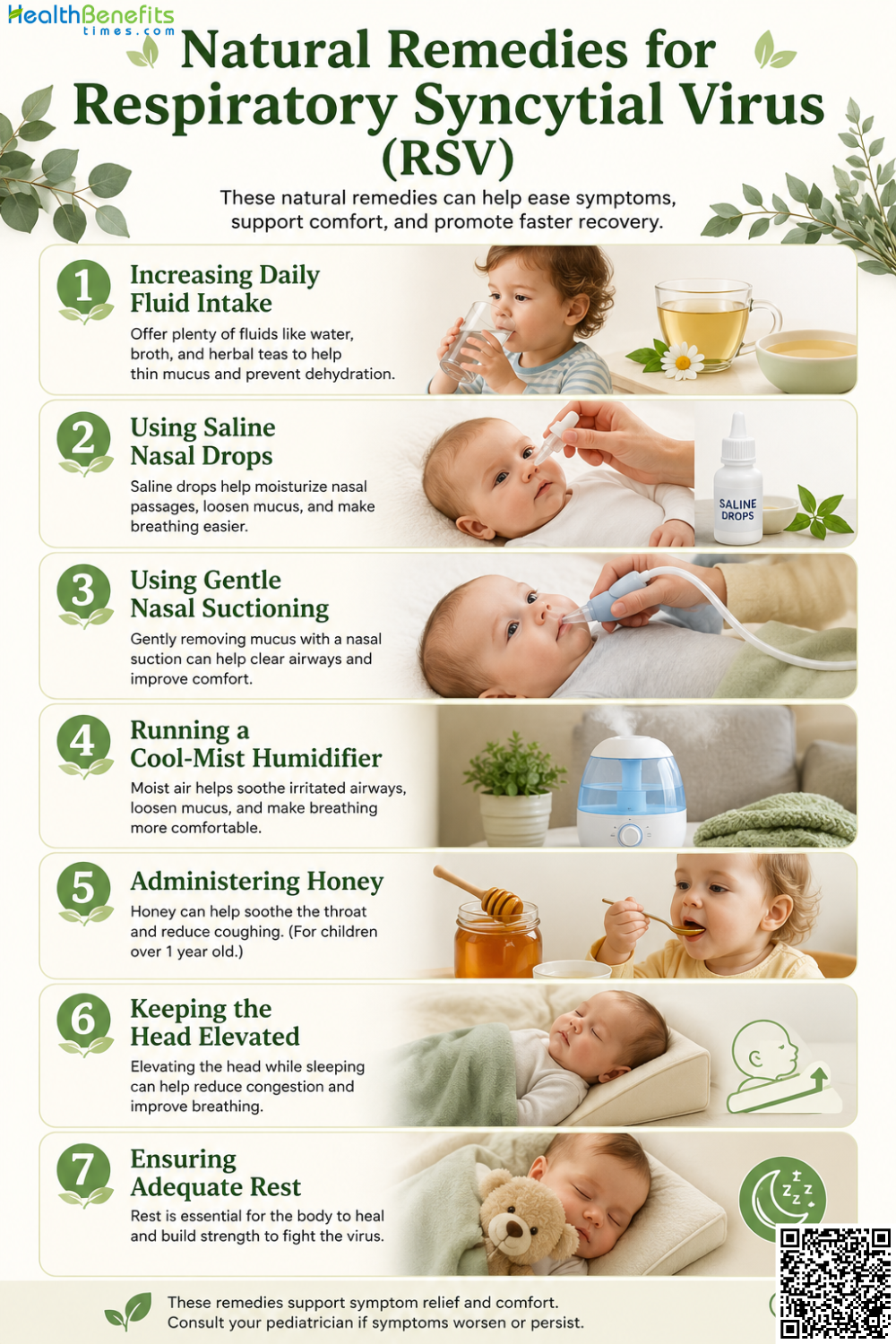
3. Using Gentle Nasal Suctioning
How it may help
Because infants primarily breathe through their noses, heavy mucus accumulation from RSV can severely disrupt their breathing and eating. Gentle nasal suctioning physically removes these stubborn secretions from the upper airway, making it easier for young children to breathe comfortably and maintain normal feeding 7.
What research says
Clinical protocols establish upper airway suctioning as a foundational supportive therapy for infants with RSV-induced bronchiolitis. Medical evidence concludes that clearing nasal blockages improves respiratory function, which helps prevent the need for more invasive breathing interventions or hospital admissions 7.
How to use it safely
Squeeze the bulb of a clean syringe before placing the tip just inside your child’s nostril. Slowly release the bulb to draw out the mucus. Perform this carefully before feedings or sleep. Wash the syringe thoroughly with warm, soapy water after every use 6.
Potential precautions or side effects
Limit suctioning to a few times a day. Overuse can damage delicate nasal tissues, causing bleeding and swelling that actually makes breathing more difficult for the child 7.
4. Running a Cool-Mist Humidifier
How it may help
Running a cool-mist humidifier adds essential moisture to indoor air. This extra humidity soothes dry, irritated breathing passages and helps thin thick mucus in the nose and throat. By keeping the airways moist, it makes coughing more productive and allows infected individuals to breathe more easily 6.
What research says
Medical guidelines recommend humidified air as a safe, supportive therapy for viral respiratory infections. Clinical evidence indicates that maintaining optimal indoor humidity helps prevent the drying of respiratory tissues, which reduces airway inflammation and lowers the risk of severe mucus blockages in the lower lungs 7.
How to use it safely
Place the humidifier in the room where the patient sleeps, keeping the device securely out of a child’s reach. Use distilled water to avoid mineral buildup. You must empty the water tank, wipe it dry, and refill it daily to prevent contamination 6.
Potential precautions or side effects
Strictly avoid warm-mist humidifiers, as hot steam poses a severe burn risk to children. Poorly cleaned machines can also release dangerous mold and bacteria directly into the air 6.
5. Administering Honey
How it may help
Honey acts as a natural cough suppressant and effectively coats the throat to soothe irritation caused by respiratory infections like RSV. Its natural thickness helps relieve the persistent cough associated with viral illnesses, making it easier for children and adults to sleep comfortably during recovery 8.
What research says
Clinical studies confirm that honey is a safe and highly effective alternative to over-the-counter cough medicines, which carry serious risks for young children. Research demonstrates that administering honey before bedtime significantly reduces cough severity, decreases coughing frequency, and improves overall sleep quality for infected children 9.
How to use it safely
Give a half to one full teaspoon of pasteurized honey to individuals aged one year or older just before bedtime to relieve coughing. You can offer the honey directly from a spoon or easily mix it into a cup of warm water 10.
Potential precautions or side effects
Never give honey to infants under one year old. It can contain bacterial spores that cause infant botulism, a rare but life-threatening neurological illness in young babies 8.
6. Keeping the Head Elevated
How it may help
Elevating the head uses gravity to promote the natural drainage of thick mucus from the nasal passages and upper airways. This position reduces severe congestion, eases the physical work of breathing, and allows infected individuals to rest more comfortably, particularly during sleep when coughing often worsens 11.
What research says
Clinical protocols indicate that an upright or semi-elevated resting position helps maximize lung expansion and improves respiratory function for patients with respiratory infections. Evidence shows that modifying resting positions facilitates mucus clearance and reduces airway resistance in older children and adults experiencing severe nasal congestion 11.
How to use it safely
For adults and older children, place an extra pillow under the head or upper back during sleep to reduce congestion. For infants, hold them in an upright position while awake to ease breathing, but always return them to a flat, clear crib surface for sleep 11.
Potential precautions or side effects
Never place pillows under infants or artificially elevate their crib mattresses. Modifying an infant’s flat sleeping surface significantly increases the risk of accidental suffocation and Sudden Infant Death Syndrome 12.
7. Ensuring Adequate Rest
How it may help
Rest is critical during an RSV infection because it allows the body to redirect its energy toward fighting the virus. Adequate sleep supports immune function, helps lower fevers, and provides the physical downtime necessary to heal inflamed respiratory tissues and recover from the physical exhaustion of coughing 6.
What research says
Clinical evidence establishes that sleep and the immune system are deeply interconnected. Research concludes that adequate rest enhances the body’s production of infection-fighting proteins called cytokines. Consequently, sufficient sleep is a medically recognized supportive therapy essential for successfully overcoming acute viral respiratory infections like RSV 13.
How to use it safely
Encourage frequent naps and maintain a quiet, comfortable environment to promote sleep. Keep infected individuals at home. Ensure children and adults take time off from school or work until their fever breaks and their severe respiratory symptoms significantly improve 6.
Potential precautions or side effects
While rest is vital, monitor the patient carefully. If prolonged lethargy, extreme unresponsiveness, or difficulty waking occurs, seek emergency medical care immediately, as this indicates dangerous disease progression 6.
Foods to Avoid When You Suffer from Respiratory Syncytial Virus (RSV)
1. Caffeinated Beverages
Caffeinated drinks act as diuretics, increasing fluid loss. This worsens dehydration and makes respiratory mucus thicker, complicating airway clearance during infections 6.
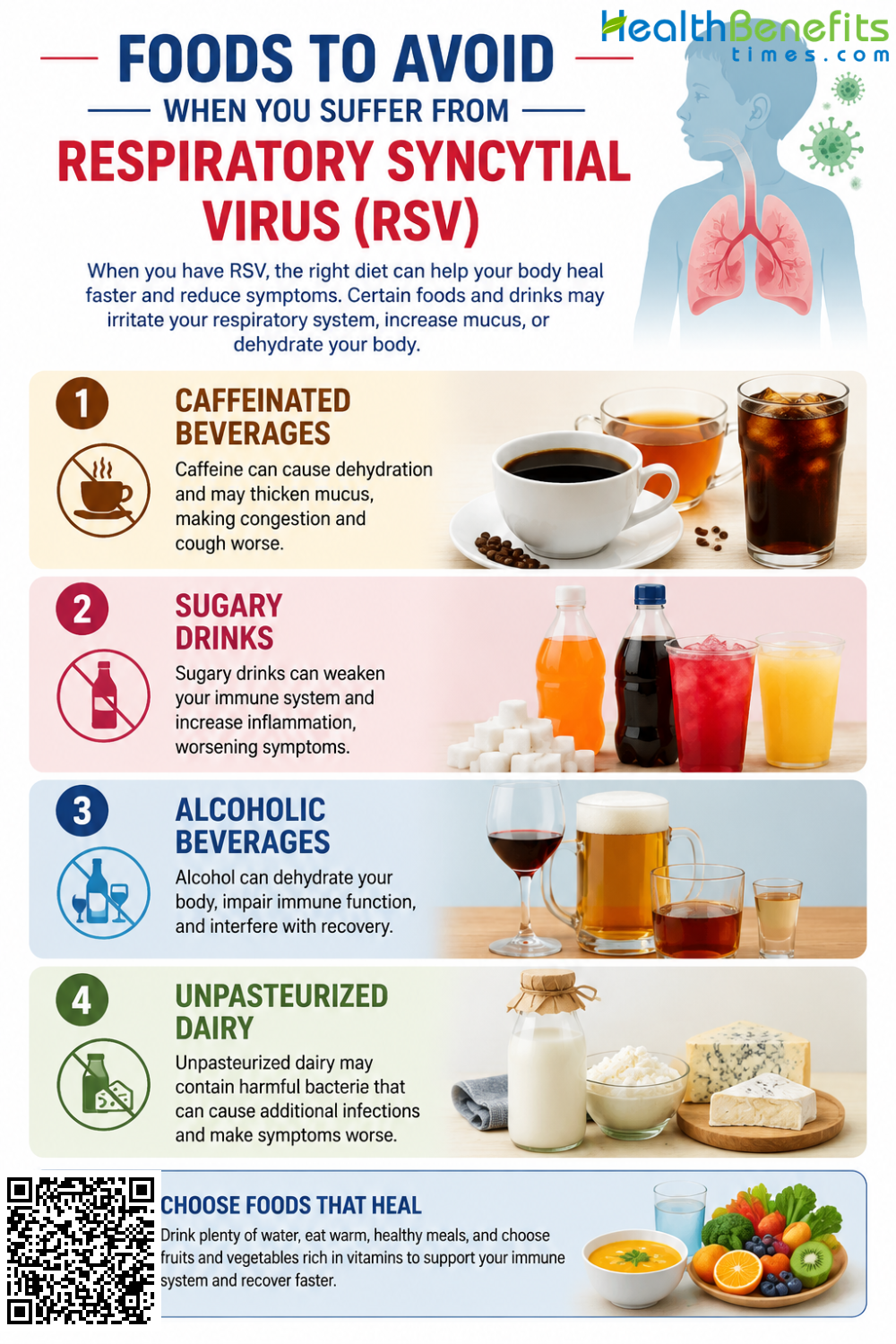
2. Sugary Drinks
High-sugar beverages fail to provide optimal hydration. Poor hydration prevents the effective thinning of respiratory secretions necessary for clearing the lungs 7.
3. Alcoholic Beverages
Alcohol significantly dehydrates the body and suppresses immune function. This combination impairs cellular defense mechanisms and delays recovery from acute viral respiratory illnesses 14.
4. Unpasteurized Dairy
Raw milk products carry a high risk of dangerous bacterial co-infections, which can severely compromise a patient already fighting a viral respiratory disease 15.
When to See a Doctor When You Suffer from Respiratory Syncytial Virus (RSV)
1. Severe Breathing Difficulties
Seek immediate medical care if you or your child experience rapid breathing, flaring nostrils, or chest retractions, where the skin forcefully pulls inward between the ribs during inhalation 6.
2. Signs of Oxygen Deprivation
Emergency intervention is required for cyanosis, characterized by a sudden bluish or grayish discoloration of the lips, tongue, or nail beds, indicating severely low oxygen levels 7.
3. Symptoms of Severe Dehydration
Contact a doctor if fluid intake drops significantly, resulting in prolonged periods without urination, a lack of tears when crying, or a noticeably dry mouth and tongue 6.
4. Unusual Lethargy or Unresponsiveness
Immediate medical evaluation is critical if an infant or older adult becomes unusually sluggish, profoundly exhausted, or exceptionally difficult to wake up during the infection 6.
5. Pauses in Breathing (Apnea)
Infants, especially those under six months old, require urgent hospital care if they exhibit apnea, which are sudden, temporary pauses in their breathing patterns 7.
Comments
comments