

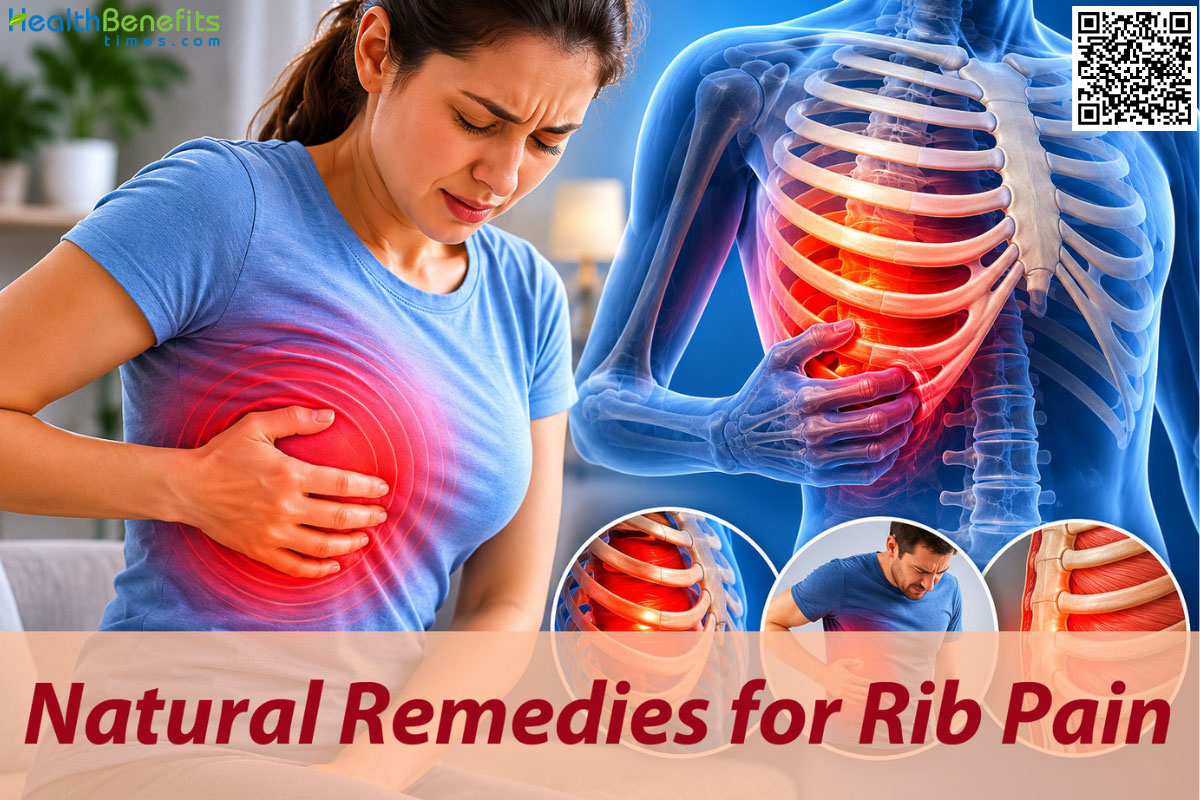
Rib pain refers to any discomfort, aching, or sharp pain felt in the chest wall, specifically involving the ribs, the rib cage, or the adjacent cartilage and muscles. It is not a standalone disease but rather a symptom of an underlying medical issue. The pain may be dull and continuous or sharp and sudden, frequently worsening during deep breathing, coughing, or torso movement. Medical professionals categorize rib pain causes into musculoskeletal, inflammatory, and referred internal issues. Musculoskeletal triggers commonly include rib fractures, intercostal muscle strains, or slipping rib syndrome. A frequent inflammatory cause is costochondritis, which is the painful swelling of the cartilage connecting the ribs to the breastbone. Additionally, pain can radiate to the ribs from internal organs, signaling conditions like pleurisy, gallbladder disease, or cardiovascular problems. Because rib pain can sometimes mimic life-threatening emergencies like a heart attack, immediate medical evaluation is required if it is accompanied by shortness of breath or severe chest pressure.1.
Causes of Rib Pain
Identifying the exact root of thoracic discomfort is vital for mapping out an effective recovery strategy. The human rib cage constantly endures mechanical forces, making it susceptible to various triggers.
- Inflammation of the Costochondral Joint: The body occasionally develops idiopathic inflammation directly within the cartilage connecting the ribs to the breastbone, leading to a persistent, aching chest wall condition that is completely benign but highly disruptive 2.
- Traumatic Muscle Strain: Engaging in unaccustomed upper-extremity exercises, sports, or heavy lifting frequently causes microscopic tears in the intercostal muscles that sit tightly between the ribs, resulting in sharp pain upon movement 3.
- Ligamentous Laxity and Hypermobility: When the fibrous connective tissues stabilizing the eighth through tenth ribs become naturally weak or damaged, the ribs can easily slip out of their designated anatomical alignment, creating the mechanical irritation known as slipping rib syndrome 4.
- Severe Respiratory Infections: Fighting off a prolonged viral illness routinely involves intense, repetitive coughing fits, which ultimately place immense, unnatural mechanical stress on the thoracic cage and its supporting respiratory musculature.
- Blunt Force Trauma: Sustaining a direct, unexpected physical impact to the chest during contact sports, a motor vehicle accident, or a hard fall can deeply bruise the underlying bones or severely strain the surrounding muscular fascia.
- Nutritional Deficiencies and Bone Health: Lacking essential systemic nutrients, particularly suffering from a severe vitamin D deficiency, can directly lead to osteomalacia; this softening of the bones frequently produces hypertrophic costochondral junctions and a deep bone ache that mimics standard joint pain 5.
Symptoms of Rib Pain
Because the thoracic region houses vital organs, learning to recognize the specific sensory patterns of musculoskeletal discomfort provides immense psychological relief. The presentation of chest wall pain involves several distinct, highly recognizable signs.
- Localized, sharp, or stabbing pain situated primarily at the very front of the chest wall, which may occasionally radiate backward toward the spine or downward into the upper stomach region 3.
- Noticeable tenderness when firm, direct physical pressure is applied to the exact area where the rib cage merges with the sternum 6.
- A distinct, immediate worsening of pain during deep inhalations, sneezing, laughing, or coughing due to the mandatory physical expansion of the inflamed thoracic cavity.
- Slipping, clicking, or popping physical sensations located specifically in the lower abdomen or lower ribs, particularly noticeable during twisting or bending movements 7.
- Gradual, comforting relief from the discomfort when torso movement completely ceases and the breathing pattern becomes shallow and quiet.
- Neuropathic symptoms such as burning, tingling, or numbing sensations that follow a specific, band-like path along a single rib, indicating irritation of an intercostal nerve 8.
Rib Pain Facts
Synthesizing the epidemiological and clinical characteristics of chest wall ailments helps clarify how these conditions operate. The following table presents the fundamental facts regarding rib pain.
| Feature | Detailed Facts |
| Symptoms |
|
| Causes |
|
| Types of Rib Pain |
|
| How does spread |
|
| Age Group |
|
| You might be at a higher risk for exposure of this disease if you: |
|
| How doctors diagnose |
|
| Other facts |
|
Natural Remedies for Rib Pain
Empowering your body to heal from chest wall inflammation requires supportive, non-invasive therapies designed to facilitate natural tissue repair. Conservative management relies on gently modulating pain pathways, relaxing surrounding muscle tension, and providing systemic anti-inflammatory support.
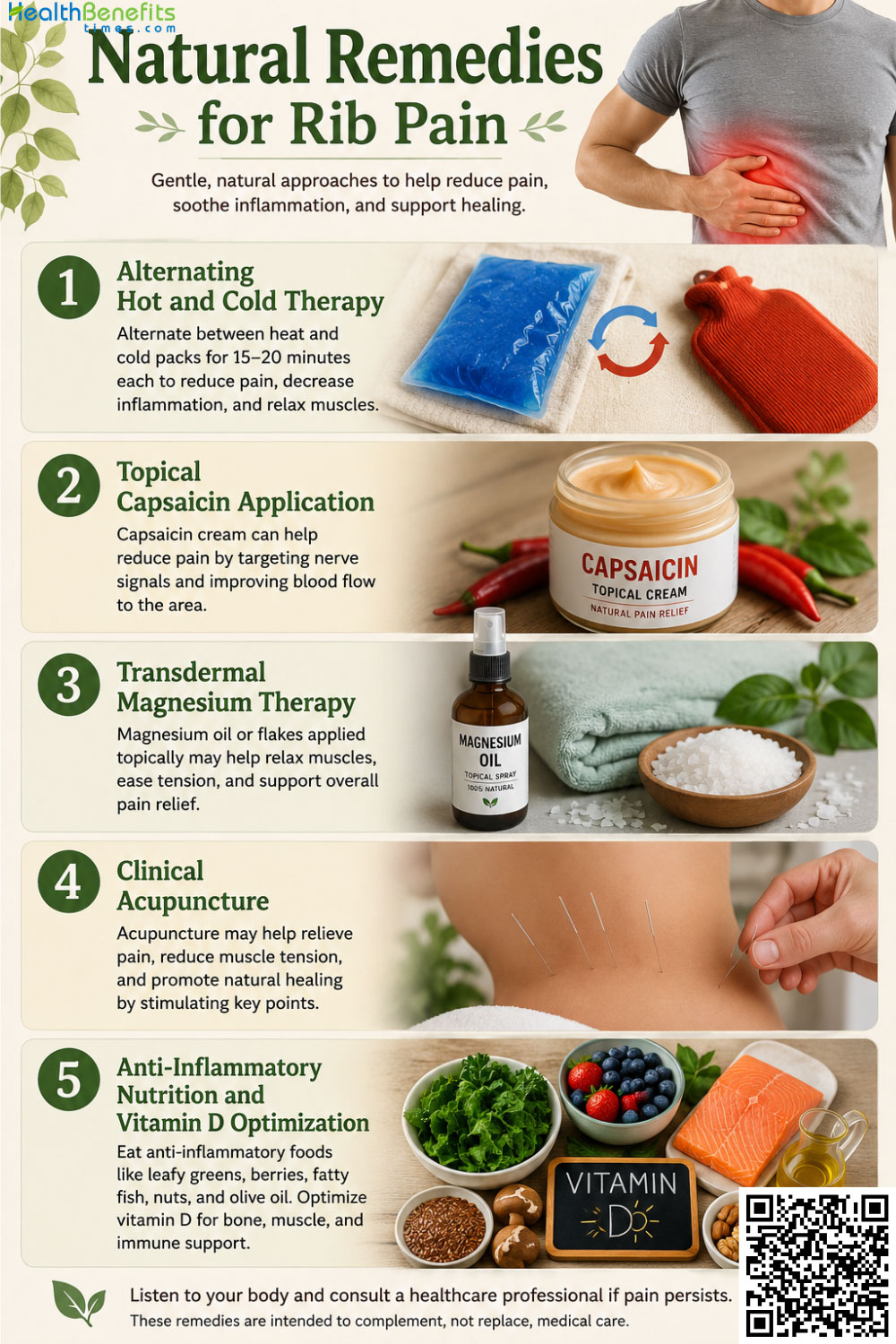
1. Alternating Hot and Cold Therapy
When you experience an acute flare-up of rib discomfort, managing the localized temperature can significantly ease your immediate distress. Applying a cold ice pack during the first 48 hours effectively constricts local blood vessels, which rapidly diminishes acute cellular swelling and numbs the irritated sensory nerve endings resting along your chest wall. Once the initial sharp, stabbing pain begins to naturally subside, you should transition your strategy to a warm compress. Heat therapy intentionally dilates your blood vessels, gently flooding the strained intercostal muscles and inflamed costochondral joints with the oxygen and vital nutrients essential for ongoing cellular repair 9.
Note: This remedy is commonly applied directly to the skin over the aching ribs in 15-to-20-minute alternating intervals to modulate acute inflammation and promote deep tissue relaxation.
2. Topical Capsaicin Application
Harnessing the biochemical power of natural chili peppers offers a surprisingly effective method to block persistent pain signals from ever reaching your brain. Capsaicin, the active heat-producing botanical compound found in certain peppers, binds directly to specific TRPV1 receptors located on your sensory nerve endings. When you apply it to your skin, it initially triggers a mild warming sensation, but over time, it effectively depletes Substance P—the specific neuropeptide responsible for transmitting localized pain signals. Utilizing topical modalities like capsaicin cream is recognized clinically as a highly effective conservative treatment for the persistent, aching chest wall pain deeply associated with costochondritis 10.
Note: This remedy is commonly applied topically as a cream or specialized patch over the tender costochondral junctions to naturally desensitize hyperactive pain receptors.
3. Transdermal Magnesium Therapy
If your rib pain feels less like a sharp stab and more like a tight, unrelenting band squeezing your chest, addressing local muscle spasms with essential minerals can provide immense physical relief. Magnesium acts fundamentally as a natural muscle relaxant within the body, effectively counteracting calcium-induced muscle contractions that cause cramping. When you soak peacefully in a bath enriched with Epsom salts, the magnesium sulfate is absorbed directly through your porous skin, bypassing the digestive system and sinking straight into the tight, guarding fascial layers of your rib cage. Evidence suggests that targeted magnesium therapy contributes actively to significant reductions in musculoskeletal pain intensity by easing involuntary intercostal muscle guarding 11.
Note: This remedy is commonly applied by soaking in a warm, mineral-rich bath for 20 to 30 minutes to soothe strained intercostal muscles and calm systemic nervous tension.
4. Clinical Acupuncture
Exploring ancient therapeutic techniques can yield profoundly positive results for your modern chest wall ailments. By having micro-fine, sterile needles gently inserted into specific anatomical points along your body’s meridians, you stimulate your central nervous system to release natural painkillers, including endorphins and enkephalins. This intricate physiological process not only alters your brain’s perception of pain but also enhances local microcirculation to help flush out inflammatory byproducts trapped within the injured rib joints. Clinical audits consistently demonstrate that acupuncture serves as a rapidly effective adjunctive treatment for persistent costochondritis, even when standard oral medications fail to bring you sufficient relief 12.
Note: This remedy is commonly applied by a licensed practitioner in a quiet clinical setting to physically release muscular trigger points and flood the central nervous system with natural analgesic neurochemicals.
5. Anti-Inflammatory Nutrition and Vitamin D Optimization
Healing your delicate rib cage from the inside out requires you to carefully evaluate the nutritional building blocks you provide your body daily. Hidden deficiencies in crucial hormones, specifically Vitamin D, can lead directly to softened bones and hypertrophic costochondral junctions, a condition you might easily mistake for a simple muscle strain 13. By purposefully correcting this deficiency and adopting a dietary pattern rich in omega-3 fatty acids, high-quality lean proteins, and antioxidant-dense vegetables, you actively lower your systemic inflammatory markers. Research highlights that strictly adhering to an anti-inflammatory diet is strongly and positively correlated with a lower overall incidence of nonspecific chest wall pain and optimized cardiovascular health 14.
Note: This remedy is commonly used by intentionally incorporating nutrient-dense whole foods and targeted vitamin supplements into your daily meals to naturally decrease systemic inflammation and fortify your bone cartilage.
Is there any exercise or physical activities for Rib Pain
Protecting an inflamed rib cage often leads to an unintended consequence: profound physical stiffness. While resting your acutely injured chest is initially necessary, prolonged inactivity leads directly to fascial adhesions and weakened respiratory muscles; therefore, targeted physical stretching remains a critical component of your complete recovery protocol.
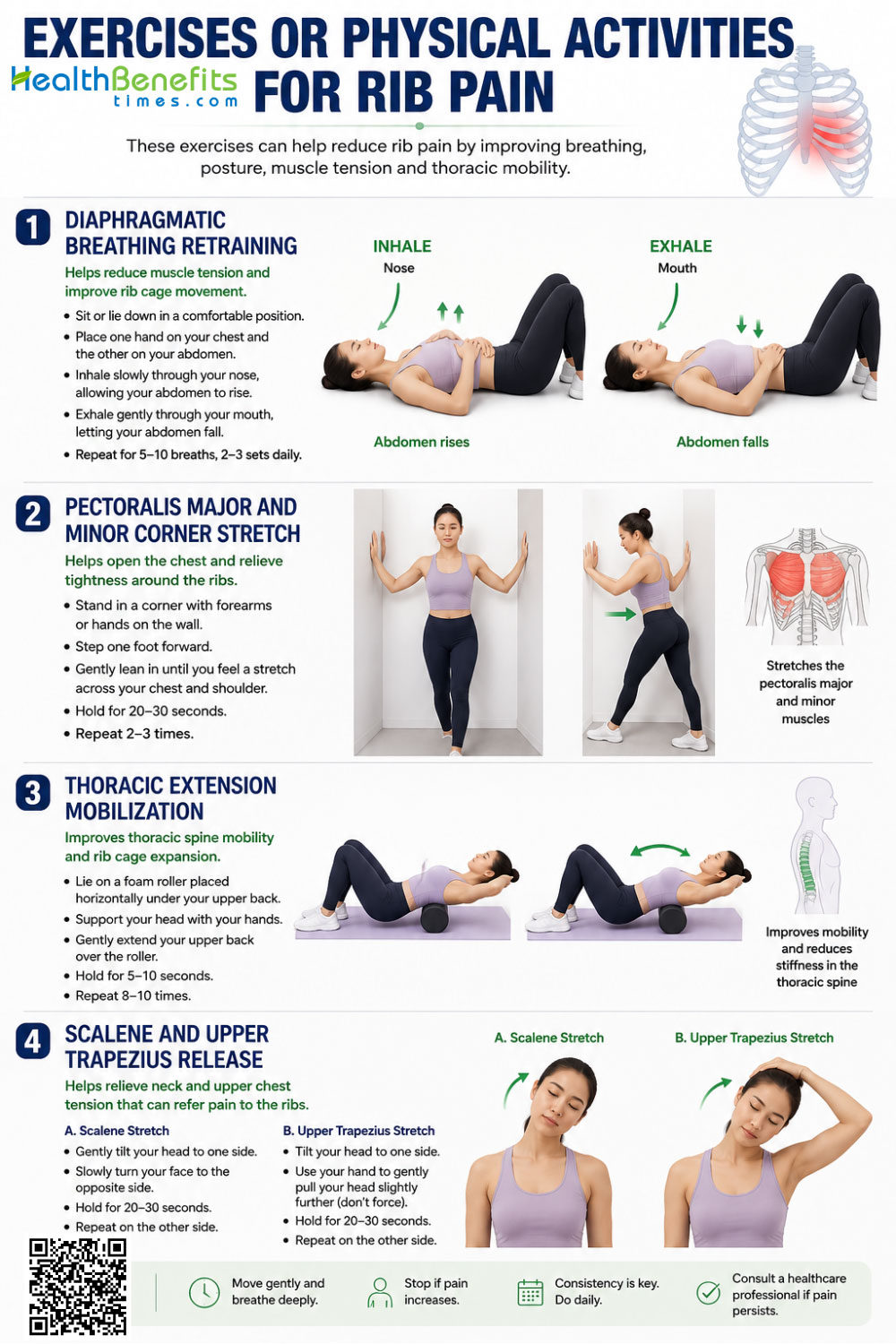
1. Diaphragmatic Breathing Retraining
Guarding your inflamed ribs often causes you to adopt a shallow, inefficient breathing pattern that inadvertently strains your upper chest musculature even further. Because chronic localized pain leads to excessive upper chest segment movement, your diaphragm naturally flattens, forcing the tiny intercostal muscles between your ribs to continuously overwork just to maintain basic ventilation 15. By consciously shifting the respiratory workload back downward to your diaphragm, you allow your strained rib cage to finally rest while still ensuring your lungs are fully and properly inflated.
Note: To do this, lie flat on your back with one hand resting softly on your stomach, inhaling deeply through your nose so that your belly rises outward while keeping your chest completely still, then exhale slowly.
2. Pectoralis Major and Minor Corner Stretch
Your daily resting posture heavily dictates the baseline amount of physical tension pulling relentlessly on the front of your rib cage. When you slouch forward at a desk, the large pectoral muscles in your chest become chronically tight and shortened, exerting a constant inward pull on the delicate joints connecting your ribs to your sternum. Gentle therapeutic stretching specifically targeting these anterior muscles can rapidly relieve the painful, unnatural compressive forces resting on your chest wall 16.
Note: To do this, stand facing a room corner, place your forearms flat against the adjacent walls at shoulder height, and gently lean your torso forward until you feel a mild, pleasant opening stretch across the front of your chest.
3. Thoracic Extension Mobilization
A stiff, immobile mid-back actively prevents your rib cage from moving fluidly during respiration, forcing the fragile joints at the front of your chest to overcompensate and inevitably become irritated. You need to mobilize your thoracic spine to ensure the mechanical load of taking a breath is distributed evenly across your entire torso rather than isolated to the front. Incorporating specific self-mobilization exercises into your daily routine has been proven clinically to facilitate the complete resolution of costochondritis by addressing these hidden biomechanical impairments 17.
Note: To do this, lie gently on the floor with a tightly rolled towel placed horizontally underneath your mid-back, extend your arms softly overhead, and take slow, deep breaths to encourage your spine to stretch into extension.
4. Scalene and Upper Trapezius Release
Tension accumulating quietly in your neck can surprisingly be the root biomechanical cause of your upper chest wall pain. When you hold psychological stress in your shoulders, the scalene muscles residing in your neck become deeply hypertonic, constantly pulling upward with immense force on your first and second ribs. To decrease this unrelenting strain on your upper rib cage, you must actively stretch and release these cervical muscles to restore proper alignment 18.
Note: To do this, sit upright in a comfortable chair, gently tilt your right ear toward your right shoulder, and reach your left hand toward the floor, applying incredibly light pressure to the side of your head with your right hand until you feel a releasing stretch.
Dietary and Lifestyle Modifications for Rib Pain Management
Foods to Avoid When You suffer from Rib Pain and you are prone to Rib Pain
- Refined Sugars and Sweets: Consuming high amounts of processed dietary sugar rapidly spikes your insulin levels, which directly triggers the cellular release of pro-inflammatory cytokines that can dramatically worsen joint pain.
- Trans Fats and Processed Oils: Avoiding partially hydrogenated oils found commonly in fast food is crucial, as these artificial fats directly promote systemic inflammation and severely hinder your body’s natural cellular repair mechanisms.
- Processed and Cured Meats: Items like breakfast bacon, hot dogs, and packaged deli meats are packed with advanced glycation end products (AGEs) that actively exacerbate cartilage inflammation and prolong healing.
- Excessive Alcohol Intake: Drinking heavy amounts of alcohol directly burdens your liver and drastically disrupts the restorative deep sleep cycles you desperately need to heal torn intercostal muscles.
- Refined Carbohydrates: White breads, pastas, and pastries lack essential fiber and act similarly to pure sugar in your bloodstream, keeping your body’s inflammatory markers artificially and dangerously elevated 19.
Activities to Avoid When You suffer from Rib Pain
- Heavy Lifting and Pushing: Attempting to move heavy room furniture or lifting heavy gym weights requires you to forcefully brace your core, which drastically increases the internal pressure pushing against your fragile costal cartilage.
- High-Velocity Twisting Motions: Participating in recreational sports like golf, tennis, or baseball pitching forces your torso to undergo explosive rotational forces that can easily provoke a slipping rib or tear a healing muscle 20.
- Prolonged Slouching: Sitting with a pronounced forward-head posture at your computer desk physically compresses your anterior chest cavity and places chronic, low-grade tension directly on your costochondral rib joints.
- High-Impact Aerobics: Running vigorously on hard pavement or doing repetitive jumping jacks sends jarring, high-impact shockwaves up through your skeletal system, actively aggravating your inflamed thoracic joints.
- Carrying Asymmetrical Loads: Slinging a heavy messenger bag or backpack over just one shoulder forces your lateral rib cage muscles into a continuous spasm to keep your spine stabilized, significantly prolonging your localized pain.
Myths and Misconceptions
Public understanding of chest wall pain is frequently clouded by the alarming nature of the symptoms, leading to unnecessary anxiety and improper self-management techniques.
| Myth | Reality |
| Every sharp pain in the chest signifies an impending heart attack. | While all severe chest pain requires prompt medical evaluation to rule out cardiac emergencies, a vast majority of localized, reproducible chest wall pain is caused by benign musculoskeletal conditions like costochondritis. |
| Healing a painful rib cage requires weeks of complete bed rest. | Absolute physical immobility actually increases joint stiffness and weakens respiratory muscles; gentle, targeted stretching and mobility exercises are highly recommended for optimal recovery. |
| Costochondritis always produces massive, visible swelling on the chest. | True costochondritis occurs without any visible external swelling or localized heat. If distinct localized swelling and redness are clearly visible, the condition is medically categorized separately as Tietze’s syndrome. |
| A slipping rib will eventually fuse back into place on its own over time. | While the acute tissue inflammation can subside, the hypermobility caused by lax interchondral ligaments often requires ongoing conservative management, nerve blocks, or occasionally surgical fixation |
| You can only develop rib pain if you sustain a direct, violent blow to the chest. | Rib pain is frequently insidious in nature; it can be triggered easily by seemingly harmless factors such as a lingering viral cough, severe vitamin D deficiency, or maintaining awkward sleeping postures over time. |
Special Considerations
The presentation, physiological risk factors, and overall treatment of rib pain vary significantly across different patient demographics and unique life stages.
1. Children
Younger populations frequently experience alarming chest discomfort that predictably sends anxious parents rushing to the local hospital. Among pediatric patients formally admitted to emergency departments for chest complaints, nearly a third are ultimately diagnosed with benign musculoskeletal issues that unfortunately cause missed school days and severely restrict athletic participation 22. In adolescents, this pain is routinely linked to carrying excessively heavy school backpacks, maintaining poor posture while using digital devices, or enduring the repetitive physical stress of competitive youth sports.
2. Pregnancy
Carrying a developing fetus introduces profound biomechanical and hormonal shifts that place remarkable, unprecedented stress on the maternal rib cage. As the uterus expands upward, it physically crowds the diaphragm and forces the lower ribs to flare outward to accommodate the reduced lung volume, dramatically altering normal respiratory mechanics. Concurrently, the maternal body secretes relaxin, a specialized hormone designed to loosen pelvic ligaments for childbirth, which inadvertently creates systemic laxity in the interchondral ligaments and makes pregnant individuals highly susceptible to rib strains and transient slipping rib issues 23.
3. Chronic Conditions
Living with persistent systemic health issues adds a complex, challenging layer of difficulty to managing thoracic discomfort. Patients suffering from autoimmune disorders or centralized pain syndromes, such as fibromyalgia, naturally experience a neurological amplification of sensory signals, quickly turning a mild costochondral irritation into a severe, debilitating flare-up. Additionally, specific seronegative conditions like ankylosing spondylitis specifically target the joints of the axial skeleton, frequently presenting as chronic anterior chest wall pain as the aggressive disease attempts to permanently fuse the thoracic spine 24.
4. Elderly
Advancing age significantly alters the overarching risk profile associated with any structural injury or inflammation to the chest wall. Due to the natural, progressive decrease in bone density associated closely with osteoporosis, the ribs become increasingly fragile; a simple, sudden coughing fit could result in a spontaneous bone fracture rather than a mere muscle strain. Furthermore, elderly patients experiencing severe rib pain tend to unconsciously restrict their natural breathing depth to avoid discomfort, which drastically increases their risk of developing life-threatening respiratory complications such as atelectasis or severe bacterial pneumonia 25.
Precaution before use of natural remedies when you have Rib Pain
Approaching your recovery with natural therapies requires a mindful understanding of your unique biological sensitivities and preexisting health conditions to ensure total safety.
- Conduct Skin Patch Tests: Before you slather a highly potent topical analgesic like capsaicin over your entire chest, always test a small amount on your inner forearm. Some individuals possess highly reactive skin and may develop severe contact dermatitis or painful blistering from the active botanical compounds.
- Monitor Temperature Exposure: Never apply a frozen ice pack or a scalding heating pad directly to your bare skin. You should always wrap the temperature source in a protective cloth towel to prevent accidental frostbite or thermal burns, and strictly avoid using heat if your chest is visibly red and actively swollen.
- Consult Regarding Magnesium Supplementation: If you have any underlying kidney dysfunction, you must speak with your primary physician before engaging in heavy transdermal magnesium therapy or oral supplementation. Impaired kidneys struggle to filter excess magnesium out of the bloodstream, which can lead to a dangerous toxic accumulation.
- Respect Your Pain Threshold During Exercise: When performing any therapeutic stretches, ensure you only stretch to the point of mild, opening tension. Pushing yourself forcefully into a zone of sharp, acute pain can easily create fresh micro-tears in your already vulnerable intercostal muscles, setting your recovery back significantly.
- Verify Practitioner Credentials: Should you choose to pursue clinical acupuncture, ensure you are visiting a fully licensed and board-certified practitioner. Proper clinical sterilization protocols and precise anatomical needle placement are absolute necessities to eliminate the risk of local infection or accidental injury to your pleural cavity.
When to see Doctor
Vigilance is paramount because your thoracic cavity meticulously shields your cardiopulmonary system, and relying solely on natural remedies without ruling out life-threatening emergencies is a dangerous misstep.
- Experiencing Crushing Chest Pressure: If your pain feels less like a sharp, superficial ache and more like an immensely heavy weight squeezing the deep center of your chest, you need immediate emergency care to rule out a severe myocardial infarction.
- Pain Radiating to Extremities: You must call emergency medical services immediately if the discomfort rapidly travels away from your ribs and shoots up into your jaw, radiates intensely through your neck, or travels down your left arm.
- Accompanied by Severe Shortness of Breath: Finding yourself suddenly unable to catch your breath, feeling intensely dizzy, breaking out in cold sweats, or experiencing an inexplicable feeling of impending doom are classic, non-negotiable red flags for serious pulmonary or cardiac events.
- Developing a High Fever: If your persistent rib pain is joined by a soaring body temperature and a wet, productive cough that brings up yellow, green, or bloody mucus, you likely have a severe respiratory infection like pneumonia that requires immediate prescription antibiotics 3.
- Visible Signs of Systemic Infection: You should visit a medical clinic promptly if the physical area directly around your ribs becomes incredibly hot to the touch, rapidly turns bright red, or begins to weep pus, indicating a serious localized bacterial infection.
- Sustaining High-Velocity Trauma: If your severe pain is the direct result of a major physical impact, such as a high-speed car collision or a traumatic fall from a significant height, you require immediate radiographic imaging to safely check for displaced rib fractures or hidden internal bleeding.
Comments
comments