

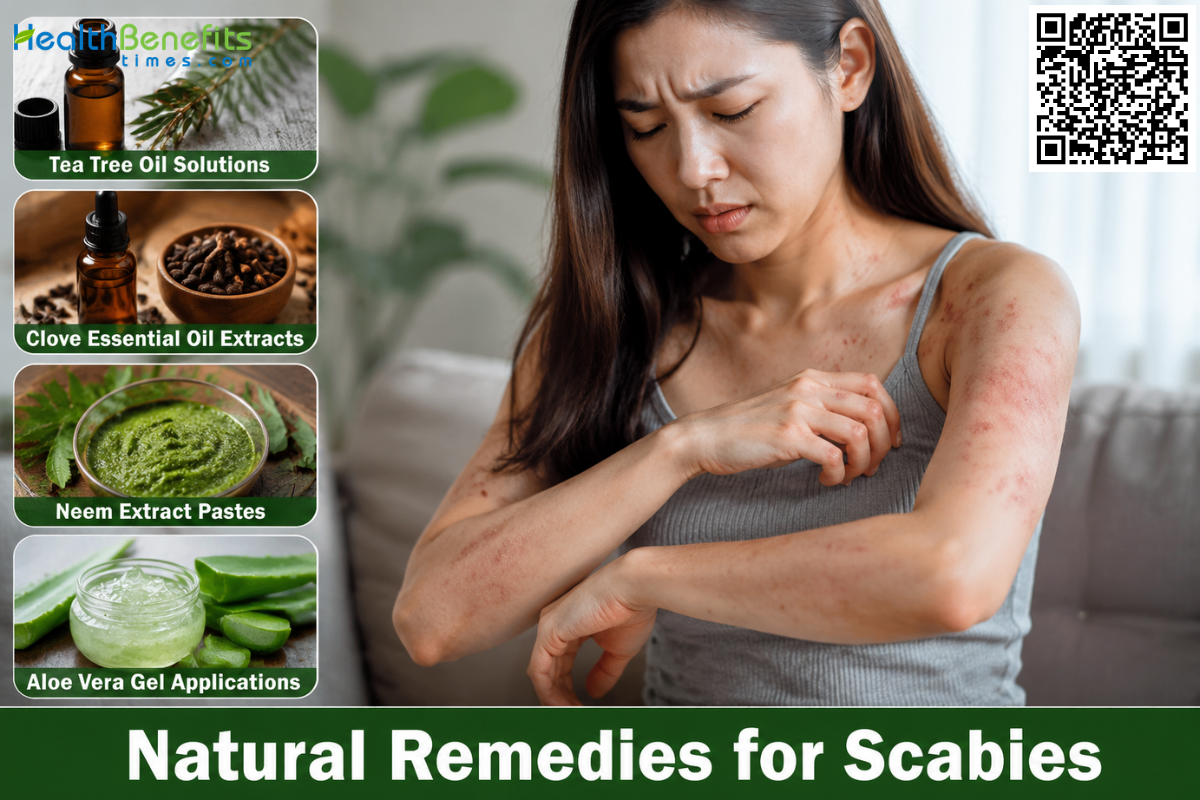
Causes of Scabies
1. Prolonged Skin-to-Skin Contact
The primary method of transmission occurs when an uninfected person has direct, extended physical contact with someone who carries the parasites. Because the microscopic mites crawl very slowly and cannot jump or fly, they require significant time to transfer between individuals, making household members highly susceptible 3.
2. Intimate and Sexual Contact
Among adults, the infestation is frequently spread through sexual activity and close physical intimacy. The prolonged skin-to-skin exposure during these interactions provides the ideal environment for the female mites to safely cross from one host to another and begin burrowing into new skin 2.
3. Sharing Contaminated Personal Items
While the mites require a human host to feed and reproduce, they can survive off the body for 48 to 72 hours. Consequently, healthy individuals can contract the parasites indirectly by sharing unwashed bedding, towels, or clothing that was recently used by an infested person 3.
4. High-Density Living Environments
Outbreaks are heavily driven by crowded living conditions where close physical proximity is unavoidable. The parasites frequently spread rapidly through nursing homes, child-care centers, prisons, and extended-care facilities before the initial cases are properly diagnosed and treated 2.
5. Exposure to Crusted Scabies
Individuals with compromised immune systems may develop crusted scabies, a severe variant characterized by thick skin crusts containing thousands to millions of mites. Due to this massive parasite load, this specific form is extraordinarily contagious and can be transmitted through very brief physical contact or by merely touching furniture the infected person has used 3.
Symptoms of Scabies
1 Intense Nocturnal Itching
The most common and earliest symptom is severe, relentless itching that noticeably worsens during the night. This intense discomfort is the direct result of the body’s allergic reaction to the microscopic mites, their eggs, and their waste products embedded in the skin 4.
2. Pimple-Like Skin Rash
Infested individuals frequently develop a red, bumpy, pimple-like rash across various parts of the body. This characteristic rash typically appears in the skin folds, most notably webbing between the fingers, around the wrists, elbows, armpits, waistline, and genital areas 4.
3. Visible Skin Burrows
Tiny, slightly raised, and crooked grayish-white lines may become visible on the surface of the skin. These physical tracks represent the microscopic tunnels excavated by adult female mites as they burrow to lay their eggs just beneath the outermost layer of skin 4.
4. Open Sores and Secondary Infections
Continuous and aggressive scratching to relieve the severe itch frequently tears the skin and creates open sores. These open wounds act as entry points for common bacteria, such as Staphylococcus aureus, which can lead to painful secondary bacterial skin infections that require additional antibiotic treatment 2.
5. Thick Skin Crusts
Patients with weakened immune systems or the elderly may develop a severe variant known as crusted scabies. This highly contagious condition presents as thick, grayish crusts on the skin that crumble easily and harbor thousands to millions of living mites, though the typical severe itching is often absent 4.
Natural Remedies for Scabies
1. Tea Tree Oil Solutions
How it may help
Tea tree oil contains terpinen-4-ol, an active compound with strong anti-parasitic and anti-inflammatory properties. It penetrates the skin to destroy scabies mites and reduce severe itching. Additionally, its natural antibacterial qualities help prevent secondary skin infections that frequently develop from constant scratching 5.
What research says
Extensive clinical reviews demonstrate that tea tree oil exhibits highly effective acaricidal effects against scabies mites. Studies indicate that diluted tea tree oil solutions achieve rapid mite mortality, successfully treating severe scabies cases that have developed resistance to standard synthetic treatments like permethrin and ivermectin 6.
How to use it safely
Never apply pure tea tree oil directly. You must dilute it by blending one part tea tree oil with at least ten parts of a neutral carrier oil, such as coconut or olive oil. Massage this mixture onto the affected skin twice daily until the rash clears.
Potential precautions or side effects
Tea tree oil can trigger allergic contact dermatitis or intense burning sensations. You must stop using the solution immediately and wash the skin if you develop severe redness or swelling 7.
2. Clove Essential Oil Extracts
How it may help
Clove essential oil contains a high concentration of eugenol, an active chemical compound with powerful anti-parasitic properties. When applied to the skin, eugenol penetrates the outer layers to directly target scabies mites. It acts on the parasites’ nervous systems, quickly paralyzing and killing both adult mites and their eggs 8.
What research says
Scientific studies demonstrate that clove oil is highly toxic to scabies mites, including strains that are resistant to standard medical treatments like permethrin. Laboratory research concludes that contact with a diluted clove oil solution achieves complete mite mortality within a single hour of application 9.
How to use it safely
Never apply pure clove oil directly to your skin. You must dilute it by mixing one part clove essential oil with at least ten parts of a neutral carrier oil, such as coconut or olive oil. Apply this diluted blend specifically to the rash once daily.
Potential precautions or side effects
Clove oil is highly potent and can cause severe contact dermatitis or skin burns. You must stop using it immediately if you experience intense stinging, excessive redness, or worsening pain.
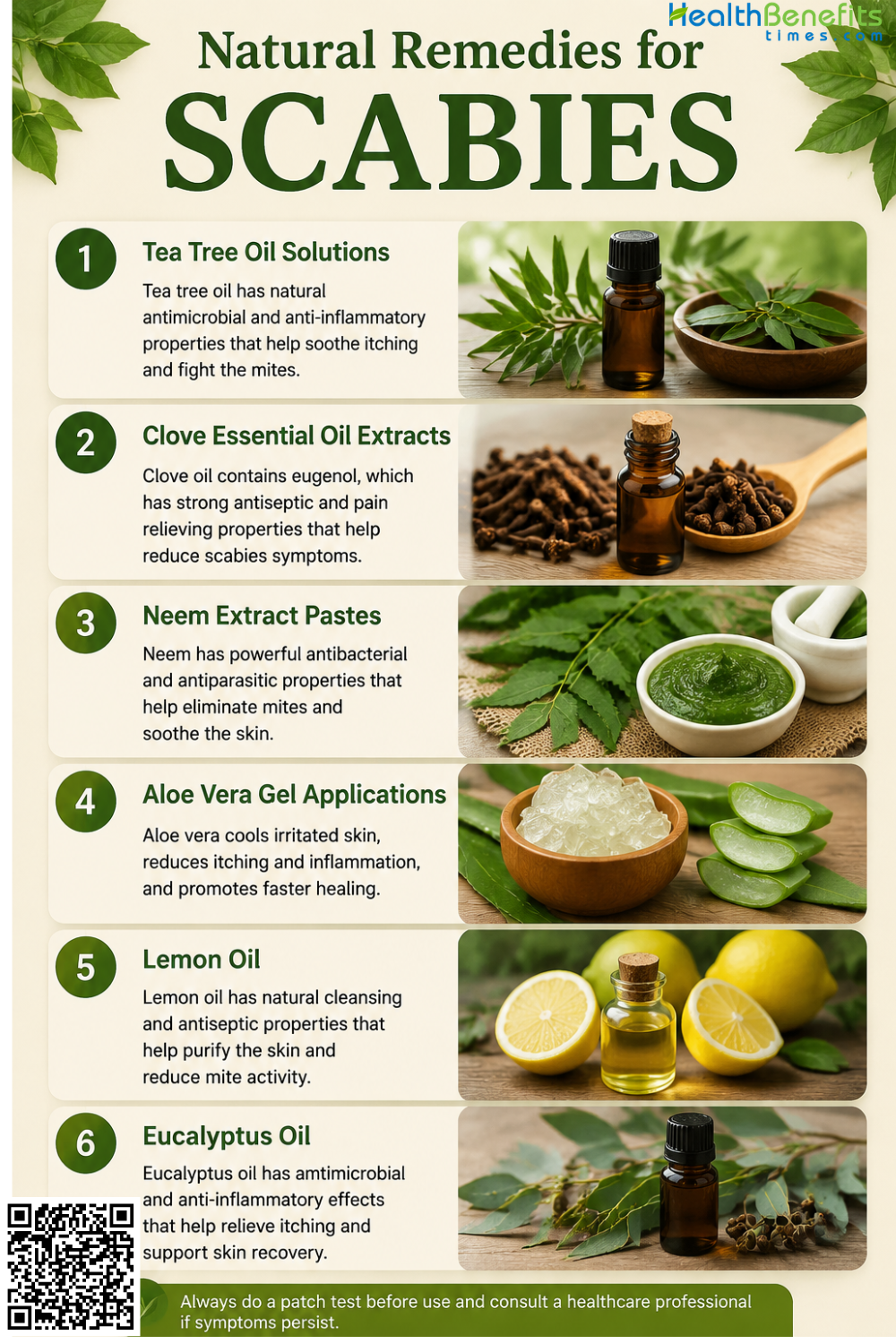
3. Neem Extract Pastes
How it may help
Neem extract contains active biological compounds, primarily azadirachtin, which act as natural anti-parasitic agents. When applied to the skin, these compounds interfere with the reproduction and feeding cycles of scabies mites. This targeted action helps eliminate the parasites while naturally reducing the severe itching and inflammation they cause 10.
What research says
Clinical trials demonstrate that neem extract is a highly effective treatment for scabies infestations. A prominent study treating infected patients with a paste made from neem and turmeric showed a 97 percent cure rate within three to fifteen days, proving it is a highly successful alternative to synthetic treatments 10.
How to use it safely
You should crush fresh neem leaves with a small amount of water or turmeric to create a thick, smooth paste. Apply this paste evenly over your affected skin and leave it on for at least one hour before rinsing thoroughly. Repeat this process daily until the rash clears.
Potential precautions or side effects
Neem paste is generally safe but may cause mild skin irritation. You must perform a patch test and discontinue use immediately if you develop severe redness or burning sensations.
4. Aloe Vera Gel Applications
How it may help
Aloe vera provides natural soothing properties that relieve the severe itching and inflammation associated with scabies. Its hydrating compounds calm irritated tissues, reduce the urge to scratch, and support the healing process of the damaged skin barrier without using harsh chemicals 11.
What research says
Clinical studies confirm that pure aloe vera gel is a viable alternative for scabies management. Research comparing crude aloe vera gel to prescription benzyl benzoate lotion concluded that aloe vera is just as effective at eliminating scabietic lesions and resolving persistent itching 12.
How to use it safely
First, clean and dry the irritated skin thoroughly. Apply a generous, even layer of pure aloe vera gel directly over the rash and allow it to dry completely. You should reapply this gel two to three times daily to maintain continuous symptom relief and skin hydration.
Potential precautions or side effects
While generally well-tolerated, topical aloe vera can occasionally trigger mild allergic contact dermatitis. You must discontinue use immediately if you experience increased redness, stinging, or worsening rashes 13.
5. Lemon Oil
How it may help
Lemon oil contains active compounds, such as limonene, that naturally disrupt the cellular structure of scabies mites. When applied to the skin, it induces oxidative stress within the mites, breaking down their protective cell membranes and fatty acids to effectively destroy the parasites without relying on synthetic chemicals 14.
What research says
Research indicates that diluted lemon oil exhibits significant miticidal effects against scabies. Laboratory and animal studies confirm that solutions containing ten to twenty percent lemon oil induce severe oxidative stress in the mites, leading to complete mite mortality and rapid resolution of the physical skin lesions 15.
How to use it safely
Never apply undiluted lemon oil. You should mix one part pure lemon oil with ten parts of a gentle carrier oil, such as coconut or olive oil. Massage this diluted mixture into the affected areas once daily, allowing it to fully absorb into the skin.
Potential precautions or side effects
Lemon oil increases sun sensitivity and can cause contact dermatitis. You must avoid direct sunlight after application and wash the oil off immediately if burning or severe redness develops.
6. Eucalyptus Oil
How it may help
Eucalyptus oil contains active compounds, primarily eucalyptol, that possess natural anti-parasitic properties. When applied topically, it penetrates the skin to directly target scabies mites. The oil functions by disrupting the mites’ respiratory systems, effectively neutralizing the parasites and helping to alleviate the associated intense skin irritation 16.
What research says
Scientific studies indicate that eucalyptus oil is an effective alternative treatment for scabies. Research evaluating botanical extracts demonstrates that eucalyptus exhibits significant direct contact and fumigant toxicity against the mites, inducing high parasite mortality rates that are comparable to conventional synthetic medical treatments 16.
How to use it safely
Pure eucalyptus oil is highly concentrated and must never be applied directly. You should dilute it by mixing one part eucalyptus oil with ten parts of a neutral carrier oil, such as olive oil. Gently apply this diluted solution to the affected skin to prevent irritation 16.
Potential precautions or side effects
Eucalyptus oil can cause contact dermatitis or burning sensations if inadequately diluted. You must immediately discontinue use and thoroughly wash the skin if severe redness or persistent stinging occurs 17.
Foods to Avoid When You Suffer from Scabies
While diet cannot cure a parasitic scabies infestation, avoiding certain pro-inflammatory foods may help you manage the severe skin itching and allergic immune responses while undergoing conventional medical treatment.
1. High-Sugar Foods
Consuming excess sugar triggers systemic inflammation, which can exacerbate intense allergic itching and slow the healing of damaged skin lesions caused by scabies mites 18.
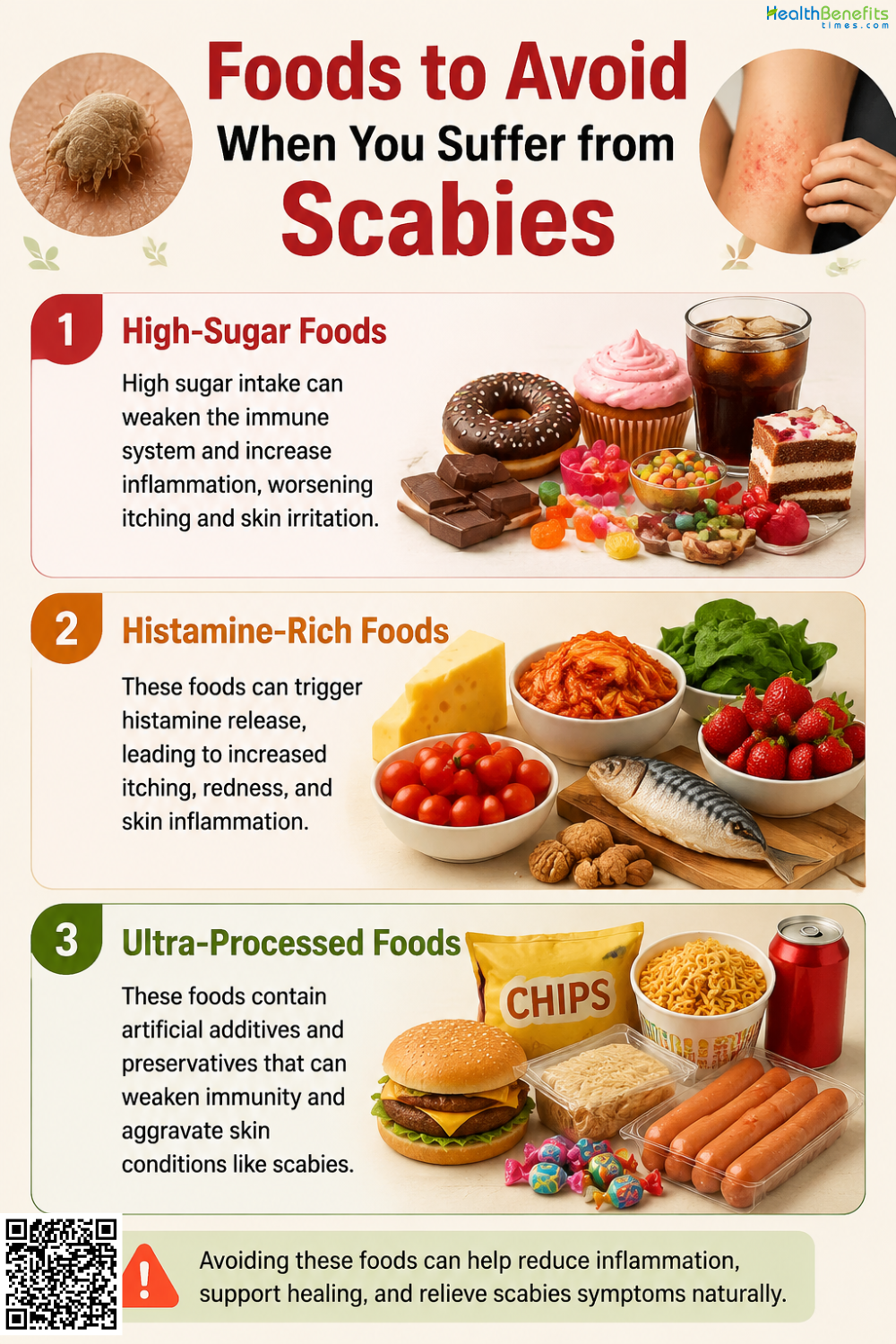
2. Histamine-Rich Foods
Fermented products, processed meats, and aged cheeses contain high histamine levels that can intensify the allergic immune response and worsen the severe skin itching 19.
3. Ultra-Processed Foods
Highly processed items contain artificial additives and unhealthy fats that increase general inflammation, potentially worsening skin irritation and delaying the recovery of your protective skin barrier 20.
When to See a Doctor When You Struggle from Scabies
Scabies is a highly contagious skin infestation caused by parasitic mites. Because the condition rarely resolves without prescription medication, timely medical evaluation is critical to prevent complications and community spread. You must consult a healthcare professional immediately if you experience specific warning signs indicating treatment failure or severe secondary complications.
1. Persistent Symptoms
If severe itching and new rashes continue for more than two to four weeks after initial treatment, you require professional medical re-evaluation to confirm complete mite eradication 21.
2. Signs of Bacterial Infection
Intense scratching frequently causes open sores susceptible to secondary bacterial infections like staphylococcus, requiring immediate medical evaluation if you notice increased swelling, warmth, or pus 22.
3. Development of Skin Crusts
The appearance of thick, grayish skin crusts indicates crusted scabies, a severe hyper-infestation containing thousands of mites that requires aggressive, specialized prescription therapy 23.
4. Spread to Close Contacts
Because the mites spread rapidly through prolonged skin-to-skin contact, you must see a doctor if family members develop symptoms, ensuring the entire household receives simultaneous medical treatment 2.
Comments
comments