

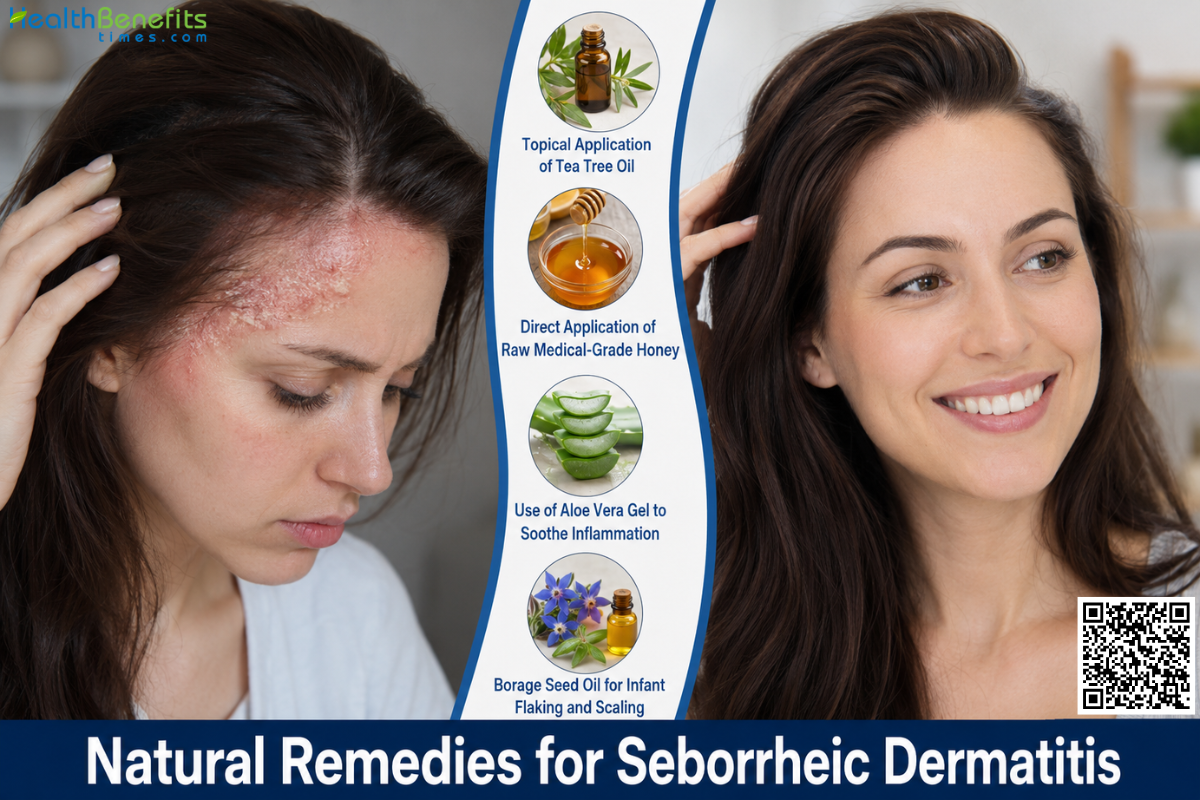
Causes of Seborrheic Dermatitis
1. Fungal Overgrowth
The skin naturally hosts a type of yeast called Malassezia. An abnormal immune reaction to this fungus or its overpopulation is a primary trigger for the condition.
2. Altered Skin Oils
Changes in the normal fat and oil composition on the skin surface contribute to the disease. The yeast breaks down these natural oils, leaving irritating acids that cause skin inflammation and flaking.
3. Immune System Weakness
Medical conditions that severely lower the body’s natural defenses, such as HIV/AIDS, lymphoma, or recent organ transplants, greatly increase the risk of developing severe cases.
4. Neurological and Psychiatric Disorders
Individuals diagnosed with brain and nervous system disorders, including Parkinson’s disease, Alzheimer’s disease, and stroke, as well as mental health conditions like major depression, are highly susceptible.
5. Genetics and Skin Barrier Defects
Inherited genetic traits that disrupt or weaken the normal, protective outer layer of the skin make a person more vulnerable to the condition.
6. Environmental Triggers
Exposure to cold temperatures and environments with very low humidity often provokes the sudden onset of symptoms or worsens existing rashes.
7. Medication Side Effects
The use of certain prescription drugs, including lithium, immune-suppressing medications, and specific therapies for psychiatric disorders, can medically induce the condition.
8. Dietary Factors
Clinical data connects a highly processed “Western” diet to a significantly higher risk of developing the condition, while eating a diet rich in whole fruits is associated with a lower risk.
Symptoms of Seborrheic Dermatitis
1. Flaky Scales and Dandruff (Desquamation)
The most recognizable symptom is the excessive shedding of skin cells, which manifests as white or yellowish flakes 5. On the scalp, this is commonly referred to as dandruff, but these scales can also form thick, greasy, and adherent crusts over affected skin areas. The flakes are most noticeable where hair is present or over active rashes.
2. Skin Discoloration and Inflammation (Erythema)
Affected areas of the skin develop distinct discolored patches that vary significantly based on natural skin tone. In individuals with lighter skin tones, the inflamed patches typically appear raised, pink, or red 6. For individuals with darker skin tones, the lesions often present as slightly purple, dark brown, or as patches that are lighter than the surrounding skin (hypopigmentation).
3. Pruritus (Itching) and Burning Sensations
While some lesions remain completely asymptomatic, many individuals experience mild to intense itching, particularly localized to the scalp. This itching is frequently accompanied by a burning sensation, and repetitive scratching can compromise the skin barrier, increasing the risk of secondary bacterial infections.
4. Targeted Rashes in Sebum-Rich Areas
The condition predominantly localizes to regions of the body with a high density of oil-producing (sebaceous) glands. Typical manifestations include poorly defined, scaly plaques on the scalp, the center of the forehead, between and underneath the eyebrows, the creases extending from the nose to the mouth (nasolabial folds), the external ear canal, the back of the neck, and the upper chest.
5. Eyelid Inflammation (Blepharitis)
When the condition affects the oil glands present in the eyelids, it causes the eyelid margins to become swollen, discolored, and irritated. This specific presentation is often accompanied by the accumulation of a yellowish, crusty scale caught between the eyelashes.
6. Skin Fold Breakdown (Maceration)
In areas where skin rubs together or traps moisture—such as the armpits, the groin, the belly button, or underneath the breasts—the rash can cause the skin tissue to soften and break down . This maceration creates painful, tender, and shiny patches that often lack the characteristic dry scaling seen on the face or scalp.
7. Infantile Manifestation (Cradle Cap)
In babies, the condition typically presents within the first few months of life as a thick, yellowish, and greasy crust covering the crown and frontal regions of the scalp. Unlike the adult form, this infantile variant is rarely itchy or painful, though the scaly rash can occasionally spread to the diaper area or body folds in more extensive cases.
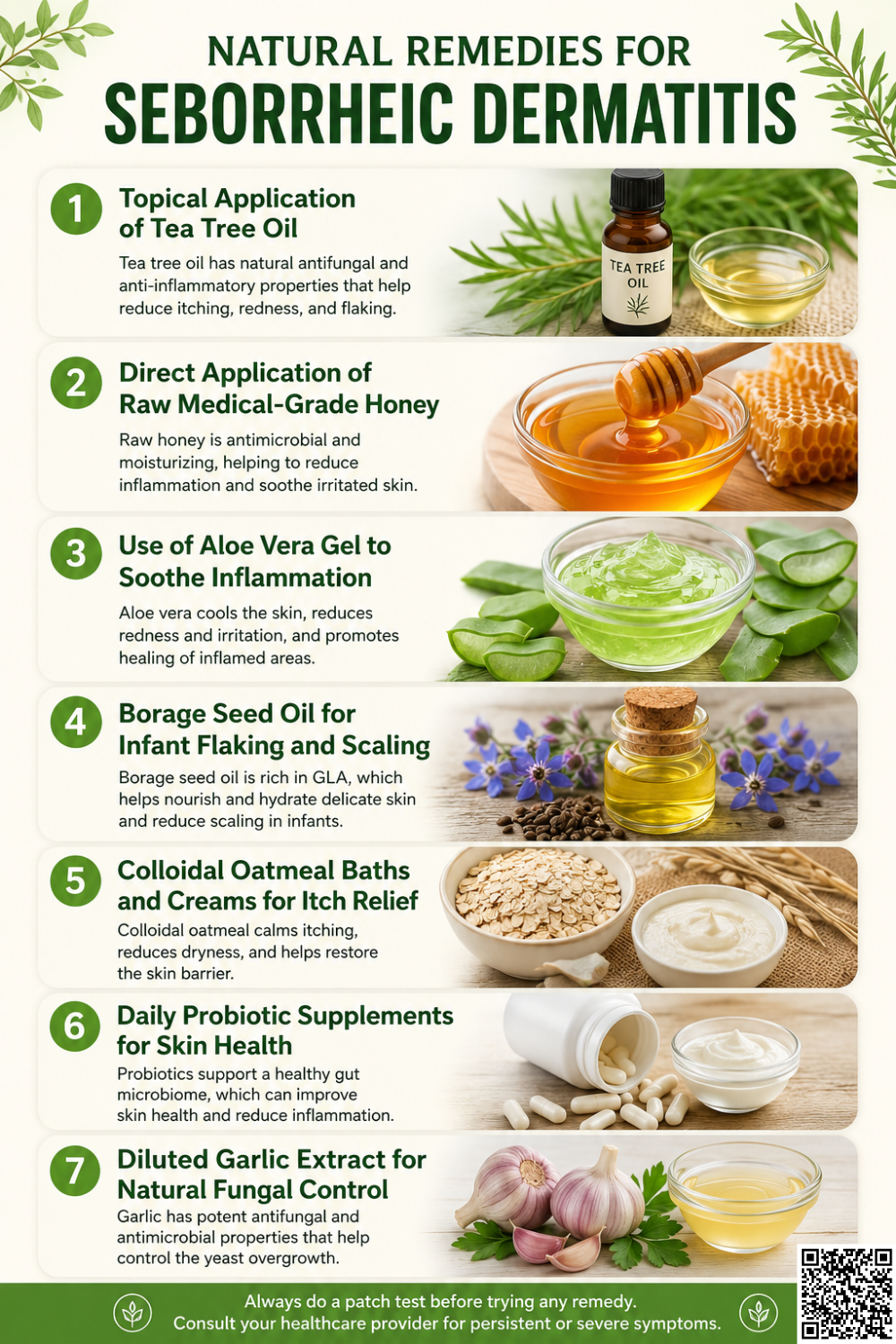
1. Topical Application of Tea Tree Oil
How It May Help
Tea tree oil contains active compounds, such as terpinen-4-ol, which provide strong antifungal and anti-inflammatory benefits 7. It directly targets Malassezia, the specific yeast responsible for seborrheic dermatitis, helping to reduce yeast overgrowth on the skin while calming the associated redness and swelling.
What Research Says
Clinical studies demonstrate that using a 5% tea tree oil shampoo significantly reduces scaling, itchiness, and greasiness associated with mild to moderate dandruff and seborrheic dermatitis 8. Research confirms it is an effective and well-tolerated alternative treatment for managing scalp flaking and surface inflammation.
How to Use It Safely
To avoid severe skin irritation, never apply pure essential oils directly to your skin. You should mix three to five drops of tea tree oil into one ounce of a gentle carrier oil, like jojoba oil, or purchase a commercially prepared 5% tea tree oil shampoo.
Potential Precautions or Side Effects
Tea tree oil can trigger allergic contact dermatitis or irritate sensitive skin 9. Discontinue use immediately if a new rash develops. It is strictly for external application.
2. Direct Application of Raw Medical-Grade Honey
How It May Help
Raw, medical-grade honey possesses natural antibacterial, antifungal, and soothing properties. It helps lower the skin’s pH and creates an environment where the Malassezia yeast struggles to survive 10. Additionally, honey provides deep moisture, which helps repair the damaged skin barrier, reduces flaking, and calms surface redness.
What Research Says
Clinical trials demonstrate that applying crude honey significantly improves seborrheic dermatitis symptoms. In a well-documented study, patients who applied a diluted honey mixture every other day experienced complete relief from itching, scaling, and associated hair loss within four weeks. Ongoing maintenance applications successfully prevented symptom relapses.
How to Use It Safely
You should mix raw or medical-grade honey with a small amount of warm water to thin it. Gently massage this mixture into the affected areas of your skin or scalp. Leave it on for three hours before rinsing thoroughly with warm water, repeating the process every other day.
Potential Precautions or Side Effects
Avoid this treatment if you have known allergies to bee stings, pollen, or honey. Because it is highly sticky, incomplete rinsing may leave residue and temporarily clog skin pores.
3. Use of Aloe Vera Gel to Soothe Inflammation
How It May Help
Aloe vera contains naturally occurring anti-inflammatory enzymes, such as bradykinase, and soothing compounds like salicylic acid 11. By deeply hydrating the skin barrier and calming surface irritation, the gel helps reduce the excessive flaking and painful redness that characterize seborrheic dermatitis flare-ups.
What Research Says
Clinical reviews confirm that topical aloe vera preparations are effective in treating seborrheic dermatitis 12. Research demonstrates that plant-derived treatments like aloe vera can mitigate localized inflammation, significantly reducing itching and scaling while supporting the overall healing of affected skin areas 13.
How to Use It Safely
You should apply a thin layer of pure, fragrance-free aloe vera gel directly to the affected skin or scalp twice daily. Gently massage the gel into the discolored patches and allow it to dry completely to benefit from its moisturizing properties.
Potential Precautions or Side Effects
While generally safe, applying aloe vera may cause mild redness, burning, or stinging in sensitive individuals. Stop using the product immediately if a new allergic rash develops.
4. Borage Seed Oil for Infant Flaking and Scaling
How It May Help
Borage seed oil provides a high concentration of gamma-linolenic acid (GLA), a vital essential fatty acid. Some infants with seborrheic dermatitis temporarily lack the enzyme required to naturally produce GLA, which compromises the skin barrier. Applying this oil directly supplies the missing lipids, deeply moisturizing the scalp and softening hardened crusts 14.
What Research Says
Clinical evidence shows that topical borage oil is an effective treatment for infantile seborrheic dermatitis. Researchers concluded that applying the oil safely corrects the local fatty acid deficit in the epidermis, resulting in the complete clearance of persistent scalp scaling and underlying redness within a few weeks of treatment.
How to Use It Safely
Gently massage a few drops of pure, cold-pressed borage seed oil into your baby’s affected scalp areas up to twice daily. Let the oil sit to soften the thick crusts, and then use a soft-bristled infant brush to carefully sweep away the loosened flakes during a bath.
Potential Precautions or Side Effects
While borage oil is highly gentle, you should perform a small patch test on your baby’s skin first. Discontinue application immediately if you notice any new redness, rash, or irritation.
5. Colloidal Oatmeal Baths and Creams for Itch Relief
How It May Help
Colloidal oatmeal forms a protective seal over the skin to trap moisture and restore the damaged skin barrier. It contains active natural compounds called avenanthramides that calm redness and block the internal chemical signals that trigger intense itching 15, making it highly effective for soothing sudden flare-ups.
What Research Says
Clinical evaluations show that personal care products containing colloidal oatmeal significantly reduce severe itching, dryness, and scaling associated with inflamed skin conditions 16. Researchers conclude that oat extracts directly suppress inflammation and successfully repair the skin barrier, providing measurable symptom relief with a very high safety profile.
How to Use It Safely
You should dissolve one cup of finely ground colloidal oatmeal into a lukewarm bath and soak for 10 to 15 minutes. Alternatively, apply a fragrance-free colloidal oatmeal cream directly to your discolored, flaky skin patches twice daily to lock in moisture and prevent further itching.
Potential Precautions or Side Effects
Colloidal oatmeal is widely considered safe for sensitive skin. However, individuals with a known oat allergy may experience a mild rash or worsening redness upon application.
6. Daily Probiotic Supplements for Skin Health
How It May Help
Specific bacterial strains help restore the necessary microbial balance on the skin’s surface and within the digestive tract. By boosting the skin’s protective barrier and modulating local immune responses, these beneficial bacteria suppress the excessive Malassezia yeast overgrowth that directly drives seborrheic dermatitis flare-ups 17.
What Research Says
Clinical trials demonstrate that targeted probiotics, specifically Lactobacillus paracasei, significantly improve seborrheic dermatitis symptoms by reducing scalp flaking, redness, and greasiness 18. Researchers concluded that these beneficial strains successfully rebalance the skin’s complex fungal and bacterial communities, which helps prevent severe symptom relapses over time 19.
How to Use It Safely
You can take a daily oral probiotic supplement containing Lactobacillus strains, strictly following the manufacturer’s recommended dosage. Alternatively, you may gently apply a scientifically formulated, fragrance-free topical probiotic cream directly to clean, affected skin patches once or twice a day to support local barrier repair.
Potential Precautions or Side Effects
Probiotics are generally safe for daily routine use. However, if you have a severely compromised immune system or a serious gastrointestinal disorder, you must consult a physician before starting oral supplementation.
7. Diluted Garlic Extract for Natural Fungal Control
How It May Help
Garlic contains high levels of allicin, a powerful sulfur-containing compound with potent natural antifungal properties. Applying diluted garlic extract directly targets and suppresses the overgrowth of Malassezia yeast on the skin, helping to eliminate the root cause of seborrheic dermatitis while reducing localized inflammation and visible flaking.
What Research Says
Clinical evaluations confirm that garlic-derived compounds, particularly allicin, strongly inhibit the growth and cellular function of opportunistic fungi, including those responsible for seborrheic dermatitis 20. Researchers conclude that topical garlic application serves as a highly effective, natural antifungal treatment capable of clearing localized fungal skin infections.
How to Use It Safely
You should crush a fresh garlic clove and mix it thoroughly with a gentle carrier oil, like coconut oil, to dilute its potency. Apply this mixture to the affected skin patches, leave it on for 15 minutes, and then wash it off completely with warm water.
Potential Precautions or Side Effects
Raw garlic is highly potent and can cause severe chemical burns or contact dermatitis if applied undiluted. Always perform a small patch test before a broader application.
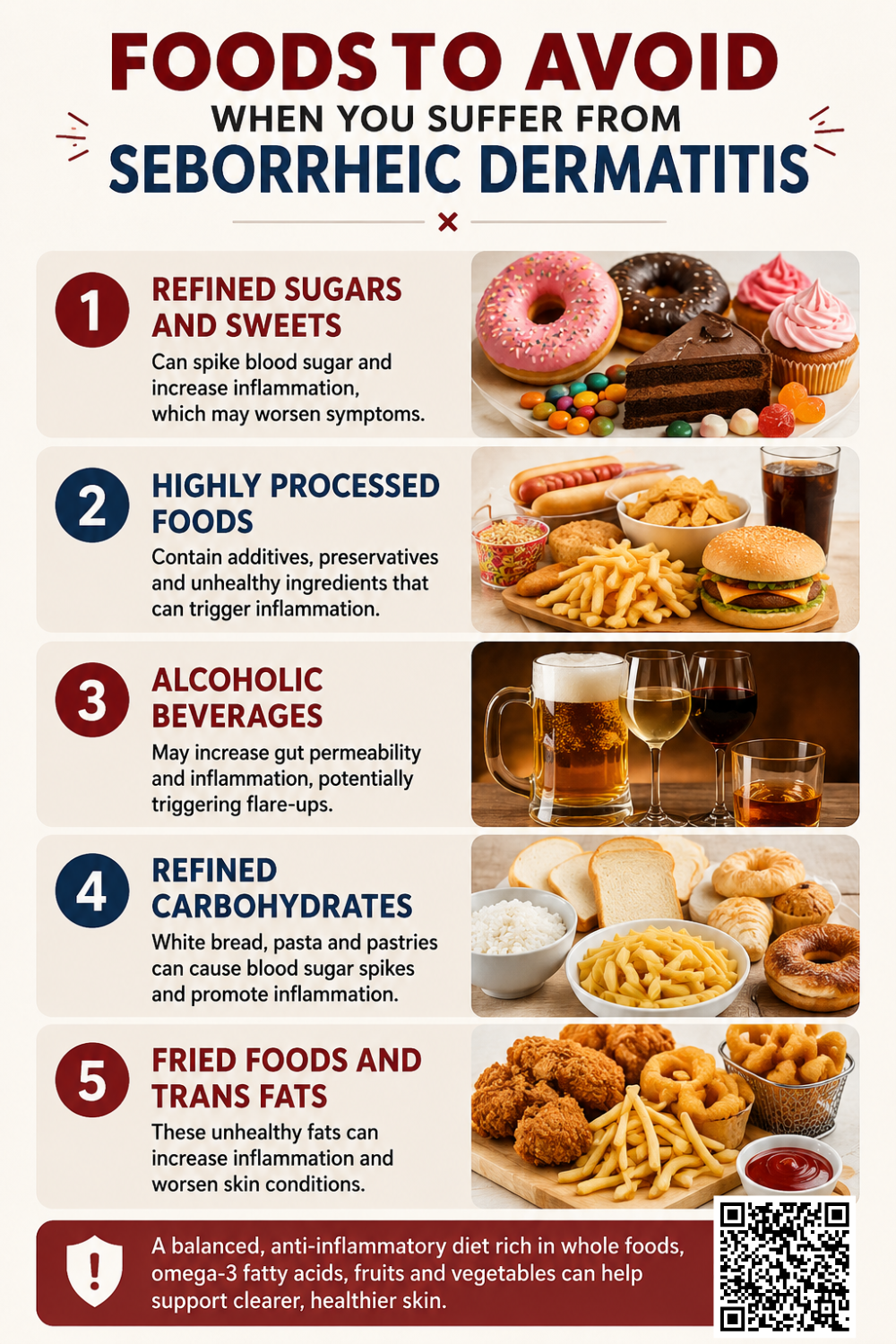
1. Refined Sugars and Sweets
Consuming high amounts of refined sugar spikes insulin and increases skin oil production, which promotes the growth of the yeast responsible for flare-ups 21.
2. Highly Processed Foods
Diets heavily reliant on processed meals trigger systemic inflammation. This inflammatory response worsens skin redness and scaling associated with active dermatitis lesions.
3. Alcoholic Beverages
Regular alcohol consumption compromises the immune system and triggers systemic inflammation, which exacerbates the severity and frequency of skin flaking and redness.
4. Refined Carbohydrates
Foods like white bread possess a high glycemic index. They rapidly digest into sugars, stimulating excessive oil gland activity and worsening fungal overgrowth.
5. Fried Foods and Trans Fats
Saturated and trans fats found in fried foods promote inflammatory chemical pathways in the body, actively delaying the healing of damaged skin barriers.
When To see Doctor when you suffer from Seborrheic Dermatitis
1. Unresponsive Over-the-Counter Care
You should see a physician if standard anti-dandruff shampoos and non-prescription antifungal creams fail to clear the scaling after several weeks of regular use.
2. Severe Disruption of Daily Life
Consult a doctor if the itching and inflammation become intense enough to disrupt your daily routine, cause significant anxiety, or prevent you from sleeping normally.
3. Signs of Bacterial Infection
Seek medical attention if the affected skin begins to leak fluid, produce pus, or develop crusts, as these indicate a secondary bacterial infection requiring antibiotics.
4. Rapid Spreading of the Rash
You must contact a dermatologist if the painful rashes rapidly spread to new areas of your body or cover a large percentage of your skin surface.
5. Compromised Immune System Status
Individuals with weakened immune systems should seek immediate clinical evaluation for new or worsening seborrheic dermatitis to prevent severe dermatological.
Comments
comments