


Causes of Sore Feet
Pinpointing the precise cause of foot pain is the first step toward finding relief. While many people assume that foot discomfort is merely a consequence of a busy day, it is often a sign of specific structural changes or mechanical imbalances in the lower limbs 5. Sufferers of foot pain should understand the primary factors responsible for this debilitating condition:
1. Prolonged Weight-Bearing Activities
Spending long, uninterrupted periods standing or walking on hard surfaces places a heavy mechanical load on the soles of the feet 5. This continuous compression restricts blood flow and induces microtrauma in the supporting soft tissues 5.
2. Inflamed Connective Tissues (Plantar Fasciitis)
The thick fibrous band of connective tissue running along the bottom of the foot the plantar fascia can become severely overstretched, overused, or inflamed 6. This condition is particularly triggered by flat feet, high arches, or tight calf muscles 6.
3. Ill-Fitting and Unsupportive Footwear
Wearing narrow-toed shoes, high heels, or shoes that lack adequate cushioning can distort the natural anatomy of the foot 5. This ongoing friction and pressure lead directly to painful abnormalities such as bunions, hard corns, and thick calluses 7.
4. Obesity and Sudden Weight Gain
Carrying excess body weight dramatically increases the downward pressure exerted on the arches during movement 2. This heightened physical force accelerates the degeneration of protective joint cartilage and connective tissues 2.
5. Structural Foot Abnormalities
Congenital or acquired conditions such as flat feet (fallen arches) or rigid high arches alter natural foot biomechanics 8. The loose tendons and ligaments in flat feet prevent the foot from absorbing shock properly, causing widespread aching 8.
6. Repetitive Physical Trauma and Overuse
Engaging in high-impact sports, distance running, or jumping without proper physical training can stress the bones and tendons 6. This repetitive impact can cause stress fractures, ligament sprains, or Achilles tendinitis 5.
7. Systemic Diseases and Nerve Pathologies
Systemic metabolic conditions can damage the nerve pathways of the lower limbs, with diabetic peripheral neuropathy being the most prominent 9. Additionally, conditions like tarsal tunnel syndrome compress the tibial nerve, resulting in burning discomfort across the bottom of the foot 10.
Symptoms of Sore Feet
Recognizing how different tissues feel when they are under strain can help determine if the problem is muscle exhaustion, joint wear, or nerve irritation. Sufferers of foot soreness should look for these key symptoms:
- Sharp, Stabbing Heel Pain: Sufferers often experience an intense, sharp pain on the bottom of the heel, which is usually worse when taking the very first steps in the morning or after resting for a period of time 6.
- Deep, Aching Arch Discomfort: A persistent, tired ache along the sole or arch of the foot is common, particularly after standing for long periods or participating in athletic sports 8.
- Burning, Tingling, or Numbness: A constant or intermittent “pins and needles” sensation or a burning feeling often develops on the bottom of the foot or travels down to the toes, indicating nerve compression 11.
- Visible Swelling, Redness, and Warmth: Inflammation can manifest around joints and tendons, making the skin look red and feel warm and tender to the touch, especially during flares of arthritis or gout 5.
- Outer Ankle Pain and Stiffness: Aching and stiffness can develop on the outer edge of the ankle or in the toes, which may change how the individual walks and lead to progressive toe deformities over time 8.
Sore Feet Facts Table
Synthesizing clinical and epidemiological data provides a structured and clear overview of this common issue. Sufferers can refer to the following table to understand the essential characteristics of foot soreness:
| Category | Facts and Details |
| Symptoms |
|
| Causes |
|
| Types of Sore Feet |
|
| How does spread |
|
| Age Group
15. |
|
| You might be at a higher risk for exposure of this disease if you: |
|
| How doctors diagnose |
|
| Other facts |
|
Natural Remedies for Sore Feet
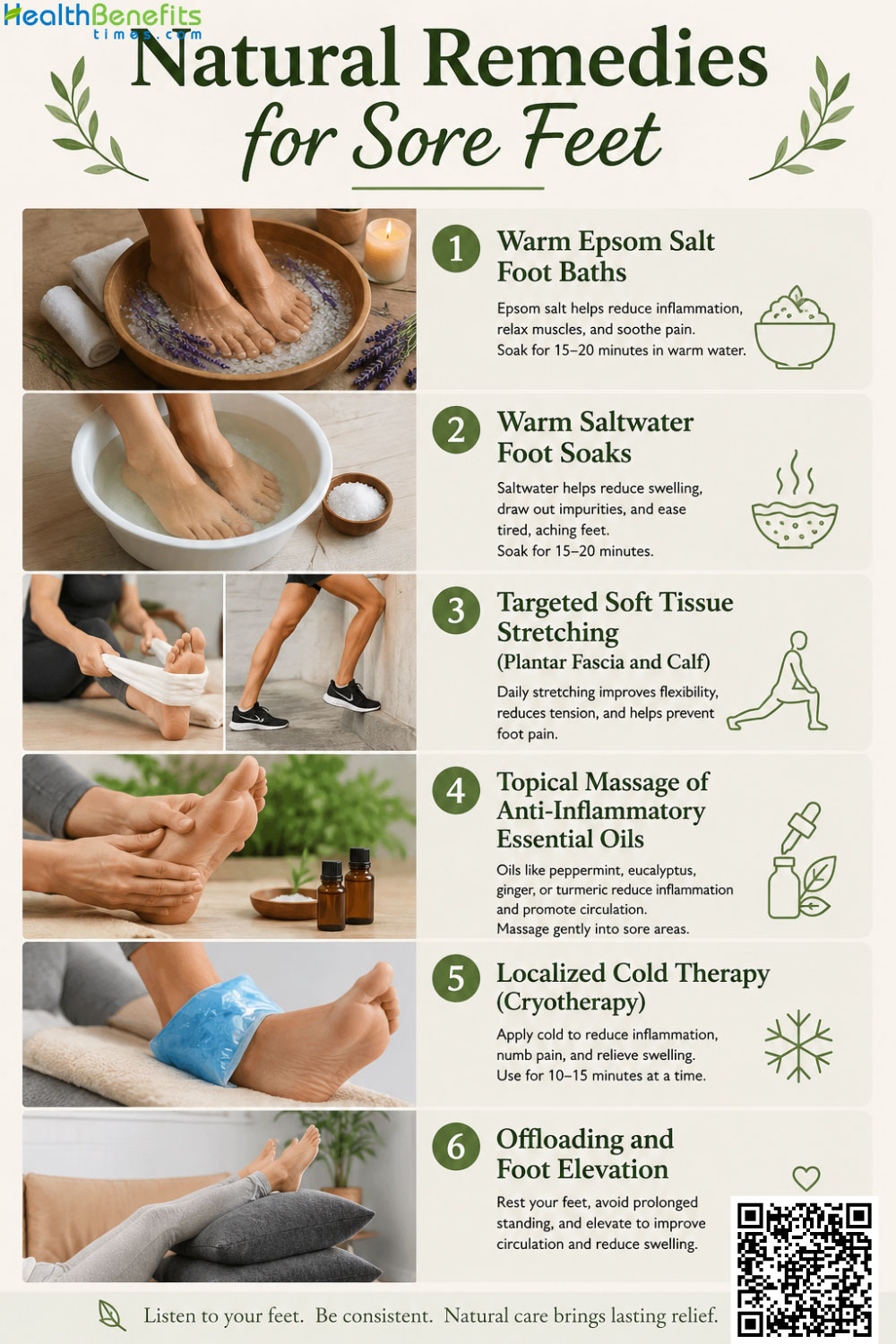
Finding effective, non-drug options to treat your feet at home can bring quick, lasting relief and help restore your daily mobility. When you focus on these non-invasive, drug-free methods, you can help lower tissue inflammation, improve circulation, and correct minor mechanical imbalances. Here are the most effective natural remedies you can use to treat your sore feet:
1. Warm Epsom Salt Foot Baths
Submerging your weary lower limbs in a warm Epsom salt foot bath is a highly relaxing and beneficial therapy. Epsom salt, chemically known as magnesium sulfate, is a natural mineral compound that helps reduce neuroinflammation, enhance localized circulation, and ease muscle tension 17. When you soak your feet in this solution, the warm temperature triggers blood vessels to widen, bringing fresh, nutrient-rich blood to your tired muscles, while the mineral bath helps soothe local nerve endings and reduce joint pain associated with conditions like osteoarthritis 18. In addition, soaking your feet in warm water softens the skin, making it much easier to safely remove painful corns or calluses while hydrating dry, cracked skin barriers 19.
Note: You commonly apply this remedy by dissolving one to two cups of Epsom salt into a basin of warm water and soaking your feet for 15 to 20 minutes daily.
2. Warm Saltwater Foot Soaks
Preparing a warm hypertonic bath with natural sea salt is an outstanding remedy that works differently from Epsom salt by drawing out trapped fluid from swollen tissues. This concentration of salt creates an osmotic gradient across your skin, naturally drawing out trapped fluid from swollen tissues to help reduce painful edema and swelling in your distal joints 20. The combination of salt and warm water also activates specialized pressure-sensitive and heat-sensitive channels (called Piezo1 and Piezo2) in your skin, which send electrical signals to your nervous system to promote deep relaxation, lower your pain perception, and improve your foot’s overall functional capacity 21.
Note: You commonly apply this soak by dissolving half a cup of natural sea salt in a tub of warm water (between 40–45°C) and soaking your feet for 20 minutes.
3. Targeted Soft Tissue Stretching (Plantar Fascia and Calf)
Relieving mechanical stiffness through daily stretching exercises is highly effective for correcting the biomechanical tightness that causes your discomfort. Tightness in your calf muscles and Achilles tendon alters your natural multi-segment foot motion during walking, creating excessive pulling forces on your plantar fascia tissue 22. You can perform a plantar-fascia stretch by sitting down, crossing your sore foot over your opposite thigh, and gently pulling your toes back toward your shin with your hand to stretch the sole of your foot 23. Combining this with wall calf stretches where you lean against a wall and keep your back heel flat on the floor helps lengthen the entire back of your leg and permanently reduces stress on your arches 24.
Note: You commonly use this technique by holding each stretch for 10 to 30 seconds and repeating it 10 times, twice a day.
4. Topical Massage of Anti-Inflammatory Essential Oils
Massaging your skin with anti-inflammatory essential oils derived from medicinal plants is a time-tested approach that has gained modern scientific support. Popular oils like lavender, peppermint, rosemary, and chamomile contain highly active plant compounds (such as terpenoids and flavonoids) that are proven to reduce swelling and ease pain without the side effects of synthetic drugs 25. When you rub these oils into your skin, they penetrate the outer skin barrier and act on specialized receptor channels (called TRP channels) to help block pain, heat, and cold sensations 26. Eucalyptus oil is particularly powerful because it is rich in 1,8-cineole, which helps suppress local swelling and lowers inflammatory responses by restricting cytokine secretion 27.
Note: You commonly apply this remedy by mixing 3 to 5 drops of pure essential oil with a tablespoon of carrier oil, like coconut or almond oil, and gently massaging it into your feet.
5. Localized Cold Therapy (Cryotherapy)
Applying direct cold temperatures is a powerful method for managing acute pain and intense localized inflammation. Applying cold temperatures causes the local blood vessels in your feet to constrict, which limits the flow of inflammatory fluids to injured tissues and dramatically reduces throbbing 5. This cooling effect also slows down the speed at which your nerves transmit pain signals to your brain, raising your local pain threshold and providing comforting relief, particularly during acute flare-ups of heel pain or tendon irritation 6.
Note: You commonly apply this by wrapping an ice pack in a thin towel and holding it against the sore area, or by rolling the arch of your foot over a frozen water bottle for 15 minutes.
6. Offloading and Foot Elevation
Propping your legs up on soft pillows to lift your feet above the level of your heart is essential for allowing micro-tears in your connective tissues to heal. This simple change uses gravity to help drain pooled blood and fluid out of your lower extremities, which quickly relieves throbbing pressure and swelling 5. During recovery, you should temporarily cut back on high-impact physical activities like running or jumping so that the delicate fibers of your plantar fascia can repair without being continuously strained 28.
Note: You commonly apply this remedy by propping your legs up on two or three soft pillows for 20 to 30 minutes several times a day.
Foods and Activities to Avoid When You Suffer from Sore Feet
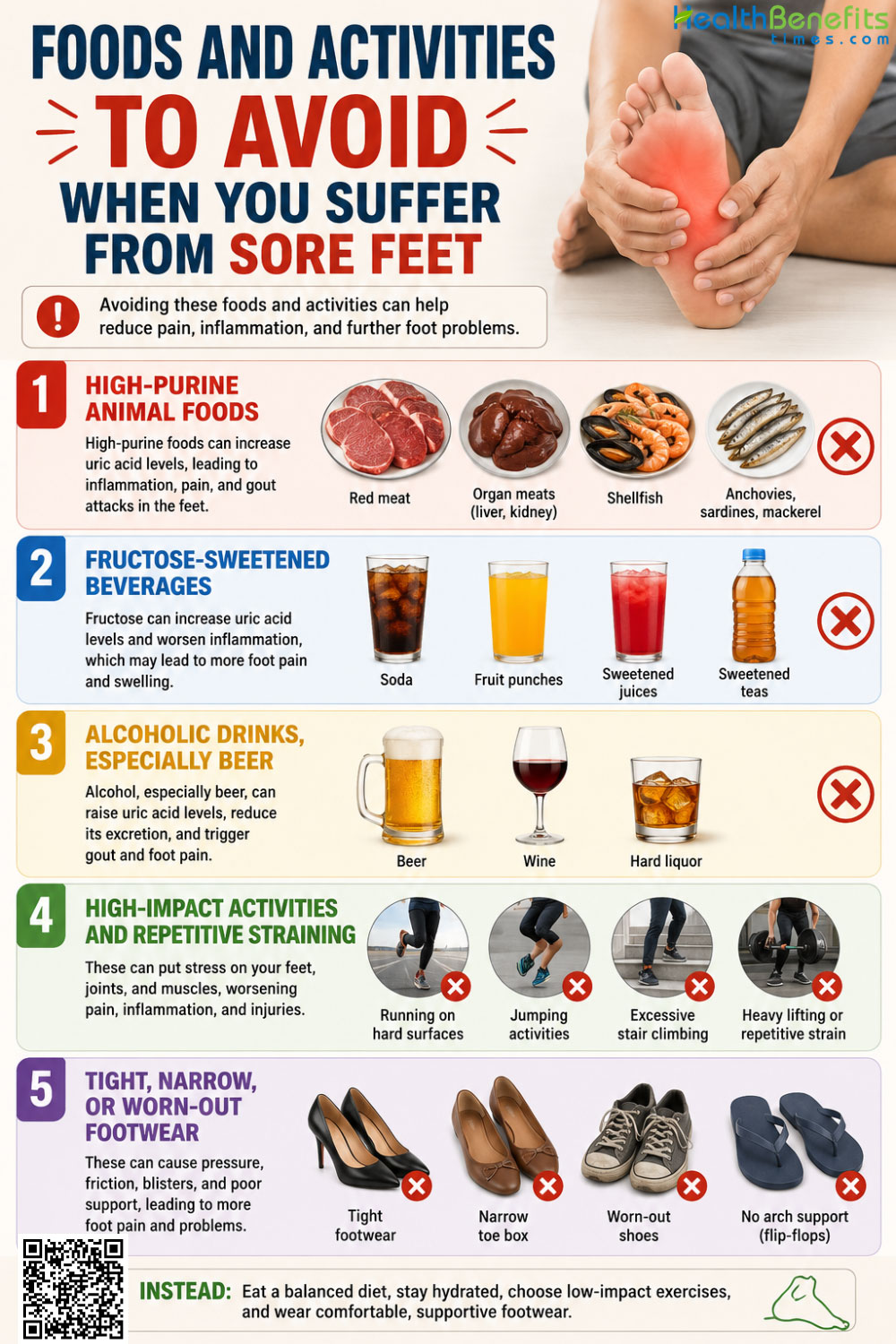
Supporting the body’s natural healing processes requires you to make healthy daily choices. While you are using natural remedies, you must also be proactive about avoiding certain foods and physical activities that can fuel internal inflammation or aggravate injured foot tissues. To speed up your recovery, you should avoid:
1. High-Purine Animal Foods
You should strictly limit your intake of foods that are very high in purines, including organ meats (like liver or kidney), red meats (beef and pork), and seafood (such as shrimp and lobster) 29. When your body breaks down these purines, it produces uric acid, which can form sharp, painful crystals inside your foot joints and trigger severe attacks of gouty arthritis 30.
2. Fructose-Sweetened Beverages
You should avoid drinking sodas, sweetened fruit juices, and beverages containing high-fructose corn syrup 31. Fructose metabolism in your liver rapidly consumes cellular energy (ATP), which accelerates the production of uric acid, raising blood levels and worsening joint inflammation in your lower limbs 31.
3. Alcoholic Drinks, Especially Beer
You must avoid drinking beer, spirits, and large amounts of alcohol 32. Alcohol promotes the overproduction of uric acid in your body and has a strong diuretic effect, which dehydrates you and causes your kidneys to retain uric acid rather than flushing it out through your urine 32.
4. High-Impact Activities and Repetitive Straining
You should avoid activities that place a heavy physical strain on your feet, such as long-distance running, jumping sports, hiking, or walking down steep hills 23. These repetitive impacts apply massive mechanical forces to your already inflamed plantar fascia and calf muscles, which can cause further micro-tears and dramatically extend your healing time 12.
5. Tight, Narrow, or Worn-Out Footwear
You must avoid wearing narrow-toed shoes, high heels, or athletic sneakers that have lost their cushioning and arch support 5. Unsupportive footwear forces your toes into abnormal, crowded positions, worsens friction-induced calluses, and fails to protect your arches from flattening and straining 5.
Myths and Misconceptions
Sifting through common household beliefs and folklore is crucial for identifying safe, evidence-based treatments. Dispelling these myths is vital for helping sufferers find reliable care and avoid unnecessary medical procedures. The following table contrasts some of the most common myths with clinical realities:
| Myth | Reality |
| Heel spurs are the primary and direct cause of plantar fasciitis heel pain. | Clinical research shows that heel spurs are visible on X-rays in people both with and without foot pain; the true source of pain is the inflammation of the plantar fascia tissue itself, not the bone growth. |
| Soaking feet in Epsom salt is an effective way to correct a systemic magnesium deficiency. {% https://pmc.ncbi.nlm.nih.gov/articles/PMC5579607/ %} | While Epsom salt baths are highly beneficial for local skin hydration, softening calluses, and relaxing muscles, large clinical reviews show that transdermal absorption of magnesium to correct a systemic deficiency is scientifically unsupported compared to oral supplements. |
| Sufferers must avoid all purine-rich plant foods like peas, lentils, and spinach to prevent foot gout. 33 | High-quality studies demonstrate that purine-rich, plant-based foods have little to no effect on raising uric acid levels or triggering gout attacks; the primary dietary culprits are animal proteins, shellfish, alcohol, and refined sugars. |
| Having flat feet is a severe deformity that will always require corrective orthotics or surgery. 8 | The vast majority of individuals with flat feet live completely pain-free lives, and they do not require any medical treatments or specialized shoes unless they begin to experience persistent pain or joint stiffness. |
Special Considerations
A person’s age, physical condition, and general health significantly change how foot pain develops and how it must be managed. What is a normal physical shift in one individual can represent a major clinical challenge in another, requiring tailored precautions.
1. Children
Pediatric arches require careful observation as they are not fully formed at birth due to natural structural laxity in early development 8. Most children have flat feet until they are two or three years old, when the supporting tissues naturally tighten to form normal arches 8. While pediatric flat feet are almost always painless, any persistent complaints of foot, ankle, or lower leg pain in a child should be evaluated by a healthcare provider to rule out rare conditions like tarsal coalition, where two or more bones grow or fuse together abnormally 8.
2. Pregnancy
Expectant mothers undergo rapid physical shifts, including rapid weight gain and hormonal surges that loosen bodily tissues 6. The release of hormones like relaxin stretches the pelvic joints for delivery, but it also relaxes the supporting ligaments in the feet, causing the arches to flatten and place severe strain on the plantar fascia 6, 8. Consequently, pregnant women are at a much higher risk of experiencing acute arch strain and lower limb swelling, making supportive shoes and daily gentle stretching highly important during this period 6.
3. Chronic Conditions
Long-term metabolic disorders require serious care when evaluating any symptoms of foot soreness. For instance, individuals with diabetes often develop peripheral neuropathy, which progressively damages sensory nerves and leaves the feet entirely numb to pain or injury 34. Because these patients cannot perceive minor cuts or friction, small wounds can easily go unnoticed and progress to deep, infected diabetic foot ulcers, which are a leading precursor to lower extremity amputations 34, 35. Conversely, for patients suffering from chronic inflammatory diseases like rheumatoid arthritis, warm foot baths represent a safe, highly beneficial complementary therapy to help soothe swollen joints, lower fatigue, and improve functional mobility 20.
4. Elderly
Older adults face a gradual, natural thinning of the protective fat pads on the heels, along with a progressive loss of joint cartilage and tendon elasticity 5, 8. This age-related wearing of the feet is a major cause of chronic soreness, which acts as a direct risk factor for locomotor disability, impaired balance, and dangerous falls 3. Community surveys show that foot pain affects nearly one in three older people community-wide, making regular supportive footwear and gentle stretching exercises essential for preserving their physical independence and safety 2.
Precautions before Using Natural Remedies
Taking careful precautions is important before you begin using any natural remedies for your sore feet. Even though home treatments are generally safe, incorrect use can worsen your symptoms or lead to accidental injuries. To protect your health, you must observe the following precautions:
1. Verify Temperatures Safely
You must always test the temperature of your foot baths with your hand or a thermometer before stepping in, especially if you have diabetes or nerve damage 34. Because peripheral neuropathy dulls your ability to feel heat, you can easily suffer severe, painless skin burns from hot water without realizing it 36.
2. Dilute and Skin-Test Oils
You should always perform a patch test with diluted essential oils on a small area of your skin before rubbing them all over your feet 37. Highly concentrated plant oils like peppermint, lavender, or tea tree can trigger severe allergic reactions, contact dermatitis, or skin burning if you are sensitive to them 38.
3. Avoid Soaking Broken Skin
You must never soak your feet in salt baths or warm water if you have any open cuts, blisters, bleeding sores, or active bacterial skin infections 39. Immersing open skin in water weakens and softens tissue borders, delays natural healing, and can introduce dangerous bacteria into your body 39.
4. Stretch with Gentle Pressure
You should never stretch your foot or calf muscles to the point of experiencing sharp, intense pain 23. Forcing a tight or heavily inflamed plantar fascia can cause further micro-tearing, which will worsen your inflammation and extend your recovery timeline.
5. Limit Soaking with Chronic Disease
You must limit the duration and frequency of your mineral foot baths if you suffer from advanced kidney or heart disease 19. Prolonged soaking can lead to the systemic absorption of minerals through your skin, which can put extra strain on compromised kidneys and potentially cause systemic mineral imbalances 40.
When to See a Doctor
Knowing when to transition from home therapies to professional medical evaluation can prevent minor issues from developing into serious mobility limitations. Sufferers must be vigilant about specific red flags that require timely medical diagnosis. You should contact a doctor or podiatrist immediately if:
1. Sudden Injury
You must seek immediate medical attention if your foot pain begins suddenly after a fall, twist, or impact, especially if your foot is bleeding, severely bruised, or if you cannot put any weight on it 5.
2. Spreading Infection
You should see a doctor right away if you develop spreading redness, significant joint swelling, local skin heat, an open sore or ulcer, or if your foot pain is accompanied by a fever 5.
3. Circulatory Issues
You must never attempt to treat your foot pain at home if you have diabetes, peripheral arterial disease, or any condition that affects the blood flow to your legs 5. Any minor injury or ache in an insensate foot requires a professional exam to prevent serious complications 5.
4. Persistent Symptoms
You should consult a medical professional if your foot pain does not feel better after using at-home treatments and resting for 1 to 2 weeks 5.
5. Nerve Damage
You must seek a medical evaluation if you develop a progressive loss of sensation, burning, tingling on the bottom of your foot, or weakness in your toe muscles, which indicate nerve compression or damage 10.
Ultimately, caring for the feet is a fundamental aspect of maintaining overall health, mobility, and independence throughout life. Implementing simple, evidence-based natural remedies like warm foot baths, structured stretching, and physical rest can help alleviate daily soreness and prevent structural wear-and-tear 5, 17. However, balancing these gentle therapies with proper footwear, safe physical habits, and timely medical care ensures that the lower limbs remain strong, healthy, and supportive for years to come.
Comments
comments