

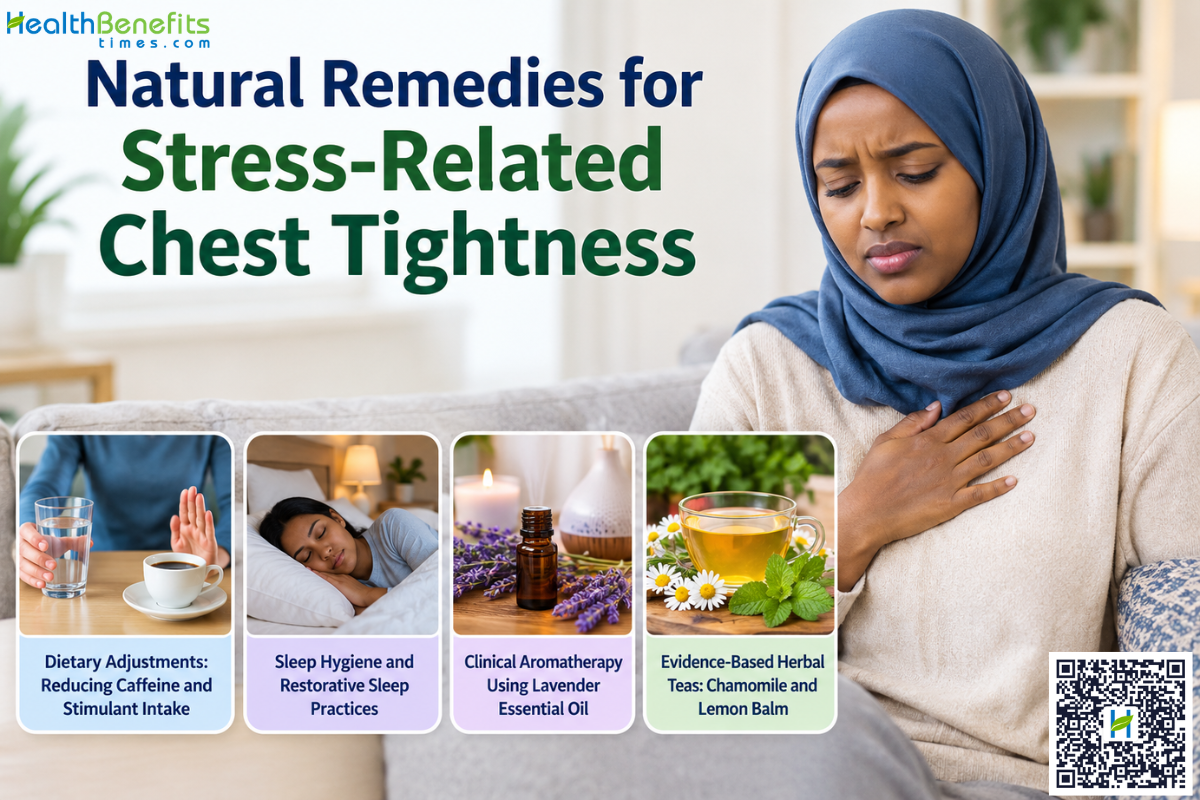
Causes of Stress-Related Chest tightness
1. Musculoskeletal Tension
Psychological stress triggers a systemic “fight-or-flight” response that causes skeletal muscles to contract involuntarily 5. When anxiety persists, the intercostal muscles situated between the ribs remain continuously tense, leading to localized muscle spasms, physical strain, and a sharp or aching sensation of tightness across the chest wall 6.
2. Hyperventilation
Anxiety and panic frequently induce rapid, shallow breathing patterns that disrupt the normal balance of oxygen and carbon dioxide in the bloodstream 5. This resulting chemical imbalance restricts blood vessels and triggers severe chest wall strain and a suffocating feeling of tightness 7
3. Esophageal Spasms
Acute emotional distress can disrupt the normal function of the gastrointestinal tract by causing the smooth muscles of the esophagus to contract abnormally 5. This esophageal dysmotility generates a sudden, squeezing pain behind the breastbone that clinically mimics cardiac distress 5.
4. Microvascular Constriction
Severe anxiety highly activates the sympathetic nervous system, increasing heart rate and blood pressure 5. This intense neurological activation can cause the small coronary blood vessels to constrict temporarily, which reduces coronary blood flow and produces chest pain even in the absence of structural heart disease 5.
5. Stress Cardiomyopathy
Intense, sudden emotional trauma can prompt a massive release of stress hormones that temporarily stuns and weakens the heart muscle 8. Also known as Takotsubo syndrome, this severe physiological reaction causes rapid left ventricular dysfunction and intense, crushing chest pain that closely simulates a heart attack 8.
Symptoms of Stress-Related Chest tightness
- Heart Palpitations: Psychological stress triggers a sudden surge of adrenaline that frequently causes the heart to beat rapidly, flutter abnormally, or pound forcefully against the chest wall 9
- Breathing Difficulties: Extreme anxiety often disrupts standard respiratory functions, inducing rapid, shallow breathing patterns that create a suffocating sensation or severe shortness of breath 9
- Dizziness and Weakness: The combination of an elevated heart rate and hyperventilation alters oxygen and carbon dioxide levels in the bloodstream, which frequently leads to sudden lightheadedness, faintness, or general physical weakness 10
- Sensory Numbness: Heightened nervous system activity during an acute panic episode can temporarily restrict peripheral blood vessels, causing noticeable tingling, numbness, or a “pins and needles” sensation in the hands and fingers 10
- Physical Tremors: A severe “fight-or-flight” stress response overstimulates the central nervous system, which routinely results in uncontrollable shaking, profuse sweating, or sudden chills alongside the chest pressure 10
- Digestive Discomfort: Because the brain and the gastrointestinal tract share closely linked nerve pathways, anxiety-induced chest tightness is often accompanied by sudden stomach pain, acid reflux, or severe nausea 10.
Natural Remedies for Stress-Related Chest tightness
1. Diaphragmatic Breathing and Controlled Respiration
How it may help
Diaphragmatic breathing helps relieve stress-related chest tightness by strongly activating the parasympathetic nervous system. This slow, deep breathing technique fully engages the diaphragm to decrease rapid respiration and reduce chest muscle tension. Ultimately, it reverses shallow thoracic breathing patterns, significantly lowering the heart rate and promoting overall physical relaxation 11.
What research says
Clinical studies confirm that diaphragmatic breathing effectively lowers perceived stress and decreases salivary cortisol levels 12. Research concludes that regular practice significantly improves emotional regulation and reduces negative affect by enhancing parasympathetic activity. This process effectively counteracts the physiological markers of anxiety, hyperventilation, and panic disorders 13.
How to use it safely
To practice safely, you should initially lie on your back in a comfortable position. Place one hand on your upper chest and the other on your abdomen. Inhale slowly through your nose so your stomach pushes outward, keeping your chest still, then exhale gently 14.
Potential precautions or side effects
Beginners might experience temporary fatigue or mild dizziness from altered breathing mechanics 15. If hyperventilation or unexpected anxiety occurs, you should immediately resume a normal resting breathing pattern.
2. Progressive Muscle Relaxation Techniques
How it may help
Progressive muscle relaxation systematically reduces physical tension by alternately tensing and releasing specific muscle groups. This active process helps individuals recognize the difference between a tense and relaxed state. Purposefully releasing tension in the chest and shoulder muscles directly diminishes stress-related chest tightness and rapidly decreases overall physiological arousal 16.
What research says
Clinical evidence demonstrates that progressive muscle relaxation significantly reduces anxiety symptoms and lowers resting heart rates. Researchers conclude that routine practice effectively decreases state anxiety and improves autonomic nervous system regulation. Consequently, individuals experience a marked reduction in physical stress symptoms, including stress-induced chest pressure and muscular tension 16.
How to use it safely
You should sit or lie quietly in a comfortable, distraction-free environment. Slowly inhale while tensing a specific muscle group, like your chest or shoulders, for five seconds. Exhale and instantly release the tension, resting for ten seconds before moving to the next muscle group 17.
Potential precautions or side effects
You must avoid tensing any injured or strained muscles to prevent further damage. Tensing muscles too forcefully can occasionally cause temporary muscle cramping or mild physical discomfort 17.
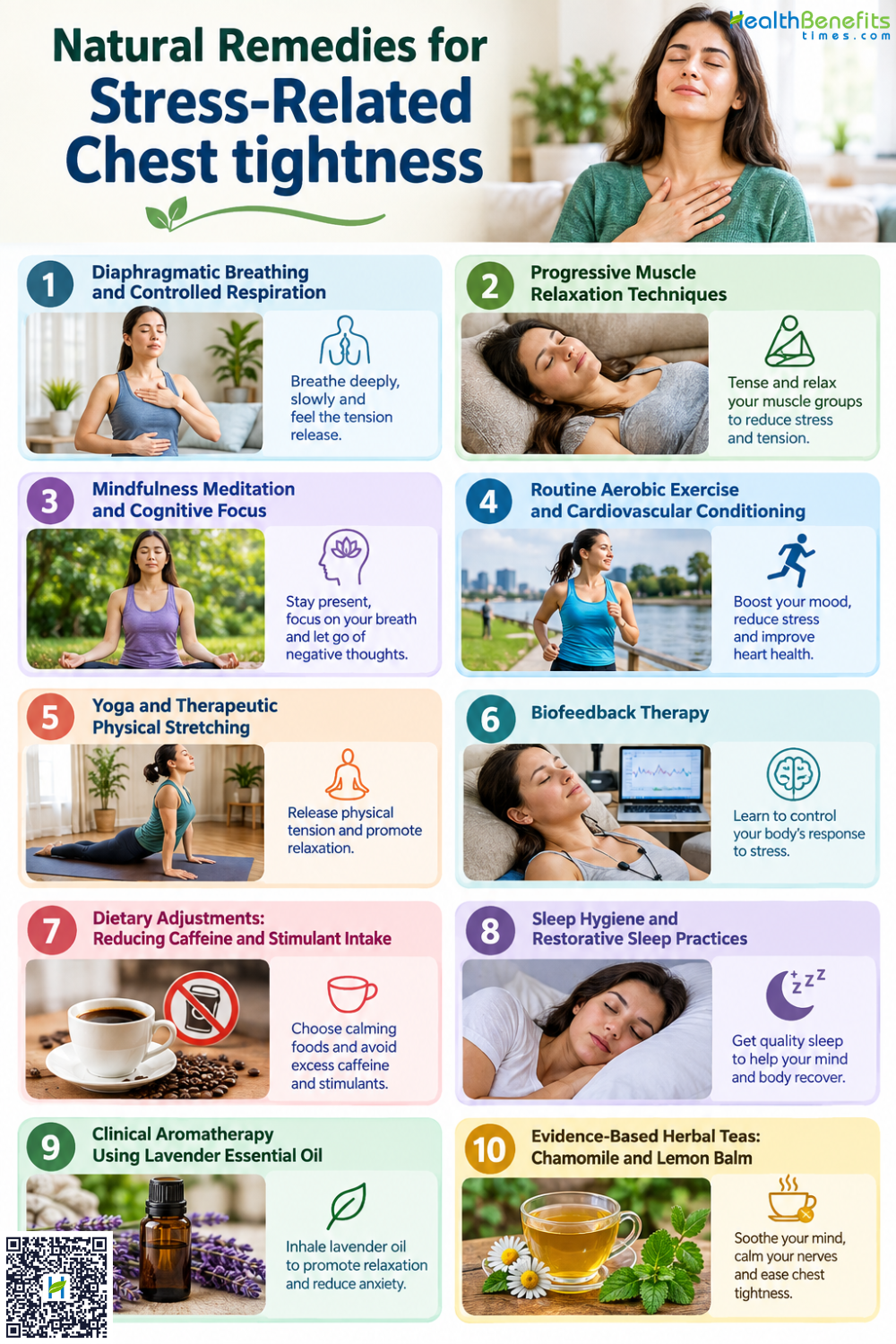
3. Mindfulness Meditation and Cognitive Focus
How it may help
Mindfulness meditation redirects cognitive focus away from distressing thoughts, effectively calming the central nervous system. This intentional mental shift reduces sympathetic nervous system overactivity. Consequently, it interrupts the body’s physical stress response, directly alleviating muscle contraction in the chest wall and stabilizing erratic breathing patterns caused by emotional distress 18.
What research says
Clinical studies conclude that mindfulness meditation significantly decreases generalized anxiety and its associated physical symptoms. Researchers have determined that regular mindfulness practice improves emotional regulation, leading to measurable reductions in severe somatic symptoms, specifically stress-induced chest pressure, elevated resting heart rates, and chronic muscle tension 19.
How to use it safely
You should sit quietly in a comfortable position and close your eyes. Focus your attention entirely on the natural rhythm of your breathing. When your mind wanders, you must gently redirect your focus back to your breath without self-judgment to maintain mental clarity 18.
Potential precautions or side effects
You might occasionally experience increased anxiety or resurfacing traumatic memories during quiet meditation. If focusing inward causes severe emotional distress, you should stop and consult a mental health professional 20.
4. Routine Aerobic Exercise and Cardiovascular Conditioning
How it may help
Routine aerobic exercise actively reduces the body’s circulating stress hormones, such as adrenaline and cortisol. This physical exertion stimulates the release of endorphins, which act as natural mood elevators and muscle relaxants. Consequently, cardiovascular conditioning decreases chronic muscle tension in the chest wall and improves overall respiratory efficiency during stressful events 21.
What research says
Clinical research demonstrates that regular cardiovascular conditioning significantly reduces generalized anxiety and its somatic symptoms. Researchers conclude that routine aerobic activity lowers cardiovascular reactivity to psychological stress. This enhanced autonomic nervous system stability directly mitigates physical manifestations of anxiety, specifically stress-induced chest tightness and rapid heart rate 22.
How to use it safely
You should begin with low-impact activities like brisk walking for thirty minutes most days. Maintain a moderate intensity where you can comfortably hold a conversation. Ensure you warm up properly before exercising and cool down afterward to prevent abrupt cardiac strain 23.
Potential precautions or side effects
Avoid sudden, high-intensity workouts if unaccustomed to physical exertion, as this may provoke acute chest pain. You must consult a physician before starting if you have underlying cardiovascular conditions 24.
5. Yoga and Therapeutic Physical Stretching
How it may help
Therapeutic stretching and yoga physically lengthen the intercostal muscles and pectoral fascia, immediately relieving mechanical chest wall tension. This mind-body practice intentionally combines physical postures with controlled breathing to actively suppress sympathetic nervous system dominance, thereby reducing the muscular contractions directly responsible for stress-induced chest pressure 25.
What research says
Clinical studies confirm that routine yoga practice significantly decreases cortisol secretion and dampens systemic stress responses. Researchers conclude that these structured therapeutic movements effectively reduce generalized anxiety scores and alleviate associated somatic symptoms, particularly subjective feelings of chest restriction and chronic muscular tension 26.
How to use it safely
You should begin with foundational, low-impact postures like seated chest openers or the child’s pose. Move slowly into each stretch while maintaining steady, deep breathing. You must always respect your physical boundaries and avoid forcing your body into painful positions to prevent muscle strain 25.
Potential precautions or side effects
You might experience mild muscle soreness initially. You must avoid advanced poses without supervision, as overstretching frequently causes acute joint injuries or severe muscle strains 27.
6. Biofeedback Therapy
How it may help
Biofeedback therapy uses electronic sensors to provide real-time data about physiological functions, including heart rate and muscle contraction. By observing this immediate feedback, individuals learn to consciously regulate their autonomic nervous system. This mindful control directly decreases sympathetic arousal, releasing tense chest wall muscles and normalizing erratic respiratory patterns 28.
What research says
Clinical studies demonstrate that heart rate variability biofeedback significantly reduces generalized anxiety and physical stress symptoms. Researchers conclude that this therapy successfully restores autonomic nervous system balance by increasing parasympathetic activity. Consequently, patients experience measurable decreases in severe somatic complaints, specifically stress-induced chest tightness and elevated resting heart rates 29.
How to use it safely
You should consult a licensed clinical practitioner to begin biofeedback therapy. During sessions, non-invasive electrical sensors monitor your physiological activity. You must actively practice guided relaxation techniques while watching the monitor, eventually learning to control these physical stress responses without relying on the electronic equipment 30.
Potential precautions or side effects
Biofeedback is non-invasive and generally safe. However, constantly monitoring vital signs might temporarily elevate health anxiety. You must consult a physician if you have implanted medical devices like pacemakers 30.
7. Dietary Adjustments: Reducing Caffeine and Stimulant Intake
How it may help
Reducing dietary caffeine directly decreases central nervous system stimulation. Stimulants artificially increase circulating adrenaline, which mimics and exacerbates the body’s natural fight-or-flight response. By limiting these substances, individuals successfully lower their baseline resting heart rate, preventing the physiological overstimulation that frequently triggers severe stress-related chest tightness 31.
What research says
Clinical studies demonstrate that excessive caffeine consumption significantly exacerbates generalized anxiety symptoms. Researchers conclude that high stimulant intake directly amplifies the body’s somatic stress response. Eliminating dietary stimulants measurably reduces physiological distress markers, specifically rapid pulse rates and panic-like chest restrictions in susceptible individuals 32.
How to use it safely
You should gradually reduce your caffeine intake over several weeks rather than quitting abruptly. Replace regular coffee or energy drinks with decaffeinated alternatives. You must consistently monitor food labels, as many common over-the-counter pain relievers and sodas contain hidden stimulants 33.
Potential precautions or side effects
Abruptly stopping caffeine often causes withdrawal symptoms, including severe headaches, irritability, and fatigue. You should stay hydrated and maintain consistent sleep schedules to minimize these temporary withdrawal effects 34.
8. Sleep Hygiene and Restorative Sleep Practices
How it may help
Restorative sleep effectively regulates the hypothalamic-pituitary-adrenal axis, reducing elevated baseline cortisol levels. Consistent sleep hygiene decreases sympathetic nervous system hyperactivity. This nightly neurological repair process prevents chronic muscle tension, directly alleviating the physical sensation of stress-related chest tightness during waking hours 35.
What research says
Clinical studies demonstrate that sleep deprivation significantly amplifies daytime autonomic arousal and emotional reactivity. Researchers conclude that achieving consistent, restorative sleep directly lowers systemic stress biomarkers. Consequently, improved sleep quality substantially reduces generalized anxiety scores and mitigates severe somatic symptoms, including subjective chest pressure 36.
How to use it safely
You should maintain a strict, consistent sleep schedule every day. Create a dark, quiet, and cool sleeping environment. You must eliminate electronic screen exposure at least one hour before bedtime to prevent blue light from disrupting natural melatonin production 37.
Potential precautions or side effects
Obsessing over perfect sleep metrics frequently triggers paradoxical performance anxiety, worsening insomnia. You should consult a physician if chronic sleep disruption persists despite maintaining strict sleep hygiene practices 38.
9. Clinical Aromatherapy Using Lavender Essential Oil
How it may help
Inhaling lavender essential oil compounds, particularly linalool, stimulates olfactory receptors that directly signal the brain’s limbic system. This rapidly reduces sympathetic nervous system arousal and promotes physical relaxation. Consequently, clinical aromatherapy effectively relaxes tightened chest wall muscles and relieves stress-induced respiratory constriction 39.
What research says
Clinical studies confirm that inhaling lavender essential oil significantly decreases generalized anxiety and lowers elevated resting heart rates. Researchers conclude that lavender acts as a mild central nervous system depressant, directly mitigating acute somatic stress responses like subjective chest pressure and rapid, shallow breathing 40.
How to use it safely
You should place three to four drops of lavender essential oil into an electronic room diffuser. Alternatively, you can apply two drops to a cotton ball and take slow, deep breaths. You must always properly dilute the essential oil before any direct skin application 41.
Potential precautions or side effects
You might experience mild allergic reactions, nausea, or headaches from strong fragrances. You must never ingest essential oils internally, as oral consumption frequently causes severe systemic toxicity 41.
10. Evidence-Based Herbal Teas: Chamomile and Lemon Balm
How it may help
Chamomile and lemon balm directly interact with the brain’s gamma-aminobutyric acid (GABA) receptors to promote central nervous system relaxation. This natural mild sedative effect actively reduces systemic autonomic arousal. Consequently, consuming these herbal teas helps release constricted smooth and skeletal muscles, directly alleviating the physical sensation of stress-related chest tightness 42.
What research says
Clinical trials confirm that pharmaceutical-grade chamomile extract significantly reduces moderate to severe generalized anxiety symptoms. Researchers conclude that these specific botanicals safely decrease somatic stress markers. Patients regularly consuming these herbs experience measurable reductions in physical anxiety manifestations, specifically subjective chest pressure and elevated resting heart rates 43.
How to use it safely
You should steep one high-quality chamomile or lemon balm tea bag in boiling water for five to ten minutes. Consume one to two cups daily during periods of acute stress. You must ensure the herbs are purely sourced to avoid heavy metal contamination from unverified commercial producers 44.
Potential precautions or side effects
You must avoid chamomile entirely if you have severe ragweed or daisy allergies to prevent anaphylaxis. Both herbs can cause mild drowsiness, so you should avoid consuming them before driving 44.
Foods to Avoid When You Suffer from Stress-Related Chest tightness
1. High-Caffeine Beverages
Caffeine directly stimulates the central nervous system, increasing resting heart rate. This artificial arousal frequently exacerbates anxiety and worsens stress-induced chest restriction 32.
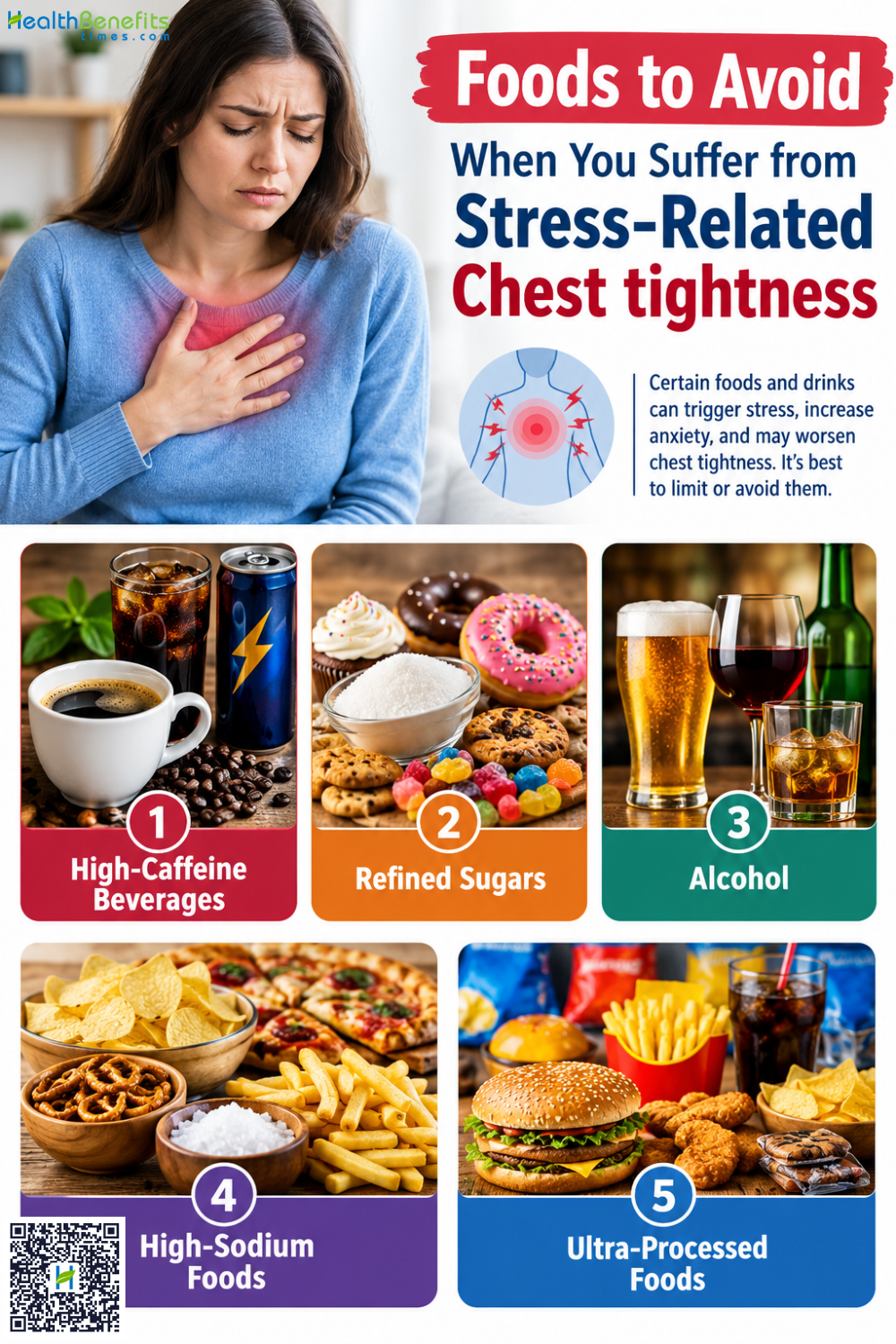
2. Refined Sugars
High-sugar foods cause rapid blood glucose fluctuations. These severe spikes trigger adrenaline release, worsening systemic stress responses and amplifying physical panic symptoms like chest pressure 45.
3. Alcohol
Alcohol initially depresses the nervous system but subsequently causes severe rebound anxiety. This physiological disruption increases sympathetic nervous system hyperactivity, directly intensifying stress-related chest tightness 46.
4. High-Sodium Foods
Excessive dietary salt rapidly elevates blood pressure. This added cardiovascular strain directly exacerbates the physical somatic manifestations of psychological stress, specifically heavy chest tension 47.
5. Ultra-Processed Foods
Artificial trans fats promote systemic neuroinflammation, which clinical studies definitively link to heightened generalized anxiety and worsened physical stress responses like chest muscle constriction 48.
When to see Doctor when you struggle from Stress-Related Chest tightness
- Radiating Pain: Seek emergency care if chest pressure radiates to the left arm, neck, or jaw. This strongly indicates an acute cardiac event rather than simple stress or anxiety 49.
- Severe Shortness of Breath: You must consult a physician if chest tightness accompanies sudden, severe shortness of breath. This frequently signals life-threatening cardiovascular emergencies requiring immediate clinical intervention 50.
- Cold Sweats and Nausea: Unexplained cold sweats, sudden nausea, or profuse sweating paired with chest restriction require urgent medical evaluation to definitively rule out acute coronary syndrome or underlying cardiac ischemia 51.
- Dizziness or Fainting: If chest discomfort causes severe lightheadedness, extreme dizziness, or fainting, you must seek immediate care. These symptoms suggest critical blood pressure drops or dangerous cardiac arrhythmias 52.
- Persistent Symptoms: Consult a healthcare professional if chest tightness persists beyond fifteen minutes, worsens during physical exertion, or fails to resolve with relaxation techniques, indicating potential structural heart disease 53.
Comments
comments