

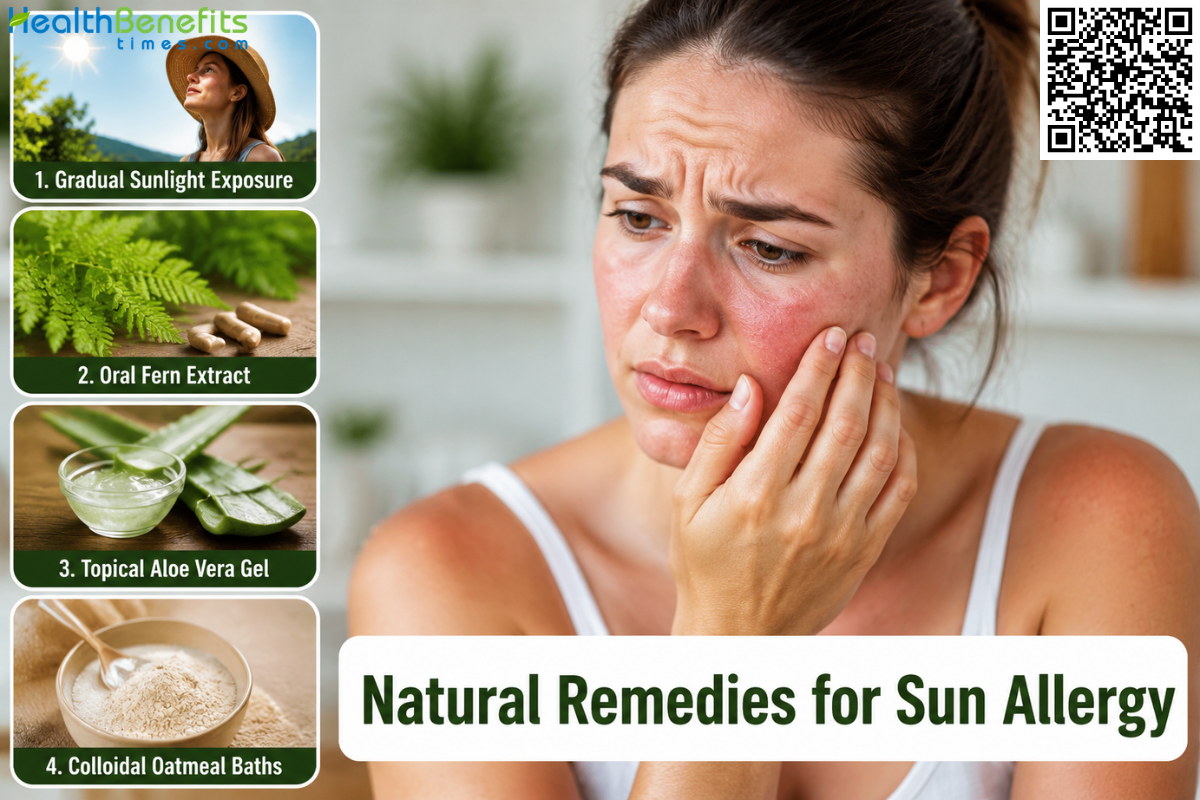
Causes of Sun Allergy
1. Immune System Reactions to Ultraviolet Light
In conditions like polymorphous light eruption (PMLE), ultraviolet (UV) radiation fundamentally alters normal proteins within the skin. The body’s immune system mistakenly identifies these newly altered proteins as foreign invaders and attacks them, resulting in an inflammatory response that produces itchy rashes and lesions 1.
2. Photosensitizing Medications
Certain prescription and over-the-counter drugs, including specific antibiotics (such as tetracyclines), nonsteroidal anti-inflammatory pain relievers, and blood pressure medications, chemically increase skin sensitivity. When UV rays penetrate the skin and interact with these circulating medications, they trigger a chemical change that causes severe, sunburn-like toxic skin reactions 5.
3. Topical Chemicals and Cosmetics
Applying specific chemical substances directly to the skin can cause a condition known as photoallergic contact dermatitis. Ingredients found in certain fragrances, botanical oils, and even specific chemical sunscreen filters structurally change when hit by UV light, prompting the immune system to initiate an allergic reaction directly on the exposed skin 6.
4. Genetic Factors
Inherited hereditary traits heavily influence a person’s susceptibility to certain rare sun allergies, such as actinic prurigo. This specific genetic condition is most commonly identified in populations of Native American and Latin American descent, causing their immune systems to generate chronic, intensely itchy skin bumps following routine sun exposure 7.
5. Underlying Medical Conditions
Pre-existing autoimmune and metabolic diseases, most notably systemic lupus erythematosus and porphyria, disrupt normal cellular processes and make the skin abnormally reactive to sunlight. For individuals managing these conditions, UV exposure rapidly induces distinct skin lesions and can trigger broader flare-ups of their underlying illness 8.
Symptoms of Sun Allergy
1. Small, Itchy Bumps (Papules)
In the most common form of sun allergy, known as polymorphous light eruption (PMLE), individuals develop clusters of small, elevated red bumps that cause intense itching or a burning sensation. These bumps typically emerge hours to days after sun exposure and are strictly confined to areas that were exposed to sunlight, such as the neck, chest, and outer arms 1.
2. Rapidly Forming Hives (Wheals)
For individuals with a rare condition called solar urticaria, exposure to ultraviolet light triggers the sudden onset of large, raised, and extremely itchy red welts. Unlike other sun allergies, these hives develop within minutes of sunlight exposure and typically fade away within a few hours once the person moves indoors or into the shade 4.
3. Blisters and Fluid-Filled Lesions
Severe photosensitivity reactions, particularly those triggered by certain interacting medications or topical chemicals, can cause the skin to erupt in painful, fluid-filled blisters. These lesions closely resemble a toxic, severe sunburn and can occasionally burst, leading to crusting and an increased risk of skin infections 5.
4. Widespread Redness and Swelling
The affected skin often develops a diffuse, inflamed redness accompanied by noticeable localized swelling underneath the skin surface. This widespread inflammation is a direct result of the immune system attacking UV-altered skin proteins, though it generally resolves without permanent scarring once the acute reaction ends 2.
5. Scaling and Thickened Skin
As the initial allergic skin reaction begins to heal over several days, the affected patches may dry out, thicken, or develop a scaly surface. If you repeatedly scratch these intensely itchy areas, the skin can tear and form scabs, which drastically prolongs the healing process and may leave temporary dark spots 6.
Natural Remedies for Sun Allergy
1. Gradual Sunlight Exposure
How it may help
Gradual, controlled sunlight exposure helps the skin develop a natural physical tolerance to ultraviolet radiation. This biological adaptation, known as photohardening, safely desensitizes the local immune system, reducing its tendency to mistakenly attack UV-altered skin proteins and trigger uncomfortable allergic rashes.
What research says
Clinical dermatology guidelines confirm that inducing photohardening through controlled UV exposure significantly reduces the frequency and severity of seasonal sun allergy flares. Research concludes that this progressive exposure successfully restores immune tolerance in the epidermis, allowing patients to endure summer sunlight with fewer clinical symptoms 1.
How to use it safely
You should begin in early spring with brief, timed outdoor exposures of just a few minutes per day during low-UV morning hours. Gradually increase your time outside by small increments each week while consistently using broad-spectrum sunscreen on the rest of your body 1.
Potential precautions or side effects
If an allergic rash develops, you must stop exposure immediately until it heals. Furthermore, this built-up skin tolerance is temporary and completely disappears during the winter months 9.
2. Oral Fern Extract
How it may help
Oral fern extract, derived from the Polypodium leucotomos plant, provides powerful natural antioxidants that protect skin cells from within. It works by neutralizing harmful molecules generated by ultraviolet radiation. This systemic protection actively reduces skin inflammation and calms the hyperactive immune response that triggers itchy allergic rashes.
What research says
Clinical studies demonstrate that daily supplementation with Polypodium leucotomos extract significantly reduces the severity of sun allergy flare-ups. Researchers conclude that this oral extract successfully delays the onset of skin rashes following UV exposure and decreases the overall intensity of redness and itching in affected patients 10.
How to use it safely
You should take oral fern extract capsules daily, typically one to two hours before planned sun exposure. However, you must always use it alongside broad-spectrum sunscreen and protective clothing, as oral supplements cannot physically block ultraviolet rays from penetrating the skin.
Potential precautions or side effects
While generally well-tolerated, this extract may occasionally cause mild stomach upset. You should consult a doctor before using this supplement if you are pregnant, nursing, or taking prescription medications.
3. Topical Aloe Vera Gel
How it may help
Topical aloe vera gel contains active natural compounds that provide immediate cooling relief to inflamed skin. By actively reducing localized heat and soothing irritated nerve endings, it temporarily relieves the severe itching, redness, and swelling associated with an acute allergic reaction to sunlight.
What research says
Clinical research confirms that the botanical compounds in aloe vera exert significant anti-inflammatory effects on human skin. Dermatological studies demonstrate that applying pure aloe vera directly to UV-damaged tissue safely accelerates the healing process and reduces overall surface redness during acute inflammatory flares 11.
How to use it safely
You should apply a generous layer of pure, fragrance-free aloe vera gel directly to the affected areas. Storing the gel in the refrigerator before application provides additional cooling relief that rapidly calms severe burning sensations and urges to scratch.
Potential precautions or side effects
You must test the gel on a small patch of skin first, as some individuals develop contact dermatitis or mild allergic reactions to raw aloe vera extracts 12.
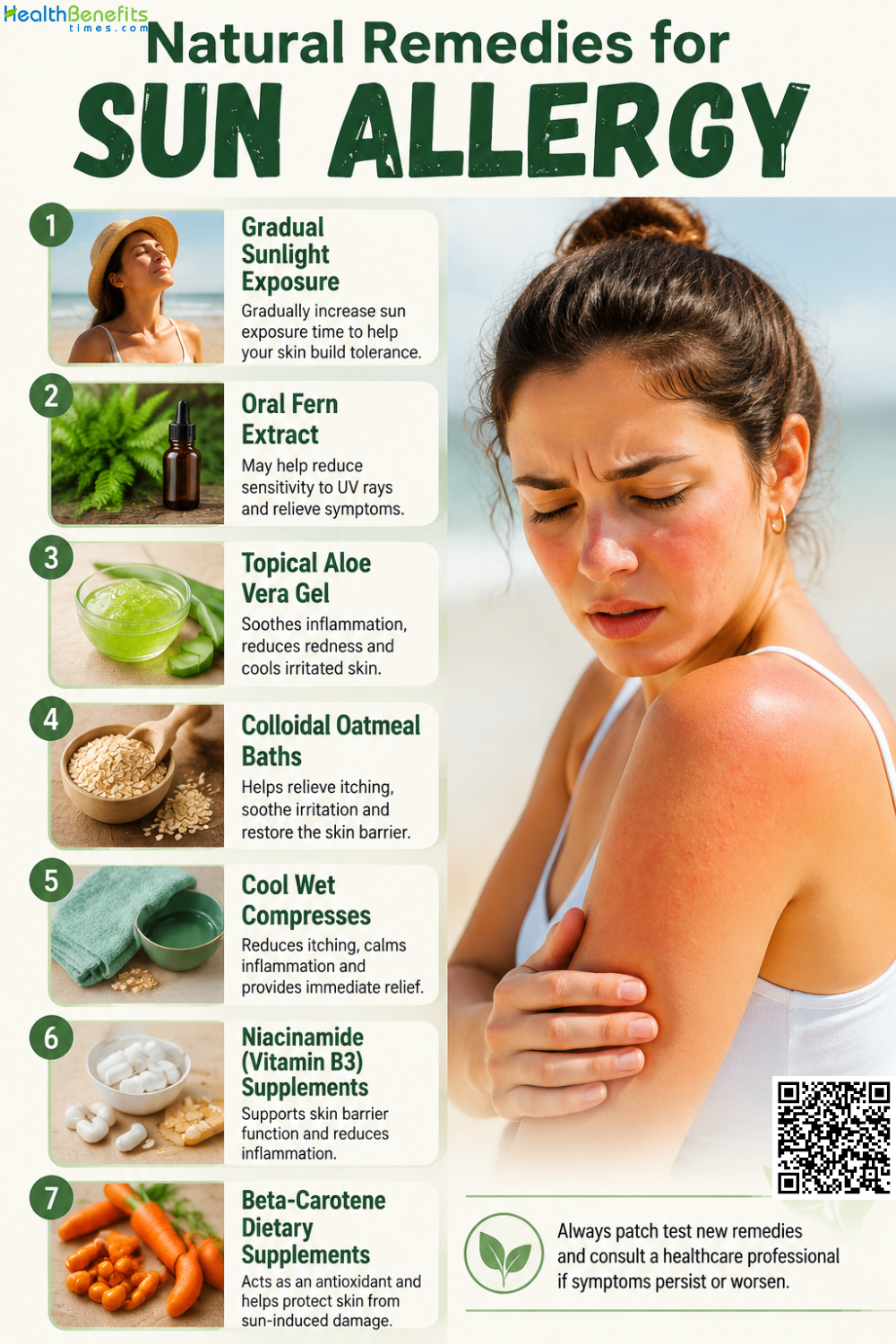
4. Colloidal Oatmeal Baths
How it may help
Colloidal oatmeal binds to the skin, creating a protective barrier that locks in moisture. It contains special anti-inflammatory compounds called avenanthramides that rapidly soothe intense itching, reduce surface redness, and calm the hyperactive skin reaction associated with allergic sun rashes.
What research says
Clinical dermatology studies confirm that colloidal oatmeal extracts possess direct anti-inflammatory and antioxidant properties. Research concludes that these natural compounds successfully inhibit the release of pro-inflammatory chemicals in the skin, proving highly effective at managing intense itching and restoring the skin barrier in allergic dermatological conditions 13.
How to use it safely
You should sprinkle finely ground colloidal oatmeal into a lukewarm bathtub, stirring until the water turns milky. Soak for 10 to 15 minutes, then gently pat your skin dry with a soft towel. Avoid vigorously rubbing the sensitive areas to prevent further irritation.
Potential precautions or side effects
You must strictly use lukewarm water, as hot water actively worsens allergic skin inflammation. Rarely, individuals with severe oat allergies may develop contact dermatitis from these baths 13.
5. Cool Wet Compresses
How it may help
Applying cool, wet compresses directly to sun-induced rashes immediately constricts local blood vessels. This physical cooling action rapidly decreases underlying skin inflammation, minimizes visible swelling, and temporarily numbs hyperactive nerve endings to provide fast relief from severe itching and burning sensations 3.
What research says
Clinical dermatology guidelines strongly recommend cool water compresses as a safe, primary intervention for acute skin inflammation. Medical experts conclude that this simple physical cooling therapy effectively suppresses localized swelling and reduces the immediate urge to scratch, preventing further mechanical damage to allergic skin 1.
How to use it safely
You should soak a clean, soft cloth in cool water, wring out the excess, and gently drape it over the affected skin. Leave the compress in place for 15 to 20 minutes, and repeat this process multiple times throughout the day for continuous relief.
Potential precautions or side effects
You must never apply ice directly to the rash, as extreme freezing temperatures can damage delicate, inflamed skin tissues and worsen the overall allergic reaction 3.
6. Niacinamide (Vitamin B3) Supplements
How it may help
Oral niacinamide, a specific form of vitamin B3, helps replenish cellular energy depleted by ultraviolet radiation. By boosting this energy, it accelerates the repair of UV-damaged DNA in skin cells, which actively prevents the abnormal immune system reactions and severe inflammation that cause sun allergy rashes 14.
What research says
Clinical trials demonstrate that oral nicotinamide significantly reduces ultraviolet-induced immune suppression in human skin. Researchers conclude that this vitamin safely enhances the skin’s natural repair mechanisms, effectively reducing the intense photosensitivity that triggers allergic eruptions like polymorphous light eruption 15.
How to use it safely
You should choose supplements explicitly labeled as nicotinamide or niacinamide, rather than standard niacin, to prevent uncomfortable skin flushing. Take the daily dosage recommended by your dermatologist prior to sunny seasons, and always continue applying broad-spectrum sunscreen 14.
Potential precautions or side effects
You must avoid excessive doses, as extremely high vitamin B3 intake can cause nausea or liver toxicity 16. Always consult a doctor if you have underlying liver or kidney conditions.
7. Beta-Carotene Dietary Supplements
How it may help
Oral beta-carotene is a powerful antioxidant that naturally accumulates in the outer layers of the skin. Once there, it actively absorbs harmful ultraviolet radiation and neutralizes damaging molecules called free radicals. This internal defense mechanism reduces severe skin inflammation and calms the hyperactive immune responses that cause sun rashes 17.
What research says
Clinical studies conclude that consistent beta-carotene supplementation provides measurable, systemic protection against ultraviolet-induced skin damage. Researchers confirm that taking these supplements over several weeks effectively increases the skin’s baseline sun tolerance, significantly reducing the severity of photosensitivity reactions and allergic redness following direct sunlight exposure 17.
How to use it safely
You should begin taking daily beta-carotene supplements several weeks before periods of heavy sun exposure, as the protective skin levels take time to build up. Because it only provides mild protection, you must always continue applying broad-spectrum sunscreen and wearing protective clothing outdoors 17.
Potential precautions or side effects
You must avoid high-dose beta-carotene supplements if you currently smoke or have a history of smoking, as clinical evidence links it to an increased risk of lung cancer 18.
Foods to Avoid When You Suffer from Sun Allergy
1. Citrus Fruits (Limes and Lemons)
These fruits contain high levels of furocoumarins. These natural chemicals drastically increase UV sensitivity and trigger severe phototoxic skin inflammation during direct sunlight exposure 19.
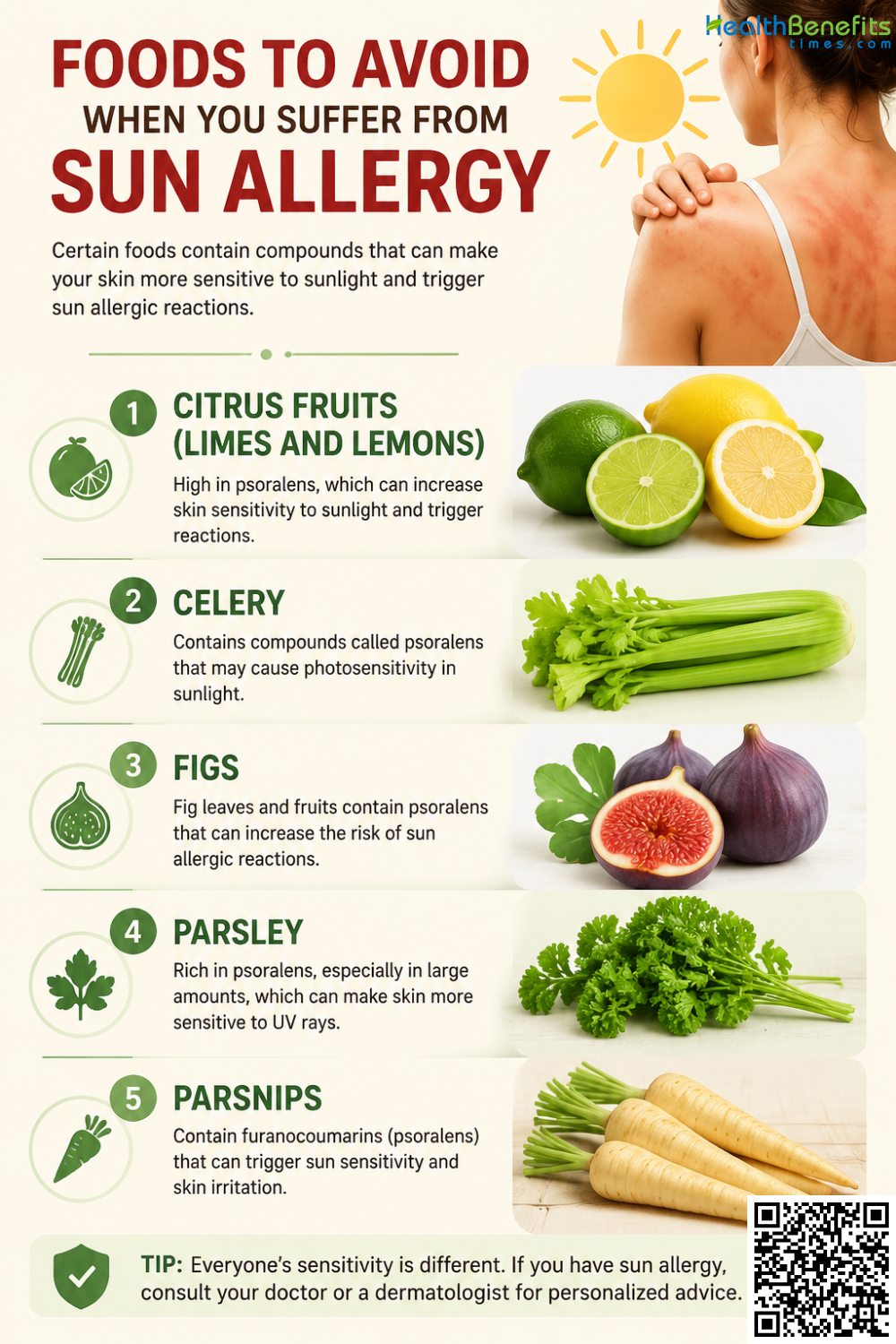
2. Celery
This vegetable naturally produces psoralens. Consuming large quantities drastically lowers your skin’s natural threshold for UV damage, directly worsening photosensitivity and existing allergic skin rashes 19.
3. Figs
Figs contain chemical compounds that act as potent photosensitizers. They actively amplify the body’s abnormal inflammatory response when the skin absorbs ultraviolet radiation from the sun 19.
4. Parsley
This common herb harbors photosensitizing agents that chemically react with ultraviolet light. This interaction increases severe skin inflammation and actively aggravates underlying sun allergy symptoms 19.
5. Parsnips
Similar to celery, this root vegetable contains concentrated furocoumarins that rapidly absorb UV energy, causing chemical changes in the skin that trigger painful allergic eruptions 19.
When to See a Doctor When You Struggle from Sun Allergy
1. Signs of Anaphylaxis or Shock
Seek emergency care immediately if you experience trouble breathing, facial swelling, extreme dizziness, or a rapid pulse, which indicate a severe systemic reaction 20.
2. Severe or Painful Blisters
You should consult a doctor if the sun rash develops into large, painful blisters or widespread fluid-filled lesions, as these require professional medical evaluation 5.
3. Symptoms of Infection
Contact a healthcare provider if the affected skin becomes unusually warm, oozes pus, or develops red streaks, as these indicate a secondary bacterial infection 20.
4. Fever and Chills
You must seek medical attention if your skin eruption is accompanied by a high fever, severe nausea, or body chills, which suggest a serious systemic response 20.
5. Persistent or Worsening Rashes
Consult a dermatologist if the itchy rash does not improve after several days of home care or if it progressively worsens and spreads 21.
Comments
comments