


Causes of Temporomandibular Joint (TMJ) Pain
Pinpointing the exact reason your jaw hurts can sometimes be a complex puzzle, as the discomfort often stems from a combination of different factors rather than a single event. Medical research indicates that the underlying triggers for this condition generally fall into several distinct categories.
1. Genetic and Anatomical Vulnerabilities
A person’s physical structure plays a foundational role in how well their jaw tolerates daily stress. Recent anatomical studies reveal that individuals possessing a smaller lower jawbone experience increased mechanical strain on the joint, which acts as a strong predictor for the eventual development of painful jaw problems 4.
2. Psychological and Life Stressors
Emotional well-being is deeply connected to physical muscle tension. High levels of psychological distress, daily anxiety, and life stressors act as primary catalysts for facial pain by promoting involuntary muscular hyperactivity and altering how the nervous system perceives pain signals 1.
3. Parafunctional Habits (Bruxism)
Many people unknowingly subject their jaw to immense pressure while they sleep or concentrate. Chronic habits such as grinding the teeth or firmly clenching the jaw shut place an unsustainable, exhausting workload on the delicate masticatory muscles 5.
4. Direct Trauma and Injury
Accidents happen, and a direct physical impact to the jaw, head, or neck can instantly disrupt the joint’s alignment. Acute trauma can forcefully displace the protective articular disk located inside the joint capsule, leading to immediate mechanical dysfunction and localized swelling 6.
5. Localized or Systemic Inflammation
Sometimes the body’s internal environment causes the joint to degrade over time. Inflammatory conditions, such as arthritis, or localized immune responses can break down the synovial fluid that lubricates the jaw, increasing friction between the bone surfaces and sensitizing local pain receptors 7.
Symptoms of Temporomandibular Joint (TMJ) Pain
Recognizing the specific signs of a jaw disorder can help you seek the right kind of relief quickly. The condition rarely presents exactly the same way in two different people, but it generally produces a highly recognizable pattern of discomfort.
- A deep, aching pain located in the chewing muscles or directly inside the jaw joint.
- Discomfort that radiates outward, spreading tension into the face, temples, or the sides of the neck.
- A feeling of stiffness or severe fatigue in the jaw muscles, especially upon waking up in the morning.
- Limited movement or sudden locking of the jaw, making it difficult to open or close the mouth fully.
- Painful clicking, popping, or grating sounds originating from the joint area when moving the mouth.
- Secondary auditory issues, such as unexplained ringing in the ears (tinnitus), transient dizziness, or a muffled sensation in hearing.
- A sudden, unexplained change in the way the upper and lower teeth fit together when the mouth rests closed.
Temporomandibular Joint (TMJ) Pain Facts
To provide a clear, comprehensive overview of what to expect, the following table breaks down the most critical medical facts regarding this condition.
| Fact Category | Details |
| Symptoms |
|
| Causes |
|
| Types of Temporomandibular Joint (TMJ) Pain 9 |
|
| How does spread 10 |
|
| Age Group 11 |
|
| You might be at a higher risk for exposure of this disease if you: 3 |
|
| How doctors diagnose 9 |
|
| Other facts 1 |
|
Natural Remedies for Temporomandibular Joint (TMJ) Pain
When you are looking for relief that does not rely on heavy pharmaceuticals, the natural world offers a variety of proven, gentle solutions. Many of these natural remedies work by directly calming the nervous system, reducing localized inflammation, and encouraging over-worked muscles to finally relax.
1. Turmeric and Curcumin Extracts
Harvesting the power of traditional botanicals can provide an excellent alternative to over-the-counter painkillers. Turmeric, specifically its active compound known as curcumin, contains highly potent anti-inflammatory properties that help suppress the immune system’s inflammatory pathways without causing stomach upset 12. When you consume concentrated curcumin, it actively works to decrease the swelling around the jaw joint, resulting in a significant reduction in overall pain intensity and an improved ability to open your mouth comfortably 13.
Note: This is commonly consumed as a daily oral dietary supplement (ideally paired with black pepper extract to boost absorption) or generously sprinkled into warm foods and teas for its internal medicinal benefits.
2. Magnesium Therapy
Minerals play a surprisingly large role in how tightly your muscles contract during the day. Magnesium is vital for regulating neuromuscular excitability, meaning it helps stop your nerve endings from becoming overly sensitive to pain signals 7. By introducing more magnesium into your system, you can effectively force cramped masseter muscles to chemically relax, drastically reducing the frequency of painful muscle spasms and morning jaw stiffness 14.
Note: This remedy is commonly utilized by taking a daily oral magnesium supplement, or by massaging a topical magnesium oil directly onto the jawline and temples before bed for localized muscle relaxation.
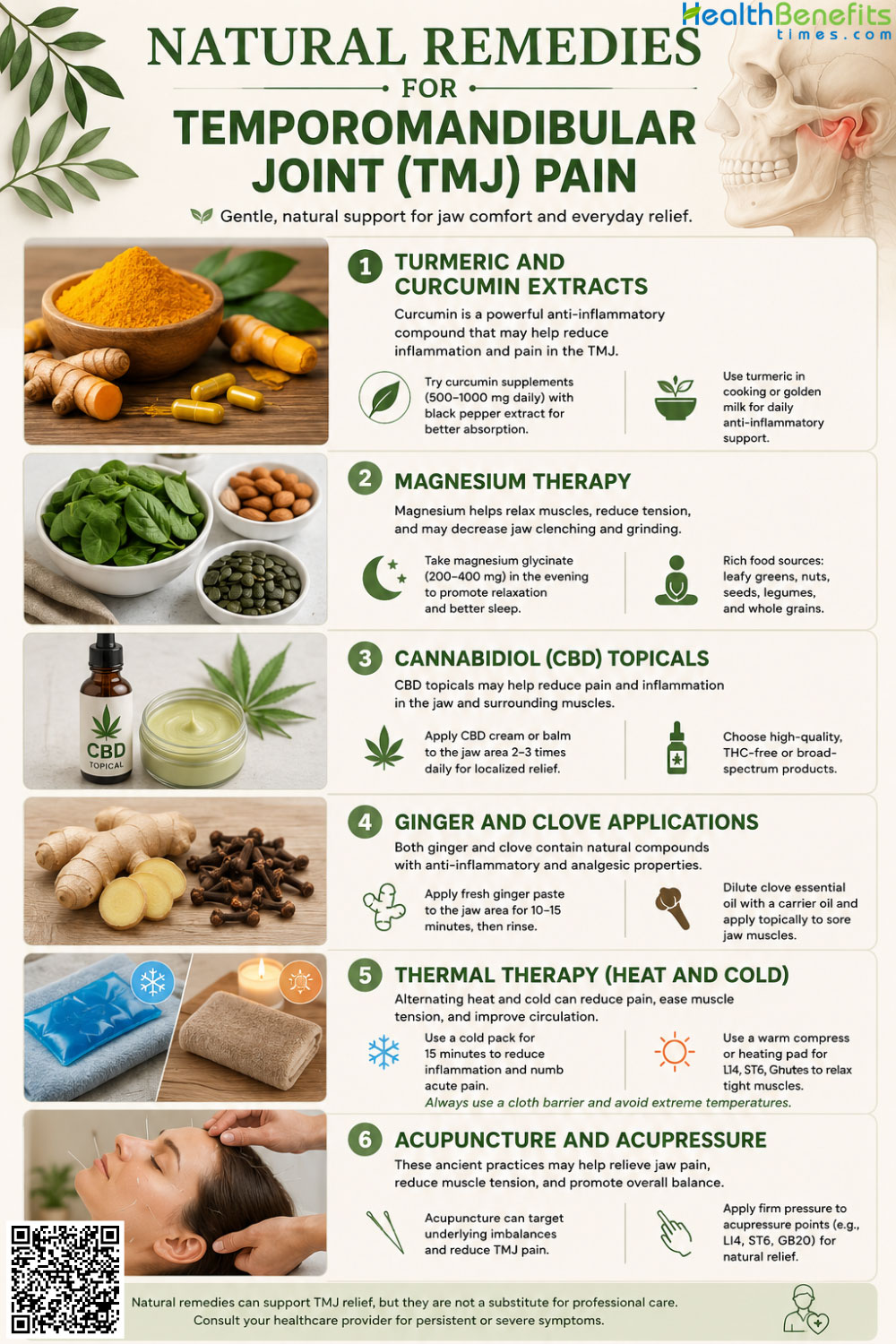
3. Cannabidiol (CBD) Topicals
Plant-based topicals have opened new doors for soothing localized nerve pain without any intoxicating effects. Cannabidiol, extracted from the hemp plant, interacts wonderfully with the endocannabinoid receptors located just beneath the skin of your face 15. When applied directly to an aching jaw, CBD actively decreases involuntary muscle hyperactivity, easing the profound tightness that comes from chronic teeth grinding and lowering your overall perception of the pain.
Note: This is applied topically as a soothing cream, balm, or oil, which you gently rub in circular motions over your jaw joints and thick cheek muscles twice a day.
4. Ginger and Clove Applications
Creating a warming sensation on the surface of the skin helps to confuse pain receptors and draw healing blood flow to the injured area. Extracts from ginger possess incredible antioxidant and anti-inflammatory qualities that parallel standard medications, while eugenol, the active compound in cloves, acts as a natural numbing agent 13. Together, these herbal elements help to desensitize the irritated nerves around the jaw, making it much easier to speak and chew without wincing.
Note: Ginger is commonly enjoyed internally by drinking freshly brewed strong teas, while clove oil must be highly diluted with a carrier oil (like coconut oil) before being very carefully applied in tiny amounts to the skin outside the jaw for its numbing benefits.
5. Thermal Therapy (Heat and Cold)
Manipulating the temperature of your skin remains one of the fastest and most reliable ways to interrupt a pain cycle. Applying controlled heat to your face opens up the blood vessels, which washes away painful lactic acid from cramped muscles and prepares the jaw for gentle stretching 10. On the other hand, applying a cold pack constricts those same vessels, rapidly bringing down acute swelling inside the joint capsule and numbing sudden, sharp pain.
Note: This is applied directly to the face by holding a warm, moist washcloth over the cheeks for 15 minutes to treat muscular stiffness, or by wrapping an ice pack in a towel and holding it against the joint to treat sharp, sudden inflammation.
6. Acupuncture and Acupressure
Stimulating the body’s natural energy pathways has been shown to release powerful internal painkillers called endorphins. Traditional body acupuncture or targeted acupressure involves stimulating specific points on the face, neck, and hands to trigger the central nervous system 16. Clinical observations show that these gentle stimulation techniques are highly effective at providing short-term relief for jaw pain, significantly improving a patient’s mood and quality of sleep by naturally elevating the body’s threshold for discomfort.
Note: Acupressure can be done at home by applying firm, steady thumb pressure to the fleshy web between your index finger and thumb, while true acupuncture requires you to visit a licensed practitioner who inserts tiny needles for therapeutic relief.
Is there any exercise or physical activities for Temporomandibular Joint (TMJ) Pain
Keeping the jaw completely still might seem like a good idea when you are in pain, but gentle, purposeful movement is actually required for proper healing. The following physical activities are designed to retrain your muscles, improve your joint’s range of motion, and establish a healthy resting posture.
1. The Goldfish Exercise
Guiding the jaw through a perfectly straight path prevents the internal disk from slipping out of place. The goldfish exercise is a foundational therapeutic movement that safely rebuilds vertical mobility by anchoring the tongue, ensuring that your jaw does not unsteadily zig-zag from side to side while you open it 17.
How to do: Place the entire flat surface of your tongue against the roof of your mouth. Place one index finger on your TMJ (just in front of your ear) and another on your chin. Keep your tongue securely on the roof of your mouth while you slowly drop your lower jaw as far as comfortably possible, then gently close it. Repeat this 5 to 10 times.
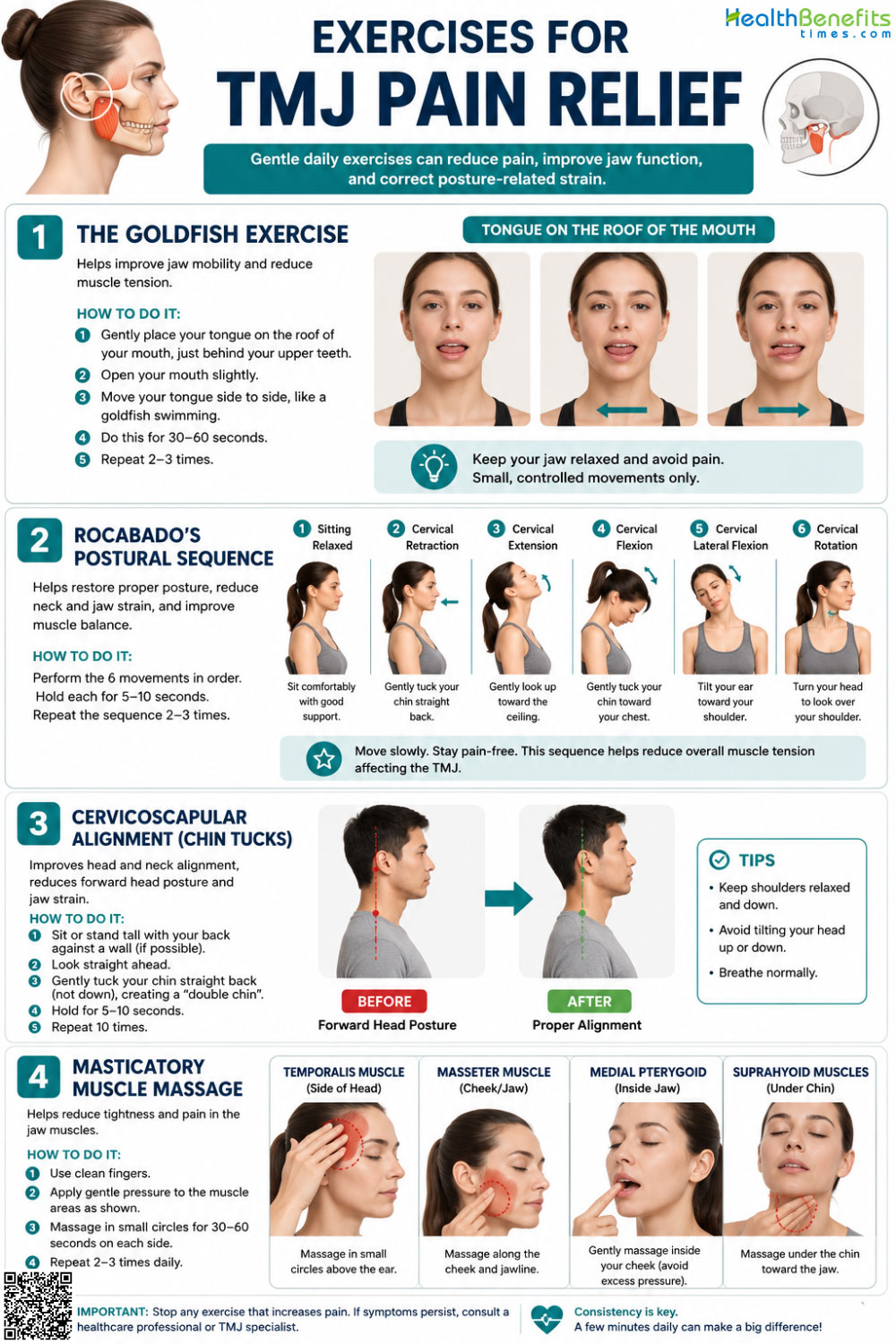
2. Rocabado’s Postural Sequence
Breathing correctly and resting your tongue in the right spot can completely change the tension in your face. This specific exercise protocol shifts your focus toward the resting posture of your entire stomatognathic system, utilizing diaphragmatic breathing to break the subconscious cycle of jaw clenching and facial tightness 5.
How to do: Rest the tip of your tongue gently against the palate just behind your upper front teeth. Part your teeth slightly so they do not touch, relax your cheeks completely, and take six slow, deep breaths from your stomach, ensuring your chest and shoulders do not rise as you inhale.
3. Cervicoscapular Alignment (Chin Tucks)
Your jaw is deeply influenced by the structural alignment of your neck and shoulders. Slouching forward to look at phones or computer screens pulls the jaw backward, compressing the delicate temporomandibular joint 18. Chin tucks are an essential activity that strengthens your deep neck flexors, actively relieving the constant downward mechanical drag placed on your facial muscles.
How to do: Sit up perfectly straight in a chair and look directly forward. Without tilting your head up or down, glide your head straight backward horizontally as if you are trying to make a “double chin.” Hold this comfortable tension at the base of your neck for three seconds, release, and repeat 10 times.
4. Masticatory Muscle Massage
Sometimes the thick fascia encasing your muscles becomes glued together, causing knots and restricted movement. Direct, mild manual manipulation of your cheek and temple tissues helps physically break down these adhesions, pushing fresh, oxygen-rich blood into tight, ischemic muscle fibers 10.
How to do: Place the pads of your index and middle fingers on the thick chewing muscles of your lower cheeks or the sides of your head above your ears. Apply a firm but soothing pressure, making very slow, continuous circular movements over the muscle for about two minutes per side.
Foods and Activities to Avoid
Allowing the joint adequate time to rest requires you to consciously alter your daily routines. When you suffer from jaw pain, or know you are prone to flare-ups, taking preventative measures throughout your day is just as important as applying remedies.
Foods to Avoid When You suffer from Temporomandibular Joint (TMJ) Pain
- Hard and Crunchy Items: Foods like raw carrots, nuts, hard pretzels, and ice cubes demand massive amounts of biting force, sending painful shockwaves straight into a sensitized joint capsule.
- Chewy and Sticky Foods: Caramels, thick steaks, chewing candies, and tough bagels force your jaw into an exhausting marathon of repetitive grinding, quickly fatiguing the masseter muscles.
- Large-Bite Foods: Eating whole apples, thick double-decker sandwiches, or giant burgers requires you to stretch your mouth to its absolute maximum limit, which can easily cause an inflamed joint to overextend or lock.
- Inflammatory Foods: Diets exceptionally high in refined sugars and highly processed ingredients can increase systemic inflammation in the body, subtly worsening joint swelling and delaying your overall healing process.
Activities to Avoid When You suffer from Temporomandibular Joint (TMJ) Pain
- Chewing Gum: This is arguably the worst possible habit for a recovering jaw. Gum chewing forces the joint through thousands of unnecessary, empty mechanical cycles, guaranteeing your muscles never get the rest they desperately need.
- Nail Biting and Pen Chewing: These nervous habits force your lower jaw into an unnatural forward position while engaging your muscles in sustained tension, inevitably leading to profound muscular stiffness.
- Daytime Clenching: Catch yourself when you are concentrating, lifting heavy objects, or feeling stressed. Your teeth should rarely touch during the day; holding them clamped tightly together cuts off vital blood flow to your facial muscles.
- Resting Your Chin on Your Hand: Sitting at a desk and leaning the weight of your head onto your palm applies continuous, uneven upward pressure on one side of your jaw, eventually pushing the joint out of its natural, healthy alignment.
Myths and Misconceptions
| Myth | Reality |
| A “bad bite” or crooked teeth are the main reason my jaw hurts. | Scientific consensus does not support the idea that minor dental misalignments cause jaw pain. The condition is driven heavily by stress, muscle tension, and genetics, rather than just tooth positioning. |
| I need to have jaw surgery to permanently cure this pain.
20. |
International pain academies strongly warn against irreversible treatments. The vast majority of TMJ pain completely resolves with simple, non-invasive therapies, and surgery is reserved only for rare, extreme structural failures. |
| My jaw clicks when I eat, which means my joint is destroying itself. | Auditory sounds like clicking or popping without any accompanying physical pain are incredibly common physiological variants. If there is no pain, the clicking is considered normal and requires zero medical intervention. |
| My dentist needs to file down my teeth to fix my bite and stop the pain. | The endless search for a “perfect bite” by aggressively drilling or altering teeth is an outdated practice. This irreversible method carries significant risks and is largely discouraged by modern orofacial experts |
| TMJ pain is just an isolated problem in my face. | Jaw pain is rarely an isolated mechanical issue. It is a complex condition heavily intertwined with the central nervous system, often co-occurring with widespread body pain, anxiety, and sleep disorders. |
Special Considerations
1. Children
While many assume jaw pain only affects stressed adults, temporomandibular disorders are remarkably common in younger populations, with prevalence rates steadily increasing as children grow into adolescence. Pediatric jaw pain is heavily linked to academic stress and emotional tension; students who report feeling highly nervous display drastically higher rates of jaw dysfunction 23. Furthermore, children diagnosed with specific autoimmune conditions like Juvenile Idiopathic Arthritis must be monitored closely, as systemic inflammation frequently attacks the developing jaw joints, restricting their ability to open their mouth fully 24. Care for children focuses strictly on gentle physical therapy, stress management, and soft diets.
2. Pregnancy
Entering the gestational period introduces massive hormonal shifts that can profoundly influence a woman’s physical comfort. During pregnancy, hormones like relaxin flood the body to loosen pelvic ligaments, but this chemical inadvertently affects the ligaments stabilizing the temporomandibular joint as well. Clinical surveys show that younger pregnant women frequently report higher levels of generalized anxiety alongside severe somatic symptoms like facial pain during their first trimester 25. Management for expecting mothers must exclusively prioritize natural, non-pharmacological interventions such as heat therapy and gentle massage to ensure total fetal safety while managing the mother’s discomfort.
3. Chronic conditions
Your jaw’s health is intrinsically linked to how your central nervous system processes discomfort everywhere else in your body. Up to 70% of individuals suffering from painful jaw disorders also endure at least one other chronic overlapping pain condition 26. If you already manage conditions like fibromyalgia, chronic fatigue syndrome, irritable bowel syndrome, or chronic migraines, you are at an exceptionally high risk for developing intractable jaw pain. In these instances, the jaw pain is usually a regional manifestation of a highly sensitized nervous system, requiring a holistic approach that treats the entire body rather than just the face.
4. Elderly
Addressing jaw pain in older adults presents a unique set of challenges that require immense care. As the human body gracefully ages, the temporomandibular joint undergoes natural degenerative changes, including the thinning of cartilage and the onset of osteoarthritis, which fundamentally alters how the joint glides 27. Additionally, elderly individuals may experience physical limitations or cognitive changes that make diagnosing the exact source of pain more difficult. Healthcare providers must carefully tailor gentle, highly conservative treatments for this demographic, accommodating the realities of age-related tissue wear while actively avoiding any aggressive dental interventions.
Precaution before use of natural remedies when you have Temporomandibular Joint (TMJ) Pain
Taking your health into your own hands is empowering, but a mindful, educated approach is absolutely vital to ensure you do not accidentally worsen your condition.
- Avoid Forcing the Joint: When practicing jaw stretches or the goldfish exercise, you must respect your body’s limits. Aggressively forcing your mouth open past the point of pain will severely aggravate an already inflamed joint capsule, leading to increased stiffness and defensive muscle spasms.
- Monitor Your Herbal Interactions: Natural supplements are powerful, which means they can interact unpredictably with prescribed medications. High daily doses of systemic botanical extracts, such as turmeric or ginger, possess mild blood-thinning properties and should be discussed with a doctor if you take anticoagulants or blood pressure medicine.
- Reject Permanent Alterations: The golden rule of initial jaw pain management is to exclusively utilize simple, reversible modalities. You should actively avoid any proposed treatments—natural or otherwise—that result in permanent changes to your physical jaw structure, the shape of your teeth, or the alignment of your bite.
- Perform Skin Patch Tests: Before generously rubbing concentrated topical agents like CBD balms, essential oils, or clove extracts over your masseter muscles, test a tiny amount on your wrist. The skin on your face is highly sensitive, and strong botanical remedies can easily cause contact dermatitis or irritation.
- Do Not Rely Solely on Pain Masking: While thermal therapy and acupuncture are incredible for relieving discomfort, they primarily treat the symptoms. You must simultaneously address the root causes—like daily stress or teeth grinding otherwise, the pain will inevitably return once the remedy wears off.
When to see Doctor
While practicing self-care and patience resolves the vast majority of muscular jaw issues, certain warning signs indicate that your jaw requires immediate professional evaluation.
- Total Loss of Basic Function: If your discomfort becomes so profound that it results in a complete inability to chew soft foods, swallow comfortably, or speak clearly, you need to seek medical intervention immediately.
- Physical Locking of the Jaw: Experiencing a mechanical lock where your mouth gets permanently stuck in either a wide-open or completely closed position indicates a severe displacement of the internal disk that requires a professional to safely guide it back into place.
- Sudden, Noticeable Bite Changes: If you wake up and suddenly feel that your upper and lower teeth no longer fit together correctly when you close your mouth, it may indicate rapid joint degradation or severe internal swelling that needs imaging.
- Unrelenting Chronic Pain: If localized pain persists constantly for longer than three months despite your strict adherence to soft diets, thermal therapy, and resting the joint, your condition has transitioned to a chronic state that warrants a visit to an orofacial pain specialist 28.
- Accompanying Fever or Severe Swelling: If your jaw pain is suddenly accompanied by a high fever, noticeably warm skin, or massive, visible swelling on one side of your face, this could be a sign of a dangerous joint infection that requires urgent antibiotic care.
Comments
comments