


Causes of Tendinitis Inflammation
- Repetitive Motion and Overuse: Engaging in the same physical movements repeatedly during work, hobbies, or sports is the primary cause, which gradually stresses the tendon and creates tiny tears in the tissue 4.
- Sudden Injury or Strain: Experiencing an abrupt, heavy impact or forceful movement can instantly stretch the tendon beyond its normal limits, triggering sudden inflammation 5.
- Age-Related Wear: As the body ages, tendons naturally lose their elasticity and structural strength, making older adults much more vulnerable to tendon irritation from everyday activities 5.
- Medication Side Effects: Taking certain prescription medications, most notably a class of antibiotics called fluoroquinolones, can directly damage connective tissue and significantly increase the risk of developing severe tendon inflammation 6.
- Underlying Health Conditions: Systemic factors such as obesity, which adds excess physical weight to weight-bearing joints, or metabolic conditions can impair the body’s ability to maintain healthy tendons, raising the likelihood of chronic inflammation 7.
Symptoms of Tendinitis Inflammation
- Localized Pain: A dull, aching pain occurs directly over the affected tendon, which typically becomes much sharper and more severe when the joint is moved or placed under physical stress 2.
- Swelling and Tenderness: The tissue immediately surrounding the irritated tendon frequently develops visible fluid swelling, may feel warm to the touch, and is highly sensitive to even light pressure 2.
- Joint Stiffness: The affected joint often experiences a significant loss of physical flexibility and a restricted range of motion, which is typically most severe upon waking up in the morning or after long periods of rest 7.
- Grating Sensation: A crackling, popping, or grating feeling may be physically felt or heard within the joint during movement, which happens because the swollen tendon can no longer glide smoothly past its surrounding tissues 1.
- Muscle Weakness: The muscle attached to the inflamed tendon may feel noticeably weak, making it difficult to perform everyday tasks like gripping objects, lifting items, or climbing stairs 2.
Natural Remedies for Tendinitis Inflammation
1. Cold Therapy (Ice Application)
How it may help
Applying cold to an inflamed tendon constricts local blood vessels, which rapidly decreases blood flow to the injured tissue. This physiological response minimizes fluid buildup to reduce physical swelling and temporarily numbs the nerve endings, providing immediate relief from acute tendon pain 2.
What research says
Clinical evidence confirms that cold therapy effectively manages acute soft tissue pain and reduces initial tissue swelling when applied immediately after tendon irritation. However, studies indicate that while ice manages short-term inflammatory symptoms, it does not accelerate the long-term structural healing of the tendon tissue 8.
How to use it safely
To treat tendinitis safely, wrap an ice pack in a thin towel before placing it against your skin. Apply the cold treatment to your affected joint for 15 to 20 minutes at a time, repeating this process every two to four hours during the initial flare-up 2.
Potential precautions or side effects
Never apply bare ice directly to your skin or exceed 20 minutes per session, as prolonged freezing temperatures can cause frostbite, permanent skin damage, or dangerously restricted blood circulation 8.
2. Eccentric Exercise and Targeted Physical Movement
How it may help
Eccentric exercises involve lengthening a muscle while applying tension, such as slowly lowering a weight. This targeted physical movement physically stimulates the body to produce new collagen. By safely stressing the injured tissue, these exercises help realign tendon fibers, restoring their natural strength and flexibility over time 9.
What research says
Clinical research consistently identifies eccentric exercise as a highly effective, first-line treatment for chronic tendon inflammation, particularly in the Achilles and knee tendons. Studies demonstrate that structured eccentric training significantly reduces joint pain and improves physical function better than total rest or standard stretching alone 9.
How to use it safely
To use this approach safely, work with a physical therapist to learn the correct technique for your specific injury. Begin with very light resistance and focus on the slow, downward movement. Perform the exercises daily, gradually increasing the weight as your tendon heals 2.
Potential precautions or side effects
You may experience mild muscle soreness initially, but you should stop immediately if you feel sharp, sudden pain, as overexertion can physically tear the weakened tendon 9.
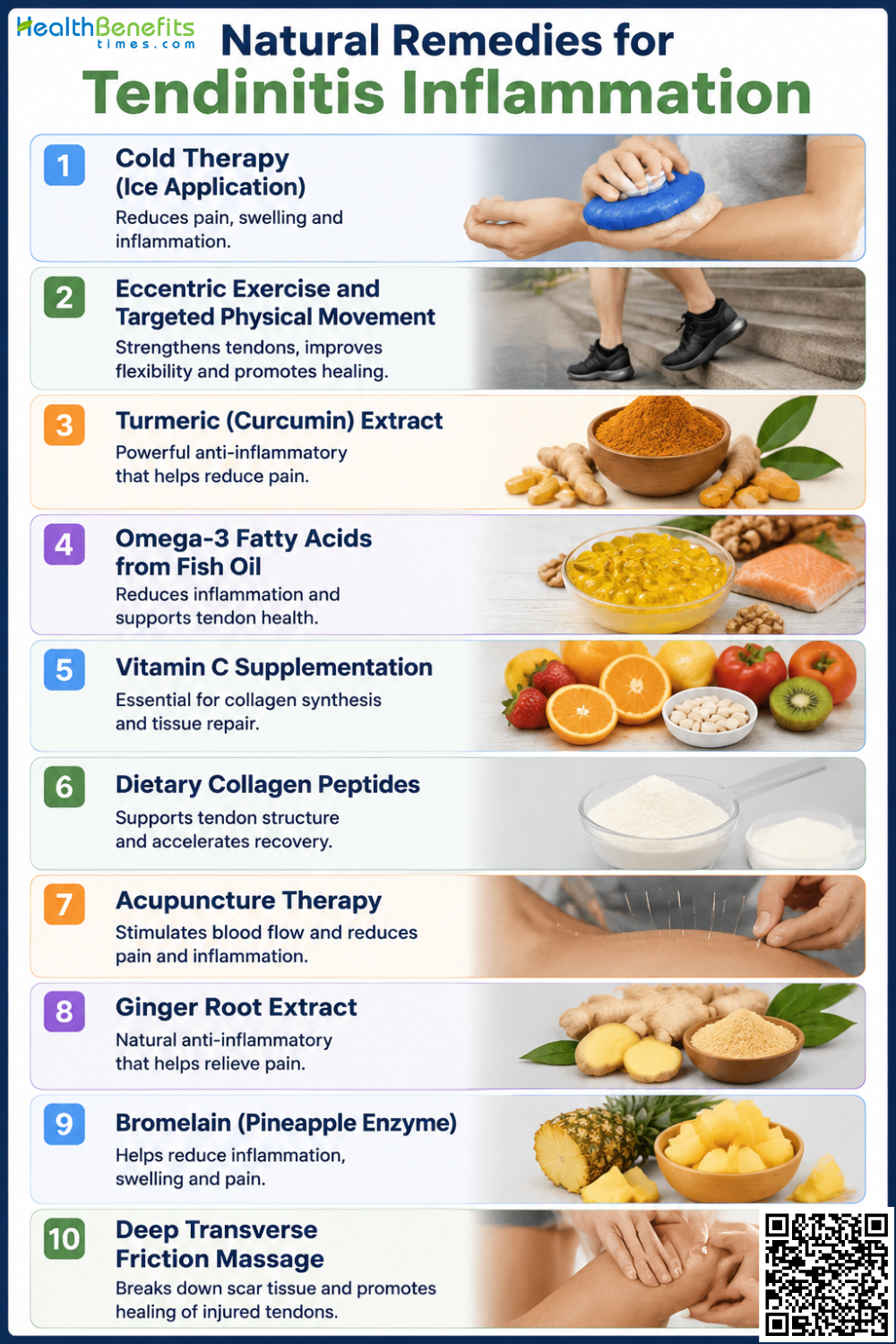
3. Turmeric (Curcumin) Extract
How it may help
Curcumin, the active compound found in turmeric root, acts as a powerful natural anti-inflammatory agent. It works by blocking the bodily enzymes and chemical signals that trigger tissue swelling and pain. This targeted action helps reduce the internal irritation surrounding an overworked tendon, thereby minimizing tendinitis symptoms 10.
What research says
Clinical studies conclude that curcumin extract significantly suppresses joint and tendon inflammation. Research confirms its anti-inflammatory effects are comparable to some common pain medications, but without harsh gastrointestinal side effects. Supplementation is proven to effectively decrease swelling and improve physical mobility in chronic inflammatory conditions 10.
How to use it safely
To maximize absorption, choose a curcumin extract supplement containing black pepper extract. Follow the dosage instructions on the label, generally between 500 and 2,000 milligrams daily. Take the supplement alongside a meal containing healthy fats to successfully improve its absorption into your bloodstream 10.
Potential precautions or side effects
Speak with your doctor before use if you take blood-thinning medications, as turmeric increases bleeding risks. Large doses can occasionally cause mild stomach upset, nausea, or digestive issues 10.
4. Omega-3 Fatty Acids from Fish Oil
How it may help
Omega-3 fatty acids, found abundantly in fish oil, contain compounds called EPA and DHA that naturally block the body’s production of inflammatory chemicals. By reducing these internal signals, fish oil helps decrease the swelling and pain surrounding an irritated tendon, creating a better environment for tissue recovery 11.
What research says
Clinical research demonstrates that omega-3 supplementation significantly reduces inflammatory markers in the bloodstream. Studies conclude that these essential fatty acids effectively decrease joint stiffness and tissue tenderness. By actively suppressing prolonged inflammation, omega-3s can help accelerate the healing process of damaged tendon fibers 11.
How to use it safely
To support tendon health, take a high-quality fish oil supplement providing 1,000 to 2,000 milligrams of combined EPA and DHA daily. Consume the capsules alongside a balanced meal containing dietary fats to maximize absorption and reduce the likelihood of experiencing an upset stomach 11.
Potential precautions or side effects
Speak with a doctor before using fish oil if you take blood-thinning medications, as high doses increase bleeding risks. Minor side effects occasionally include a fishy aftertaste or mild indigestion 11.
5. Vitamin C Supplementation
How it may help
Vitamin C is essential for producing collagen, the primary structural protein that forms healthy tendons. By actively stimulating new collagen creation, it physically helps repair micro-tears within the injured tissue. Additionally, its natural antioxidant properties clear damaging cellular molecules, significantly reducing localized tissue inflammation 12.
What research says
Clinical research concludes that vitamin C supplementation significantly accelerates tendon healing and increases tissue structural strength. Studies demonstrate that maintaining high vitamin C levels promotes denser collagen fiber formation, which effectively repairs tendon damage and decreases prolonged inflammatory responses after physical injury 12.
How to use it safely
To actively support tendon repair, take a daily vitamin C supplement of 500 to 1,000 milligrams. For optimal tissue-building benefits, consume the supplement alongside a collagen-rich food or protein powder roughly one hour before engaging in physical therapy or exercise 13.
Potential precautions or side effects
Avoid exceeding 2,000 milligrams daily, as highly excessive doses commonly cause diarrhea, stomach cramps, and nausea, and may increase the long-term risk of developing kidney stones 14.
6. Dietary Collagen Peptides
How it may help
Dietary collagen peptides provide the essential amino acids required to rebuild damaged tendon fibers. Once consumed, these highly absorbable protein fragments travel directly to the injured connective tissue. By supplying the necessary structural building blocks, they actively repair micro-tears and strengthen the tendon, which naturally reduces localized tissue inflammation 15.
What research says
Clinical research confirms that consuming specific collagen peptides significantly increases the body’s natural collagen production within joint tissues. Studies demonstrate that supplementing with collagen, particularly before physical exercise, effectively decreases ongoing tendon pain, accelerates structural tissue healing, and improves joint mobility in patients suffering from chronic tendinitis 16.
How to use it safely
To effectively support your tendon recovery, mix 10 to 15 grams of hydrolyzed collagen peptide powder into a daily beverage. For the best structural healing results, consume this mixture alongside a source of vitamin C exactly one hour before engaging in physical therapy or targeted joint exercise 13.
Potential precautions or side effects
Collagen supplements are widely considered safe with very few risks. Minor side effects occasionally include mild bloating or stomach upset. Always verify the source material if you have fish or beef allergies 16.
7. Acupuncture Therapy
How it may help
Acupuncture involves inserting extremely thin needles into specific bodily areas surrounding the affected joint. This targeted physical stimulation triggers the nervous system to release natural pain-relieving chemicals, such as endorphins. Furthermore, the localized needling increases targeted blood circulation, which effectively delivers oxygen and clears inflammatory cellular waste to decrease tendon swelling 17.
What research says
Clinical trials conclude that acupuncture therapy significantly reduces localized joint pain and improves physical mobility in patients suffering from chronic tendinitis. Research confirms that professional needle stimulation effectively suppresses internal inflammatory markers and provides measurable short-term pain relief that often exceeds the benefits of standard rest 18.
How to use it safely
To ensure your safety, only receive treatment from a state-licensed and board-certified acupuncture practitioner. Verify that the clinic strictly uses sterile, single-use, disposable needles. A standard treatment protocol for tendon inflammation typically requires scheduling one to two sessions per week for roughly one month 19.
Potential precautions or side effects
Minor side effects occasionally include mild soreness, slight bleeding, or temporary bruising at the needle insertion sites. Avoid acupuncture if you currently take prescription blood-thinning medications or have a bleeding disorder 19.
8. Ginger Root Extract
How it may help
Ginger root contains active chemical compounds called gingerols that act as natural pain relievers. These compounds directly block the specific bodily enzymes responsible for producing inflammatory chemicals. By stopping this internal chemical production, ginger effectively reduces localized tissue swelling and eases the ache of an irritated tendon 20.
What research says
Clinical studies demonstrate that concentrated ginger extract significantly reduces joint pain and soft tissue inflammation. Research concludes that ginger functions similarly to standard over-the-counter anti-inflammatory medications, effectively suppressing internal swelling and improving physical mobility in patients suffering from chronic musculoskeletal conditions without causing severe stomach irritation 21.
How to use it safely
To manage tendon pain, take a standardized ginger root supplement providing 500 to 1,000 milligrams daily. Consume the capsules with a full glass of water and a solid meal to prevent stomach upset. You can also incorporate freshly grated ginger into your daily meals for added benefits 22.
Potential precautions or side effects
Ginger is generally safe but occasionally causes mild heartburn, gas, or diarrhea. Consult your doctor before use if you take prescription blood-thinning medications, as ginger naturally
9. Bromelain (Pineapple Enzyme)
How it may help
Bromelain, a natural enzyme extracted from pineapple stems, actively breaks down specific proteins that promote internal tissue swelling. By reducing the buildup of inflammatory fluids around the injured joint, this enzyme effectively decreases localized pressure and significantly relieves the pain associated with an irritated tendon 23.
What research says
Clinical studies conclude that bromelain significantly reduces soft tissue swelling and joint pain following physical injury. Research confirms its natural anti-inflammatory properties are highly effective in treating musculoskeletal conditions, successfully accelerating recovery times and decreasing tissue tenderness without relying on standard pharmaceutical pain medications 23.
How to use it safely
To reduce tendon inflammation, take a daily bromelain supplement of 200 to 400 milligrams. Consume the capsules on an empty stomach, rather than with food, ensuring the enzyme enters your bloodstream to fight tissue swelling instead of merely digesting your dietary protein 24.
Potential precautions or side effects
Avoid bromelain if you have a pineapple allergy. Consult your doctor before use if taking blood-thinning medications, as the enzyme increases bleeding risks and occasionally causes mild stomach upset 24.
10. Deep Transverse Friction Massage
How it may help
Deep transverse friction massage involves applying firm, targeted pressure directly across the tendon fibers. This physical manipulation increases local blood flow, breaks down rigid scar tissue, and physically stimulates the body to realign new collagen fibers, which restores the tendon’s natural flexibility and reduces pain 25.
What research says
Clinical research indicates that deep transverse friction massage improves joint mobility and reduces pain when treating chronic tendon conditions. Evidence confirms it significantly enhances structural tissue healing when combined with standard physical therapy and targeted stretching exercises, though it should not be the sole treatment 26.
How to use it safely
To ensure your safety, have a licensed physical therapist perform this specialized massage. The practitioner will use their fingers to apply firm, perpendicular pressure directly to your specific injury site for roughly five to ten minutes per clinical session 25.
Potential precautions or side effects
You may experience temporary soreness or skin redness during treatment. Avoid this therapy if the joint is acutely swollen, actively bleeding, or has a ba
Foods to Avoid When You Suffer from Tendinitis Inflammation
1. Refined Sugars
Diets high in added sugars trigger the release of inflammatory messengers called cytokines, which actively worsen localized joint swelling and delay the tendon healing process 27.
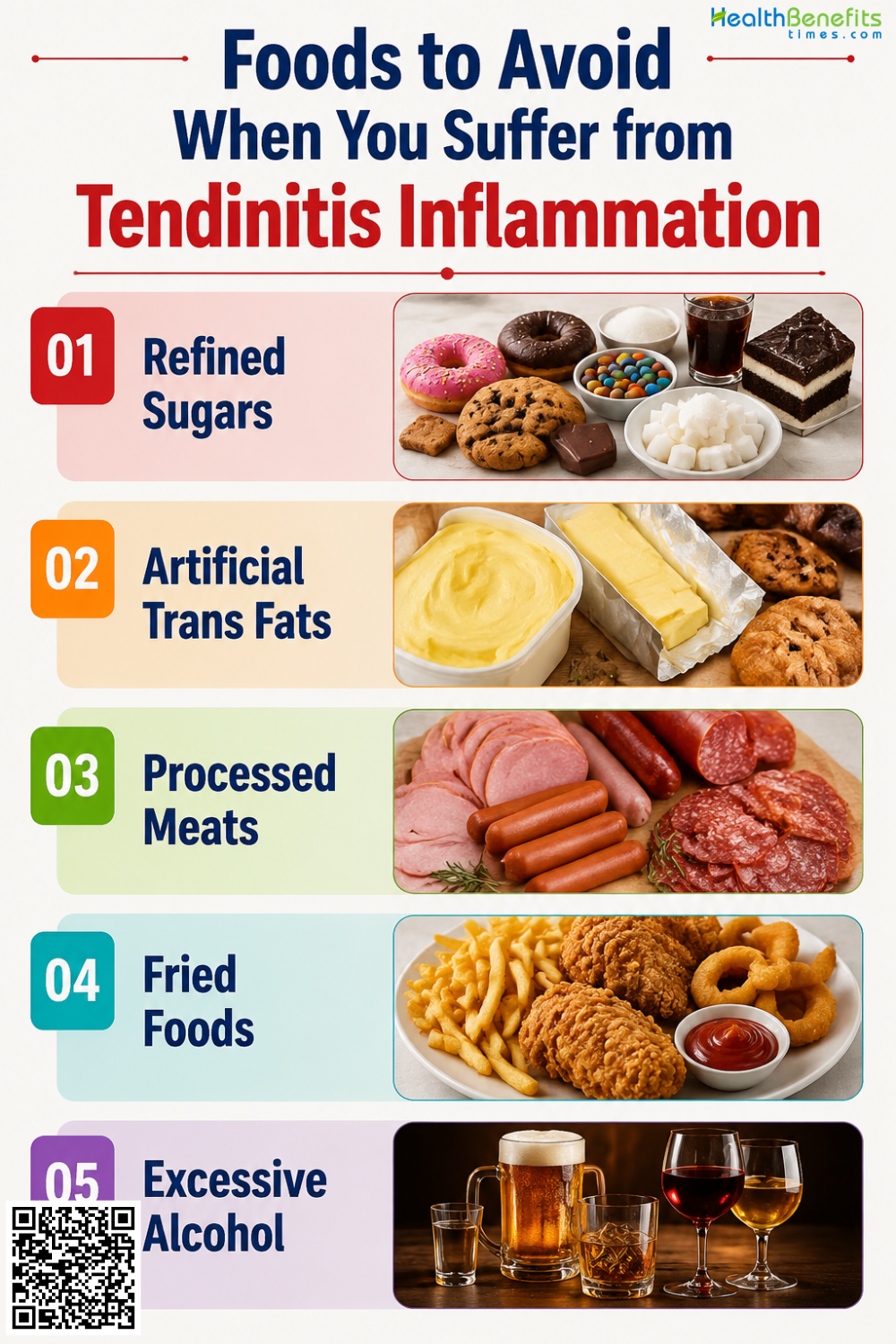
2. Artificial Trans Fats
Found in certain baked goods, artificial trans fats significantly increase systemic inflammation markers in the bloodstream, aggravating irritated connective tissues and prolonging tendon pain 28.
3. Processed Meats
Meats like bacon and hot dogs contain advanced glycation end products (AGEs), which are harmful compounds that actively stimulate internal inflammatory responses and joint tissue stress 29.
4. Fried Foods
Foods deep-fried in heavily processed oils create harmful cellular compounds that disrupt normal immune function, elevate systemic inflammation, and worsen existing tendon irritation 30.
5. Excessive Alcohol
Heavy alcohol consumption disrupts natural immune function and directly increases whole-body inflammation, which significantly slows down the physical structural repair of damaged tendon fibers 31.
When to See a Doctor When You Struggle from Tendinitis Inflammation
- Persistent Symptoms: Consult a healthcare provider if your joint pain and swelling do not improve after several days of practicing standard rest and at-home cold therapy 2.
- Loss of Function: Seek immediate medical care if you experience a sudden inability to move the affected joint or bear any physical weight, which may indicate a ruptured tendon 32.
- Visible Deformity: Go to a medical clinic if you notice a physical deformity or heard a distinctive snapping sound during the injury, signaling severe structural tissue damage 7.
- Signs of Infection: Seek urgent treatment if the surrounding skin becomes exceedingly red or abnormally hot, or if you develop a fever, as these indicate a potential bacterial infection 33.
Comments
comments