


Causes of Tourette Syndrome
1. Genetics and Family History
Genetic factors play a primary role in the development of Tourette syndrome, as the condition frequently runs in families and can be passed down from parents to children 2.
2. Brain Chemical Imbalances
Disruptions in the brain’s processing and regulation of key neurotransmitters—specifically chemical messengers like dopamine that control body movements—contribute to the onset of tics 2.
3 Pregnancy and Birth Complications
Environmental and perinatal factors, such as low birth weight, prenatal exposure to cigarette smoke, and other pregnancy-related health complications, can increase the likelihood of developing the condition 1.
Symptoms of Tourette Syndrome
- Motor Tics: Physical movements that happen suddenly and repeatedly, such as excessive blinking, shoulder shrugging, head jerking, or facial grimacing 2.
- Vocal Tics: Sudden, involuntary sounds produced by moving air through the nose or throat, including frequent throat clearing, sniffing, grunting, or shouting words and phrases 1.
- Premonitory Urges: An uncomfortable physical sensation or internal tension occurring just before a tic happens, which is temporarily relieved after the movement or sound is completed 2.
Natural Remedies for Tourette Syndrome
1. Vitamin D Supplementation
How it may help
Vitamin D helps regulate brain chemicals and supports nervous system health 3. It influences pathways in the brain responsible for movement control and muscle coordination 4. Restoring healthy levels can reduce brain inflammation and balance neurotransmitters linked to tics 3.
What research says
Clinical studies show that individuals with chronic tic disorders often have lower blood levels of vitamin D than healthy people 3. Research indicates that correcting this deficiency through supplementation can significantly decrease tic severity and frequency 3.
How to use it safely
You should request a simple blood test from your doctor to check your current vitamin D levels before starting supplements. If advised, take the recommended dose with a meal containing healthy fats to improve absorption.
Potential precautions or side effects
Excessive vitamin D can cause high calcium levels, leading to nausea, kidney stress, and weakness. Always follow professional medical guidance.
2. Vitamin A and Retinoic Acid Therapy
How it may help
Vitamin A and its active metabolite, retinoic acid, help regulate central nervous system development and influence brain chemistry pathways linked to movement control 4. Specifically, retinoic acid interacts with nuclear receptors to modulate dopamine receptor expression in the striatum, a brain region heavily involved in tic regulation 4.
What research says
Clinical and experimental studies indicate that individuals with chronic tic disorders often exhibit lower circulating levels of vitamin A and retinol compared to healthy controls 5. Emerging pre-clinical and observational research suggests that correcting these micronutrient deficiencies can help alleviate tic severity and improve behavioral symptoms 5.
How to use it safely
You should always consult a qualified healthcare provider to measure your blood levels before starting any high-dose supplementation. If recommended, ensure you use pharmaceutical-grade vitamin A under medical supervision rather than self-prescribing arbitrary doses.
Potential precautions or side effects
Excessive vitamin A intake can cause severe toxicity, liver damage, and intracranial pressure. Always adhere strictly to clinician-guided dosages.

3. Dietary Micronutrient Support
How it may help
Dietary micronutrients—including essential vitamins and minerals like magnesium, zinc, and B6—support proper brain signaling and nerve function 6. Maintaining adequate nutritional status helps regulate neurotransmitters involved in motor control, potentially lowering the frequency and intensity of tics 6.
What research says
Clinical studies indicate that individuals with tic disorders frequently display lower blood levels of key minerals and vitamins compared to healthy peers. Research shows that identifying and correcting these specific nutritional gaps can contribute to a reduction in overall symptom severity.
How to use it safely
You should consult a healthcare provider to perform blood tests before adding any concentrated supplements. If a deficiency is found, ensure you follow professional guidance regarding appropriate food choices or high-quality oral supplements.
Potential precautions or side effects
High doses of certain minerals can cause digestive distress or organ toxicity. Always adhere strictly to clinical safety limits.
4. Stress Management and Relaxation Techniques
How it may help
Stress management and relaxation techniques—such as deep breathing exercises and progressive muscle reduction—help lower baseline physiological arousal and alleviate physical muscle tension 7. Because emotional stress and anxiety commonly exacerbate tic frequency, lowering overall tension helps minimize the triggers that intensify motor and vocal symptoms 7.
What research says
Clinical trials indicate that structured relaxation training and mindfulness-based stress protocols effectively reduce overall tic severity and associated distress {% https://pmc.ncbi.nlm.nih.gov/articles/PMC25149879/, https://pmc.ncbi.nlm.nih.gov/articles/PMC5669407/ %}. Research shows that incorporating these practices into routine care yields measurable improvements in behavioral management and self-control 8.
How to use it safely
You should practice these techniques daily in a quiet, comfortable environment, starting with short sessions of controlled breathing. For optimal results, integrate them under the guidance of a trained behavioral therapist specializing in tic disorders.
Potential precautions or side effects
Relaxation methods carry no physiological risks, but individuals should avoid frustrating themselves if immediate tic reduction does not occur.
5. Mindfulness and Meditation Practices
How it may help
Mindfulness and meditation practices train individuals to observe bodily sensations and premonitory urges without judgment {% https://pmc.ncbi.nlm.nih.gov/articles/PMC11260994/, https://pmc.ncbi.nlm.nih.gov/articles/PMC12550066/ %}. By fostering non-reactive awareness, these techniques help reduce the anxiety and stress that typically worsen motor and vocal tics 8.
What research says
Clinical pilot studies indicate that structured mindfulness programs significantly decrease overall tic severity and improve daily functioning 8. Research shows that regular meditative practice helps patients develop a higher tolerance for physical tension associated with tics 8.
How to use it safely
You should practice guided meditation daily in a quiet environment, starting with short sessions. For structured support, integrate these exercises under the care of a licensed behavioral specialist 9.
Potential precautions or side effects
Mindfulness practices carry no physical risks, but patience is required as immediate symptom relief is not guaranteed 8.
6. Regular Physical Exercise and Yoga
How it may help
Regular physical exercise and yoga help burn excess physical energy and release natural brain chemicals that improve mood and muscle control 10. These activities lower stress and anxiety levels, which are primary triggers that typically make motor and vocal tics worse 11.
What research says
Clinical reviews indicate that consistent physical activity can reduce short-term tic severity and help manage co-occurring conditions like anxiety 11. Research shows that chronic, regular exercise routines contribute to overall behavioral stability and better physical control 10.
How to use it safely
You should choose moderate-intensity activities or structured yoga classes that match your current fitness level. Start slowly and build consistency without pushing your body to the point of extreme fatigue.
Potential precautions or side effects
Over-exercising or very intense workouts can cause physical fatigue, which may temporarily increase tic frequency. Listen to your body and rest when needed.
7. Acupuncture Interventions
How it may help
Acupuncture involves inserting fine, sterile needles into specific body points to help regulate central nervous system activity and influence brain pathways associated with movement control 12. This intervention aims to modulate neural signaling and promote physical relaxation, which can help alleviate the frequency and intensity of tics 13.
What research says
Clinical reviews and controlled trials indicate that acupuncture can serve as an effective supplementary approach to reduce short-term tic severity and improve overall behavioral control 12. Research suggests it may yield favorable clinical response rates when integrated into routine management plans 12.
How to use it safely
You should seek treatment exclusively from a licensed, certified acupuncturist experienced in working with neurological or movement conditions. Ensure that single-use, sterile disposable needles are utilized during every session to prevent infection.
Potential precautions or side effects
Mild bruising, minor local discomfort, or slight bleeding may occur at insertion sites.
8. Biofeedback Training
How it may help
Biofeedback training uses monitoring devices to display real-time physiological data, such as muscle tension or skin conductance, helping individuals learn to consciously regulate their nervous system activity 14. By increasing self-awareness of physical arousal, this training assists patients in reducing stress and physical tension that frequently trigger motor and vocal tics 7.
What research says
Clinical studies indicate that while biofeedback can promote relaxation and general well-being, controlled trials show mixed evidence regarding its ability to directly reduce tic frequency compared to placebo conditions 15. Research suggests that optimal training schedules and specialized protocols are still being evaluated to determine clear clinical efficacy 15.
How to use it safely
You should pursue biofeedback sessions under the supervision of a certified clinician or licensed behavioral therapist. Ensure the training is integrated as part of a comprehensive management plan rather than used as a standalone treatment.
Potential precautions or side effects
Biofeedback is non-invasive and generally safe, though patients should maintain realistic expectations since immediate symptom control is not guaranteed 7.
Foods to Avoid When You Suffer From Tourette Syndrome
1. Caffeinated Beverages and Foods
Caffeine stimulates the central nervous system, increasing physical agitation and heightening baseline neural activity that can trigger or worsen motor and vocal tics 6.
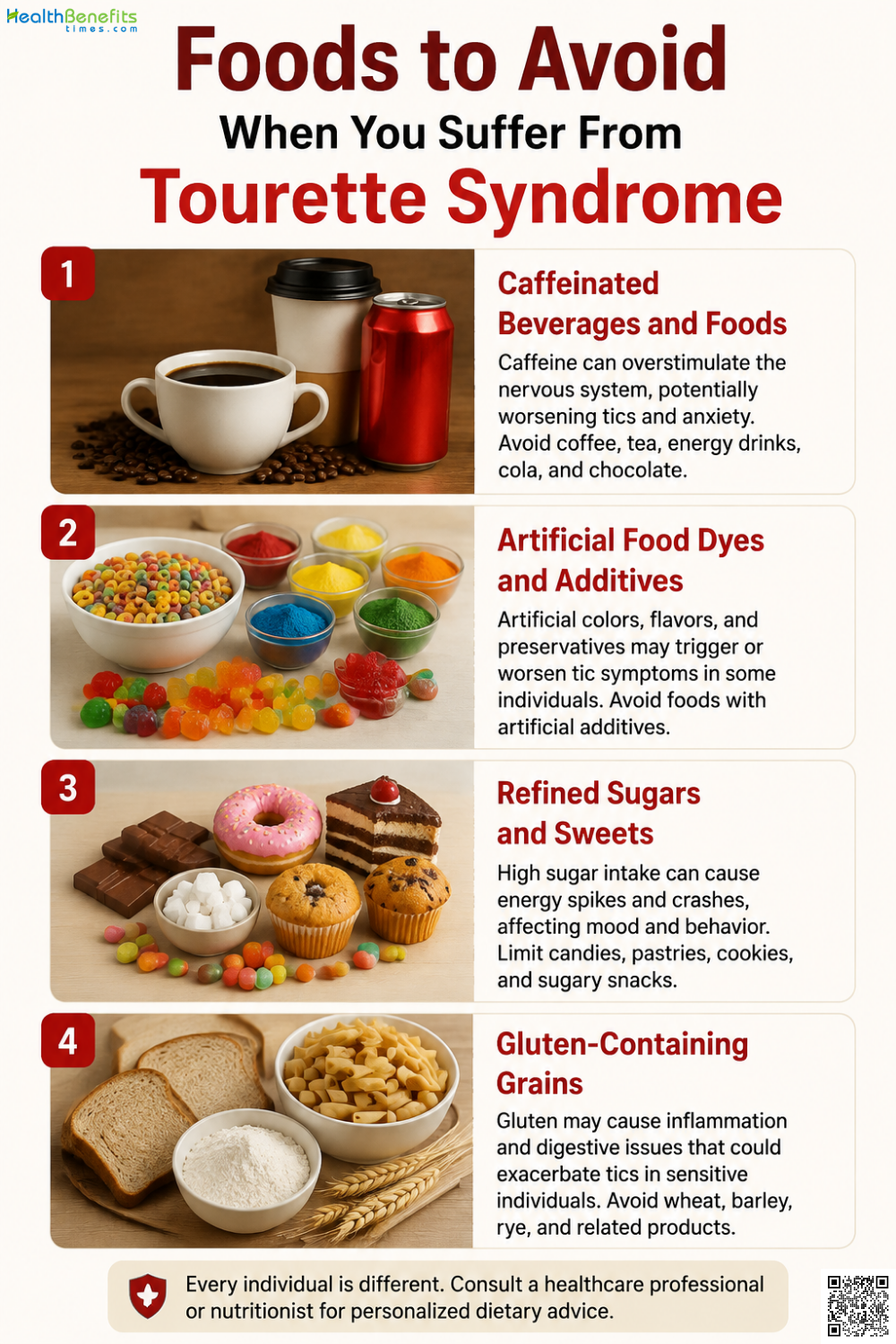
2. Artificial Food Dyes and Additives
Synthetic colorings and chemical preservatives act as neurobehavioral irritants in sensitive individuals, promoting neuroinflammation and intensifying behavioral symptoms 16.
3. Refined Sugars and Sweets
High-glycemic foods cause rapid fluctuations in blood glucose and dopamine pathways, which can destabilize mood and increase physical hyperactivity 6.
4. Gluten-Containing Grains
For individuals with underlying gut sensitivities or immune reactivity, gluten can trigger systemic inflammatory responses that indirectly influence neurological symptom severity 6.
When to See a Doctor When You Struggle from Tourette Syndrome
1. Persistent Physical or Vocal Tics
Consult a healthcare professional if you or your child experience sudden, repeated movements or sounds lasting longer than one year.
2. Interference with Daily Functioning
Seek medical evaluation when tics disrupt school performance, job responsibilities, social interactions, or overall quality of life.
3. Pain, Discomfort, or Physical Injury
Schedule an appointment promptly if severe or repetitive tics cause physical pain, muscle strain, self-inflicted injury, or joint stress.
4. Co-occurring Behavioral or Emotional Distress
Consult a specialist if tics are accompanied by intense anxiety, depressive symptoms, obsessive behaviors, or significant emotional distress.
Comments
comments