


Causes of Trigeminal Neuralgia
1. Blood Vessel Compression
A primary structural issue behind this disorder is the physical compression of the nerve root by an adjacent blood vessel 8. Constant beating of an artery against the nerve slowly damages its protective outer layer, causing the sensory signals to misfire and create intense pain 9.
2. Demyelinating Diseases
Certain underlying systemic conditions actively destroy the protective myelin sheath that insulates nerves throughout the body. Multiple sclerosis, in particular, is heavily linked to secondary forms of this facial pain because it aggressively breaks down these critical nerve coatings 10.
3. Brain Tumors or Lesions
Space-occupying growths can occasionally press against the delicate trigeminal nerve pathways. Cysts, arteriovenous malformations, or tumors located in the cerebellopontine angle of the brain may create enough mechanical pressure to spark severe neuralgic symptoms 11.
4. Facial or Dental Trauma
Physical injuries to the face can leave lasting neurological scars. Complications from extensive oral surgeries, severe sinus infections, or blunt force trauma can permanently damage the nerve branches, leading to chronic miscommunication between the face and the brain 12.
5. Idiopathic Origins
Sometimes, exhaustive medical imaging and neurological testing yield absolutely no structural or systemic abnormalities. When doctors cannot pinpoint a specific anatomical cause for the nerve misfiring, the condition is officially classified as idiopathic trigeminal neuralgia 13.
Symptoms of Trigeminal Neuralgia
- Sudden, intense flashes of facial pain described as feeling like a violent electric shock or a sharp stabbing sensation 14.
- Pain attacks that are strictly unilateral, affecting only one side of the face at a time, very rarely crossing over the facial midline 15.
- Episodes provoked by light, non-painful touch stimuli, such as applying makeup, washing the face, or lightly brushing the teeth 10.
- Short-lived paroxysms that conclude as abruptly as they begin, lasting anywhere from a fraction of a second to two minutes 11.
- Constant, dull, aching, or burning background pain that lingers persistently between the severe acute attacks, often seen in atypical presentations 16.
- Pain clustering along specific facial territories, typically following the ophthalmic, maxillary, or mandibular nerve branches 17.
Trigeminal Neuralgia Facts
| Category | Details |
| Symptoms |
|
| Causes |
|
| Types of Trigeminal Neuralgia |
|
| How does spread |
|
| Age Group |
|
| You might be at a higher risk for exposure of this disease if you: |
|
| How doctors diagnose |
|
| Other facts |
|
Natural Remedies for Trigeminal Neuralgia
Exploring complementary approaches has become a vital component of modern pain management. While standard anticonvulsant medications remain the first line of defense, many individuals seek natural alternatives to support nerve health, reduce inflammation, and minimize the frequency of pain spikes.
1. Vitamin B12 Supplementation
Nerve health relies heavily on vital nutrients to maintain and repair the myelin sheath. Vitamin B12, particularly in its active form known as methylcobalamin, has demonstrated a unique capacity to facilitate nerve regeneration and enhance nerve conduction velocity 18. Clinical evaluations indicate that patients suffering from neuropathic facial pain often exhibit significantly lower serum levels of Vitamin B12 compared to healthy individuals 19. When the myelin is damaged by vascular compression, a rich supply of this vitamin is required to support the body’s natural remyelination processes, thereby reducing the hyperexcitability of the trigeminal sensory fibers 20.
Note: You can easily incorporate this remedy into your routine by taking a daily sublingual methylcobalamin drop, eating B12-rich foods, or asking your physician for periodic intramuscular injections for maximum absorption.

2. Topical Peppermint Oil and Menthol
Harnessing the sensory properties of botanical extracts can offer immediate, localized comfort. Menthol, the primary active compound found naturally in peppermint oil, interacts directly with the transient receptor potential melastatin 8 (TRPM8) channels located in the trigeminal ganglia 21. When applied to the skin, menthol induces a profound cooling sensation that competes with and overrides the transmission of pain signals to the brain. Furthermore, topical peppermint oil has been successfully utilized to relieve various forms of resistant neuropathic pain, demonstrating a robust analgesic effect that can persist for several hours after a single application 22.
Note: You apply this remedy topically by gently dabbing a highly diluted solution of peppermint oil mixed with a gentle carrier oil directly onto the unbroken skin of your painful facial zones.
3. Acupuncture Therapy
Ancient therapeutic modalities offer a sophisticated framework for modulating nervous system activity. Acupuncture involves the strategic insertion of ultra-fine needles into specific anatomical points to restore physiological balance. From a modern clinical perspective, this practice stimulates the central nervous system to release endogenous opioid peptides, which act as the body’s natural painkillers 23. For facial neuralgia, practitioners typically target local points around the jaw alongside systemic points on the limbs to downregulate inflammatory factors and alleviate the extreme psychological distress associated with chronic pain 24.
Note: You utilize this therapy by visiting a licensed acupuncturist who will carefully insert sterile needles into targeted points on your body for 30 to 45 minutes to promote deep systemic pain relief.
4. Topical Capsaicin Application
Extracting the pungent, heat-producing component of chili peppers yields capsaicin, a compound with profound effects on nerve function. Capsaicin works by initially activating the transient receptor potential vanilloid 1 (TRPV1) receptors on sensory nerve endings. With repeated topical application, it systematically depletes the neurons of Substance P, a crucial neurotransmitter responsible for sending pain signals to the brain 25. Once this chemical is exhausted, the facial nerve fibers become highly desensitized to painful stimuli, providing significant periods of relief for many sufferers 26.
Note: You apply this remedy directly to your face using a low-concentration, over-the-counter capsaicin cream, keeping in mind that it will initially cause a warm, burning sensation before the nerve numbs.
5. Biofeedback and Mindfulness Meditation
Psychological and physiological stress are known catalysts for neuropathic flare-ups. Biofeedback is a non-invasive mind-body technique that teaches individuals how to consciously control involuntary physiological functions, such as muscle tension and heart rate, by observing real-time data on a monitor. When combined with mindfulness meditation, these therapies significantly reduce the excess brainwave activity associated with chronic pain states 27. By calming the central nervous system and lowering the body’s baseline stress response, patients report substantial reductions in the perceived intensity of their attacks 1.
Note: You practice this remedy mentally by engaging in guided daily meditation sessions or working with a biofeedback therapist to consciously relax your facial muscles and alter your brain’s pain response.
Is there any exercise or physical activities for Trigeminal Neuralgia
Physical conditioning might seem counterintuitive for a facial pain disorder, but targeted movement plays a vital role in neuropathic rehabilitation.
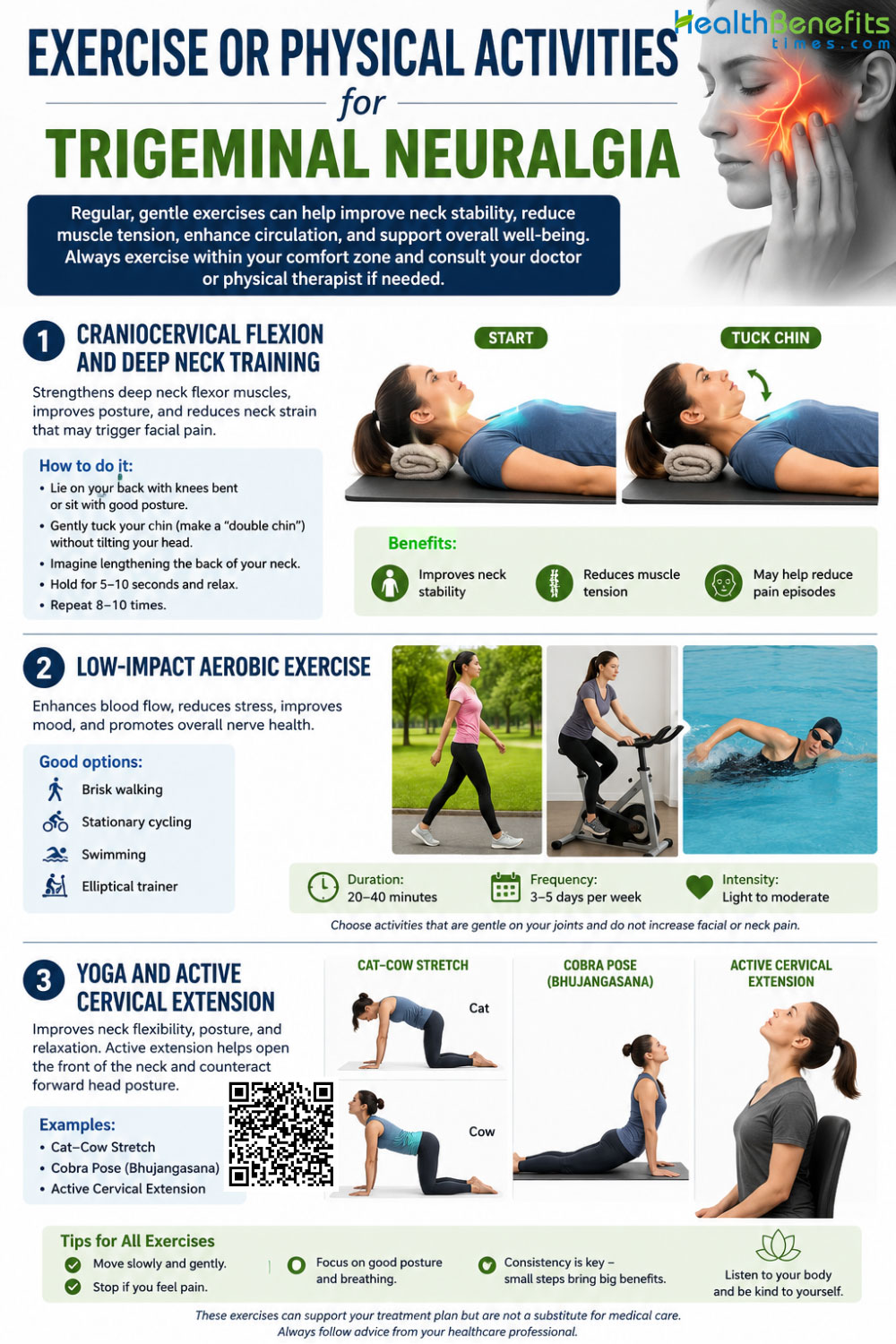
1. Craniocervical Flexion and Deep Neck Training
Targeting the intricate muscles supporting the head and neck can relieve structural tension that exacerbates facial nerve distress. The trigeminal nerve pathway shares a close anatomical relationship with the upper cervical spine, meaning that musculoskeletal dysfunction in the neck can directly contribute to the severity of neuralgic symptoms 28. Craniocervical flexion exercises specifically strengthen the deep flexor muscles of the neck, improving postural alignment and reducing mechanical stress on the brainstem where the trigeminal nerve root originates 29.
Note: To do this exercise, you should lie flat on your back, gently nod your head forward as if making a double chin without lifting your head off the floor, and hold the position for a few seconds before releasing.
2. Low-Impact Aerobic Exercise
Keeping the body in motion without jarring impacts benefits the entire nervous system. Regular, low-impact physical activity promotes systemic hypoalgesia, which is a naturally decreased sensitivity to painful stimuli. Aerobic exercise achieves this internal pain relief by suppressing chronic inflammation, modulating pain-transmitting neurotransmitters, and encouraging the release of healing endorphins 30. Activities that do not involve heavy foot-strikes are ideal because they minimize the risk of sending physical shockwaves up through the spine and into the sensitive facial trigger zones 1.
Note: To do this activity, you should engage in 20 to 30 minutes of smooth, stationary cycling, swimming, or brisk walking on a flat surface while keeping your head and neck perfectly stable.
3. Yoga and Active Cervical Extension
Blending breathwork with gentle stretching offers a dual benefit of physical release and mental calmness. Yoga incorporates slow, deliberate postures that stretch tight musculature in the chest, shoulders, and neck, effectively counteracting the rigid posture that many chronic pain patients adopt defensively 28. Active cervical extensions combined with lateral side bends help maintain essential mobility in the cervical spine, preventing the stiffness and muscle spasms that can indirectly trigger facial nerve pain 31.
Note: To do this exercise, you should sit in a comfortable upright posture, slowly drop your shoulders down, gently tilt your head backward to look at the ceiling, and stretch your neck side to side while breathing deeply.
Foods to Avoid When You suffer from Trigeminal Neuralgia and you are prone to Trigeminal Neuralgia
When you are managing an overly sensitive nervous system, the foods you consume can inadvertently act as mechanical or chemical triggers.
1. Hard and Crunchy Foods
You should firmly eliminate foods like whole nuts, hard crusty bread, ice cubes, and raw carrots from your diet. The heavy mechanical force required to crush and chew these tough items places intense physical stress on the jaw, easily stimulating the intra-oral trigger points associated with the mandibular and maxillary branches of the nerve 32.

2. Highly Spiced Foods
You must use extreme caution with spicy ingredients such as raw chili peppers, hot sauces, and heavy curries. Dietary capsaicin activates the heat receptors inside your mouth, and if you have damaged sensory nerve fibers, this chemical stimulation can easily misfire and trigger a severe paroxysmal pain attack 6.
3. Extremely Hot or Cold Foods
You need to avoid piping hot coffee, steaming soups, ice cream, and frozen smoothies. Rapid temperature fluctuations strongly stimulate the intra-oral thermoreceptors, sending an overwhelming shock to the demyelinated nerve fibers that are completely unable to process the temperature input normally 33.
4. Excessively Sweet Foods
You should limit your intake of sticky candies, highly concentrated syrups, and pure sugars. High-sugar foods create a heavy osmotic load in the mouth; if you have any minor gum recession, this osmotic pressure pulls fluid from the tooth pulp, intensely stimulating the delicate nerve fibers within the tooth 33.
Activities to Avoid When You suffer from Trigeminal Neuralgia
Modifying your daily routines can drastically reduce the number of pain paroxysms you experience throughout the week.
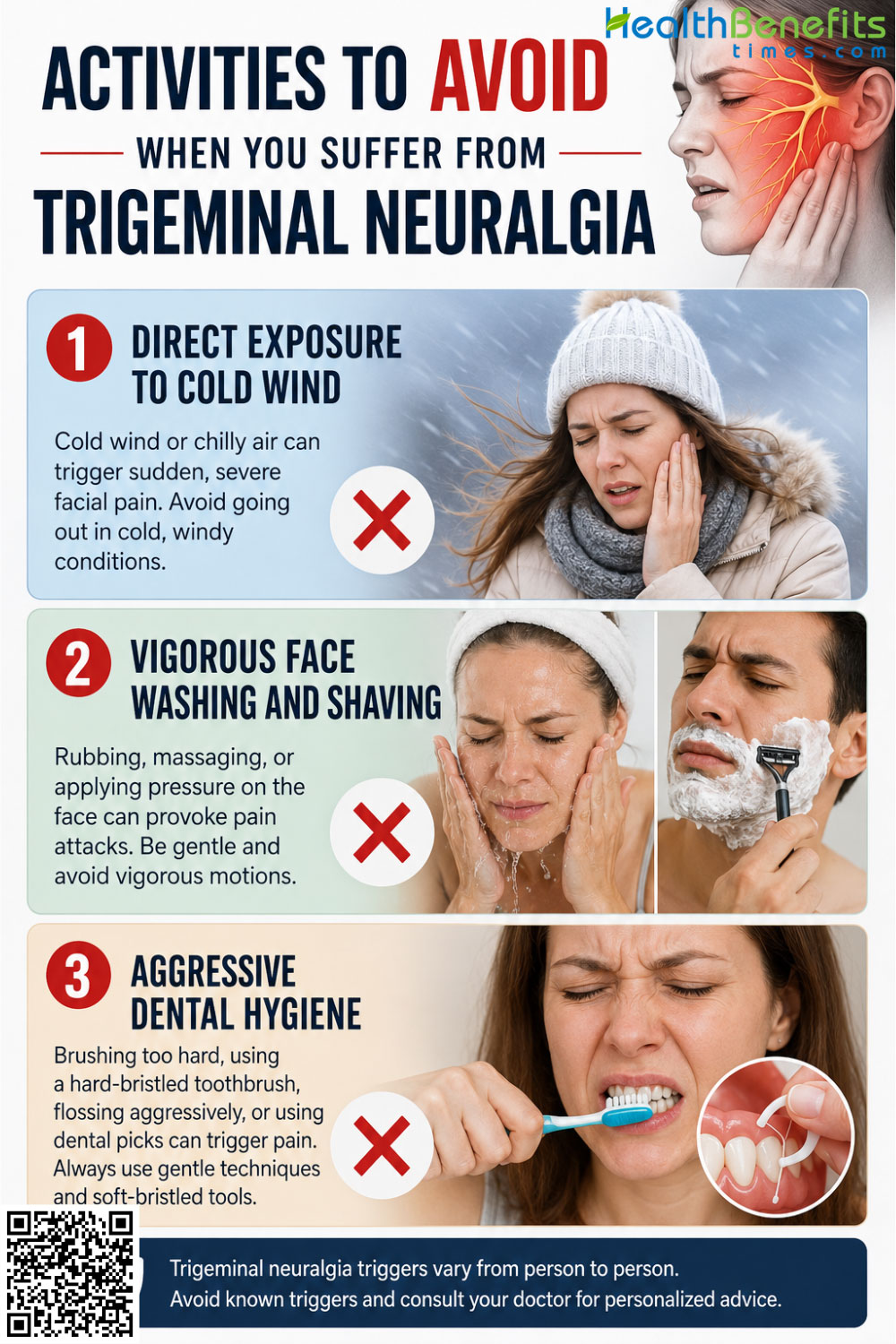
1. Direct Exposure to Cold Wind
You should absolutely avoid walking outside without a thick scarf on windy, cold days, or sitting directly under a blasting air conditioning vent. The physical impact of the moving air combined with the cold temperature is a notorious mechanical trigger for the hyper-excitable sensory fibers on your face 33.
2. Vigorous Face Washing and Shaving
You must refrain from scrubbing your face with rough towels or using heavy-vibration electric razors. Even innocuous, light tactile stimulation over the cheek, upper lip, or nasolabial fold is recognized as the most potent trigger for classic pain attacks 15.
3. Aggressive Dental Hygiene
You should avoid using hard-bristled toothbrushes and alcohol-based, burning mouthwashes. The vigorous mechanical brushing and harsh chemical irritation can quickly overstimulate the fragile trigeminal pathways located inside your mouth 16.
4. Excessive Jaw Movement
You need to consciously limit activities that require prolonged or wide jaw opening. Excessive chewing of gum, yelling, singing loudly, or taking overly large bites of food can easily strain the facial structures and spark a sudden neuralgic episode 32.
Myths and Misconceptions
| Myth | Reality |
| It is just a severe toothache. | While the pain is often felt intensely in the jaw or teeth, it originates from the cranial nerve, not dental decay. Unnecessary tooth extractions will never cure the underlying nerve pain 4. |
| Only the elderly can develop it. | Although it is most prevalent in adults over 50, it can occur at absolutely any age. When seen in young adults, doctors must investigate secondary causes like demyelinating diseases 5. |
| The pain is constant and never stops. | Classic trigeminal neuralgia features paroxysmal pain, meaning it strikes suddenly and stops abruptly, often with very long pain-free remission periods in the early stages 1. |
| Natural treatments are entirely useless. | While not a complete substitute for medical intervention, adjunctive therapies like acupuncture, targeted vitamins, and biofeedback have proven mechanistic benefits in nerve pain reduction 34. |
| It can eventually spread to the rest of the body. | The condition is strictly confined to the sensory distribution of the trigeminal nerve on the face and head; it will never spread to the torso, arms, or legs 14. |
Special Considerations
1. Children
Pediatric cases of this facial pain disorder are exceedingly rare and require specialized attention. When a child or infant presents with classic shock-like facial symptoms, medical professionals must prioritize comprehensive neuroimaging immediately. In these young patients, the symptoms are highly likely to be secondary to a severe underlying pathology, such as a brain tumor, a genetic disorder, or congenital vascular malformations 35.
2. Pregnancy
Expectant mothers face unique hurdles because the physiological stress and hormonal shifts of pregnancy can dramatically exacerbate pre-existing chronic pain syndromes 36. Managing the condition becomes highly complicated, as the primary pharmacological treatments carry well-documented teratogenic risks, meaning they can cause severe developmental abnormalities in the growing fetus. Therefore, natural, non-pharmacological, or highly conservative localized therapies are generally prioritized during gestation.
3. Chronic Conditions
Patients with pre-existing autoimmune diseases represent a distinct and highly vulnerable clinical group. Because their nerve damage stems from systemic myelin degradation rather than localized blood vessel compression, standard surgical interventions are usually ineffective 37. Additionally, individuals suffering from systemic hypertension demonstrate a statistically higher incidence of developing this pain syndrome, requiring careful cardiovascular management alongside pain therapy.
4. Elderly
This demographic makes up the vast majority of cases, driven by age-related arterial elongation and brain sagging that increase the likelihood of neurovascular compression. However, the elderly are also the most vulnerable to the adverse side effects of strong neurological medications. High doses of anticonvulsants can cause dangerously low blood sodium (hyponatremia), which frequently leads to life-threatening encephalopathy, severe dizziness, and devastating falls 38.
Precaution before use of natural remedies when you have Trigeminal Neuralgia
- Consult Your Neurologist First: You must explicitly discuss any new herb, supplement, or physical therapy with your prescribing doctor, as “natural” does not mean harmless. Certain botanicals can severely alter how your liver processes prescription nerve medications, leading to dangerous toxicities 39.
- Patch-Test Topical Treatments: You should always apply a tiny amount of capsaicin cream or peppermint oil to an unaffected area of your skin, like your inner arm, 24 hours before putting it on your face. This ensures you do not suffer an unexpected allergic reaction that could inflame your facial nerves further.
- Avoid Over-Stimulating the Trigger Zone: You must be incredibly gentle and cautious if applying oils or creams to your face. The simple mechanical act of rubbing a soothing ointment into a known trigger zone can easily provoke a severe pain paroxysm 16.
- Verify the Source of Supplements: You should purchase vitamins and herbal remedies only from reputable, third-party-tested manufacturers to avoid dangerous impurities and ensure you are taking the correct, highly bioavailable dosage.
- Do Not Stop Prescription Medication Abruptly: You must never replace your current medical regimen with a natural remedy overnight. Anticonvulsant medications require a slow, medically supervised tapering process to prevent withdrawal seizures or catastrophic rebound pain 40.
When to see Doctor
- When Your Pain Becomes Unmanageable: You need to seek immediate medical care if your pain attacks increase rapidly in frequency and duration, rendering you entirely unable to eat, drink, or speak, which can quickly lead to severe dehydration and malnutrition 41.
- If You Experience Facial Numbness: You should contact a neurologist promptly if the sharp pain is suddenly accompanied by a complete loss of sensation, profound numbness, or progressive facial muscle weakness, as this may indicate a growing tumor or severe permanent nerve damage 5.
- When Experiencing Medication Side Effects: You must go to the doctor or emergency room if you develop acute confusion, severe dizziness, extreme lethargy, or nausea while taking nerve-pain medications, as these are classic signs of critical electrolyte imbalances 42.
- If You Notice Vision Changes: You need to seek urgent care if your facial pain is accompanied by blurred vision, double vision, or uncoordinated eye movements, as these are hallmark symptoms of an underlying demyelinating disease 37.
- When Alternative Treatments Fail: You should schedule a consultation with a surgical specialist if natural remedies, lifestyle modifications, and initial medications no longer provide acceptable relief, indicating it is time to thoroughly evaluate your eligibility for more advanced procedural interventions 15.
Comments
comments