

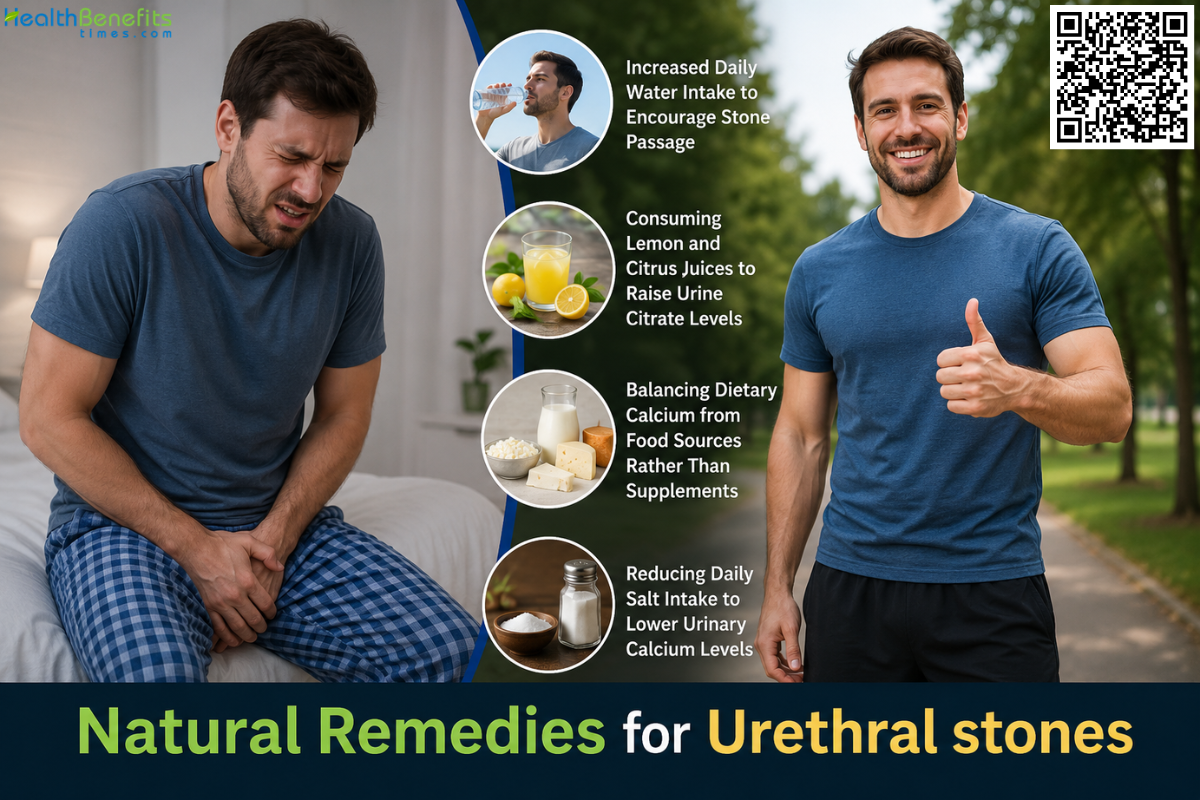
Causes of Urethral stones
1. Migrating Kidney or Bladder Stones (Secondary Stones)
The most frequent cause involves stones that originally develop in the higher urinary tract (kidneys or bladder) and move downward, eventually getting stuck in the narrowest parts of the urethra 5.
2. Urethral Strictures
A structural narrowing of the urinary tube, often resulting from scar tissue due to past injuries, medical procedures, or infections, which restricts urine flow and allows minerals to crystallize into primary native stones.
3. Urethral Diverticula
The presence of abnormal, balloon-like pouches along the urethral wall where urine becomes trapped and stagnates, creating an ideal environment for urinary salts to build up and solidify 6.
4. Chronic Urinary Tract Infections (UTIs)
Persistent or recurring infections, particularly those involving urea-splitting bacteria, alter the chemical composition of stagnant urine and trigger the rapid formation of stones 7.
5. Retained Foreign Bodies
External objects trapped in the lower urinary tract, such as fragments of medical catheters or other foreign materials, act as a core where calcium and other minerals accumulate and harden over time 8.
6. Chronic Urinary Stasis
Any underlying anatomical condition that prevents the complete, forceful emptying of urine, such as congenital physical defects or an enlarged prostate, leads to localized urine pooling and the subsequent settling of stone-forming minerals 9.
Symptoms of Urethral stones
1. Acute Urinary Retention
A sudden and painful inability to empty the bladder, which is the most common emergency presentation when a stone completely blocks the urinary passage.
2. Localized Pain
Sharp, severe pain that radiates through the lower urinary tract, commonly felt in the penis, the perineum (the space between the genitals and anus), or the lower abdomen, depending on exactly where the stone is lodged.
3. Painful Urination (Dysuria)
A distinct burning, stinging, or intensely painful sensation during attempts to pass urine.
4. Weak or Interrupted Stream
A noticeable decrease in the pressure of the urine flow, difficulty starting urination, or continuous post-urination dribbling caused by a partial obstruction of the tube 10.
5. Blood in the Urine (Hematuria)
Visible pink or red discoloration in the urine, or direct bleeding from the urethral opening, resulting from the rough surface of the stone scraping and damaging the delicate internal tissue lining 11.
6. Palpable Hard Mass
A solid, physical lump that a doctor or patient can feel from the outside along the underside of the penis in men, or along the anterior vaginal wall in women.
7. Urinary Urgency and Frequency
A constant, sudden need to urinate, which often results in only passing very small amounts of urine at a time, accompanied by a heavy sensation of pelvic pressure.
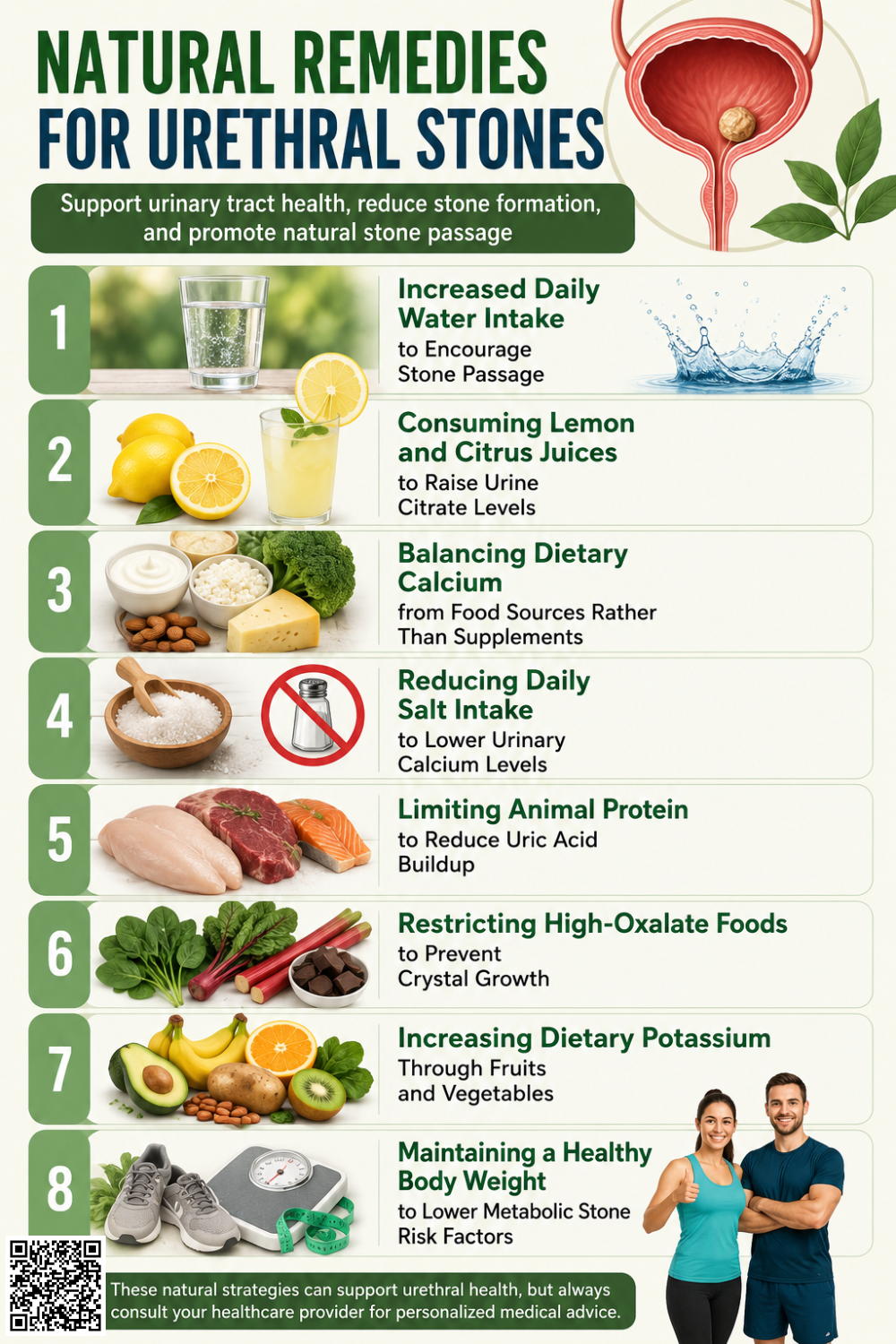
1. Increased Daily Water Intake to Encourage Stone Passage
How it may help
Increasing daily water intake produces a higher volume of urine, which directly dilutes the concentration of minerals that form stones 12. This continuous fluid flow creates physical pressure that helps flush small stones out of the urinary system and prevents new mineral deposits from crystallizing.
What research says
Clinical studies conclude that consuming enough fluids to produce over two liters of urine daily significantly reduces the recurrence rate of urinary stones 13. Researchers emphasize that high water intake is the most effective, primary dietary intervention for preventing stone formation across all patient populations.
How to use it safely
To manage stones safely, you should aim to drink two to three liters of plain water daily, spreading it evenly across your waking hours. Check your urine regularly; consistently pale or nearly clear urine indicates your fluid intake is sufficient to prevent mineral buildup.
Potential precautions or side effects
Do not increase fluid intake without medical approval if you have heart failure or severe kidney disease, as excess fluid can cause dangerous swelling or sodium imbalances 14.
2. Consuming Lemon and Citrus Juices to Raise Urine Citrate Levels
How it may help
Consuming citrus juices, specifically lemon juice, increases citrate levels in the urine. Citrate binds with urinary calcium, which prevents the calcium from combining with oxalate to form solid mineral masses 15. Furthermore, citrate coats existing microscopic crystals, effectively stopping them from growing into larger stones.
What research says
Clinical studies show that regular consumption of lemon juice significantly raises urinary citrate levels, directly lowering the risk of calcium-based stone formation 16. Researchers conclude that citrus-based dietary therapies provide a highly effective, natural alternative for patients who cannot tolerate standard prescription citrate medications 17.
How to use it safely
You should mix one-half cup of pure, unsweetened lemon juice into seven cups of plain water and drink it throughout the day. To protect your teeth from acid damage, drink the mixture through a straw and completely avoid adding sugar.
Potential precautions or side effects
Frequent consumption of highly acidic citrus juices can permanently erode tooth enamel, trigger sudden heartburn, or worsen existing acid reflux symptoms in sensitive individuals 18.
3. Balancing Dietary Calcium from Food Sources Rather Than Supplements
How it may help
Consuming calcium through food rather than pills helps block stone formation in the digestive tract. Dietary calcium binds tightly to oxalates—compounds found in many plant foods—inside the stomach and intestines 19. This prevents the body from absorbing oxalates into the bloodstream, ultimately keeping them out of the urine where they form solid stones.
What research says
Extensive clinical studies demonstrate that diets high in natural calcium foods significantly reduce the risk of developing urinary stones 20. Conversely, researchers conclude that taking isolated calcium supplements, especially between meals, actually increases stone formation risk by causing sharp, dangerous spikes of calcium levels within the urine 21.
How to use it safely
You should obtain your daily calcium by eating dairy products, fortified plant milks, or calcium-rich vegetables directly with your meals. If a doctor requires you to take calcium pills, always swallow the supplements during a meal so the calcium can bind to food oxalates immediately.
Potential precautions or side effects
Taking high-dose calcium supplements on an empty stomach can trigger severe constipation, interfere with iron absorption, and actively promote the formation of new urinary stones 22.
4. Reducing Daily Salt Intake to Lower Urinary Calcium Levels
How it may help
High salt intake forces the kidneys to release excess calcium into the urine. This extra calcium can easily combine with oxalates or phosphorus to form solid stones 23. By reducing salt, you lower the amount of calcium in your urine, directly removing a primary building block of urinary stones.
What research says
Clinical evidence demonstrates a direct link between high dietary sodium and increased stone formation. Researchers found that patients who restrict their daily sodium intake significantly reduce urinary calcium excretion, effectively lowering their overall risk of experiencing recurrent stone episodes 24.
How to use it safely
You should limit total daily sodium to under 2,300 milligrams by avoiding processed foods, canned soups, and fast meals. Read nutrition labels carefully, and flavor your home-cooked meals with salt-free herbs, spices, or citrus juices instead of adding table salt.
Potential precautions or side effects
Avoid extreme, unmonitored sodium restriction. Dangerously low sodium levels can trigger severe fatigue, confusion, and muscle cramps, particularly in older adults or those taking diuretic medications 25.
5. Limiting Animal Protein to Reduce Uric Acid Buildup
How it may help
Limiting non-dairy animal protein reduces uric acid accumulation and prevents urine from becoming excessively acidic. Animal proteins contain high levels of purines, which the human body breaks down into uric acid. By reducing purine intake, the urine remains less acidic, preventing uric acid from crystallizing into solid stones that can enter and obstruct the urethra.
What research says
Clinical metabolic studies confirm that consuming meat, poultry, and fish significantly increases urinary uric acid levels and lowers urine pH, directly elevating the risk of stone formation 26. Furthermore, extensive systematic reviews conclude that higher dietary intake of red and processed meats is associated with a greater overall incidence of urinary tract stones 27.
How to use it safely
To safely manage your condition, replace excess meat with plant-based proteins, which provide necessary nutrients without acidifying the urine. You should maintain an adequate daily protein intake of 0.8 to 1.0 grams per kilogram of body weight to sustain normal biological functions and preserve muscle mass.
Potential precautions or side effects
Do not severely restrict all dietary protein, as excessive restriction causes muscle wasting, weakened immunity, and malnutrition. You must consult a healthcare provider before implementing any strict dietary changes.
6. Restricting High-Oxalate Foods to Prevent Crystal Growth
How it may help
Dietary oxalates bind with urinary calcium to form calcium oxalate crystals, the most common component of urinary tract stones. By restricting high-oxalate foods—like spinach, rhubarb, and nuts—it is possible to lower oxalate concentrations in the urine, preventing new crystals from forming and obstructing the urethra 28.
What research says
Epidemiological studies demonstrate that high urinary oxalate excretion directly correlates with increased stone formation. However, research confirms that restricting oxalate is most effective when paired with normal dietary calcium intake. Calcium binds to oxalate in the intestines, preventing free oxalate from absorbing into the bloodstream and crystallizing in urine.
How to use it safely
You should moderate high-oxalate foods rather than eliminating them entirely, as many are nutrient-dense. To safely manage your diet, consume calcium-rich foods alongside any oxalate-containing meals. This allows the minerals to bind safely in your digestive tract rather than crystallizing in your kidneys. Potential precautions or side effects: Do not restrict dietary calcium while limiting oxalates; low calcium intake paradoxically increases stone risk and reduces bone density. Consult a healthcare provider before making strict dietary changes.
7. Increasing Dietary Potassium Through Fruits and Vegetables
How it may help
Dietary potassium from fruits and vegetables increases urinary citrate, a compound that binds to calcium in the urine. This binding process stops excess calcium from crystallizing with oxalates, effectively preventing the formation and growth of solid stones that could block the urethra 29.
What research says
Clinical studies demonstrate that higher dietary potassium intake significantly reduces urinary calcium excretion and lowers the overall risk of developing urinary tract stones. Researchers confirm that diets rich in natural potassium act as powerful inhibitors against new stone formation and recurrent nephrolithiasis 30.
How to use it safely
To safely boost your potassium levels, incorporate a variety of fresh fruits and vegetables into your daily meals. You should focus on whole foods rather than high-dose supplements to ensure safe nutrient absorption and avoid disrupting your natural mineral balance 31.
Potential precautions or side effects
You must consult a healthcare provider before increasing potassium intake if you have kidney disease or take blood pressure medications, as excessive potassium can cause dangerous heart arrhythmias 32.
8. Maintaining a Healthy Body Weight to Lower Metabolic Stone Risk Factors
How it may help
Excess body weight alters urine chemistry by increasing the excretion of calcium, oxalate, and uric acid while lowering urine pH. Maintaining a healthy weight normalizes these metabolic factors, preventing the highly acidic and mineral-rich environment necessary for solid stones to form and enter the urethra 33.
What research says
Clinical research confirms a direct link between a high body mass index (BMI) and an increased incidence of urinary tract stones. Studies demonstrate that obesity-induced insulin resistance impairs the kidneys’ ability to produce ammonia, resulting in highly acidic urine that rapidly crystallizes uric acid 34.
How to use it safely
You should aim for gradual, sustainable weight loss through moderate exercise and a balanced diet rich in vegetables and whole grains. Avoid rapid weight-loss programs or extreme fasting, which can severely dehydrate the body and temporarily increase your risk of forming new stones.
Potential precautions or side effects
Do not follow high-protein crash diets for weight loss, as excessive animal protein dramatically increases acid and purine levels in the urine, triggering new stone formation.
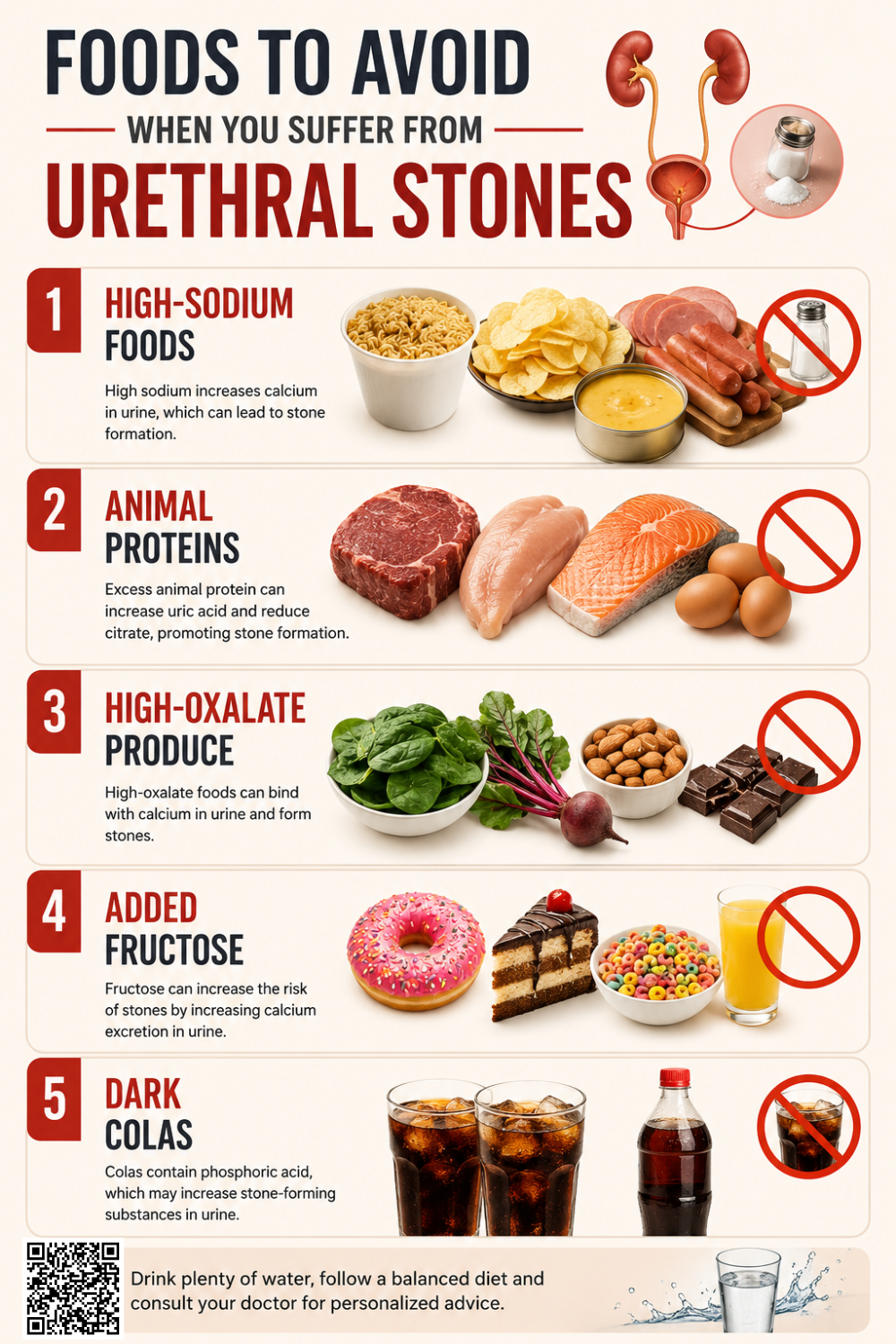
1. High-Sodium Foods
Excessive salt intake forces the kidneys to excrete more calcium into the urine, which directly binds with oxalates to form solid stones 35.
2. Animal Proteins
Consuming excess red meat and poultry increases uric acid and decreases urinary citrate, creating a highly acidic environment that promotes rapid stone crystallization.
3. High-Oxalate Produce
Eating high-oxalate foods like spinach and rhubarb without adequate dietary calcium allows free oxalates to absorb into the bloodstream and crystallize in the urinary tract.
4. Added Fructose
High consumption of artificial sugars disrupts metabolic functions, increasing the urinary excretion of calcium, oxalate, and uric acid to drive new stone formation 36.
5. Dark Colas
Dark carbonated sodas contain substantial levels of phosphoric acid, which strongly acidifies urine and significantly increases the overall incidence of urinary tract stones 37.
When to See a Doctor When You Suffer From Urethral Stones
1. Unbearable Pain
You must seek immediate care if you experience severe, unrelenting pain in the lower abdomen that prevents you from sitting still or finding a comfortable position.
2. Inability to Urinate
A complete inability to pass urine indicates a severe structural blockage by the stone, which can rapidly cause irreversible kidney damage and requires urgent medical intervention.
3. Fever and Chills
Developing a fever or chills alongside urinary pain strongly indicates a dangerous bacterial infection within the trapped urine, requiring prompt antibiotic treatment and stone removal.
4. Blood in the Urine
Visible blood, causing the urine to appear pink or red, signals that the solid stone is actively damaging and tearing the sensitive lining of the urinary tract.
5. Severe Nausea and Vomiting
Persistent nausea or vomiting alongside intense pain signifies extreme bodily distress that often necessitates intravenous fluids and professional clinical pain management.
Comments
comments