

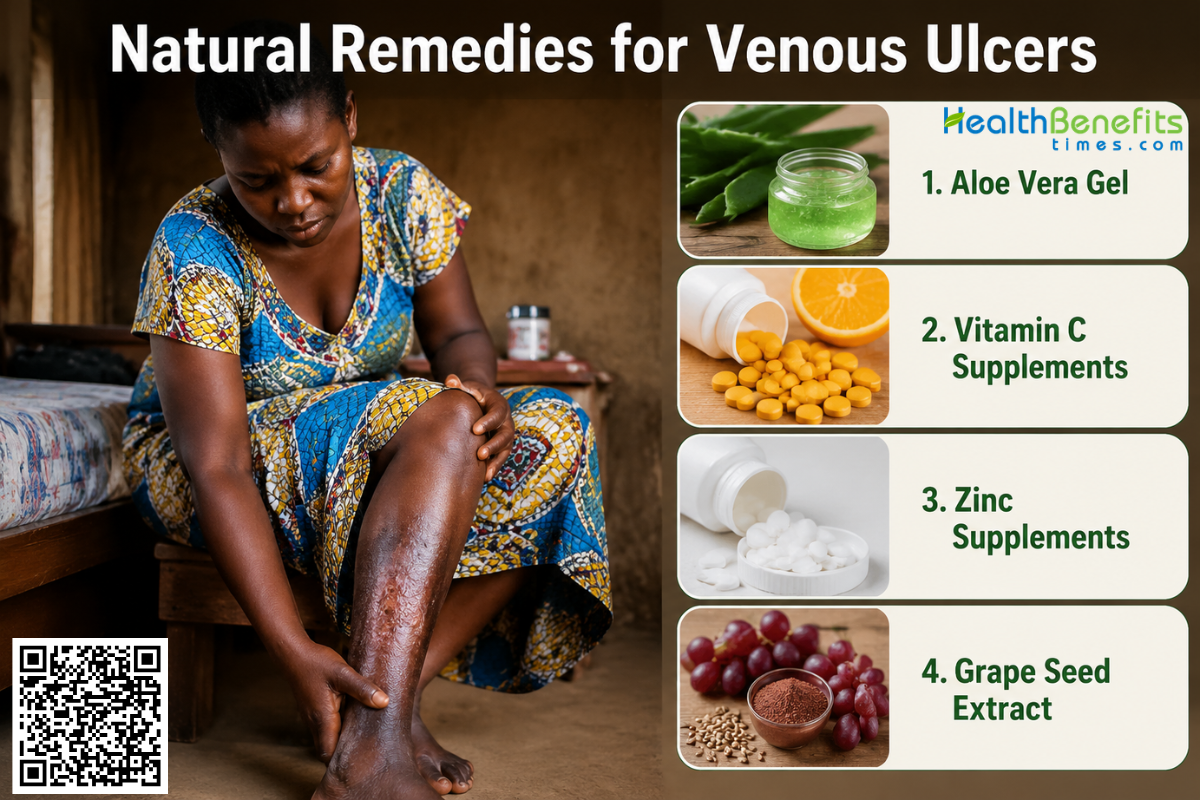
Causes of Venous Ulcers
1. Chronic Venous Insufficiency (CVI)
The primary and most direct cause of venous ulcers is a mechanical failure of the one-way valves inside the leg veins. When these valves weaken, blood flows backward and pools in the lower legs. This creates sustained high pressure within the veins, known as venous hypertension, which deprives the local skin of oxygen and nutrients until the tissue breaks down into an open wound 1.
2. Deep Vein Thrombosis (DVT)
A previous blood clot deep within the leg can cause permanent scarring and destruction of the vein’s valves. This damage restricts normal blood circulation and severely increases lower leg pressure, a long-term complication known as post-thrombotic syndrome that frequently results in ulcer formation 3.
3. Severe Varicose Veins
Enlarged, swollen, and twisted veins near the skin’s surface lose their ability to move blood efficiently back to the heart. If left untreated over many years, the chronic stretching of these veins forces fluid to leak into the surrounding tissues, causing persistent swelling, skin discoloration, and eventual skin breakdown 4.
4. Calf Muscle Pump Failure
The calf muscles act as a secondary heart for the lower body, squeezing the leg veins during walking to push blood upward. Conditions that cause long-term immobility, such as paralysis, severe arthritis, or a strictly sedentary lifestyle, prevent this natural pumping action, causing blood to stagnate in the lower extremities 5.
5. Obesity
Carrying excess body weight places severe, continuous mechanical pressure on the blood vessels in the pelvis and legs. This constant abdominal pressure physically impedes the upward flow of blood, accelerating valve damage and significantly increasing the likelihood of fluid pooling and subsequent skin ulceration 2.
6. Prior Leg Injuries or Surgery
Severe trauma to the lower leg, such as a major bone fracture, crush injury, or extensive leg surgery, can permanently physically damage the local vein structure. This structural damage disrupts normal blood return pathways, making the injured area highly susceptible to circulation problems and future ulcers 6.
Symptoms of Venous Ulcers
1. Shallow, Open Wound
The defining physical feature is a shallow sore with irregular, uneven edges, most commonly appearing on the inner side of the lower leg, just above the ankle. The base of the wound usually looks red and is frequently covered in a thin layer of soft, yellow tissue 1.
2. Dark Skin Discoloration
The skin immediately surrounding the sore frequently turns dark red, purple, or brown. This long-lasting color change occurs when high vein pressure forces red blood cells to leak out of the small blood vessels and break down directly within the skin tissue 3.
3. Leg Swelling and Heaviness
Fluid pools in the lower legs due to poor circulation, causing a noticeable, firm swelling that generally worsens after long periods of standing or sitting. Elevating the legs allows gravity to pull the fluid back toward the heart, which temporarily reduces the swelling and relieves the tired, heavy feeling in the limbs 2.
4. Thickened and Hardened Skin
Over time, the continuous pooling of blood and ongoing tissue inflammation severely damage the local skin structure. This chronic damage causes the skin and the fat layer underneath it to become scarred, uncomfortably tight, and permanently hardened, often giving the lower leg an inverted-champagne-bottle appearance 7.
5. Dull, Aching Pain
The ulcer and the damaged area surrounding it typically produce a continuous dull ache, cramping, or a throbbing sensation. Unlike nerve or artery-related leg pain, the discomfort from venous ulcers usually improves significantly when the legs are elevated above the level of the heart to encourage blood drainage 6.
6. Fluid Leakage and Signs of Infection
These wounds are consistently moist and frequently weep clear or slightly yellowish fluid. Because the skin barrier is broken, they are highly prone to bacterial infection; when infected, the wound rapidly produces thicker green or cloudy fluid and develops a highly noticeable, foul odor 1.
Natural Remedies for Venous Ulcers
1. Medical-Grade Honey
How it may help
Medical-grade honey, such as Manuka honey, may support the healing of venous ulcers through its natural antibacterial and anti-inflammatory properties. When applied to wounds, its high sugar content creates an environment that draws out fluid, while natural enzymes release low levels of hydrogen peroxide to help clear dead tissue and reduce wound odor 8.
What research says
Although widely used in wound care, rigorous clinical evidence remains mixed. Major reviews conclude that while honey dressings successfully clear dead tissue, using them alongside standard compression therapy does not significantly speed up the overall healing time of venous leg ulcers compared to conventional wound care treatments 9.
How to use it safely
Only use sterile, medical-grade honey products, which are strictly purified to remove harmful bacteria. Never apply regular grocery store honey to an open ulcer. Your healthcare provider will typically apply it using specialized, pre-soaked dressings that are then wrapped securely with a standard compression bandage.
Potential precautions or side effects
Some patients experience temporary stinging or increased pain upon application 9. If you notice severe discomfort, worsening redness, or swelling, remove the dressing and contact a healthcare provider immediately.
2. Horse Chestnut Seed Extract
How it may help
Horse chestnut seed extract contains an active compound called aescin, which strengthens weak vein walls and improves blood circulation in the legs. By reducing fluid leakage from veins into surrounding tissues, it decreases the severe swelling that often contributes to the worsening of venous ulcers 10.
What research says
Clinical reviews confirm that horse chestnut seed extract effectively reduces leg pain, heaviness, and swelling associated with chronic venous insufficiency 10. While it successfully manages the underlying vein disease that causes ulcers, there is limited direct evidence proving it accelerates the healing of currently open wounds.
How to use it safely
Only consume standardized commercial extracts that explicitly state the toxic raw compound, esculin, has been removed 11. You should take these oral supplements exactly as directed by a healthcare provider, and never apply raw horse chestnut directly to an open leg wound.
Potential precautions or side effects
Side effects include mild stomach upset, dizziness, and headaches. You must avoid this supplement if taking blood-thinning medications, as it can significantly increase the risk of bleeding 11.
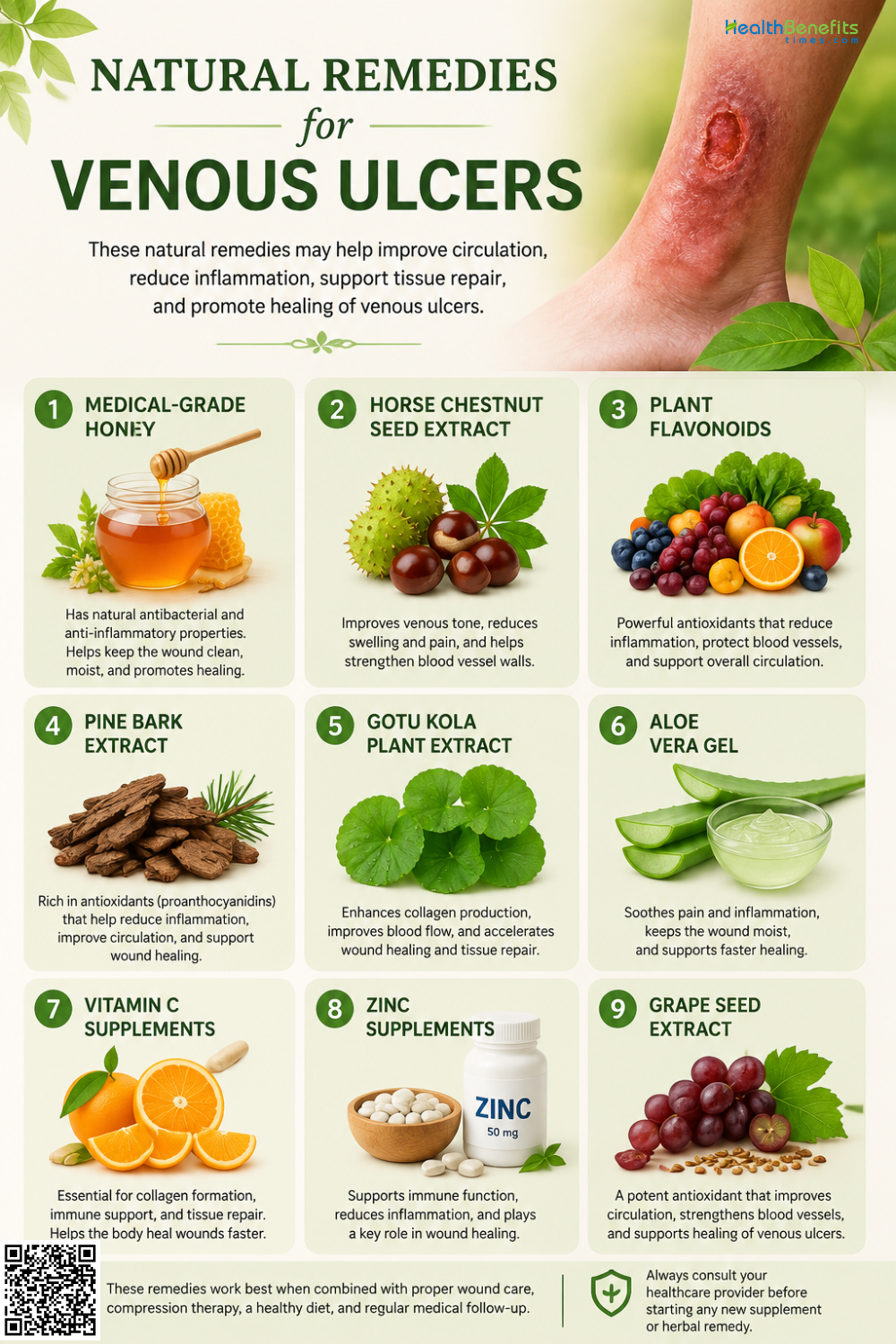
3. Plant Flavonoids
How it may help
Plant flavonoids, specifically micronized purified flavonoid fraction (MPFF), strengthen vein walls and improve lymphatic drainage 12. By protecting small blood vessels from inflammation and reducing fluid leakage, they decrease leg swelling and target the underlying poor blood flow that prevents venous ulcers from closing properly 13.
What research says
Extensive clinical reviews show that taking oral MPFF alongside standard compression therapy significantly accelerates venous ulcer healing 14. Studies found that patients using flavonoids had a 32% higher chance of complete ulcer closure at six months, particularly for large or long-standing ulcers 14.
How to use it safely
You should take oral flavonoid supplements, such as MPFF or diosmin, exactly as prescribed by your healthcare provider 12. These are most effective when used as an add-on treatment, meaning you must continue your standard medical care, including wearing prescribed compression stockings 15.
Potential precautions or side effects
Flavonoids are generally well-tolerated, but some people may experience mild side effects, including stomach upset, diarrhea, and minor skin changes 16.
4. Pine Bark Extract
How it may help
Pine bark extract contains powerful antioxidants that strengthen small blood vessel walls and improve local blood flow. By reducing fluid leakage and severe swelling in the lower legs, it tackles the underlying high venous pressure that causes tissue damage and ulcer formation 17.
What research says
Clinical trials indicate that taking pine bark extract alongside standard wound care and compression therapy significantly accelerates the healing of venous ulcers 18. Studies show it reduces the ulcerated area faster and controls leg swelling more effectively than conventional compression treatment alone 19.
How to use it safely
You should take oral pine bark extract supplements exactly as directed by your healthcare provider. It must be used as an add-on therapy, meaning you need to continue wearing prescribed compression bandages and following standard wound care protocols to achieve results 18.
Potential precautions or side effects
While generally safe, it may cause mild stomach upset or headaches 20. You must consult your doctor before use if taking blood-thinning medications or immunosuppressants.
5. Gotu Kola Plant Extract
How it may help
Gotu kola contains active compounds called triterpenoids that stimulate collagen production and improve local blood circulation 21. By strengthening weakened vein walls and promoting healthy connective tissue development, this plant extract helps reduce fluid buildup and supports the repair of damaged skin around venous ulcers 21.
What research says
Clinical studies demonstrate that gotu kola extract significantly reduces leg swelling, heaviness, and fluid leakage associated with severe vein disease 21. Furthermore, research indicates that it accelerates tissue regeneration and wound closure, making it a valuable complementary treatment for stubborn leg ulcers 21.
How to use it safely
You can take gotu kola via oral capsules or apply it as a topical cream. You must only use it under the supervision of a healthcare provider, ensuring it acts alongside standard wound care and compression therapy 21. Never apply unsterilized creams directly into open wounds.
Potential precautions or side effects
Side effects include minor stomach upset and skin irritation. You must avoid gotu kola if you have liver disease or are pregnant, due to rare liver toxicity risks 21.
6. Aloe Vera Gel
How it may help
Aloe vera gel contains active compounds, like glucomannan, which keep the skin moist and stimulate collagen production 22. By reducing inflammation and encouraging new tissue growth, it may protect the surrounding skin and provide a soothing environment that supports the body’s natural wound repair process.
What research says
Despite its popularity, high-quality clinical evidence does not support using aloe vera for venous ulcers. Major systematic reviews reveal an absence of strong data showing it improves chronic wound healing 23. In fact, one trial found that applying aloe vera actually delayed the closure of certain deep wounds 23.
How to use it safely
If approved by your healthcare provider, use only sterile, medical-grade aloe vera gels or pre-soaked dressings designed for wound care. Never apply raw gel directly from a household plant into an open ulcer. You must continue your standard prescribed treatments, including compression therapy.
Potential precautions or side effects
Aloe vera may cause mild skin irritation or allergic reactions. Because evidence suggests it might delay chronic wound healing, avoid using it without strict medical supervision 23.
7. Vitamin C Supplements
How it may help
Vitamin C is an essential nutrient required to produce collagen, the primary structural protein needed to rebuild damaged skin and blood vessels 24. By acting as a powerful antioxidant, it reduces inflammation and strengthens newly formed tissue, creating a healthier environment for venous ulcers to close properly 25.
What research says
Clinical studies confirm that severe vitamin C deficiency drastically impairs collagen production and delays wound healing 25. However, for individuals who already maintain normal vitamin levels, major reviews show that adding vitamin C supplements does not significantly accelerate the healing time of venous leg ulcers compared to standard wound care 26.
How to use it safely
You should aim to get adequate vitamin C through a balanced diet rich in fruits and vegetables 24. If taking an oral supplement, follow your healthcare provider’s dosage instructions, typically between 500 to 1,000 milligrams daily 27. Do not use supplements as a replacement for prescribed compression therapy.
Potential precautions or side effects
Vitamin C is generally safe, but taking excessively high doses can cause stomach upset, diarrhea, and increase the risk of developing kidney stones in susceptible individuals 24.
8. Zinc Supplements
How it may help
Zinc is a vital mineral required for cell growth, immune function, and the synthesis of collagen, the main protein that rebuilds damaged skin 28. By supporting tissue regeneration and reducing local inflammation, zinc helps construct the new cellular framework necessary to close chronic wounds like venous ulcers 28.
What research says
Clinical evidence demonstrates that oral zinc supplements only accelerate venous ulcer healing in patients suffering from a confirmed zinc deficiency 29. For individuals with normal blood zinc levels, major reviews conclude that supplementation offers no significant benefit in speeding up the closure of venous leg ulcers 29.
How to use it safely
You should request a blood test from your healthcare provider to confirm a zinc deficiency before starting supplements 30. Take oral zinc exactly as prescribed, ideally with food to minimize stomach upset, while strictly continuing your standard compression therapy.
Potential precautions or side effects
Excessive zinc intake can cause nausea, vomiting, and stomach cramps. Long-term overuse can lead to copper deficiency, neurological issues, and weaken the immune system 30.
9. Grape Seed Extract
How it may help
Grape seed extract contains powerful antioxidants called oligomeric proanthocyanidins, which protect and strengthen weak blood vessel walls 31. By improving circulation and reducing fluid leakage into surrounding tissues, it minimizes the severe leg swelling that contributes to skin breakdown and venous ulcer formation 32.
What research says
Clinical evidence confirms that grape seed extract significantly reduces leg swelling, heaviness, and pain associated with chronic venous insufficiency 31. While it effectively manages the underlying poor blood flow, there is currently insufficient direct clinical evidence proving it accelerates the closure of existing open venous ulcers 31.
How to use it safely
You should take oral grape seed extract supplements exactly as directed by your healthcare provider 31. It must be used strictly as a supportive therapy, meaning you must continue standard medical wound care and consistently wear prescribed compression stockings to effectively treat leg ulcers.
Potential precautions or side effects
Side effects include mild headaches, nausea, or dizziness. You must consult a doctor if taking blood-thinning medications, as this extract can significantly increase the risk of bleeding 31.
Foods to Avoid When You Suffer from Venous Ulcers
1. High-Sodium Foods
Excessive salt intake causes the body to retain fluids. This increases blood volume and pressure, which exacerbates leg swelling and puts additional strain on damaged vein valves 33.
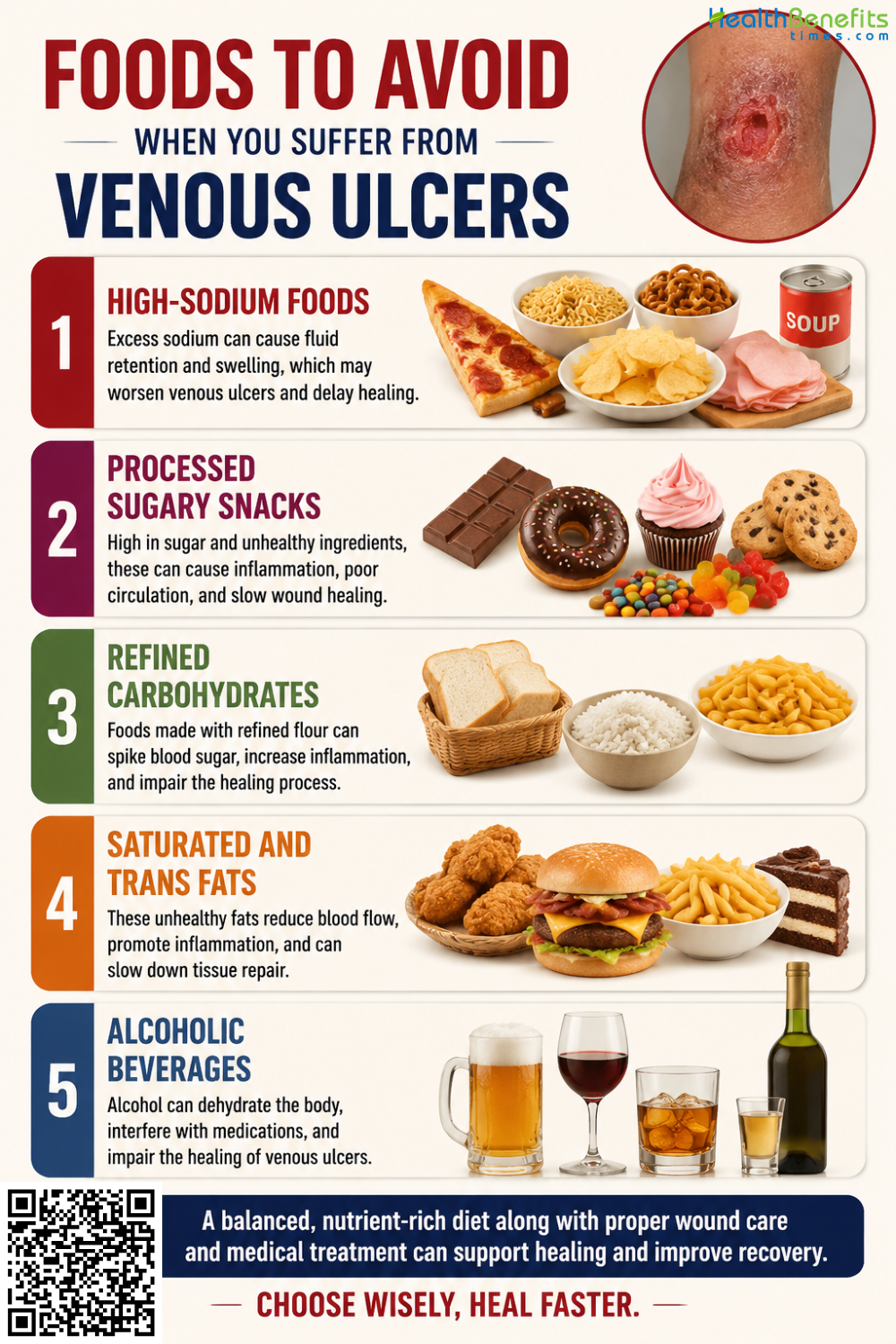
2. Processed Sugary Snacks
Refined sugars contribute to systemic inflammation and weight gain. Increased body weight places unnecessary mechanical pressure on the veins, hindering blood flow from the legs to the heart 34.
3. Refined Carbohydrates
Foods like white bread and pastries cause rapid blood sugar spikes. These fluctuations can impair the body’s natural tissue repair processes, slowing the healing of existing venous wounds 3.
4. Saturated and Trans Fats
High intakes of these fats promote obesity and arterial stiffening. This can worsen overall circulatory health, making it more difficult for the body to maintain proper vein function 35.
5. Alcoholic Beverages
Alcohol can lead to dehydration and interfere with healthy circulation. It may also worsen inflammatory responses in the body, potentially complicating the recovery of damaged skin and tissues 36.
When to See a Doctor for Venous Ulcers
1. Signs of Bacterial Infection
Seek immediate care if you notice spreading redness, increased warmth, severe pain, or a foul-smelling discharge, as these indicate a serious infection that requires antibiotics 1.
2. Sudden Worsening of Symptoms
Contact your healthcare provider if the ulcer grows rapidly in size, becomes significantly deeper, or if you experience a sudden, sharp increase in leg pain 2.
3. Fever or Chills
If you develop a fever, chills, or feel generally unwell, it may indicate that the wound infection has spread into the bloodstream, requiring urgent clinical intervention 7.
4. No Signs of Healing
See a specialist if the ulcer shows no signs of improvement or reduction in size after several weeks of consistent, appropriate compression and wound care treatment 3.
5. New or Unexplained Swelling
If you experience sudden, severe swelling in the entire leg accompanied by calf pain or tenderness, consult a doctor immediately to rule out a deep blood clot 37.
Comments
comments