


Causes of Vocal Fatigue from talking/singing
- Excessive Voice Use (Overuse): Prolonged periods of talking, lecturing, or singing without adequate rest overwork the muscles of the voice box, leading to physical exhaustion of the vocal system 6.
- Improper Vocal Technique (Misuse): Straining the voice through unnatural pitch levels, forced voice projection, or speaking without proper breath support creates damaging physical stress and friction on the vocal cords 3.
- High Volume and Pitch Demands: Frequently speaking or singing at loud volumes or high pitch levels requires intense muscular effort and high airflow, which rapidly speeds up both tissue swelling and muscle tiredness 7.
- Inadequate Hydration: The vocal cords require a thin layer of moisture to vibrate smoothly and efficiently; a lack of hydration in the body dries out this tissue, significantly increasing friction and the physical effort needed to produce sound 8.
- Environmental Strain: Talking or performing in spaces with low humidity, dense dust, or loud background noise forces individuals to unconsciously strain their voice and raise their volume while simultaneously exposing the throat to drying irritants 3.
- Excessive Muscle Tension: Holding unnecessary physical tension in the neck, jaw, and throat muscles during speech or vocal performance restricts natural vocal cord movement, forcing the vocal system to work harder to make sound 9.
Symptoms of Vocal Fatigue from talking/singing
- Increased Physical Effort to Speak: The most prominent sign of vocal fatigue is a noticeable increase in the energy and physical work required to produce standard speech or singing, making normal conversations feel exhausting 10.
- Hoarseness and Rough Sound: The voice frequently loses its natural clarity, sounding raspy, scratchy, or rough, which occurs because the overworked tissues of the vocal cords become temporarily swollen and irritated 11.
- Throat Discomfort and Pain: Individuals often experience a dull ache, a feeling of tightness, or soreness in the neck and throat muscles that progressively worsens as they continue talking or performing 10.
- Loss of Vocal Range and Control: Singers and active speakers typically lose their ability to reach high notes and may experience unexpected voice breaks, sudden drops in pitch, or vocal cracking during use 12.
- Breathy or Weak Voice: The voice may become quiet, airy, or thin because the exhausted throat muscles fail to bring the vocal cords completely together, allowing excess breath to leak out while making sound 3.
- Persistent Dryness and Throat Clearing: The condition often causes a severe sensation of dryness or a feeling that a lump is stuck in the throat, which triggers an uncontrollable urge to clear the throat repeatedly 10.
Natural Remedies for Vocal Fatigue from talking/singing
1. Complete Voice Rest and Speech Conservation
How it may help
Complete voice rest and speech conservation alleviate vocal fatigue by minimizing mechanical stress on the vocal folds. Reducing phonation decreases tissue inflammation and allows damaged mucosal layers to heal naturally. This restorative period prevents further microtrauma, ensuring the laryngeal muscles recover from overuse and regain optimal function without exacerbating the underlying injury 13.
What research says
Clinical studies indicate that prolonged absolute voice rest offers no greater long-term benefit than relative voice conservation. While strict vocal restriction was traditionally recommended, research now concludes that gentle, modified vocal exercises may actually reduce acute inflammation better than complete silence, optimizing the tissue healing process without risking muscle atrophy 14.
How to use it safely
To safely practice voice conservation, you should limit talking to essential communication and avoid whispering, which strains vocal cords. Maintain hydration and utilize non-vocal communication methods when possible. Gradually reintroduce normal speech through guided voice therapy rather than returning abruptly to heavy vocal demands 13.
Potential precautions or side effects
Extended strict voice rest can cause laryngeal muscle stiffness and psychological distress. You should avoid prolonged silence, as it may delay functional recovery and worsen vocal fatigue symptoms 15.
2. Total Body Hydration through Increased Water Intake
How it may help
Adequate total body hydration maintains the fluidity of mucosal secretions lining the laryngeal tissues. This internal moisture reduces the friction and mechanical stress experienced by the vocal folds during continuous speech or singing. By lowering tissue viscosity, proper fluid intake facilitates smoother tissue oscillation and decreases the overall effort required for phonation 16.
What research says
Clinical investigations demonstrate that systemic hydration directly influences vocal fold biomechanics and physiological efficiency. Research concludes that maintaining optimal water balance prevents increases in phonation threshold pressure, thereby reducing vocal fatigue and minimizing the physical strain associated with prolonged vocal performance 16.
How to use it safely
You should steadily consume water throughout the day rather than drinking excessive amounts all at once. Aim for consistent fluid intake to keep your vocal tissues moist, and complement internal hydration with environmental humidification to protect your voice during heavy talking or singing 17.
Potential precautions or side effects
Excessive water consumption can lead to electrolyte imbalances like hyponatremia. You should avoid overhydration, as consuming unsafe fluid volumes poses severe medical risks 18.
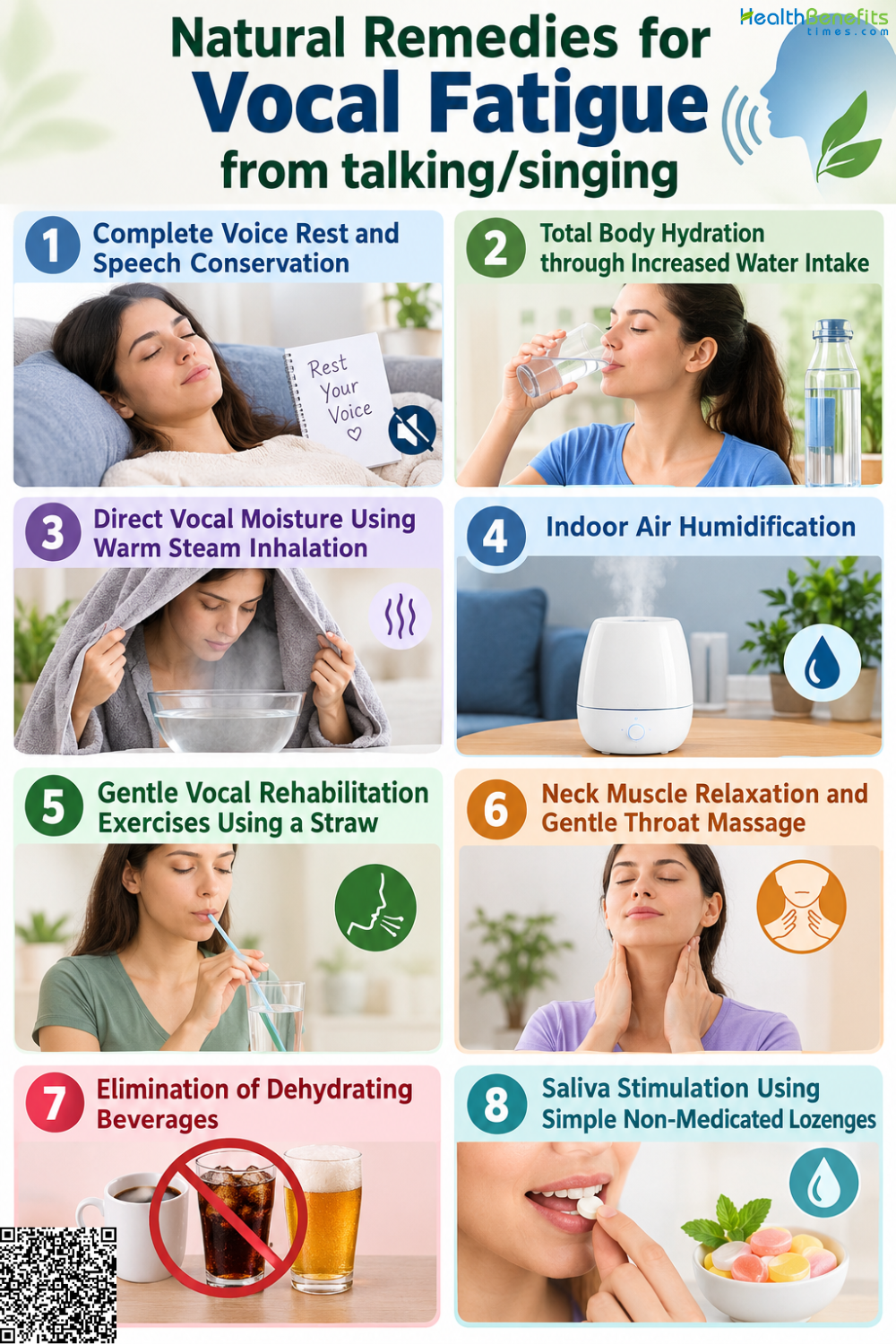
3. Direct Vocal Moisture Using Warm Steam Inhalation
How it may help
Warm steam inhalation delivers direct superficial hydration to the laryngeal mucosa. This localized moisture thins dense secretions, lowers vocal fold tissue viscosity, and significantly decreases the physical effort required for phonation. By minimizing aerodynamic resistance, steam directly alleviates the mechanical stress and friction that cause vocal fatigue 16.
What research says
Clinical evaluations demonstrate that superficial hydration via steam inhalation significantly improves voice quality by reducing acoustic instability markers like jitter and shimmer. Research concludes that adding direct moisture to inhaled air decreases phonation threshold pressure, effectively mitigating acute laryngeal dryness and enhancing overall vocal endurance 19.
How to use it safely
You should inhale warm, never boiling, steam gently through your nose and mouth for short intervals. Maintain a safe distance from the water source to avoid mucosal injury. Integrate this direct moisture approach with systemic hydration strategies to fully support laryngeal tissue recovery 20.
Potential precautions or side effects
You must avoid boiling steam to prevent severe thermal burns to the airway. Always place water containers on stable surfaces to prevent accidental physical scalding 20.
4. Indoor Air Humidification
How it may help
Maintaining adequate indoor air humidity prevents the rapid evaporation of the protective surface fluid layer on the vocal folds. Breathing moisturized air directly reduces tissue dryness and friction during vocal cord vibration, which lowers the physical effort needed to speak and minimizes structural tissue damage over time 17.
What research says
Clinical studies demonstrate that prolonged exposure to dry ambient air increases phonation threshold pressure, forcing the larynx to work significantly harder. Research concludes that maintaining environmental indoor humidity between 30% and 50% optimizes vocal fold mechanical efficiency and prevents the rapid onset of vocal fatigue during acoustic tasks 16.
How to use it safely
You should use a cool-mist humidifier in your primary living or sleeping spaces to maintain optimal environmental moisture. Always clean the device daily and refill it with distilled water to prevent the hazardous growth and circulation of bacteria or mold in your respiratory tract 21.
Potential precautions or side effects
You must avoid humidifying rooms above 50%, as excessive moisture promotes mold and dust mite proliferation, potentially triggering respiratory allergies that can further irritate your vocal cords 21.
5. Gentle Vocal Rehabilitation Exercises Using a Straw
How it may help
Straw phonation, a semi-occluded vocal tract exercise, artificially lengthens the vocal tract and restricts airflow. This creates beneficial back-pressure above the vocal cords, which reduces mechanical collision forces during vibration. By altering acoustic impedance, it lessens tissue strain and significantly relieves vocal fatigue 22.
What research says
Clinical studies confirm that sustained semi-occluded vocal tract straw therapy significantly reduces phonation threshold pressure, the minimum effort required to initiate speech. Research concludes that this controlled airflow technique consistently lowers aerodynamic resistance and improves glottal closure efficiency, demonstrating substantial improvements in vocal economy over time 23.
How to use it safely
You should hum or glide your pitch gently through a narrow rigid straw while keeping your lips sealed tightly around it. Maintain steady, relaxed airflow without forcing the sound. Perform these exercises for short durations daily as a vocal warm-up to support safe tissue recovery 24.
Potential precautions or side effects
You must avoid blowing forcefully, which may induce dizziness or elevate laryngeal tension. Stop the exercise immediately if you experience pain, shortness of breath, or increased vocal strain 23.
6. Neck Muscle Relaxation and Gentle Throat Massage
How it may help
Neck muscle relaxation and gentle throat massage, clinically known as laryngeal manual therapy, relieve excessive tension in the muscles surrounding the voice box. This targeted physical manipulation lowers a high-resting larynx, reduces painful muscle stiffness, and restores natural vocal fold vibration, significantly decreasing the physical effort required to speak 25.
What research says
Clinical studies show that laryngeal manual therapy consistently improves voice quality and reduces acoustic signs of vocal strain. Research concludes that circumlaryngeal massage significantly decreases self-reported vocal fatigue and lowers phonation threshold pressure, proving highly effective for resolving functional voice disorders caused by chronic muscle tension 26.
How to use it safely
You should gently massage the muscles on the sides of your neck and just above your voice box using slow, circular finger motions. Apply only light pressure to avoid discomfort. For optimal safety, have a certified speech-language pathologist teach you the correct laryngeal manipulation techniques 26.
Potential precautions or side effects
You must avoid applying deep, forceful pressure directly over the front of the throat, as this can dangerously compress the airway or damage the delicate laryngeal cartilage 25.
7. Elimination of Dehydrating Beverages
How it may help
Eliminating dehydrating beverages like caffeinated coffees and alcoholic drinks prevents systemic fluid loss. These substances act as mild diuretics, stripping essential moisture from laryngeal tissues. Removing them preserves the protective mucosal layer on the vocal folds, reducing friction during vibration and significantly lowering the physical effort required for sustained phonation 17.
What research says
Clinical studies confirm that consuming high amounts of caffeine and alcohol negatively alters vocal fold hydration. Research concludes that systemic dehydration from these diuretic beverages increases phonation threshold pressure, thereby elevating laryngeal tissue viscosity and actively contributing to the rapid onset of vocal fatigue during prolonged speaking tasks 16.
How to use it safely
You should gradually taper your intake of caffeinated and alcoholic beverages to avoid systemic withdrawal symptoms. Replace these dehydrating drinks with room-temperature water or non-caffeinated herbal teas to actively maintain internal hydration and continuously protect your vocal cords from excessive drying 17.
Potential precautions or side effects
You must avoid stopping high caffeine consumption abruptly. Sudden withdrawal can trigger severe headaches, irritability, and general body fatigue that temporarily disrupts your daily routine 27.
8. Saliva Stimulation Using Simple Non-Medicated Lozenges
How it may help
Non-medicated lozenges stimulate the salivary glands, significantly increasing the natural flow of saliva. This saliva coats the pharynx and upper airway, providing essential superficial moisture. By lubricating these tissues, stimulated saliva reduces throat dryness and friction, lowering the physical effort required during prolonged vocalization and easing overall vocal fatigue 17.
What research says
Clinical evidence indicates that maintaining continuous superficial hydration effectively mitigates pharyngeal dryness, a major contributor to voice strain. Research concludes that non-medicated, non-mentholated lozenges maintain mucosal moisture without numbing the vocal tract, thereby supporting optimal vocal fold vibration and preventing the exacerbation of acute vocal fatigue symptoms 16.
How to use it safely
You should choose plain, non-medicated lozenges containing glycerin or pectin to naturally stimulate saliva production. Suck on them slowly between speaking engagements. Avoid lozenges with menthol, eucalyptus, or numbing agents, as these ingredients can severely dry out mucosal tissues and dangerously mask underlying vocal injuries 17.
Potential precautions or side effects
You must avoid talking or singing while a lozenge is in your mouth to prevent accidental choking. Additionally, use sugar-free options to prevent tooth decay during frequent use 28.
Foods to Avoid When You suffer from Vocal Fatigue from talking/singing
Certain foods and beverages exacerbate vocal fatigue by either directly dehydrating the laryngeal mucosa or triggering acid reflux that chemically burns the vocal folds.
1. Caffeinated Beverages
Caffeine acts as a mild diuretic, reducing essential vocal fold hydration, and promotes stomach acid backflow that severely irritates laryngeal tissues 17.

2. Alcoholic Drinks
Alcohol systemically dehydrates laryngeal tissues and frequently induces acid reflux. This chemical irritation inflames the vocal folds, drastically increasing the physical effort required for phonation 16.
3. Spicy Foods
Spicy ingredients heavily trigger laryngopharyngeal reflux. Escaping stomach acid chemically burns the vocal folds, causing severe mucosal inflammation that significantly prolongs vocal fatigue and hoarseness 29.
4. Citrus Fruits
Highly acidic items like lemons directly irritate the throat mucosa and stimulate acid reflux, exacerbating vocal fold swelling and delaying natural tissue recovery 29.
5. Chocolate
Chocolate contains compounds that relax the esophageal sphincter, allowing gastric acid to flow into the larynx. This continuous acid exposure damages vocal mucosa and increases speaking strain 29.
When to see a Doctor when you struggle from Vocal Fatigue from talking/singing
While vocal fatigue often resolves with adequate rest and hydration, persistent symptoms can indicate an underlying laryngeal pathology that requires professional medical evaluation. Delaying a clinical assessment can lead to permanent structural damage to the vocal folds, such as the formation of nodules, polyps, or cysts. You should consult an otolaryngologist (ENT specialist) if you experience any of the following severe or prolonged clinical warning signs.
Persistent Hoarseness: Seek immediate medical evaluation if hoarseness lasts longer than two to three weeks without improving, as this indicates potential chronic tissue damage 11.
Pain During Phonation: Experiencing sharp throat pain while speaking or swallowing suggests acute mucosal injury, laryngeal nerve irritation, or severe infection requiring prompt clinical intervention 30.
Complete Voice Loss: The sudden inability to produce sound, known as aphonia, can signify severe vocal fold hemorrhage or vocal cord paralysis requiring immediate urgent care 31.
Coughing Up Blood: Coughing up blood alongside vocal fatigue is a severe clinical warning sign necessitating immediate otolaryngological assessment to rule out laryngeal malignancy or trauma 30.
Palpable Neck Lumps: The development of physical swelling in the neck accompanying vocal exhaustion suggests thyroid complications, structural abnormalities, or laryngeal cancer requiring urgent diagnostic imaging 11.
Comments
comments