


Causes of West Nile Virus Infection
1. Infected Mosquito Bites
The primary cause of human infection is the bite of an infected mosquito. Mosquitoes become carriers of the virus after feeding on the blood of infected birds, which serve as the main hosts for the pathogen. 4
2. Blood Transfusions and Organ Transplants
In rare instances, the virus can be transmitted if a person receives blood products or an organ transplant from an infected donor. Medical screening protocols are currently used to greatly reduce this risk.
3. Mother-to-Child Transmission
On very rare occasions, an infected pregnant woman can pass the virus to her baby during pregnancy, delivery, or through breastfeeding.
4. Laboratory Exposure
Healthcare and laboratory workers face a minimal occupational risk of contracting the virus through accidental injuries, such as a needle stick, while handling infected fluids or tissue samples. 5
Symptoms of West Nile Virus Infection
1. Mild Flu-Like Symptoms (West Nile Fever)
Approximately 20% of infected individuals develop a mild condition known as West Nile fever. This typically presents with a sudden onset of fever, mild to severe headache, generalized body aches, joint pain, and persistent fatigue. 6
2. Gastrointestinal Issues
Alongside a fever, many people experience digestive system disruptions, which commonly include nausea, vomiting, stomach pain, or diarrhea.
3. Skin Rash
A flat or slightly raised skin rash frequently develops in mild cases. This rash usually appears on the trunk of the body, such as the chest, back, or stomach.
4. Swollen Lymph Nodes
As the body’s immune system fights the viral infection, individuals may develop enlarged or tender lymph nodes, particularly in the neck area.
5. Severe Neurological Symptoms
In fewer than 1% of infections, the virus enters the central nervous system, causing dangerous swelling of the brain (encephalitis) or the tissues surrounding the brain and spinal cord (meningitis). The initial signs of these severe illnesses include a very high fever, intense headache, and neck stiffness.
6. Cognitive and Mental Status Changes
When the central nervous system is compromised, patients often experience severe mental shifts, including confusion, disorientation, stupor, or slipping into a coma.
7. Motor Impairments and Paralysis
Severe neurological infection can disrupt nerve signals to the body, leading to sudden muscle weakness, uncontrollable tremors, convulsions (seizures), numbness, vision loss, or paralysis. While some symptoms improve over weeks or months, nerve damage and paralysis can sometimes be permanent.
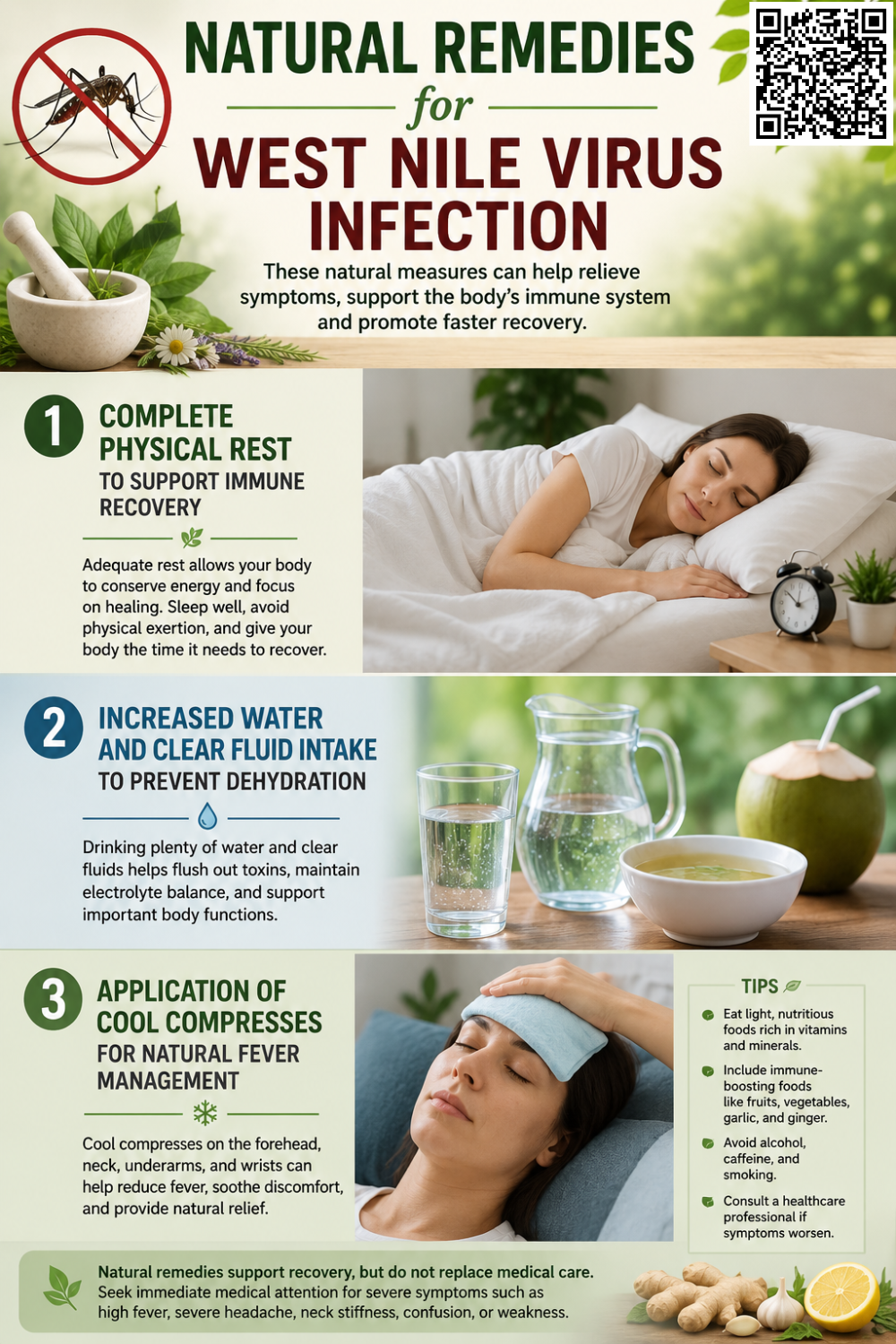
1. Complete Physical Rest to Support Immune Recovery
How it may help
Complete physical rest conserves energy, allowing the immune system to focus entirely on clearing the viral pathogen. By minimizing physical exertion, resting helps reduce the severity of fever, muscle aches, and the extreme fatigue that accompany the infection 7.
What research says
Clinical protocols confirm that because no targeted antiviral medications exist for West Nile virus, supportive care remains the standard medical approach. Health authorities conclude that routine rest is critical for uncomplicated infections, enabling the body to naturally overcome the virus.
How to use it safely
You should remain in bed or stay comfortably seated while experiencing a fever or severe weakness. Avoid heavy lifting, exercise, or stressful tasks. Slowly reintroduce light daily activities only after your fever disappears and your energy levels improve.
Potential precautions or side effects
Strict, prolonged bed rest without any light movement can increase the risk of developing blood clots or muscle stiffness, particularly in older adults with reduced mobility.
2. Increased Water and Clear Fluid Intake to Prevent Dehydration
How it may help
West Nile virus infection often causes high fever, vomiting, and diarrhea, which rapidly deplete the body’s water levels. Drinking water and clear fluids replaces lost liquids, helps lower body temperature naturally, and maintains essential blood flow to organs, preventing the serious complication of dehydration.
What research says
Medical authorities confirm that because no specific antiviral drug exists to cure West Nile virus, supportive care is the standard medical treatment. Official health guidelines strongly advise adequate fluid replacement for infected individuals to manage symptoms and prevent the need for hospitalization due to severe dehydration.
How to use it safely
You should drink plenty of water, clear broths, or oral rehydration solutions consistently throughout the day. If you feel nauseated or have an upset stomach, take small, frequent sips rather than gulping large amounts at once to maintain steady hydration.
Potential precautions or side effects
If you have severe kidney disease or heart failure, consult your doctor before significantly increasing fluids. Avoid alcohol and highly caffeinated drinks, as these can worsen dehydration.
3. Application of Cool Compresses for Natural Fever Management
How it may help
Applying a cool compress helps safely draw heat away from the body, lowering a high fever associated with West Nile virus infection. It provides immediate physical comfort, reduces intense headaches, and helps prevent the core body temperature from reaching dangerous levels during the acute phase of the illness.
What research says
Since there are no specific antiviral medications for West Nile virus, health authorities emphasize supportive care to manage symptoms. Clinical guidelines state that non-medication cooling techniques, such as applying external cool compresses, are effective complementary methods to help reduce viral fevers and improve patient comfort.
How to use it safely
You should soak a clean cloth in cool, but not freezing cold, water. Wring out the excess liquid and place the damp cloth flat across your forehead, back of the neck, or wrists. Re-soak the cloth whenever it becomes warm to maintain the steady cooling effect.
Potential precautions or side effects
Do not use ice or ice water, as extreme cold can cause shivering, which actually raises your internal body temperature. Stop immediately if you experience severe chills.
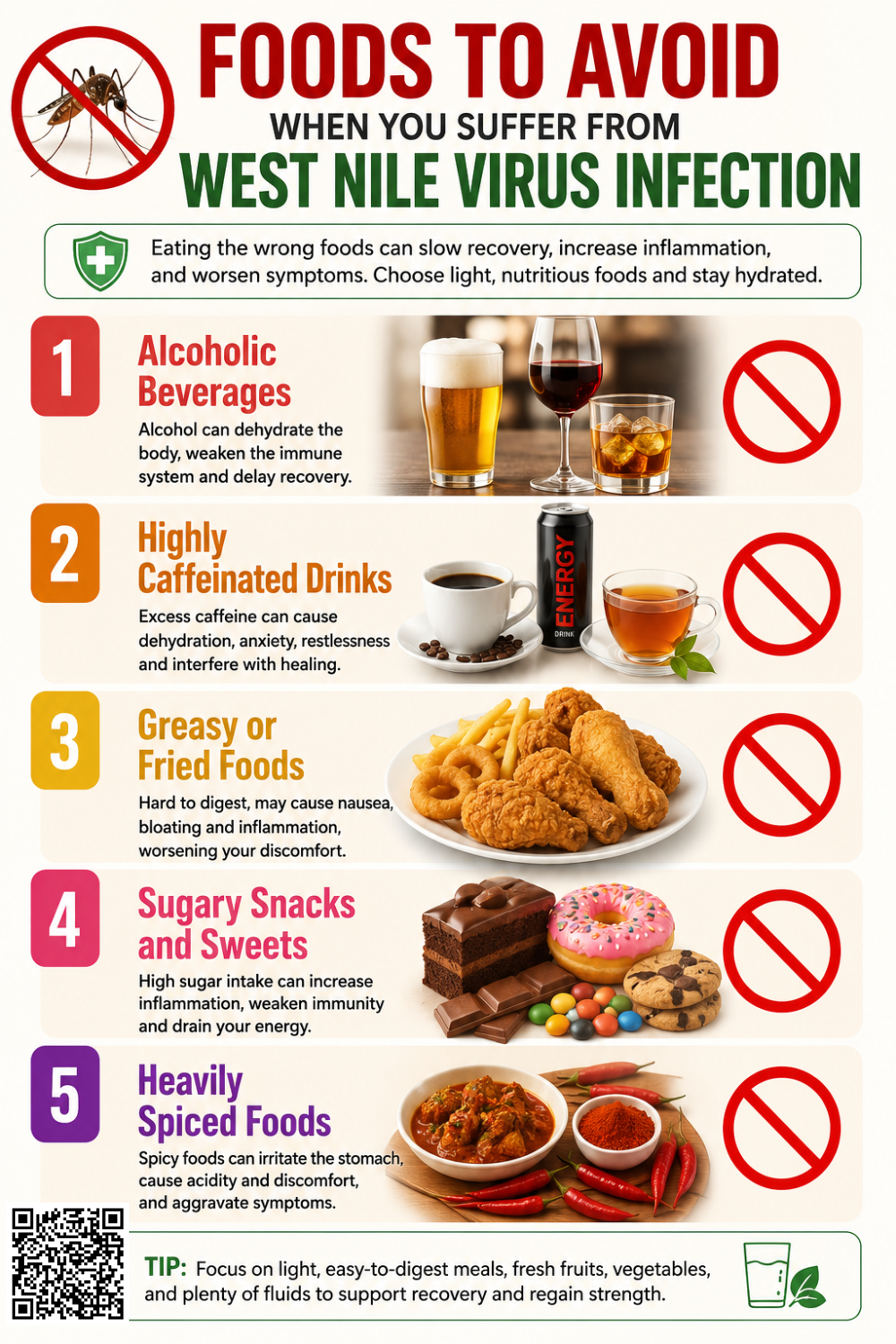
1. Alcoholic Beverages
Alcohol promotes severe fluid loss, counteracting the rehydration necessary to treat viral fevers. It also suppresses the immune system, making it harder to clear the infection 8.
2. Highly Caffeinated Drinks
High-caffeine drinks act as diuretics, increasing urine output and worsening dehydration caused by fever. You should choose clear fluids like water or oral rehydration solutions instead 9.
3. Greasy or Fried Foods
Because the virus frequently causes nausea and stomach pain, eating heavy, high-fat meals can further irritate the digestive tract, delay stomach emptying, and trigger severe vomiting or diarrhea 10.
4. Sugary Snacks and Sweets
Consuming large amounts of sugar draws excess water into the intestines, worsening diarrhea. Sugary snacks also lack the essential nutrients required to support your immune system during recovery.
5. Heavily Spiced Foods
Intense spices can irritate an already sensitive stomach lining. This irritation can easily exacerbate the nausea and digestive discomfort commonly experienced during the acute phase of this viral illness.
When To See a Doctor When You Suffer from West Nile Virus Infection
1. Unusually High Fever
A persistent or extremely high fever requires immediate medical evaluation, as it often signals a progression from mild illness to a severe neurological infection.
2. Severe Neck Stiffness
If you cannot bend your neck forward without severe pain, seek emergency care. This is a primary clinical sign of meningitis, indicating dangerous swelling around the spinal cord.
3. Sudden Confusion or Disorientation
Severe viral swelling in the brain rapidly alters mental states. Immediate medical attention is necessary if a patient becomes suddenly confused, highly disoriented, unresponsive, or slips into a stupor.
4. Muscle Weakness or Paralysis
The virus can attack the nervous system, disrupting brain signals. You must visit an emergency room immediately if you experience sudden limb weakness, uncontrollable tremors, or any partial paralysis.
5. Intense, Unrelenting Headaches
While mild headaches are common, an excruciating headache that does not improve with standard rest indicates dangerous pressure within the skull and requires an urgent professional medical assessment.
Comments
comments