

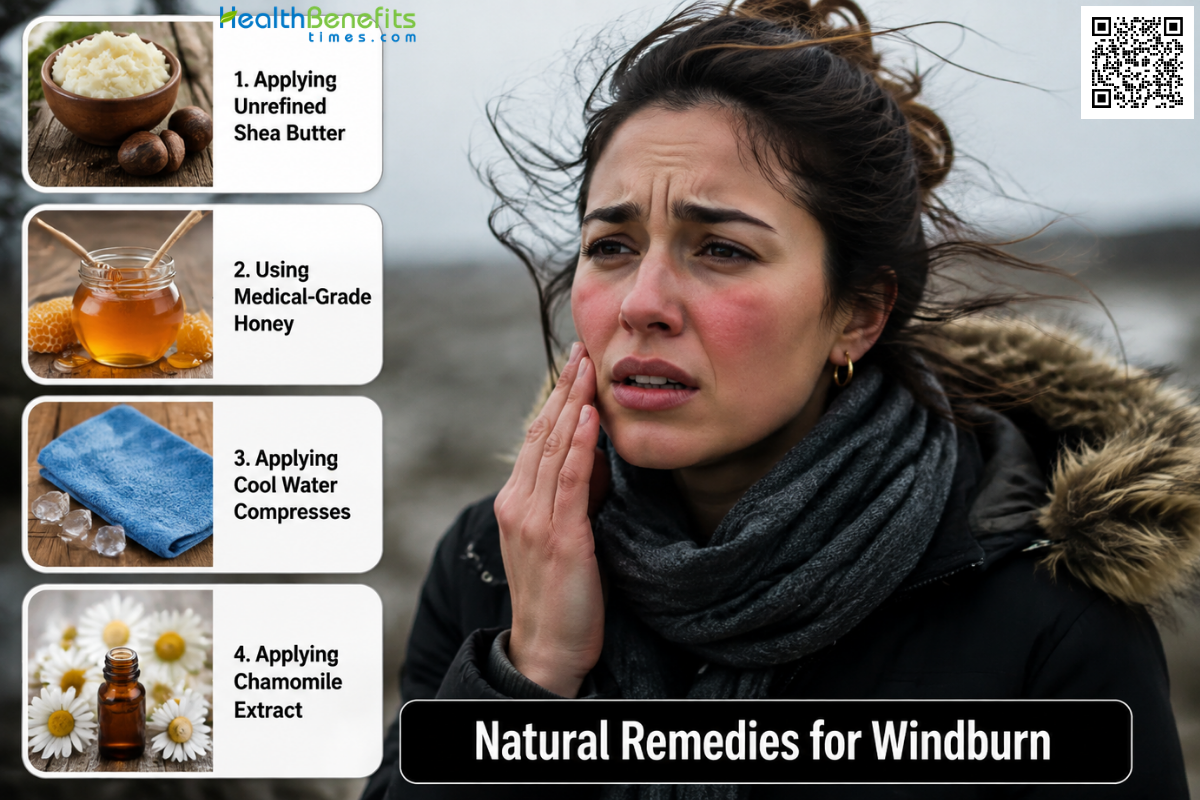
Causes of Windburn
- Damage to the Skin’s Outer Layer: Direct contact with freezing, high-speed winds physically strips away the skin’s top layer of natural protective oils, leaving the sensitive tissue underneath completely exposed to harsh weather conditions 3.
- Rapid Loss of Skin Moisture: Cold air and strong wind currents force the skin to lose its internal water content at a highly accelerated rate, causing the skin cells to quickly dry out, shrink, and become severely inflamed 3.
- Extremely Dry Winter Air: Cold weather naturally contains very low ambient humidity, meaning there is almost no moisture present in the air. This extremely dry environment constantly pulls existing water out of the skin, worsening the wind’s damaging and irritating effects 3.
- Hidden Sun Damage: Winter winds actively wear off applied sunscreen, while bright snow reflects a massive amount of ultraviolet rays back onto the body. This combination allows deep sunburns to occur simultaneously, multiplying the pain and redness initially caused by the cold wind 4.
- Lack of Physical Barriers: Spending time in harsh winter environments without wearing protective scarves or applying thick, medical-grade skin ointments allows the freezing air direct access to the skin, which significantly increases friction and rapid surface breakdown 5.
Symptoms of Windburn
- Skin Redness: The most obvious sign of windburn is a distinct, sunburn-like redness on the areas of the face or body that were directly exposed to cold, fast-moving air 6.
- Burning and Stinging: The affected skin often feels painfully warm to the touch and produces a sharp burning or stinging sensation, which typically worsens when the individual enters a heated room or washes the area with warm water 6.
- Severe Dryness and Roughness: Because high winds strip away the skin’s protective oil layer, the surface rapidly loses its natural water content, causing the skin to feel extremely dry, tight, and rough 7.
- Flaking and Peeling: As the damaged outermost layer of the skin attempts to heal and shed dead cells, it frequently starts to flake off or peel in small, dry patches 7.
- Persistent Itching: The significant loss of cellular moisture triggers nerve endings within the skin, resulting in an uncomfortable and continuous urge to scratch the irritated areas 7.
- Cracking and Bleeding: In more severe cases of wind exposure, the extreme dehydration causes the weakened skin barrier to split and form deep cracks. These cracks can occasionally bleed and may leave the skin vulnerable to secondary bacterial infections 7.
Natural Remedies for Windburn
1. Applying Pure Aloe Vera Gel
How it may help
Pure aloe vera gel provides an immediate cooling effect that relieves the painful burning sensation of windburn. It rapidly hydrates severely dry skin and forms a protective layer over the damaged surface, which helps soothe irritation and reduce visible redness caused by harsh wind exposure 8.
What research says
Clinical dermatological studies confirm that the active compounds in aloe vera possess significant anti-inflammatory and skin-healing properties. Evidence demonstrates that applying the gel effectively repairs epidermal barrier damage, accelerates tissue regeneration, and retains essential skin moisture better than many standard synthetic wound treatments 8.
How to use it safely
You should wash the affected area gently with cool water before applying a generous layer of 100% pure, fragrance-free aloe vera gel. Reapply the gel three to four times daily to keep the damaged skin consistently hydrated and protected.
Potential precautions or side effects
Avoid aloe products containing alcohol, as they worsen skin dryness. Always test a small amount on your wrist first to ensure you do not experience an allergic reaction 9.
2. Using Colloidal Oatmeal
How it may help
Colloidal oatmeal helps restore the skin’s natural protective barrier that harsh winds physically strip away. It effectively locks in moisture to treat severe dryness while providing immediate relief from the itching, burning, and painful inflammation associated with windburn 10.
What research says
Clinical dermatological studies conclude that colloidal oatmeal contains active compounds with significant anti-inflammatory and barrier-repairing properties. Evidence demonstrates that it actively reduces pro-inflammatory cytokines, decreases transepidermal water loss, and improves skin hydration, making it a highly effective treatment for soothing irritated and physically damaged skin 10.
How to use it safely
You should dissolve one cup of finely ground colloidal oatmeal into a lukewarm bath and soak for ten to fifteen minutes to soothe extensive irritation 11. Alternatively, apply a fragrance-free, over-the-counter colloidal oatmeal cream directly to your wind-damaged skin several times daily to maintain continuous moisture.
Potential precautions or side effects
Colloidal oatmeal is generally safe, but you should discontinue use immediately if you experience a new rash or increased stinging, which may indicate a rare oat allergy 12.
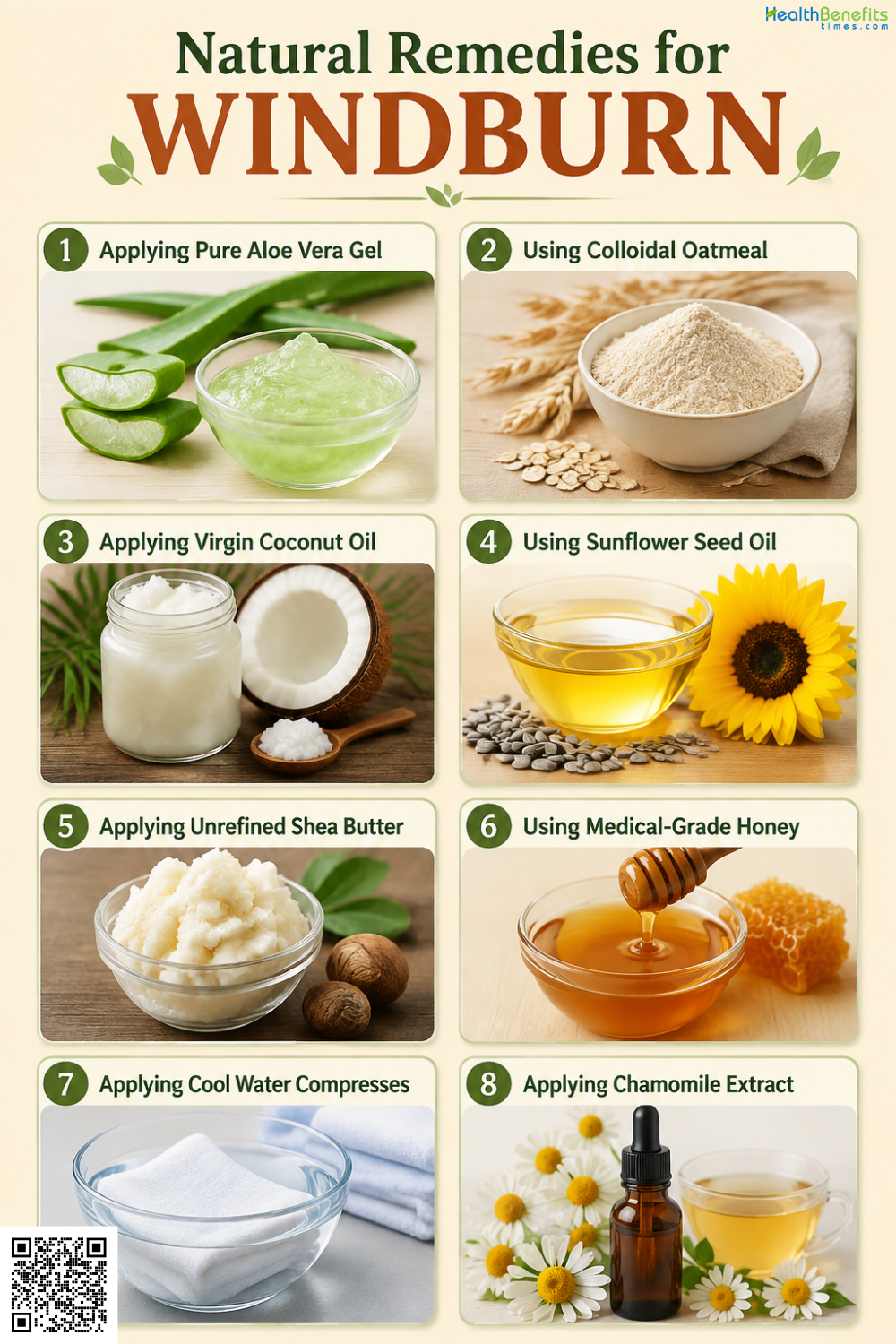
3. Applying Virgin Coconut Oil
How it may help
Virgin coconut oil acts as a powerful natural moisturizer that temporarily replaces the protective surface oils stripped away by freezing winds. By trapping water inside the skin tissues, it rapidly relieves severe dryness, prevents excessive peeling, and calms the painful burning sensation associated with environmental skin damage 13.
What research says
Clinical dermatological studies demonstrate that the topical application of virgin coconut oil significantly improves skin barrier function and increases surface moisture. Evidence concludes that its high concentration of beneficial fatty acids actively reduces tissue inflammation and accelerates the natural repair process of severely dehydrated and damaged skin 13.
How to use it safely
You should apply a thin layer of organic, cold-pressed virgin coconut oil directly to your windburned skin immediately after washing with lukewarm water. Gently massage the oil into the affected areas twice daily to lock in moisture and protect the skin from further environmental irritation.
Potential precautions or side effects
You must avoid applying coconut oil heavily if you have acne-prone skin, as it can severely clog pores and trigger painful breakouts during the healing process 14.
4. Using Sunflower Seed Oil
How it may help
Sunflower seed oil is rich in essential fatty acids that actively repair the damaged outer layer of the skin. By deeply hydrating the affected tissue, it rapidly relieves the severe dryness, flaking, and uncomfortable redness caused by freezing winds while preventing further moisture loss 14.
What research says
Clinical dermatological studies conclude that the topical application of sunflower seed oil significantly preserves the integrity of the skin’s natural barrier. Evidence demonstrates that it effectively increases cellular hydration and reduces inflammation without causing further surface irritation, making it a highly reliable treatment for severely compromised skin 15.
How to use it safely
You should gently massage a few drops of cold-pressed, organic sunflower seed oil directly onto your windburned skin. Apply the oil immediately after washing your face with lukewarm water to effectively trap the existing moisture, repeating this process twice daily until the irritation completely heals.
Potential precautions or side effects
You must avoid this treatment if you have a known allergy to sunflower seeds or plants in the ragweed family, as it may trigger severe allergic contact dermatitis 16.
5. Applying Unrefined Shea Butter
How it may help
Unrefined shea butter acts as a powerful, heavy emollient that seals in essential moisture. By forming a thick physical barrier over damaged skin, it rapidly soothes dry, cracked surfaces and calms the painful inflammation caused by severe wind exposure 14.
What research says
Clinical dermatological studies conclude that shea butter is rich in specialized fatty acids and triterpenes that provide significant anti-inflammatory effects. Evidence demonstrates that applying it topically actively accelerates tissue repair and strengthens the skin’s natural protective barrier against harsh environmental conditions 14.
How to use it safely
You should warm a small amount of raw, unrefined shea butter between your clean palms until it melts. Gently massage the melted butter directly onto the windburned skin twice a day to create a continuous, protective moisture barrier.
Potential precautions or side effects
Because shea butter is exceptionally heavy, you should avoid applying it to acne-prone areas, as it can heavily clog pores and trigger painful breakouts during healing 14.
6. Using Medical-Grade Honey
How it may help
Medical-grade honey acts as a natural humectant that pulls moisture into severely dehydrated tissue. It forms a protective barrier over cracked, windburned skin, which immediately soothes painful burning and actively prevents secondary bacterial infections from entering the damaged surface 17.
What research says
Clinical studies confirm that medical-grade honey possesses strong antibacterial and anti-inflammatory properties. Evidence demonstrates that its topical application significantly accelerates tissue regeneration, reduces visible redness, and maintains a moist environment that is critical for repairing severe skin damage 17.
How to use it safely
You should apply a thin layer of sterile, medical-grade honey directly to your windburned face or body. Leave it on for twenty minutes before gently rinsing it off with cool water. Repeat this once daily until healing occurs.
Potential precautions or side effects
You must avoid this treatment if you have a bee or pollen allergy. Never apply raw grocery store honey to cracked skin, as it carries severe bacterial contamination risks 17.
7. Applying Cool Water Compresses
How it may help
Applying a cool water compress provides immediate pain relief by lowering the surface temperature of inflamed skin. This simple method constricts widened blood vessels, which quickly reduces severe redness, swelling, and the sharp burning sensation caused by harsh wind exposure 18.
What research says
Clinical dermatology guidelines recommend cool water therapy as a primary first-aid treatment for surface-level skin burns and environmental damage. Evidence confirms that applying cold temperatures decreases local tissue inflammation and temporarily numbs nerve endings, effectively reducing pain without using medications 19.
How to use it safely
You should soak a clean, soft cloth in cool water and gently wring out the excess liquid. Apply the damp cloth directly to your windburned skin for ten to fifteen minutes. You can repeat this process several times throughout the day to relieve pain.
Potential precautions or side effects
You must strictly avoid using ice or freezing water directly on your face, as extreme cold can severely damage the already weakened skin tissue and cause frostbite 18.
8. Applying Chamomile Extract
How it may help
Chamomile extract contains powerful anti-inflammatory compounds that directly soothe irritated tissue. When applied to windburned skin, it rapidly reduces visible redness, calms severe itching, and helps restore the skin’s physical barrier, providing immediate relief from the harsh effects of freezing winds 20.
What research says
Clinical studies demonstrate that chamomile extract contains active flavonoids, specifically apigenin, which actively block inflammatory signals in the body. Research concludes that its topical application effectively promotes tissue repair, reduces swelling, and heals damaged skin barriers as effectively as mild, over-the-counter hydrocortisone creams 20.
How to use it safely
You should steep pure chamomile tea, let it cool completely, and soak a clean cloth in the liquid to create a cold compress. Gently press this cloth against your windburned skin for ten minutes, twice daily, to safely relieve the burning sensation.
Potential precautions or side effects
You must avoid using chamomile if you have known allergies to ragweed, daisies, or chrysanthemums, as it can trigger a severe allergic skin rash 21.
Foods to Avoid When You Suffer from Windburn
1. Alcoholic Beverages
Avoid alcohol, as it acts as a strong diuretic. It forces your body to lose water rapidly, worsening the severe skin dehydration caused by harsh wind exposure 22.
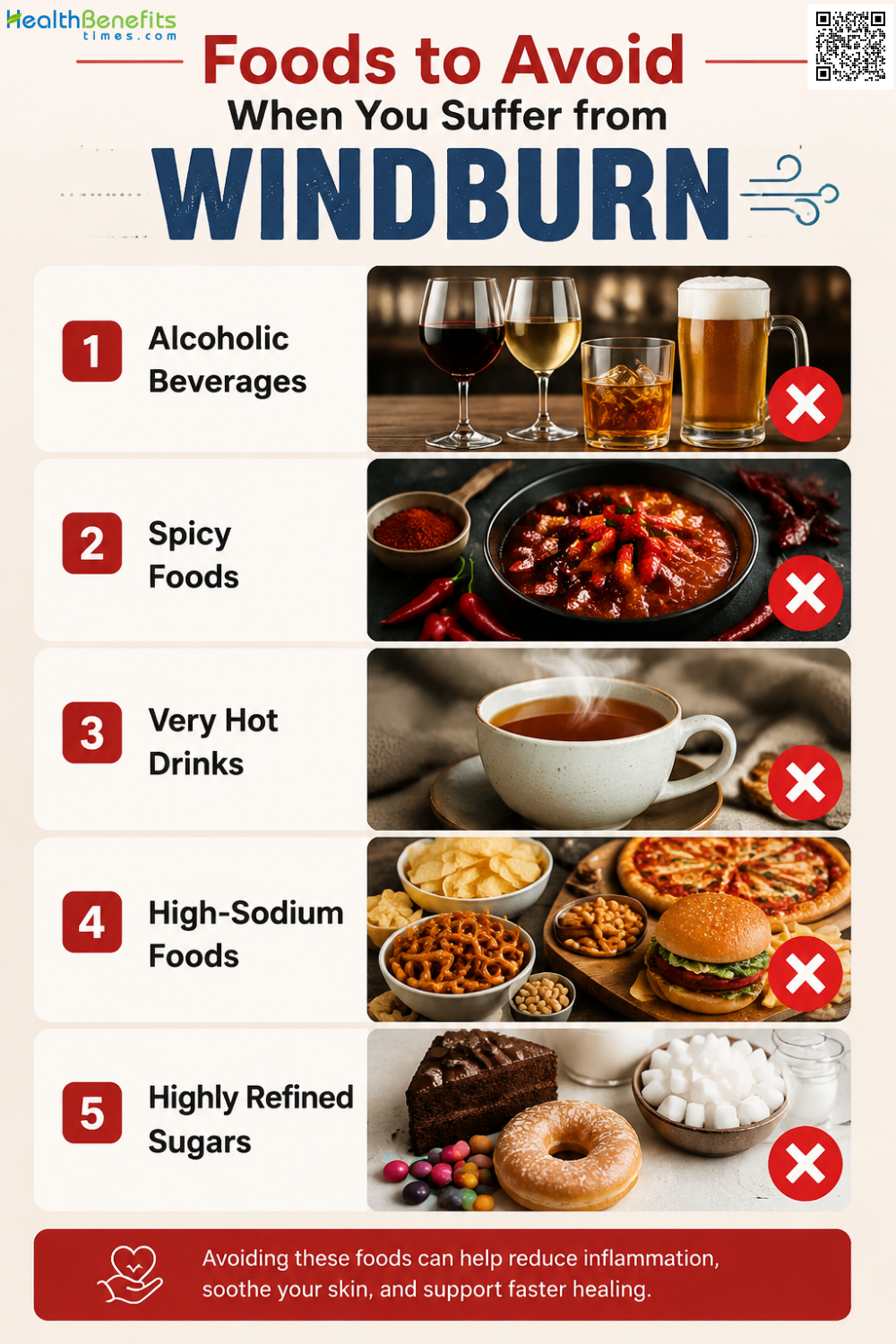
2. Spicy Foods
Limit hot spices. Ingredients like capsaicin trigger blood vessel dilation, which significantly increases facial flushing, heat, and the stinging sensation of already irritated skin 23.
3. Very Hot Drinks
Steer clear of extremely hot liquids. High-temperature beverages cause sudden facial flushing and increased blood flow, intensifying the burning pain and visible redness of damaged skin 23.
4. High-Sodium Foods
Reduce your intake of heavily salted snacks. Excess dietary sodium promotes systemic dehydration, which prevents your skin from properly restoring its damaged and depleted moisture barrier 24.
5. Highly Refined Sugars
Avoid heavily sugared foods. High sugar consumption triggers a systemic inflammatory response in the body, which can actively delay the cellular repair and healing of wind-damaged skin 25.\
When to See a Doctor When You Struggle from Windburn
- Signs of Infection: Seek immediate medical care if the affected skin develops yellow pus, red streaks, or if you experience a fever, as these indicate a secondary bacterial infection 18.
- Severe Blistering: Consult a doctor if large, fluid-filled blisters form on the skin. Leaving these blisters untreated can permanently damage the tissue and heavily increase the risk of infection 26.
- Numbness or Color Changes: Get emergency medical help if the skin becomes completely numb, hard, or turns pale white. These are clinical signs of deep tissue freezing, known as frostbite 27.
- Extreme or Worsening Pain: Contact a healthcare provider if the burning pain becomes extreme, rapidly worsens, or fails to improve after using standard over-the-counter pain relievers and protective skin ointments 18.
- No Improvement Over Time: Schedule a medical evaluation if the redness, severe dryness, and irritation do not begin to heal after several days of consistent, proper home care and moisturizing treatments 18.
Comments
comments