


Causes of Yellow Fever
- Viral Infection: Yellow fever is caused by a virus belonging to the Flavivirus family, which enters the human body and spreads through the bloodstream to affect organs like the liver and kidneys 1.
- Mosquito Transmission: The primary cause of infection is the bite of a female mosquito that has previously picked up the virus from an infected human or primate. In urban environments, the Aedes aegypti mosquito is the main spreader, while in forested areas, different species of Aedes and Haemagogus mosquitoes transmit the virus to humans 2.
- Lifecycle Cycles: The virus persists through three distinct transmission cycles: the jungle (sylvatic) cycle between primates and forest mosquitoes, the intermediate cycle in savanna regions, and the urban cycle where mosquitoes transmit the virus between humans in densely populated areas 3.
Symptoms of Yellow Fever
- Initial Phase: Most patients experience a sudden onset of symptoms including high fever, severe headache, intense muscle and back pain, chills, fatigue, and nausea or vomiting. These symptoms generally appear three to six days after the initial mosquito bite 1.
- Improvement Period: A significant portion of infected individuals experience a brief period of remission where symptoms improve and the fever subsides. Some people recover completely during this stage without progressing further 2.
- Toxic Phase: A small percentage of patients enter a more severe, dangerous stage within 24 hours of the initial improvement. This phase is characterized by a return of high fever, jaundice (yellowing of the skin and eyes), and dark urine caused by liver damage 3.
- Advanced Complications: In severe cases, the disease progresses to internal bleeding, often manifesting as vomiting blood, and multi-organ failure, particularly affecting the kidneys and heart. Delirium and seizures may also occur as the infection impacts the body’s essential systems 2.
Natural Remedies for Yellow Fever
1. Complete Bed Rest
How it may help
Complete bed rest allows the body to save vital energy and redirect its resources toward fighting the viral infection. By minimizing physical movement, rest reduces the strain on the heart and other vital organs, giving the immune system the best chance to recover from the illness efficiently.
What research says
Major health authorities confirm there is no specific medication to cure yellow fever. Consequently, established clinical guidelines conclude that supportive care, which heavily relies on complete rest and proper fluid replacement, is the essential treatment protocol to manage symptoms and improve survival rates 4 1.
How to use it safely
You should remain in bed in a quiet, comfortable room as soon as symptoms appear. Avoid any strenuous physical activity. Slowly return to your normal daily routine only after your fever is gone and your healthcare provider confirms you are healthy enough to move around.
Potential precautions or side effects
Extended periods in bed can sometimes lead to muscle stiffness or blood clots. To prevent this, gently move and stretch your legs while resting to maintain healthy blood circulation.
2. Frequent Intake of Water and Clear Fluids
How it may help
Yellow fever frequently causes severe symptoms like high fever, sweating, and vomiting, which quickly drain the body of essential moisture. Consuming water and clear fluids helps replace these lost fluids, maintains proper blood volume, and protects vital organs like the kidneys from failing due to severe dehydration.
What research says
Because there is no specific antiviral medicine to cure yellow fever, clinical research confirms that management must rely entirely on supportive care. Leading health institutions report that aggressive fluid replacement is the primary treatment to successfully counter dehydration, drastically lowering the risk of life-threatening complications and improving patient survival rates 5 6.
How to use it safely
You should drink small, frequent sips of water, clear broths, or diluted juices throughout the day rather than large amounts at once, which can trigger nausea. Ensure you monitor your urine color; it should remain pale yellow, signaling that your body is staying properly hydrated.
Potential precautions or side effects
Drinking only plain water in extreme amounts can dangerously dilute your body’s salt levels. If you have severe vomiting, alternate water with oral rehydration salts to maintain proper balance 6.
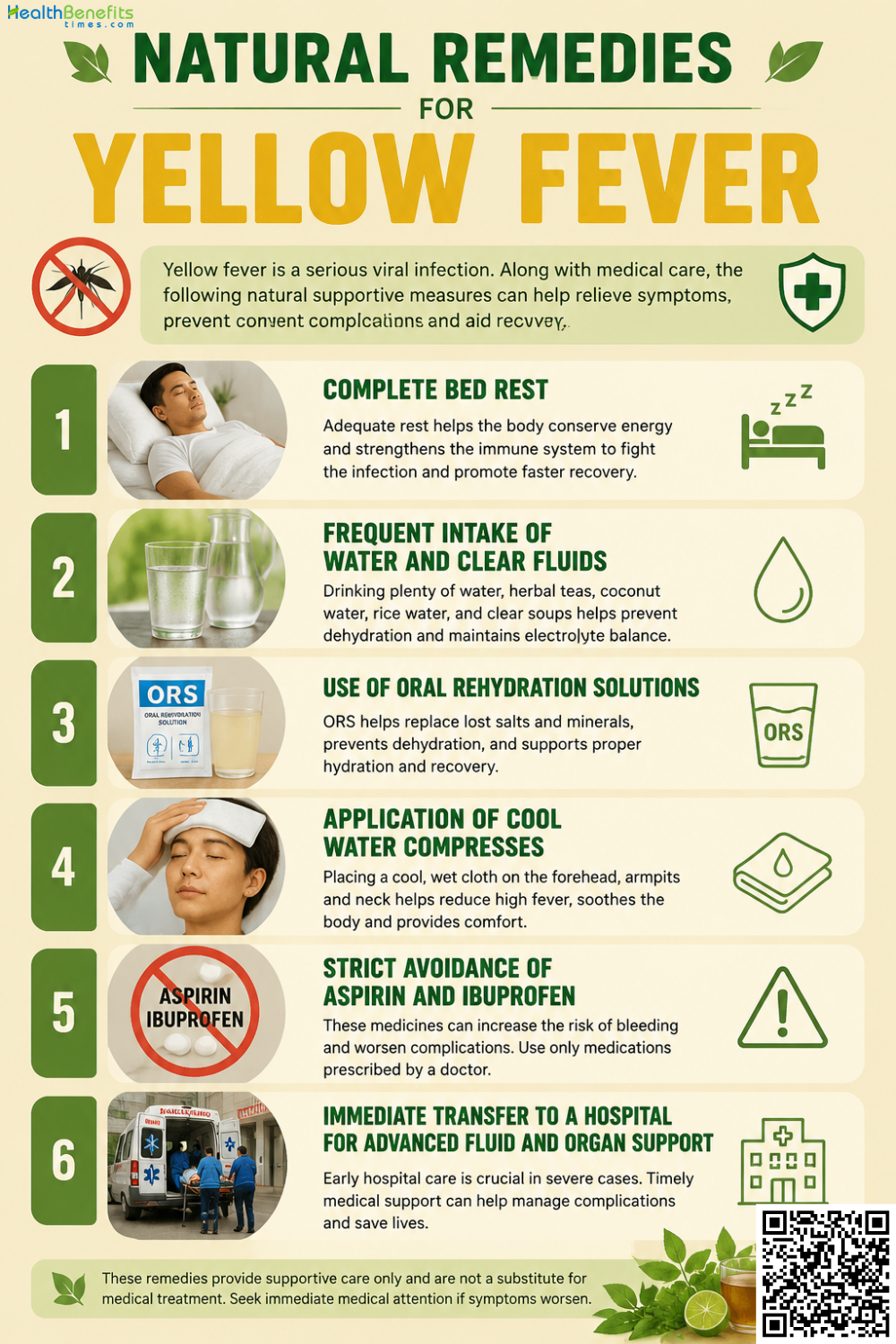
3. Use of Oral Rehydration Solutions
How it may help
Yellow fever often causes excessive sweating, high fever, and vomiting, stripping the body of vital minerals and water. Oral rehydration solutions contain a precise mix of water, salts, and sugars. This specific combination helps the intestines absorb fluids quickly, effectively replacing lost minerals and preventing severe dehydration.
What research says
Major medical institutions state there is no specific cure for yellow fever, making supportive therapy critical. Clinical guidelines conclude that providing oral rehydration solutions is a primary, effective method to correct mineral imbalances and manage severe dehydration, which significantly reduces the risk of serious complications 1 5.
How to use it safely
You should mix the oral rehydration powder with clean, boiled, or safely bottled water exactly as the package directs. Drink the solution slowly in small sips throughout the day. Do not mix the powder with milk or juice, as this ruins the precise mineral balance.
Potential precautions or side effects
If you experience severe, continuous vomiting and cannot keep the solution down, you must seek immediate hospital care for intravenous fluids to prevent dangerous dehydration and organ damage.
4. Application of Cool Water Compresses
How it may help
Yellow fever typically causes sudden, high body temperatures. Applying cool water compresses directly to the skin helps absorb excess heat and safely lower the fever. This simple physical cooling method provides immediate comfort without relying on certain medications that could increase the risk of dangerous bleeding.
What research says
Because there are no specific antiviral medications for yellow fever, clinical guidelines emphasize symptom management. Health authorities advise that physical cooling techniques, such as applying cool compresses, are safe and effective for fever reduction. This is especially crucial since common fever-reducing drugs like aspirin must be strictly avoided to prevent severe internal bleeding 5.
How to use it safely
You should soak a clean cloth in lukewarm or slightly cool water, rather than ice water. Wring out the excess liquid and place the damp cloth on your forehead, neck, or under your arms. Re-soak the cloth whenever it becomes warm to maintain the cooling effect.
Potential precautions or side effects
Never use ice or extremely cold water, as this can cause shivering. Shivering actually raises your internal body temperature, making the fever worse instead of better.
5. Strict Avoidance of Aspirin and Ibuprofen
How it may help
Yellow fever can severely damage the liver and disrupt the body’s ability to clot blood naturally. Avoiding certain common pain relievers, specifically aspirin and ibuprofen, is crucial because these drugs thin the blood. Strict avoidance directly prevents an increased risk of severe, life-threatening internal bleeding during the infection.
What research says
Clinical protocols established by major health authorities strongly warn against using aspirin, ibuprofen, naproxen, or other nonsteroidal anti-inflammatory drugs for yellow fever patients. Medical research concludes that these medications interfere with blood clotting and significantly increase the risk of dangerous hemorrhagic complications 5.
How to use it safely
You must carefully read the labels of all over-the-counter cold and flu medications to ensure they do not contain aspirin or ibuprofen. If you need medicine to reduce fever or relieve muscle aches, you should strictly use acetaminophen instead, as directed by a medical professional.
Potential precautions or side effects
While acetaminophen is a safer alternative, you must use it cautiously. Yellow fever can severely damage the liver, and excessive acetaminophen can cause further life-threatening liver toxicity.
6. Immediate Transfer to a Hospital for Advanced Fluid and Organ Support
How it may help
Severe yellow fever causes liver failure, kidney damage, and severe bleeding. Immediate hospital transfer allows medical professionals to provide advanced care, such as intravenous fluids and blood transfusions. This direct organ support prevents fatal complications and drastically improves the chances of survival during the toxic phase of the disease.
What research says
Health authorities emphasize that about 15% of patients enter a toxic, life-threatening phase of yellow fever. Clinical data confirms that treating these severe cases requires immediate hospitalization for aggressive intensive care, including kidney dialysis and blood pressure management, which are essential to prevent death 1 5.
How to use it safely
You must seek emergency medical help immediately if you develop dark urine, severe stomach pain, bleeding from your nose or gums, or yellowing of your skin and eyes. Do not attempt to treat these severe symptoms at home.
Potential precautions or side effects
Delaying hospital care is extremely dangerous. Severe yellow fever can progress rapidly, and failing to receive professional intensive care quickly often results in fatal organ failure.
Foods to Avoid When You Suffer from Yellow Fever
1. Alcoholic Beverages
Alcohol severely stresses the liver. Since yellow fever actively causes dangerous liver damage, consuming alcohol can accelerate toxic liver failure and worsen severe dehydration 5.
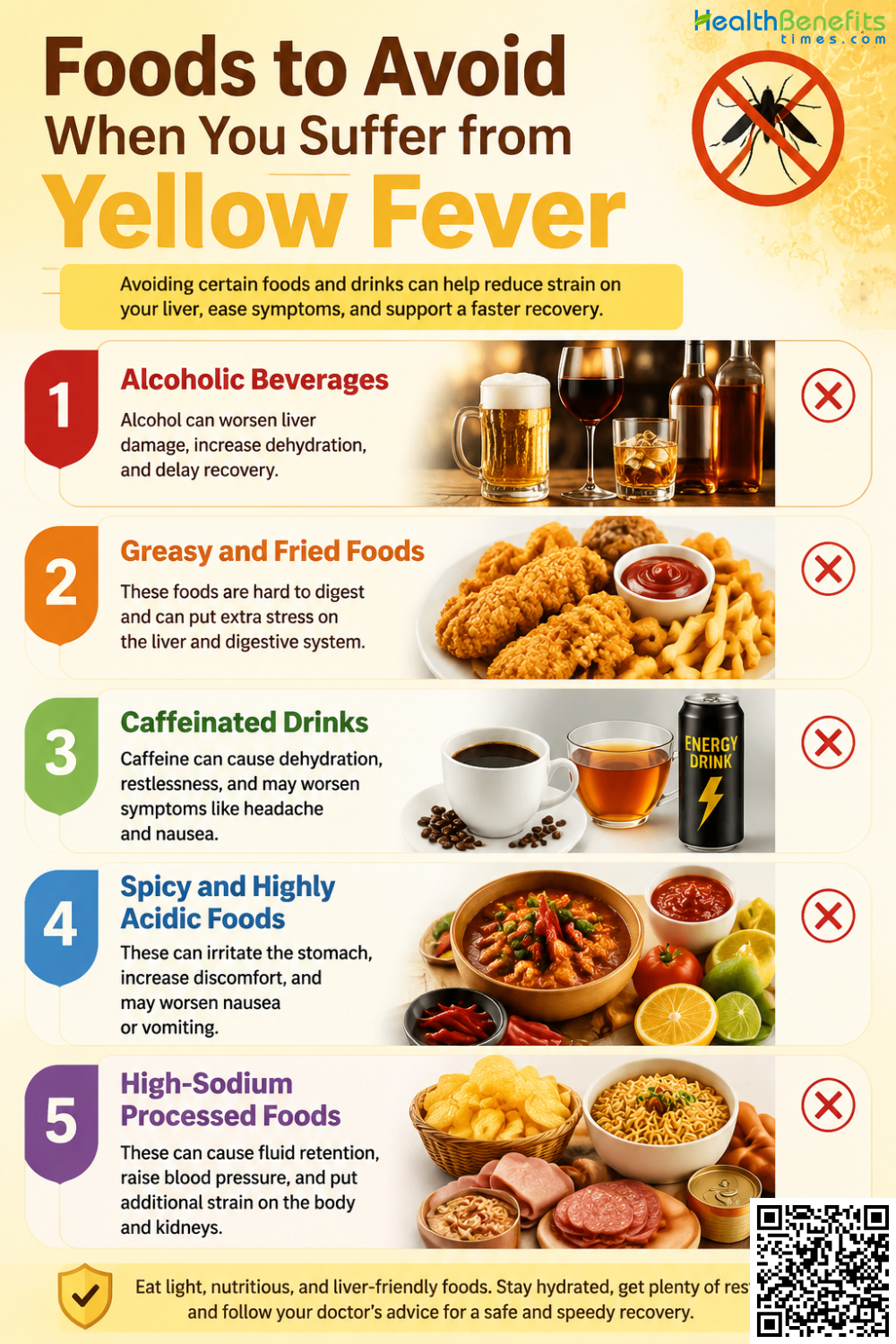
2. Greasy and Fried Foods
High-fat meals require significant effort from the liver to digest. Eating greasy foods overworks the compromised organ, worsening nausea, vomiting, and abdominal pain associated with the viral infection 7.
3. Caffeinated Drinks
Beverages like coffee and energy drinks increase urine production. This forces the kidneys to expel water, dangerously worsening the severe dehydration caused by high yellow fever temperatures 8.
4. Spicy and Highly Acidic Foods
Yellow fever frequently damages the stomach lining and triggers severe vomiting. Spicy or highly acidic meals directly irritate the digestive tract, increasing the risk of painful gastrointestinal bleeding 9.
5. High-Sodium Processed Foods
Salty snacks force the kidneys to work much harder to filter blood. You should avoid excess sodium to protect kidneys already weakened by the severe viral infection 10.
When to See a Doctor When You Suffer from Yellow Fever
1. Yellowing of the Skin and Eyes
Jaundice indicates severe liver damage. You must seek emergency care immediately if your skin or the whites of your eyes turn yellow 1.
2. Unusual or Severe Bleeding
Bleeding from the nose, mouth, or eyes, or vomiting blood, signals dangerous internal hemorrhage. This requires urgent hospital treatment to prevent fatal blood loss 4.
3. Intense Abdominal Pain and Vomiting
Severe stomach pain combined with uncontrollable vomiting prevents fluid absorption. This causes life-threatening dehydration and rapid organ failure if not treated with intravenous fluids 4.
4. Dark Urine or Decreased Urination
A sudden drop in urine output or extremely dark urine indicates acute kidney failure. You should go to a hospital immediately for vital organ support 1.
5. Extreme Weakness or Confusion
Profound weakness, severe dizziness, mental confusion, or seizures are signs of shock. These toxic-phase symptoms are medical emergencies requiring immediate intensive care monitoring 4.
Comments
comments