

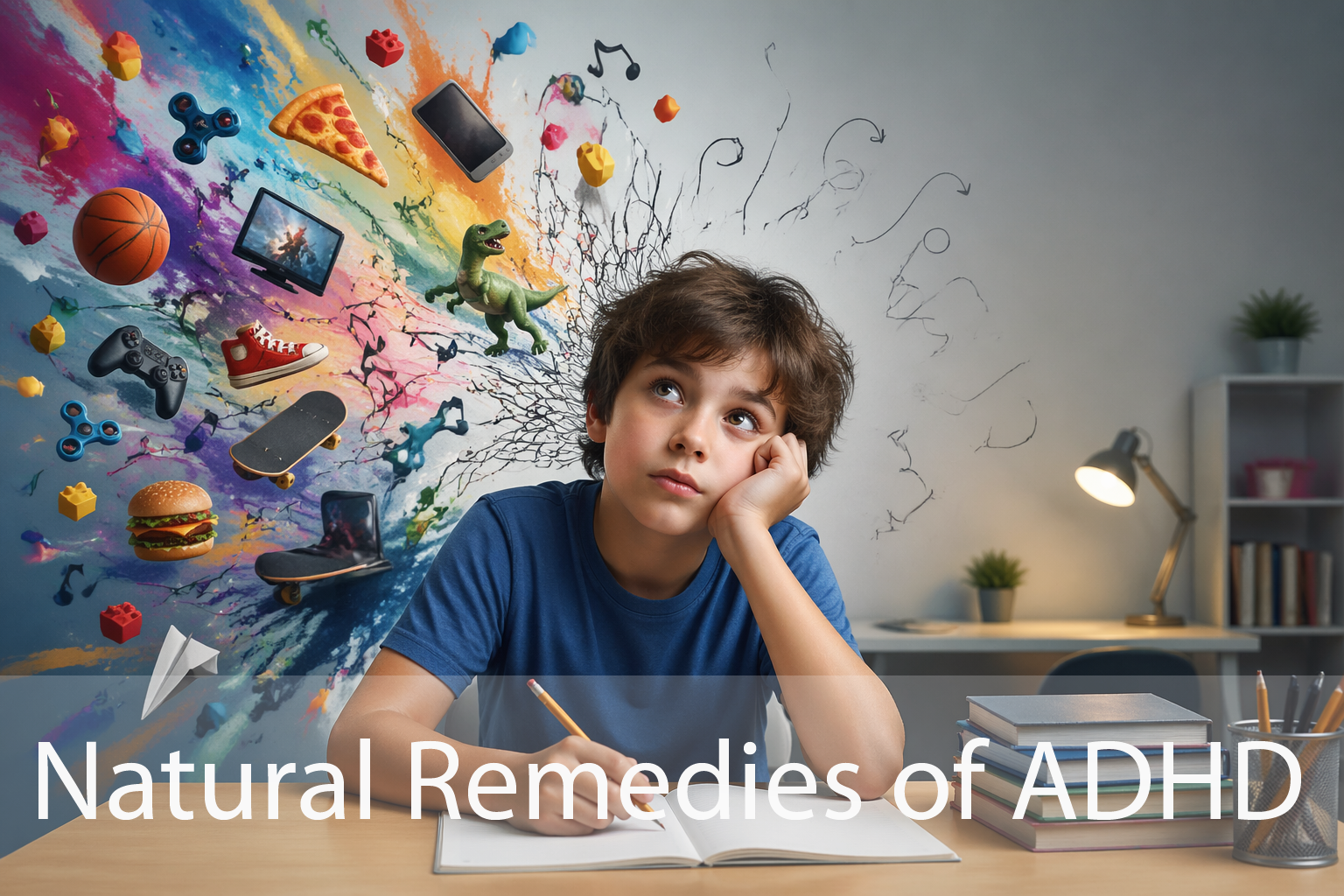
Causes of ADHD
1. Genetic Heritability and DNA Modifications
Genetics is the biggest factor in developing ADHD, with heritability estimated at 77–88%, meaning it strongly runs in families, though new genetic changes not inherited from parents can also play a role. 5, 6.
2. Prenatal Exposures and Maternal Health
The prenatal environment plays a critical role in shaping brain development, as maternal smoking, alcohol use, and severe stress during pregnancy have been linked to reduced brain size in children, especially in the cerebellum 7.
3. Environmental Toxins and Chemicals
Exposure to industrial chemicals such as lead, phthalates, and organophosphates during early childhood can disrupt brain development and significantly increase the risk of attention and cognitive problems later in life 8 9.
4. Perinatal Complications
Babies born too early or with very low birth weight are more likely to have developmental delays because these conditions can disrupt important brain development needed for focus and self-control. 10
5. Neurochemical Dysregulation
ADHD is linked to imbalances in brain chemicals like dopamine and norepinephrine, which affect communication between brain regions and make it harder to prioritize tasks and control reactions 11.
Symptoms of ADHD
1. Inattention and Focus Struggles
Difficulty sustaining focus on uninteresting tasks is a core challenge of ADHD, often leading to careless mistakes, trouble following instructions, losing important items, easy distractibility, and ongoing problems with organization and time management 12.
2. Physical and Mental Hyperactivity
In childhood, hyperactivity often shows up as constant fidgeting and an inability to stay still, but in adulthood it typically shifts inward, becoming a racing mind and a deep sense of mental restlessness that makes it hard to simply relax. 13
3. Impulsivity and Lack of Restraint
ADHD impairs executive functioning, causing people to act without thinking such as blurting out answers, interrupting others, or making risky decisions often driven by a need for immediate dopamine stimulation. 1
4. Gender-Specific Manifestations
Women with ADHD are more likely to show the inattentive type rather than hyperactivity, with symptoms like mental exhaustion and internal emotional struggles instead of outward impulsivity, which often leads to misdiagnosis or being overlooked entirely 14.
ADHD Facts
Consolidating the vast amount of clinical data surrounding this condition helps paint a clearer picture of its widespread impact on your life and society.
| Fact Category | Detailed Clinical Information |
| Symptoms |
|
| Causes |
|
| Types of ADHD |
|
| How does it spread |
|
| Caused of ADHD |
|
| Age Group Prevalence |
|
| You might be at a higher risk for exposure of this disease if you: |
|
| How doctors diagnose |
|
| Remedies for ADHD |
|
| Economic and Societal Impact |
|
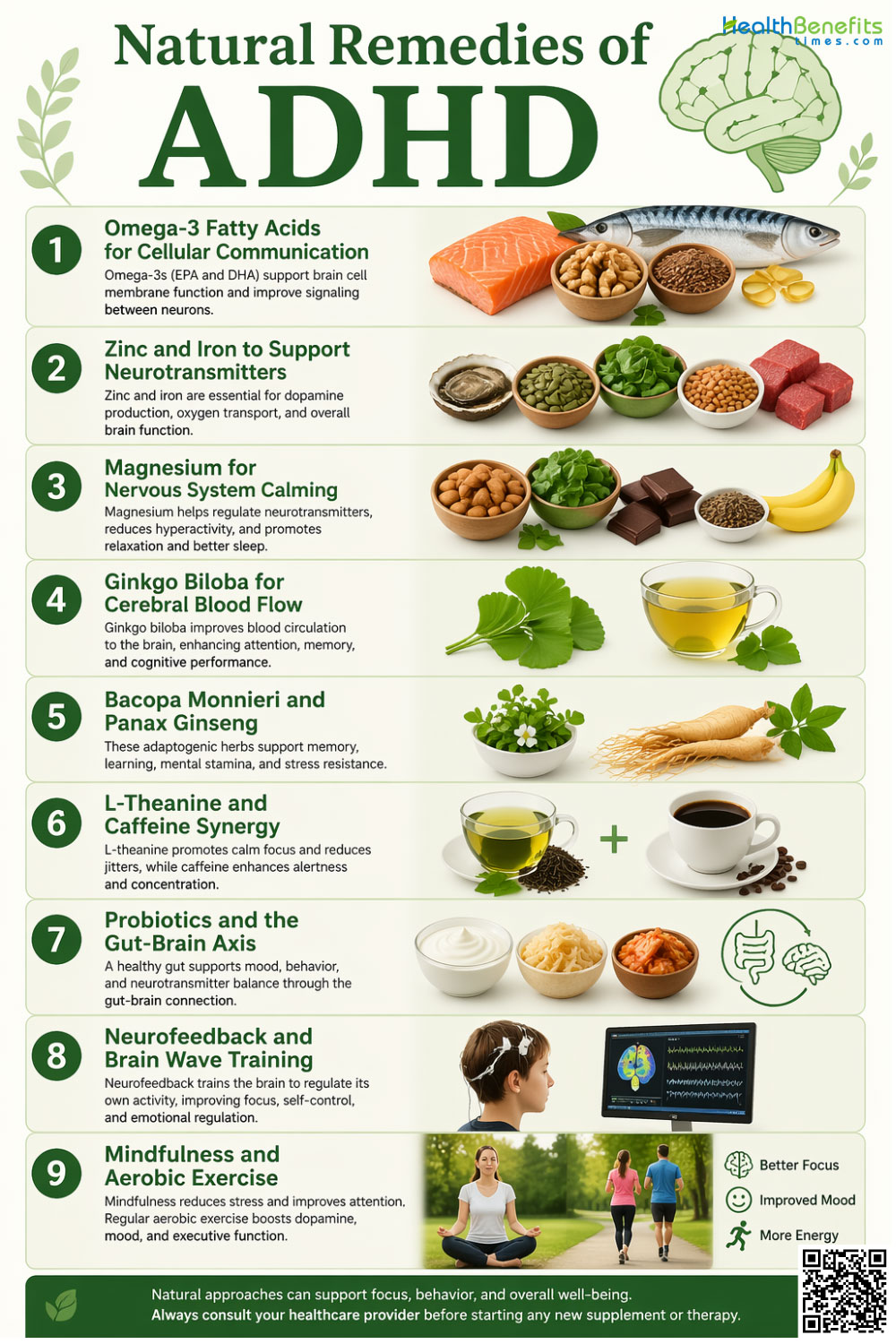
Natural Remedies of ADHD
Many people add natural supplements to their routine hoping for better focus and calmer energy. Whether that expectation is realistic depends on what you’re using and how it fits into your overall care plan. If you’ve been dealing with side effects like insomnia or appetite loss from prescription stimulants, you’re not alone in looking for other options. Just don’t swap out your current treatment without talking to your doctor first. That said, a growing body of research supports using certain natural compounds and mind-body practices alongside standard care to help with focus and emotional regulation.
1. Omega-3 Fatty Acids for Cellular Communication
The way omega-3s affect your brain comes down to a relatively simple mechanism: they help build and maintain the membranes that surround every brain cell. These fats especially EPA and DHA are key structural components of those membranes. When your brain cells have healthy, flexible membranes, signals pass between neurons more smoothly. EPA, in particular, also helps calm low-level inflammation in the brain that can interfere with focus. Research confirms that omega-3 supplementation offers modest but real improvements in impulsivity and hyperactivity 15. Formulas with a higher ratio of EPA to DHA tend to show the strongest results. In practical terms, this means your dopamine receptors can work a little more efficiently which may help ease that persistent mental fog.
2. Zinc and Iron to Support Neurotransmitters
Most people don’t think of zinc and iron as brain nutrients, but they consistently rank among the more important minerals for how your brain produces and uses dopamine. Iron helps your body make dopamine. Zinc helps control how that dopamine gets released and moves between nerve cells. When either one is low, the whole system slows down and that can show up as trouble with focus, motivation, and getting things done. Clinical trials have found that supplementing with iron and zinc can meaningfully reduce ADHD symptoms but mainly in people who were already low in these minerals to begin with 16. So fixing a deficiency isn’t just checking a box. It’s giving your brain the raw materials it needs to produce its own motivation chemicals at a steady, functional level.
3. Magnesium for Nervous System Calming
The modern diet tends to be short on magnesium and that shortfall has real consequences for brain function, sleep, and nervous system regulation. If you constantly feel like an internal motor is running in the background, this mineral might be part of the puzzle. Magnesium works as a natural relaxant for your brain. It helps regulate sleep and dial down physical hyperactivity. Research shows that when you combine magnesium with Vitamin D or Vitamin B6, it can meaningfully reduce conduct issues and problems with emotional regulation 17. Getting enough magnesium helps quiet that neurological noise the kind that keeps pulling your focus away from whatever you’re trying to do.
4. Ginkgo Biloba for Cerebral Blood Flow
In traditional medicine systems across East Asia, ginkgo biloba has been used for centuries to support brain function. Now, researchers are looking more closely at how it actually works 18. The basic idea is straightforward. Ginkgo helps increase blood flow to your brain. More blood flow means more oxygen and nutrients reaching the prefrontal cortex the part of your brain responsible for focus, planning, and impulse control. So does it help with ADHD? The research suggests it can but with a caveat. Ginkgo isn’t as strong as standard stimulant medications. It does, however, appear to improve attention symptoms while causing far fewer side effects like headaches or appetite loss 18. That trade-off matters if you’re someone who reacts poorly to conventional ADHD medications. For you, ginkgo may offer a gentler alternative worth discussing with your doctor.
5. Bacopa Monnieri and Panax Ginseng
In traditional Ayurvedic practice, Bacopa Monnieri has been used for centuries to support brain function. Now, researchers are looking more closely at how it might help with ADHD. This herb appears to protect nerve cells and play a role in how your brain handles dopamine a chemical closely tied to attention and impulse control. When taken consistently over time, it’s been linked to noticeable improvements in restlessness and self-control 18. Korean Red Ginseng shows promise too. Studies have found it can improve inattention scores in people with ADHD. It also appears to shift brainwave patterns specifically lowering the theta/beta ratio on EEG readings which is a measurable sign of better cognitive focus. Both herbs offer a plant-based approach worth discussing with your doctor.
6. L-Theanine and Caffeine Synergy
If you’ve ever wondered why green tea feels calmer than coffee despite still having caffeine, the answer often comes back to an amino acid called L-theanine. It’s found naturally in tea leaves, and it promotes a relaxed but alert mental state by influencing alpha brain waves the kind your brain produces when you’re calm yet focused. Here’s where it gets interesting for ADHD. When you combine L-theanine with caffeine on purpose, research shows the pairing quiets the brain’s default mode network during tasks. That’s the network responsible for mind-wandering something most people with ADHD know all too well 19. The result is better sustained attention and less impulsivity, without the jittery spike-and-crash that high-dose caffeine alone tends to cause. You get a smoother, more even energy curve instead.
7. Probiotics and the Gut-Brain Axis
A growing body of research links mental health to gut health and probiotics play a specific role in that connection through the gut-brain axis. When the bacteria in your gut are out of balance, it can trigger inflammation throughout your body. That inflammation doesn’t stay in your digestive system. It can affect how your brain develops and how it regulates mood and attention. Recent clinical studies show that taking specific multi-strain probiotics can significantly lower hyperactivity scores over a three-month period 20. In other words, improving your gut health may help create the right conditions for steadier focus and more consistent cognitive function.
8. Neurofeedback and Brain Wave Training
The idea that you can train your own brain waves sounds futuristic but it’s already being used as a real, drug-free approach to managing ADHD. Neurofeedback works through a brain-computer interface that monitors your brain activity in real time. When your mind shifts from a distracted state into a focused one, the system gives you immediate feedback essentially rewarding your brain for paying attention. Over time, your brain learns to make that shift more easily on its own. And the results appear to stick. A large review of multiple studies found that standard neurofeedback protocols lead to lasting improvements in both impulsivity and inattention benefits that continue even after the training sessions are over 21.
9. Mindfulness and Aerobic Exercise
If you’ve ever wondered why you feel calmer and more focused after a good workout, the answer often comes back to brain chemistry. When you exercise at a moderate-to-high intensity, your brain releases BDNF (brain-derived neurotrophic factor), serotonin, and dopamine almost right away. These are the same chemicals that ADHD medications target meaning a solid aerobic session can produce a similar effect to prescription stimulants 22. Adding mindfulness meditation or yoga takes things a step further. These practices train you to notice intrusive thoughts without getting pulled into them. Research shows this leads to meaningful reductions in hyperactivity and real improvements in emotional self-regulation 23.
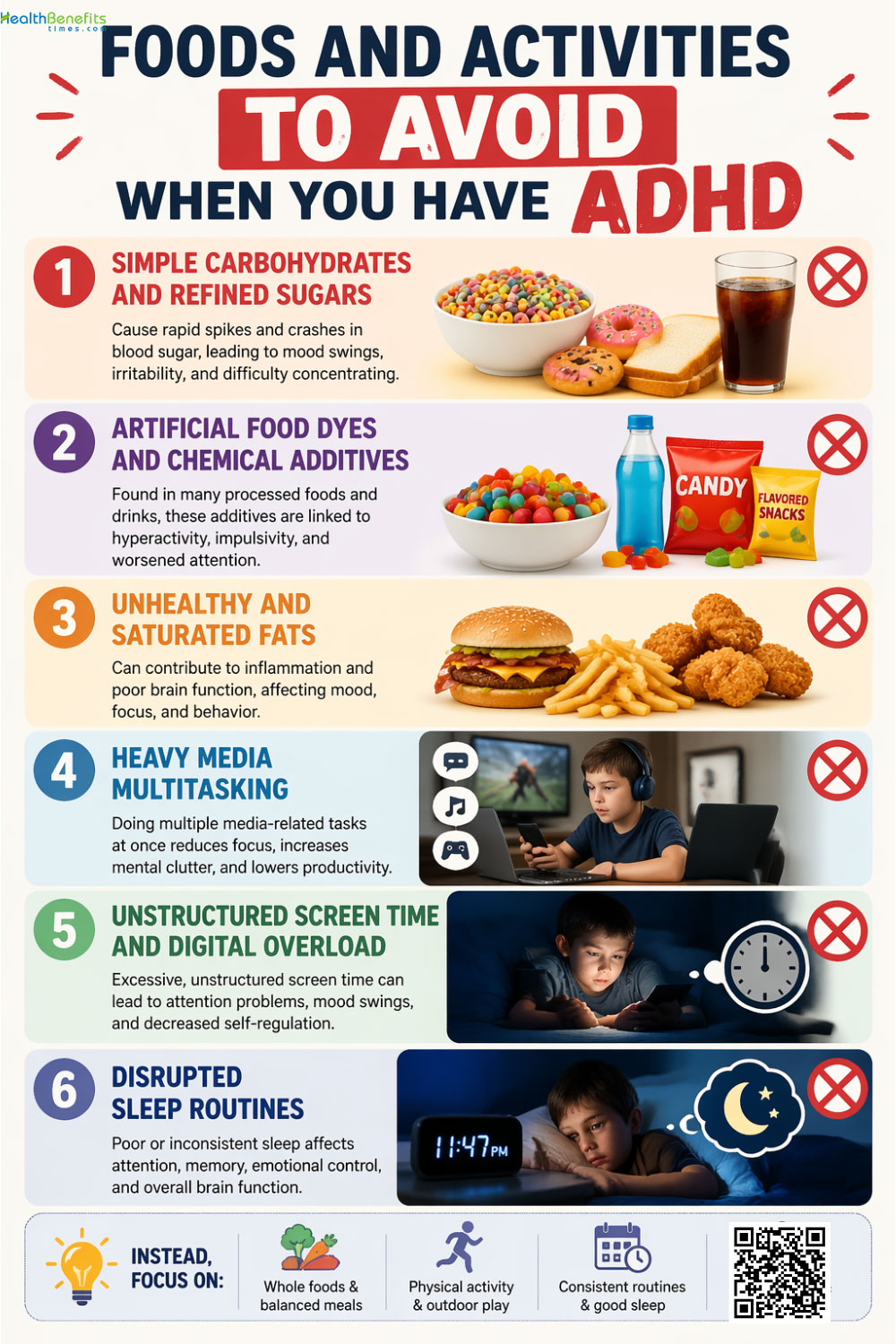
Foods and Activities to Avoid When You Have ADHD
Managing ADHD isn’t just about adding the right things to your routine. It’s also about cutting out the ones that work against you. Certain foods and habits can quietly undermine your focus, making symptoms harder to control.
1. Simple Carbohydrates and Refined Sugars
Foods that break down into sugar quickly like white bread, corn syrup, concentrated fruit juices, and baked goods can set you up for a rough cycle. You get a fast burst of energy as your blood sugar spikes, but it doesn’t last. What follows is a crash that leaves you more scattered and restless than before. Sugar doesn’t cause ADHD, but it can make hyperactivity and impulsivity noticeably worse by disrupting your body’s metabolic balance 24. Choosing complex carbohydrates instead helps keep your energy and your behavior on a more even keel.
2. Artificial Food Dyes and Chemical Additives
Your body responds to artificial food chemicals in a specific way one that can be especially disruptive if you have ADHD. Highly processed foods contain synthetic colors and preservatives your nervous system simply wasn’t built to handle. Two of the worst offenders are Red 40 and Yellow 5, along with a preservative called sodium benzoate. Research shows that cutting these out is a reasonable and effective way to reduce hyperactive outbursts in affected individuals 17. The simplest fix? Stick to whole, unprocessed foods and skip the chemical burden altogether.
3. Unhealthy and Saturated Fats
The relationship between dietary fat and brain function looks simple on the surface, but gets more complicated the deeper you look. Eating a lot of fried foods and saturated animal fats can gradually harm your brain’s structure. A “Western-style” diet heavy on trans fats and rich creams is linked to a higher risk of severe inattention 25. These fats fuel inflammation throughout your body and weaken blood flow. That means less oxygen reaches your prefrontal cortex, the part of your brain responsible for focus and decision-making. Swapping them out for healthier options like avocados, nuts, and olive oil can make a real difference for your brain over the long run.
4. Heavy Media Multitasking
Most people assume their brain can handle five things at once especially if they already feel wired for chaos. But that assumption doesn’t hold up when you look at how the brain actually works. Your brain is built to focus on one thing at a time. When you keep bouncing between your phone, the TV, and your work, you’re draining your working memory with every switch. Research shows that people who frequently juggle multiple media streams tend to have worse attention, get distracted more easily, and use their brain capacity far less efficiently than those who don’t 26. So guard your workspace. Cut the extra screens, close the extra tabs, and give your brain room to do what it does best one thing at a time.
5. Unstructured Screen Time and Digital Overload
If you’ve ever wondered why pulling away from social media or video games feels nearly impossible, the answer often comes back to dopamine. These digital environments deliver quick, constant hits of it training your brain to crave instant rewards. Over time, this makes it harder to tolerate boredom or wait for things that take longer to pay off. Clinical reviews consistently link excessive, unstructured screen time to worsening attention and hyperactivity symptoms. The main reason? It changes how your brain’s reward system works 27. Setting up app blockers and screen-time limits can be a practical first step toward managing this.
6. Disrupted Sleep Routines
If you’ve ever wondered why a bad night’s sleep makes everything harder focus, patience, emotional control the answer often comes back to executive function, and ADHD makes that connection even more fragile. Your brain is already wired to prefer staying up late. This is called delayed sleep phase syndrome, and it’s common with ADHD. You naturally want to be awake well into the night, which means you’re often running on too little sleep. Adding late-night screen time to that mix makes things worse. It throws off your circadian rhythm and amplifies emotional dysregulation during the day 28. A consistent bedtime routine dark room, cool temperature, screens off can be just as important as any medication you take.
Precaution Before Use of Natural Remedies
Most people assume that if something is labeled “natural” or “herbal,” it must be safe. But that assumption doesn’t always hold up when you look at the evidence and in some cases, it can put your health and mental well-being at serious risk.
1. Dangerous Herb-Drug Interactions
Taking herbal supplements alongside your prescription medications can cause serious and unpredictable problems. St. John’s Wort is a well-known example. It speeds up how your liver processes certain drugs, which means those medications may stop working the way they should. Clinical warnings also flag that this herb can interact harmfully with a wide range of medicines. When combined with certain antidepressants, it can cause a dangerous buildup of serotonin in your body 29. Always tell your doctor about everything you take including herbal products and supplements.
2. Toxicity from Mineral Megadosing
With minerals like zinc and iron, more isn’t always better. The dose-response curve appears to plateau and in some cases reverse past a certain point. Correcting a genuine deficiency in zinc or iron can be genuinely helpful. But taking amounts far beyond what your body actually needs especially fat-soluble vitamins and heavy metals can backfire in serious ways. Without blood testing and medical guidance, high doses of zinc and iron can actually become toxic 30. Sticking within the Dietary Reference Intakes is the safer path unless a healthcare provider tells you otherwise.
3. Hidden Contaminants in Unregulated Supplements
The gap between natural supplements in their marketed form and what’s actually inside the bottle is larger than most labels suggest. Unlike pharmaceutical drugs, dietary supplements don’t go through the same strict FDA testing before hitting store shelves. That matters more than you might think. Independent lab tests regularly find major differences between what a label claims and what the product actually contains 31. Some supplements turn up contaminated with heavy metals, illegal chemicals, or even hidden prescription drugs. These hidden ingredients can cause serious allergic reactions or cardiovascular problems. So before you buy, look for products verified by third-party testing organizations. It’s one of the simplest ways to protect yourself.
4. Bleeding Risks with Certain Botanicals
Ginkgo biloba is generally considered safe and beneficial for focus. There are, however, a few situations where caution makes sense particularly around bleeding risk. Ginkgo has natural blood-thinning properties. It acts as an anticoagulant, which means it can slow down your blood’s ability to clot. This might sound minor, but it can become a real problem in certain situations. If you’re already taking prescription blood thinners, you could be doubling up on that effect without realizing it. The same concern applies if you have a bleeding disorder or if you’re preparing for surgery or a dental procedure. In any of these cases, the added blood-thinning effect of Ginkgo could significantly raise your risk of excessive bleeding 30.
5. Unknown Long-Term Effects on Children
Children’s nutritional needs differ from adults’ in a few key ways and when it comes to natural supplements, those differences matter even more. Their hormone and brain systems are still developing, so giving them supplements calls for extra care. Take melatonin, for example. It works well for helping kids fall asleep faster, but doctors don’t have enough long-term data to know how this hormone affects a child’s growing body. Short-term use appears safe, but beyond that, the picture is still unclear 32.
On a separate note, having access to objective diagnostic tools can make a real difference in how your treatment is managed over time. When your doctor has a clear biological baseline to work from, they can fine-tune your medication doses more accurately or better judge whether a new natural remedy is actually working 33. This moves psychiatric care away from guesswork and toward a more personalized, data-informed approach built around how your brain actually works.
Comments
comments